
Revolutionary forest restoration project promises to save the planet and transform communities!
How is Morphogenesis using the Lodsi Community Project to promote sustainable forest management and community development?

The Lodsi community project for Forest Essentials is nestled in the Himalayan foothills, along the banks of the river Ganges, in Rishikesh, India. The design brief stipulated by the client outlined the construction of a manufacturing facility for a modern skincare company that focuses on reviving the ancient science of Ayurveda. The brand’s philosophy of infusing ancient wisdom with contemporary aesthetics presented the design team with an opportunity to adapt vernacular construction techniques to create a contemporary production facility.
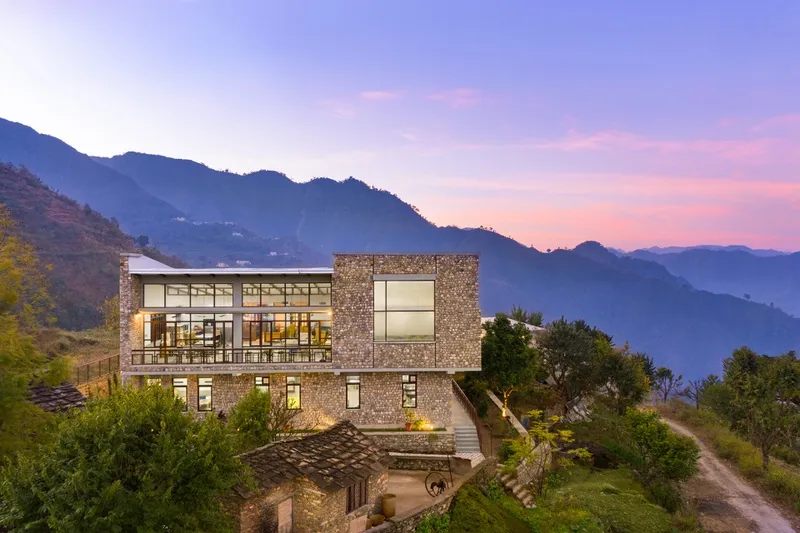
The design approach and development of the facility were highly specific to the site’s topography, climate, and immediate context. It has been designed in a manner that does not exceed the footprint of the previously existing structure. Furthermore, the location of the site and the limited availability of resources determined the budgetary and building constraints for the project. Therefore, the firm set out to achieve a net-zero and energy-efficient building through an integrated design approach resulting in a free-running and off-grid production unit.
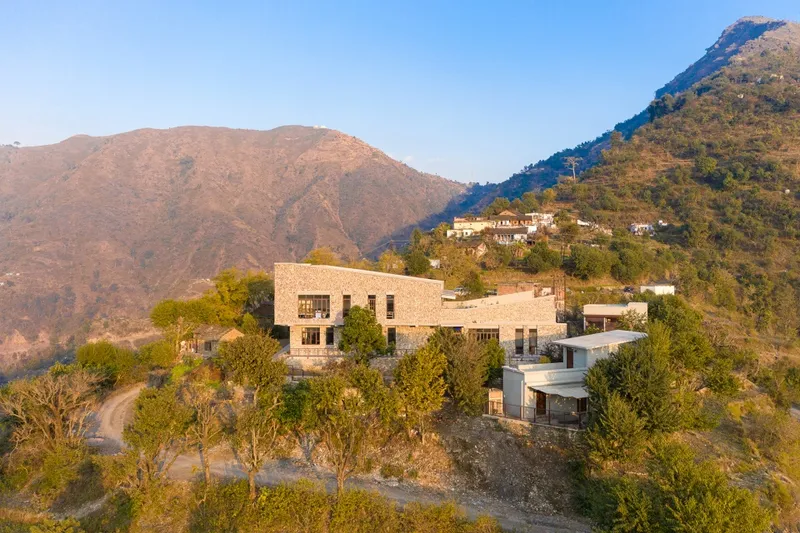
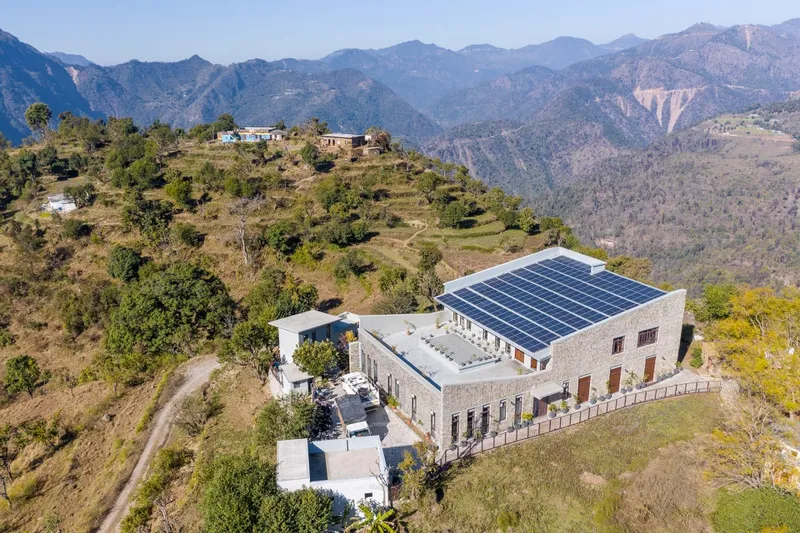
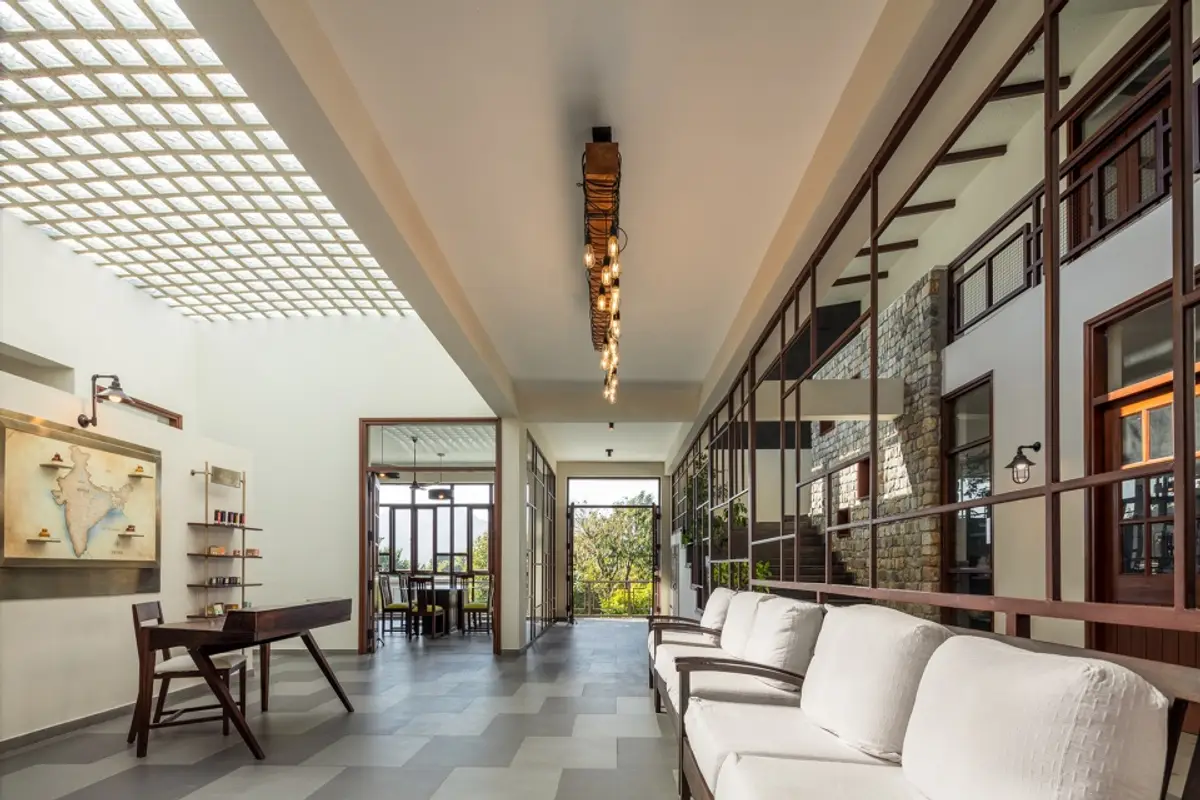
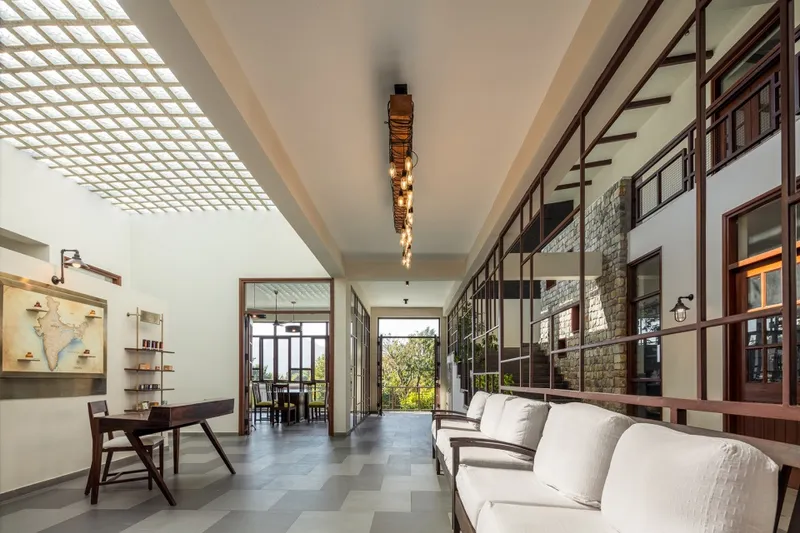
The built form draws inspiration from the traditional Garwahli ‘kholi’ (house). A rectilinear volume oriented along the East-West axis has been planned with a central entry that divides the facility into two parts. Functions that require a cooler environment (herb grinding, packaging, and storage) are located on the upper floor, whereas the preparatory functions with high internal heat gain are located on the lower floor. The North-South-oriented butterfly roof form allows large openable windows that allow the prevailing North-East and South-East wind for ventilation, with 80% naturally day-lit spaces and unobstructed views of the valley. The high volume of space with operable clerestory windows enforces Bernoulli’s principle and moderates indoor temperatures. A central light-well forms a multi-purpose communal space. This also doubles up as mother and child wellness camps for students post-school.
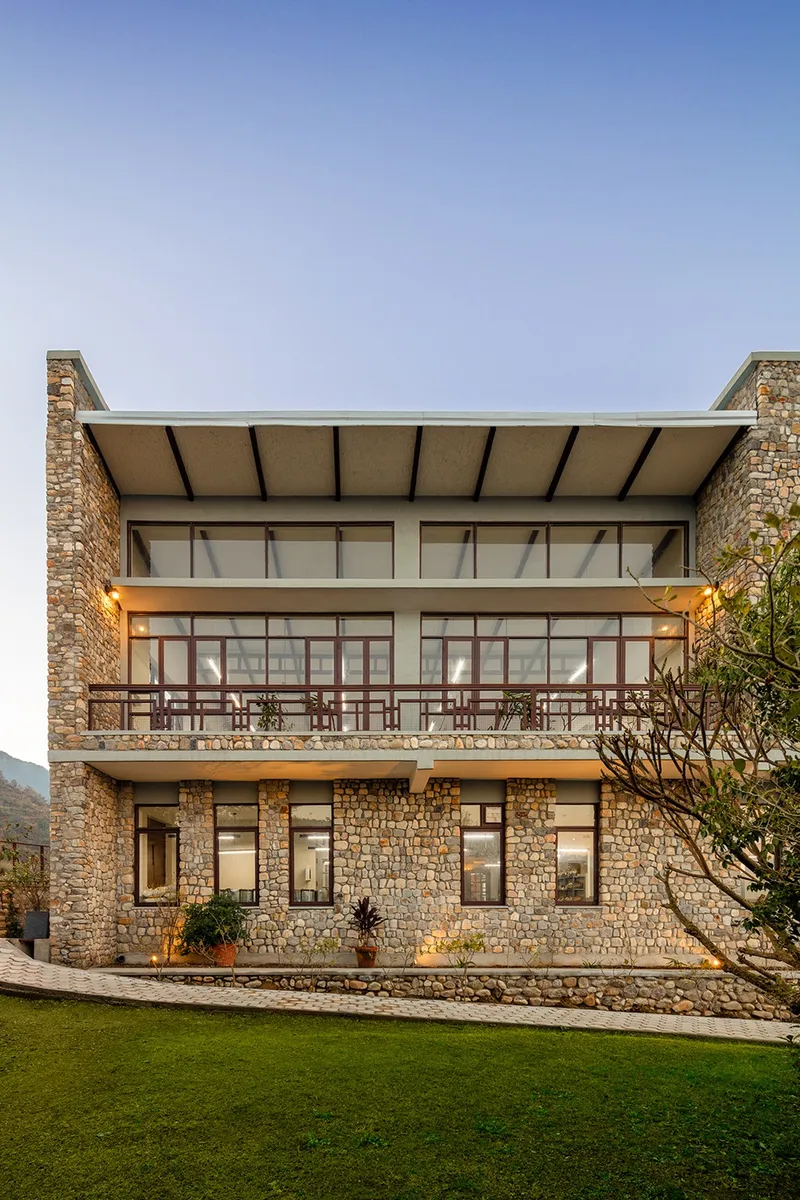
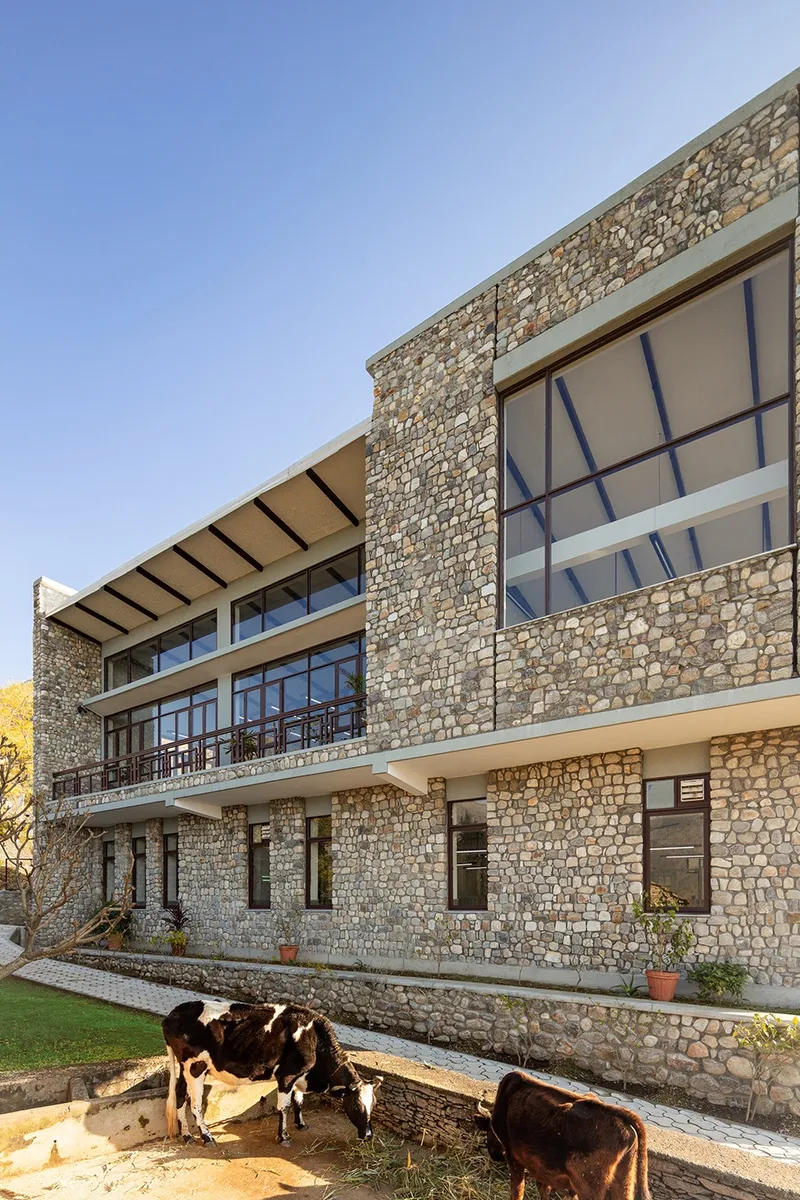
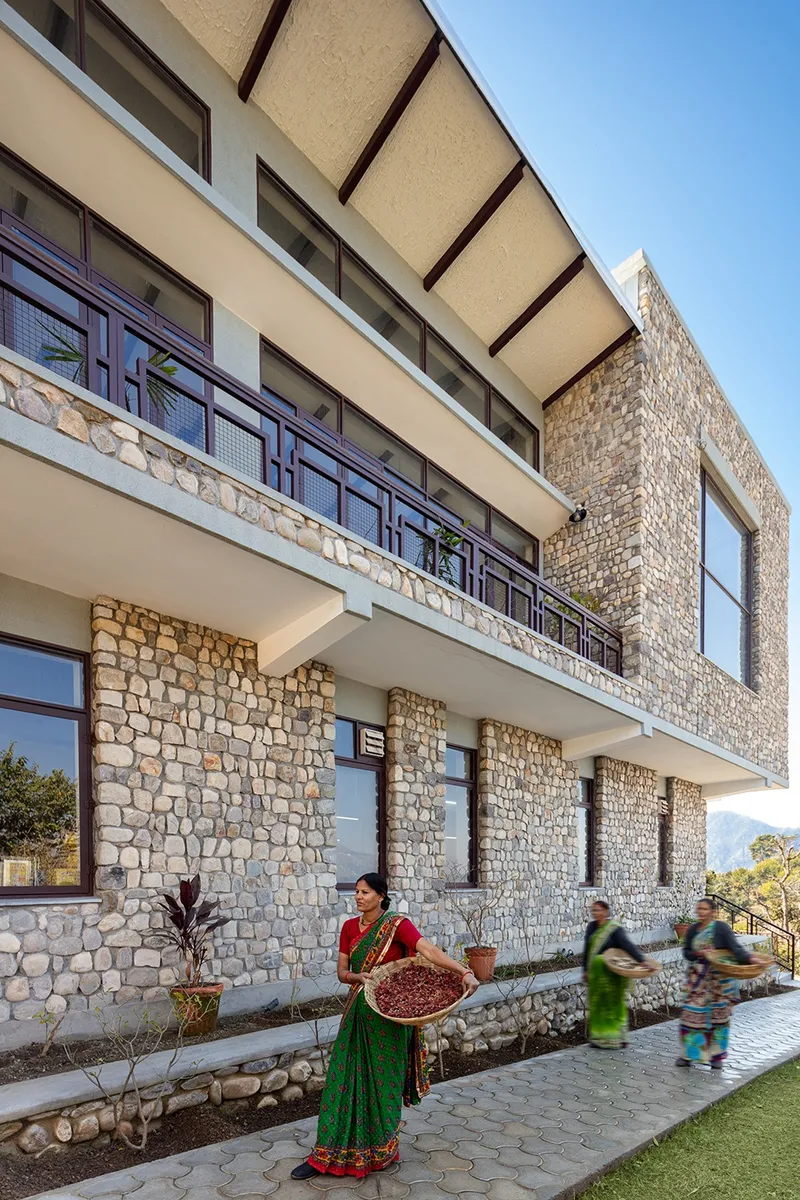
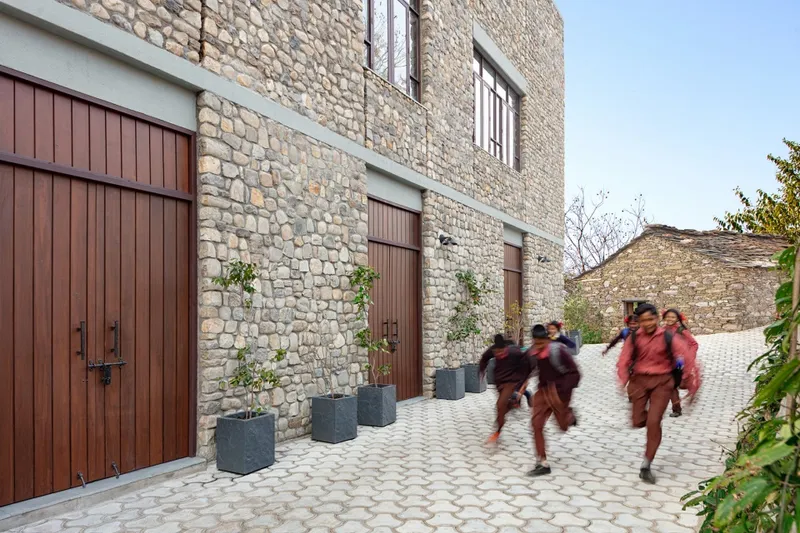
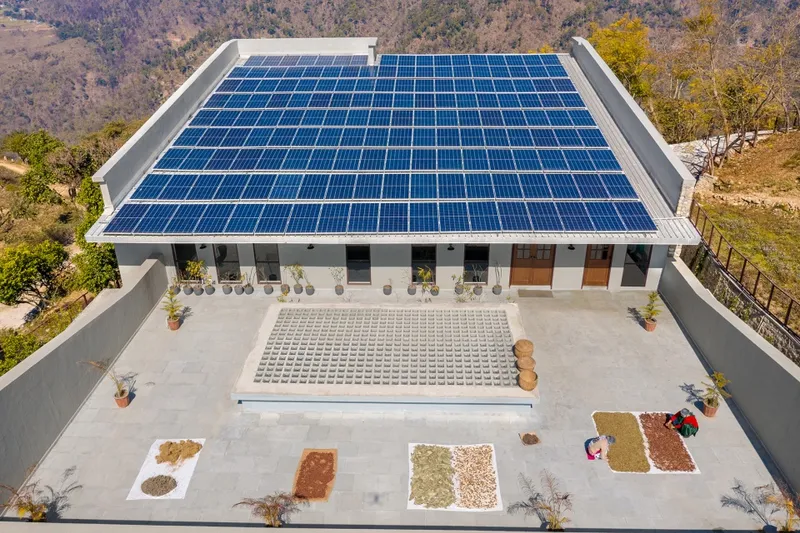
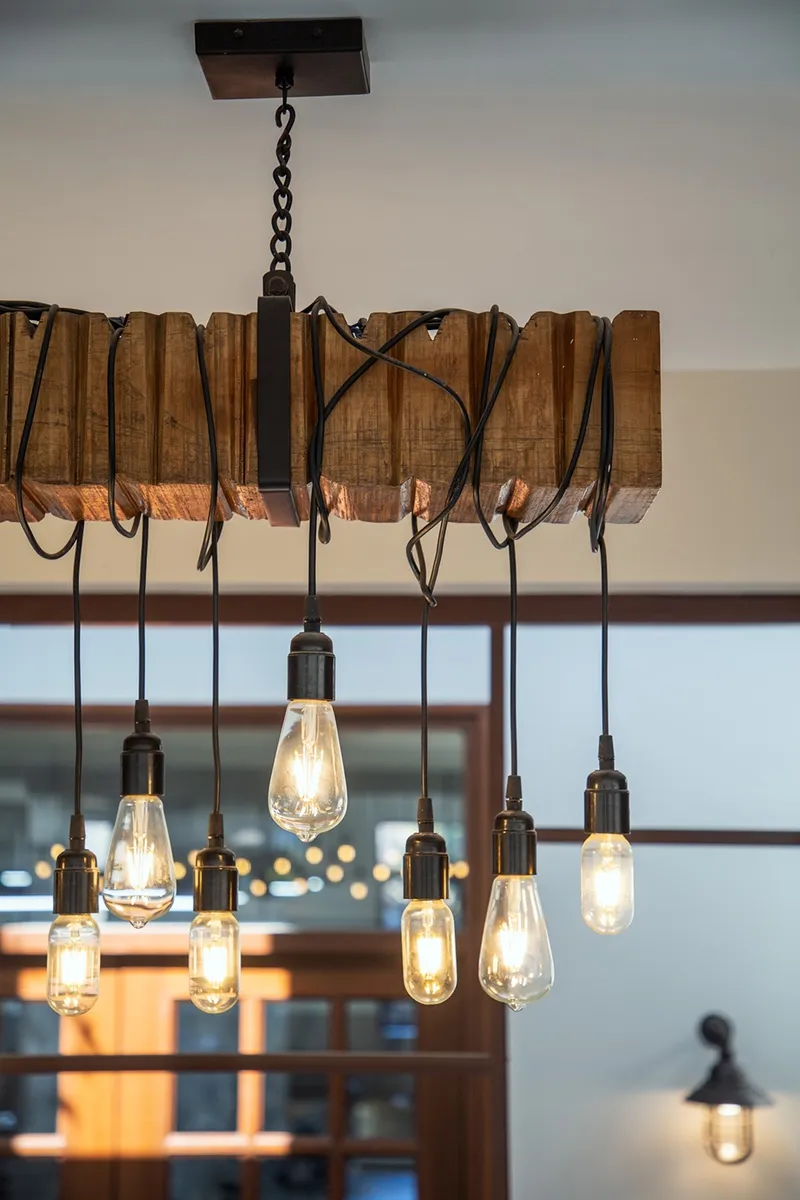
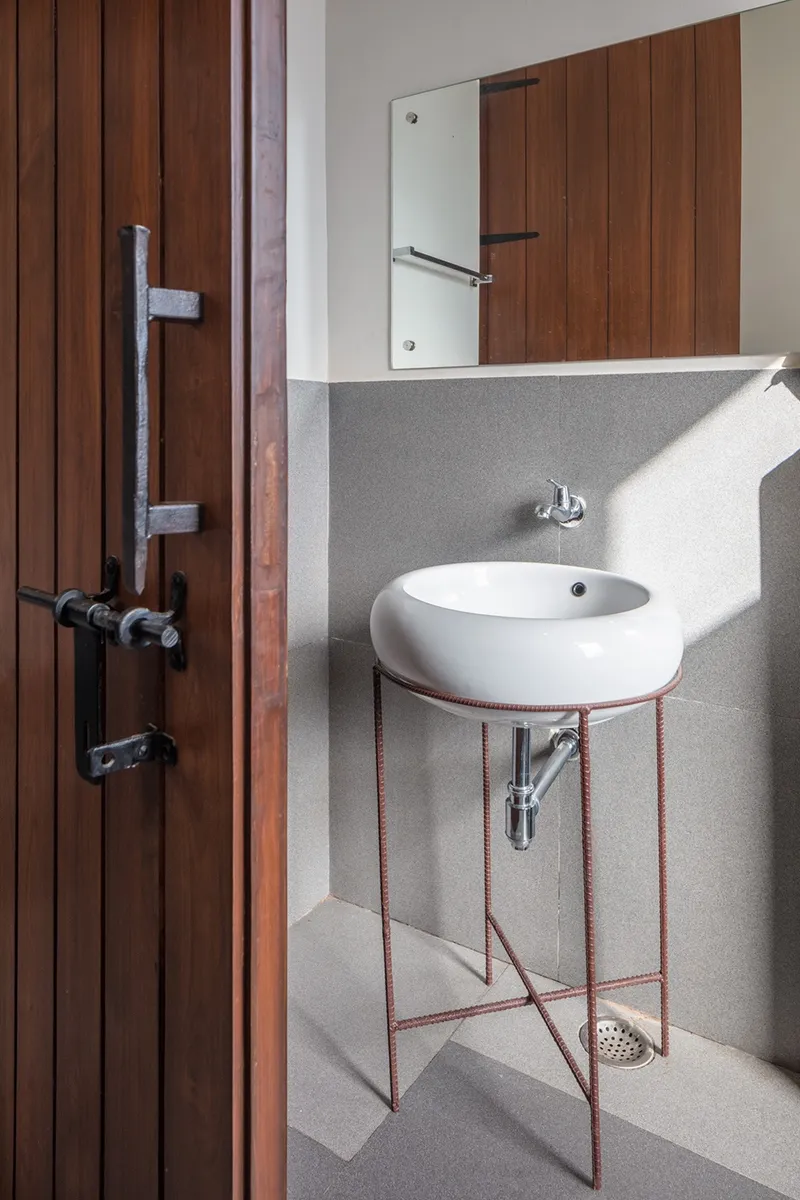
Passive design strategies and indigenous construction techniques resulted in a strong architectural expression that contextually blends in and builds community pride. Façade shading, window-to-wall ratio and building materials were optimised to ensure a high-thermal mass façade resulting in an energy-efficient building envelope with an EPI of 38kWh/m2/year. A solar roof generating 55kWp offsets the facility’s requirements and creates a surplus to supply back to the grid, hence rendering the design ‘Energy+’. A site-specific rainwater collection, storage tank and treatment system, and an effluent treatment plant offset the water requirements. Waste materials at the site have been repurposed and used, e.g., reclaimed wooden rafters as light fixtures, waste purlin sections as tube light holders, stone chisels as door handles, re-bar as wash basin pedestals, and others. Any organic by-product is reused or composted. This project is net-zero on energy, water, and waste. The planning incorporated the existing ‘gaushala’ (cow shed) to produce milk-based products.
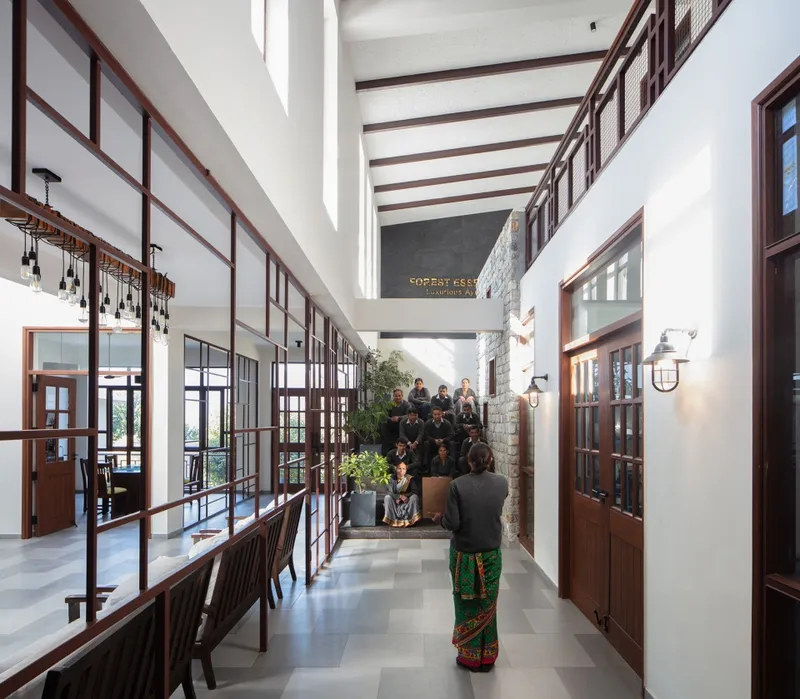
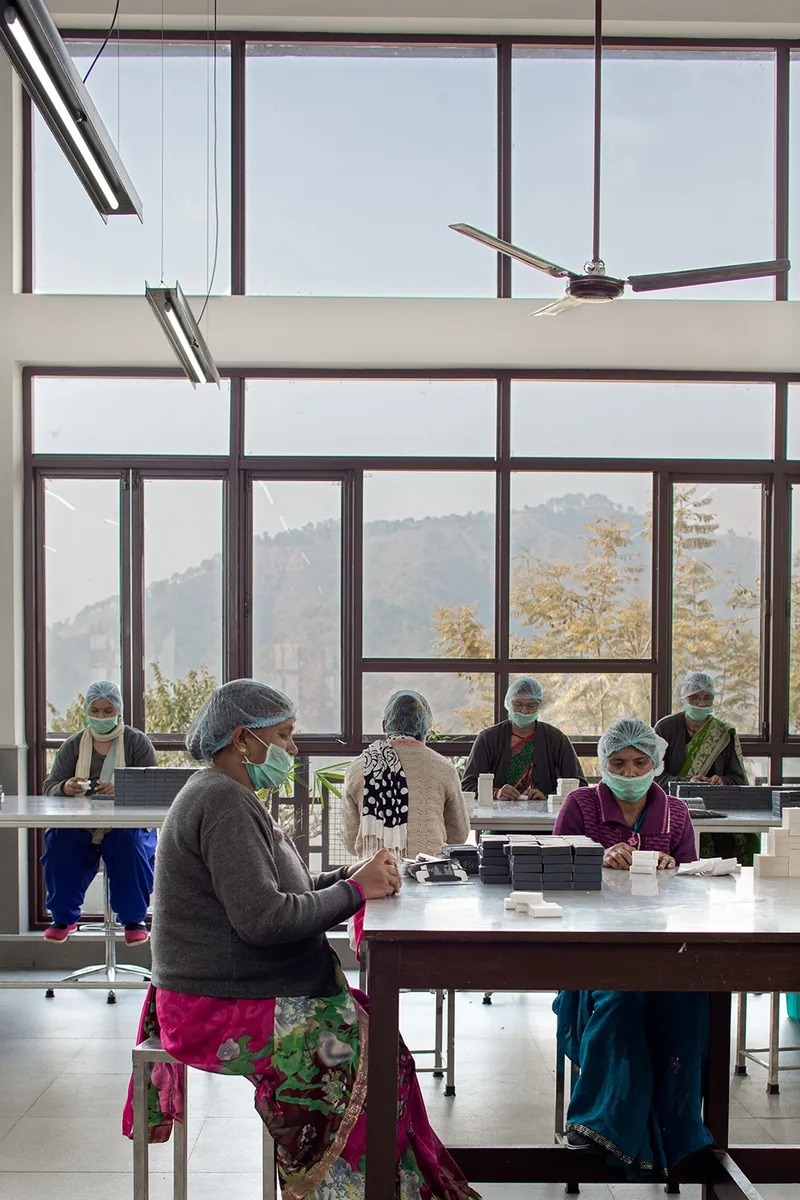
Sixty-five villagers built the project, and the building supports 45% of the village households directly and the entire village indirectly. The use of vernacular materials, techniques, and village labour forms the ethos of the facility, making it “A Project for the locals, built by the locals and for the employment of the locals.” The Lodsi Community Project addresses sociocultural and economic sustainability. It is an example of decentralised development in the post-pandemic world. This project stayed functional through most of the pandemic, and we believe this is the exemplar for future growth across India.
The project also provides employment opportunities for local people
Waste purlin sections as tube light holders
The stone chisels door handles and re-bar as wash basin pedestals
Architects: Morphogenesis
Area: 10000 ft²
Year: 2019
Photographs: Noughts & Crosses LLP
Lead Architects: Ar. Sonali Rastogi, Ar. Aarushi Juneja
Contractor: Abdul Constructions
Landscape Architects: Morphogenesis
Structure Engineers: Mr. Suneet Prasad
City: Lodsi
Country: India


Popular Articles
Popular articles from the community

Opera by the Sea Estonia: Three Shells Dissolving Architecture into Tallinn's Coastline
A winning opera house proposal replaces monumental form with interconnected shells that blur the boundary between building, park and Baltic Sea.

The Amber Palace Opera: A Geological Fiction Surfaces on Tallinn's Baltic Waterfront
Pierre Brillard reimagines a Baltic legend as a public landscape, opera house, and waterfront promenade rooted in Tallinn's coastal identity.

Singing Woman: An Opera House That Performs Before the Curtain Rises
Ovidiu Cristian Pavel's conceptual opera house translates Estonia's choral identity into a sculpted waterfront landmark facing the Baltic Sea.

Temporary Home for Dogs: A Reversed Zoo Rethinks Animal Shelter Architecture
In Bucharest, a sinuous corridor and freed landscape flip the logic of containment, designing a shelter that works to make itself unnecessary.

Similar Reads
You might also enjoy these articles

Shakur's House: Exposed Brick as an Interior Organiser in a 168 m² Mashhad Residence
Brick moves indoors in this Mashhad residence, where masonry walls, glass partitions and teal planes sequence a compact home without closing it off.

Day and Night Park: A Time-Based Urban Newsstand in Beijing
A temporary urban newsstand in Beijing blending travel, light, and reading through poetic colors, compact form, and community-focused design.

Modernist Patio Renovation in El Masnou, Barcelona by Oliver Segura Arquitectura + Cebrià Arquitectura
Modernist patio renovation blending tradition and innovation with a movable pool, leveled floors, and Catalan materials in El Masnou.

Alto Residencial Coop: Cooperative Housing Development in Santiago de Compostela by Carbajo Barrios Arquitectos
A linear cooperative housing complex blending white volumes and perforated metal façades, enhancing community living, natural light, privacy, and urban integration.

Explore Landscape Revival Competitions
Discover active competitions in this discipline


Challenge to design luxury tourism on rails

Challenge to reimagine the Iron Throne

Photograph architecture without architects

VR headsets Storefront design competition
Comments (0)
Please login or sign up to add comments
No comments yet. Be the first to comment!