
RID Co and Ltd Craft a 57-Square-Meter Eyewear Store in Ashiya Around Raw Concrete and Steel
A compact optical shop in Hyogo Prefecture treats retail display as architecture, grounding delicate eyewear in an industrial material palette.

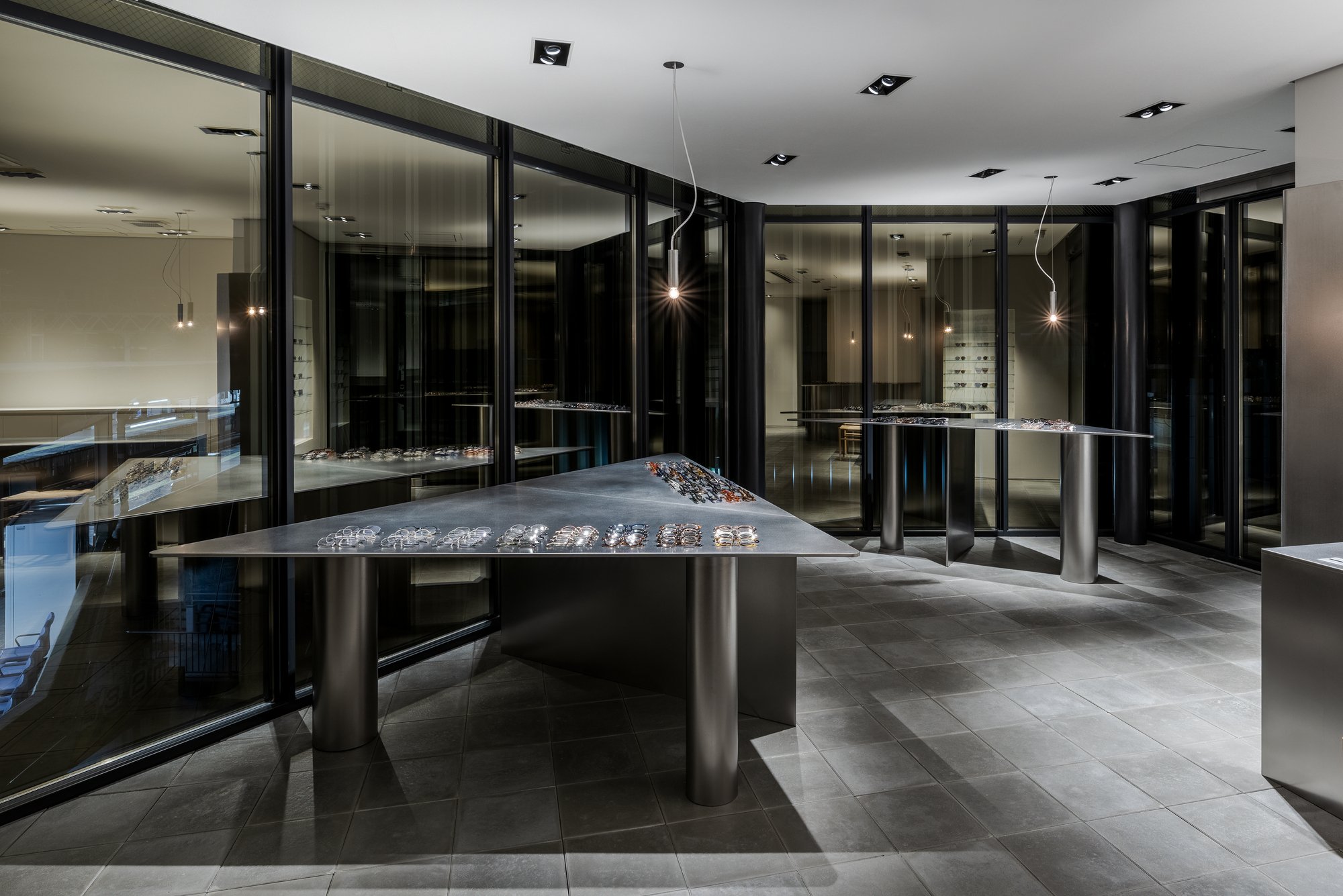
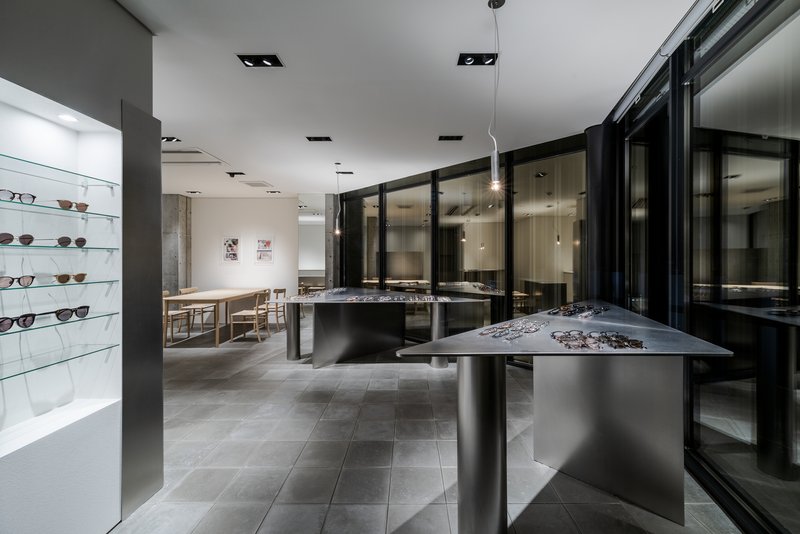
There is a particular challenge in designing a retail space for objects as small as eyeglasses. The merchandise itself is almost invisible at room scale, so the interior has to perform double duty: it must frame the product and simultaneously give a customer a reason to stay. At ASHIYA OPTICAL STORE, a collaboration between Tokyo-based RID Co and New Zealand practice Ltd, the answer is a material strategy that borrows more from gallery architecture than conventional retail fitout. Board-formed concrete columns, stainless steel display tables, and black-framed glass partitions establish an atmosphere that is quiet, serious, and deliberately unhurried.
What makes the project worth studying is its refusal to decorate. Across just 57 square meters in Ashiya, Hyogo Prefecture, the designers let structural honesty carry the experience. Formwork tie holes are left visible. Steel columns double as table legs. Pendant lights are reduced to simple cylinders on thin cords. The space reads less as a shop and more as a curated room where every joint and junction has been considered, a posture that quietly argues eyewear deserves the same attention as art.
Storefront as Threshold
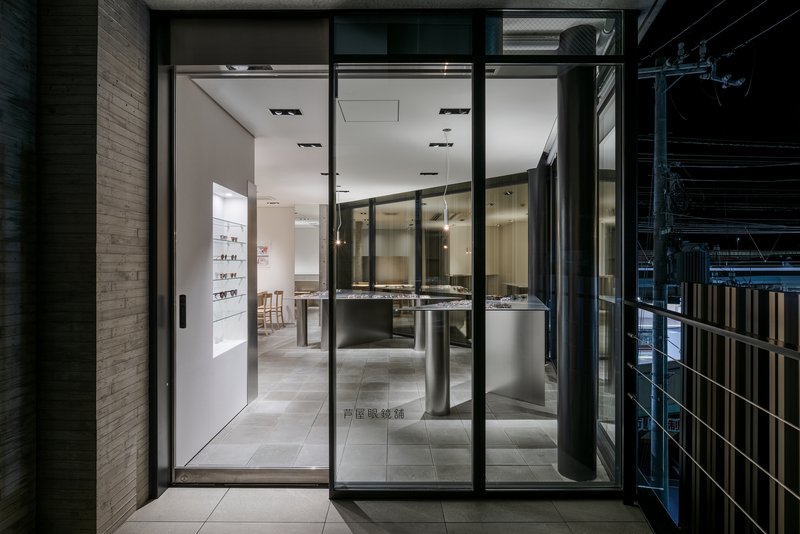
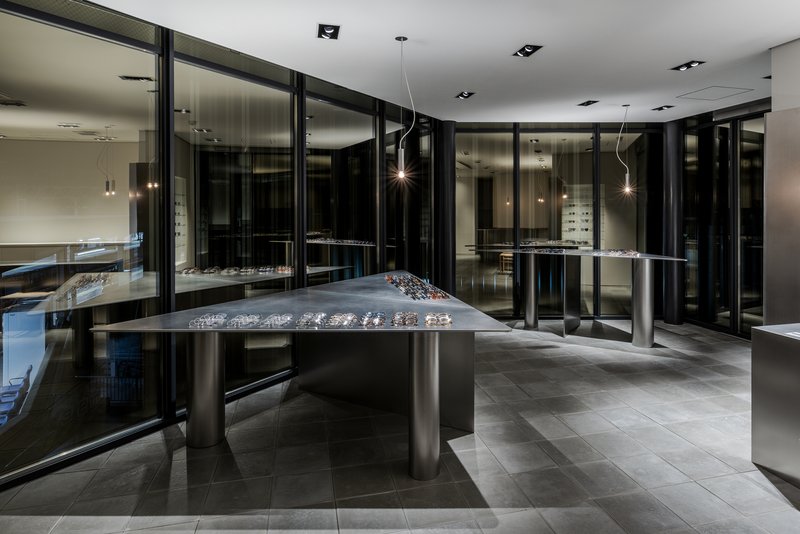
The angled glazed facade does something clever with a relatively standard commercial frontage. Floor-to-ceiling glass dissolves the boundary between street and shop, turning the interior into a vitrine visible from multiple angles. At night the effect intensifies: pendant lights and display counters glow against the dark glass partition walls, pulling the street into the composition. There is no signage shouting for attention, just transparency and light doing the work of invitation.
Concrete and Steel in Dialogue
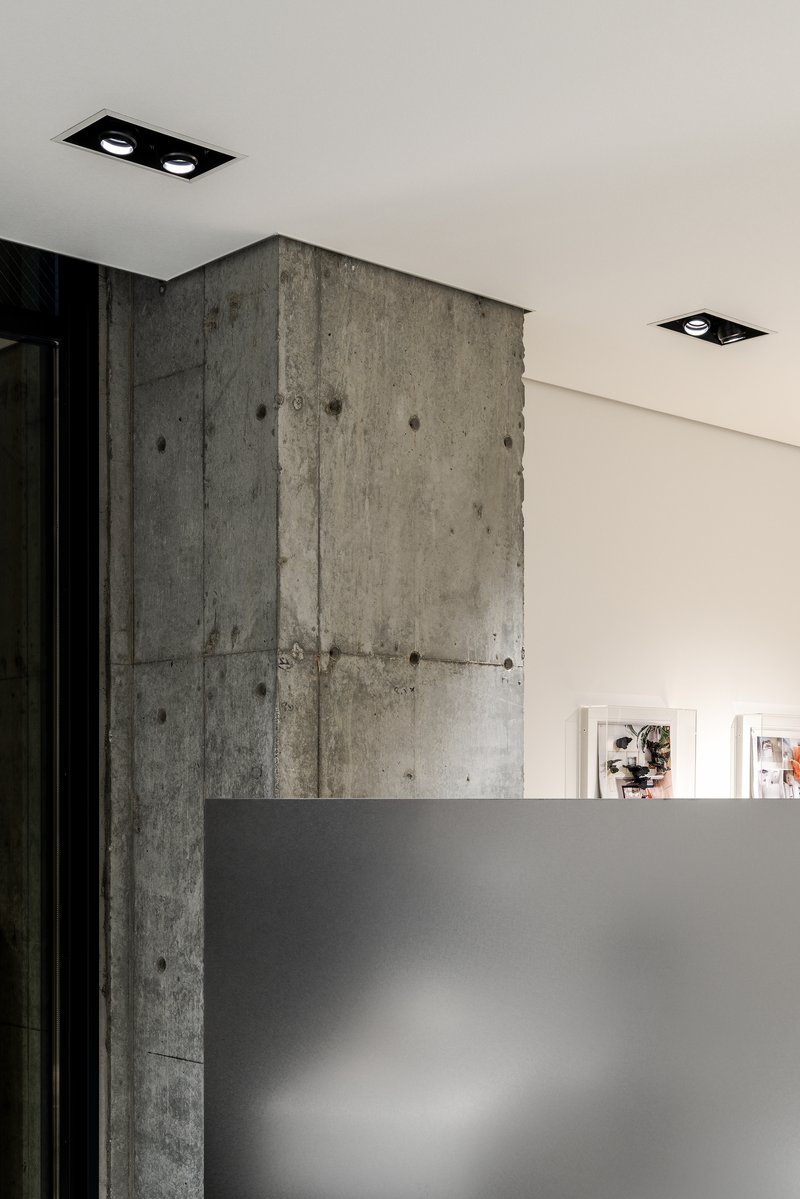
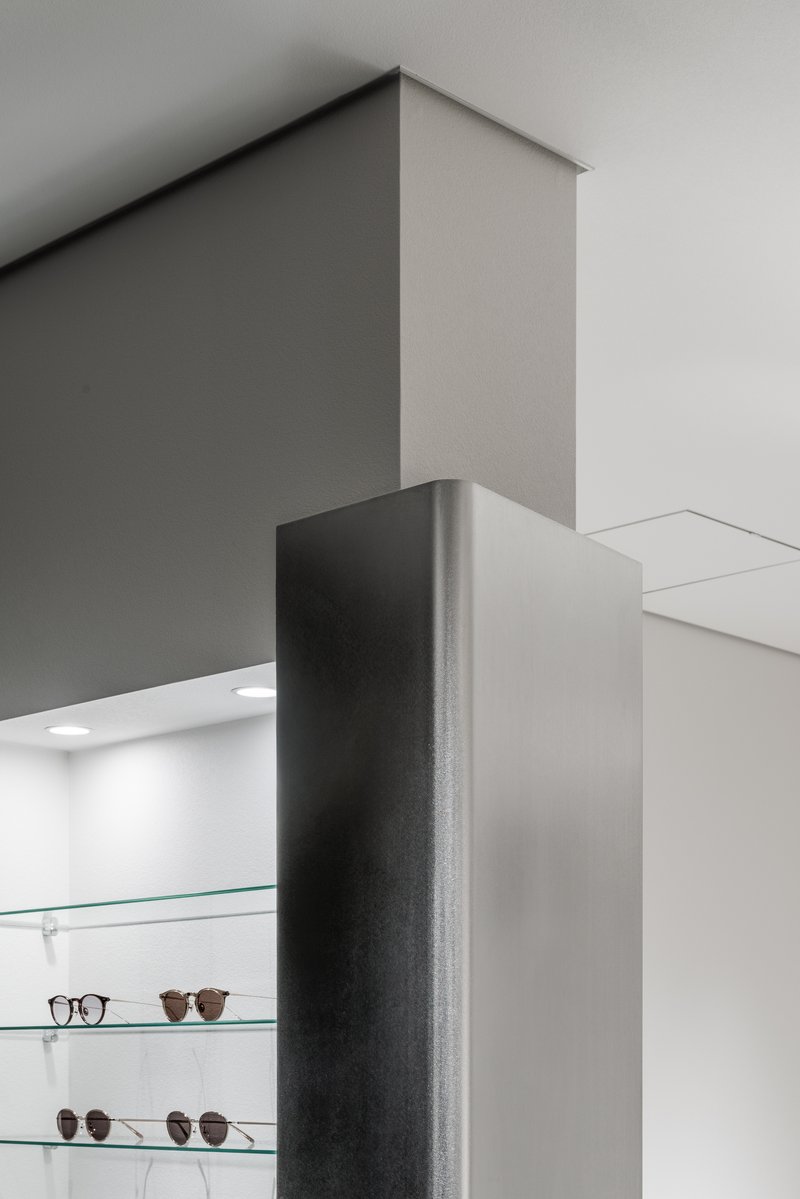
The board-formed concrete columns are the strongest single gesture in the room. Their rough grain and exposed formwork ties anchor the space with a textural weight that contrasts sharply with the precision of the eyewear on display. Rather than concealing these structural elements behind plasterboard, the designers celebrate them as landmarks, moments where the building's skeleton becomes part of the retail narrative.
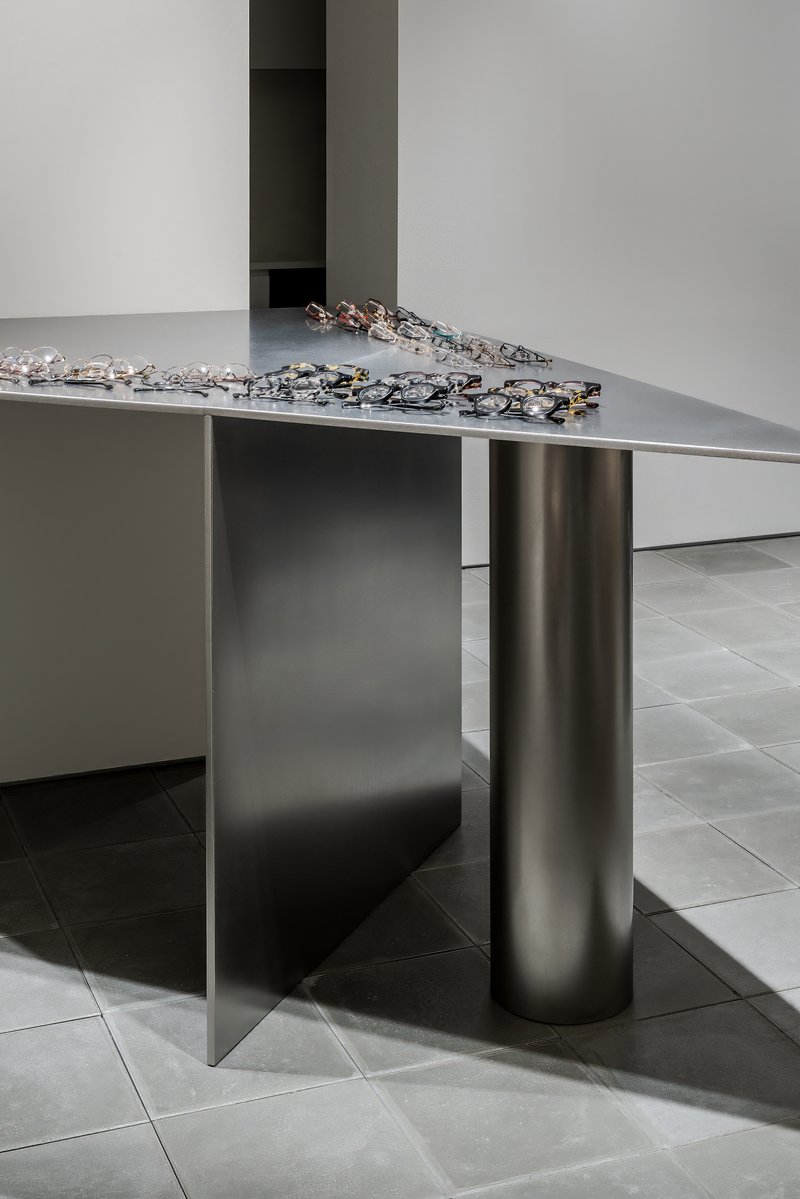
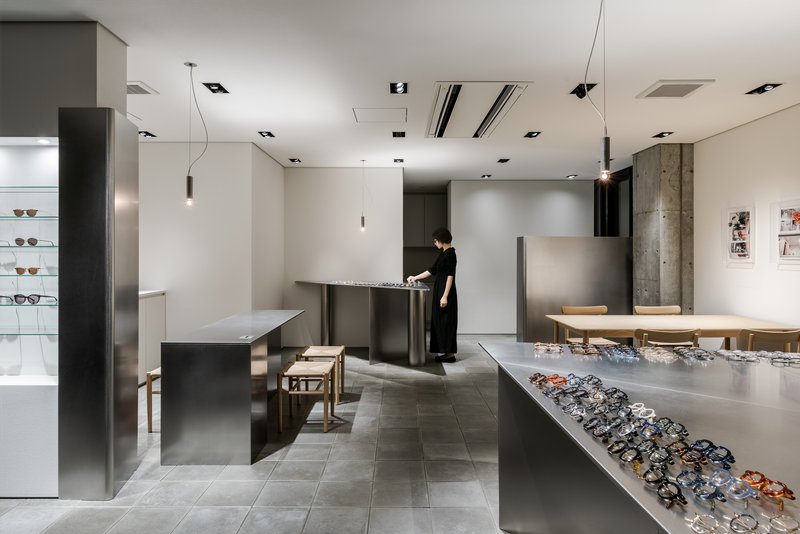
Steel plays the complementary role. Cylindrical columns taper into table supports, and stainless surfaces catch and scatter ambient light. The material pairing, raw concrete against polished metal, keeps the 57-square-meter footprint from feeling monotone. It also communicates craft: every weld, every formwork seam, every edge trim speaks to deliberate making.
Display as Furniture
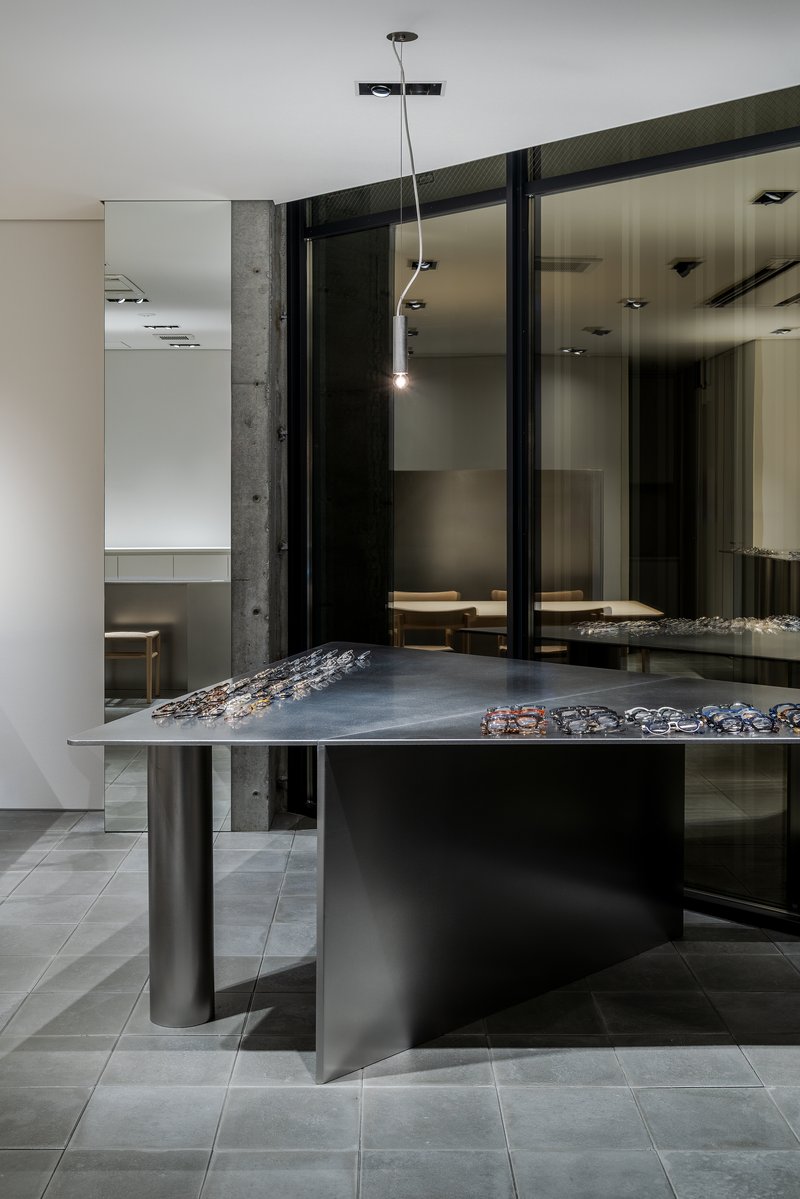
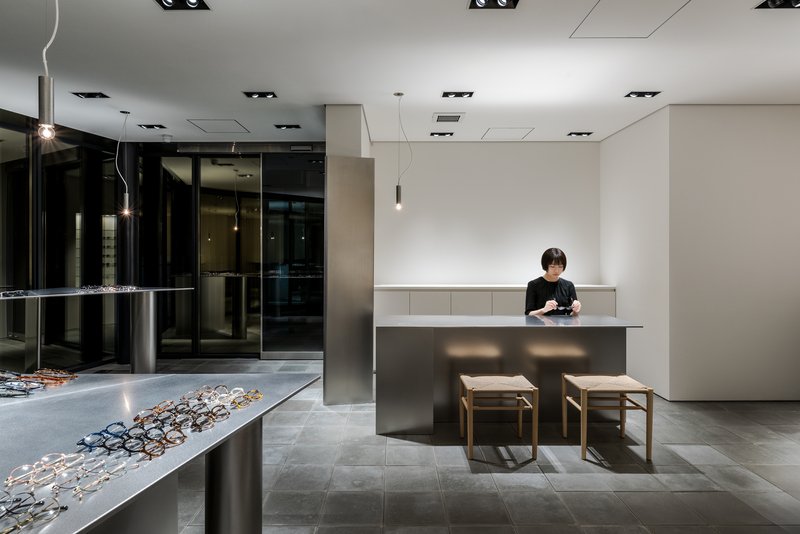
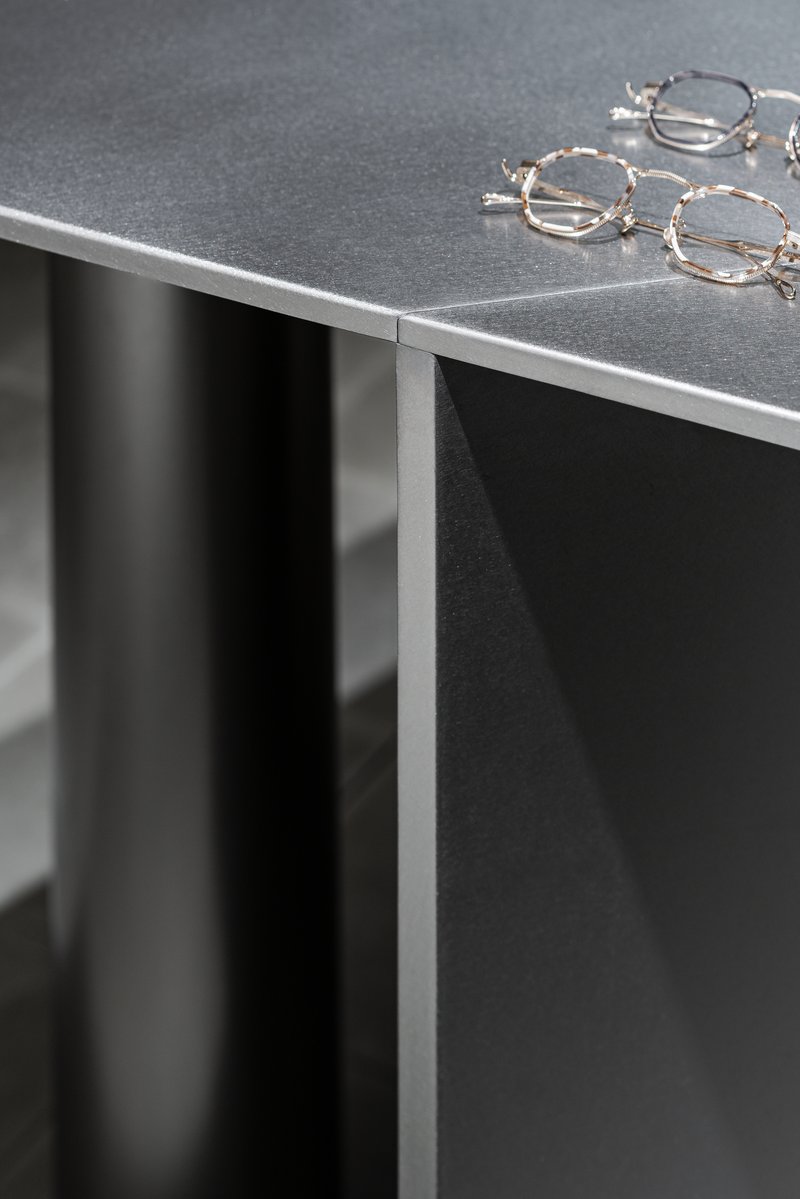
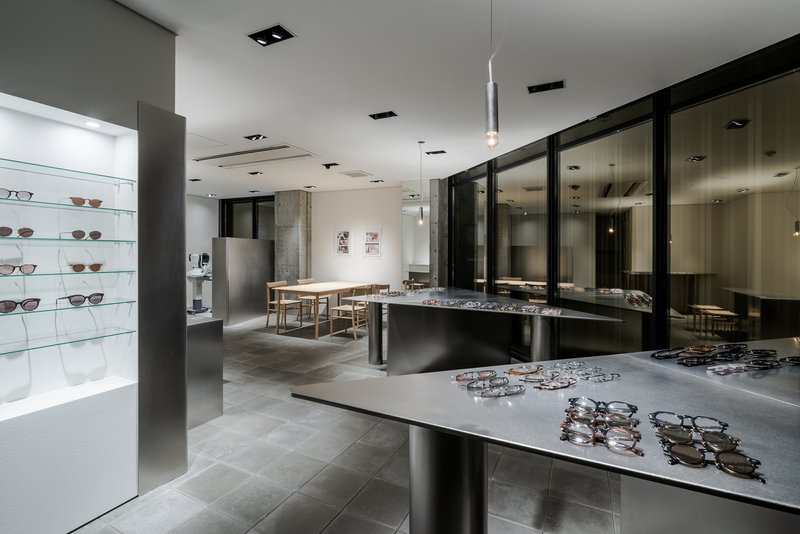
The display tables are not fixtures in the conventional retail sense. They sit in the room like pieces of furniture, freestanding objects with their own structural logic. Metal edge trim wraps the dark counters cleanly, and eyeglass frames are arranged with generous spacing that invites browsing rather than overwhelming with choice. Pendant lights drop directly above each table, creating focused pools of illumination that isolate the product against the broader dimness of the room.
The backlit shelving along the perimeter wall offers a secondary layer. Where the tables encourage touch and close inspection, the wall displays function more like a catalog, presenting the full range at a glance. The hierarchy is legible without labels.
Light and Reflection
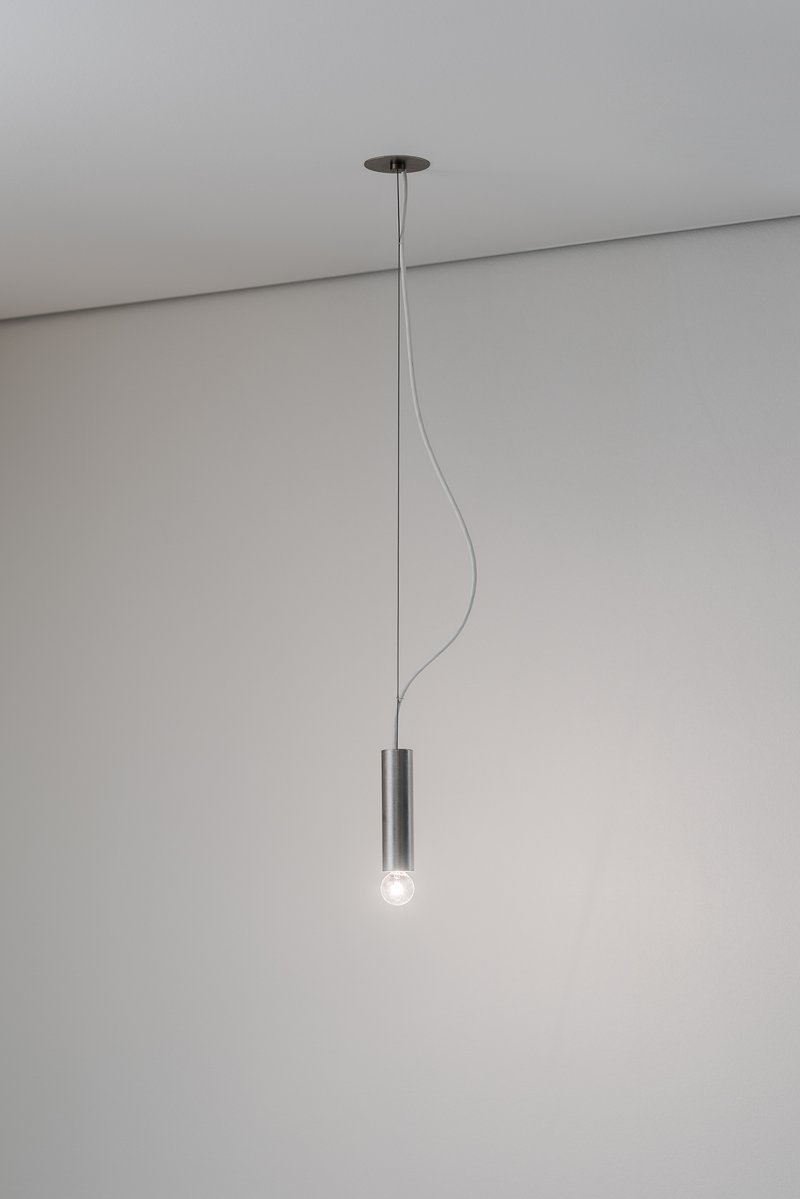
Lighting in the store operates on two registers. Recessed ceiling fixtures wash the space evenly, keeping sight lines clear. The cylindrical pendant lamps, suspended on thin cords, act as accents, drawing the eye downward toward product surfaces. The simplicity of these fixtures is the point: a metal shade, a cord, no ornament. They read as components of the architecture rather than decorative additions.
The black glass partitions multiply these light sources through reflection, extending the perceived depth of the room well beyond its actual dimensions. Where a frameless mirror meets an exposed concrete column, the boundary between real and reflected dissolves. For a space that sells objects you look through, this play on transparency and reflection feels conceptually right.
Material Details Up Close
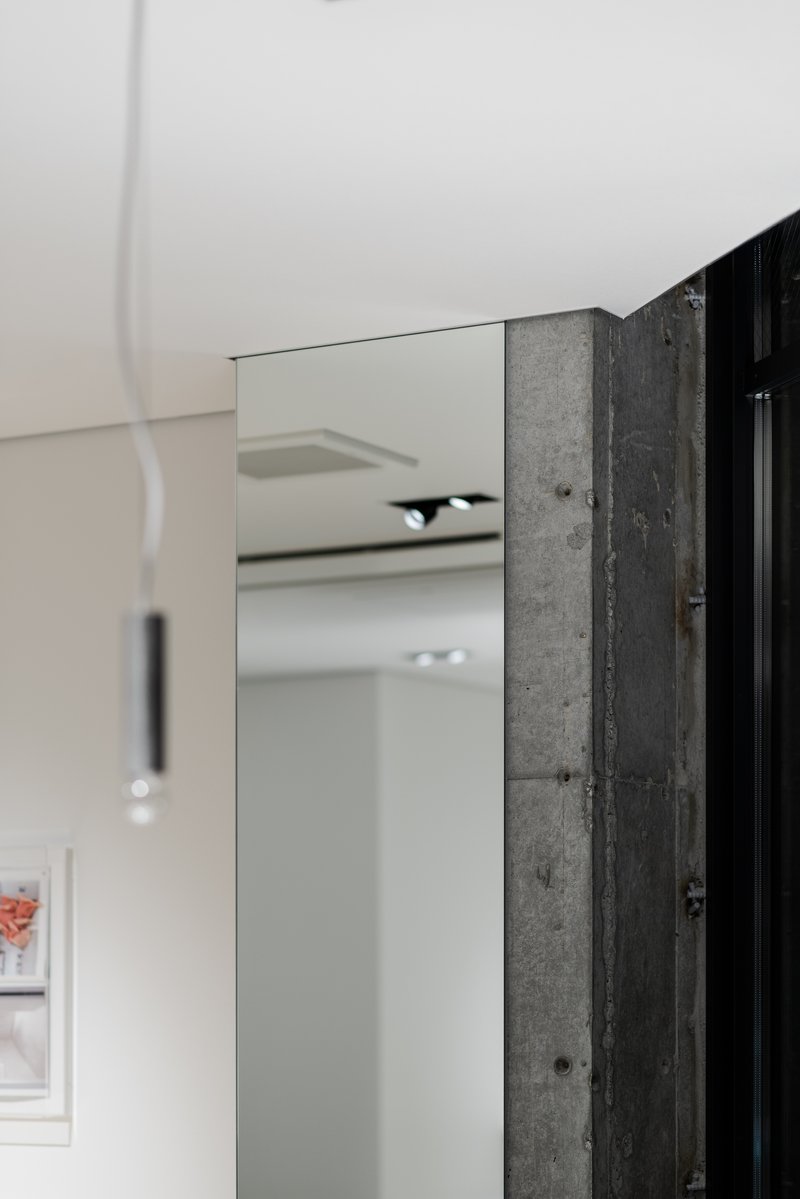
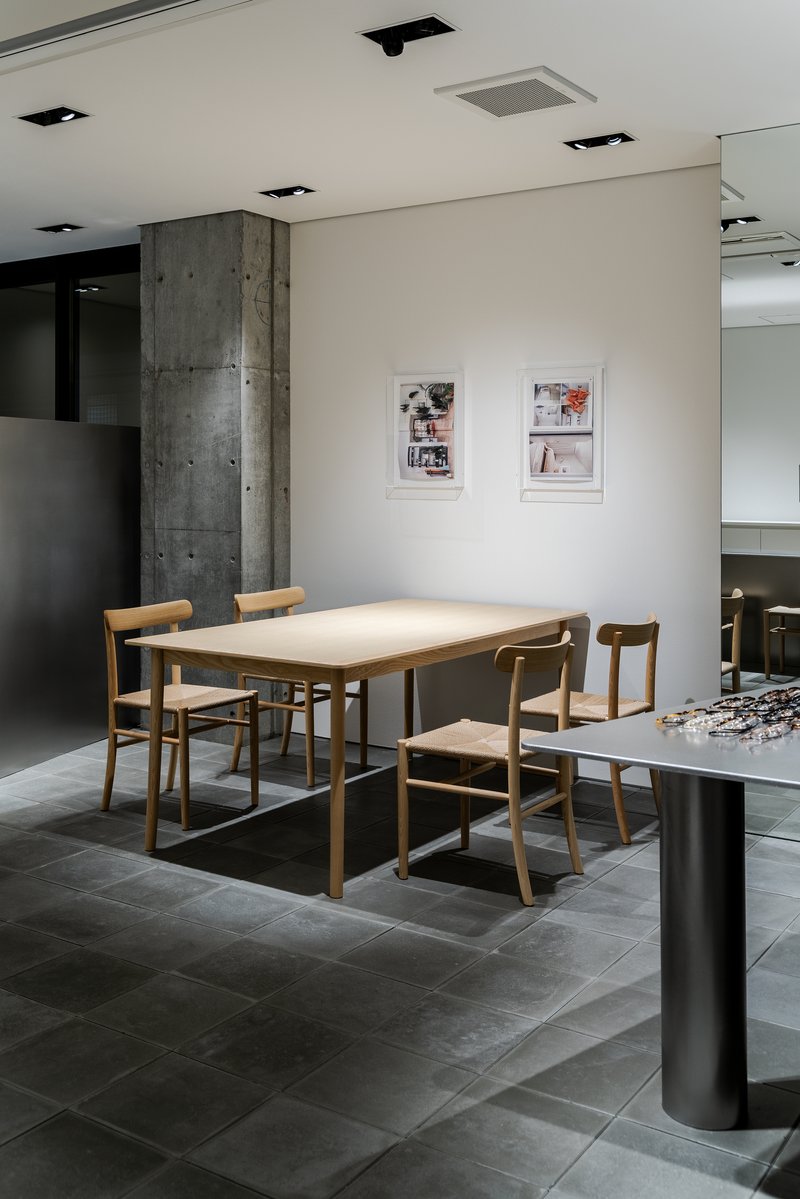
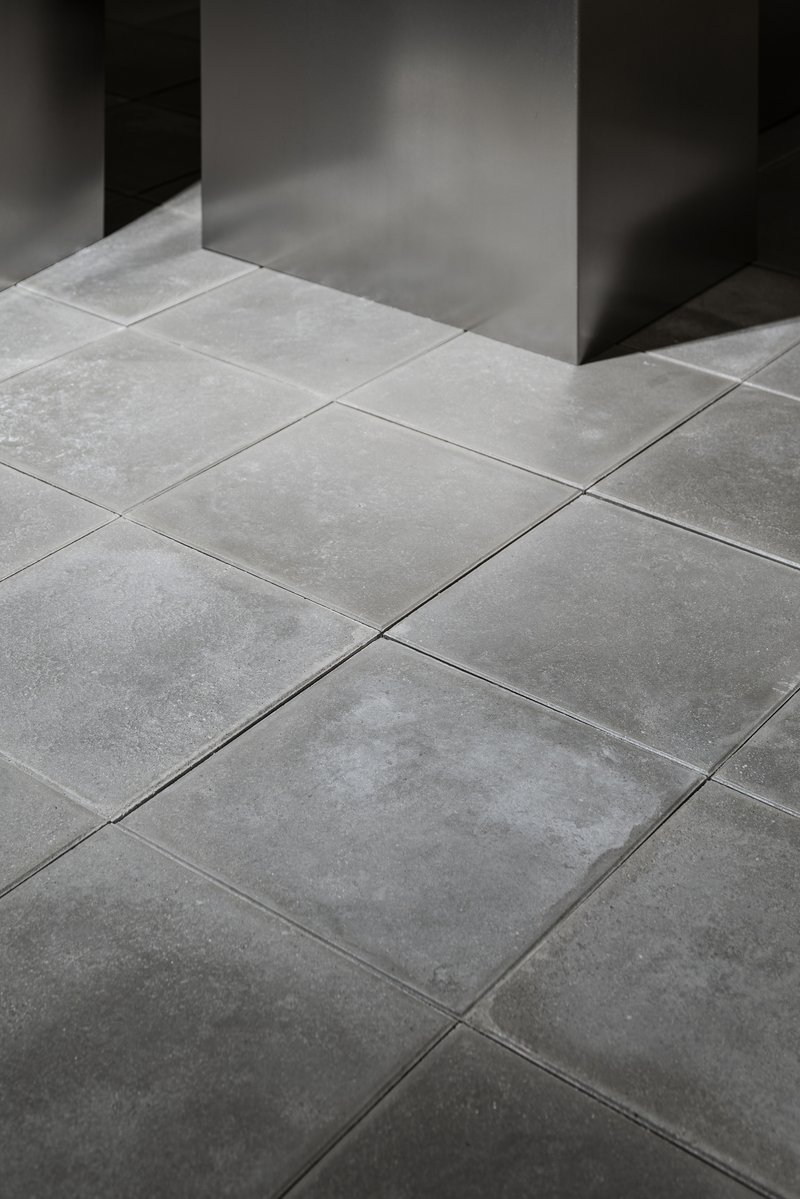
A good detail photograph can reveal the philosophy behind a project faster than a floor plan. The junction where a frameless mirror meets a concrete column, formwork ties still visible, says everything about the designers' attitude toward finish: nothing is hidden, and nothing is faked. The large-format grey stone tiles on the floor reinforce this honesty, their clean joints and neutral tone letting the vertical elements dominate.
A timber table with chairs near one of the columns hints at a consultation zone, a place to sit and consider a purchase without the pressure of a counter. The material shift from steel to wood softens the space at the moment it needs to feel most human.
Plans and Drawings
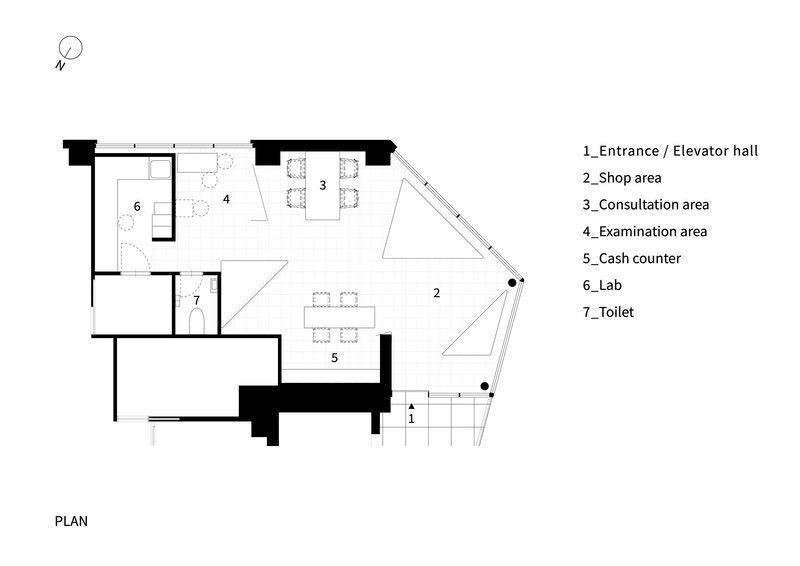
The floor plan reveals how tightly the program is packed. An examination area, consultation zones, and a lab sit behind the public-facing display room, all organized around the angled glazed facade that gives the storefront its distinctive geometry. The plan also clarifies the column grid, showing how the freestanding concrete elements create natural subdivisions within the open retail floor without resorting to walls.
Why This Project Matters
Small retail projects rarely get the architectural attention they deserve, partly because budgets are tight and partly because the brief seems straightforward. ASHIYA OPTICAL STORE pushes back against that assumption. RID Co and Ltd have treated a 57-square-meter shop as a serious design problem, resolving program, material, and atmosphere with the kind of rigor usually reserved for cultural commissions. The result is a space that elevates its product without resorting to luxury clichés.
The broader lesson here is about restraint. In an industry that often equates quality with complexity, this project shows that a limited palette, honestly expressed, can produce a richer spatial experience than any amount of layered finishes. For architects working on compact commercial interiors, it is a useful case study in doing more with less, and trusting materials to speak for themselves.
ASHIYA OPTICAL STORE by RID Co and Ltd. Ashiya, Hyogo, Japan. 57 m². Completed 2025. Photography by Yoshiro Masuda.
About the Studio
Share Your Own Work on uni.xyz
If projects like this are the kind of work you want to make, uni.xyz is a place to publish your own, find collaborators, and enter design competitions.




Popular Articles
Popular articles from the community


Cro&Co Architecture Builds a 150-Meter Tower on Top of a Seven-Lane Highway in La Défense
Trinity Tower reimagines the office high-rise as a bioclimatic organism threaded with terraces, trees, and public ground in Paris's business district.

The Flow: Coffee Shop Interior Design Where Time, People, and Process Intertwine
The Flow reimagines Viennese coffee culture through arched forms, warm interiors, music, reading, work, and social gathering.
Pablo Senmartin Suspends a Steel-and-Timber Refuge Above a River Forest in Córdoba
An 80-square-meter dwelling on pilotis camouflages itself among the trees of Mayu Sumaj, designed to be dismantled without waste.
The Heart of Milano: Slow Fashion Architecture for a New Circular Culture
The Heart of Milano turns slow fashion architecture into a civic landmark where learning, making, sharing, and circular culture meets daily.


Similar Reads
You might also enjoy these articles
Freebird Residence by Alexis Dornier: A Tropical Modernist Sanctuary in Bali
Floating living pavilion above pool anchors H-shaped tropical villa, blending Japanese minimalism, sustainable strategies, lush landscape, and sculptural interiors.
127af Flips a Tiny Bagnolet Rowhouse Upside Down with a Handcrafted Roof Extension
A 55-square-meter terraced house on the edge of Paris gains a luminous upper living floor through lightweight timber and steel.
1.61 Design Workshop Wraps a 600-Square-Meter Café in Vietnam in Sculptural Burgundy Drama
Reden Café & Bistro pairs a helical staircase, mosaic floors, and deep red interiors to rethink Vietnamese hospitality space.

The Unbound Brain: A School Shaped by Cognitive Architecture
Cylindrical learning pods radiate like neurons from a central cortex, turning the floor plan into a spatial model of human thought.


Explore Interior Design Competitions
Discover active competitions in this discipline




The Global Benchmark for Architecture Dissertation Awards


The Global Benchmark for Graduation Excellence


Challenge to design luxury tourism on rails


VR headsets Storefront design competition
Comments (0)
Please login or sign up to add comments
No comments yet. Be the first to comment!