
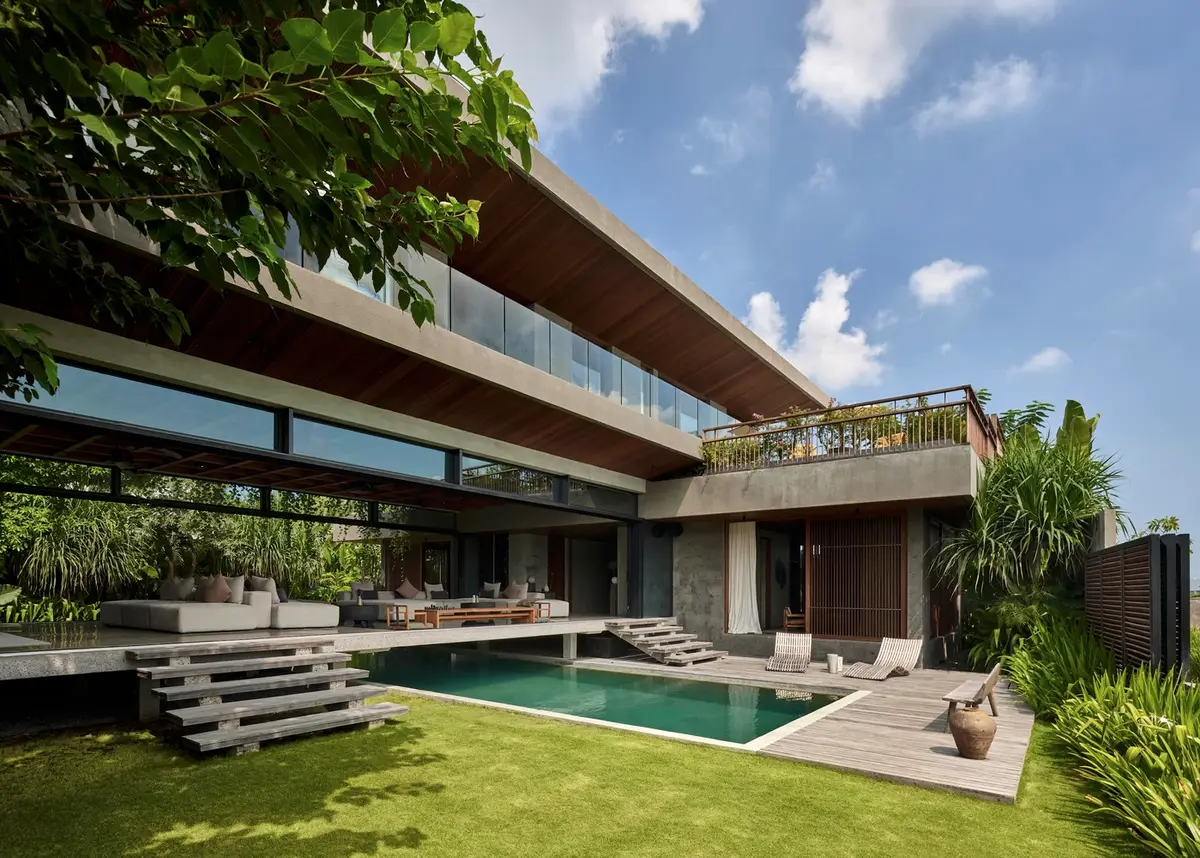
Freebird Residence by Alexis Dornier: A Tropical Modernist Sanctuary in Bali
Floating living pavilion above pool anchors H-shaped tropical villa, blending Japanese minimalism, sustainable strategies, lush landscape, and sculptural interiors.


Located in Berawa, Kecamatan Kuta Utara, Indonesia, the Freebird Residence is a 770-square-meter private villa completed in 2023 by German architectAlexis Dornier. This exceptional residential project embodies a seamless fusion of contemporary Japanese design principles and tropical modernist architecture, redefining luxury living in Bali.
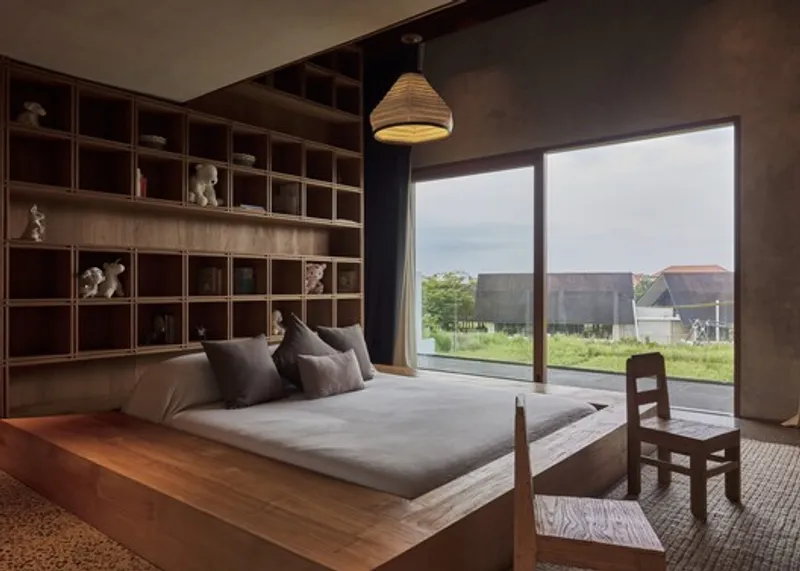
Designed as an immersive retreat, the residence reflects Dornier’s architectural philosophy of dissolving boundaries between interior and exterior spaces. The project stands as a benchmark for sustainable residential architecture in Indonesia, carefully responding to climate, context, and craftsmanship.
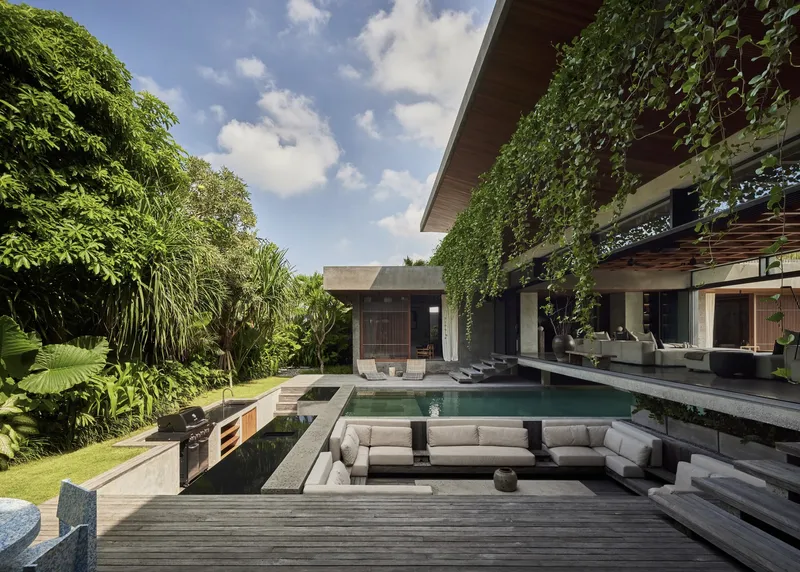

Architectural Concept: The H-Shaped Layout and Elevated Living Pavilion
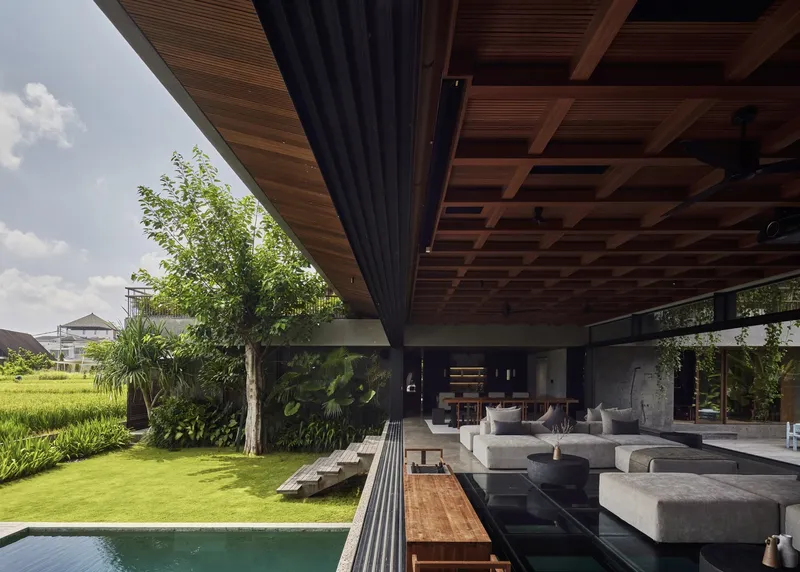
At the core of the Freebird Residence is a striking H-shaped floor plan, composed of two independent wings connected by a dramatic central living space. This elevated pavilion sits directly above the swimming pool, creating a floating effect that visually anchors the entire composition.
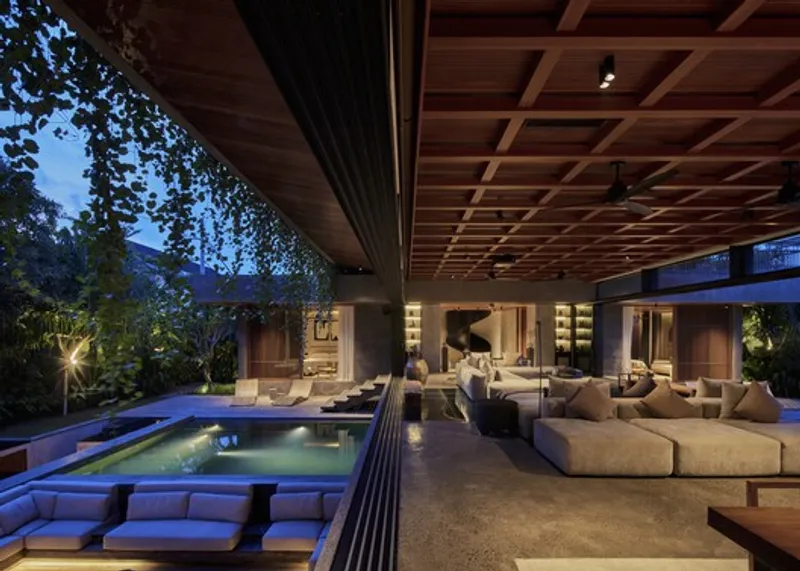
The living room features retractable glass walls, allowing it to transform into a fully open-air pavilion. This flexibility enhances cross-ventilation and maximizes natural airflow, an essential strategy in tropical architecture. A transparent glass floor introduces a bold architectural gesture, offering direct views into the pool below and reinforcing the relationship between structure, light, and water.
This spatial configuration not only strengthens visual connectivity across the property but also establishes the living area as the symbolic and functional heart of the home.

Sustainable Design and Climate-Responsive Strategies
Sustainability is central to the Freebird Residence. In collaboration with environmental engineering consultant Eco Mantra, the design team implemented advanced strategies to reduce energy consumption and minimize the villa’s carbon footprint.
Key sustainable features include passive cooling systems, deep overhangs for solar shading, cross-ventilation corridors, and strategic orientation to optimize daylight while limiting heat gain. The architecture leverages Bali’s tropical climate, reducing dependence on mechanical air conditioning systems and artificial lighting.
By combining environmental engineering with architectural innovation, the residence demonstrates how luxury villas in Bali can achieve both high performance and aesthetic refinement.
Landscape Integration and Indoor, Outdoor Living
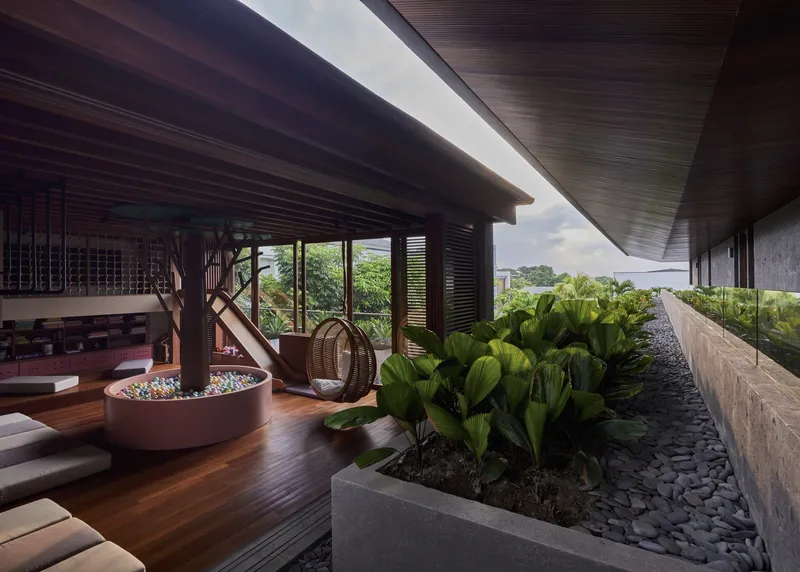
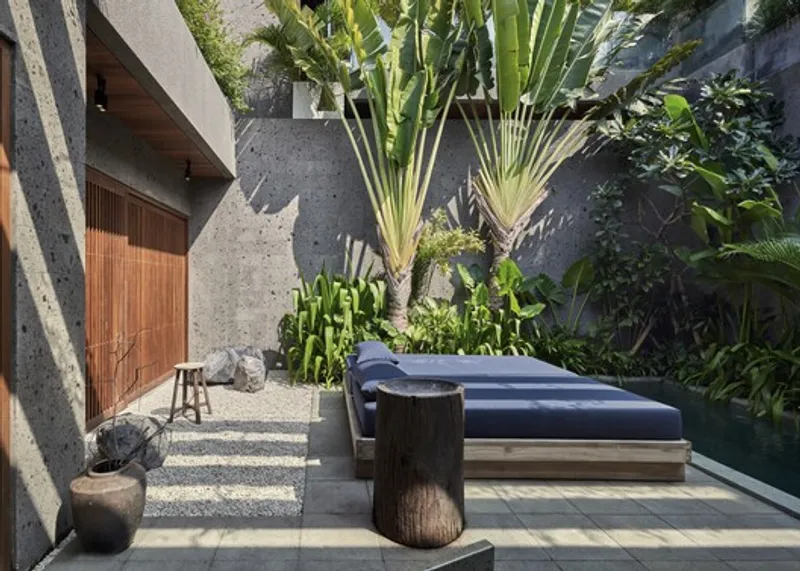
The tropical garden plays a vital role in shaping the spatial experience of the home. Designed to function as an extension of the architecture, the landscape enhances privacy, improves microclimatic conditions, and reinforces the indoor, outdoor living concept that defines contemporary Balinese villas.
The ground floor accommodates two guest bedrooms and a private gym, each oriented toward the garden to ensure direct visual and physical access to greenery. This arrangement creates a continuous dialogue between built form and natural surroundings.
A dedicated yoga pavilion, characterized by extensive glazing, strengthens the connection to nature. Its transparent envelope invites filtered daylight and garden views, fostering a tranquil atmosphere aligned with Bali’s wellness-centered lifestyle.


Materiality and Local Craftsmanship
Material selection throughout the Freebird Residence celebrates Indonesian craftsmanship and local resources. Paras Kerobokan stone walls anchor the structure in its regional context, while fluted wooden ceilings introduce warmth and textural rhythm.
Natural textiles and layered fabrics soften the architectural lines, balancing minimalism with tactile richness. Exposed beams and clean geometric forms highlight structural clarity, reinforcing the modernist language of the project.
A distinctive feature near the entrance is the expansive wine refrigerator, designed not only as a functional storage element but also as a sculptural architectural statement. Its presence contributes to thermal insulation while adding visual intrigue to the entry sequence.

Interior Design: Sculptural Simplicity and Functional Elegance
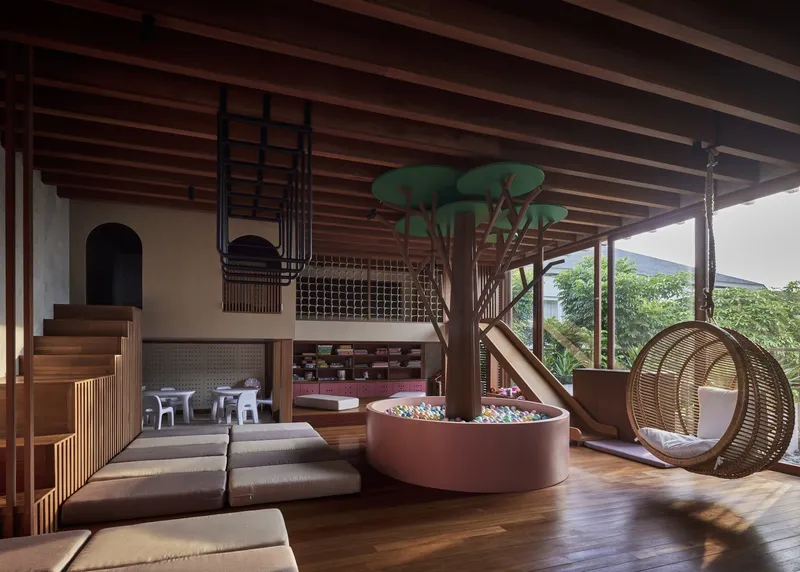
The interior design emphasizes sculptural minimalism, blending functionality with refined aesthetics. Carefully selected furniture pieces complement the architectural palette of stone, wood, and glass, creating cohesive and serene living spaces.
Each room is curated to maintain openness and spatial flow while introducing subtle layers of texture and material contrast. The result is a calm, gallery-like ambiance that enhances comfort without compromising architectural integrity.

A New Benchmark for Luxury Residential Architecture in Bali
The Freebird Residence represents a forward-thinking approach to modern villa design in Indonesia. Through its innovative H-shaped layout, elevated living pavilion, climate-responsive systems, and integration of tropical landscaping, the project establishes a new standard for sustainable luxury homes in Bali.
By harmonizing architecture with environment, material authenticity, and contemporary design language, Alexis Dornier delivers a residence that is both visionary and deeply rooted in place. The Freebird Residence is not simply a private home, it is a sophisticated model for environmentally conscious tropical living.


All photographs are works of
KIE


Popular Articles
Popular articles from the community


Singing Woman: An Opera House That Performs Before the Curtain Rises
Ovidiu Cristian Pavel's conceptual opera house translates Estonia's choral identity into a sculpted waterfront landmark facing the Baltic Sea.


ETEH Reworks the Shared Spaces of São Domingos School in Brazil Around Timber, Color and Hanging Plants
At São Domingos School in Brazil, 436 m² of hall, refectory and library are recast with timber joinery, a yellow and blue code and trailing greenery.

FCC Arquitectura Expands a Portuguese Granite House with a Board-Marked Concrete Wing
In Portugal, JV House pairs a cleaned-up whitewashed and granite dwelling with a timber-shuttered concrete extension, courtyards and a garden pool.

The Amber Palace Opera: A Geological Fiction Surfaces on Tallinn's Baltic Waterfront
Pierre Brillard reimagines a Baltic legend as a public landscape, opera house, and waterfront promenade rooted in Tallinn's coastal identity.

Similar Reads
You might also enjoy these articles

Cube Design Draws an Ecological Corridor Between Two Shenzhen Hills with the Nankai Building
Beside Shenzhen's container docks, the Nankai Building pairs stacked balconies with a climbing green screen to connect two hillsides across its height.

Praksis A and Studio Sted Bend a Red Timber Cabin Across the Granite of Norway's Southern Coast
On the southern Norwegian coast, a 105 m² cabin follows the rock on slender posts, pairing red cladding outside with pine, brick and plywood within.

David Ortega Stacks a Two-Story Mexico City Penthouse Around a Steel Stair and a Pergola-Shaded Roof Terrace
In Colonia Roma, a 300 m² penthouse uses oak joinery, a planted steel stair and a slatted roof pergola to make a new-build apartment feel like a house.

PARALELA and LB2 Thread a Public Walkway Through the Base of a Las Condes Residential Tower
In Las Condes, Santiago, the Hamlet Building gives its fenceless ground floor to a 70-metre wooded passage linking two streets and the metro.

Explore Housing Competitions
Discover active competitions in this discipline

Challenge to reimagine the Iron Throne

Photograph architecture without architects

Illustrate the lost glory of Angkor Wat - Render Challenge

Design challenge to reuse E-waste
Comments (0)
Please login or sign up to add comments
No comments yet. Be the first to comment!