

Sandy Liang Store Design by Almost Studio: A Playful Fusion of Fashion and Architecture
This article explores Almost Studio's design of Sandy Liang's flagship store, blending fashion, architecture, and personal history into a cohesive retail experience.


The Sandy Liang flagship store, designed by Brooklyn-based Almost Studio, is an architectural masterpiece that reflects the ethos of the designer's playful and process-driven fashion line. Situated in Chinatown/Lower East Side, New York, this 1,500-square-foot boutique integrates personal history, industrial aesthetics, and whimsical design. The project, a collaboration between Sandy Liang and Almost Studio, transforms a former laundromat into a vibrant retail space that embodies Liang’s roots and creative vision.


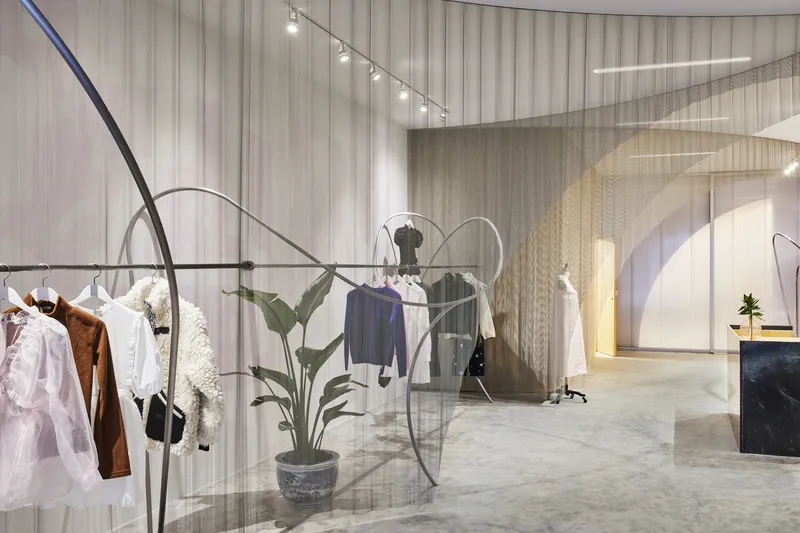
Transforming a Historic Neighborhood Space
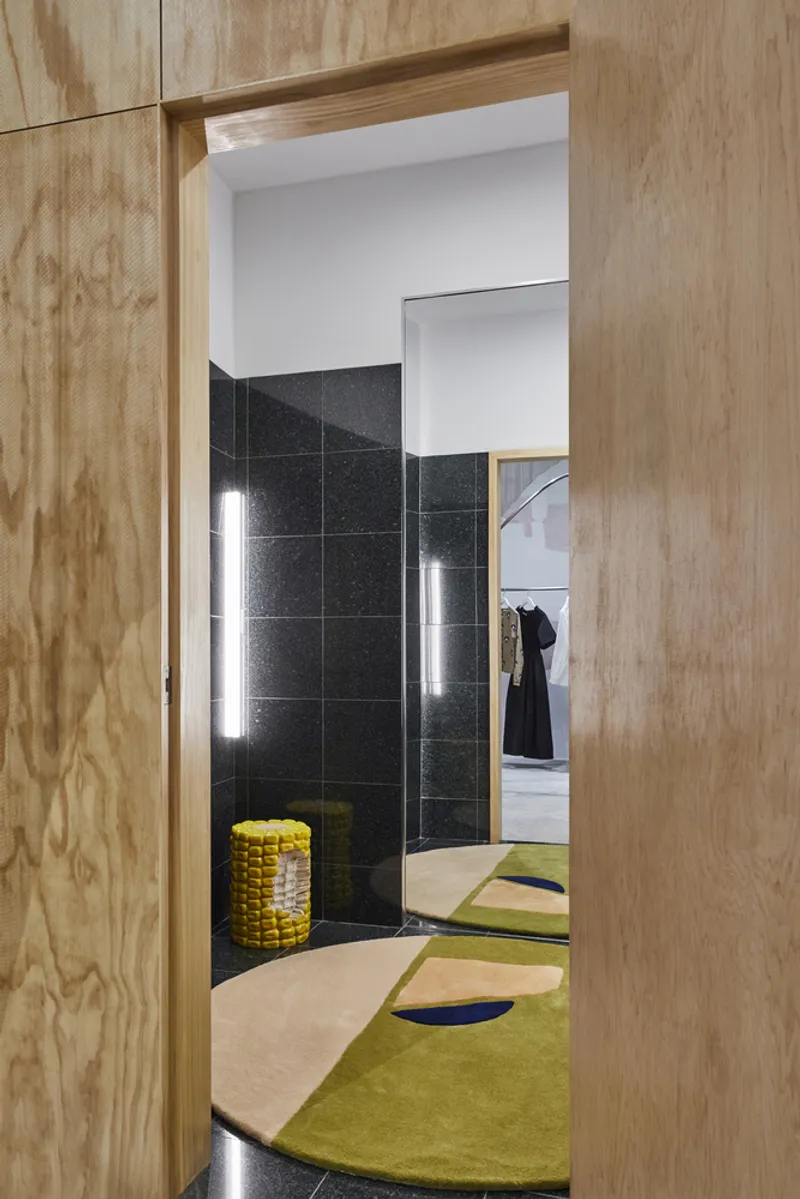
The store occupies the ground floor of a five-story brick building constructed in 1900. Previously a laundromat, the space was repurposed to align with Liang's vision and Almost Studio's first foray into retail design. The firm removed all remnants of the laundromat, including appliances and low tile platforms, to create an open, rectangular layout. The industrial surroundings of Chinatown inspired the design, while the close ties between Liang's family and the neighborhood added an emotional depth to the project.

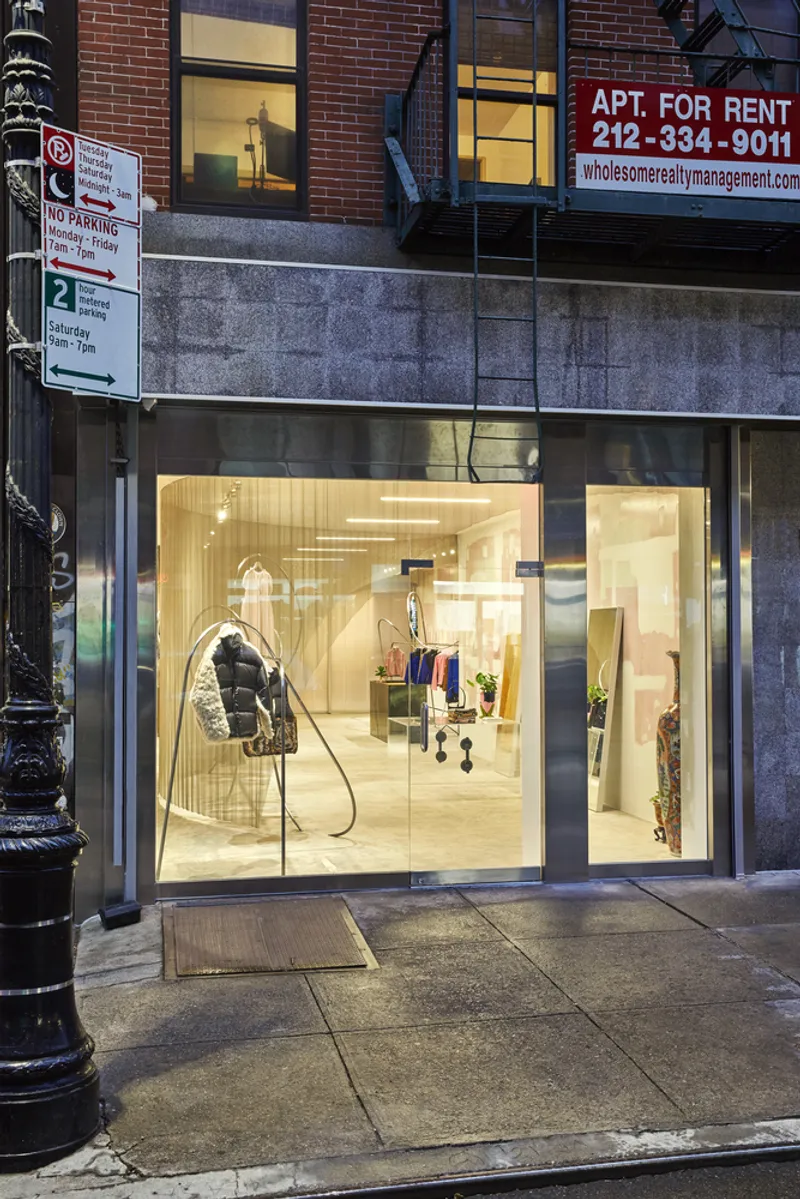
A Linear and Layered Spatial Logic
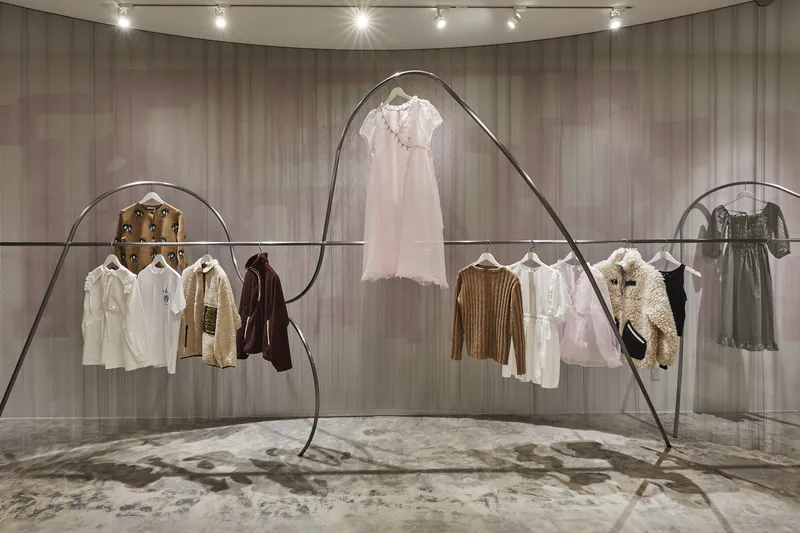
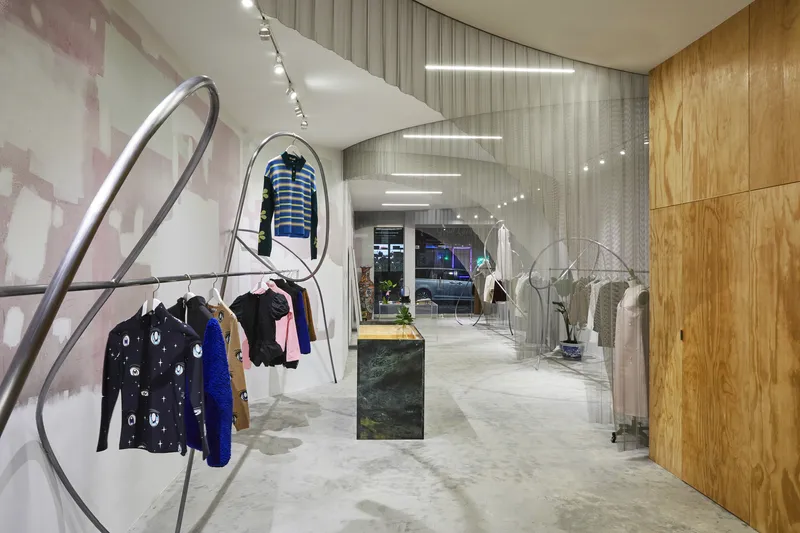
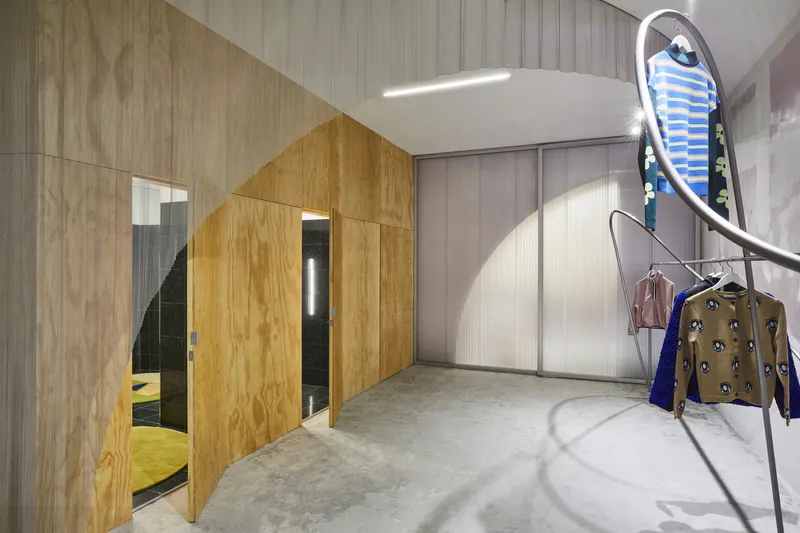
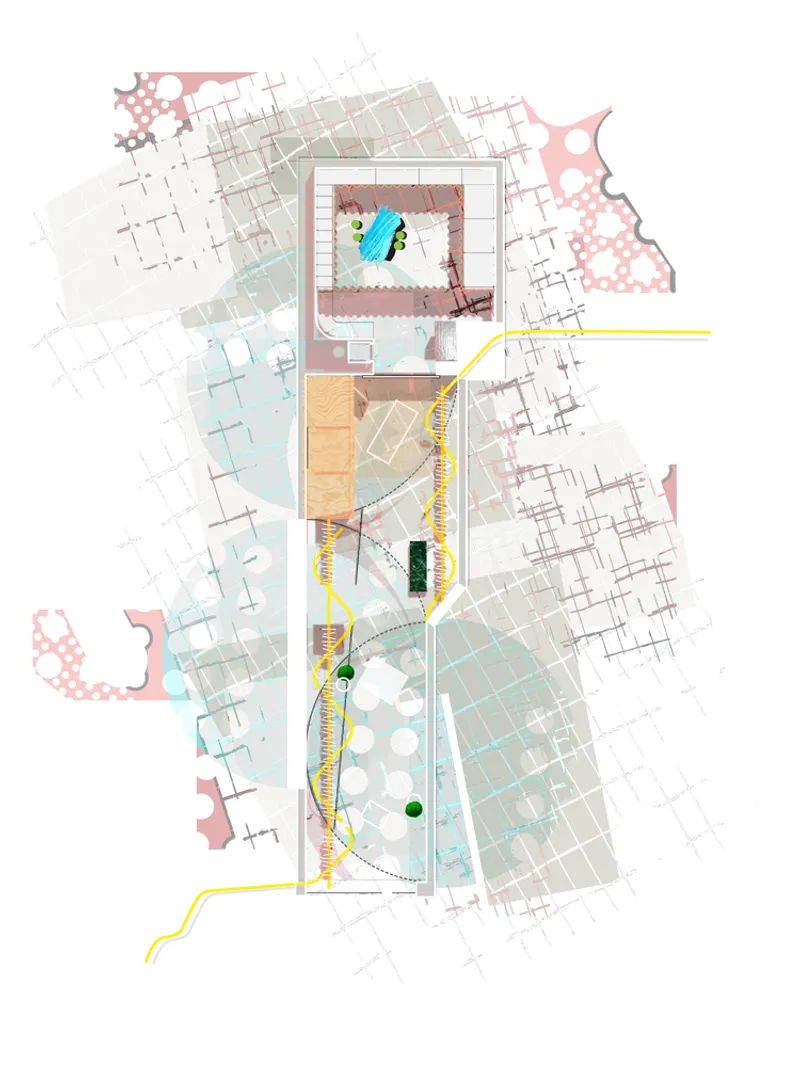
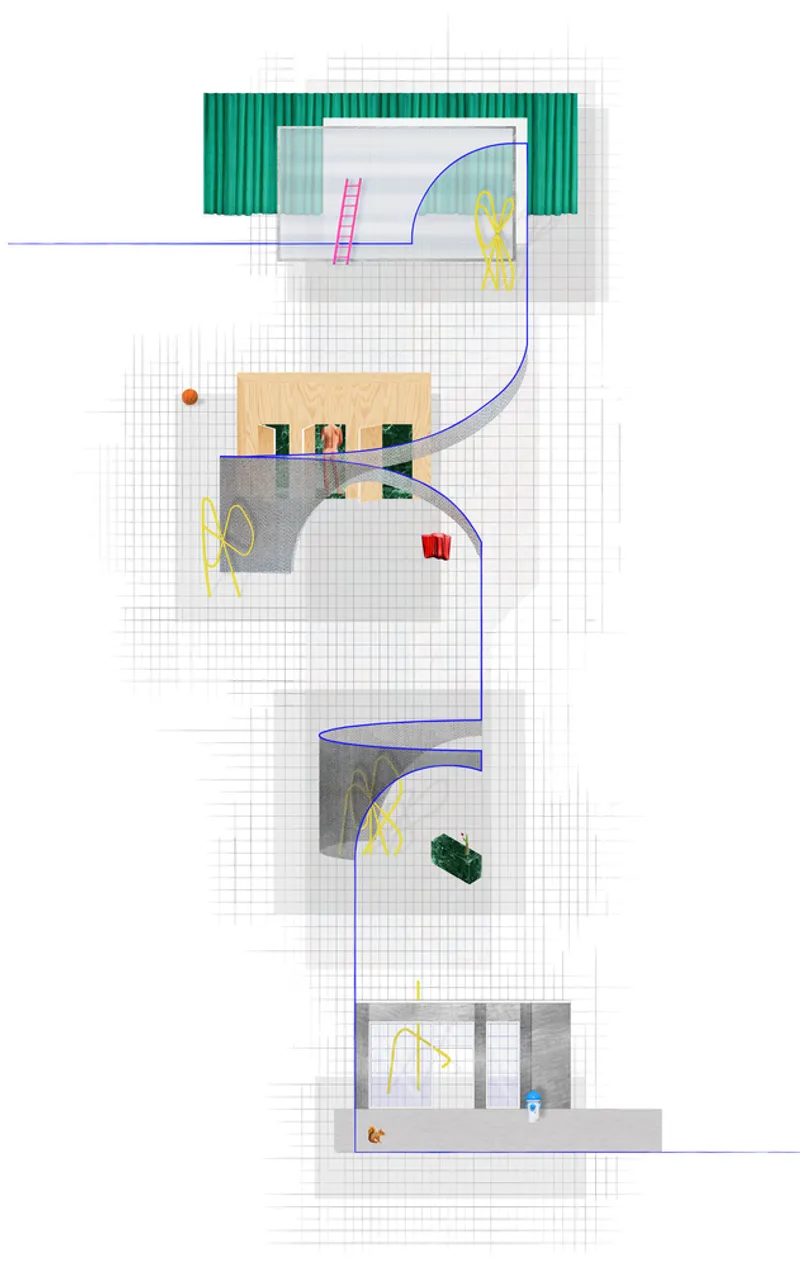
The design challenge was to create a cohesive yet segmented space within the narrow, irregular layout. Almost Studio approached this by implementing a spatial organization resembling a "stage set with overlapping backdrops." The linear layout transitions seamlessly through different zones, including shopping areas, dressing rooms, a point of sale, and back-of-house spaces. This layered approach introduces a sense of depth while maintaining functional clarity.


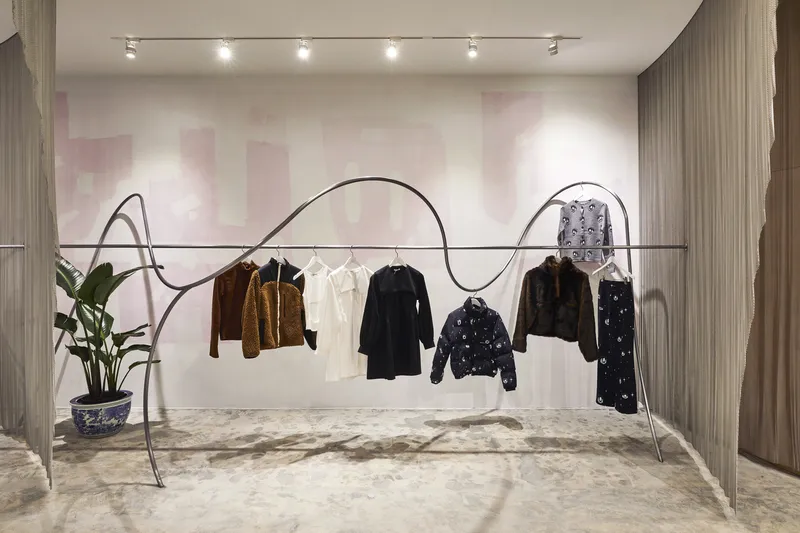
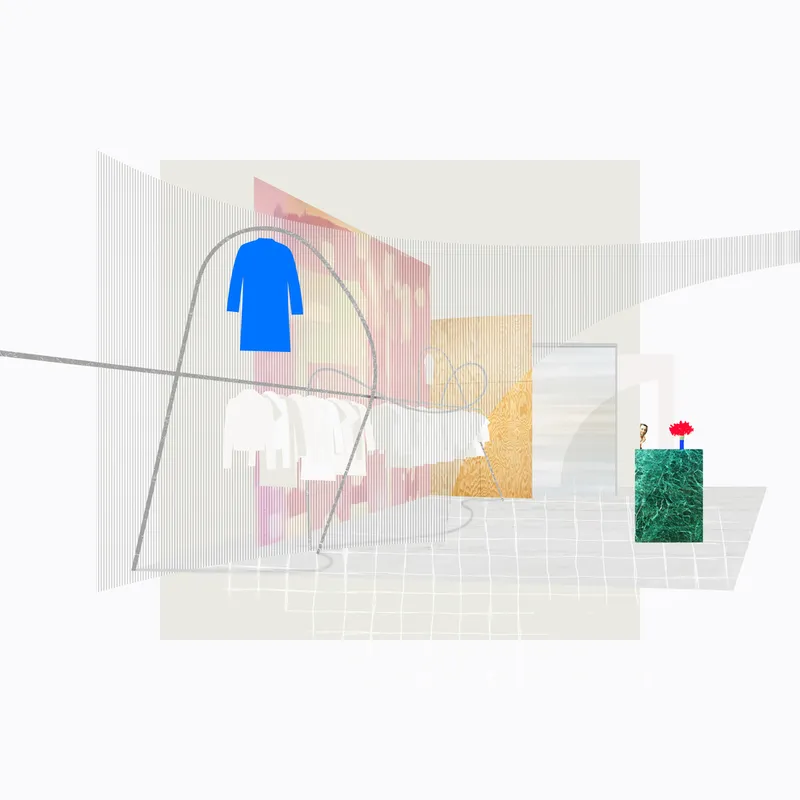
Distinctive steel clothing rods, reminiscent of laundromat conveyors and playground jungle gyms, form the backbone of the display system. These rods blend industrial rawness with playful curves, mirroring Liang's fashion aesthetic. Metal mesh curtains divide the shopping area into three segments while maintaining transparency, creating an interplay of openness and enclosure.
Materials That Tell a Story
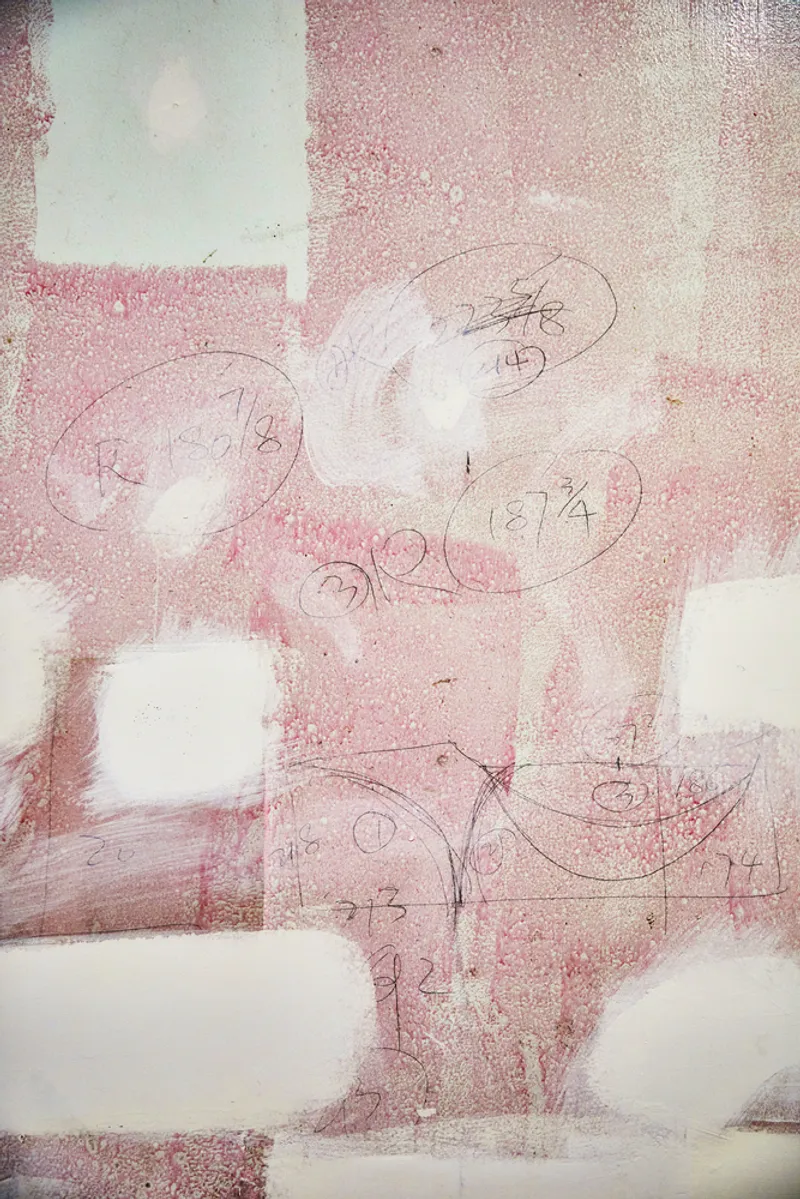
Material choices throughout the boutique emphasize contrast, combining raw and refined textures. The walls in the shopping area retain visible construction marks over pink primer, a nod to the unfinished, ever-evolving nature of both fashion and architecture. These design elements reflect Liang's clothing, where exposed hardware transforms utility into decoration.
At the rear, the dressing rooms and point-of-sale areas feature luxurious green marble and raw plywood, evoking Liang's upbringing and family heritage. The bold use of materials connects the store’s design to personal memories, blending the industrial with the intimate.
The Private Spaces: A Balance of Utility and Aesthetics
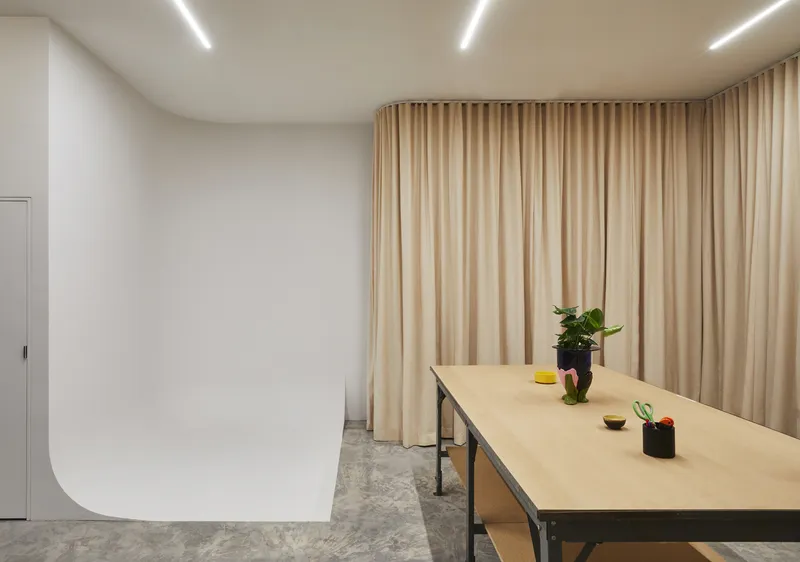
The back-of-house areas continue the balance between industrial functionality and aesthetic playfulness. A sliding polycarbonate door separates the public shopping area from the private kitchen and office. Stainless steel cabinetry in the kitchenette echoes Chinatown's restaurant kitchens, while canvas curtains soften and delineate the office space.


The design incorporates a cylindrical stainless steel "sleeve," adding a futuristic edge to the functional elements. These private areas are thoughtfully designed to serve both operational needs and aesthetic continuity, ensuring the boutique’s rear spaces complement its front-facing design.
A Process-Driven Philosophy
Almost Studio’s philosophy, where the built environment is seen as "always in process," shines through in the Sandy Liang store. The boutique embodies an ongoing narrative, integrating references from laundromats, construction sites, and industrial kitchens into its aesthetic. The play between high and low materials reflects a shared design language between Almost Studio and Sandy Liang, celebrating imperfections as part of the creative process.

The Sandy Liang flagship store is a testament to the harmonious blend of architecture and fashion. Designed with a deep connection to the designer's heritage, the boutique showcases a dynamic interplay of materials, spatial layers, and personal history. Almost Studio's innovative approach redefines retail spaces as platforms for storytelling, transforming the act of shopping into an immersive cultural and aesthetic experience.
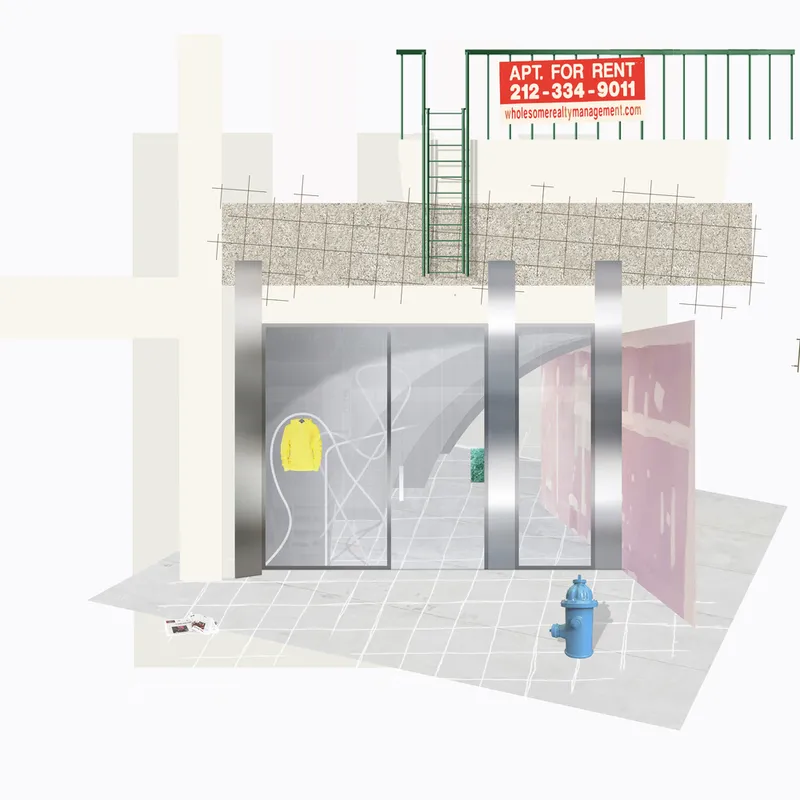

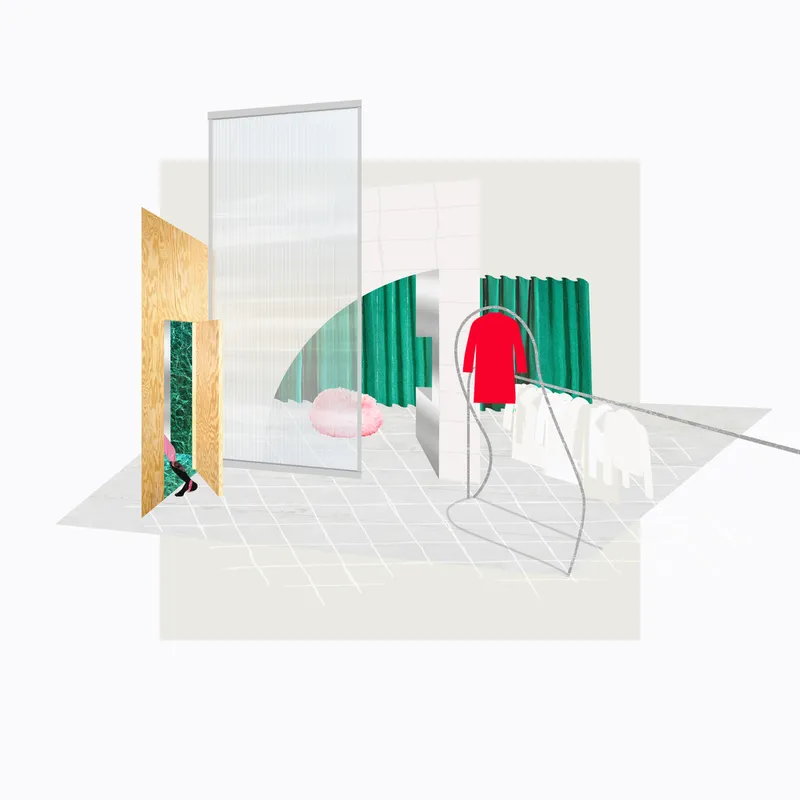
All Photographs are work of Jonathan Hokklo


Popular Articles
Popular articles from the community


Juan García Correa, John González and Claudia Rueda Sink a Circular Amphitheater into a Manizales Engineering Building
On the La Nubia campus in Manizales, Colombia, the S1 Building folds labs and offices into a hillside of ramped lawns that double as a campus route.

David Ortega Stacks a Two-Story Mexico City Penthouse Around a Steel Stair and a Pergola-Shaded Roof Terrace
In Colonia Roma, a 300 m² penthouse uses oak joinery, a planted steel stair and a slatted roof pergola to make a new-build apartment feel like a house.

ETEH Reworks the Shared Spaces of São Domingos School in Brazil Around Timber, Color and Hanging Plants
At São Domingos School in Brazil, 436 m² of hall, refectory and library are recast with timber joinery, a yellow and blue code and trailing greenery.


Singing Woman: An Opera House That Performs Before the Curtain Rises
Ovidiu Cristian Pavel's conceptual opera house translates Estonia's choral identity into a sculpted waterfront landmark facing the Baltic Sea.

Similar Reads
You might also enjoy these articles


Hodi-Mandai Geram
Project Function: Preservation and revitalization of the Intangible heritage and socio-spatial identity of the Hodi by Housing, Cultural Memory Center, Sacred Grove, landscape, local tourism economy


Olio Towers: A Mid-Rise for Performers That Fuses Housing, Rehearsal, and Stage
Located blocks from Houston's Theater District, this modular tower stacks living units around a central performance atrium.

Oasis: Modular Green Housing Carved into Dhaka's Urban Fabric
A shortlisted Plugin Housing entry reclaims unauthorized settlements in Dhaka with stepped concrete volumes, green roofs, and ventilation-driven design.

Black Hole: A Floating Megastructure for the Post-Physical Era
Emiliano Mazzarotto envisions a spherical, self-scaling arena where e-sports, digital hotels, and holographic stadiums replace traditional public space.

Explore Architecture Competitions
Discover active competitions in this discipline

Challenge to reimagine the Iron Throne

Photograph architecture without architects

Illustrate the lost glory of Angkor Wat - Render Challenge

Design challenge to reuse E-waste
Comments (0)
Please login or sign up to add comments
No comments yet. Be the first to comment!