
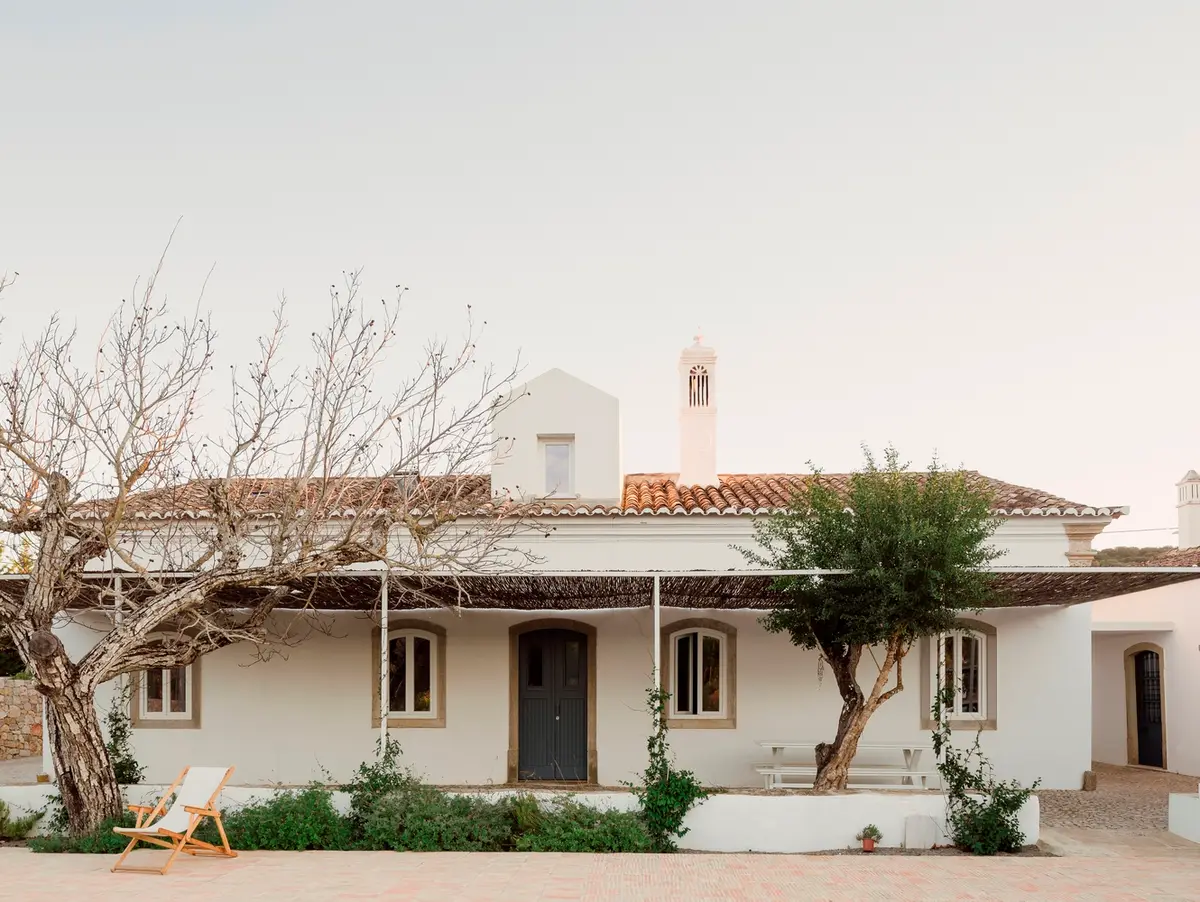
São Romão House by SAMF Arquitectos: A Contemporary Revival of Algarve’s Vernacular Heritage
São Romão House blends Algarve’s vernacular charm with contemporary design through thoughtful renovation, natural materials, and geometric clarity.


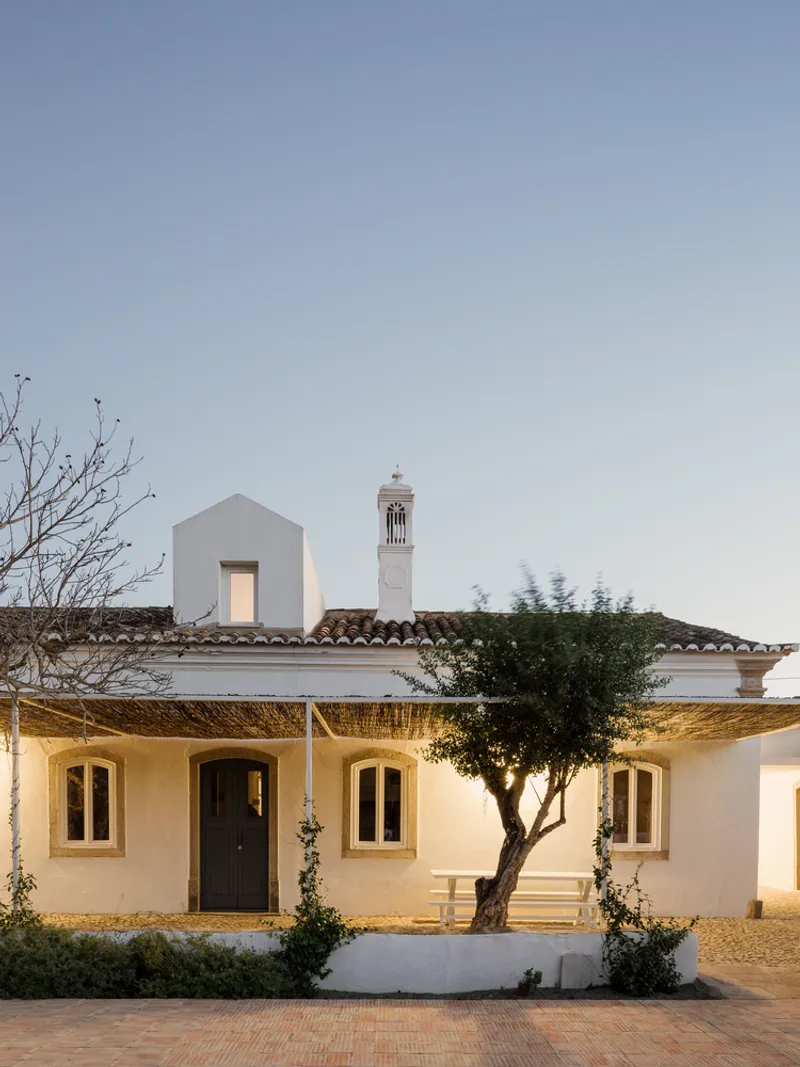
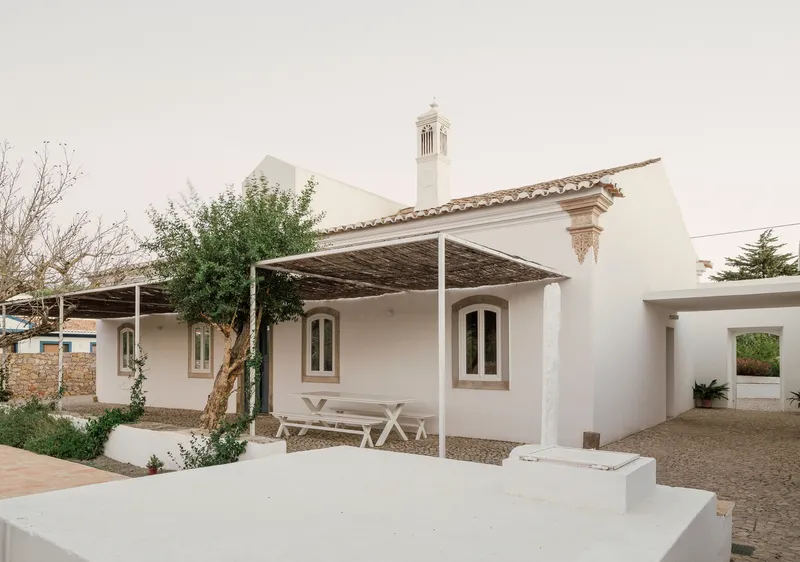
Located in the heart of Portugal’s Barrocal region in the Algarve, São Romão House by SAMF Arquitectos is a meticulous renovation and expansion project that merges traditional Portuguese architecture with contemporary spatial clarity. Originally built over a century ago, this 315 m² farmhouse stands as a testament to the enduring simplicity of regional design while adapting to the evolving needs of modern living.
Contextual Grounding: A Home Between Orchard and Hillside
Nestled between the Atlantic coast and the Caldeirão mountain range, the site lies in a semi-rural, agriculturally rich region known for citrus, almond, and fig cultivation. The original structure—typical of southern Portugal’s rural vernacular—features a long, gabled roof with shallow slopes and repetitive modular divisions. The house faces the main road to the south while opening up to expansive agricultural land to the north, blending seamlessly into the local topography.
The client, who was born in this very house, envisioned it as a multigenerational retreat—a space to alternate between urban life in Lisbon and peaceful family gatherings in the countryside.
Design Approach: Restoring Essence, Reimagining Use
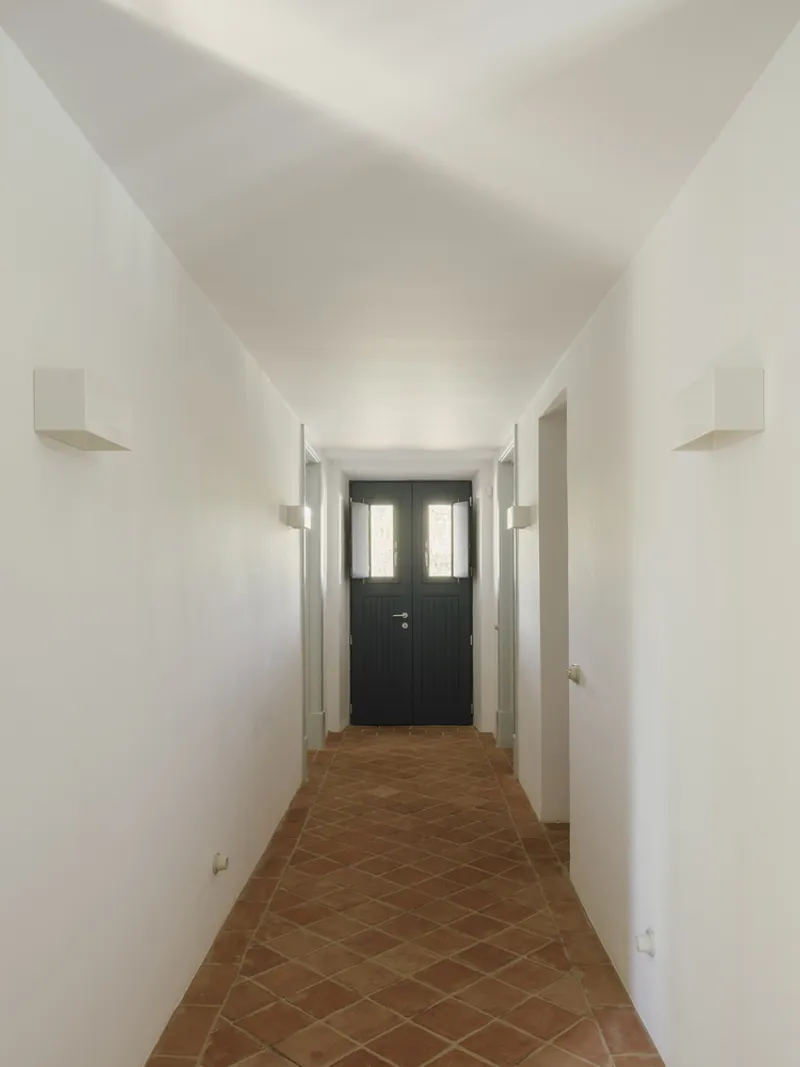
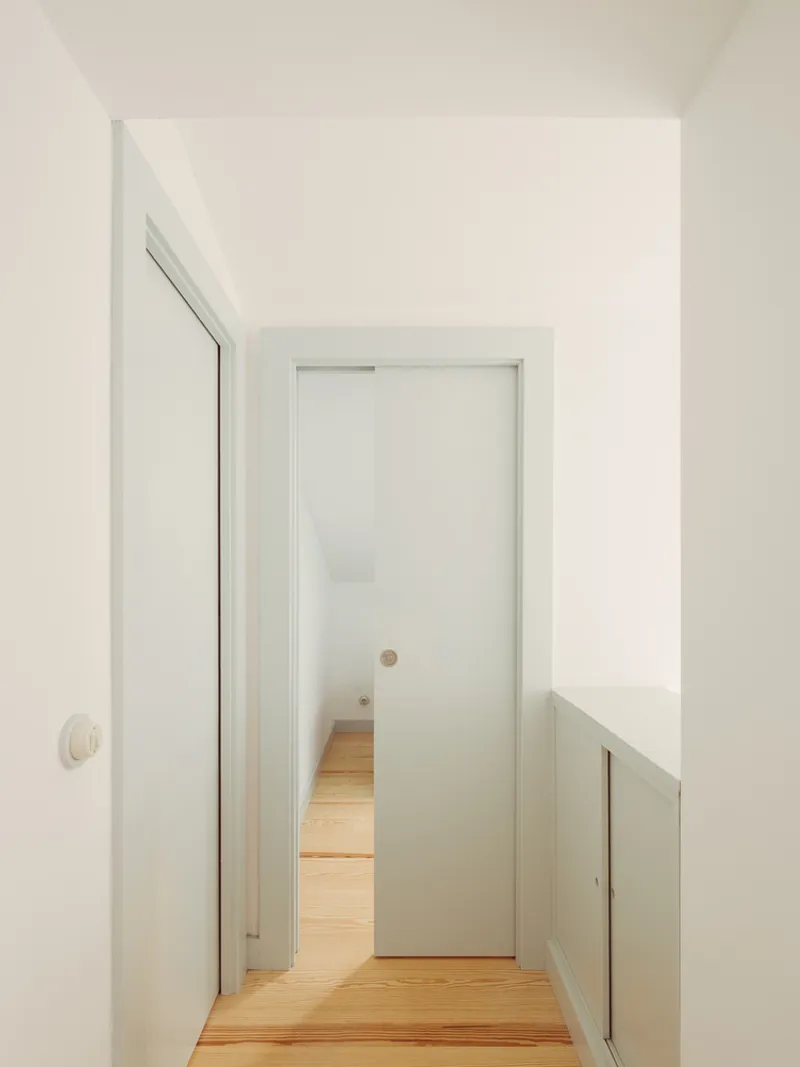
SAMF Arquitectos, led by Sara Antunes and Mário Ferreira, approached the project with restraint and precision. Their intervention stripped away haphazard partitions and accretions accumulated over decades, unveiling the home’s elemental spatial structure. The central axial corridor—hallmark of this typology—was preserved and enhanced with longitudinal connections to new bathrooms and a redefined upper floor.
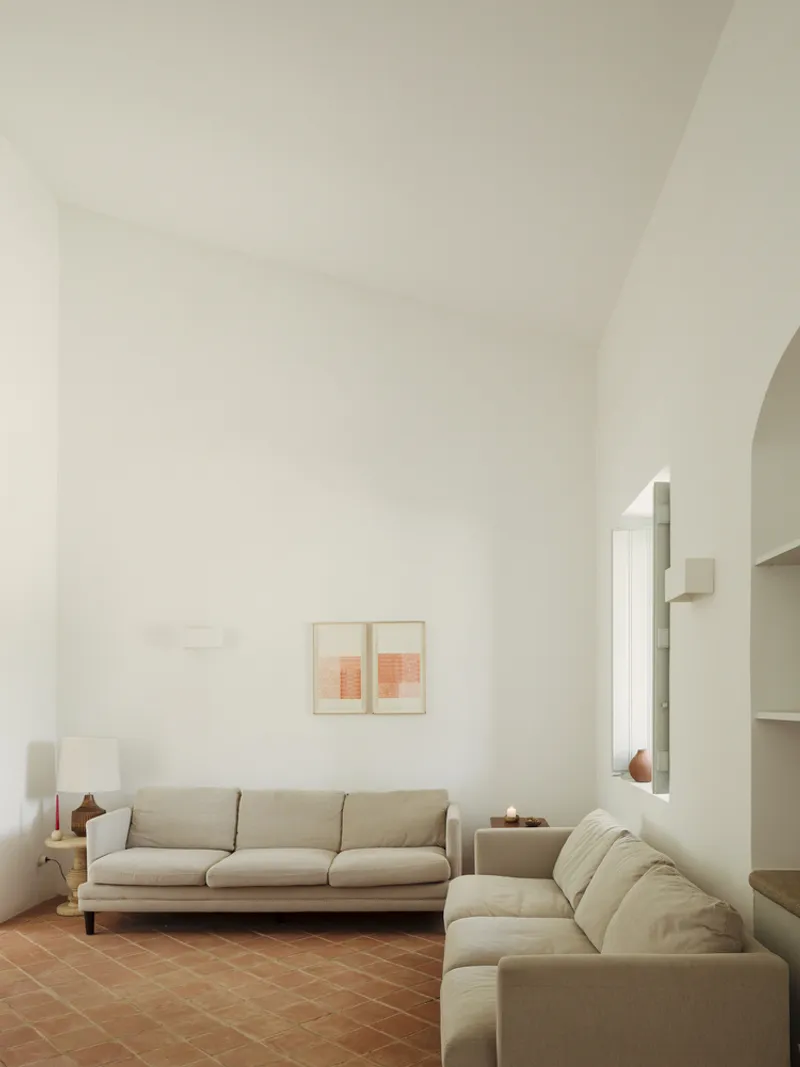
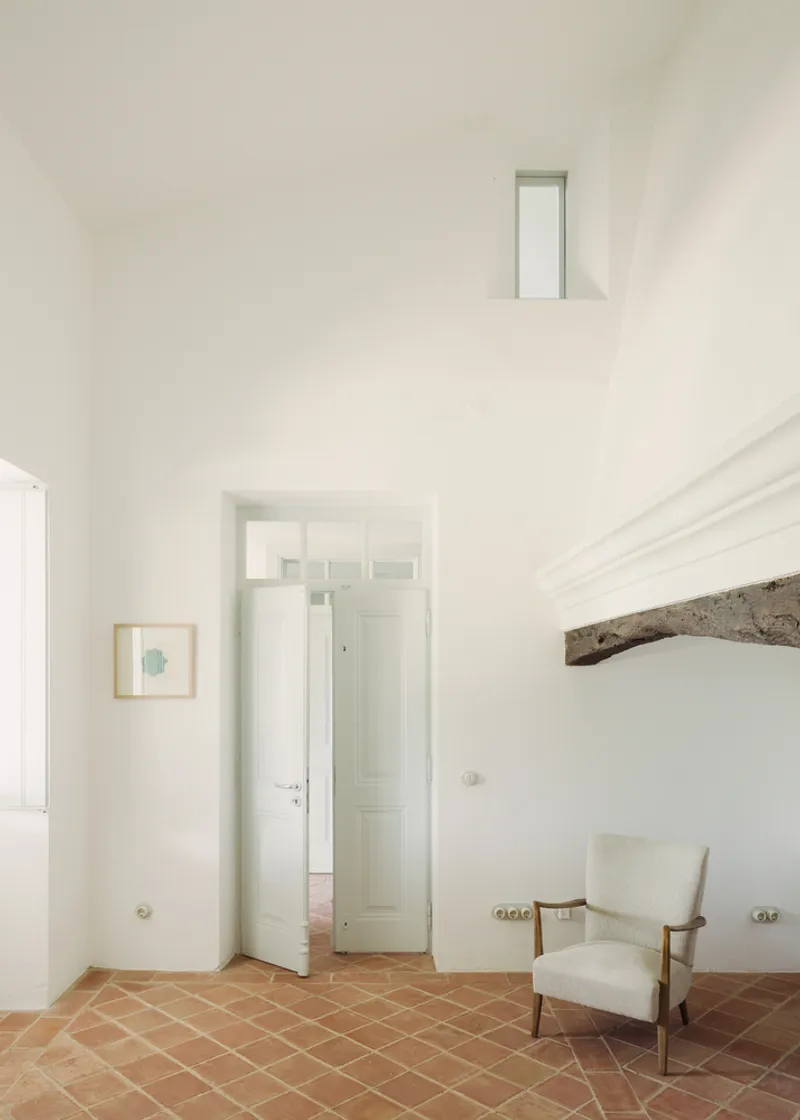
One of the most transformative gestures was the conversion of the chimney room into a double-height living space, establishing a visual link between floors with a new high-set window that frames natural light at the end of the interior promenade.
Fluid Circulation and Social Connectivity
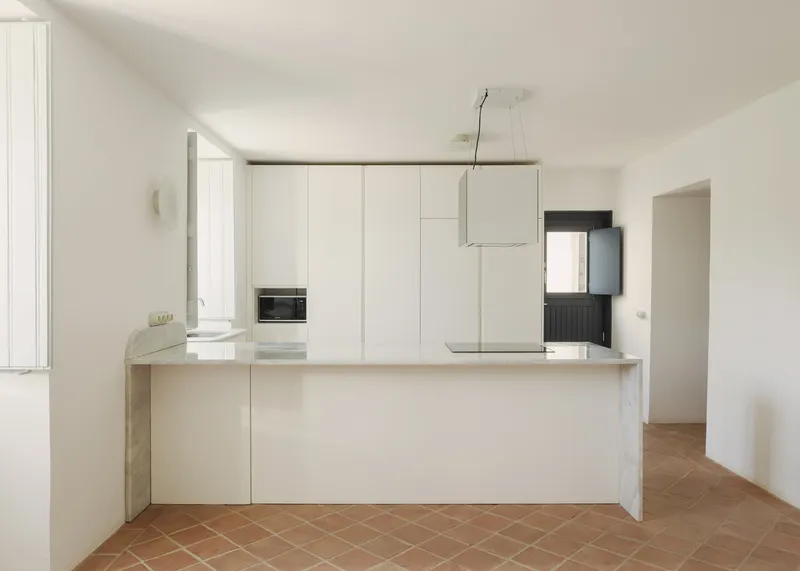
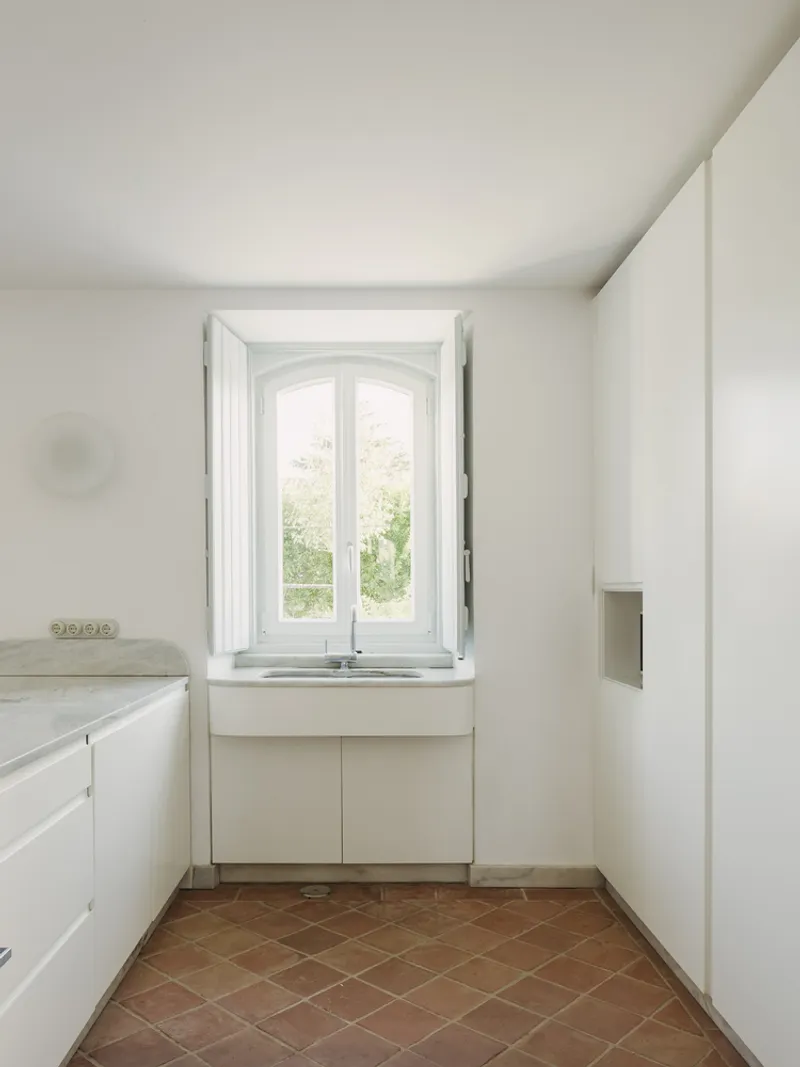
Strategic openings in the structural longitudinal wall allow fluid movement between kitchen, living, and dining spaces, creating a circular flow ideal for social use. A side access to the kitchen through a newly connected volume improves functional circulation, while also reinforcing the formal unity of old and new.
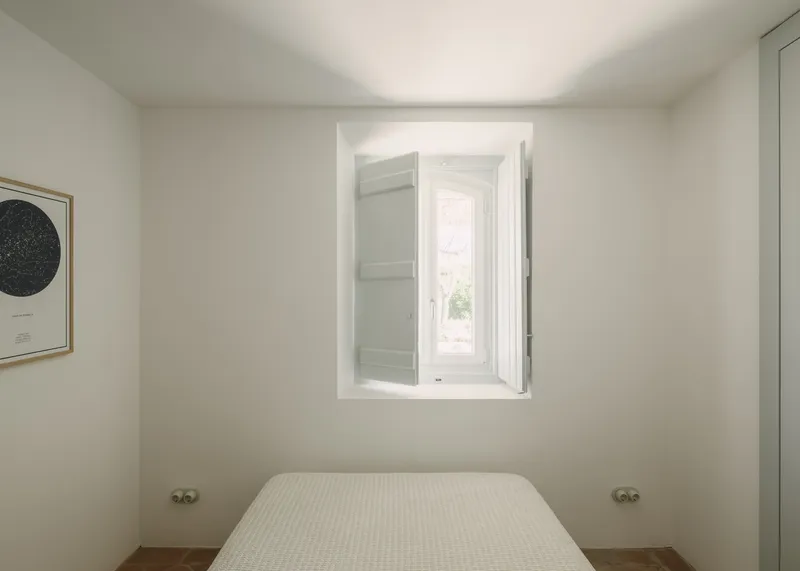
On the upper floor, once a humble storage loft accessible only from outside, new bedrooms were introduced along a corridor that terminates in a light-filled lounge beneath a sweeping gable dormer. This upper-level intervention subtly contrasts with the more cellular ground floor, balancing privacy with communal life.
Outdoor Living and Material Integrity
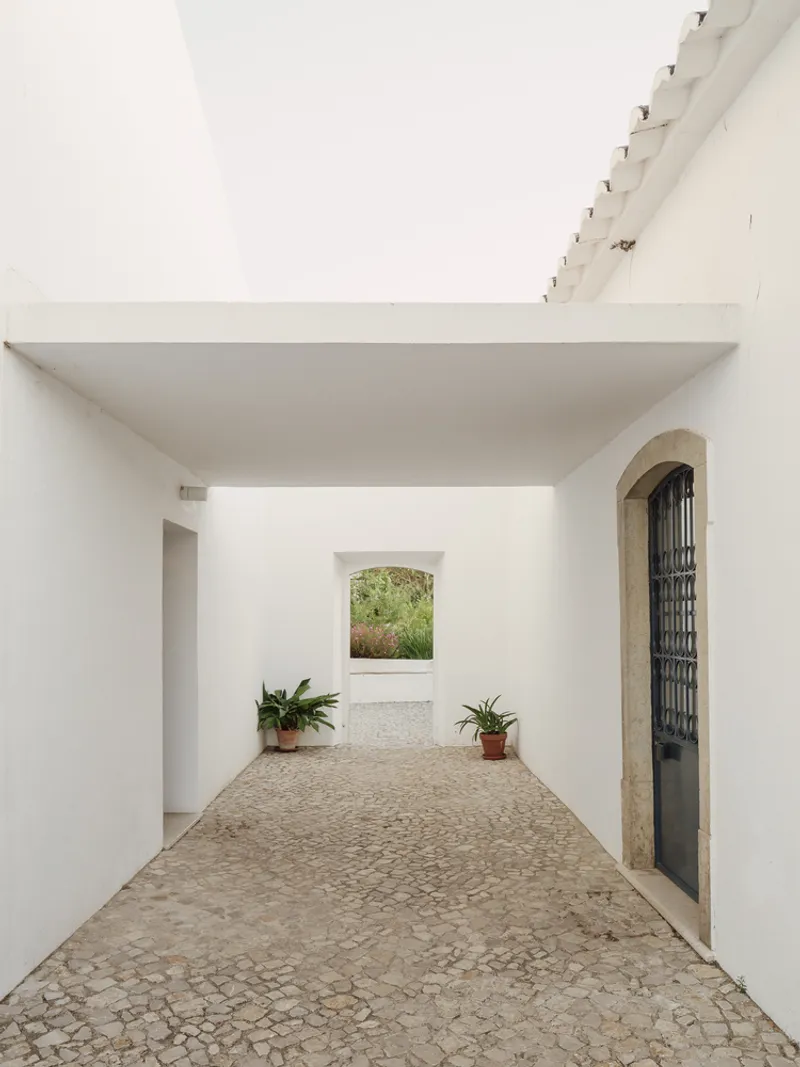
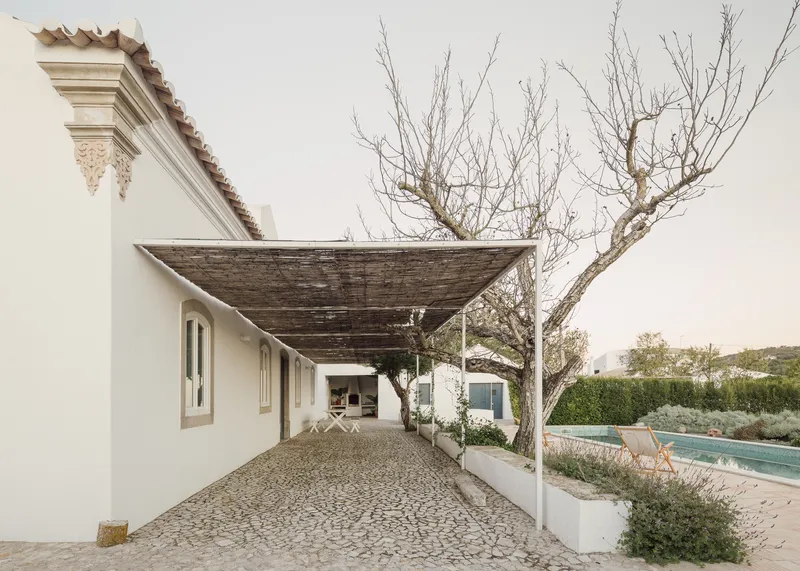
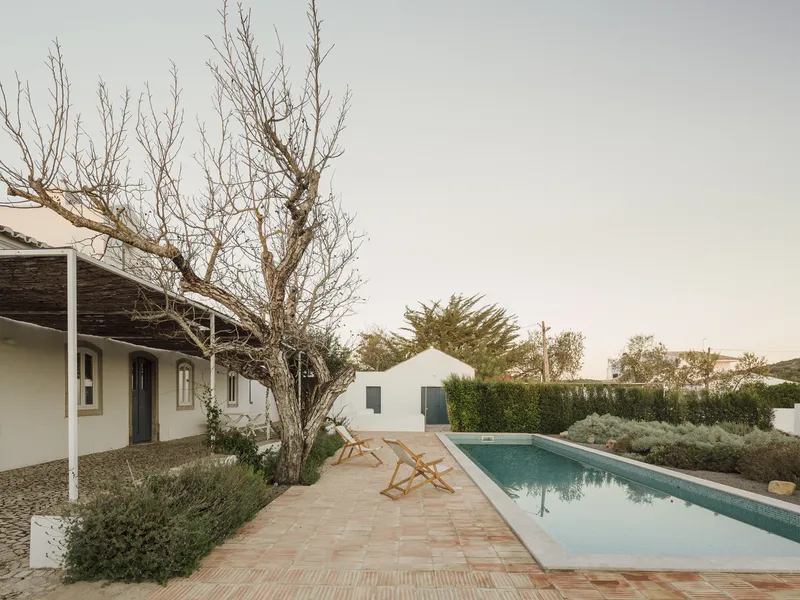
In response to Algarve’s climate and outdoor culture, generous pergolas were introduced on the north façade and carport, offering shaded spaces for relaxation and dining. A swimming pool at the edge of the house completes the rural haven experience.
The material palette draws from local building traditions: terracotta tiles for flooring and roofing, white stucco walls, pine wood for the lightweight upper construction, and distinctive light blue carpentry—darker on the exterior—for windows and doors. The choice of materials emphasizes tactility, natural aging, and regional authenticity.
Architectural Poetics: Light, Geometry, and Moorish Echoes
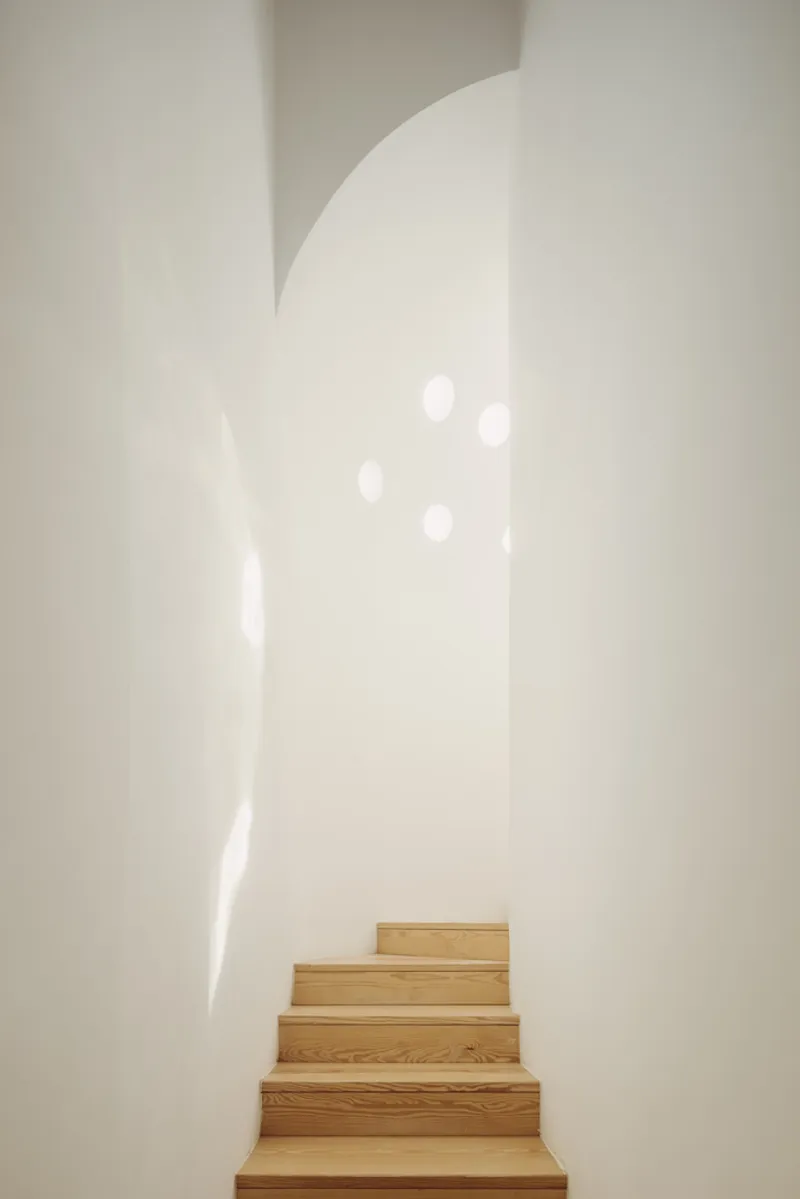
This architectural language resonates with the Mediterranean tradition of geometric whitewashed volumes, a style famously admired by Le Corbusier. The renovation enhances the play of light and shadow on the minimalist forms—most notably in the new sculptural staircase, which draws on Moorish architectural influence. It features a cupola pierced with small solid glass oculi, arranged in a geometric pattern, casting animated light effects throughout the day.
This intervention not only pays homage to the cultural and climatic logic of Algarve’s architecture but also reinterprets it for contemporary life—balancing the poetic with the pragmatic, and the historical with the modern.
All Photographs are works of Hugo Santos Silva


Popular Articles
Popular articles from the community


ALGAL REALM: A Bio-Integrated Lunar Habitat Design for Life Beyond Earth
ALGAL REALM reimagines lunar habitat design with algae-powered life support, 3D-printed regolith, and vertical living for a lunar future.

Co-life: Sustainable Architecture for Age-Friendly Community Living
Co-life reimagines sustainable architecture for seniors through courtyards, rammed earth, shared gardens, and spaces designed for belonging.

The Musturak Paradise: Senior Living Architecture for a Connected Future in Temara, Morocco
The Musturak Paradise reimagines senior living architecture in Temara via private homes, social spaces, culture, community, and shared care.

Co-Life: Senior Housing Design That Reconnects Older Adults With the City
Co-Life reimagines senior housing design through healing gardens, shared streets, workshops, and a sustainable community across generations.

Similar Reads
You might also enjoy these articles


Hodi-Mandai Geram
Project Function: Preservation and revitalization of the Intangible heritage and socio-spatial identity of the Hodi by Housing, Cultural Memory Center, Sacred Grove, landscape, local tourism economy


Olio Towers: A Mid-Rise for Performers That Fuses Housing, Rehearsal, and Stage
Located blocks from Houston's Theater District, this modular tower stacks living units around a central performance atrium.

Oasis: Modular Green Housing Carved into Dhaka's Urban Fabric
A shortlisted Plugin Housing entry reclaims unauthorized settlements in Dhaka with stepped concrete volumes, green roofs, and ventilation-driven design.

Black Hole: A Floating Megastructure for the Post-Physical Era
Emiliano Mazzarotto envisions a spherical, self-scaling arena where e-sports, digital hotels, and holographic stadiums replace traditional public space.

Explore Romanian Architecture Competitions
Discover active competitions in this discipline

Challenge to reimagine the Iron Throne

Photograph architecture without architects

Illustrate the lost glory of Angkor Wat - Render Challenge

Design challenge to reuse E-waste
Comments (0)
Please login or sign up to add comments
No comments yet. Be the first to comment!