
Sepand House of Culture and Art Renovation by Mohammadreza Samavati and Maryam Karimian
A mid-century Tehran villa transformed into a cultural hub, where courtyard architecture and adaptive reuse reconnect memory, community, and contemporary life.


Located in Tehran, Sepand House of Culture and Art is the careful regeneration of a mid-20th-century residence into a contemporary cultural platform. Originally designed in the 1960s by Dr. Paknia as both a home and medical office for cardiologist Dr. Esmaeilzadeh, the building has transitioned from a space of physical healing to one of cultural exchange and collective life.
From Private Residence to Public Culture
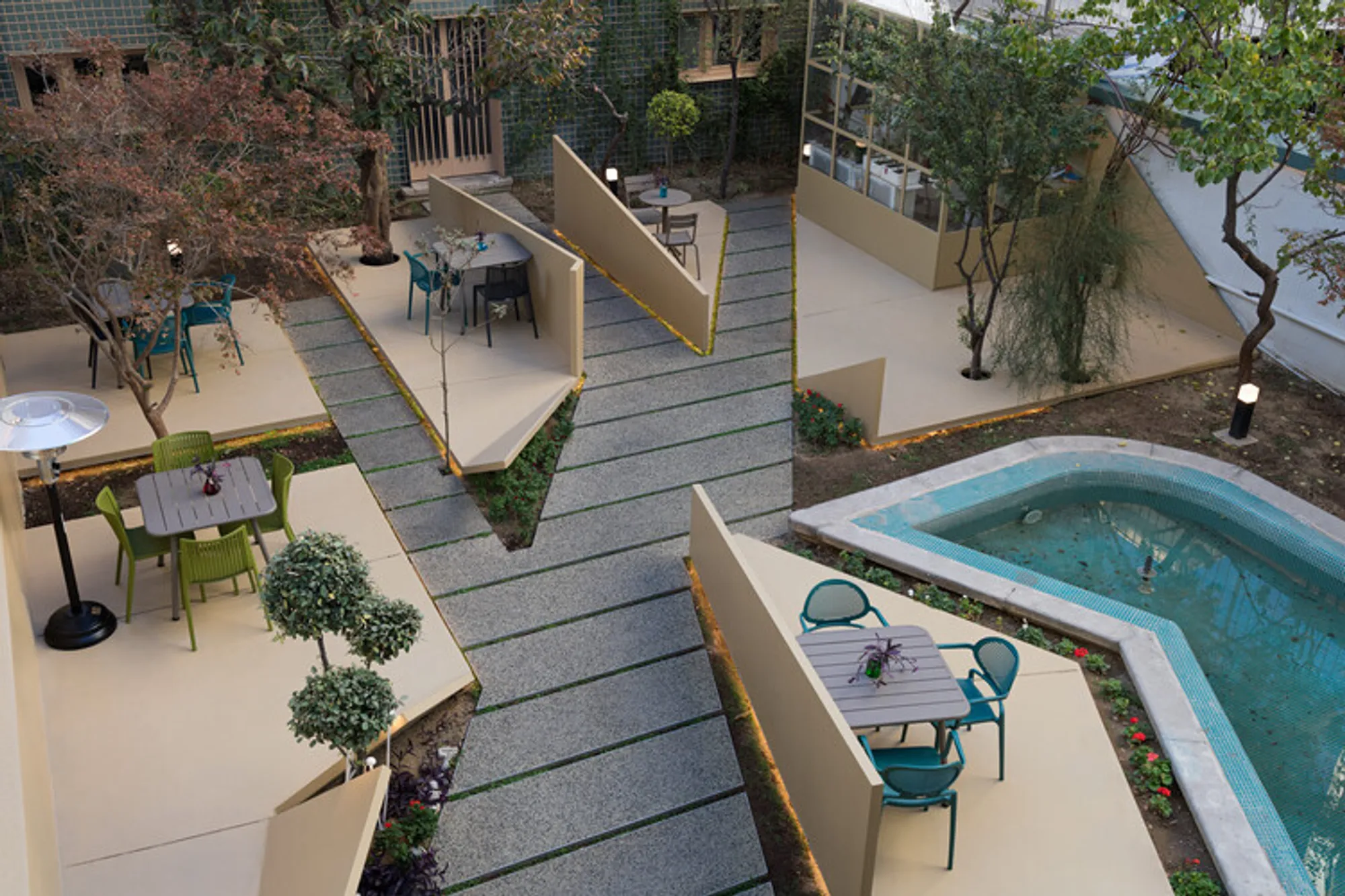
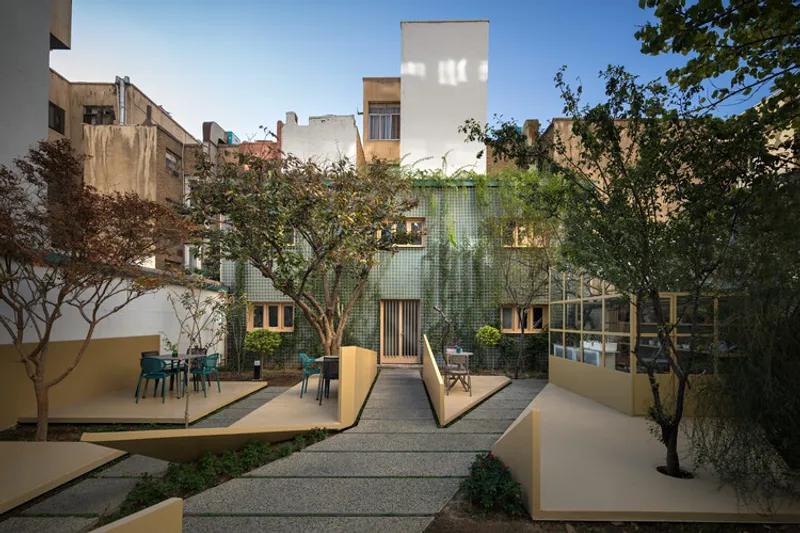
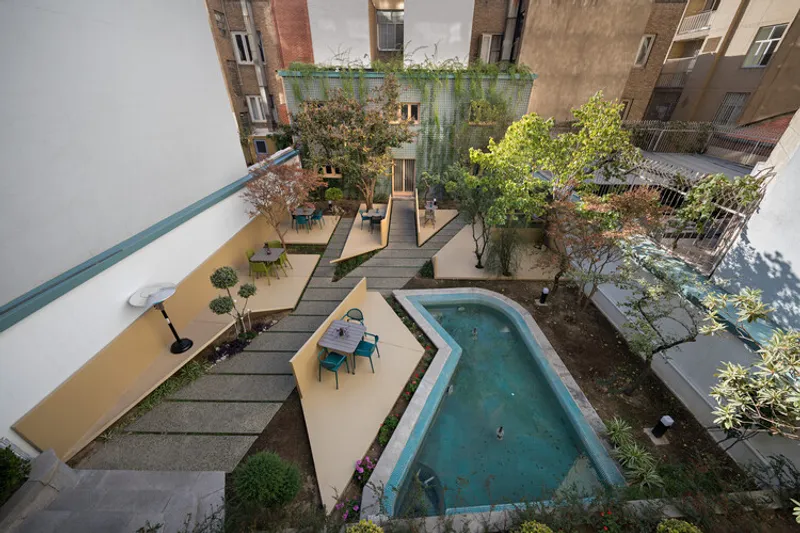
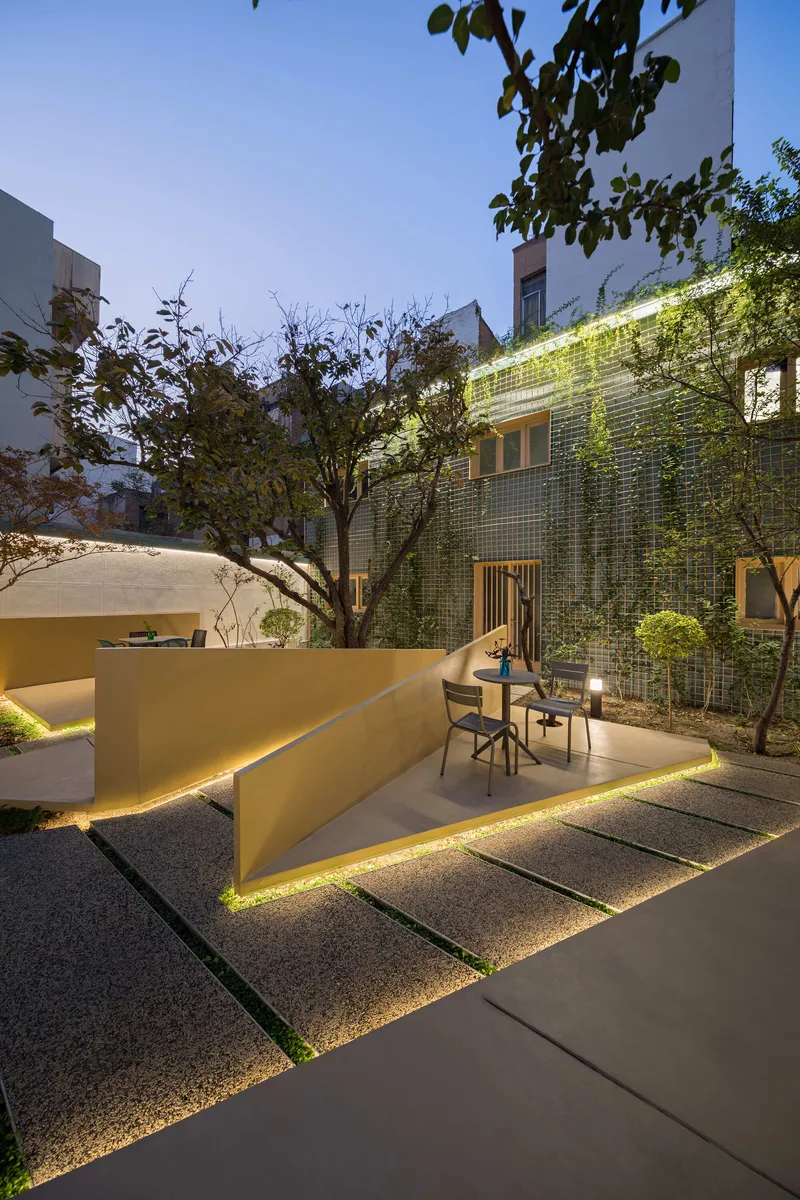
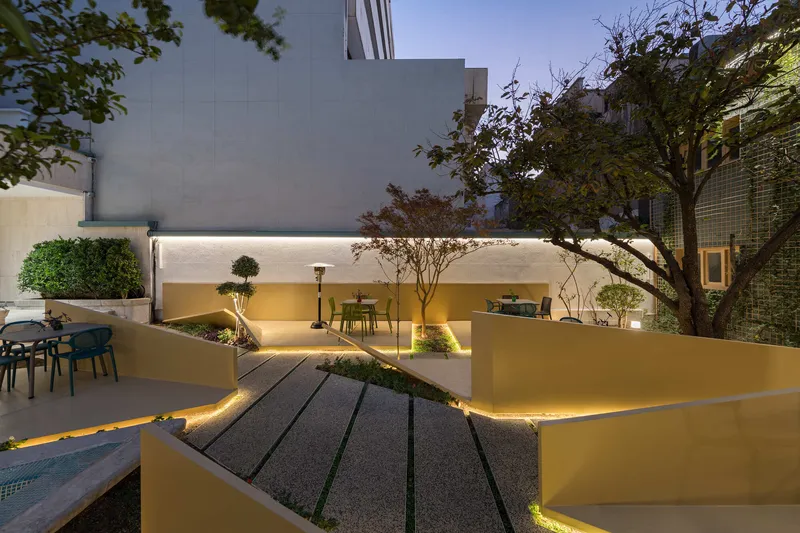
The original house was organized into three linear components: the main building, an open courtyard, and a servants’ quarter. Rather than erasing this structure, the architects embraced it as a framework for transformation. The project’s central gesture was to redefine the courtyard as the social heart of the complex—turning a residual space into a catalyst for interaction.
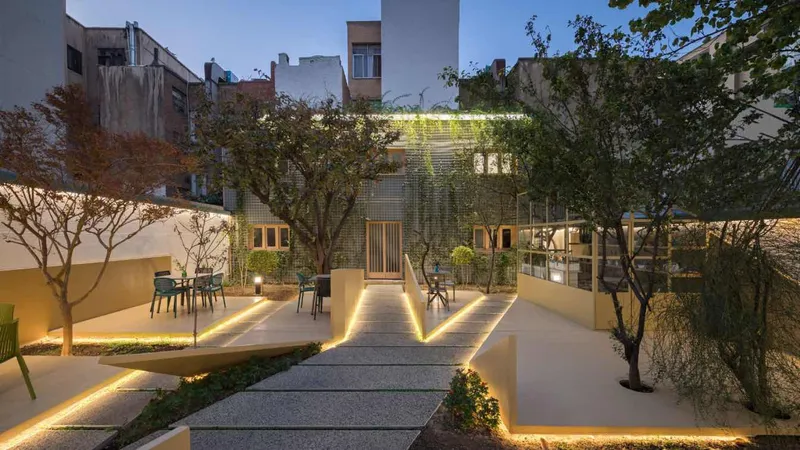
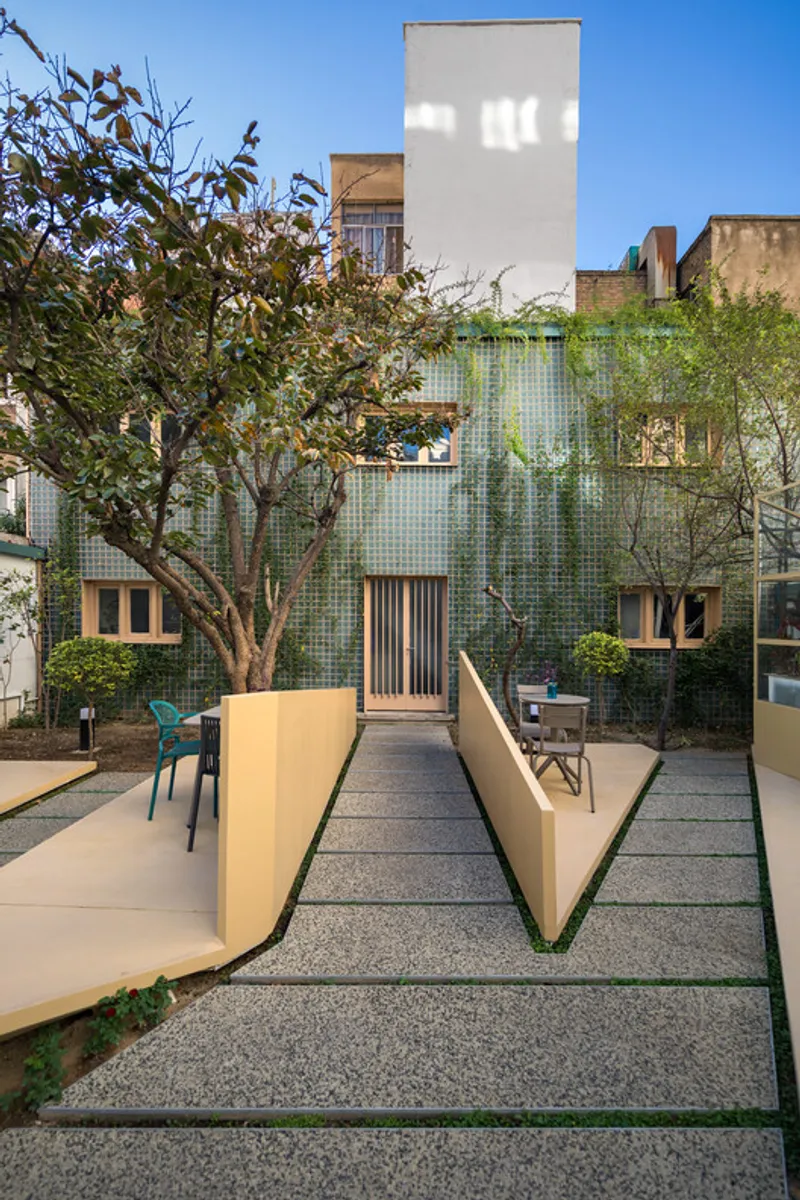
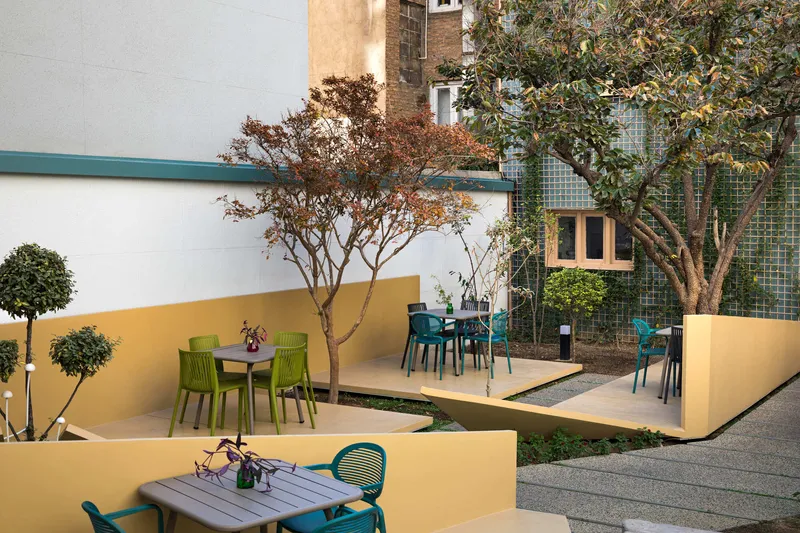
Folded and fractured concrete slabs were introduced into the courtyard, forming seating platforms at varying heights. These elements act as spatial metaphors for layers of time and human experience, accommodating diverse modes of use—from quiet reflection and intimate conversation to public gatherings and performances.
Preservation Through Reinterpretation
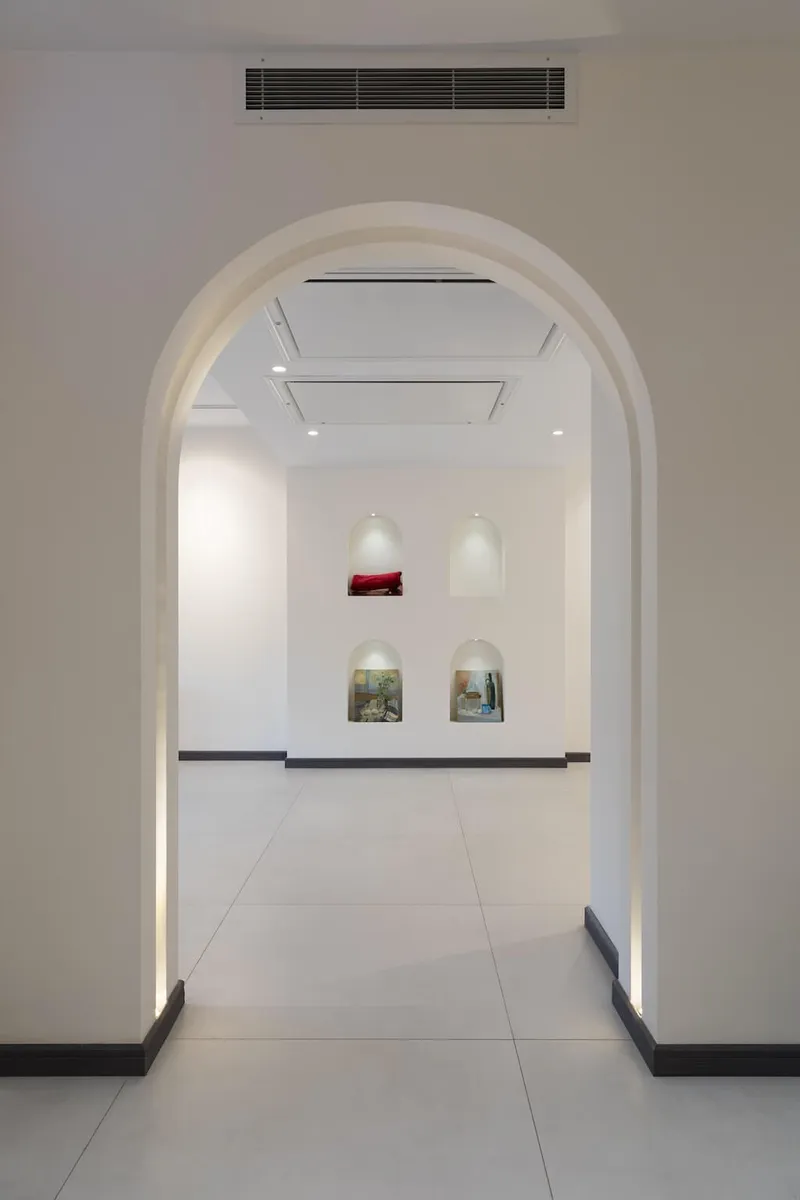
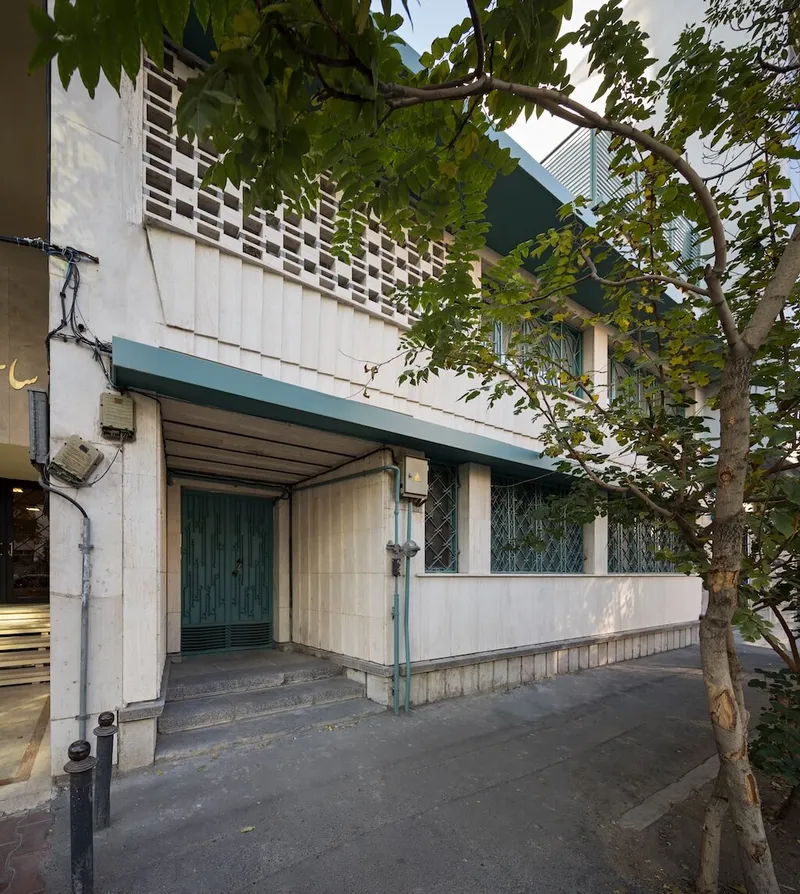
The main building was preserved with minimal structural intervention. Instead of nostalgic restoration, the architects pursued adaptive reuse, allowing the interiors to host new programs such as a gallery, classrooms, and a small cinema. Existing spatial proportions and level changes were retained, enabling the building’s memory to remain legible while supporting contemporary cultural activities.
The reception hall on the ground floor exemplifies this approach. Its pre-existing level differences were not corrected but activated, transforming the space into a multilayered stage capable of hosting performances, screenings, and workshops. Architecture here becomes an instrument for participation rather than a static container.
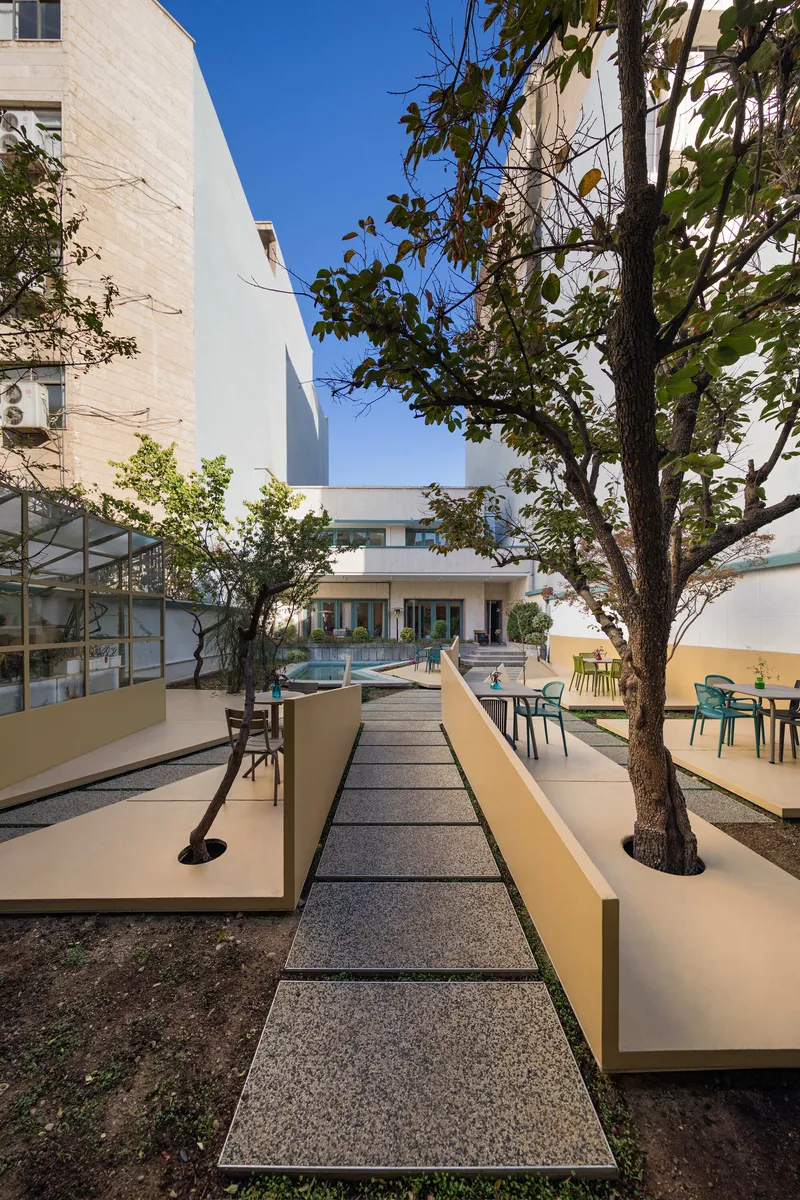
The Courtyard as a Living Archive
The courtyard’s new topography encourages movement, pause, and encounter. It is neither fully interior nor exterior, but a transitional realm where social life unfolds informally. This space anchors the project’s identity, functioning as an open forum that connects all parts of the complex while reinforcing its civic character.
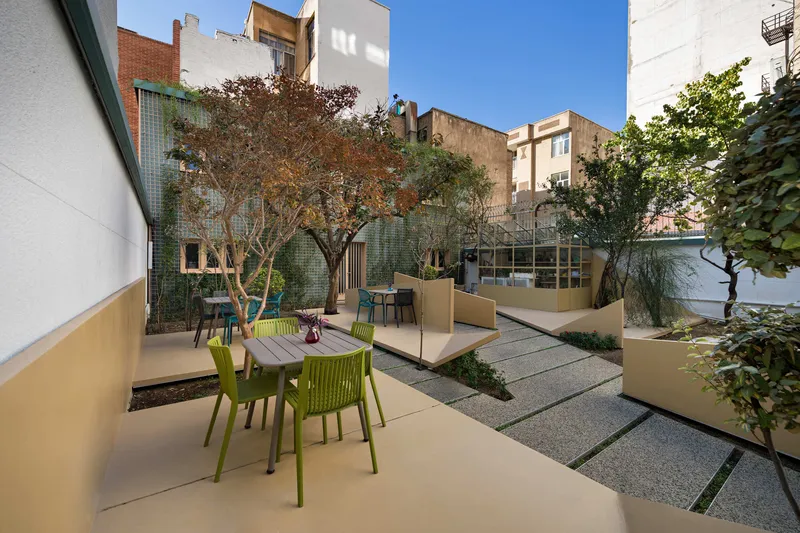
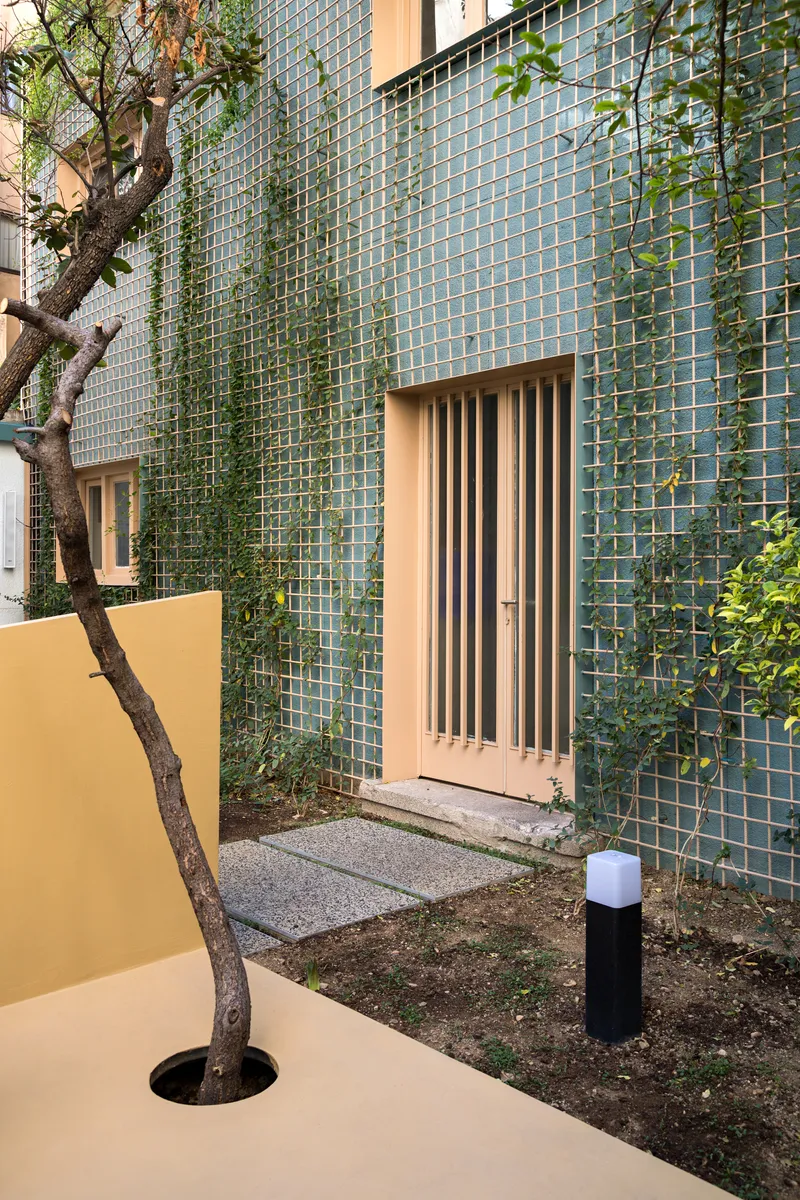
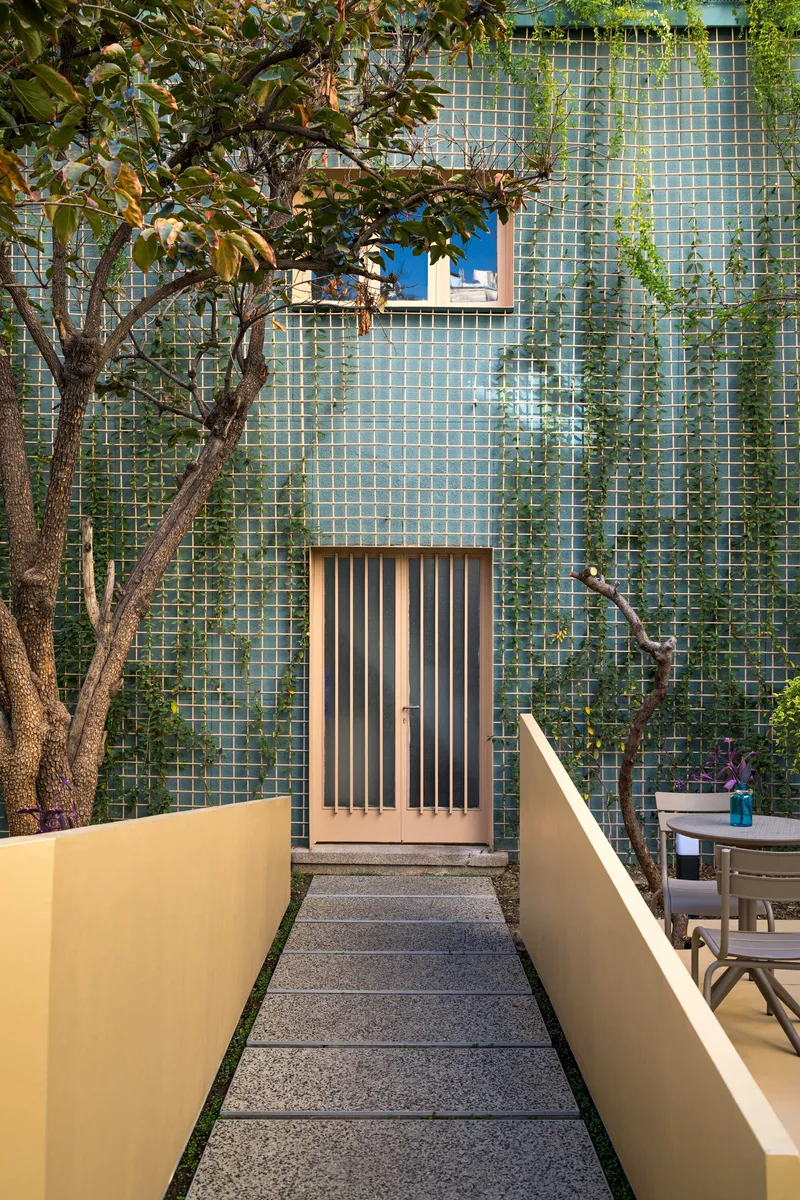
Meanwhile, the former servants’ building—once worn and marginal—was enveloped in a metal mesh skin designed to support climbing vegetation. This secondary layer allows the structure to age naturally, establishing a living dialogue between past and future rather than freezing the building in time.
Urban Memory and Continuity
Originally part of a street lined with villas from the 1950s and 1960s, Sepand House stands as one of the few survivors of a rapidly transformed urban fabric. Its value lies not only in its architectural integrity, but in its ability to embody Tehran’s layered urban history.
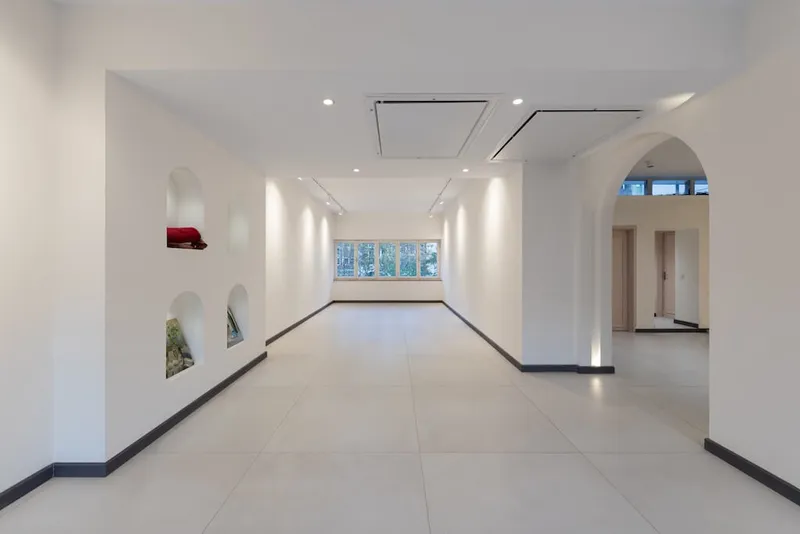
The renovation reinforces this continuity by safeguarding original details while allowing new cultural uses to emerge. The house does not become a museum of itself; instead, it re-enters the city’s daily life as an active cultural node.
Architecture as Cultural Infrastructure
Sepand House of Culture and Art demonstrates how architectural regeneration can operate beyond preservation, becoming a tool for social engagement. By respecting spatial memory, embracing existing imperfections, and inserting minimal yet precise interventions, the project reactivates a historic structure for contemporary use.
Here, architecture mediates between past and present—transforming a private villa into a shared civic space where culture, dialogue, and community once again take root.
All the Photographs are works of Mohammad Hassan Ettefagh



Popular Articles
Popular articles from the community


The Earth Pod: 3D Printed Homes for Resilient Refugee Communities
The Earth Pod reimagines refugee housing through 3D printed homes made from clay, combining resilience, self-sufficiency, and rapid shelter.

Co-Life: Senior Housing Design That Reconnects Older Adults With the City
Co-Life reimagines senior housing design through healing gardens, shared streets, workshops, and a sustainable community across generations.

Co-life: Sustainable Architecture for Age-Friendly Community Living
Co-life reimagines sustainable architecture for seniors through courtyards, rammed earth, shared gardens, and spaces designed for belonging.

Conexión: Biophilic Design Reimagines High-Rise Living in Hong Kong
Conexión reimagines high-rise living in Hong Kong through biophilic design, green facades, shared spaces, daylight, water and nature within.

Similar Reads
You might also enjoy these articles


Hodi-Mandai Geram
Project Function: Preservation and revitalization of the Intangible heritage and socio-spatial identity of the Hodi by Housing, Cultural Memory Center, Sacred Grove, landscape, local tourism economy


Olio Towers: A Mid-Rise for Performers That Fuses Housing, Rehearsal, and Stage
Located blocks from Houston's Theater District, this modular tower stacks living units around a central performance atrium.

Oasis: Modular Green Housing Carved into Dhaka's Urban Fabric
A shortlisted Plugin Housing entry reclaims unauthorized settlements in Dhaka with stepped concrete volumes, green roofs, and ventilation-driven design.

Black Hole: A Floating Megastructure for the Post-Physical Era
Emiliano Mazzarotto envisions a spherical, self-scaling arena where e-sports, digital hotels, and holographic stadiums replace traditional public space.

Explore Persian Architecture Competitions
Discover active competitions in this discipline



Challenge to reimagine the Iron Throne


Photograph architecture without architects


Illustrate the lost glory of Angkor Wat - Render Challenge


Bring back Drive In's
Comments (0)
Please login or sign up to add comments
No comments yet. Be the first to comment!