

Shekou Cultural and Sports Park Architecture: A Human-Centered Design by Tanghua Architects
An in-depth look at Shekou Cultural and Sports Park’s architecture by Tanghua Architects, blending public space, climate response, and community.


Redefining Public Spaces Through Architectural Integration
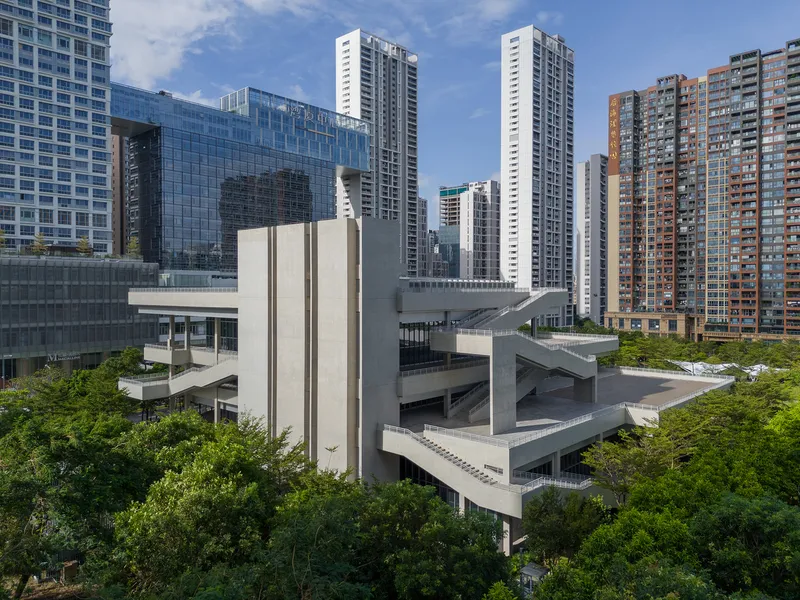
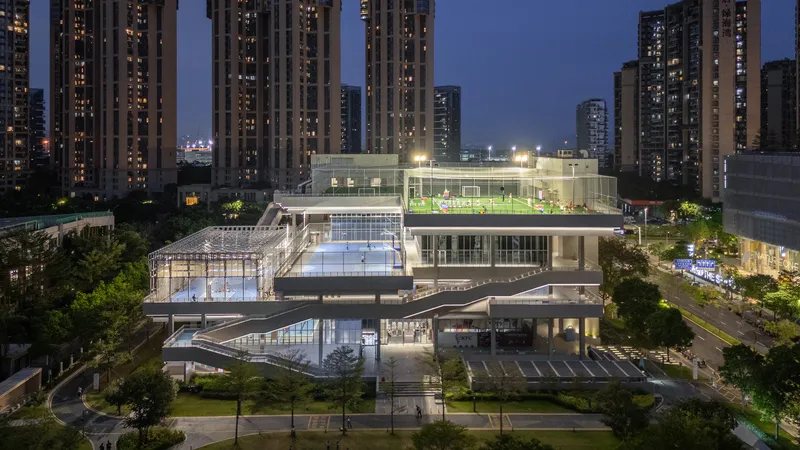
Shekou Cultural and Sports Park, designed by Tanghua Architects, presents a transformative vision for urban recreational infrastructure in Shenzhen. Situated on reclaimed land amidst high-density residential communities, this 21,547-square-meter project exemplifies a paradigm shift from iconic forms toward immersive, human-scaled environments. The park and its architectural centerpiece foster inclusivity, adaptability, and spatial harmony between the built environment and natural elements.
Harmonizing Landscape and Architecture in Shenzhen
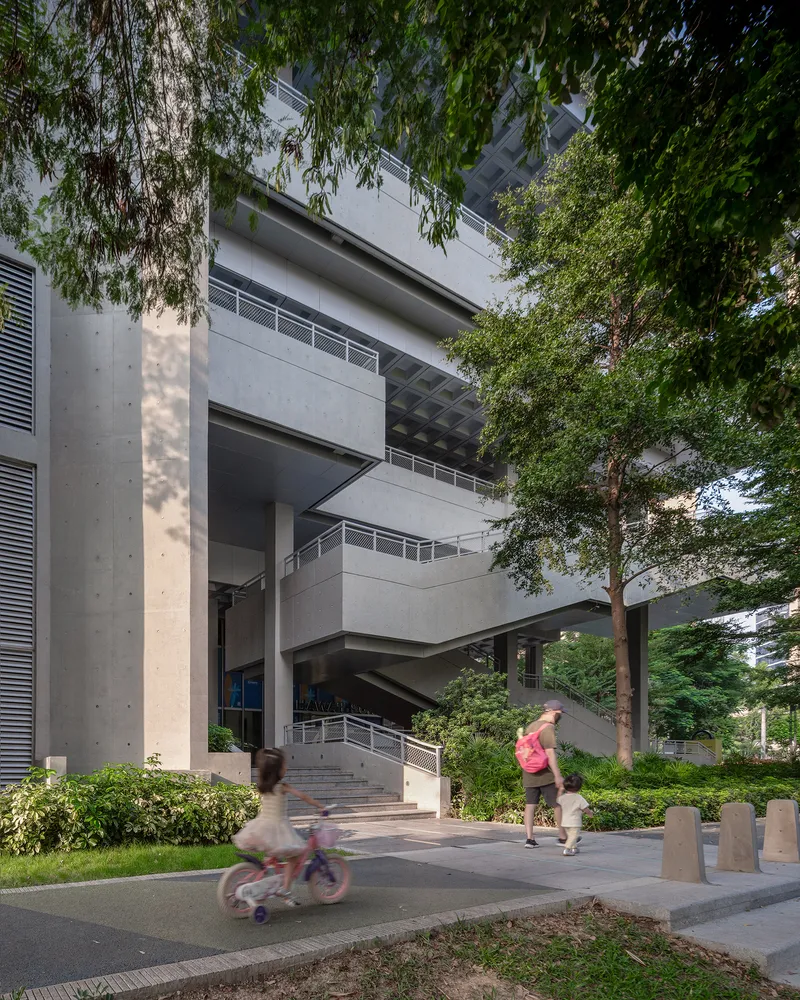
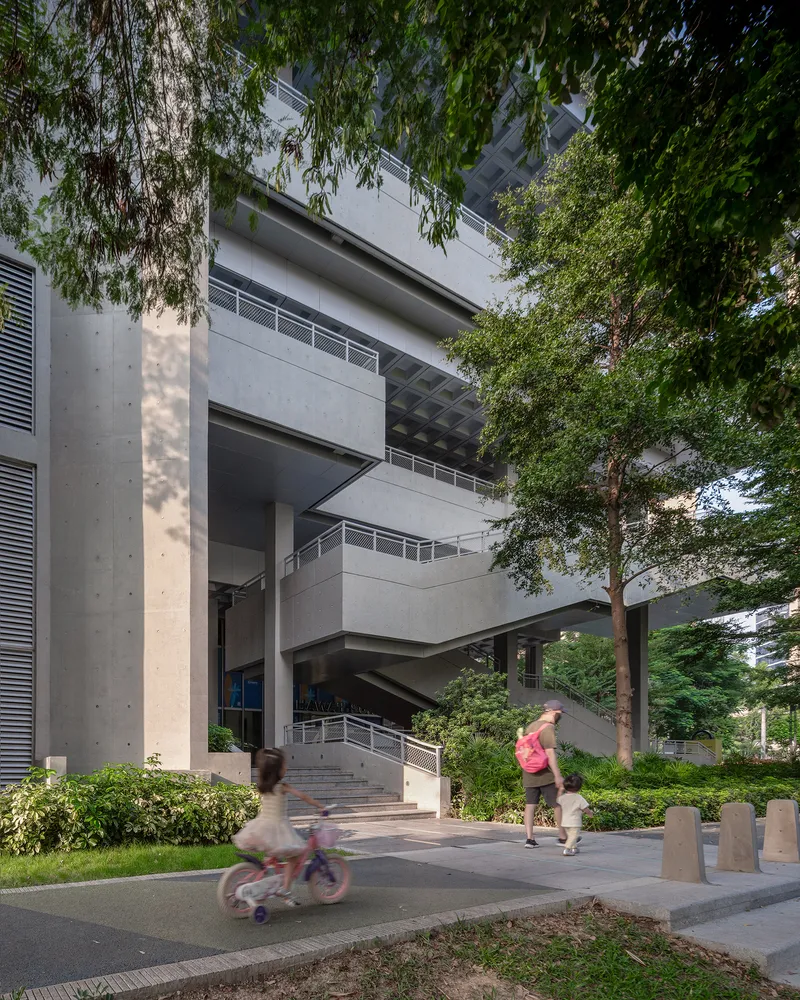
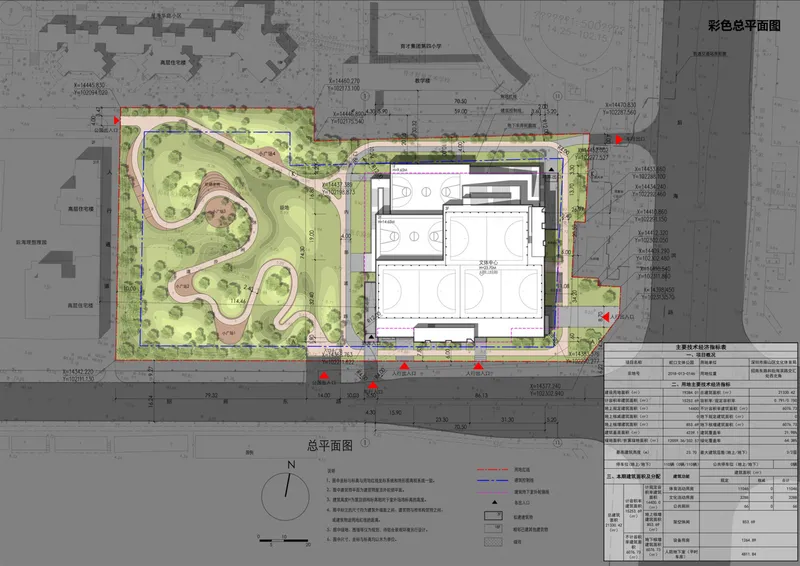
In contrast to past tendencies toward exaggerated civic structures, the design approach at Shekou Cultural and Sports Park emphasizes the experience of space, accessibility, and community engagement. The site is divided equally between open parkland and a modernist building that blends seamlessly into its environment. Undulating lawns, meandering pathways, and open plazas encourage a variety of social activities, transforming the park into a dynamic civic venue.
A Building That Extends the Urban Fabric
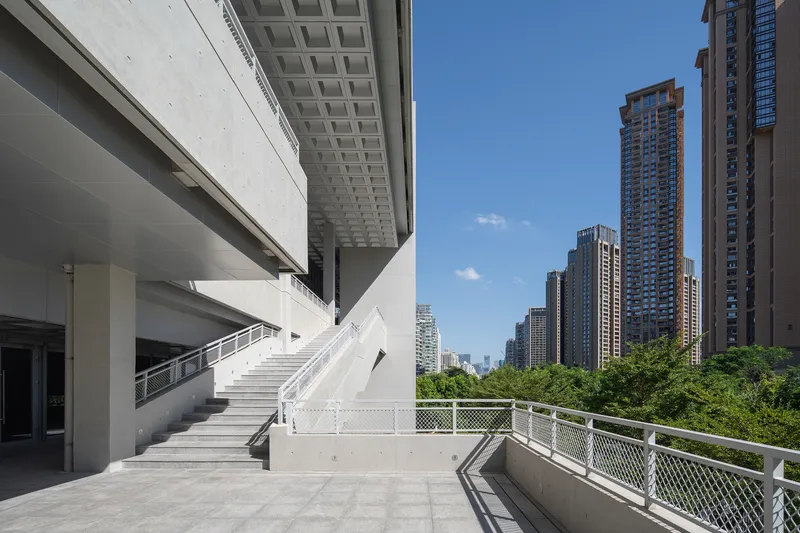
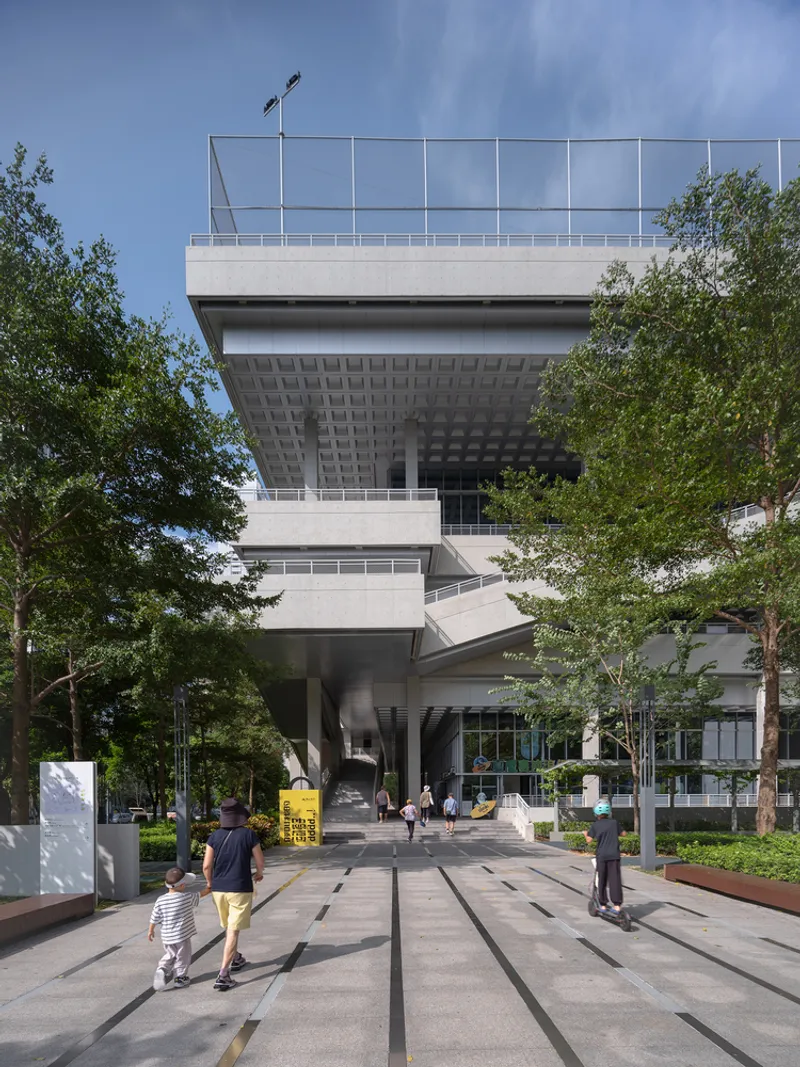
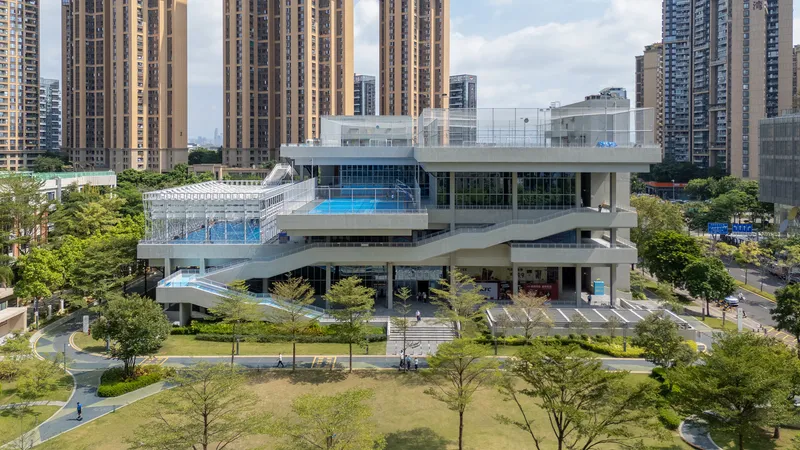
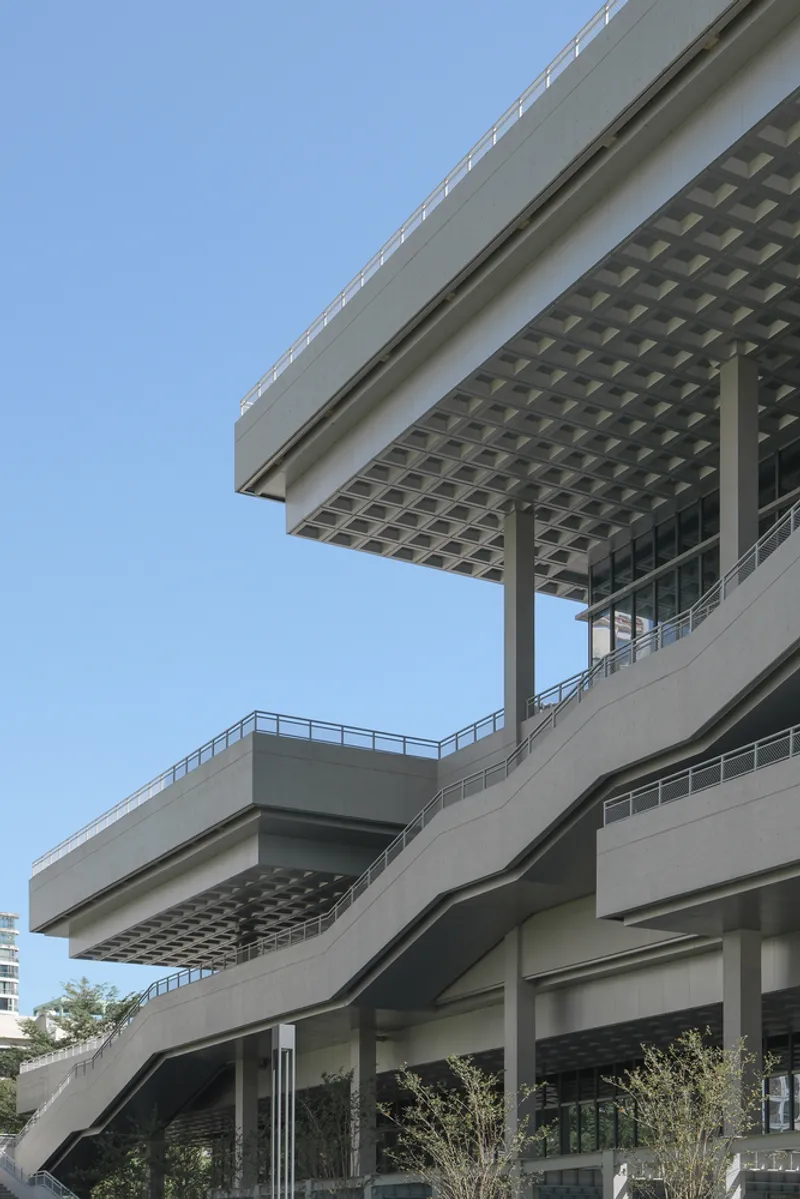
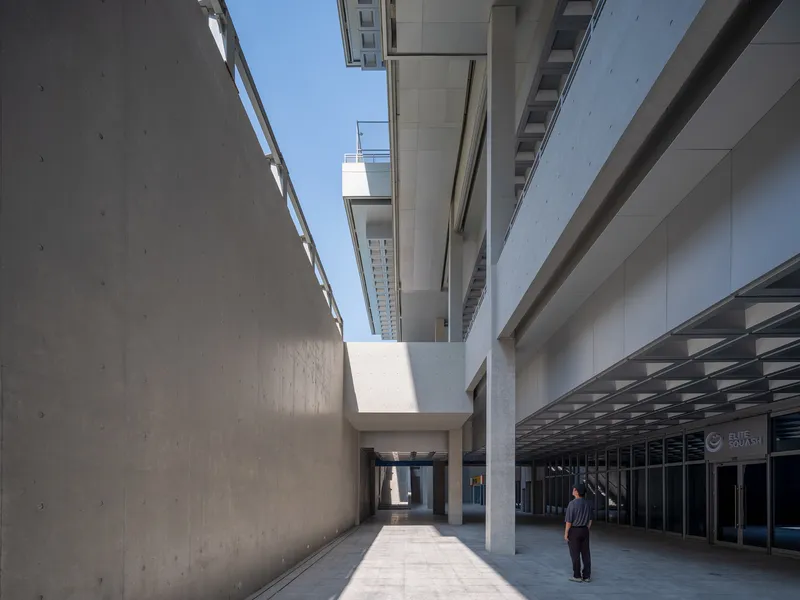
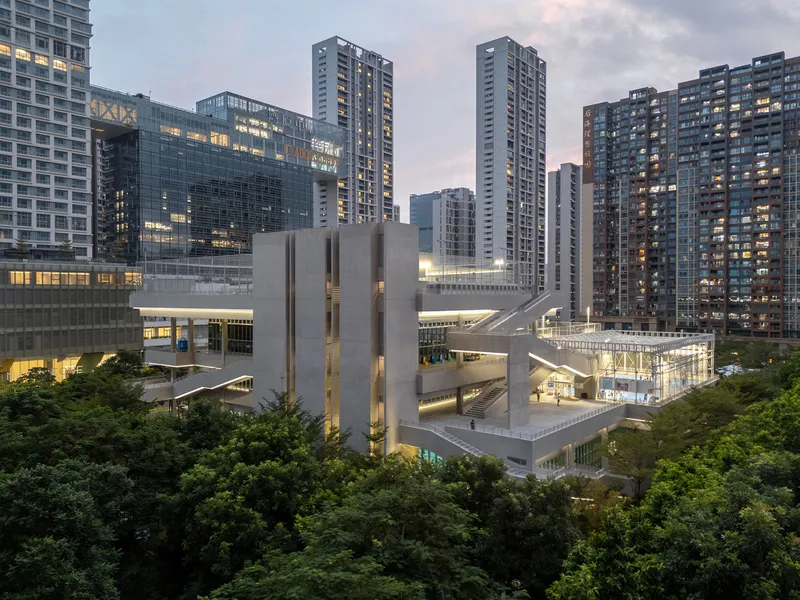
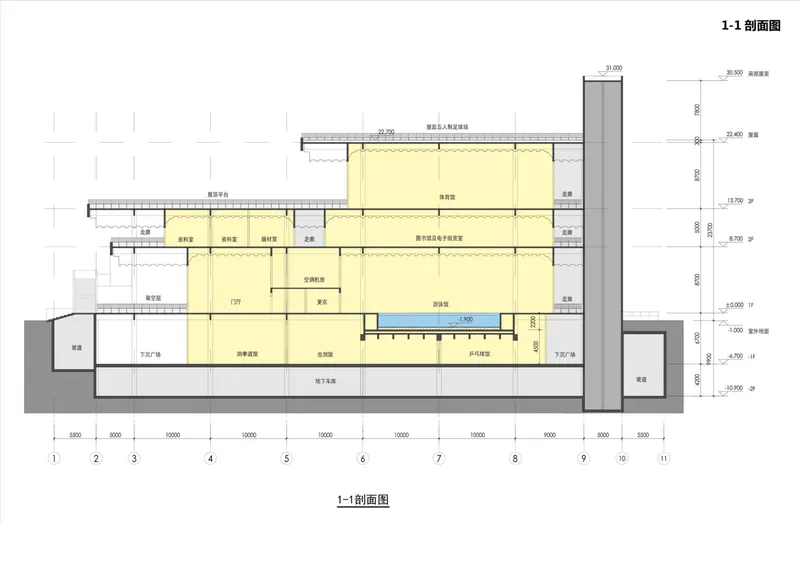
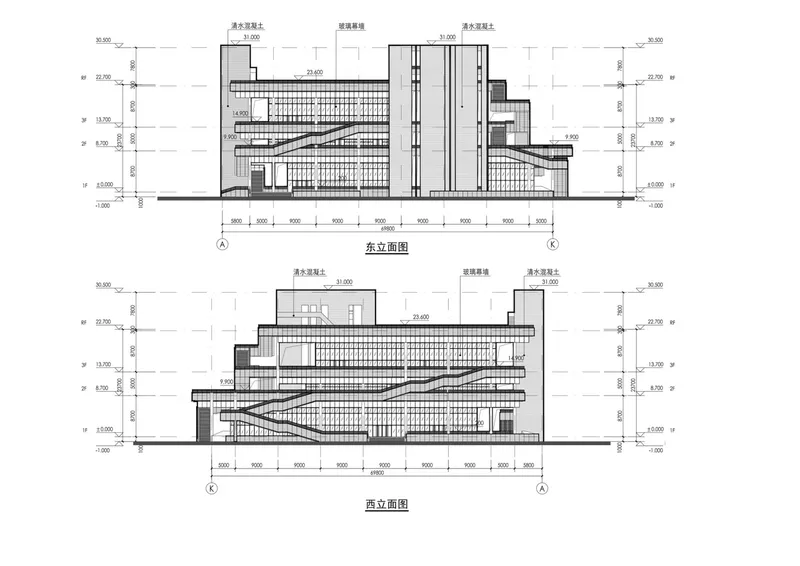
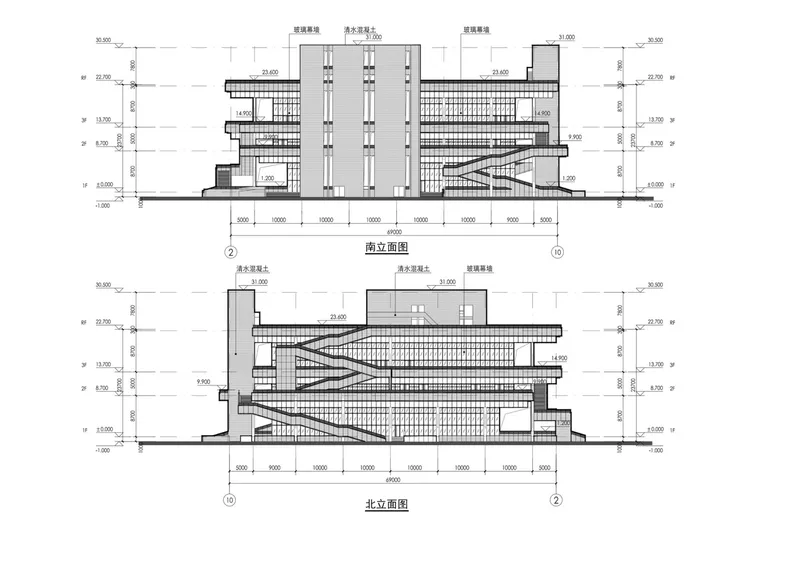
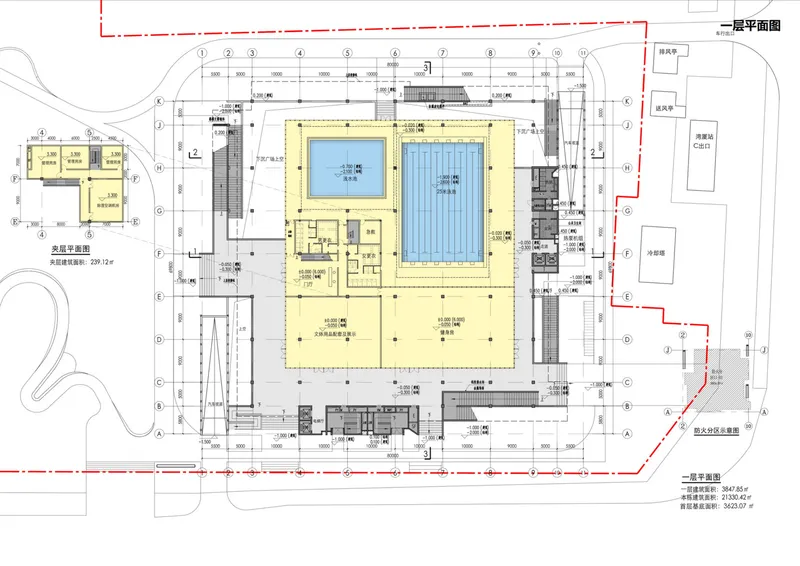
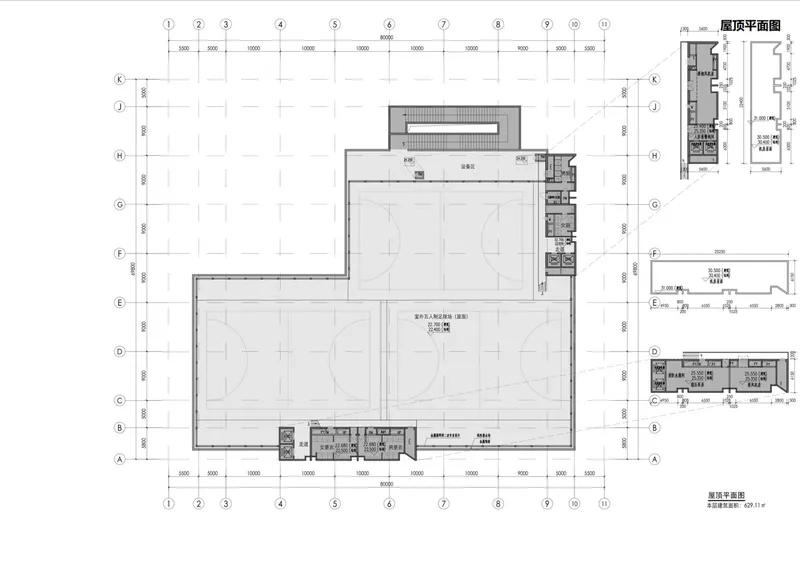
The main structure occupies the eastern half of the site and is shaped by the needs of Southern China’s humid climate. Horizontal platforms and layered terraces draw the city and park into the building, effectively blurring the lines between indoors and outdoors. Its open-air configuration maximizes ventilation and natural shading, while service cores are strategically housed in vertical concrete shafts to maintain spatial clarity and openness.
Vertical Transparency with Functional Logic
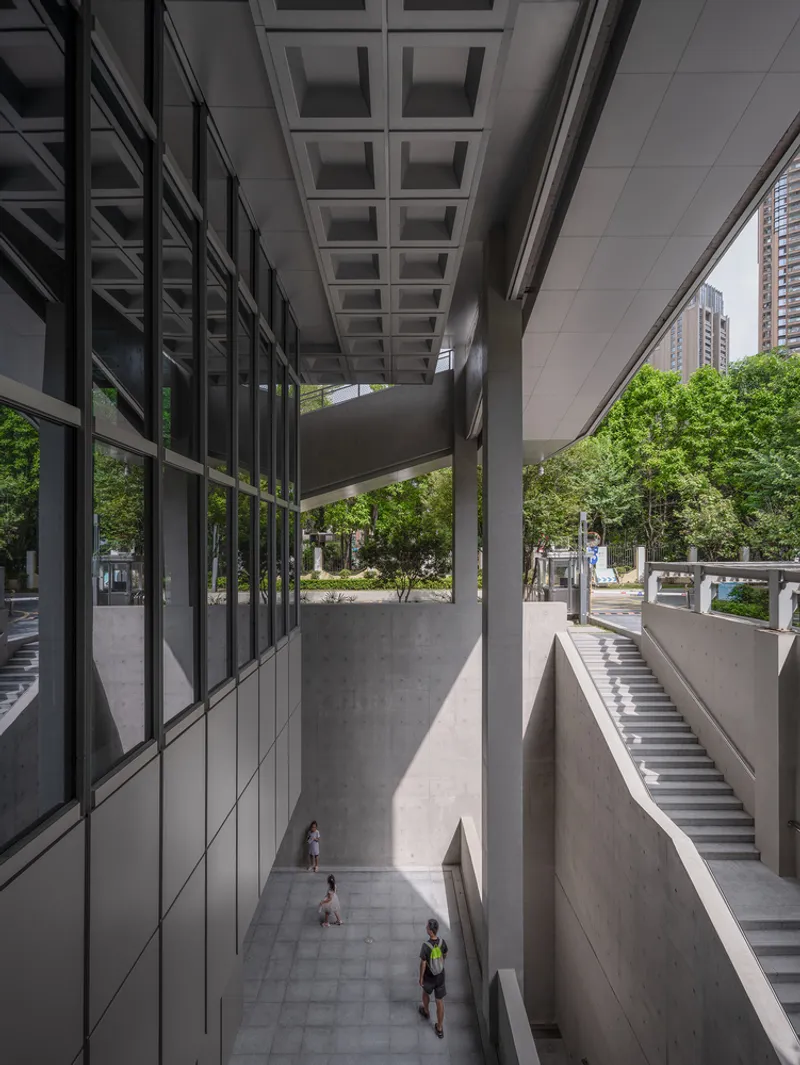
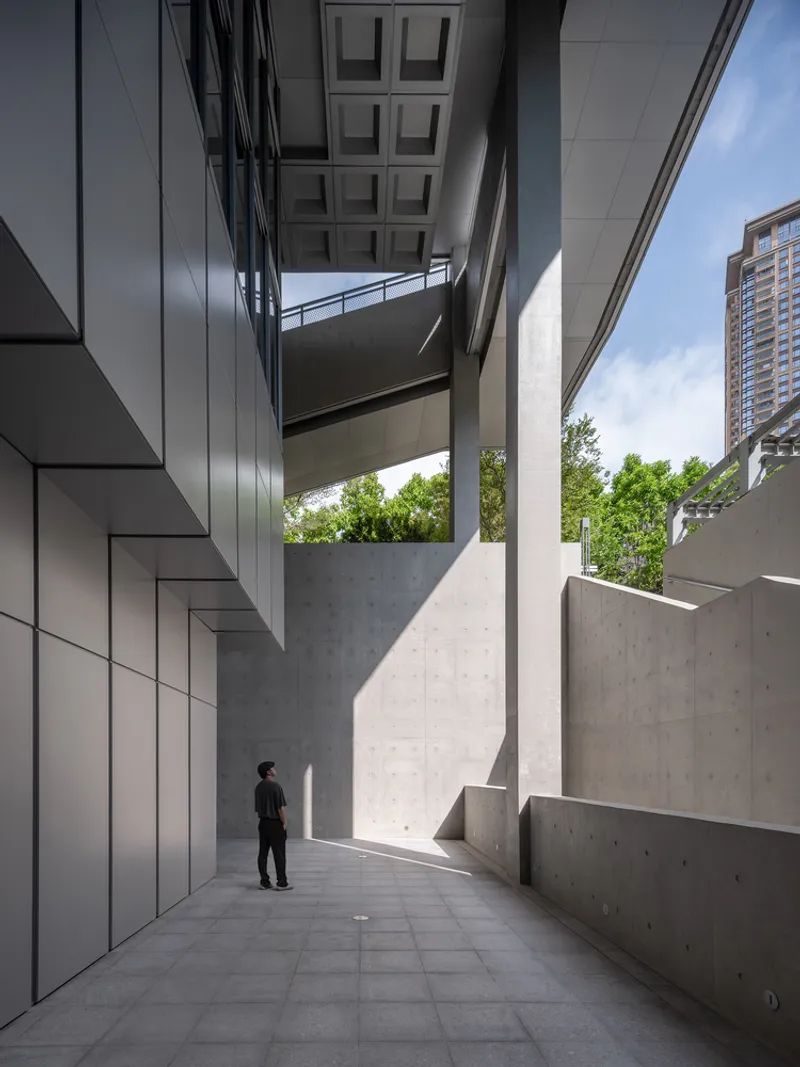
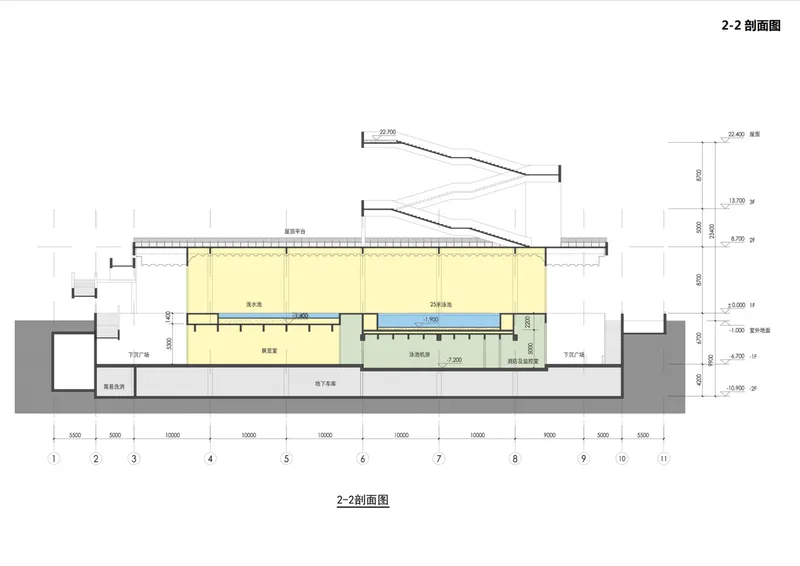
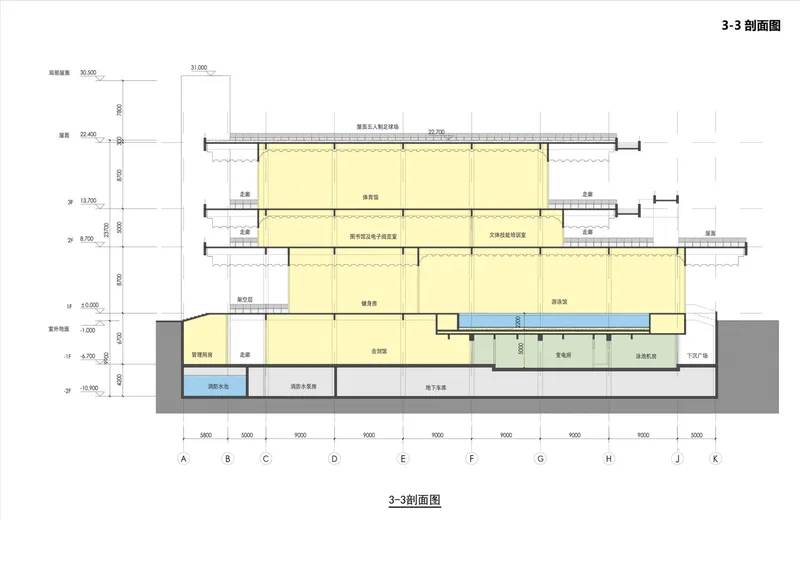
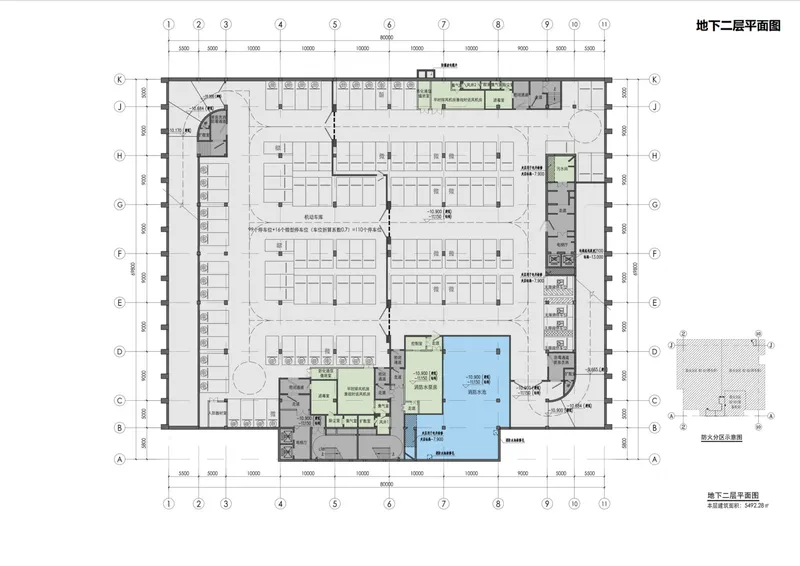
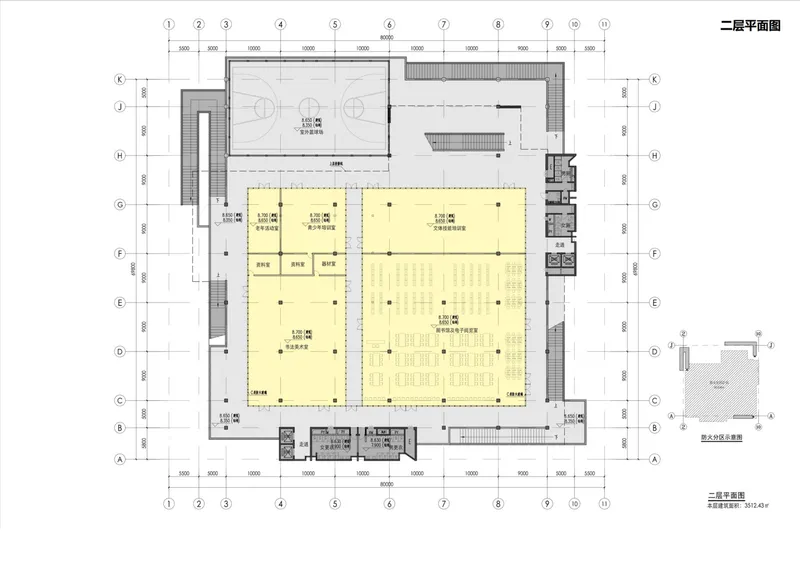
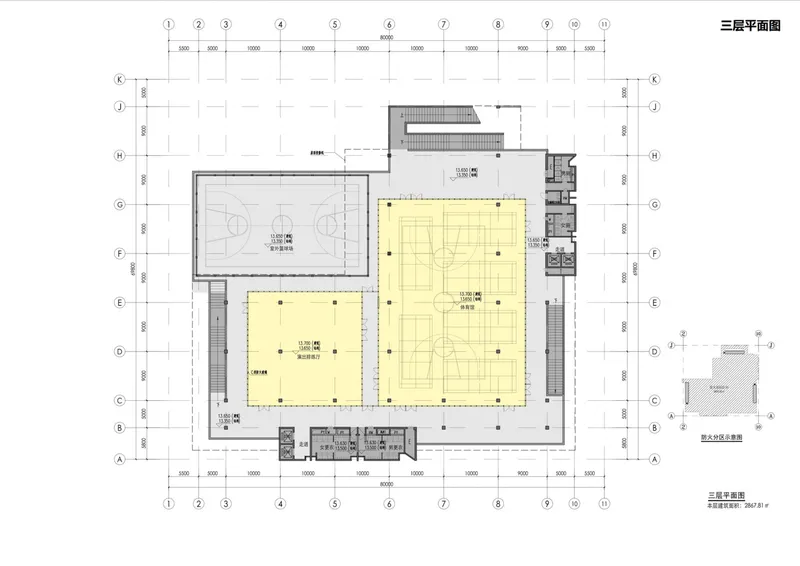
This three-level structure follows a high-low-high organization that supports its integrated "sports-culture-sports" programming. The architectural layout allows continuous public access even when internal facilities are closed, maintaining civic engagement at all times. A sunken plaza in the basement level introduces daylight and airflow, enriching the visitor experience and activating underutilized space. Each stair and platform is scaled for comfort, ensuring an intuitive spatial flow.
Material Language and Modular Expression
The architectural expression is grounded in a 1x1 meter modular system, highlighting the logic of construction and materiality. Concrete surfaces interact with metallic precision, distinguishing structural from non-structural components. Integrated ceiling ducts and boundary vents enhance spatial continuity, especially on the second floor, where indoor and outdoor spaces merge through seamless design transitions.
Contemporary Pavilion with Cultural Resonance
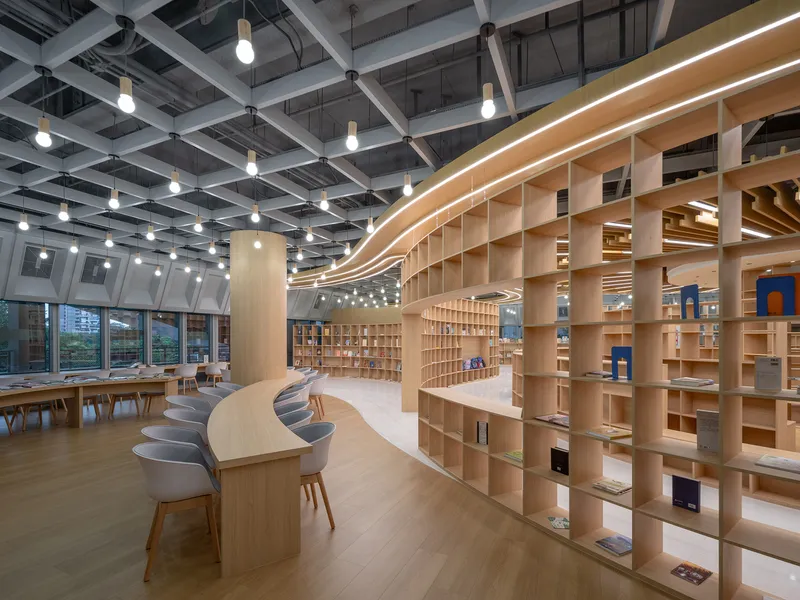
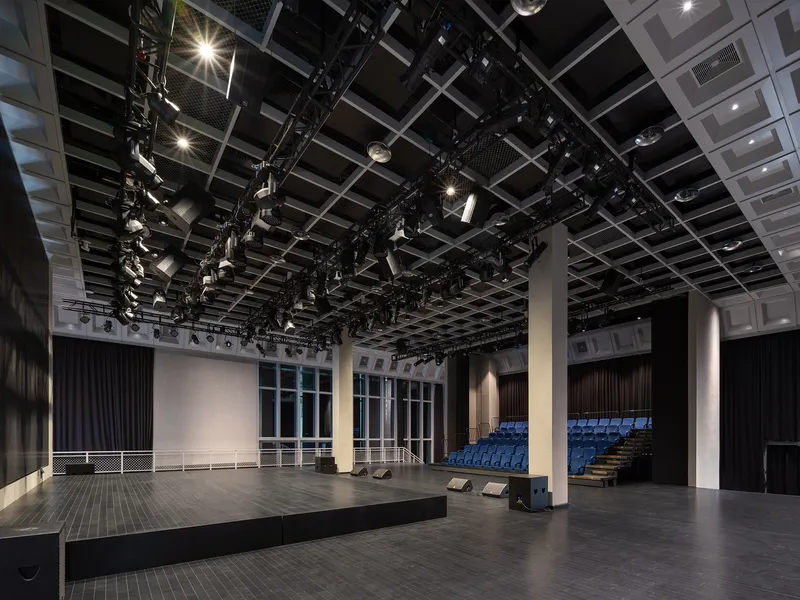
While strikingly modern, the building’s open volumes and elevated vistas evoke the spatial experience of traditional Chinese pavilions. The park’s pathways and green spaces, inspired by classical garden design, create a layered, experiential landscape. Inside, design choices reflect the distinct needs of each space: the swimming pool features marine tones, while cultural areas on the second floor are enriched with warm wood textures for a sense of calm and focus.

Interior Contrasts and Community Activation
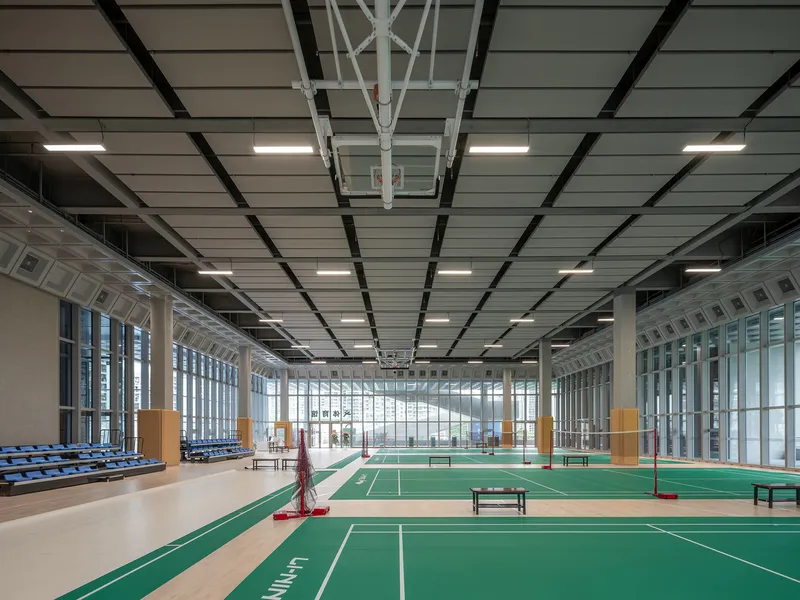
Interior programs are tailored to serve a diverse population. The bookstore contrasts its spatial fluidity with the structural grid, creating a unique reading environment. Sports zones burst with vivid color, set against the muted palette of the building. This interplay energizes the interior spaces and enhances user engagement. Since its inauguration, the park has become a vital hub for residents, offering dance spaces, play zones, and educational events that serve nearby schools and broader Shenzhen communities.
A Blueprint for Future Urban Parks
Shekou Cultural and Sports Park stands as a model for future civic architecture—where inclusivity, environmental responsiveness, and aesthetic precision converge. By prioritizing community experience and architectural clarity, Tanghua Architects have created a space that celebrates both urban life and cultural expression in a sustainable, forward-looking way.
All Photographs are works of Chao Zhang



Popular Articles
Popular articles from the community

EW PARK: Sustainable Architecture Reimagines the Future of Urban Parking
EW PARK reimagines city parking as a modular wooden tower combining automation, solar energy, electric mobility, and adaptable urban design.

AL-JANNAH: Sustainable Architecture and Permaculture for Afghan Widows
AL-JANNAH uses sustainable architecture and permaculture to create resilient oasis of housing, learning, work and renewal for Afghan widows.

Co-life: Sustainable Architecture for Age-Friendly Community Living
Co-life reimagines sustainable architecture for seniors through courtyards, rammed earth, shared gardens, and spaces designed for belonging.

The Musturak Paradise: Senior Living Architecture for a Connected Future in Temara, Morocco
The Musturak Paradise reimagines senior living architecture in Temara via private homes, social spaces, culture, community, and shared care.

Similar Reads
You might also enjoy these articles

Bamboo Housing Challenge 2026: Design Affordable, Sustainable Homes Using Bamboo
An international design competition by Bamboo U and IBUKU inviting architects and designers to reimagine affordable housing using bamboo — with the winning design built full-scale in Bali.

Computational Design & Education: Beegraphy Design Awards Introduces 7th Category (Featuring Jiyun's Innovative Approach)
Dive into Beegraphy’s 7th Design Awards category, where computational design meets education to create immersive, interactive learning tools, inspired by Jiyun’s work.
From Parametric Lighting to Urban Furniture: Join the 2nd Workshop in Beegraphy’s Computational Design Series
Dive into Cutting-Edge Design Techniques and Practical Applications with Industry Experts

Last Call: Unleash Your Architectural Genius in SHAK's Kindergarten Design Competition
Urgent call for architects to join SHAK's kindergarten design competition before the looming deadline


Explore Architecture Competitions
Discover active competitions in this discipline



Challenge to reimagine the Iron Throne


Photograph architecture without architects


Illustrate the lost glory of Angkor Wat - Render Challenge


Design challenge to reuse E-waste
Comments (0)
Please login or sign up to add comments
No comments yet. Be the first to comment!