
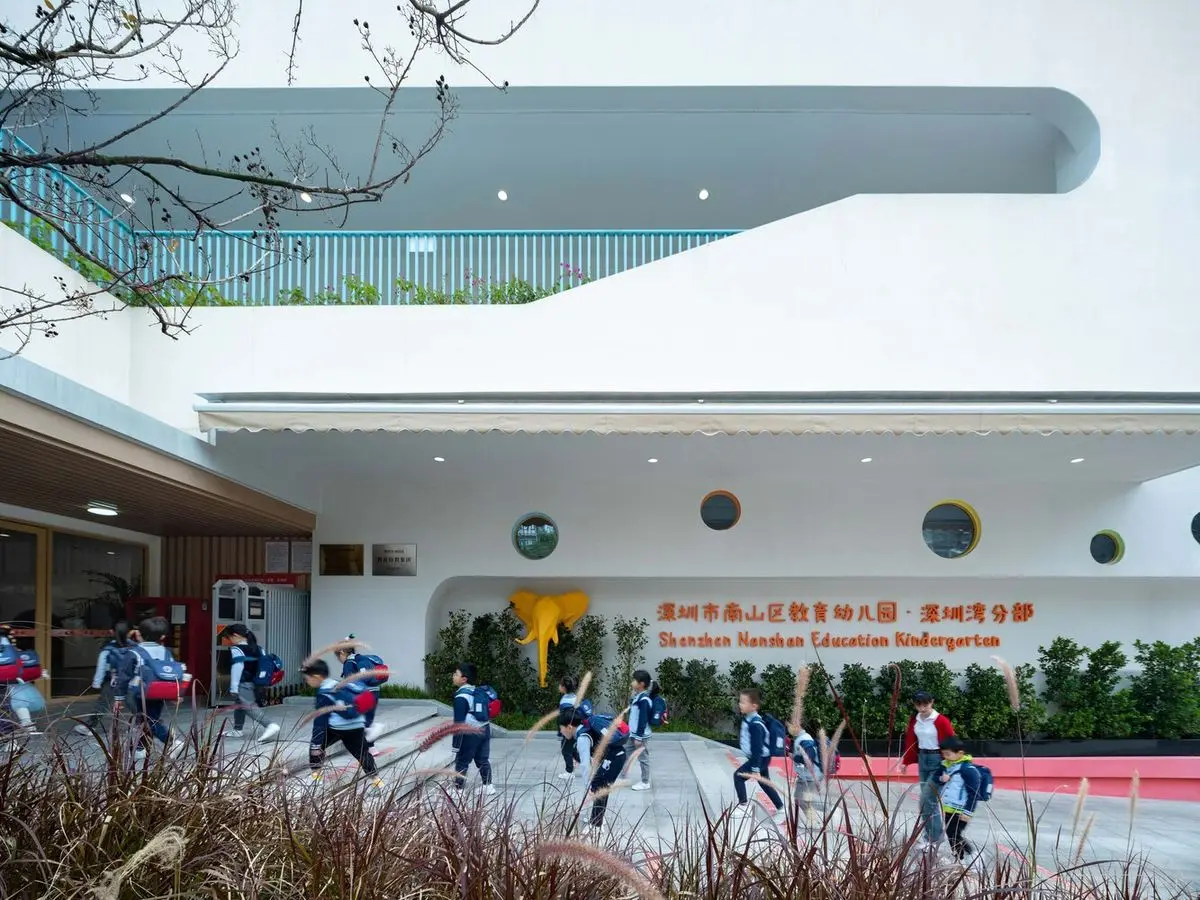
Shenzhen Nanshan Education Kindergarten by Shenzhen TIANHUA Architectural Design: A Vertical Oasis of Learning in a Dense Urban Core
A terraced kindergarten in Shenzhen blending play, nature, and city views through biophilic design and child-centered architectural elements.


Located in the heart of the high-density Shenzhen Bay area, the Shenzhen Nanshan Education Kindergarten, designed by Shenzhen TIANHUA Architectural Design, reimagines early childhood education environments within compact urban settings. Spanning 13,248 square meters, the kindergarten serves 21 classes and over 630 children, pushing the boundaries of traditional school design through innovative spatial planning, biophilic integration, and child-centric architecture.
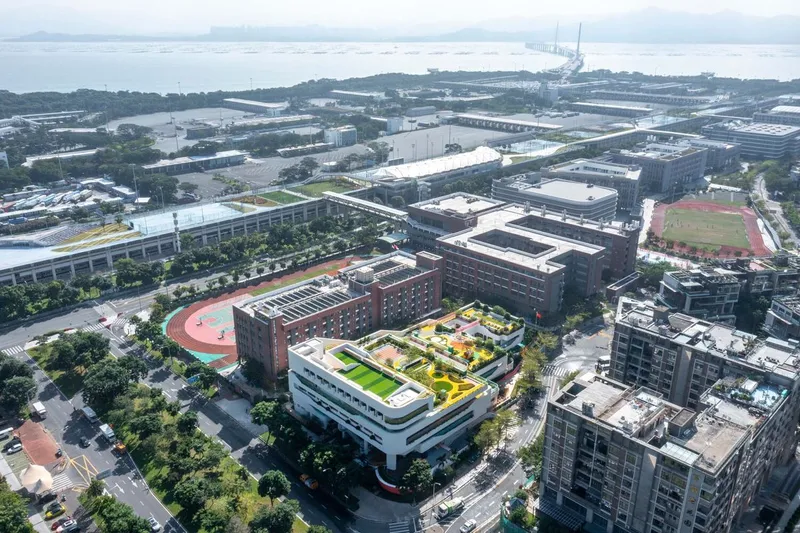
Design Philosophy: Terraced Campus and Bonsai Landscape
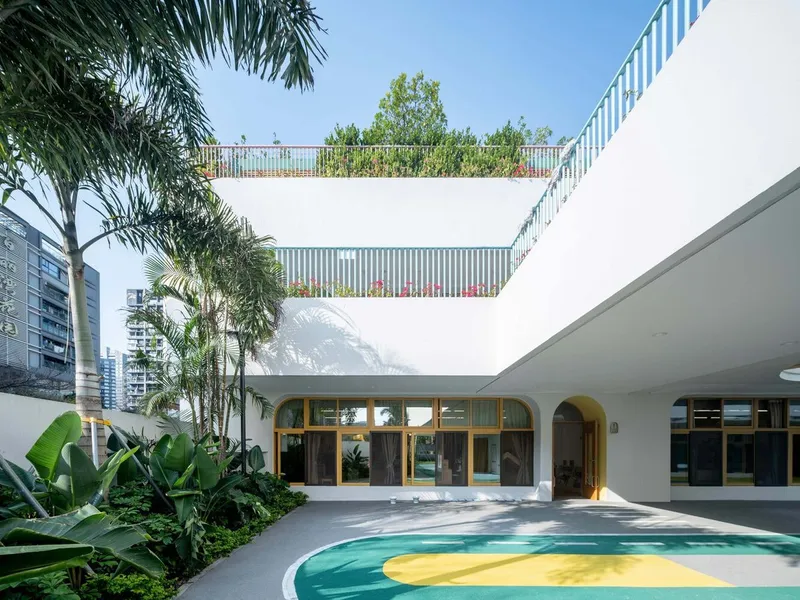
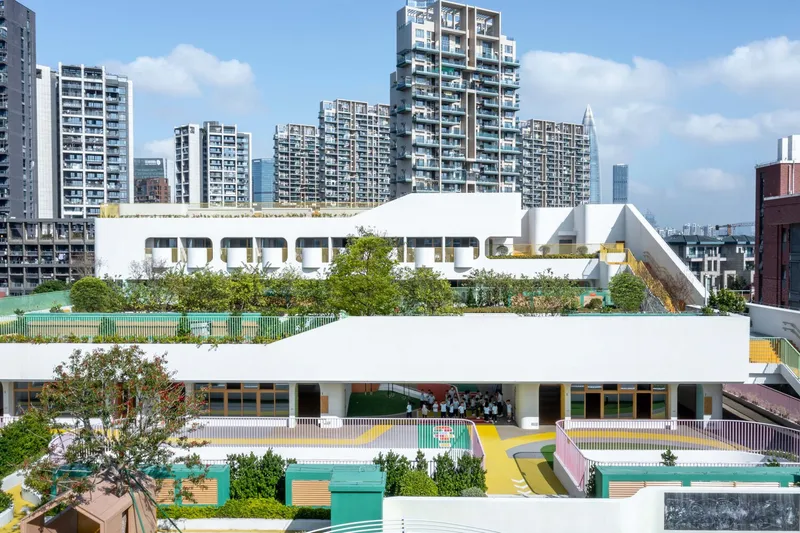
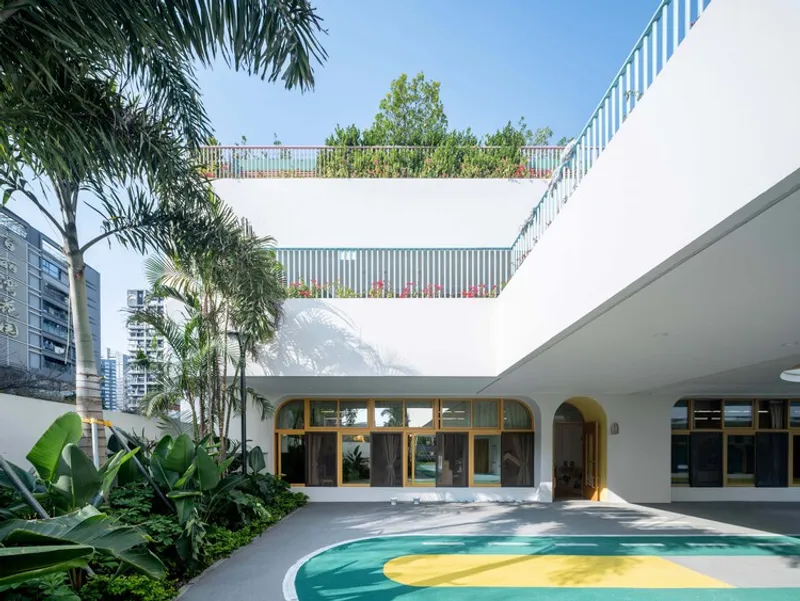
Faced with the challenge of creating expansive outdoor spaces in a tight urban plot, the architects introduced the concept of a “Terraced Campus, Bonsai Landscape”. The design steps down from north to south, relieving pressure on the southern side and opening views while forming a striking profile along the urban street edge. This layered architectural form mimics terraced hillsides and invites a continuous interaction between nature and play.
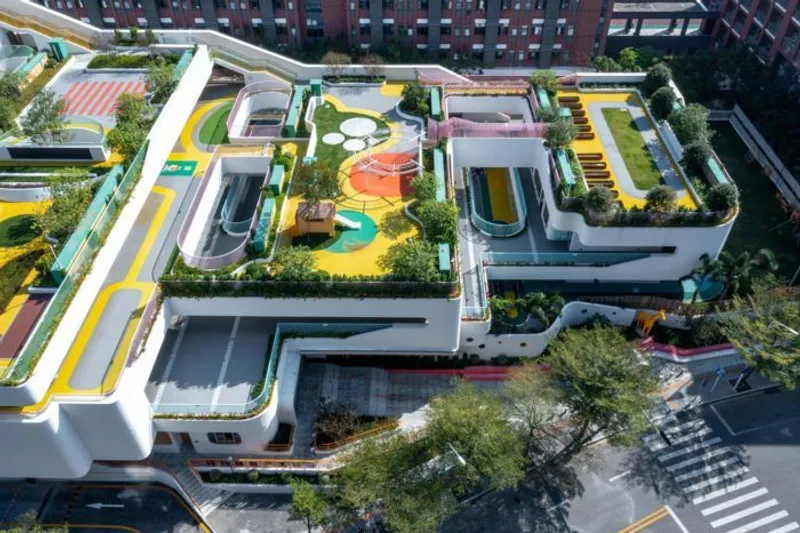
Urban Integration and Civic Presence
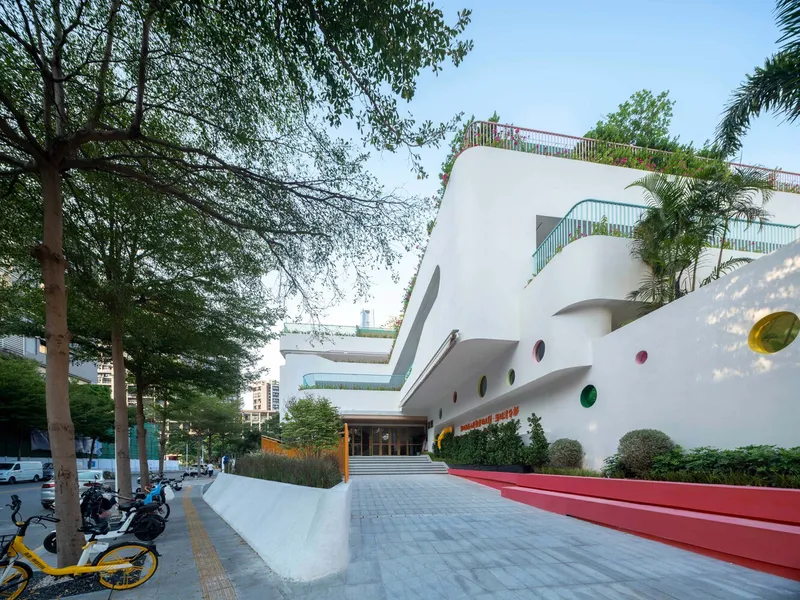
Despite its large scale for a kindergarten, the school is carefully integrated into its urban context. The west-facing façade gently recedes from the road, creating a welcoming public plaza that functions as a pick-up/drop-off zone and communal gathering space. The campus becomes not just a place for learning, but an active and accessible part of the neighborhood’s daily life.
Maximized Play Spaces and Vertical Connectivity
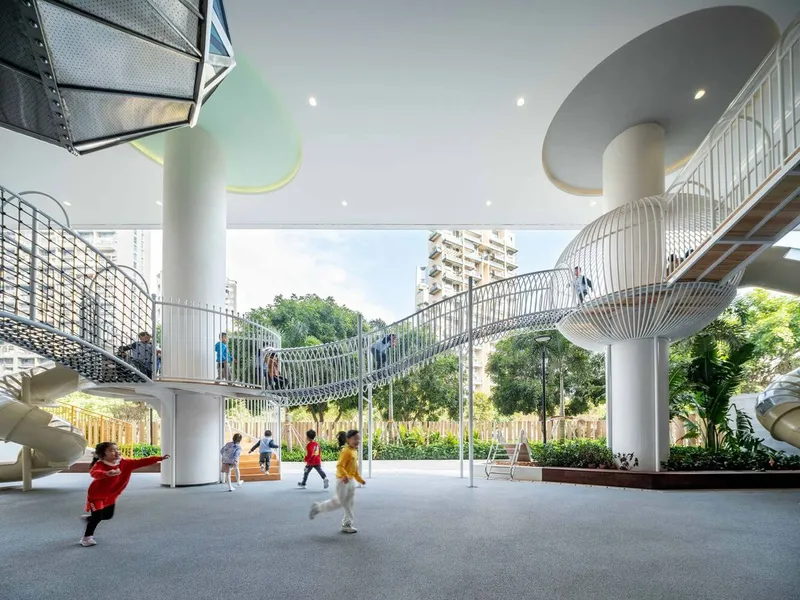
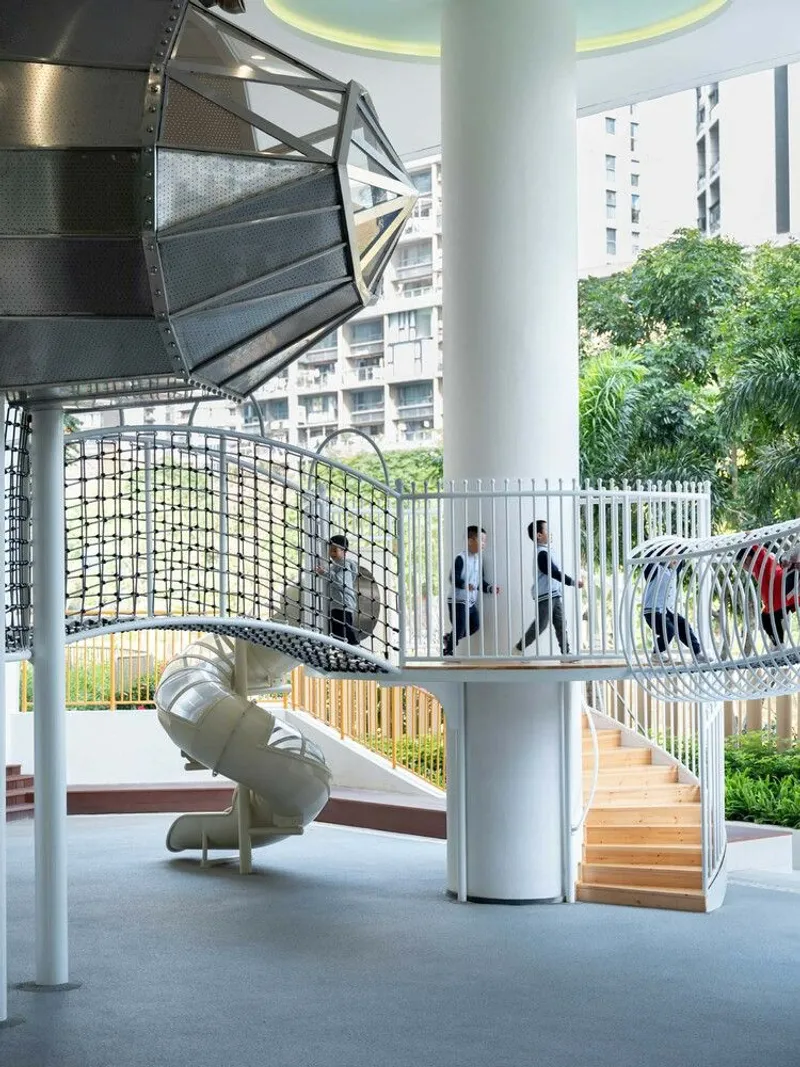
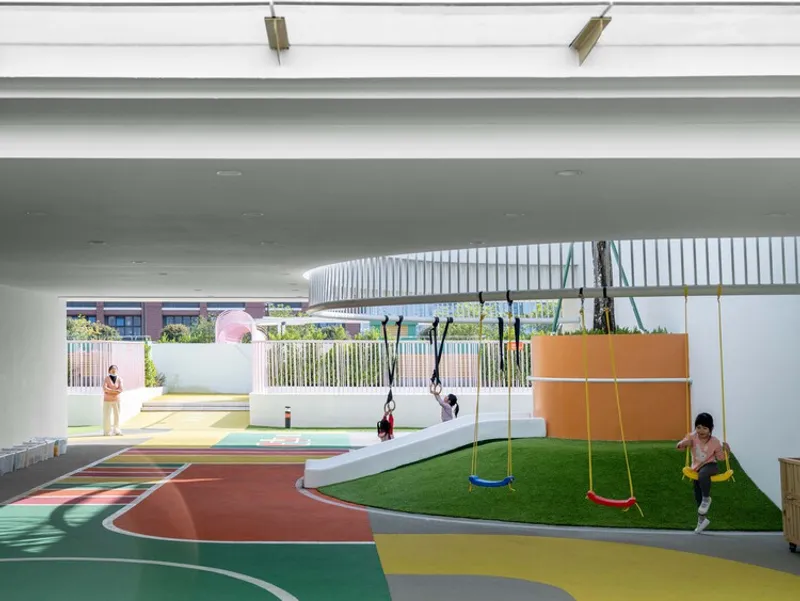
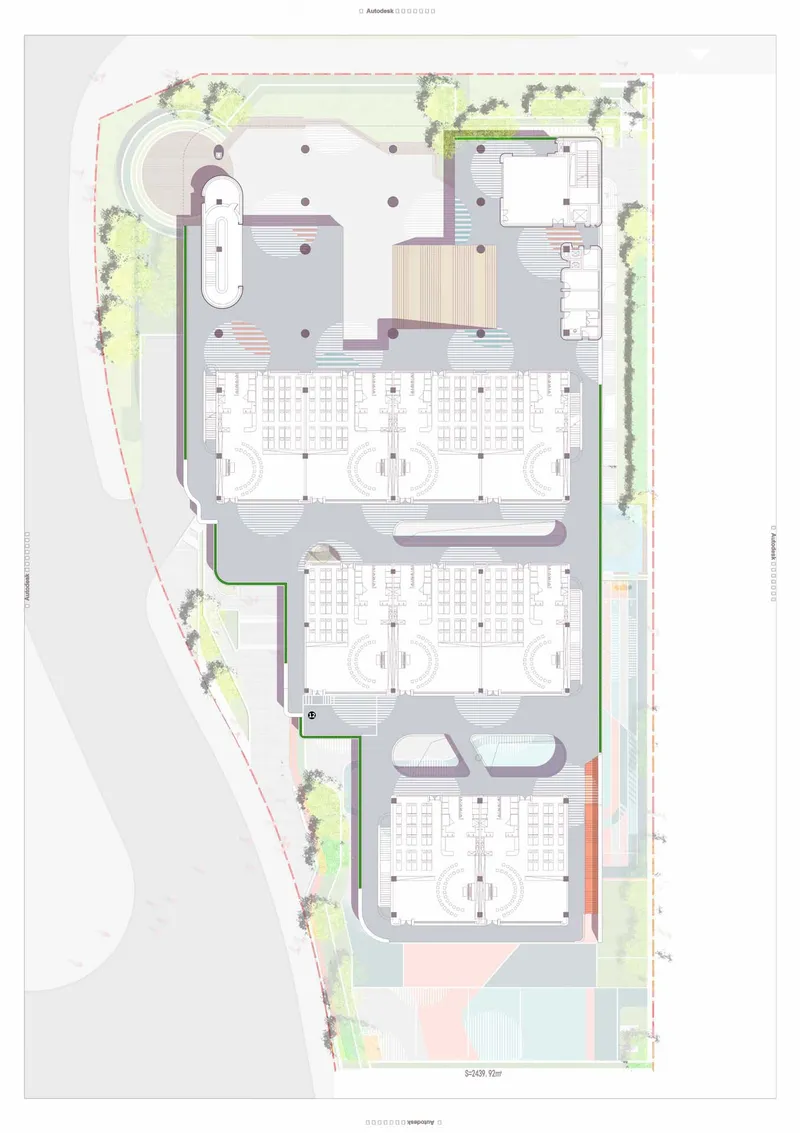
The “Terrace Garden” acts as a vertical playground, weaving through every level of the building with vibrant staircases that encourage exploration and interaction. Each floor features themed gardens that double as scenic classroom views and direct outdoor activity zones. Children of all age groups can engage with diverse landscapes—ranging from quiet corners to wide-open plazas—facilitating social interaction and sensory-rich play.
Child-Centered Interiors and Informal Learning
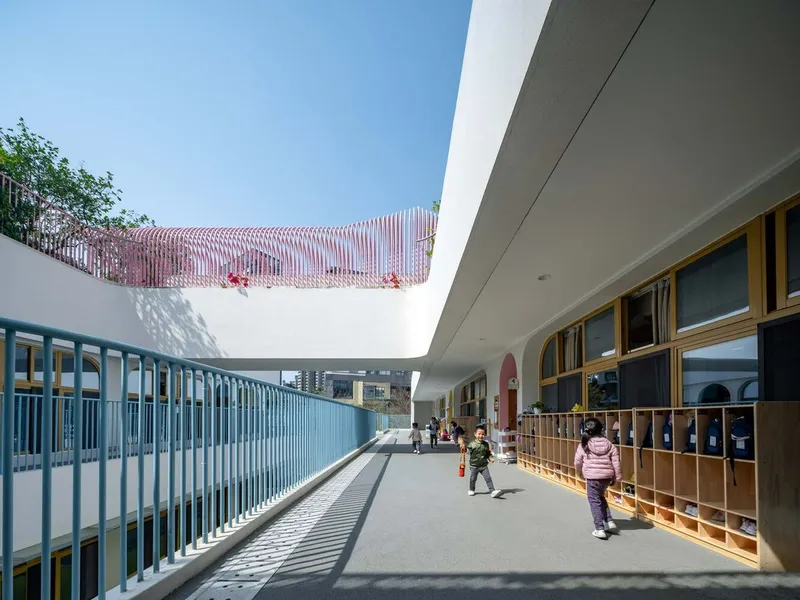
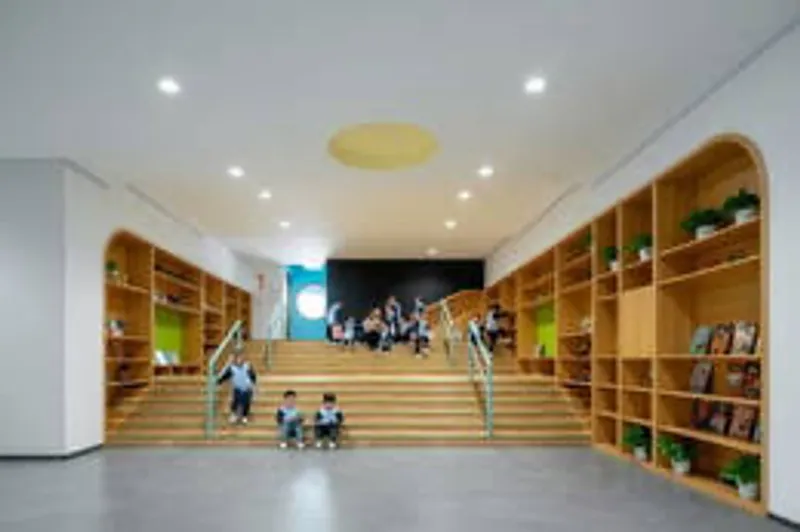
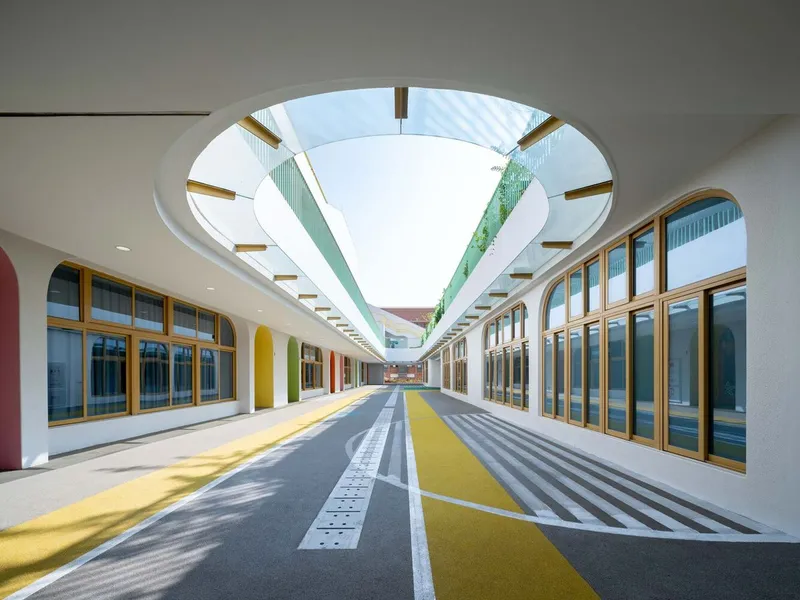
Internally, the architecture is punctuated with playful features like "niches," stepped seating areas, mini courtyards, and thematic zones, all interconnected by a looped corridor. The spatial layout supports both collective learning and solitary discovery, making informal education seamless throughout the day. Natural light, soft curves, and cozy materials support safety and comfort for young children.
Biophilic Design and Climate Responsiveness
The school borrows views from a lush green belt to the north and celebrates seasonal flora like the Spathodea campanulata, bringing local ecology into daily awareness. The architects designed shaded open floors, projecting windows, eaves, and hollow corridors that adapt to Shenzhen’s hot, rainy climate while also creating a dynamic, cave-like facade enriched with texture and greenery.
Safety and Sensory Engagement in Every Detail
Rounded edges, child-height windowsills that double as seats, interactive playground equipment, and strategically placed columns all support safe and intuitive movement. The north-side two-story plaza becomes a key play and gathering zone during inclement weather, doubling as a platform for imaginative play with structures like the submarine-themed playground.
A New Model for Kindergartens in Dense Cities
The Shenzhen Nanshan Education Kindergarten sets a new benchmark for educational facilities in crowded urban contexts. It demonstrates how educational architecture can be both high-density and high-quality, blending compactness with creativity. With its rich architectural vocabulary, seamless indoor-outdoor connection, and child-first approach, the campus redefines how cities can grow with their youngest residents in mind.
All the photographs sre works of IX-MILES


Popular Articles
Popular articles from the community


ALGAL REALM: A Bio-Integrated Lunar Habitat Design for Life Beyond Earth
ALGAL REALM reimagines lunar habitat design with algae-powered life support, 3D-printed regolith, and vertical living for a lunar future.

Little Red Riding Hood: Architectural Design as a Journey Through Fear, Light, and Storytelling
Little Red Riding Hood reimagines the fairy tale through architectural design shaped by fear, light, scale, memory, uncertainty, and choice.

Conexión: Biophilic Design Reimagines High-Rise Living in Hong Kong
Conexión reimagines high-rise living in Hong Kong through biophilic design, green facades, shared spaces, daylight, water and nature within.

Hill & Cross Opera: Sculptural Opera House Architecture Shaped by Tallinn’s Landscape and Identity
Hill & Cross Opera reimagines opera house architecture in Tallinn through its sculptural hill, civic plaza, glass wave and a luminous cross.

Similar Reads
You might also enjoy these articles


Hodi-Mandai Geram
Project Function: Preservation and revitalization of the Intangible heritage and socio-spatial identity of the Hodi by Housing, Cultural Memory Center, Sacred Grove, landscape, local tourism economy


Olio Towers: A Mid-Rise for Performers That Fuses Housing, Rehearsal, and Stage
Located blocks from Houston's Theater District, this modular tower stacks living units around a central performance atrium.

Oasis: Modular Green Housing Carved into Dhaka's Urban Fabric
A shortlisted Plugin Housing entry reclaims unauthorized settlements in Dhaka with stepped concrete volumes, green roofs, and ventilation-driven design.

Black Hole: A Floating Megastructure for the Post-Physical Era
Emiliano Mazzarotto envisions a spherical, self-scaling arena where e-sports, digital hotels, and holographic stadiums replace traditional public space.

Explore Educational Building Competitions
Discover active competitions in this discipline

Challenge to design public laboratory

Challenge to reimagine the Iron Throne

Photograph architecture without architects

Illustrate the lost glory of Angkor Wat - Render Challenge
Comments (0)
Please login or sign up to add comments
No comments yet. Be the first to comment!