
Sher Maker Wraps a Chiang Mai Gas Station in Thousands of Handmade Ceramic Tiles
A roadside PTT station in Saraphi District becomes a showcase for Lanna craft tradition and pearl-coated ceramic cladding.


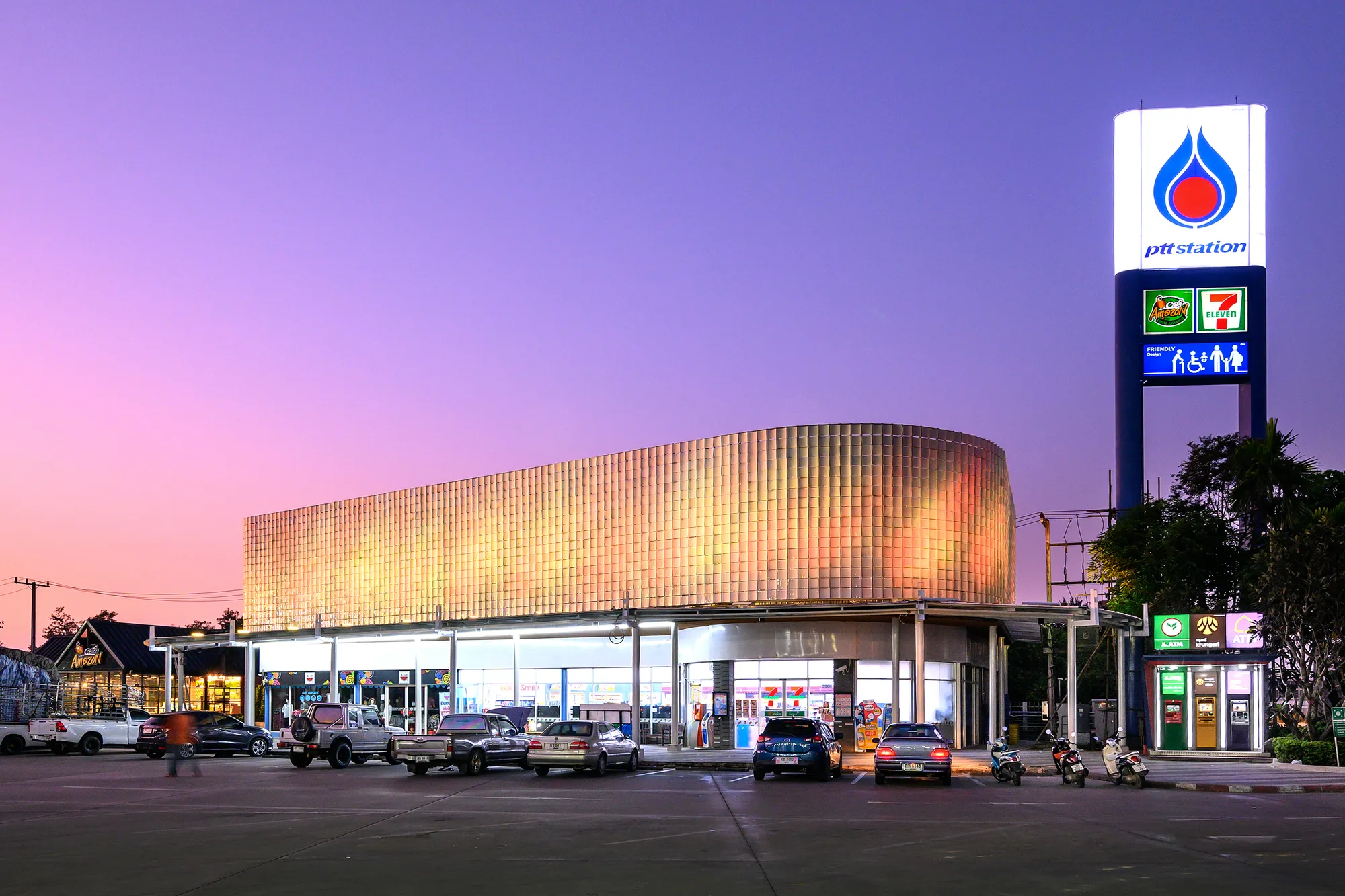
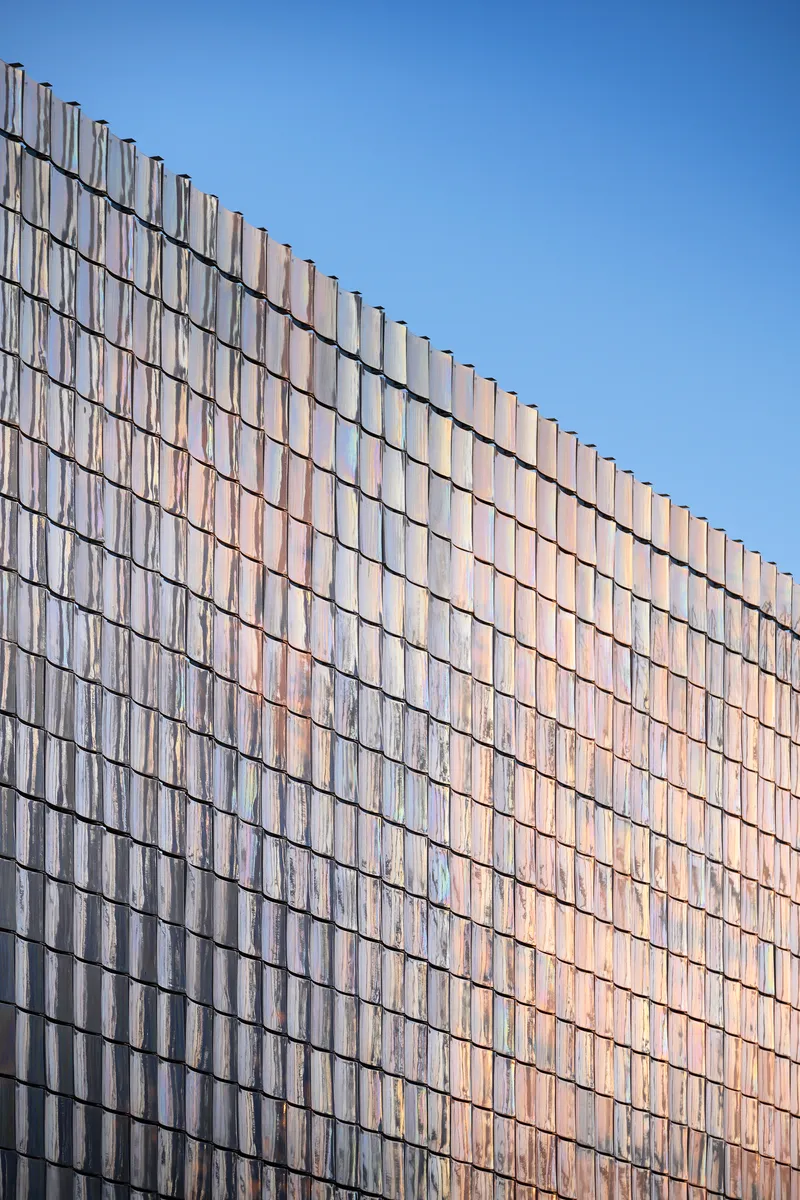
Gas stations rarely warrant a second glance. They are functional, standardized, and designed for speed. Yet along a main route in Chiang Mai's Saraphi District, a PTT station commands attention with a billowing ceramic facade that glows iridescent at dusk and shifts through blues and golds during the day. Sher Maker, the Chiang Mai-based multidisciplinary studio, took on the renovation of an existing 10-meter-high sales building and transformed it into something closer to a civic landmark than a refueling stop, encasing the old structure in a skin of pearl-coated ceramic tiles produced entirely within the district.
What makes this project genuinely interesting is not the visual spectacle, though it is striking, but the production network behind it. Sher Maker co-developed the facade tiles with three separate ceramic studios in Chiang Mai, each contributing a specific expertise: Chatchaiwat handled initial test firings and assessed contraction and structural weight; Maerim Ceramic consulted on tile design; and Saraphi Ceramic Art and Design, located in the same area as the station, applied the final pearl coating. The result is a building whose material culture is inseparable from its geography, a pilot project for proving that non-capital cities can leverage local craft resources at architectural scale.
A Facade That Catches the Light and the Eye
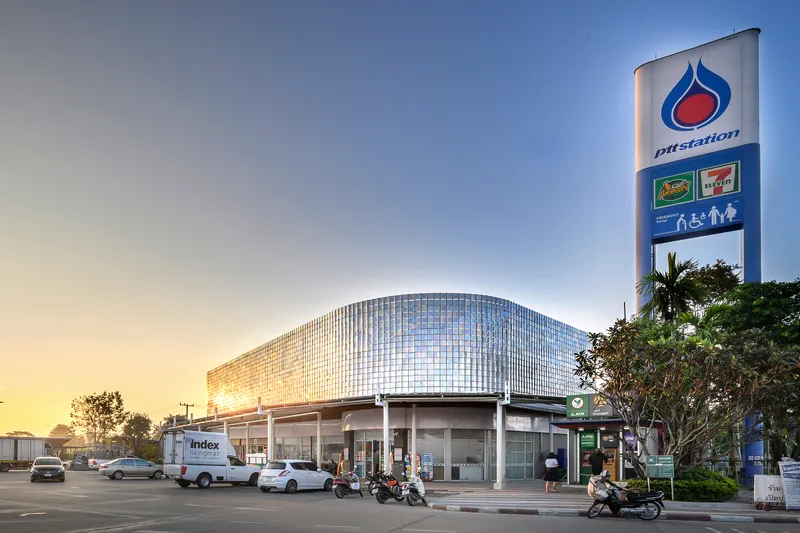
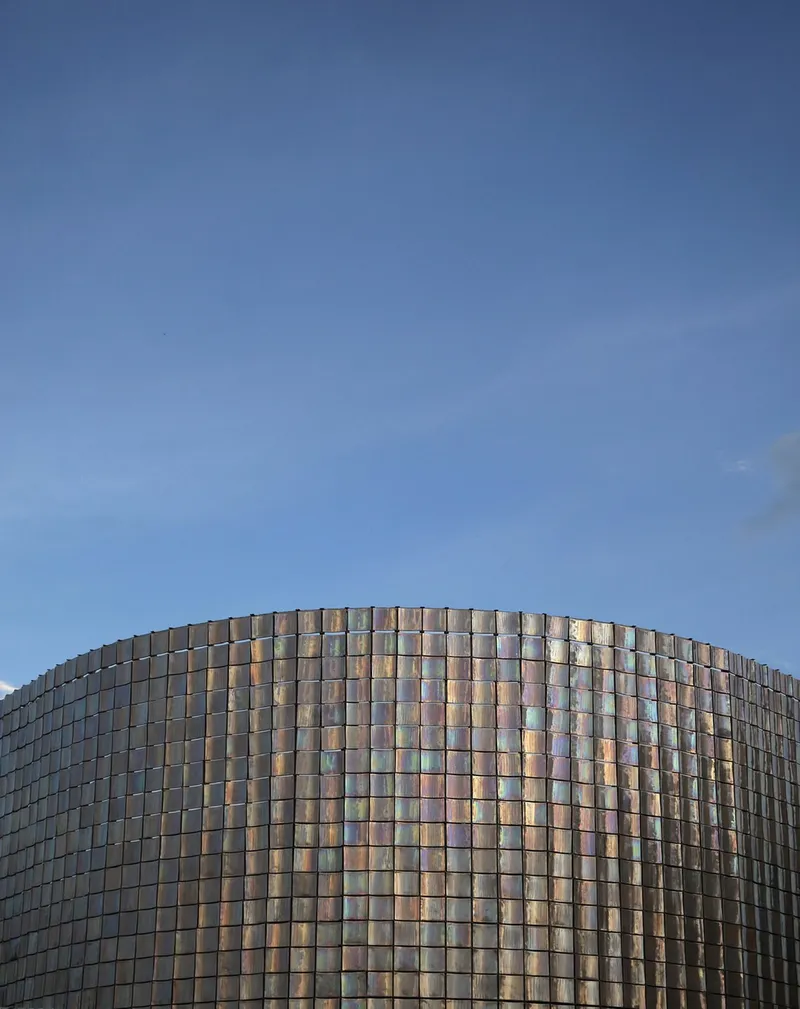
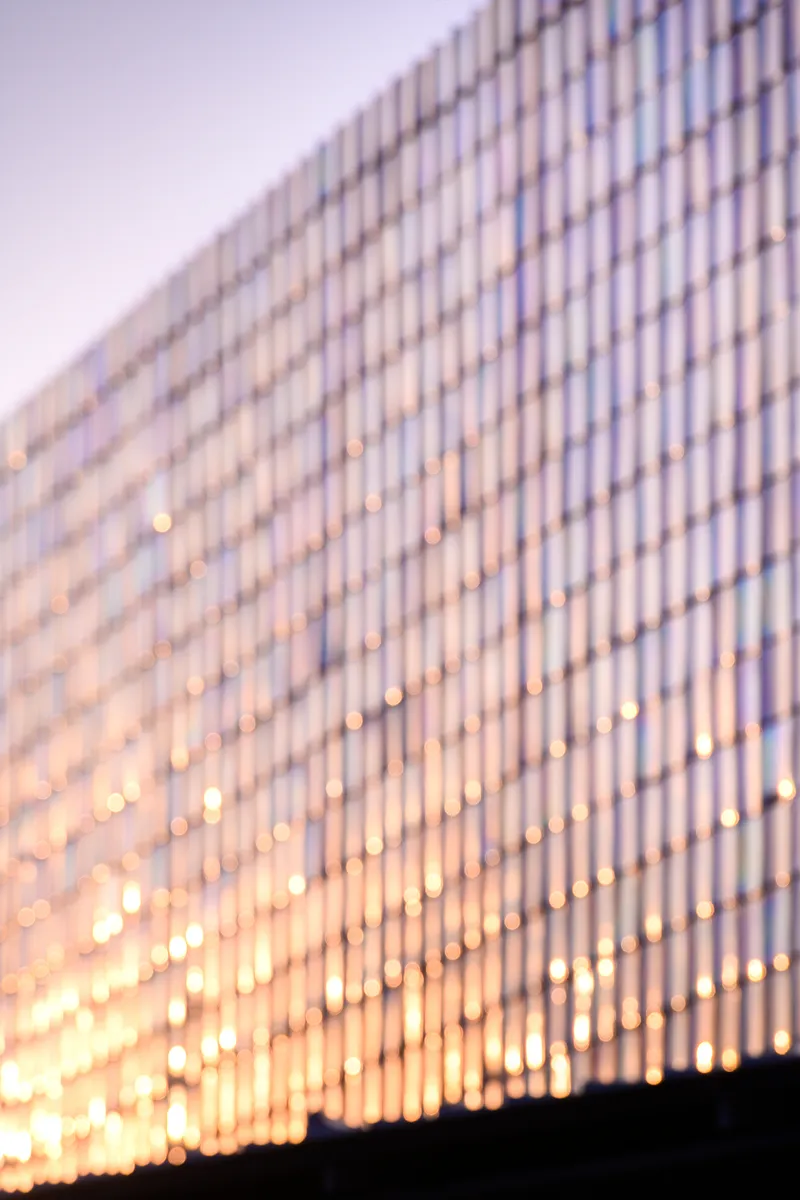
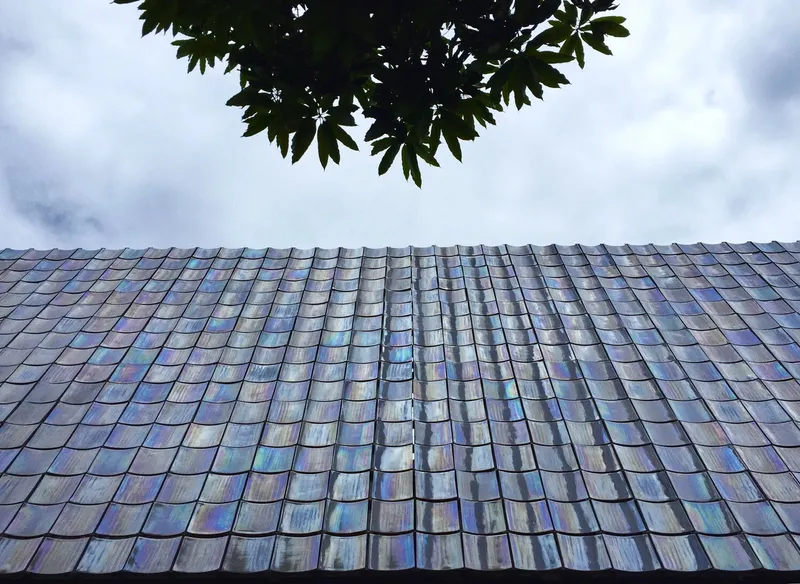
The ceramic cladding wraps the existing structure in a continuous, gently curving surface that reads differently at every hour. In direct sunlight the pearl coating produces a warm metallic sheen with undertones of copper and turquoise. At twilight the tiles become translucent backdrops for the interior lighting, giving the building a lantern-like quality visible from the road. The curve itself references the rounded forms of traditional Lanna clay roof tiles, scaled up and stood on edge to create a wall rather than a roof.
The shift in perception is immediate. Drivers pulling in for fuel encounter a building that refuses the flatness of a typical canopy structure. The facade's gentle undulation breaks up what would otherwise be a monotonous commercial frontage and creates depth and shadow play that standard metal cladding simply cannot achieve.
Material Texture Up Close
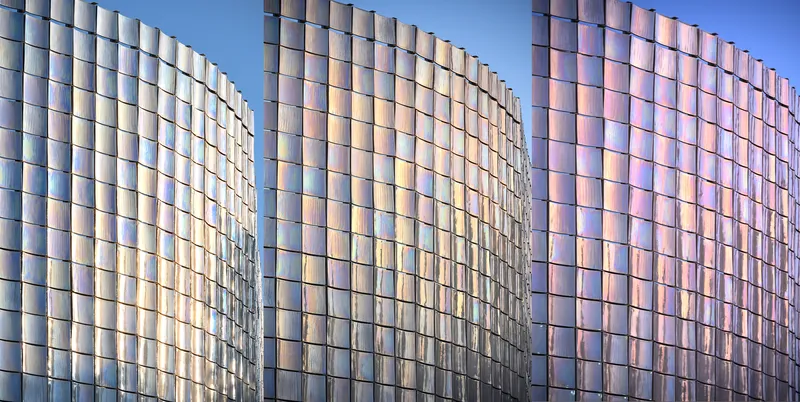
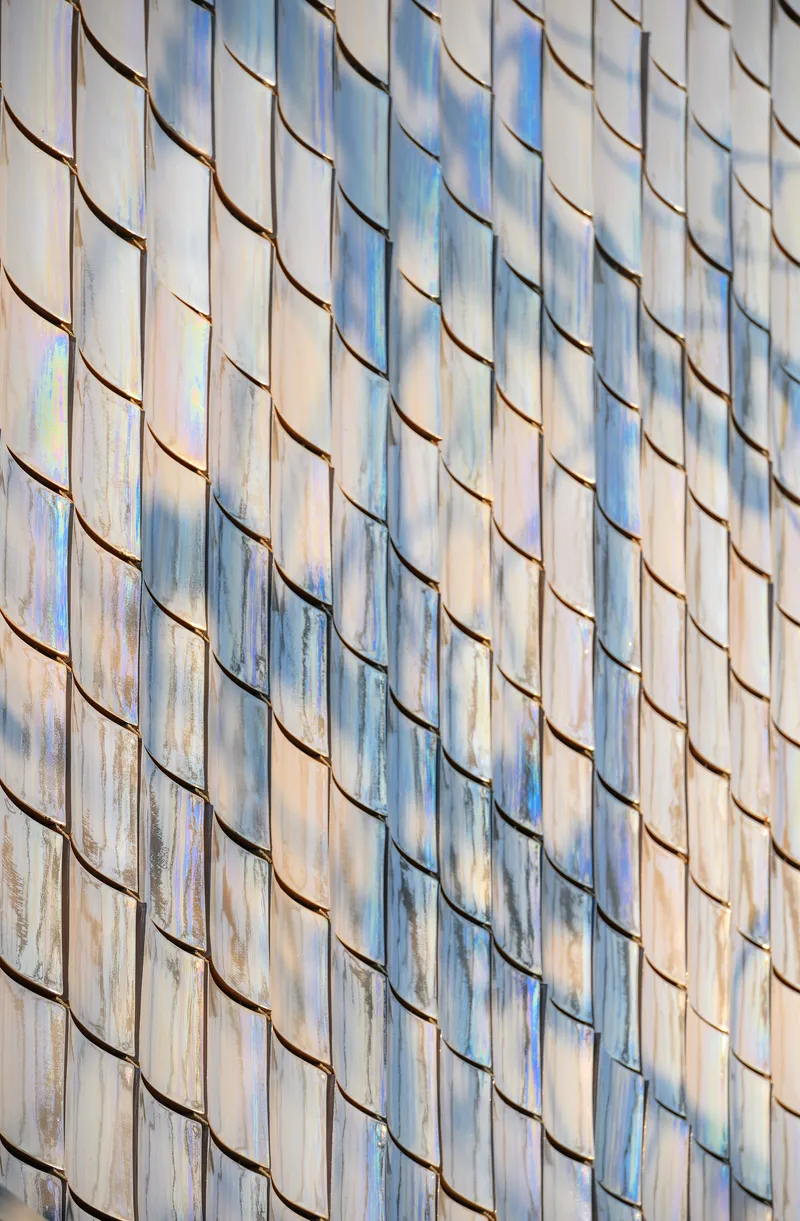
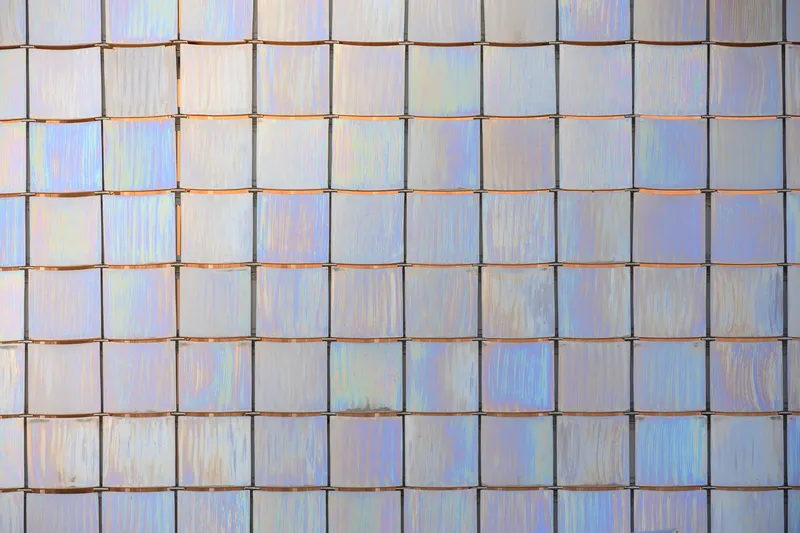
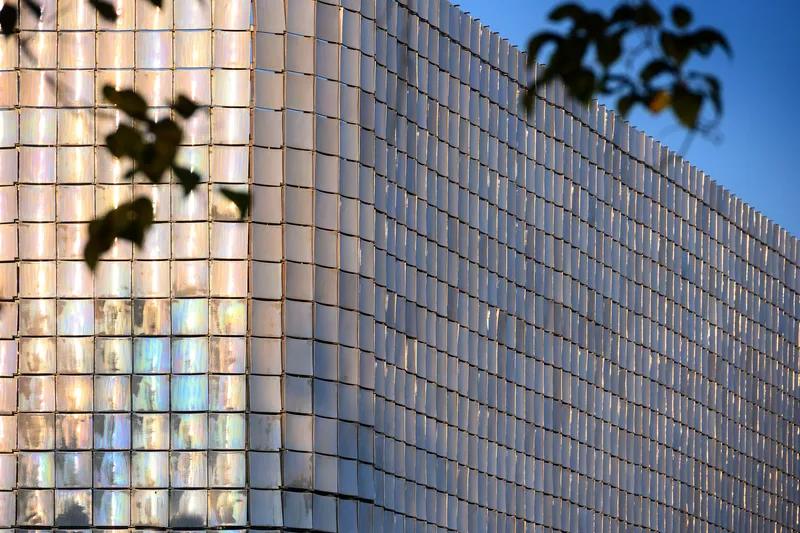
At arm's length, the tiles reveal their handmade origins. No two are identical in color saturation. The pearl glaze pools and thins across each tile's surface, producing gradations that industrial processes would flatten into uniformity. Some show a weathered patina where rain and sun have already begun to mark them, which only enriches the palette rather than degrading it.
The scalloped profile of individual tiles creates a rhythmic texture that catches diagonal shadow lines throughout the day. Metallic frames hold each tile in place within a gridded system that allows the organic form of the ceramic to sit within an orderly structural logic. It is a smart resolution: craft at the surface, engineering at the substrate.
The Curve Meets the Canopy
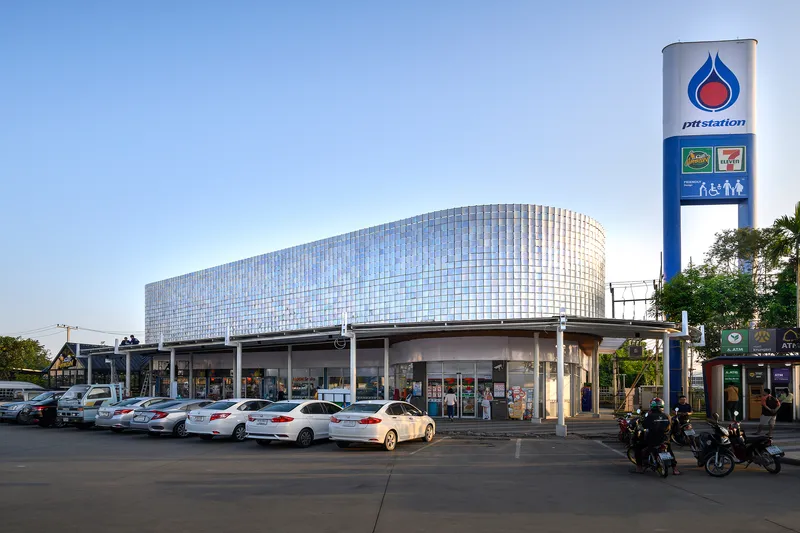
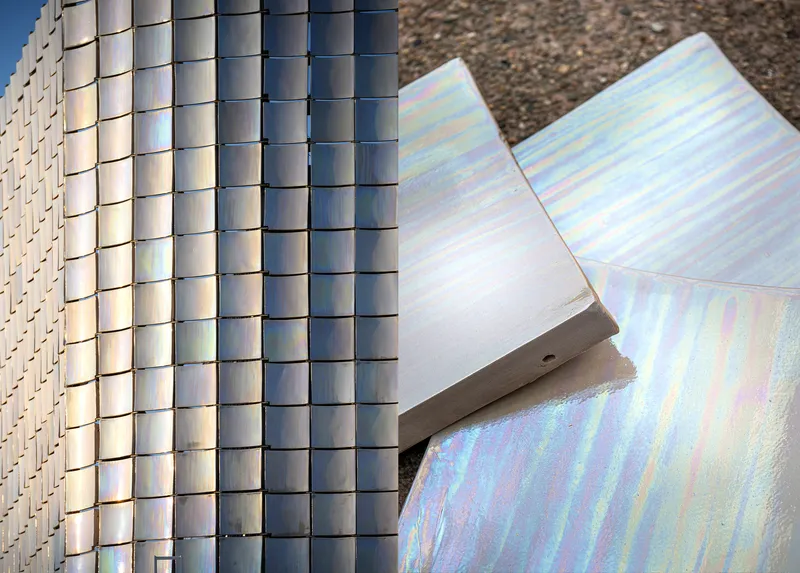
Where the ceramic facade meets the standard gas station canopy below, the building navigates a tricky transition between the artisanal and the industrial. The curving tile wall rises from behind the flat canopy roof, asserting itself as the dominant element while the pumps and service areas carry on underneath in familiar PTT corporate format. Cylindrical metal cladding at certain junctions mediates between the faceted ceramic panels and the rectilinear steel below.
The 10-meter height of the original building works to the design's advantage. It gives the ceramic skin enough vertical real estate to read as architecture rather than decoration. From a moving car, the facade registers as a singular, luminous object sitting above the utilitarian ground plane.
Assembly and Installation
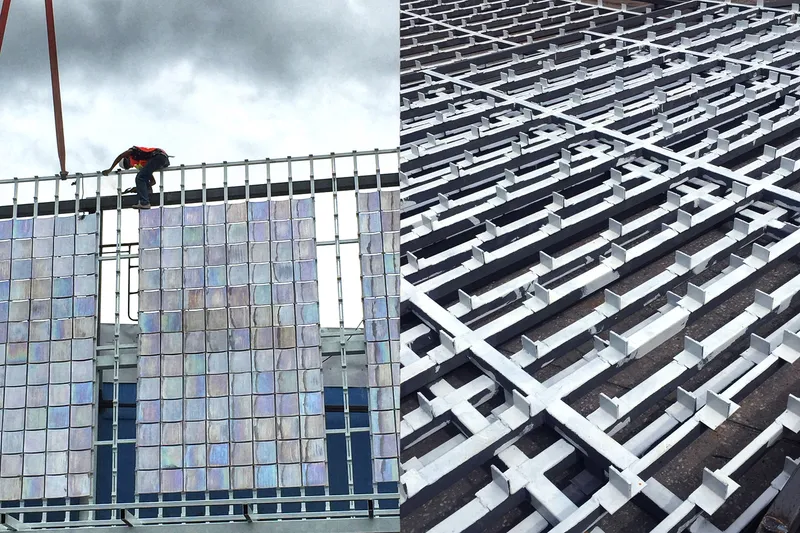
Construction photographs reveal the gridded metal framework onto which the tile panels were mounted. Workers installed iridescent panels one by one onto this substructure, a labor-intensive process that underscores the project's commitment to craft over expedience. Vertical slat sections, visible at certain elevations, allow interior light to bleed through at night, turning structural gaps into a lighting strategy.
The installation method also had to account for the weight and thermal behavior of fired ceramic at this scale. Mock-ups conducted with Chatchaiwat studio were essential to determining how much each tile would contract during firing and how heavy the assembled panels would be once mounted. These are not decorative appliqués; they are load-bearing cladding elements that had to perform structurally.
Inside the Ceramic Workshops
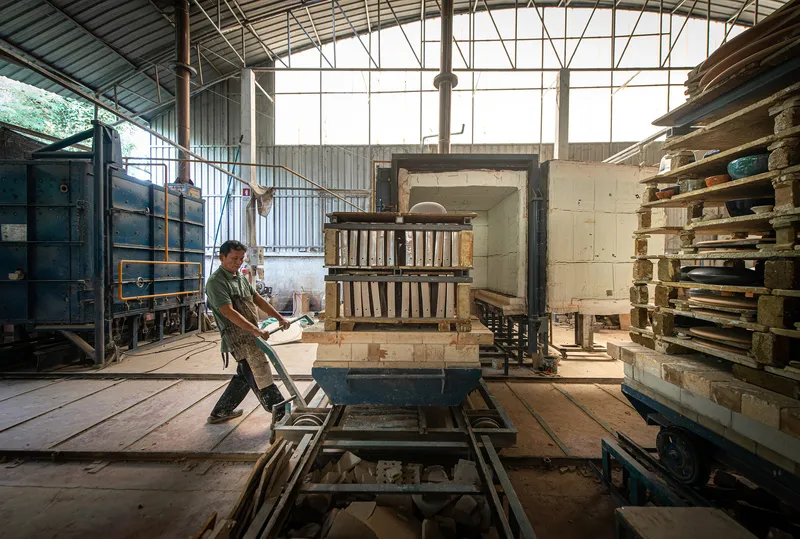
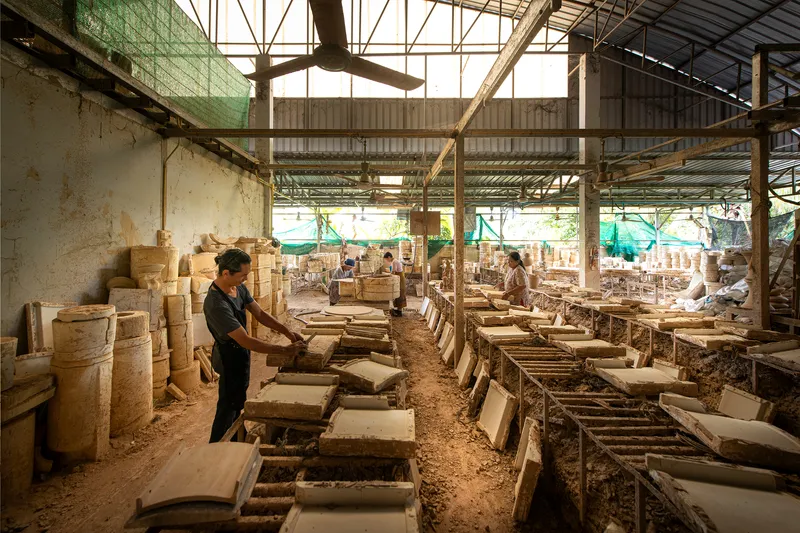
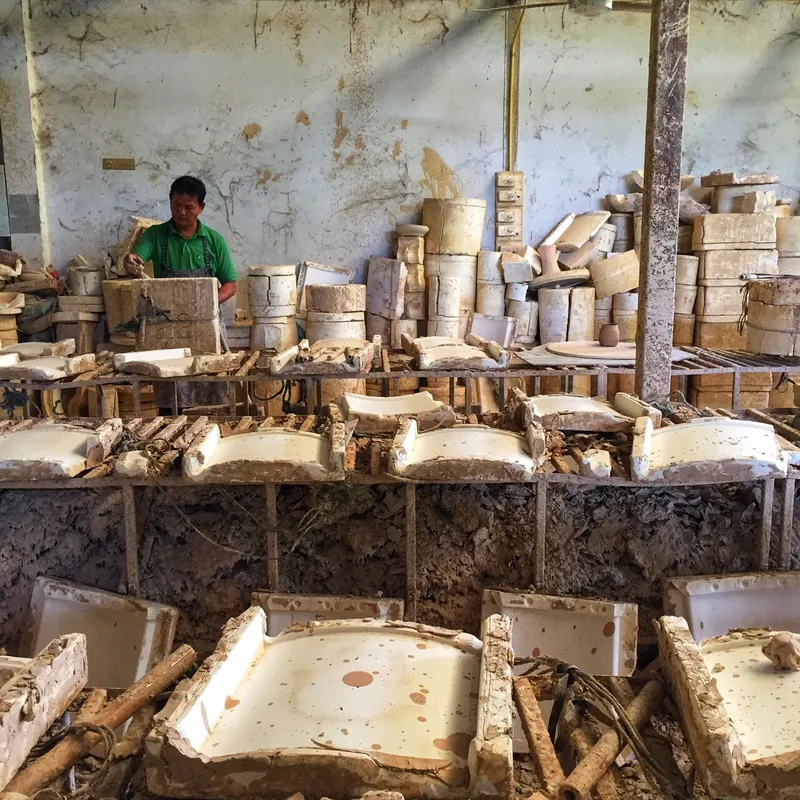
Some of the most compelling images from this project are not of the finished building but of the workshops where the tiles were made. Under skylit steel truss roofs, workers formed clay pieces by hand and loaded them into brick kilns. Rows of ceramic molds stacked on wooden racks speak to the sheer volume of production required. This is not a boutique ceramics operation making a few accent pieces; it is a full-scale manufacturing effort operating within an artisanal framework.
The fact that Saraphi Ceramic Art and Design sits in the same district as the gas station collapses the distance between factory and site. Materials did not travel across the country. They were conceived, tested, fired, and installed within a tight geographic radius, making the project an argument for hyper-local supply chains in construction.
Testing, Glazing, and the Craft of Iteration
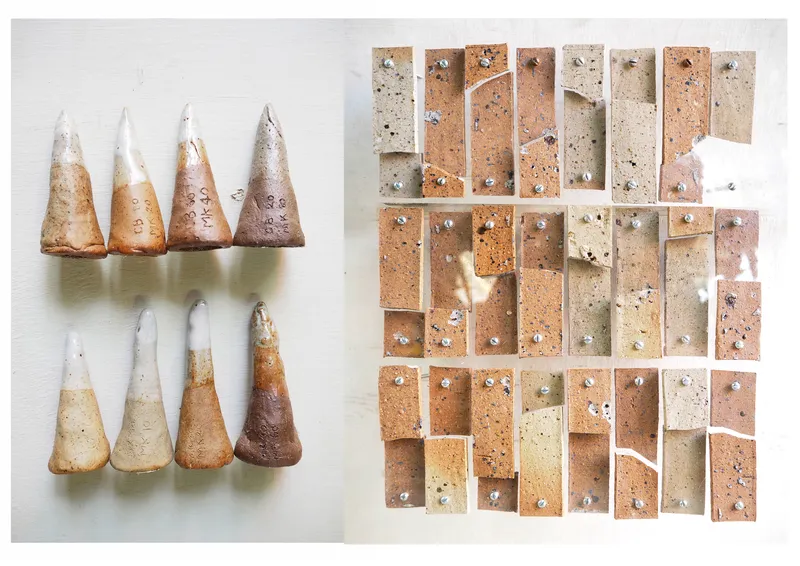
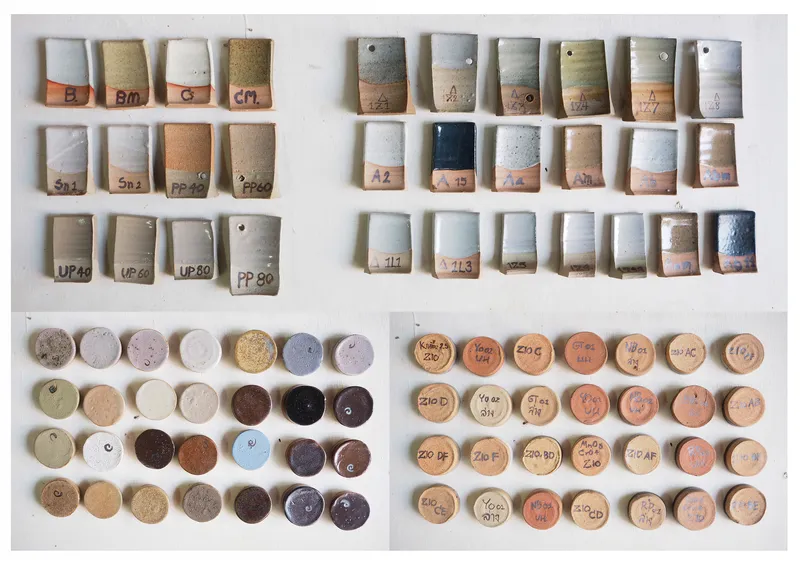
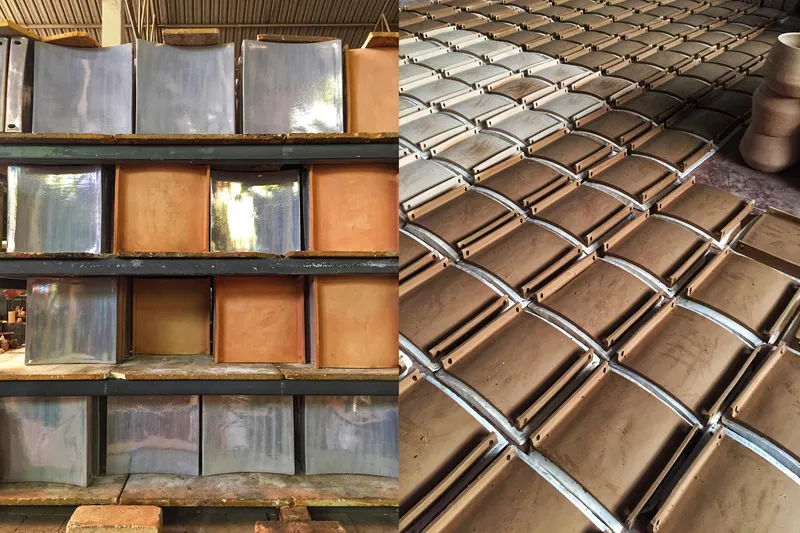
Grids of labeled test samples document the iterative process behind the final tile. Layered glazes, varying clay body formulations, and different aggregate mixes were all trialed before the pearl coating formula was locked down. Conical test samples and rectangular specimens sit side by side, each tagged with batch information. The workshop shelves also hold curved terra cotta roofing tiles, a reminder that the Lanna tradition of clay construction was never far from the design conversation.
This level of material research is unusual for a commercial renovation. It signals that Sher Maker treated the gas station not as a quick cosmetic upgrade but as a genuine R&D exercise in regional ceramic technology. The knowledge gained here is transferable to future projects, making the station a proving ground as much as a finished work.
From Kiln to Cladding
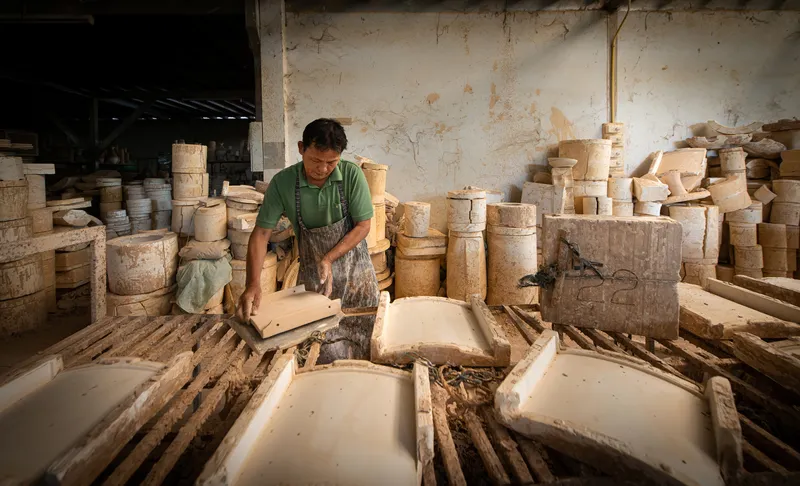
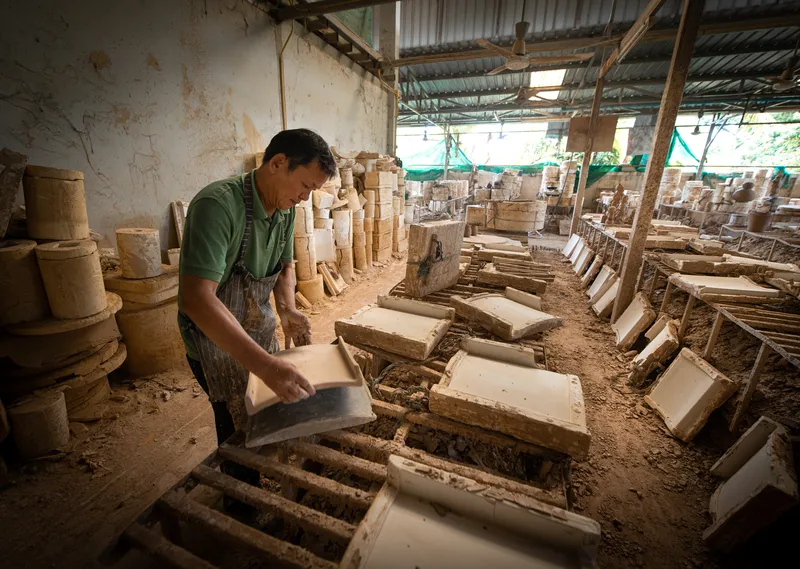
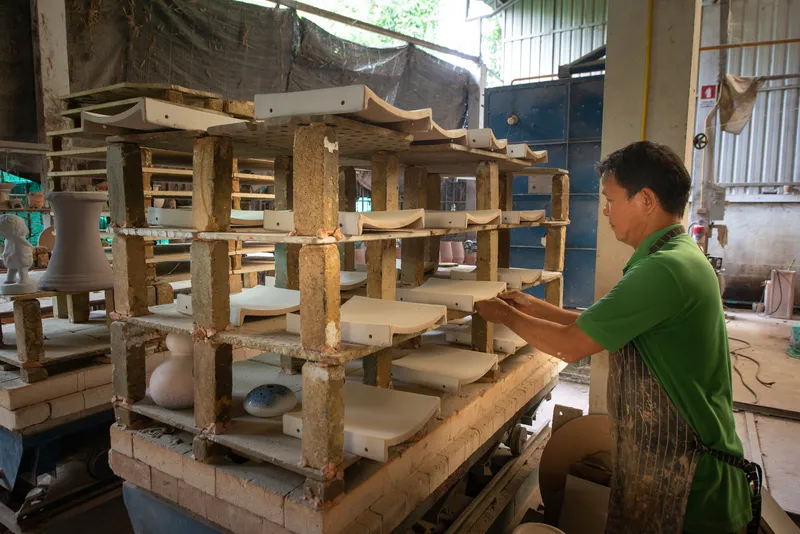
Craftsmen inspecting unfired tiles on drying racks, placing them into multi-tiered wooden kiln racks, and monitoring the production line represent a workflow that connects directly to Chiang Mai's broader craft identity. The province is recognized nationally for its craft movements, and this project positions architecture as a legitimate client for those skills, not just the tourism or souvenir market.
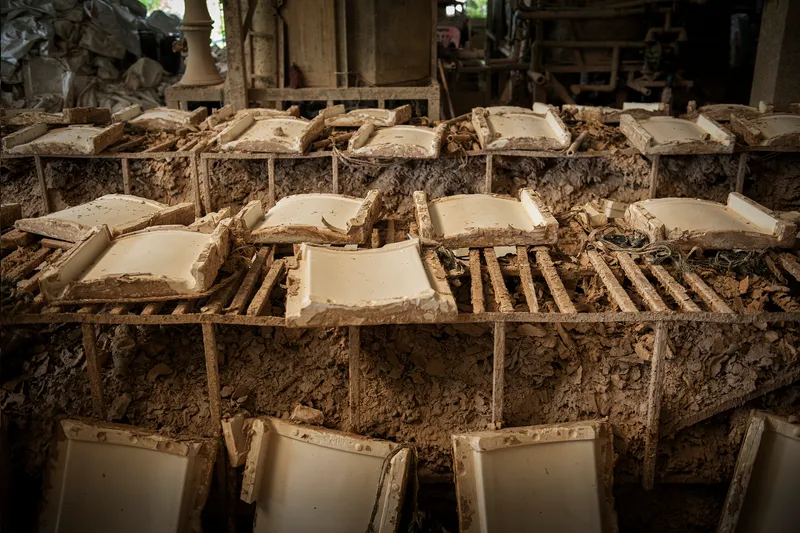
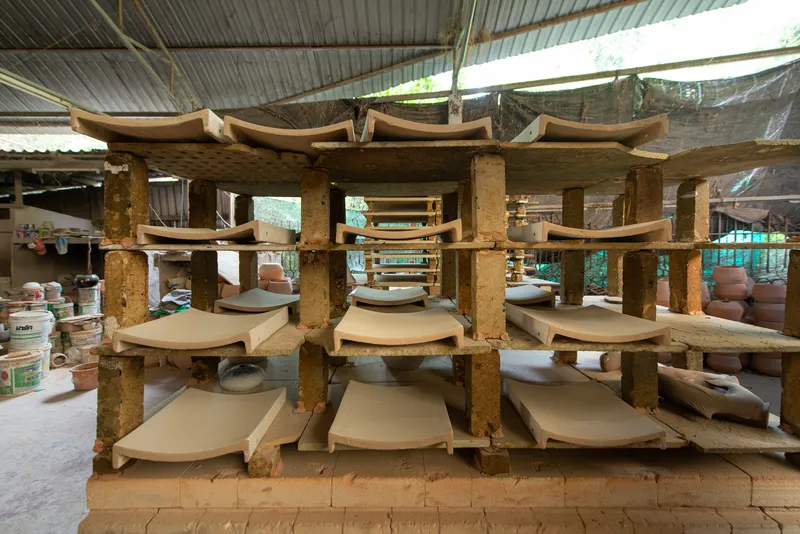
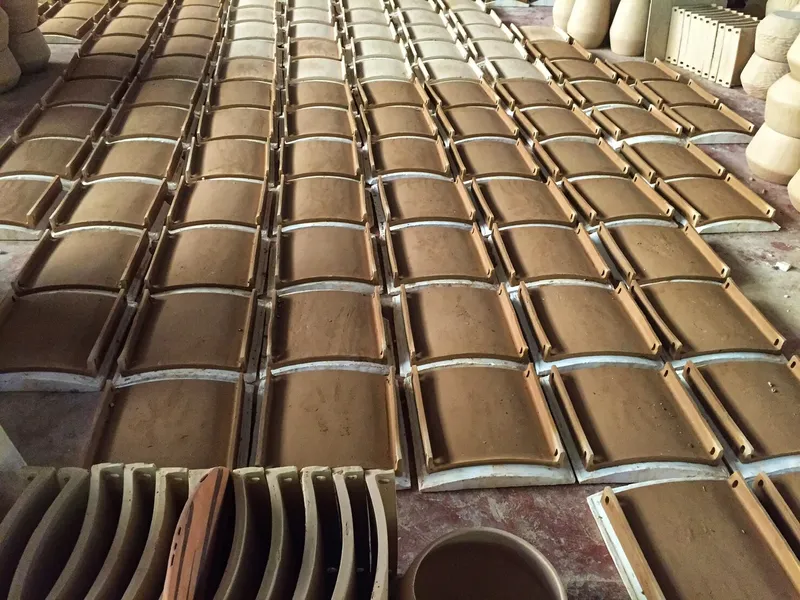
Stacked molds covered in drying clay, multi-tiered racks of curved tiles resting under corrugated roofing, and rows of finished pieces on the workshop floor complete the picture of a genuinely collaborative production. Three studios, each with distinct expertise, contributed to a single facade. That collaborative model is arguably the project's most replicable innovation.
Plans and Drawings
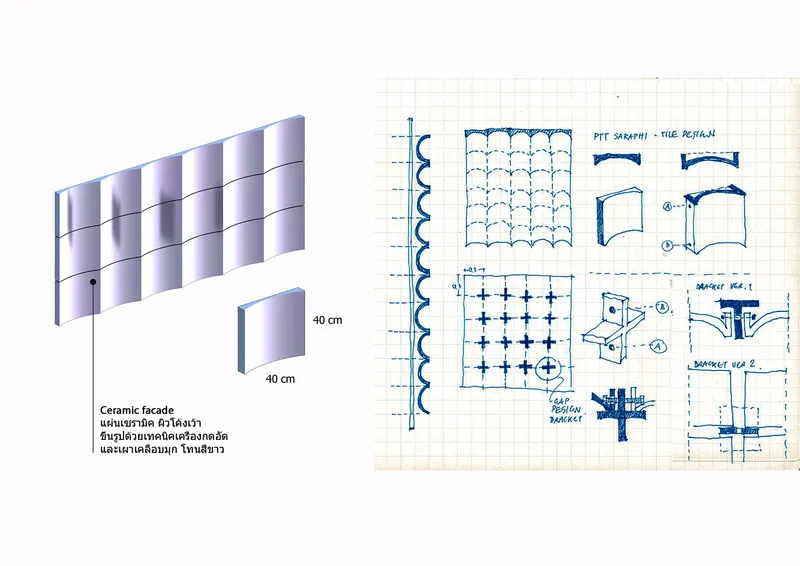
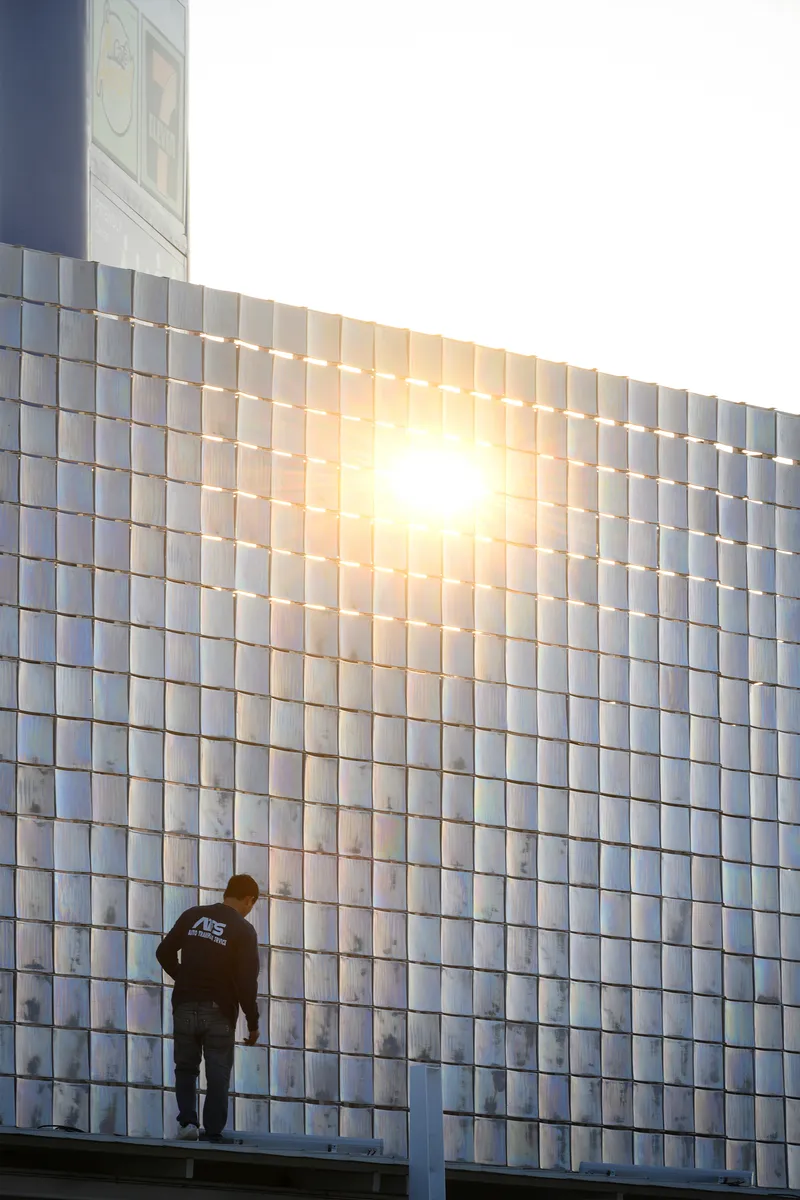
The technical drawing reveals the ceramic facade system in axonometric views alongside hand-sketched assembly details on grid paper. It shows how the individual tiles lock into the metal framework and how the curved profile was generated from a series of flat panel segments. The rooftop platform photograph, with a figure standing beside the backlit facade, gives a sense of the scale that the drawing alone cannot communicate. Together they clarify that the design is both a craft exercise and a carefully engineered system.
Why This Project Matters
The PTT Saraphi Gas Station matters because it reframes what a commercial renovation can accomplish beyond the bottom line. By embedding local ceramic craft into the building's identity, Sher Maker created a structure that functions as both a service station and a public demonstration of regional capability. It proves that mundane building types, the ones we drive past without thinking, are valid sites for architectural ambition and material innovation. The building does not hide its function; it elevates the conversation around it.
More broadly, the project challenges the assumption that meaningful craft-based architecture belongs only in cultural institutions or luxury residences. A gas station is as commercial and transient a program as you can find. If Chiang Mai's ceramic tradition can dignify a fuel stop on a district highway, it can dignify almost anything. That is the real argument Sher Maker is making, and the iridescent facade is simply the most visible evidence.
PTT Saraphi Gas Station by Sher Maker. Chiang Mai, Thailand. Completed 2019. Photography by Rungkit Charoenwat.
About the Studio
Share Your Own Work on uni.xyz
If projects like this are the kind of work you want to make, uni.xyz is a place to publish your own, find collaborators, and enter design competitions.



Popular Articles
Popular articles from the community


Co-life: Sustainable Architecture for Age-Friendly Community Living
Co-life reimagines sustainable architecture for seniors through courtyards, rammed earth, shared gardens, and spaces designed for belonging.

Conexión: Biophilic Design Reimagines High-Rise Living in Hong Kong
Conexión reimagines high-rise living in Hong Kong through biophilic design, green facades, shared spaces, daylight, water and nature within.

The Ocean Hive: Sustainable Architecture for a Self-Sufficient Civilization at Sea
The Ocean Hive imagines sustainable architecture at sea, where modular habitats, algae, wave power and ocean waste sustain a growing colony.

The Musturak Paradise: Senior Living Architecture for a Connected Future in Temara, Morocco
The Musturak Paradise reimagines senior living architecture in Temara via private homes, social spaces, culture, community, and shared care.

Similar Reads
You might also enjoy these articles

Bao Huynh Watercolor Atelier: A Serene Art Retreat in Hội An
Bao Huynh Watercolor Atelier in Hội An blends multifunctional art spaces, sustainable design, local materials, and family-friendly living in a serene environment.

Atelier Macri Concept Store Interior Design by CASE-REAL
Atelier Macri store features a "ko" counter, walnut wood details, cork displays, blending retail, gallery, and seamless customer experiences.

Manuel Vargas Izquierdo Stadium and High-Performance Sports Center: Architectural Excellence in Jalpa de Méndez
The Manuel Vargas Izquierdo Stadium blends sustainable design, inclusive sports facilities, and cultural-inspired architecture, revitalizing Jalpa de Méndez’s public spaces.

KAKR Buluh Awar Hall: Revitalizing Community and Ecology Through Bamboo Architecture
Community built bamboo hall revitalizes Buluh Awar village, empowering youth, restoring ecology, celebrating vernacular craftsmanship through sustainable architecture and culture.


Explore Power Station Competitions
Discover active competitions in this discipline



Challenge to reimagine the Iron Throne


Photograph architecture without architects


Illustrate the lost glory of Angkor Wat - Render Challenge


Design challenge to reuse E-waste
Comments (0)
Please login or sign up to add comments
No comments yet. Be the first to comment!