

Silver Lining House by Mork-Ulnes Architects: A Reimagined Modern Residence in San Francisco
A modern San Francisco home blending Victorian charm with minimalist design, showcasing artful interiors, natural light, and architectural resilience.


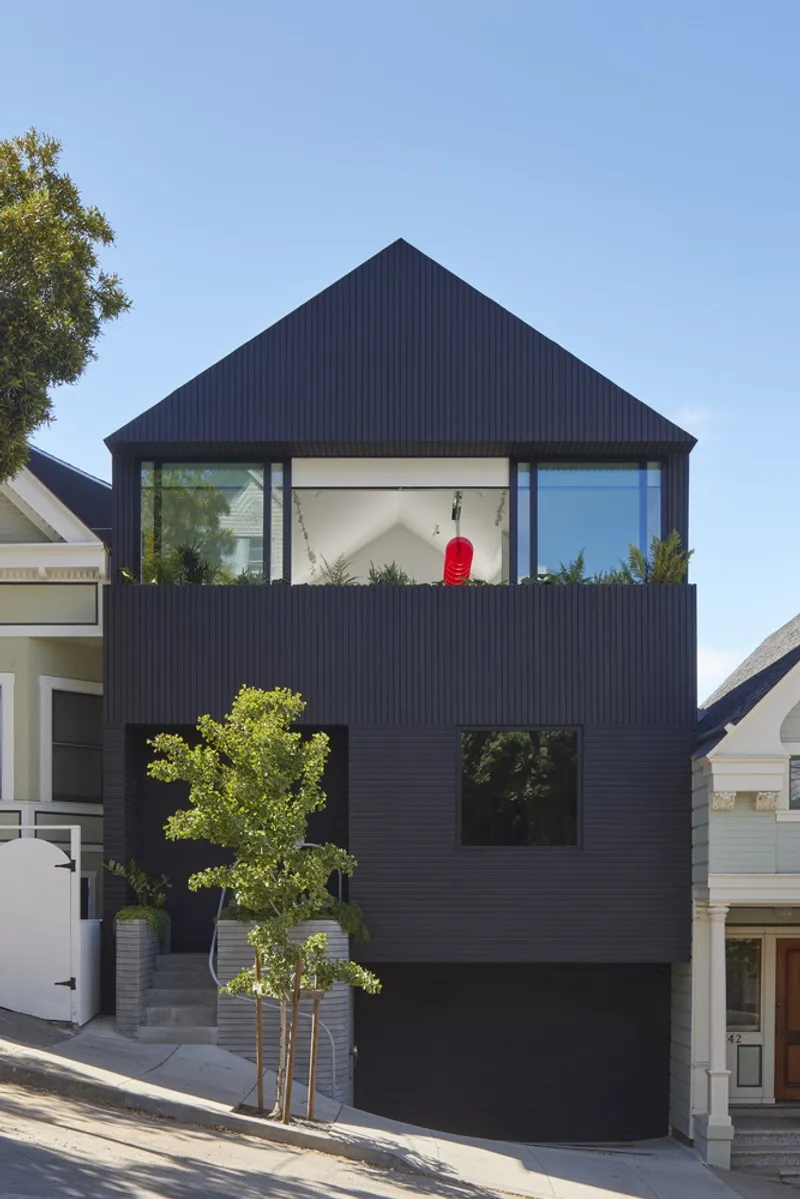
Nestled within the historic neighborhood of Bernal Heights, San Francisco, the Silver Lining House by Mork-Ulnes Architects is a striking blend of modern architecture and contextual design. This three-story home stands as a refined and contemporary reinterpretation of its Edwardian neighbors, both honoring tradition and redefining it through innovative materials and spatial storytelling.
A Vision Rooted in Art, Architecture, and Resilience
The project began as a labor of love by interior designer Alison Damonte and architectural photographer Bruce Damonte, who purchased the original 1908 wood-frame house over a decade ago. What started as a modest, single-story Victorian structure slowly evolved through years of careful planning and design, with architect Casper Mork-Ulnes—a close friend and early supporter of Bruce’s career—leading the transformation.
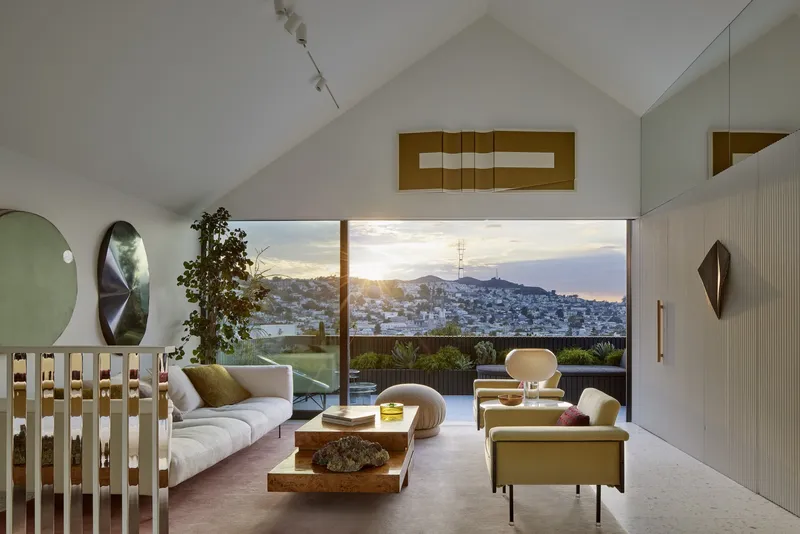
Tragically, the renovation process took a dramatic turn when a fire devastated the home on Christmas Eve in 2017. Rather than halt their ambitions, the couple used the event as an opportunity to reimagine the home with renewed vision. Their objective remained clear: to craft a residence that serves as both a living space and a personal gallery—a vessel for their extensive art and designer furniture collection.
A Modern Interpretation of Victorian Vernacular
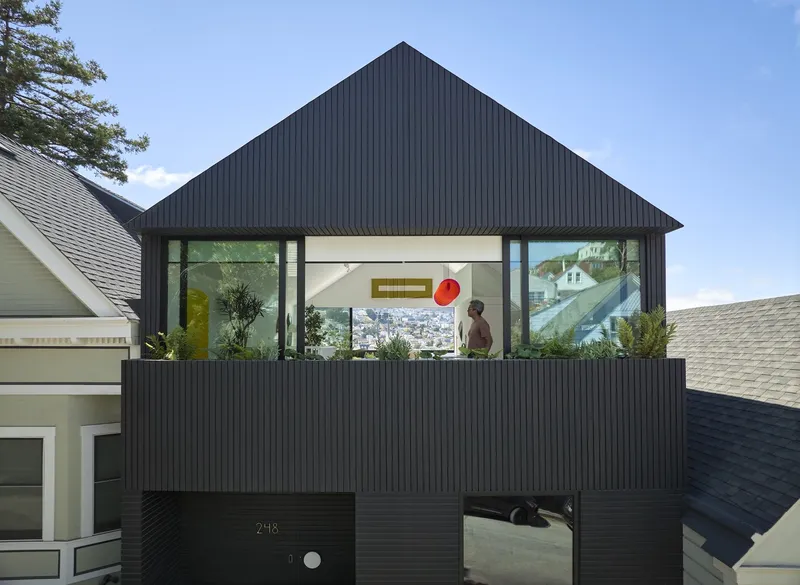
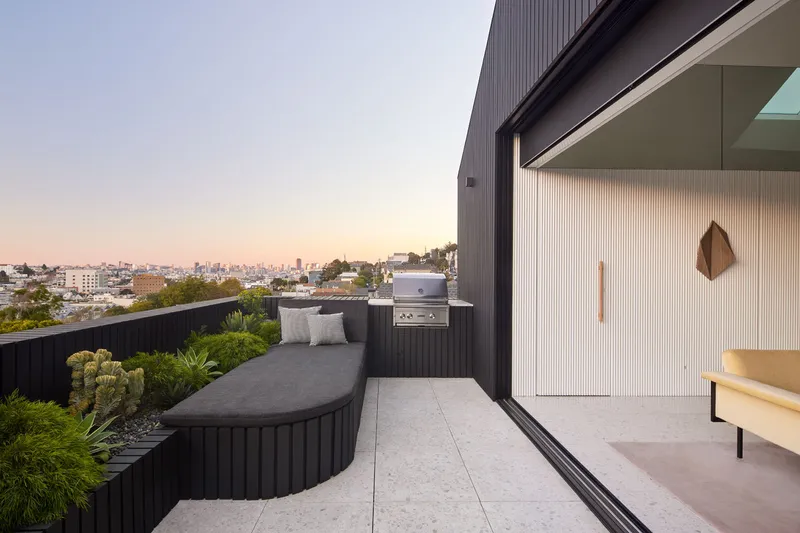
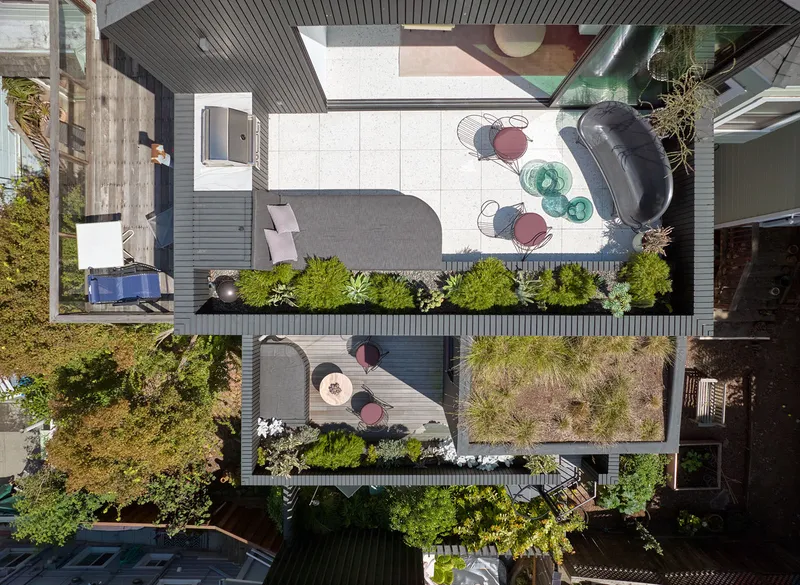
The newly designed Silver Lining House mirrors the scale and silhouette of its gabled Edwardian neighbors, aligning respectfully with San Francisco’s steep, historic streetscape. However, Mork-Ulnes Architects brought a modern architectural language to the home through materiality and massing. The façade, clad in horizontally paneled black-painted cedar, offers a bold contrast to traditional Victorians while maintaining a dialogue with the surrounding urban fabric.
Architectural elements such as ribbon windows and a modern stoop reinterpret classic motifs, creating visual continuity while embracing a minimalist aesthetic. This interplay between old and new is at the core of the project’s identity—respecting the past while pushing forward into the future.
Interior as Curated Exhibition Space
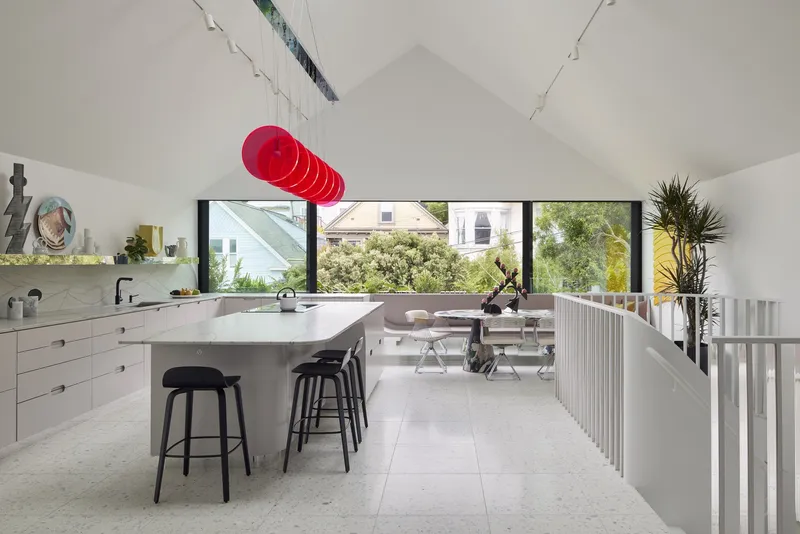
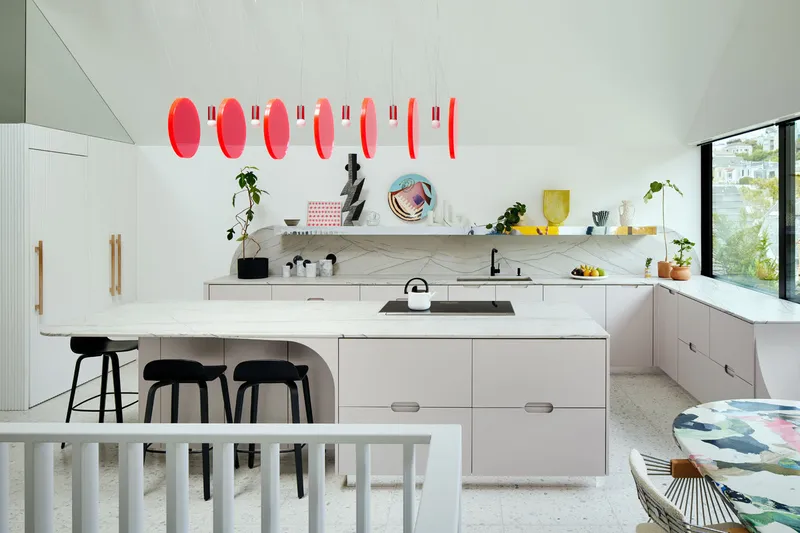
Inside, the house functions as a curated environment for art, creativity, and daily life. The interior design, led by Alison Damonte, emphasizes rich materiality and expressive textures. Carefully selected finishes, colors, and furniture pieces form a harmonious composition that echoes the couple’s artistic sensibilities.
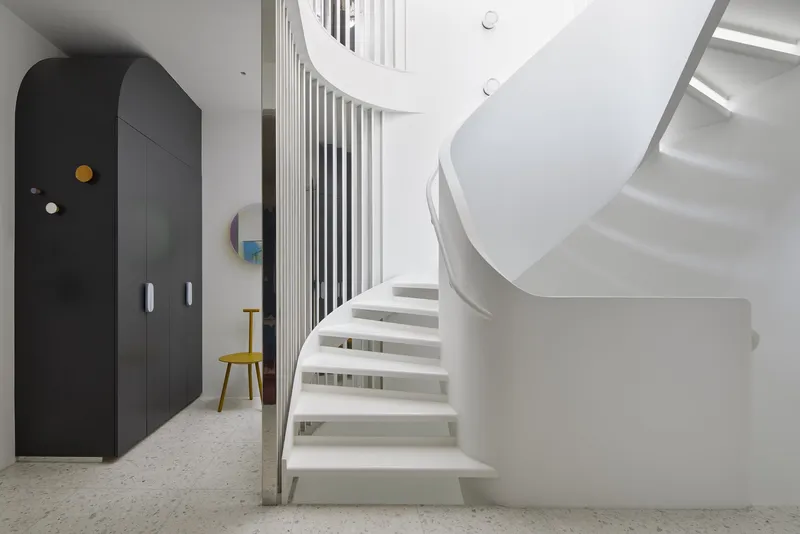
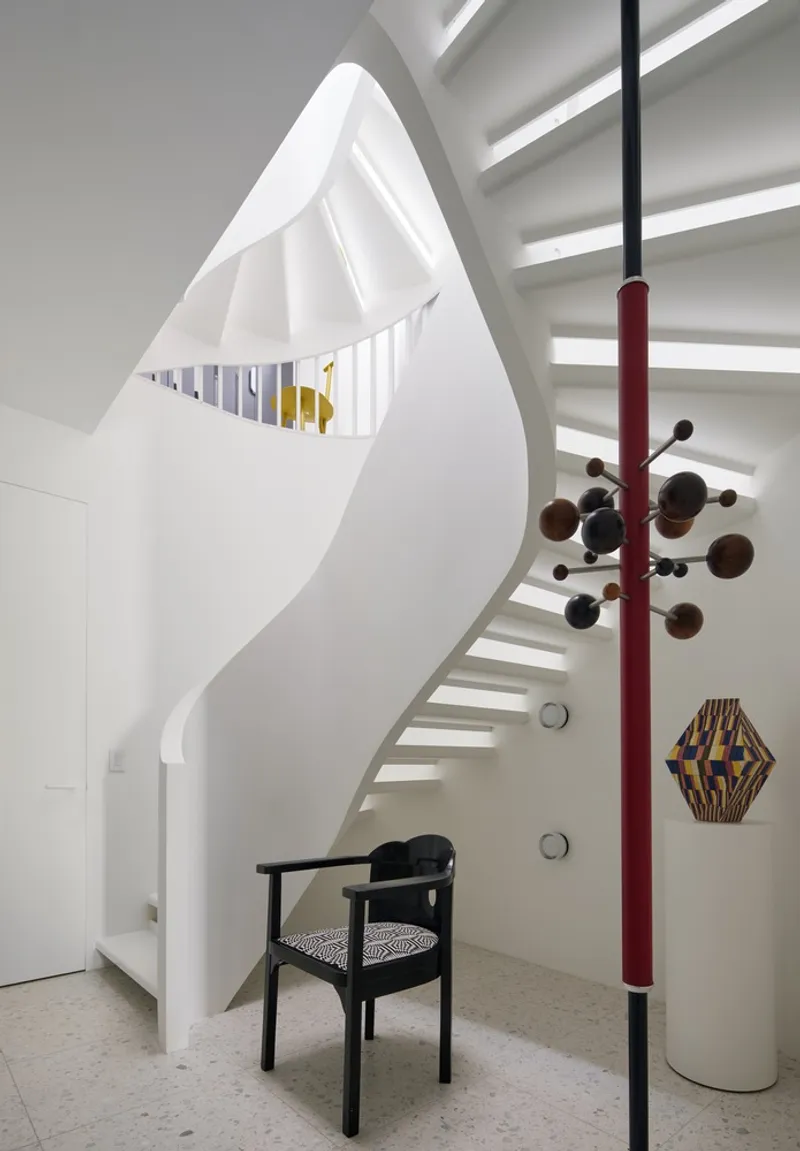
One of the defining architectural gestures within the home is a sculptural, curved staircase—a central light shaft topped by a skylight that channels natural light down through the vertical core of the house. This stairwell not only serves a functional purpose but also becomes a symbolic element of continuity and vertical connection, both visually and experientially.
Blending Functionality with Personal Expression
With three bedrooms and three and a half bathrooms, the residence is tailored for comfort and creativity. Each room is designed to support both everyday living and the display of meaningful objects. The house's flexible layout accommodates the couple’s dual roles as designers and collectors, providing open, light-filled areas that can easily adapt to new uses or changing arrangements of their evolving art collection.
Silver Lining House is a testament to the possibilities that arise when resilience, design ambition, and a passion for personal expression converge. Mork-Ulnes Architects have created more than a home—they have sculpted an architectural narrative that embodies transformation, memory, and modern design integrity.
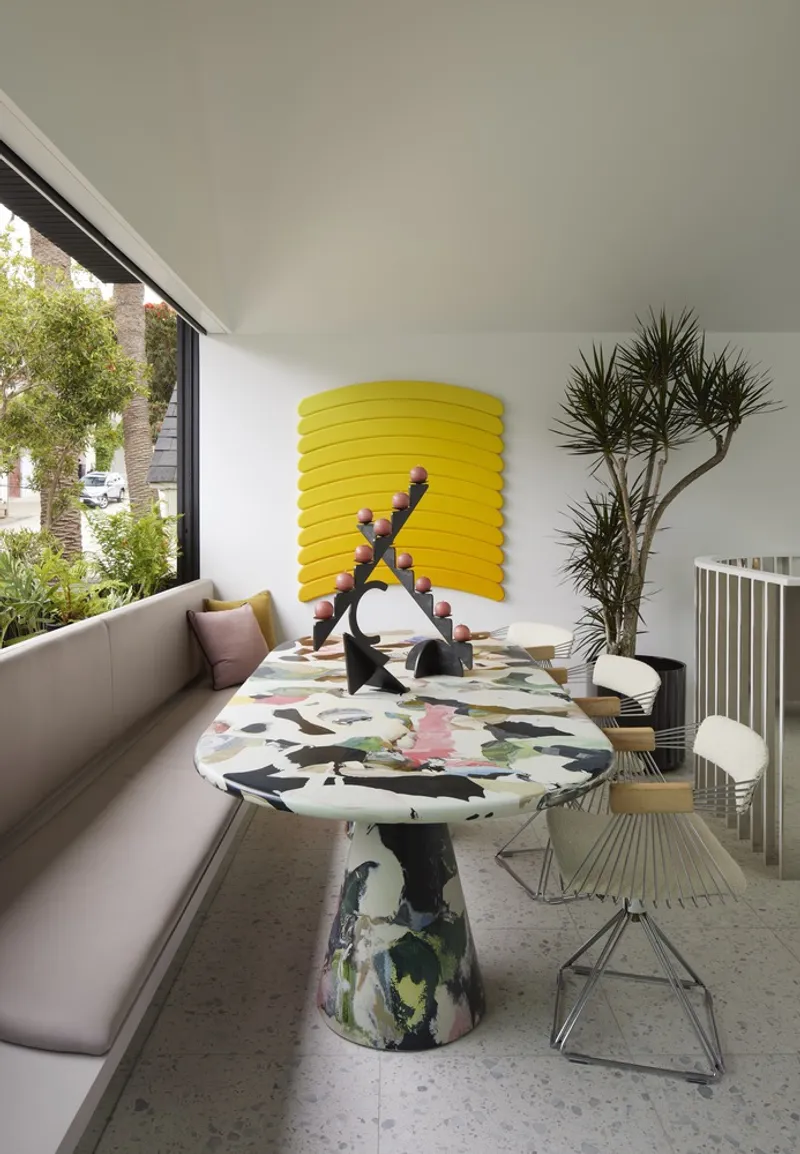
All Photographs are works of Bruce Damonte



Popular Articles
Popular articles from the community


Hill & Cross Opera: Sculptural Opera House Architecture Shaped by Tallinn’s Landscape and Identity
Hill & Cross Opera reimagines opera house architecture in Tallinn through its sculptural hill, civic plaza, glass wave and a luminous cross.

The Musturak Paradise: Senior Living Architecture for a Connected Future in Temara, Morocco
The Musturak Paradise reimagines senior living architecture in Temara via private homes, social spaces, culture, community, and shared care.

AL-JANNAH: Sustainable Architecture and Permaculture for Afghan Widows
AL-JANNAH uses sustainable architecture and permaculture to create resilient oasis of housing, learning, work and renewal for Afghan widows.

The Ocean Hive: Sustainable Architecture for a Self-Sufficient Civilization at Sea
The Ocean Hive imagines sustainable architecture at sea, where modular habitats, algae, wave power and ocean waste sustain a growing colony.


Similar Reads
You might also enjoy these articles


Hodi-Mandai Geram
Project Function: Preservation and revitalization of the Intangible heritage and socio-spatial identity of the Hodi by Housing, Cultural Memory Center, Sacred Grove, landscape, local tourism economy


Olio Towers: A Mid-Rise for Performers That Fuses Housing, Rehearsal, and Stage
Located blocks from Houston's Theater District, this modular tower stacks living units around a central performance atrium.

Oasis: Modular Green Housing Carved into Dhaka's Urban Fabric
A shortlisted Plugin Housing entry reclaims unauthorized settlements in Dhaka with stepped concrete volumes, green roofs, and ventilation-driven design.

Black Hole: A Floating Megastructure for the Post-Physical Era
Emiliano Mazzarotto envisions a spherical, self-scaling arena where e-sports, digital hotels, and holographic stadiums replace traditional public space.

Explore Housing Competitions
Discover active competitions in this discipline



Challenge to reimagine the Iron Throne


Photograph architecture without architects


Illustrate the lost glory of Angkor Wat - Render Challenge


Design challenge to reuse E-waste
Comments (0)
Please login or sign up to add comments
No comments yet. Be the first to comment!