
Slumber
Snail Pod

Considering the remote working situation and the pandemic situation, many workers work at home or places outside the office. In order to enhance their working efficiency, taking a nap is of the utmost importance to recharge themselves from the busy working. The geometry and idea were inspired by the form and habitation of a snail. The Snail Pod is movable to everywhere easily, workers can choose a suitable spot for sleeping.
To provide a quality short nap of 10 to 15 minutes, the temperature, lighting, materials, and sound condition had been considered. For the temperature control, the most comfortable sleeping temperature falls between 18-20 °C. The inner part of the pots consists of a temperature monitor. The energy of the temperature monitor is provided by the photovoltaic panels in the upper part of the Snail Pod. When it is in stationary or not in use, it is suggested to move the sleeping pod to a location with adequate sunlight. Besides, solar power can provide the energy for a tiny speaker inside which helps play some soft music and is beneficial for sleeping quick. The materials used are also soundproof and warm enough. The ergonomics of the mattress consider the angles that can support the whole body in order to protect the neck, shoulder and backbone of users.

Popular Articles
Popular articles from the community


ETEH Reworks the Shared Spaces of São Domingos School in Brazil Around Timber, Color and Hanging Plants
At São Domingos School in Brazil, 436 m² of hall, refectory and library are recast with timber joinery, a yellow and blue code and trailing greenery.

graciastudio Turns a Viewless Tijuana Lot Inward Around a Courtyard of Concrete, Timber and Trees
In Tijuana, Jorge Gracia's GA2 House stacks a timber-clad private floor over exposed concrete and replaces a missing view with a planted interior patio.

Juan García Correa, John González and Claudia Rueda Sink a Circular Amphitheater into a Manizales Engineering Building
On the La Nubia campus in Manizales, Colombia, the S1 Building folds labs and offices into a hillside of ramped lawns that double as a campus route.


The Amber Palace Opera: A Geological Fiction Surfaces on Tallinn's Baltic Waterfront
Pierre Brillard reimagines a Baltic legend as a public landscape, opera house, and waterfront promenade rooted in Tallinn's coastal identity.

Similar Reads
You might also enjoy these articles

The Rhythm of Seasons
A Farmers' Market Connecting Nature and the City

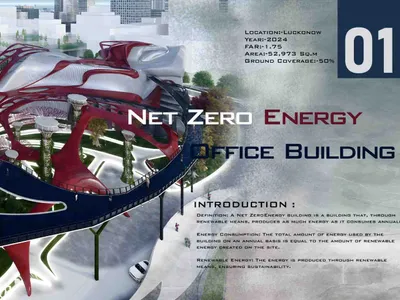
More Than a Building-Designing a Living System
More Than a Building-Designing a Living System
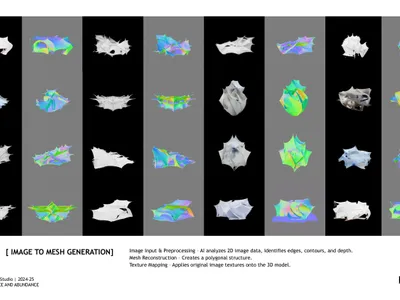
Base Beyond
DESERT COMPOUND ARID: TOURISM OF ABSENCE AND ABUNDANCE


Comments (0)
Please login or sign up to add comments
No comments yet. Be the first to comment!