
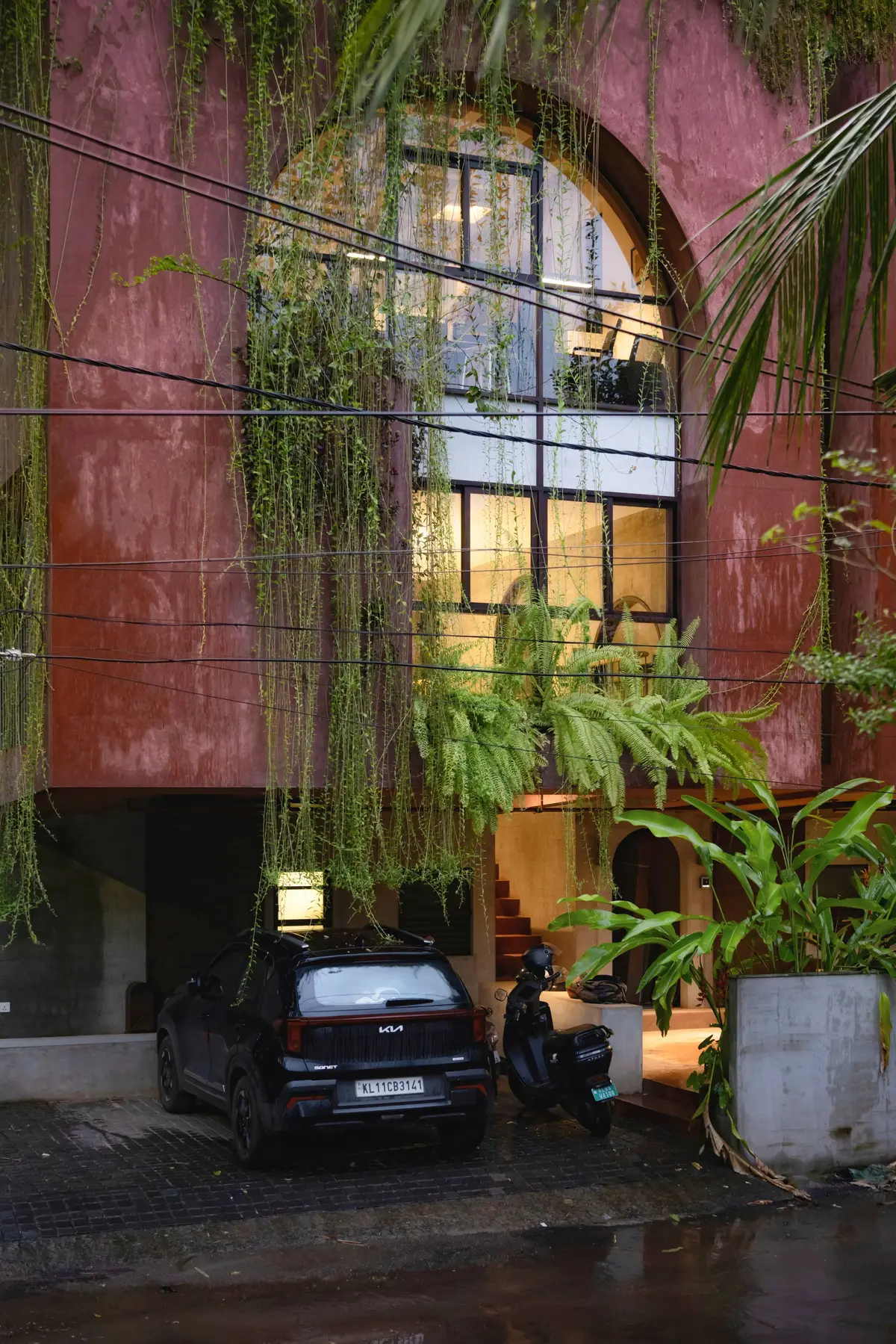
SOHO Architects Stacks Work and Living into a Pink Twin Block on a Tiny Plot in Calicut
On an 8.5-cent conserved site in Kerala, a compact mixed-use house layers terracotta, arched niches, and planted courtyards into a vertical life.


An 8.5-cent plot in Calicut is not much ground to build a life on, let alone a life and a livelihood. Yet SOHO Architects has done exactly that, stacking workspace, social rooms, a media den, bedrooms, and planted terraces into a compact vertical block that reads as a single vigorous gesture from the street. The project, completed in 2025, is one half of a twin-block composition designed for two friends: shared architectural language, independent spatial worlds.
What makes the building worth studying is not its size but the density of architectural ideas packed into it. Every floor shifts its material register: exposed concrete gives way to terracotta plaster, terrazzo yields to brass-inlaid tile, timber shutters replace perforated metal screens. The result is a house that changes mood as you move through it vertically, turning a tight footprint into a rich sequence of atmospheric rooms rather than a repetitive stack of identical levels.
A Pink Signal on the Street
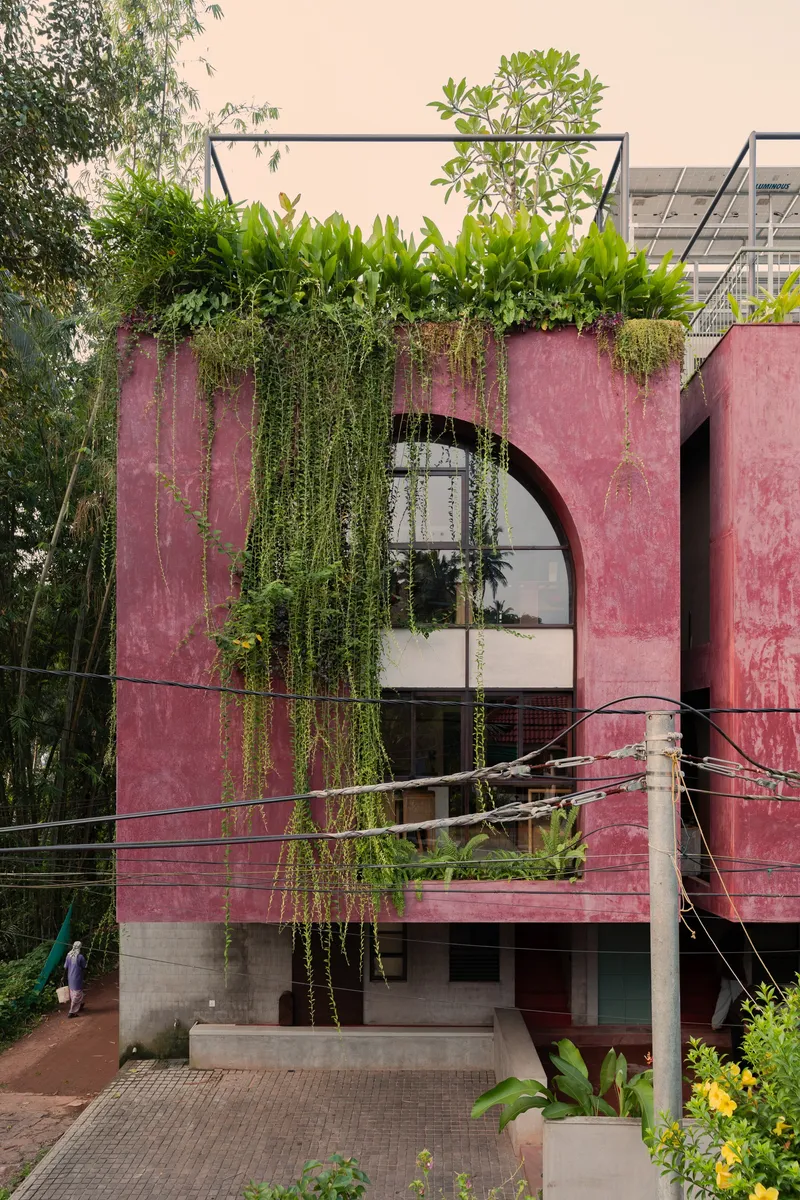
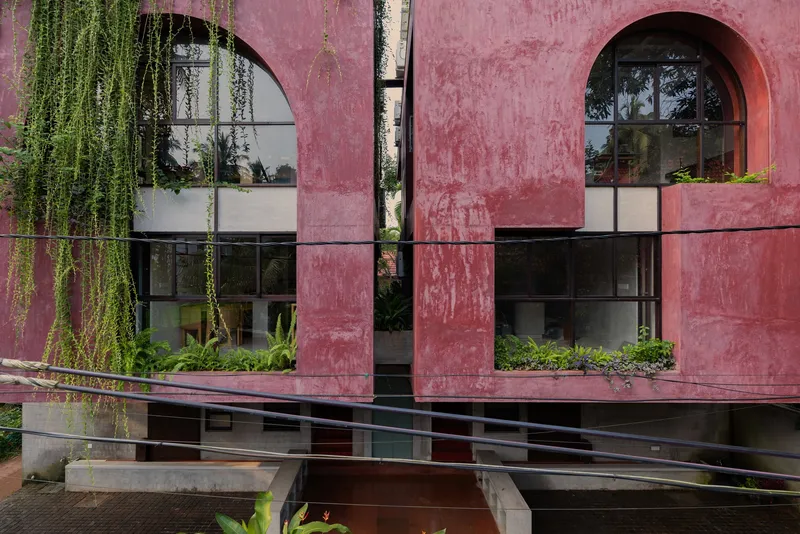
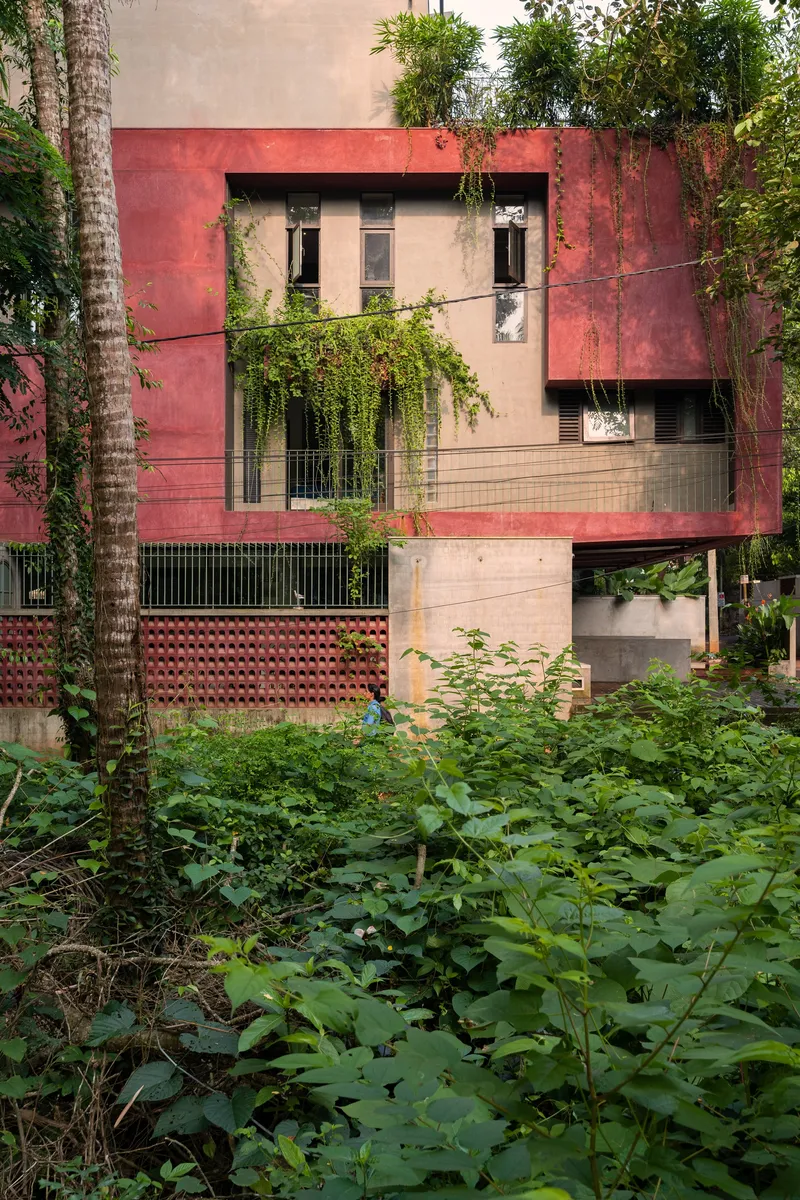
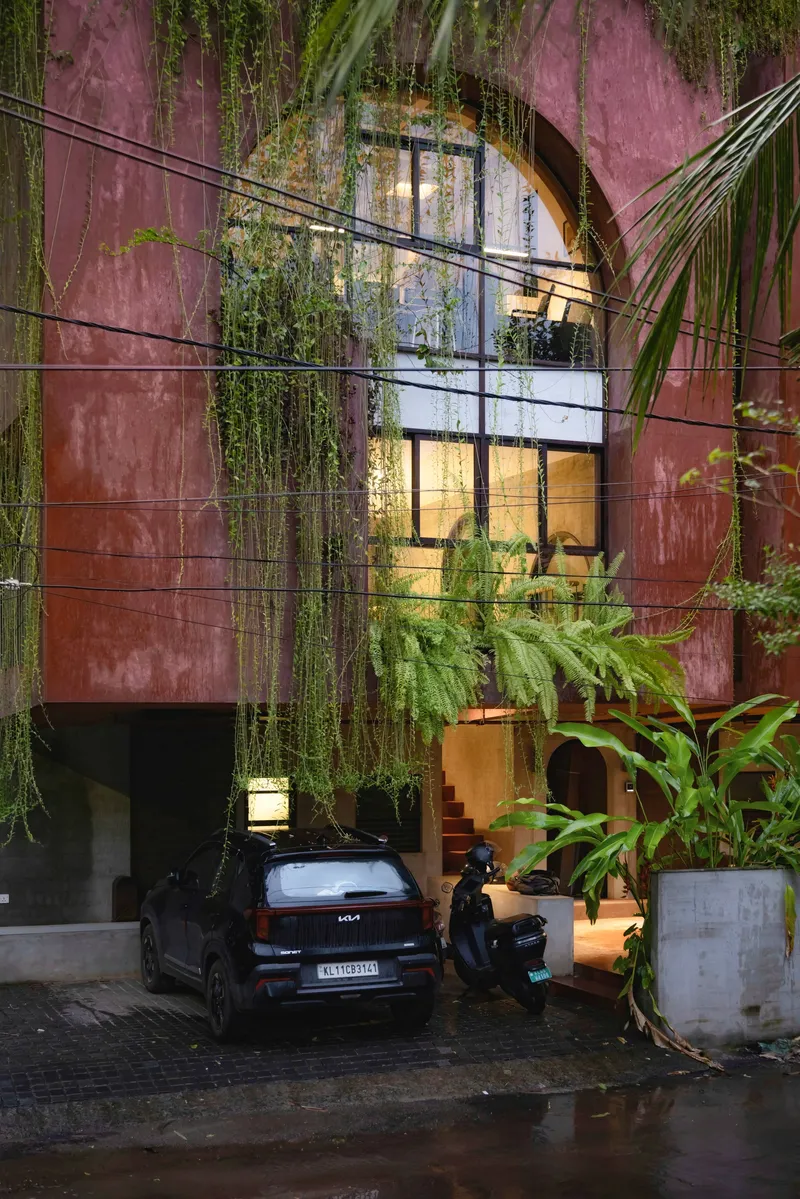
The facade is the building's loudest move and its most disciplined one. A warm pink render wraps the upper volume, punctured by arched openings that oscillate between deep-set glazing and trailing vines. Below, a concrete base and terracotta perforated screens ground the composition, giving it weight while pulling air into the interior. The effect from the street is of a layered, breathing wall rather than a flat elevation.
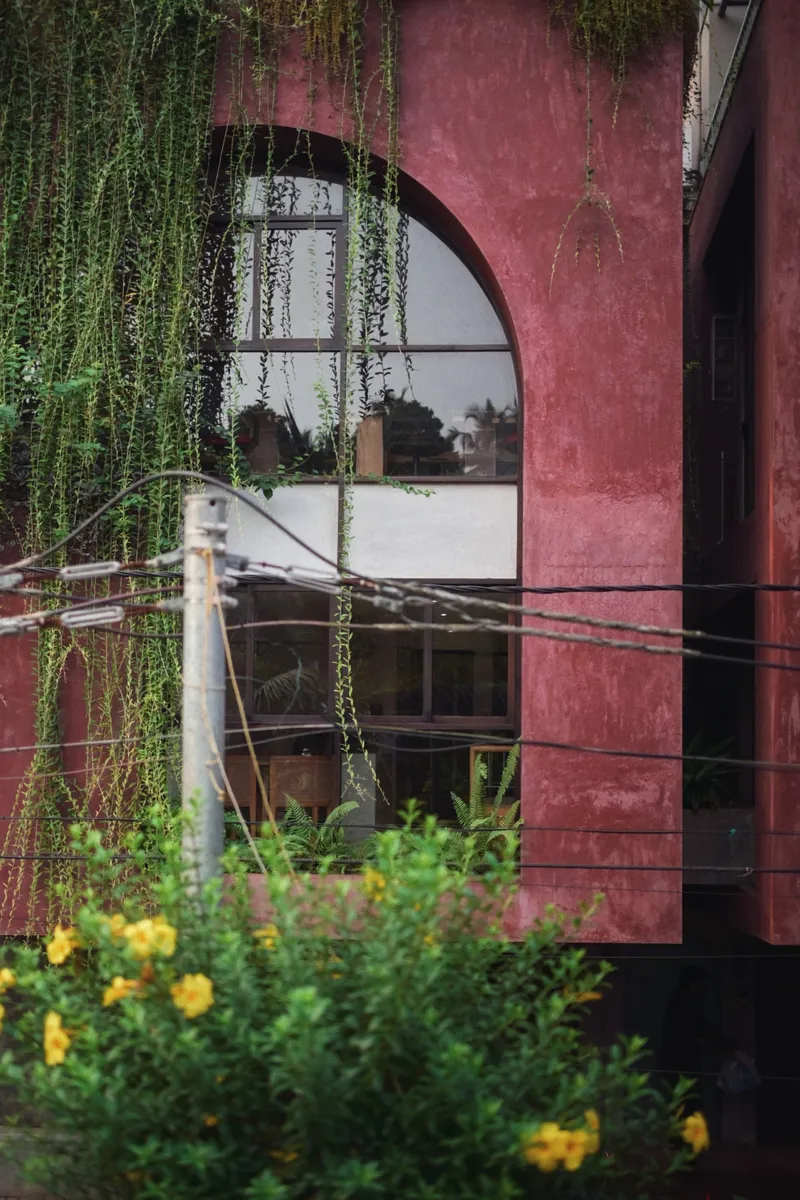
Planter beds integrated into the terrace parapets let greenery spill down the facade, softening the hard geometry and tying the building visually to the dense tropical vegetation at its base. Over time, as the vines thicken, this will become as much a planted wall as a built one.
Arched Entries and Terracotta Screens
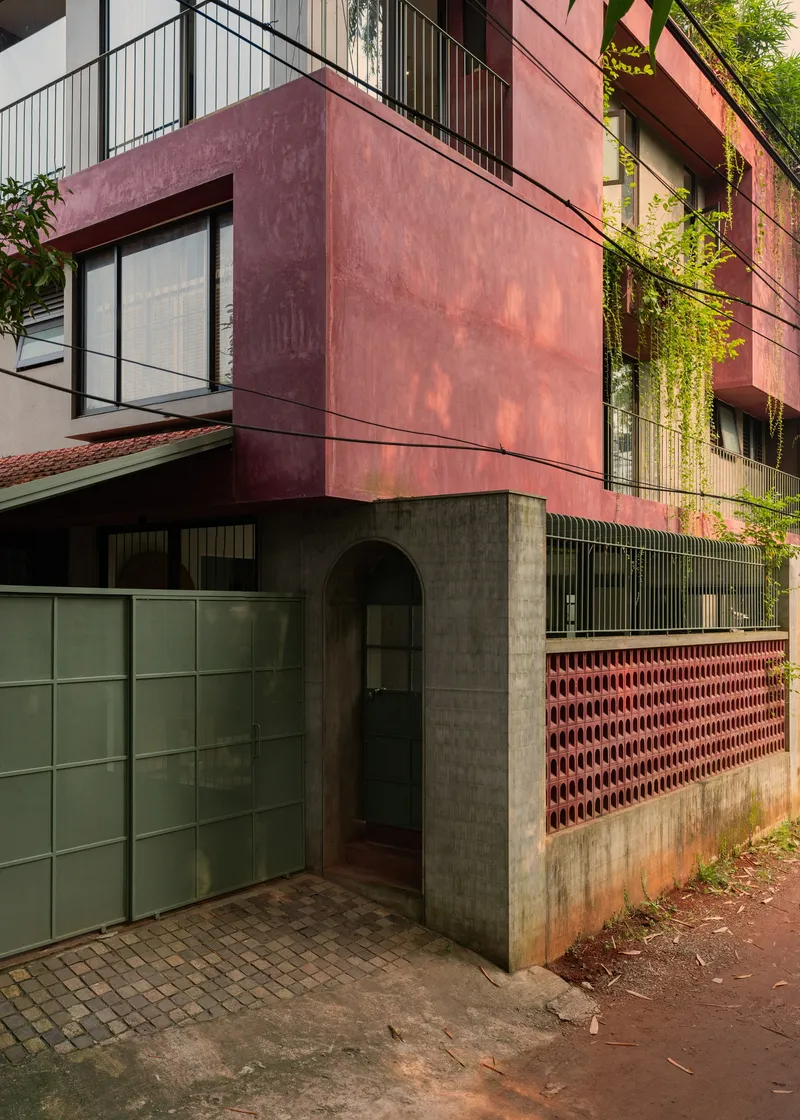
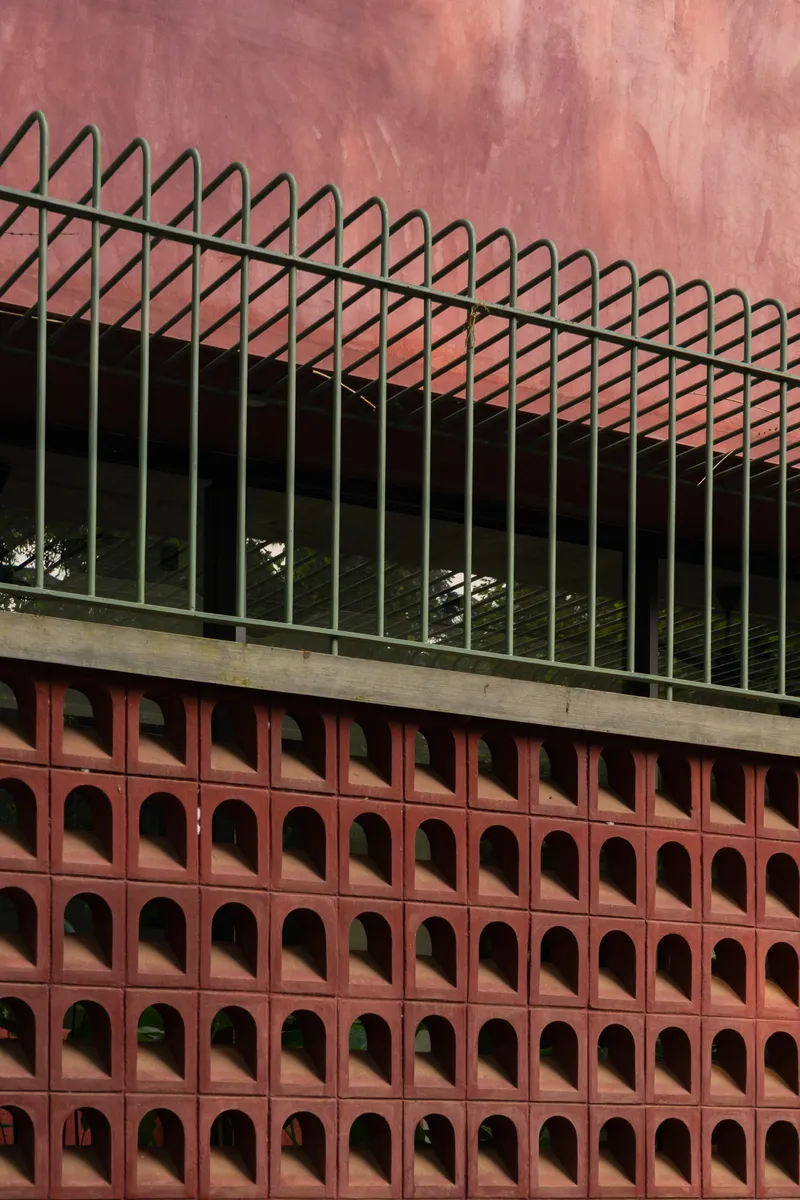
At the corner entry, a concrete portal frames a terracotta perforated screen wall beneath a cantilevered red oxide volume. The screen does triple duty: it filters light, ventilates the interior naturally, and provides visual privacy from the street without closing off the ground floor. A triangular metal railing above the concrete ledge adds a sharp geometric counterpoint to the organic pattern of the screen.
The arched window motif reappears across the facade, sometimes framing deep glazing, sometimes framing nothing but flowering shrubs and hanging vines. It is a simple formal device, but its repetition at different scales gives the elevation a rhythmic coherence that holds the diverse material palette together.
Living With the Courtyard
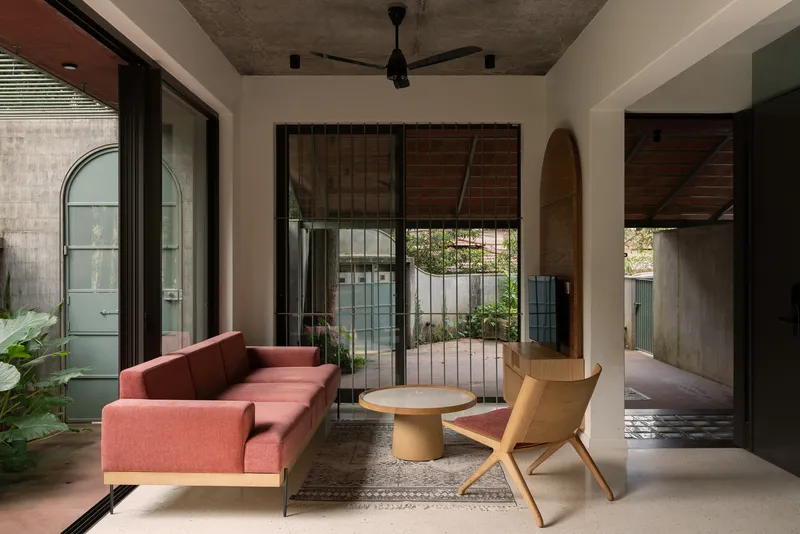
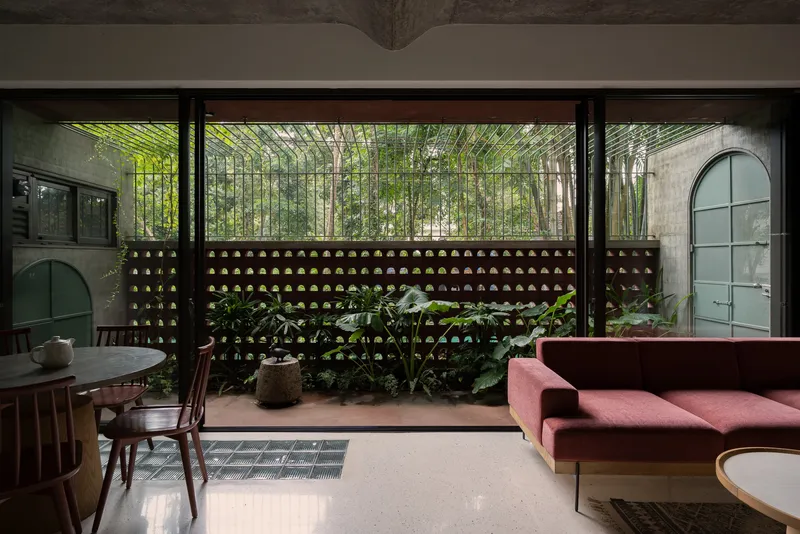
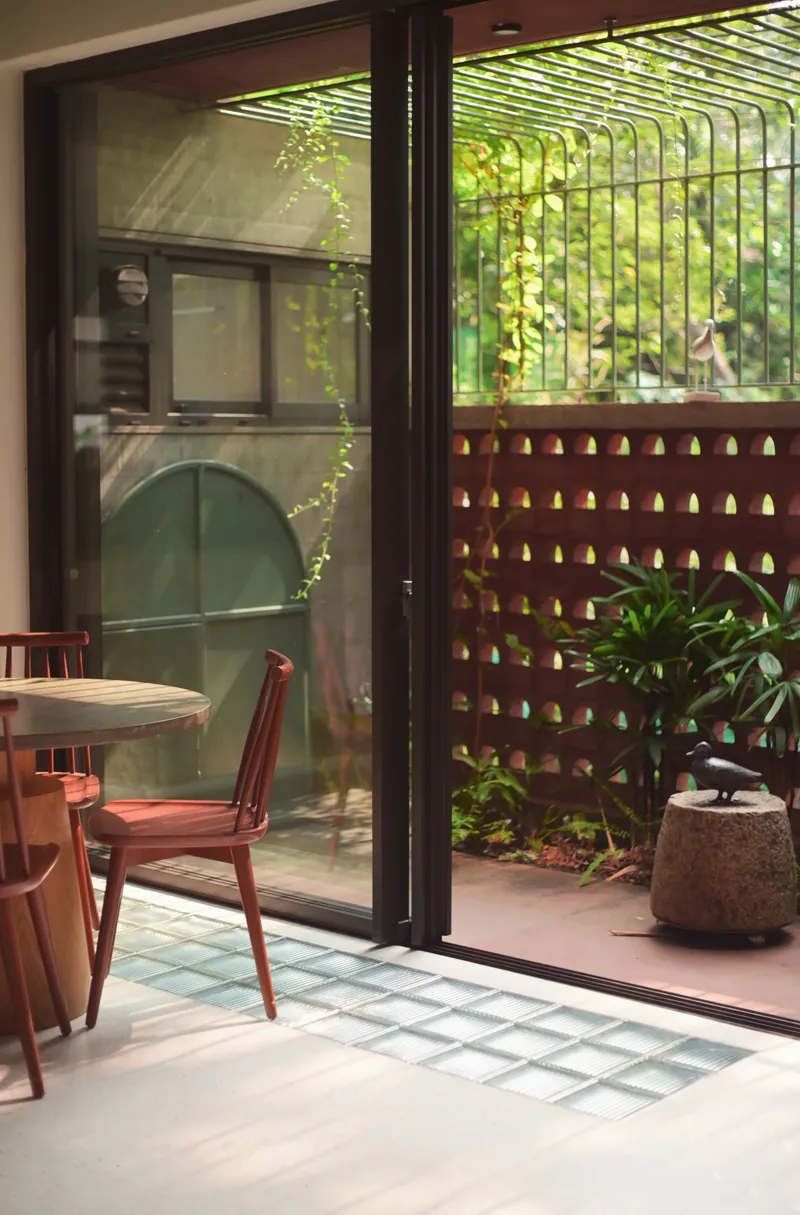
The real spatial engine of the house is not any single room but the planted courtyard that threads light and air through the section. Full-height glazing in the living room opens onto bamboo screens and tropical planting, turning what could be a dark interior on a narrow site into something genuinely luminous. The perforated brick screen wall on the courtyard boundary works the same logic as the facade screens: it lets air through while keeping the courtyard intimate.
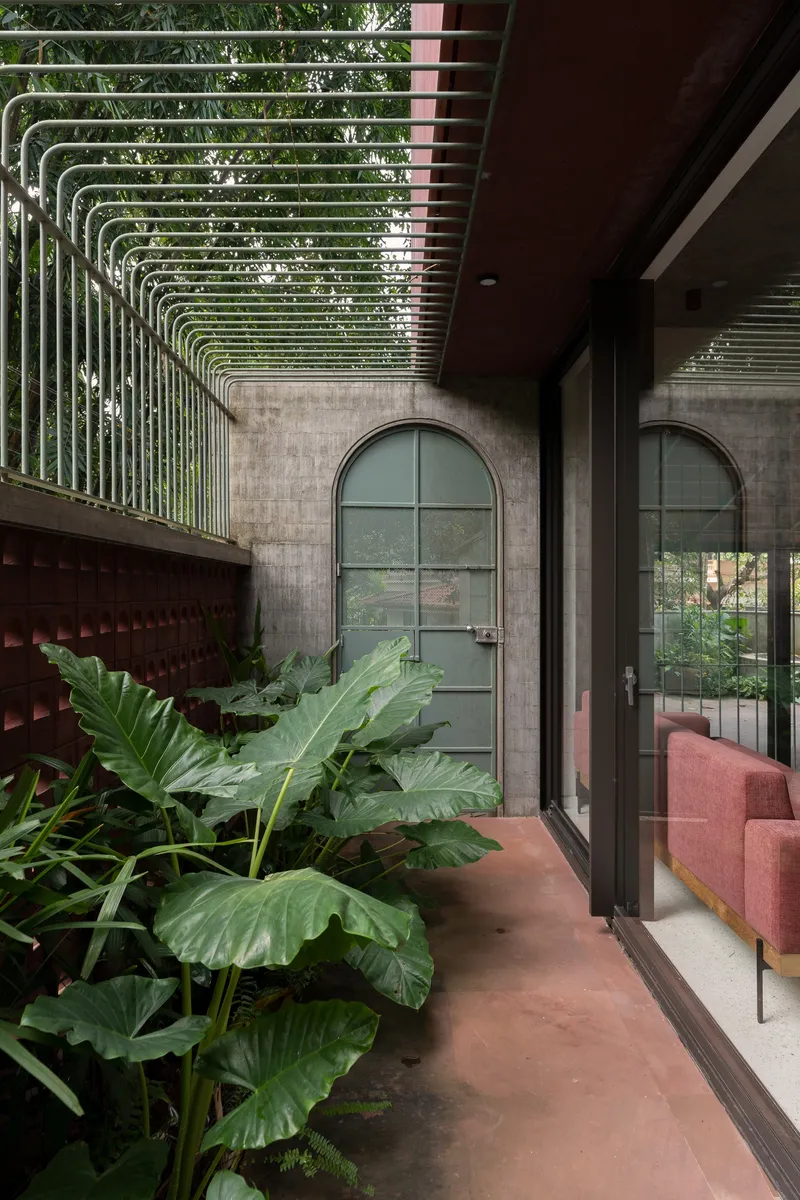
A curved metal trellis visible through the glass doors will eventually carry climbing plants across the courtyard overhead, creating a secondary canopy. The architects clearly understand that in Kerala's climate, shade is not decoration; it is infrastructure.
Open Living and Material Transitions
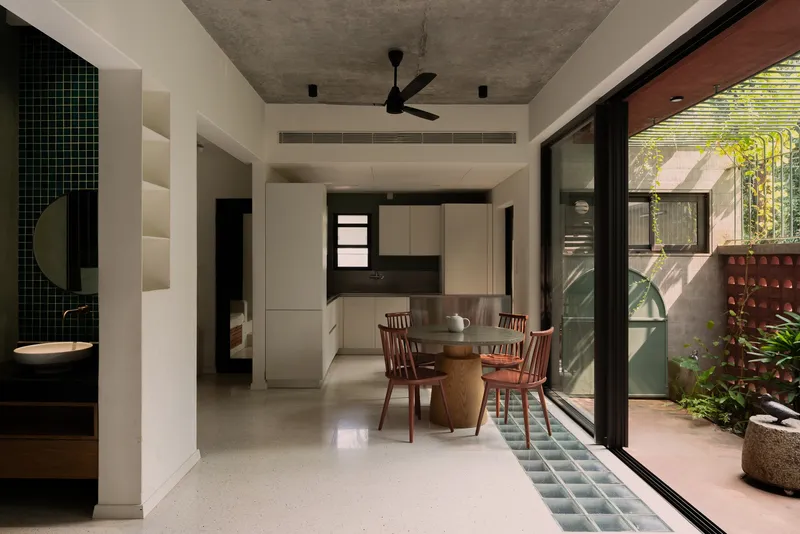
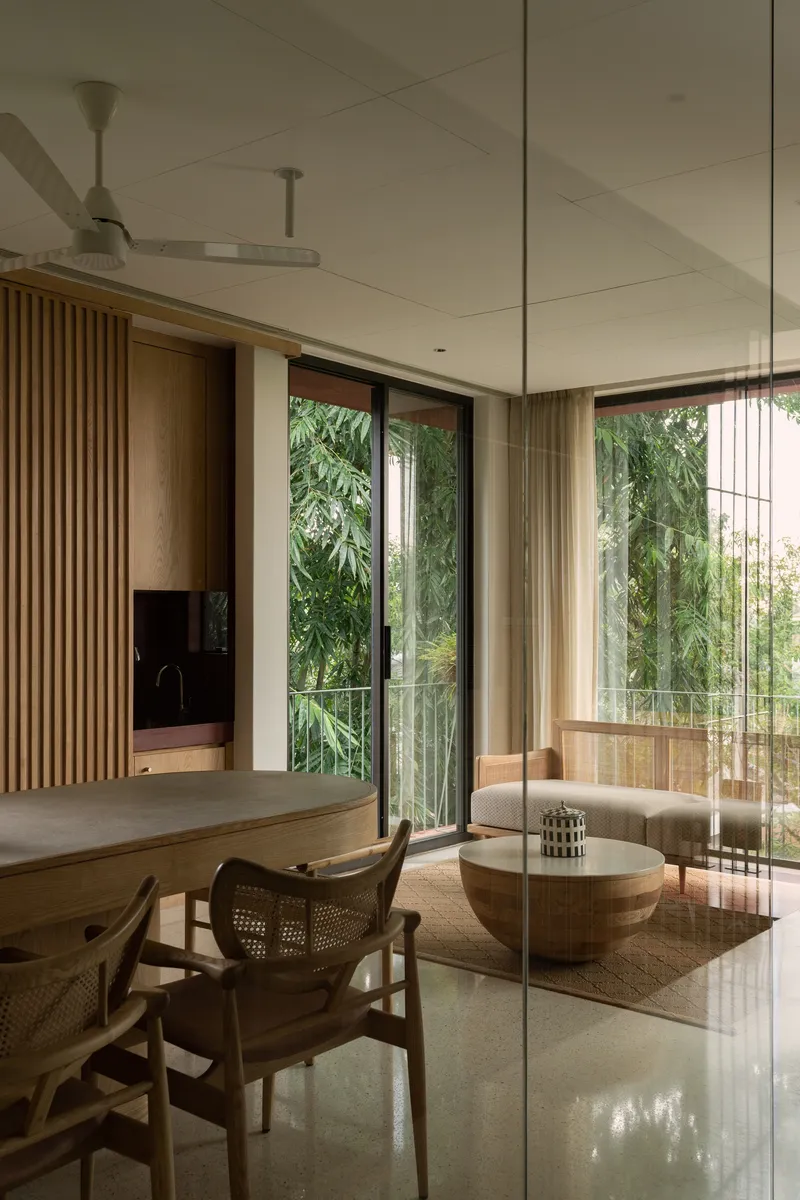
The open-plan dining and living areas work hard to justify their compact footprint. Terrazzo flooring with green tile insets, timber slat screens, and sliding glass doors to the courtyard create a room that feels generous despite its actual dimensions. The material transitions are deliberate: terrazzo underfoot signals social space, while the timber screen marks the threshold to more private zones.
Outside, a covered walkway with a tubular steel pergola and a planted bed thick with elephant ear leaves connects the indoor rooms to the garden. It is a simple circulation move, but it means you pass through green on the way to every room, not just on the way out.
The Red Rooms
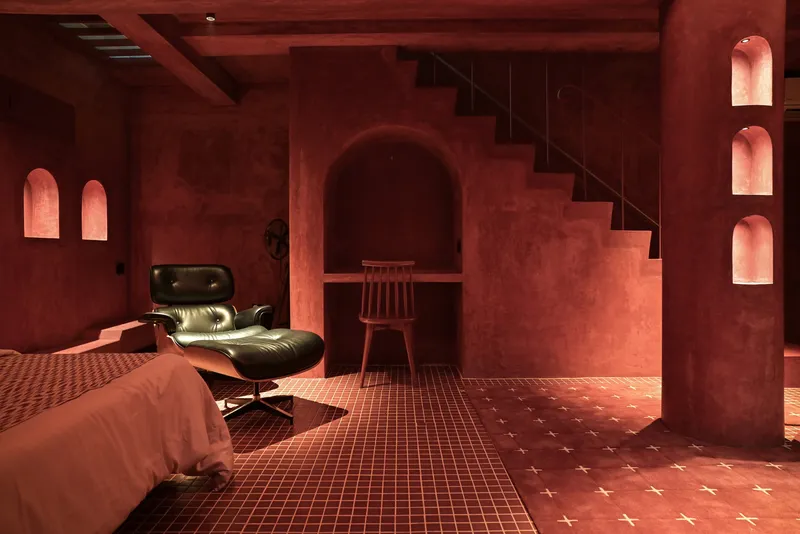
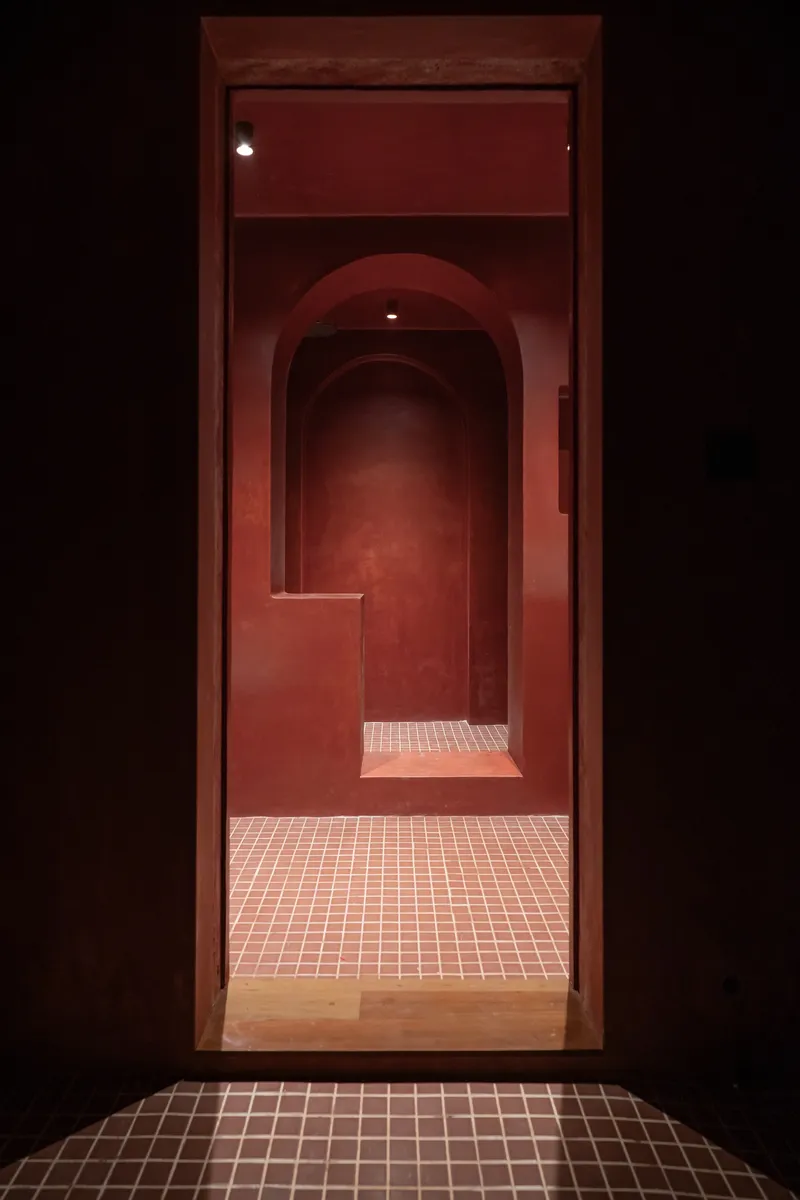
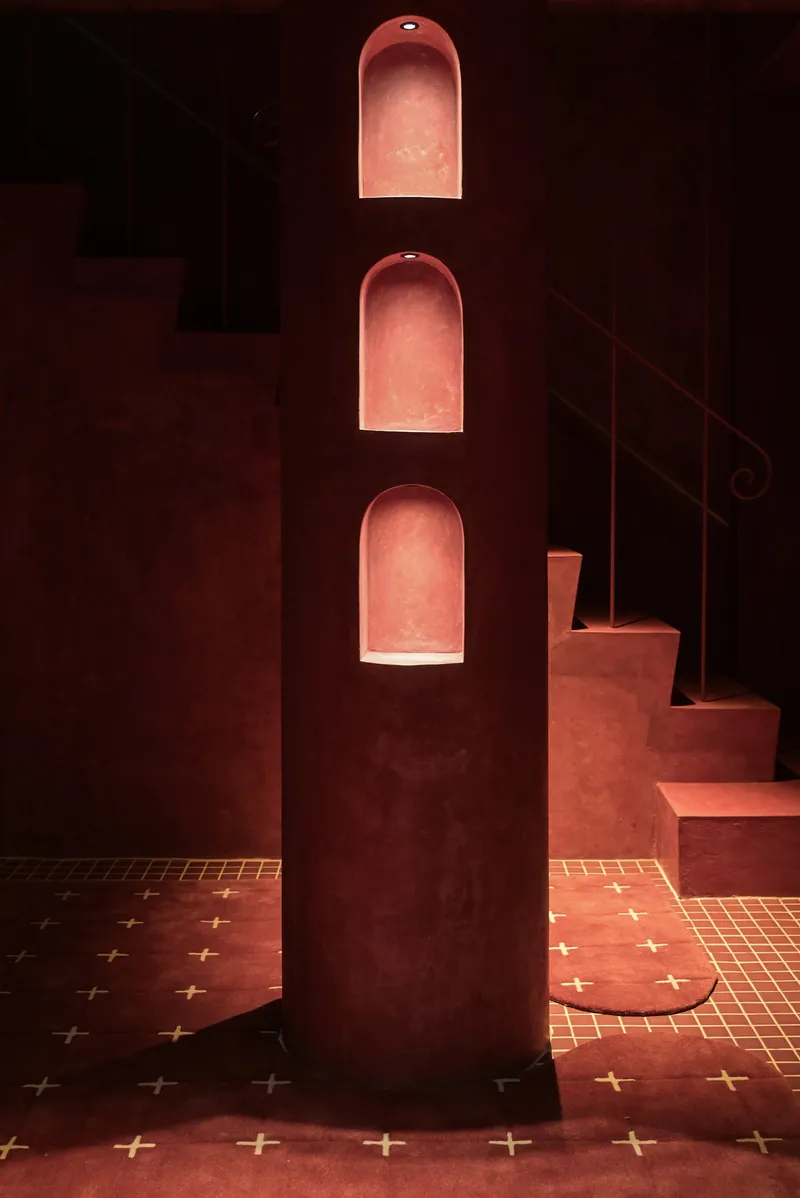
The most atmospheric spaces in the house are the upper-level rooms wrapped entirely in red plaster. Arched niches, a metal staircase, and cross-pattern tile floors combine to produce an interior that feels almost devotional in its intensity. A sequence of arched doorways receding into soft darkness suggests a depth the plan cannot actually contain; it is a spatial illusion achieved through alignment and repetition rather than square meters.
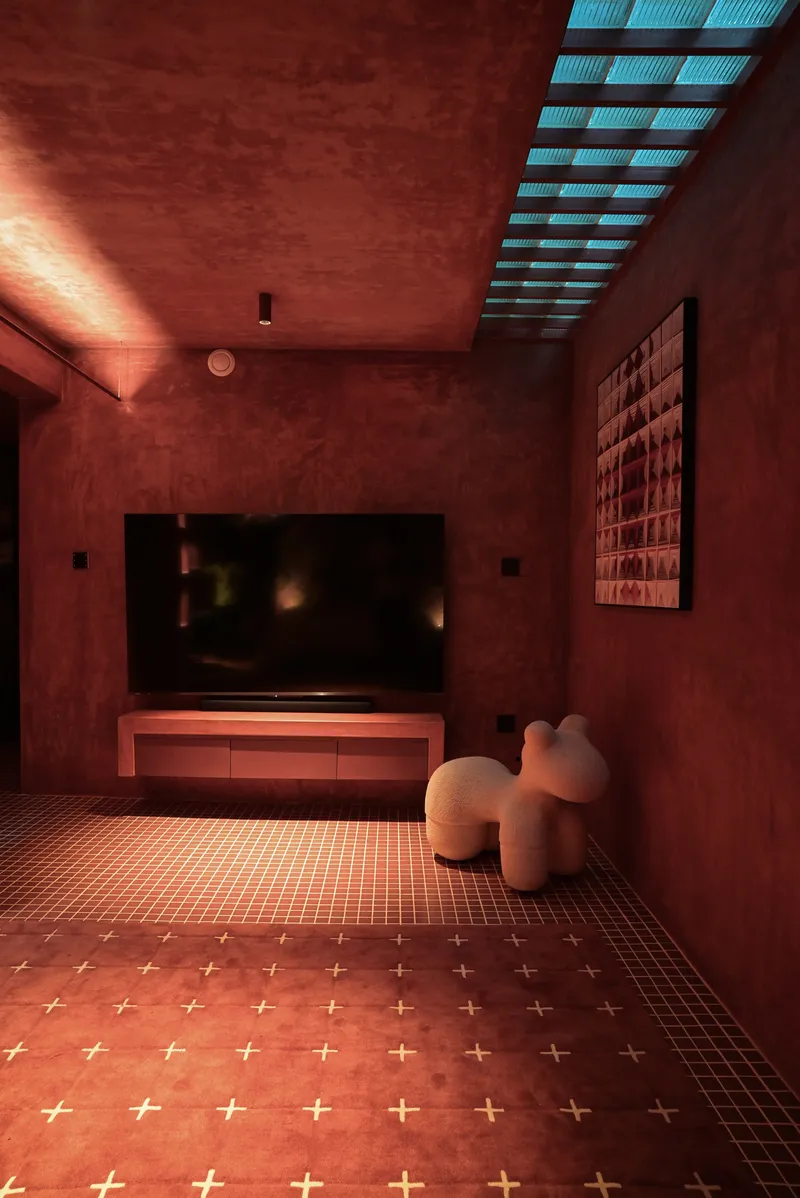
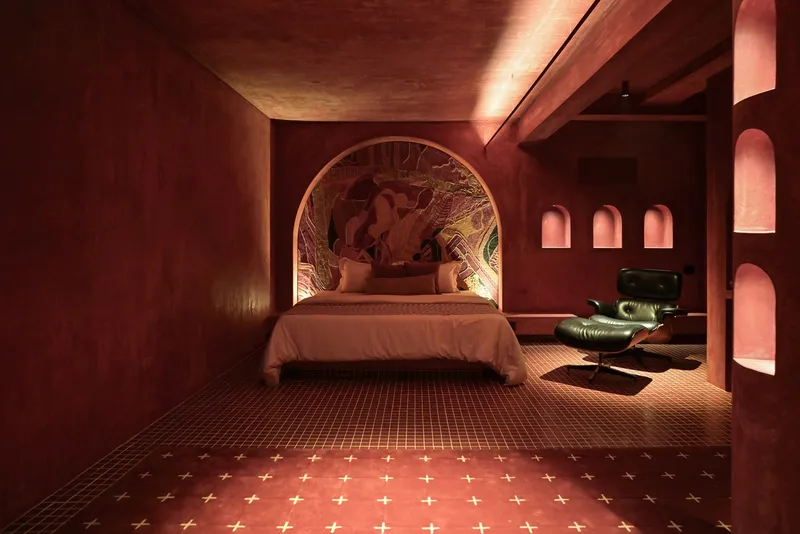
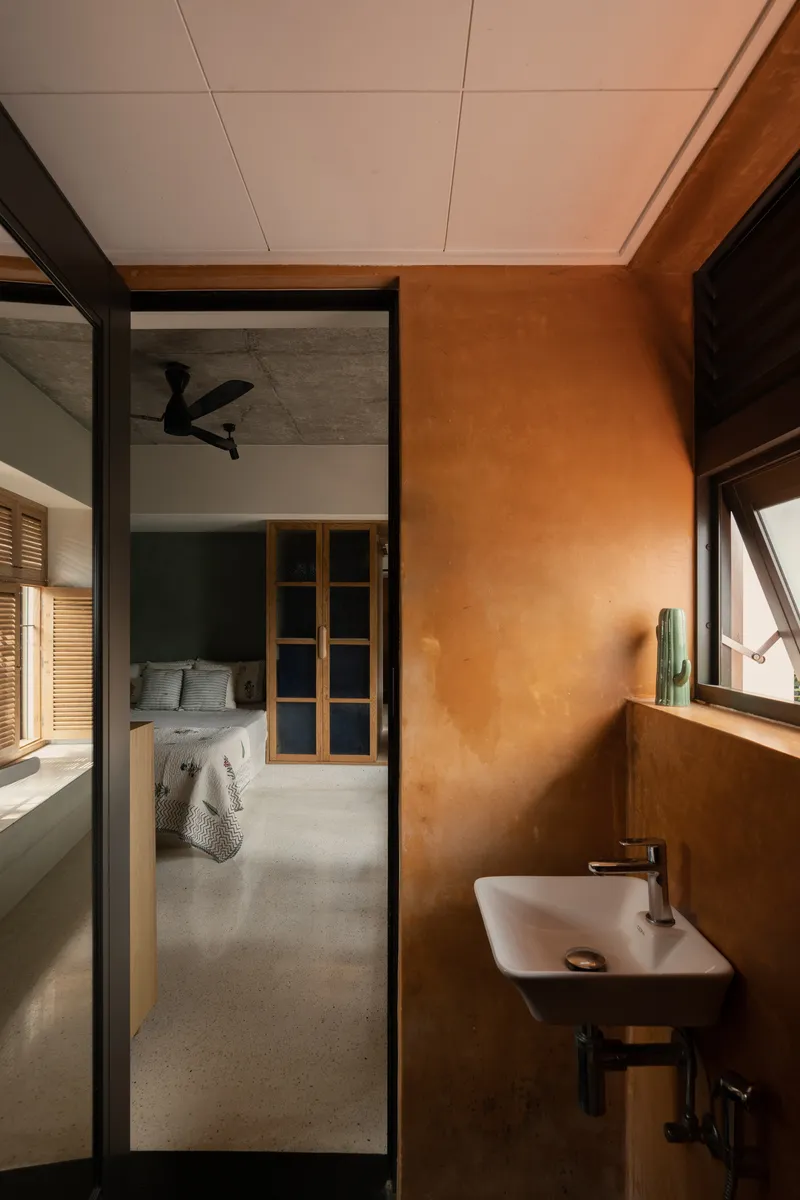
The media room continues the red plaster palette but introduces a glass-slat ceiling opening that floods the space with controlled daylight. The bedrooms follow a similar logic: terracotta plaster walls, arched headboard niches, tiled floors with brass inlay. Each room has its own material detail, but the shared warm color register holds the upper levels together as a coherent domestic world distinct from the cooler, more open ground floor.
Work Above the Canopy
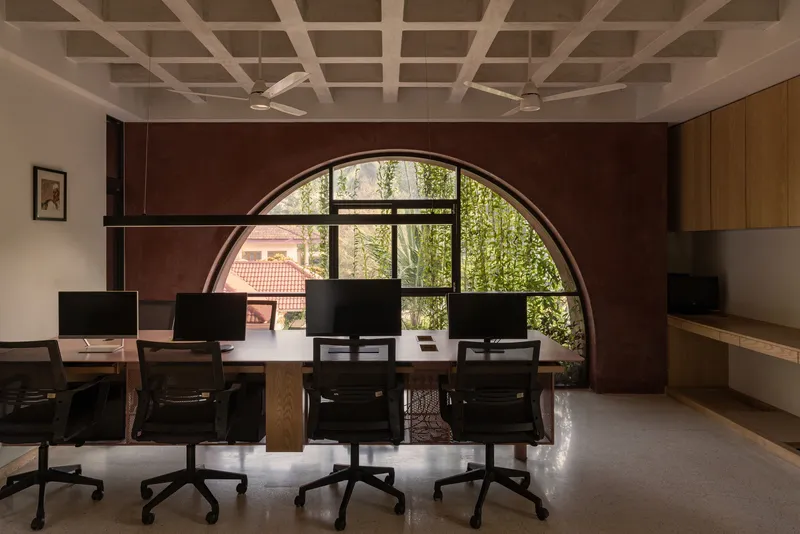
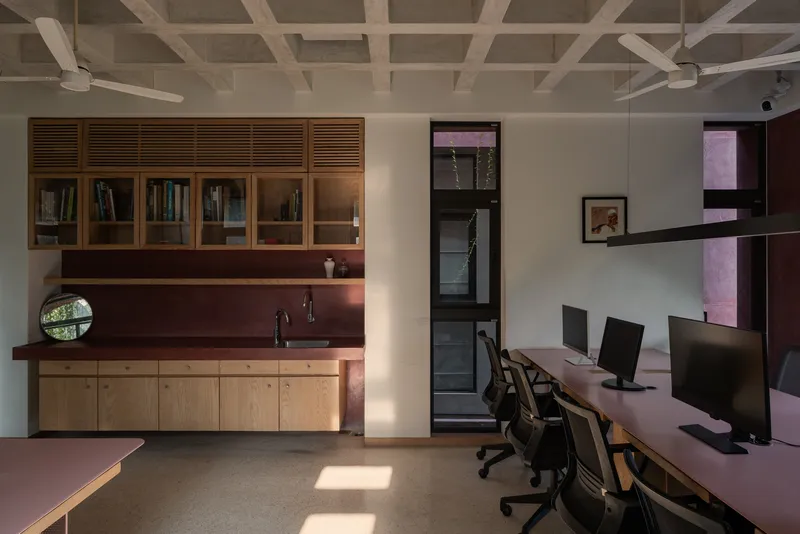
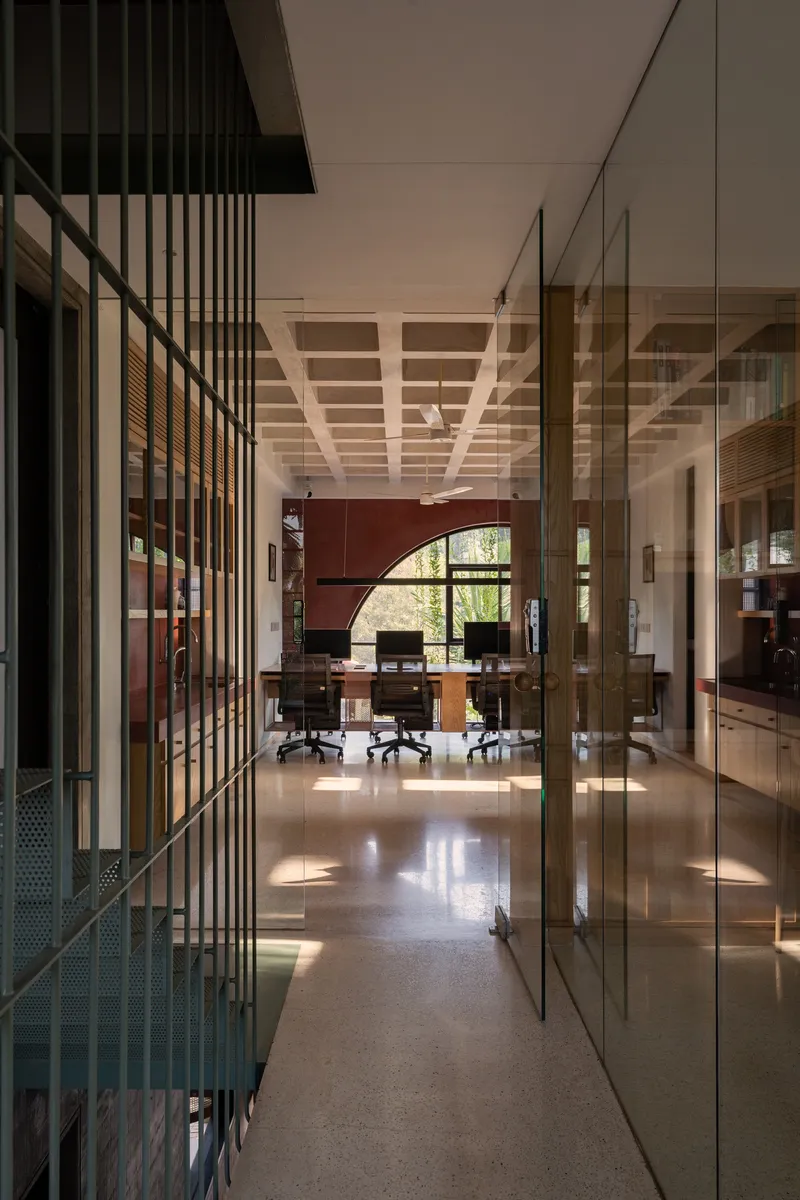
The workspace occupies the terrace level, where coffered ceilings and arched windows framed by maroon walls give the office rooms a gravity that distinguishes them from the domestic floors below. Timber cabinetry and a maroon backsplash keep the material palette warm but controlled. Perforated metal screens in the corridor leading to the workspace filter light into shifting patterns that change through the day, making the journey to the desk a daily calibration of time and weather.
Positioning the office at the top of the building is a smart climatic and psychological move. The rooms catch the best breezes, sit above the noise of the street, and benefit from the longest views over the surrounding tree canopy. Work and home share a staircase, but they occupy distinctly different atmospheric zones.
Stairs, Screens, and the Vertical Section
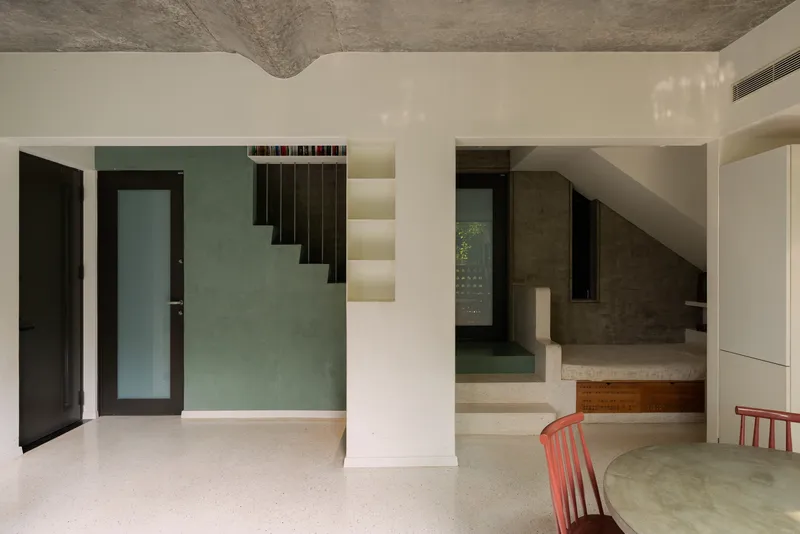
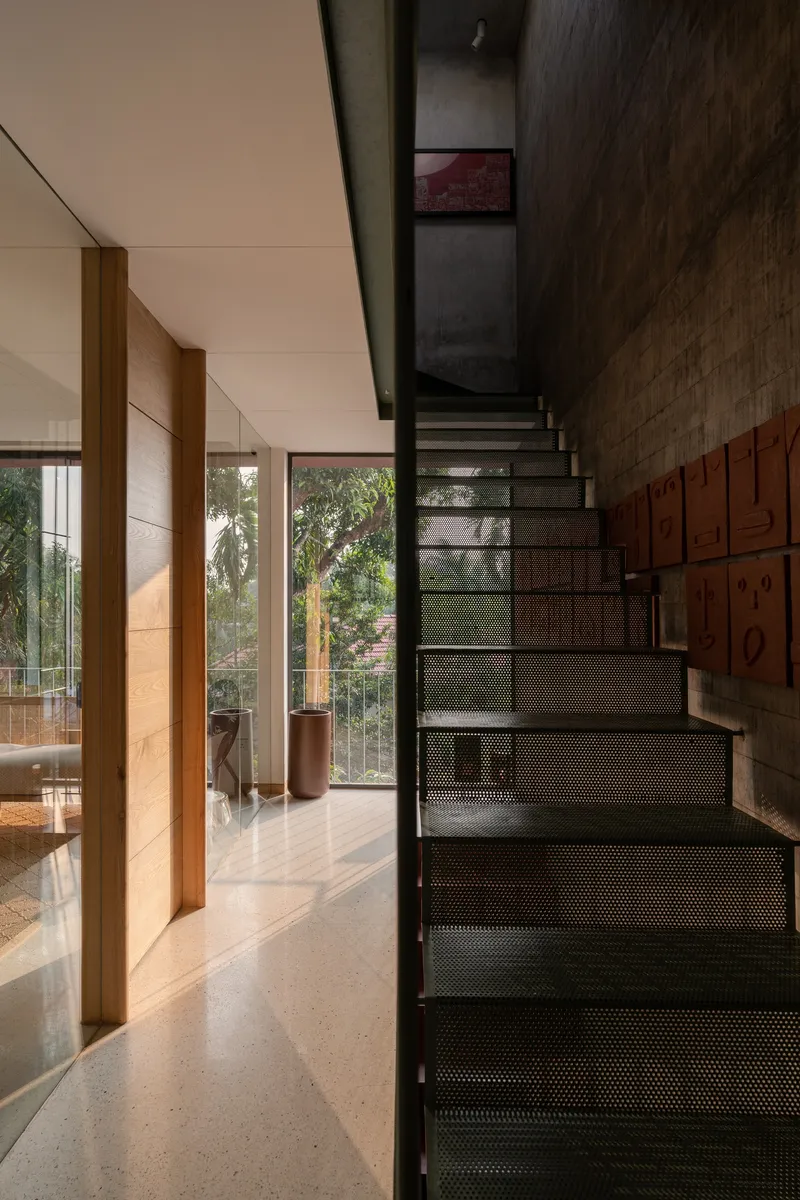
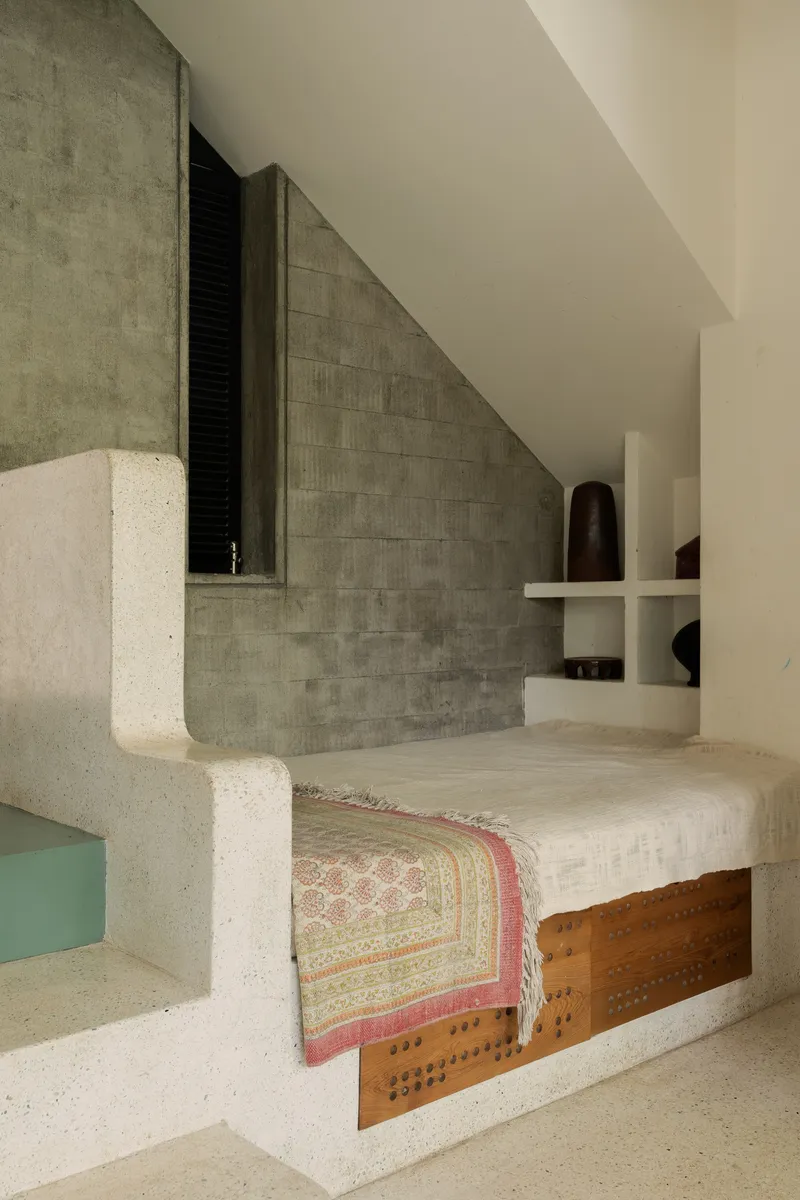
The floating staircase with integrated lighting treads ascending past a green textured wall is the vertical spine of the house. It does more than move people between floors; it calibrates the mood shift from one level to the next. The perforated metal stair beside the timber storage wall and glazed garden doors at the lower level operates on a different register entirely, raw and industrial where the other is polished and luminous.
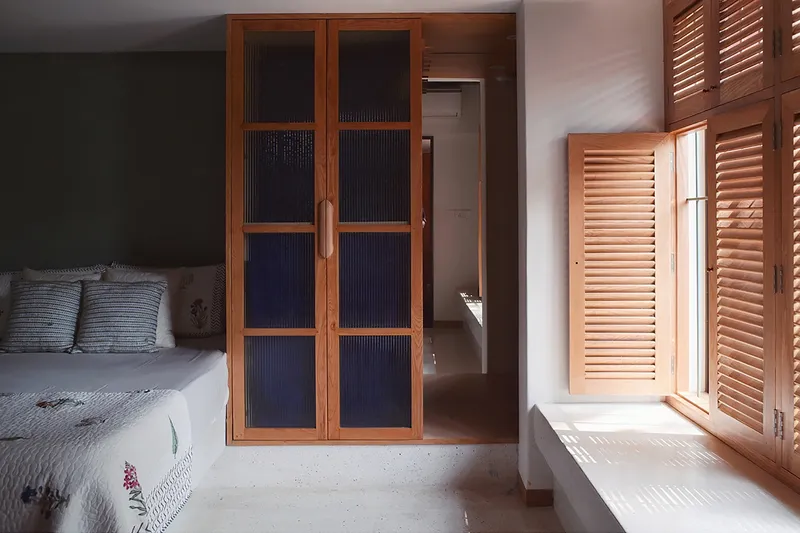
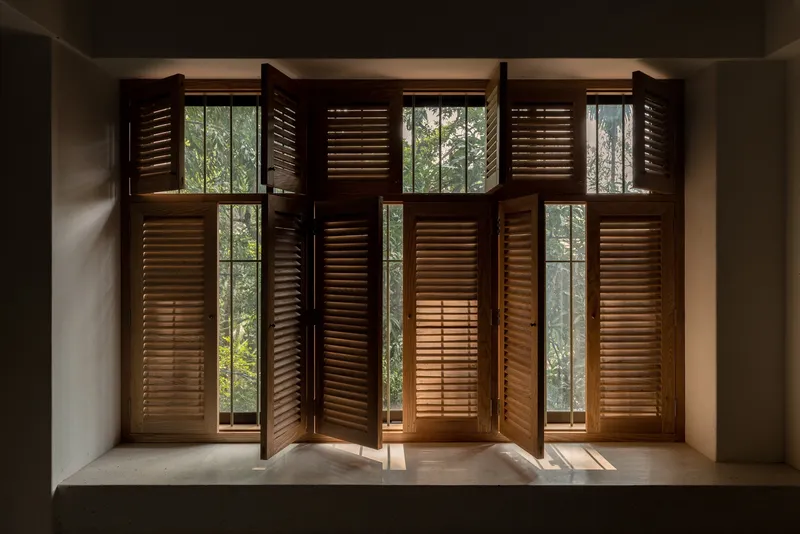
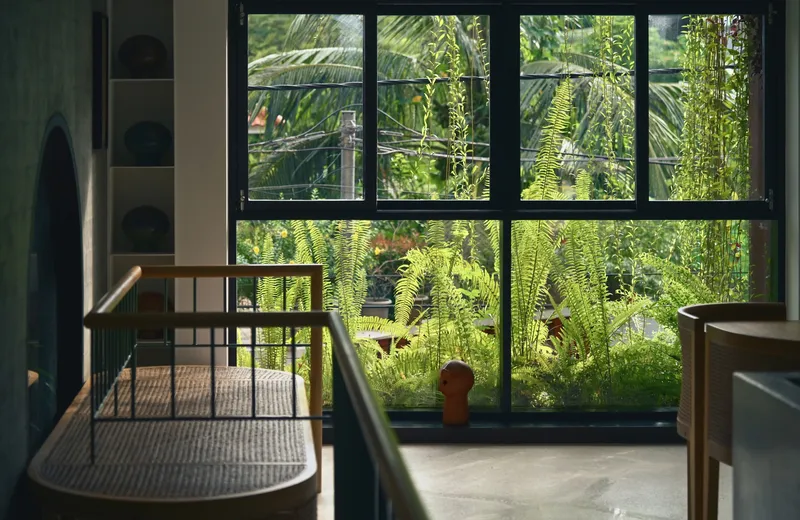
Throughout the house, the architects deploy louvered timber shutters, black steel-framed windows, and perforated screens to modulate daylight and privacy. Six timber shutters folded open at a window alcove reveal trees beyond in soft filtered light; steel-framed windows frame dense ferns like living paintings. These are not decorative gestures. In a climate where the sun is relentless and rain is horizontal, every opening is a negotiation between exposure and shelter.
Plans and Drawings
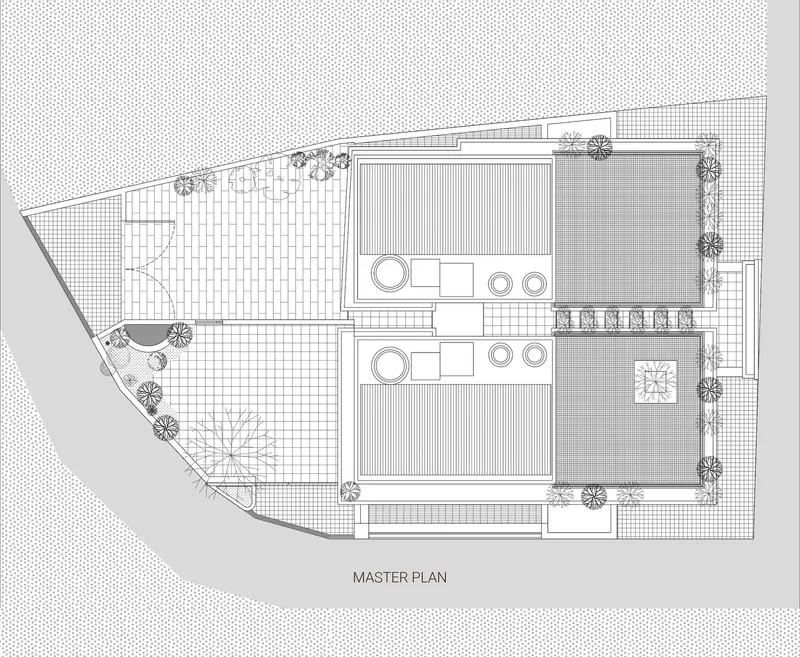
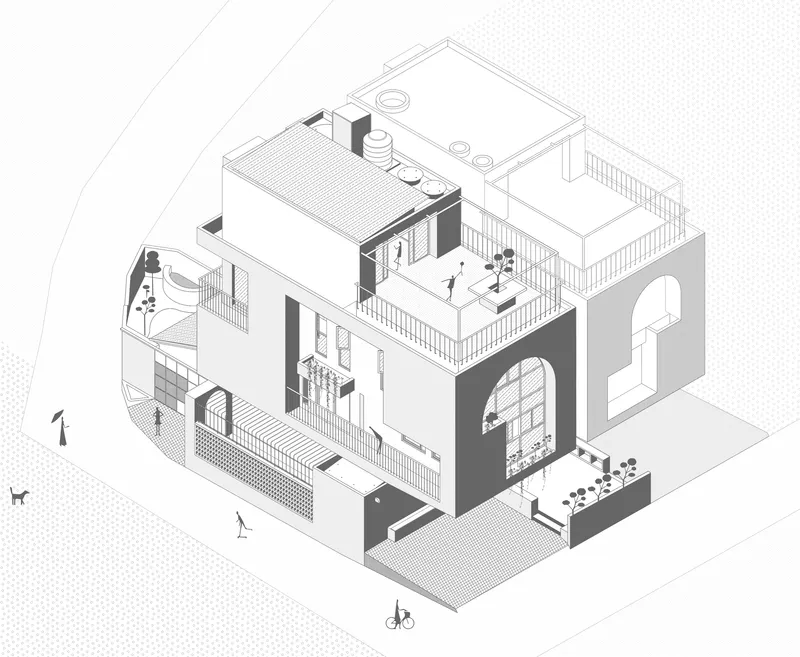
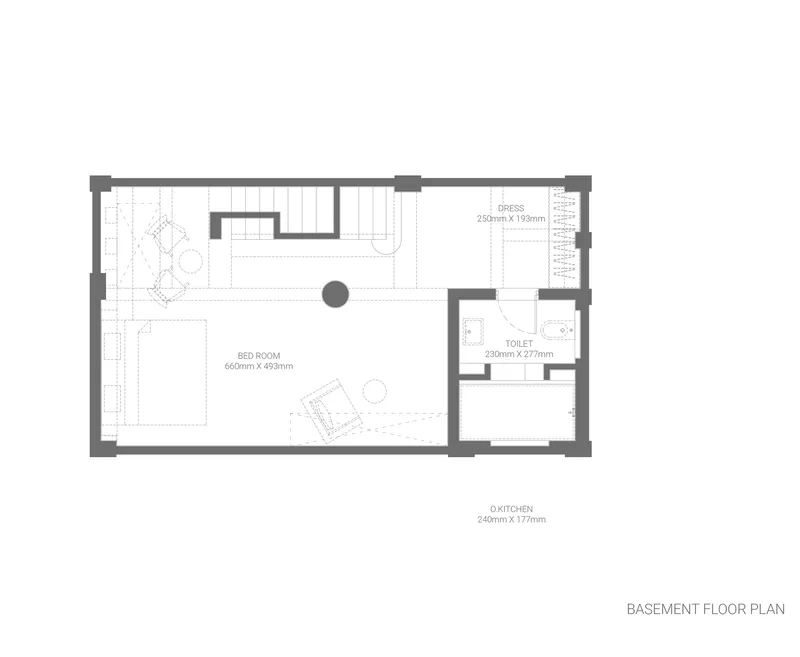
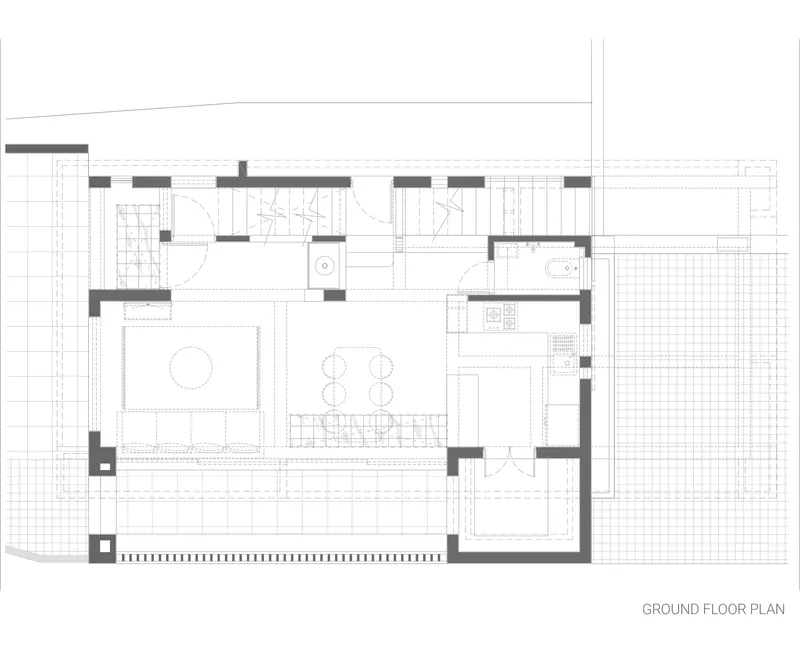
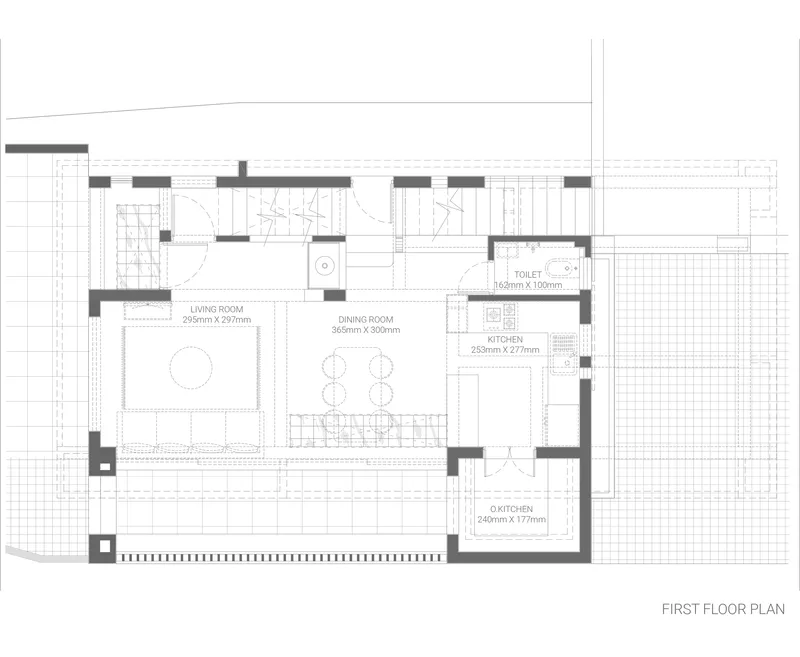
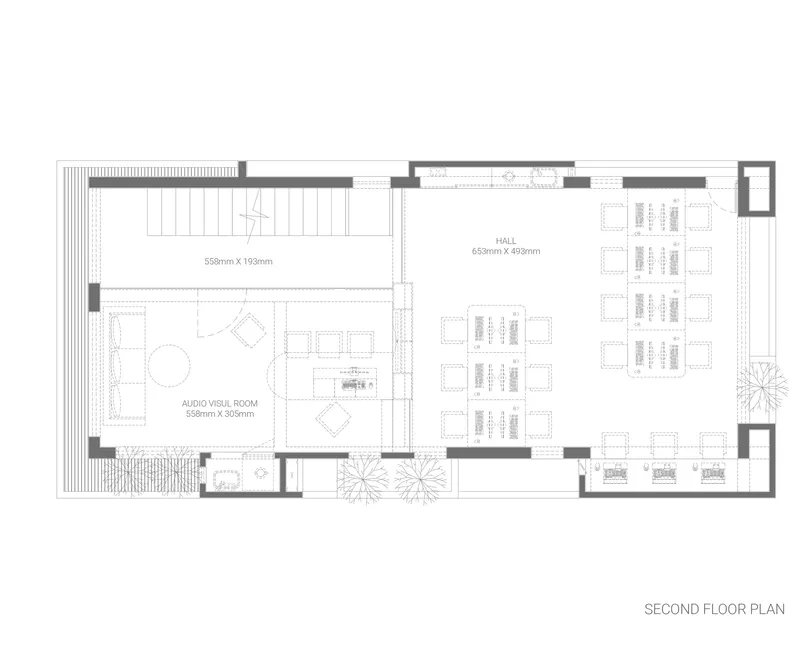
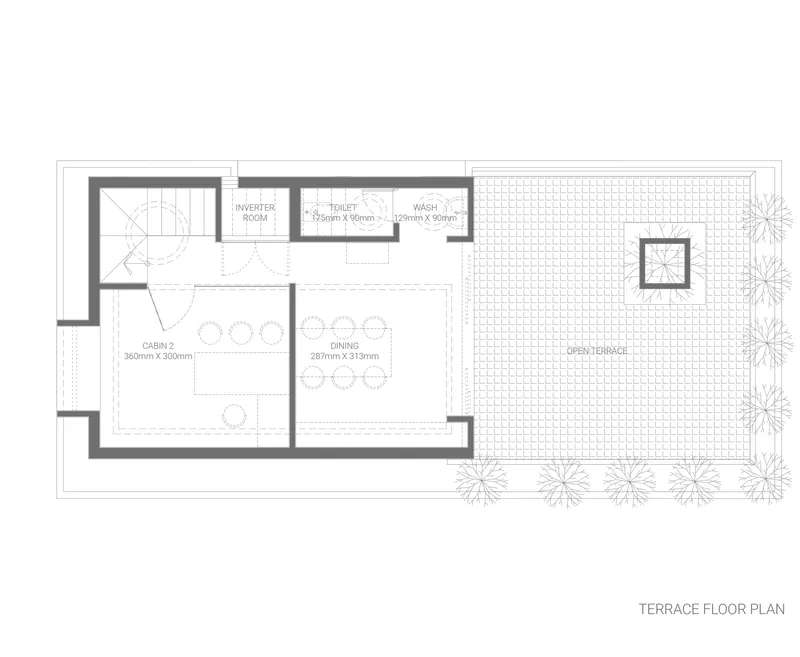
The drawings reveal the full complexity of the section. A basement level sinks a bedroom, dressing room, and exterior kitchen below grade, keeping them cool and private. The ground and first floors stack living, dining, and kitchen around the central courtyard. The second floor houses the audiovisual room with spiral stairs connecting to the terrace-level cabin and open dining area. The axonometric makes visible what the experience confirms: every floor is a distinct world, connected by stairs and light wells that pull air and greenery through the entire volume.
The master plan drawing showing the twin blocks side by side clarifies the project's urban ambition. Two houses, one architectural language, a shared landscape strategy, and enough independence that each household can live on its own terms. It is a model for dense, site-specific development in Kerala's rapidly urbanizing towns.
Why This Project Matters
SOHO Work + Living matters because it takes the constraints that typically flatten compact urban houses, tight plots, mixed programs, aggressive climate, and turns them into generators of architectural quality. The vertical stacking of mood and material, the courtyard that never lets you forget you are in the tropics, the screens that treat ventilation as a design opportunity rather than a technical problem: these are not innovations, but they are executed here with a conviction and coherence that elevates them.
For architects working on small urban sites in South and Southeast Asia, the project offers a practical demonstration that density does not require monotony. You can build on 8.5 cents and still give every room its own character, its own light, its own relationship to the garden. The pink facade is a provocation, but the real argument is inside: in the red plaster rooms, the brass-inlaid tiles, the bamboo courtyards, and the staircase that makes every floor feel like a different house.
SOHO Work + Living by SOHO Architects. Located in Calicut, Kerala, India. Completed in 2025. Photography by Ar. Varun Gopal and Syam Sreesylam.
About the Studio
Share Your Own Work on uni.xyz
If projects like this are the kind of work you want to make, uni.xyz is a place to publish your own, find collaborators, and enter design competitions.


Popular Articles
Popular articles from the community

Manzana Morphosis: Stretching Barcelona's Grid into a Living Landscape for 2050
A radical reworking of the Eixample manzana turns density into a tool for generous public space, vertical ecology, and environmental performance.

Opera on the Sea: Driftwood Logic Shapes a Timber Opera House on Estonia's Coast
Trevor Orgill's opera house translates the entangled drift of floating timber into a civic building where wood, water, and music converge.

The Amber Palace Opera: A Geological Fiction Surfaces on Tallinn's Baltic Waterfront
Pierre Brillard reimagines a Baltic legend as a public landscape, opera house, and waterfront promenade rooted in Tallinn's coastal identity.

Tsunami Convergenics: Turning Catastrophic Ocean Forces into Underwater Housing Infrastructure
A speculative underwater settlement off the coast of Onagawa, Japan, treats tsunamis and typhoons as energy sources rather than threats.

Similar Reads
You might also enjoy these articles

Bao Huynh Watercolor Atelier: A Serene Art Retreat in Hội An
Bao Huynh Watercolor Atelier in Hội An blends multifunctional art spaces, sustainable design, local materials, and family-friendly living in a serene environment.

Atelier Macri Concept Store Interior Design by CASE-REAL
Atelier Macri store features a "ko" counter, walnut wood details, cork displays, blending retail, gallery, and seamless customer experiences.

Manuel Vargas Izquierdo Stadium and High-Performance Sports Center: Architectural Excellence in Jalpa de Méndez
The Manuel Vargas Izquierdo Stadium blends sustainable design, inclusive sports facilities, and cultural-inspired architecture, revitalizing Jalpa de Méndez’s public spaces.

KAKR Buluh Awar Hall: Revitalizing Community and Ecology Through Bamboo Architecture
Community built bamboo hall revitalizes Buluh Awar village, empowering youth, restoring ecology, celebrating vernacular craftsmanship through sustainable architecture and culture.

Explore Live-Work-Play Competitions
Discover active competitions in this discipline

Challenge to reimagine the Iron Throne

Photograph architecture without architects

Illustrate the lost glory of Angkor Wat - Render Challenge

Design challenge to reuse E-waste
Comments (0)
Please login or sign up to add comments
No comments yet. Be the first to comment!