
SOMBRA Pavilion by MVRDV: A Pioneering Kinetic Architecture Pavilion in Venice
An innovative kinetic architecture pavilion by MVRDV that passively responds to sunlight, blending sustainability, motion, and poetic design.


Introduction to the SOMBRA Pavilion
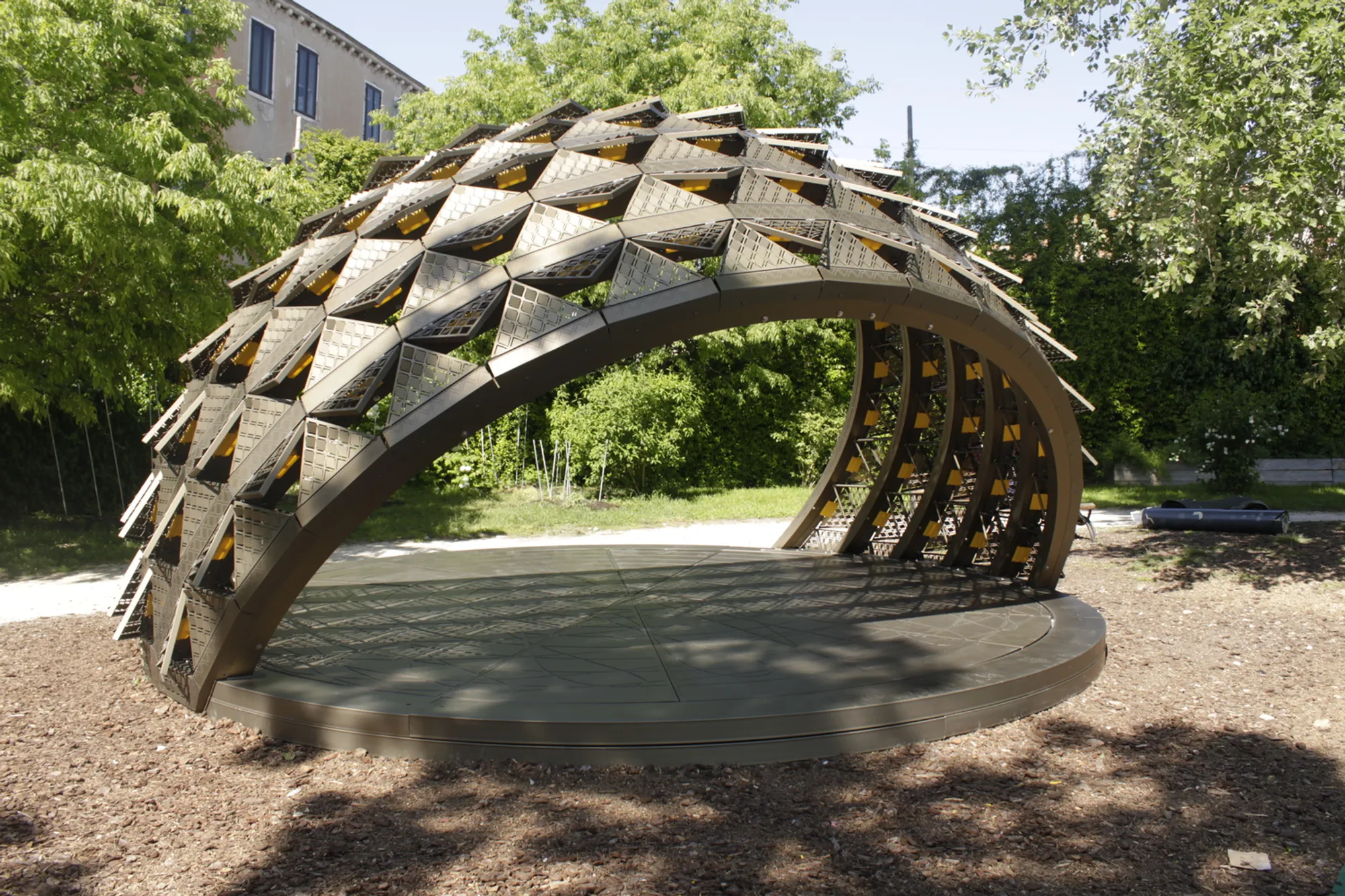
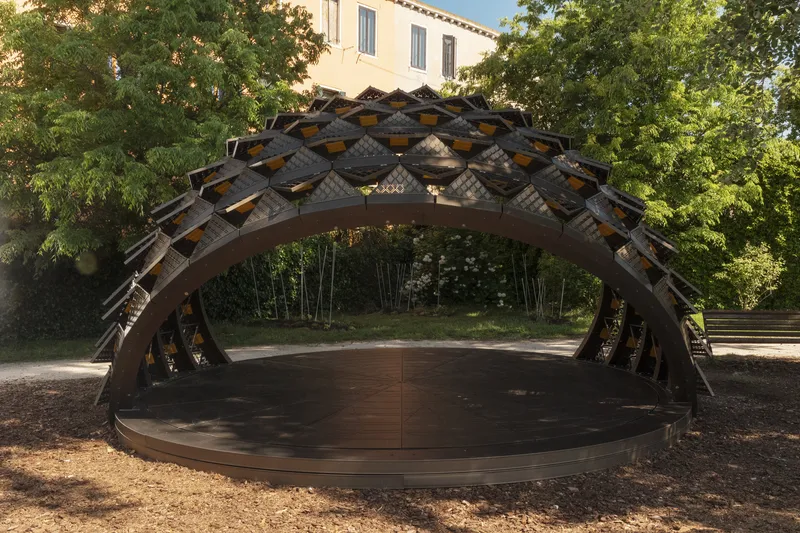
In the historic heart of Venice, at the European Cultural Centre’s Giardini Marinaressa, MVRDV has unveiled the SOMBRA Pavilion, an architectural innovation that celebrates the symbiotic relationship between sun and shade. Designed for the 2025 edition of the Time Space Existence exhibition, the 30-square-meter structure introduces a bold experiment in kinetic architecture—one that responds organically to solar conditions without relying on electronics or motors.
Concept and Inspiration Behind SOMBRA
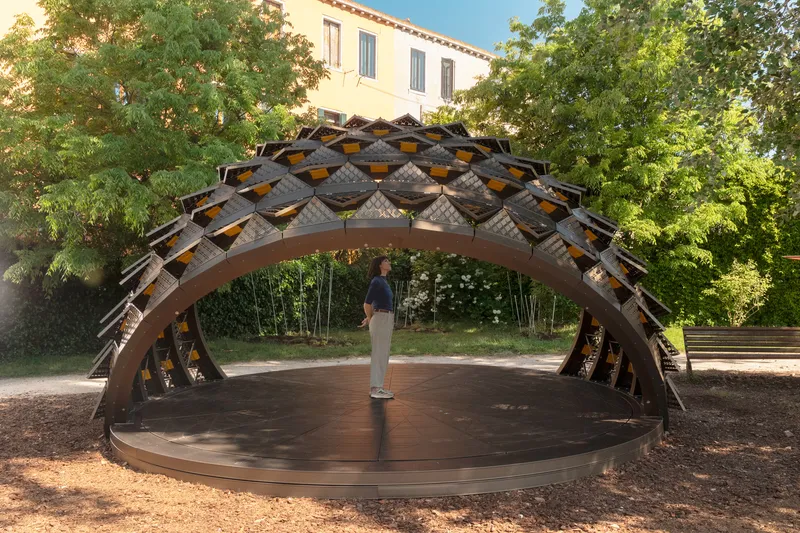
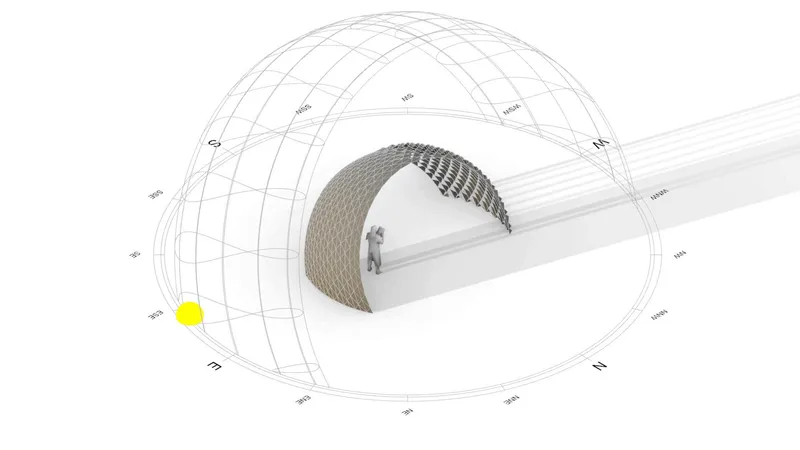
The name SOMBRA, derived from the Latin words sol (sun) and umbra (shade), encapsulates the pavilion’s poetic dialogue with sunlight. The structure is shaped like a heliodon, a tool used to study sun angles. This homage sets the stage for a physical narrative in which the sun is not merely a source of illumination, but an active participant in architectural performance.
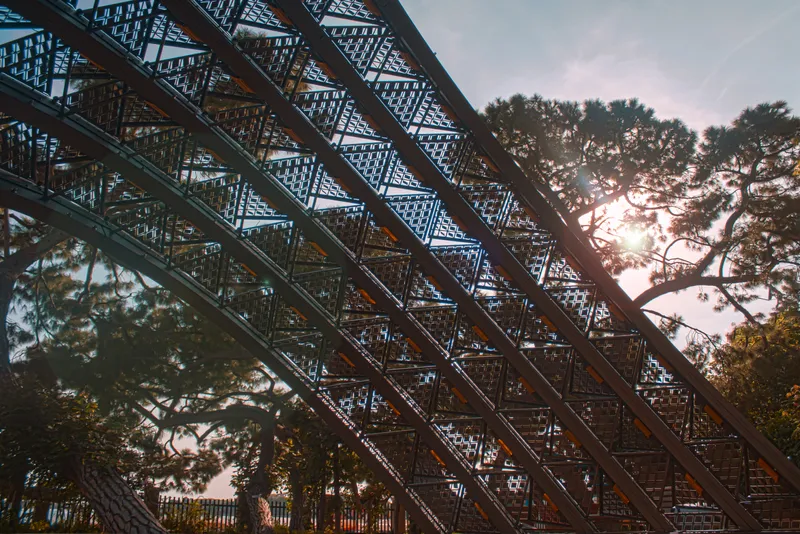
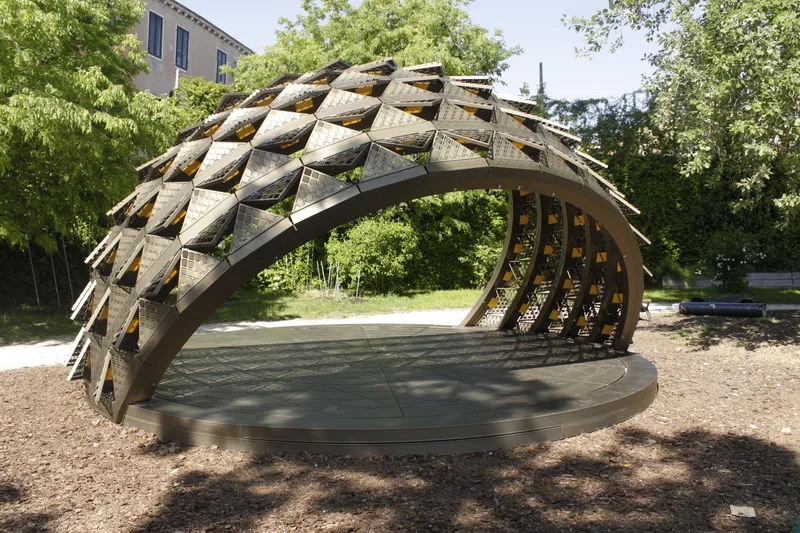
Passive Kinetics and Adaptive Shading
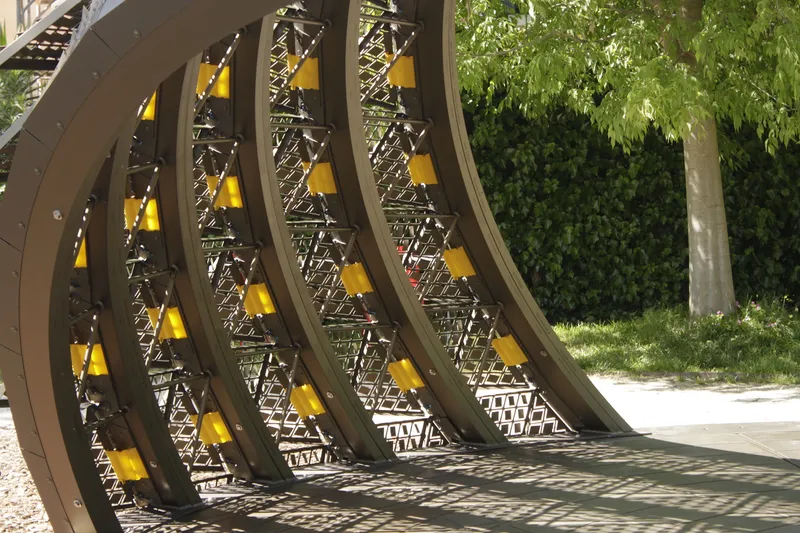
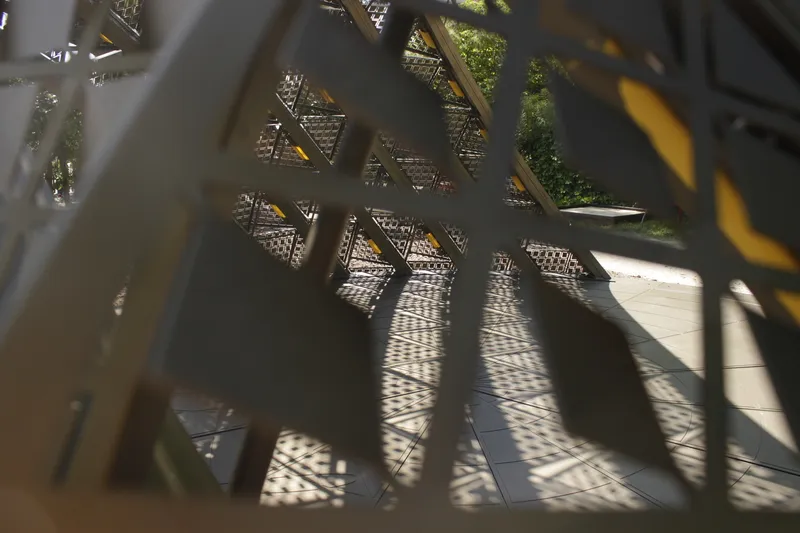
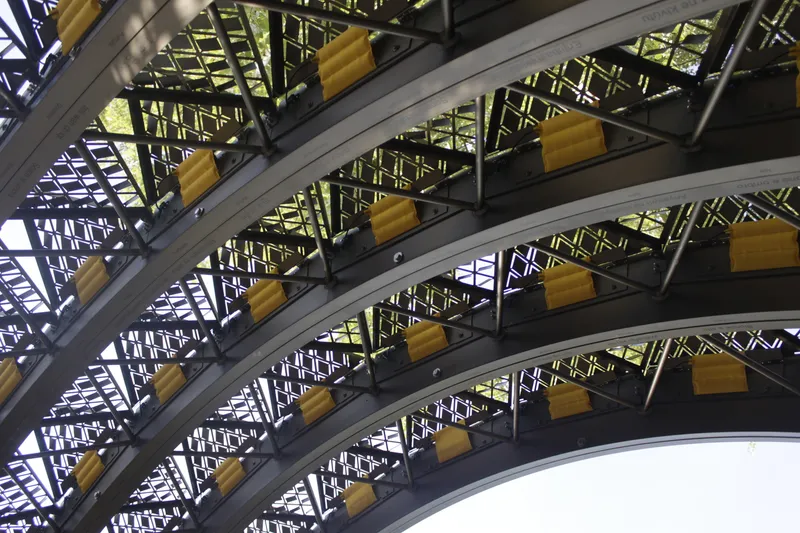
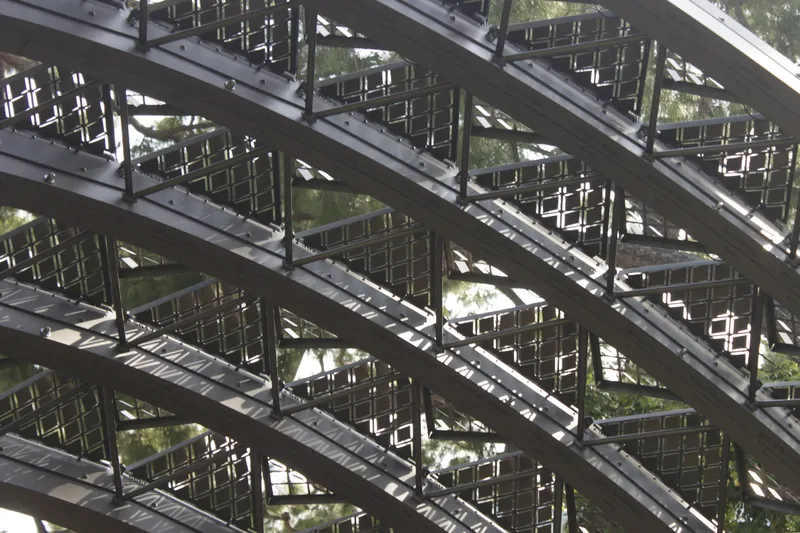
What sets the SOMBRA Pavilion apart is its pioneering use of kinetic building elements driven purely by passive mechanics. Developed in collaboration with Airshade Technologies, the structure operates without any electronics or motors. Instead, it employs a system of arched metal ribs embedded with small air canisters. When sunlight heats these areas, internal pressure increases, inflating air-filled actuators connected to the shading panels. This inflation contracts like a muscle, closing the panels to create shade—then relaxing again as the heat dissipates.
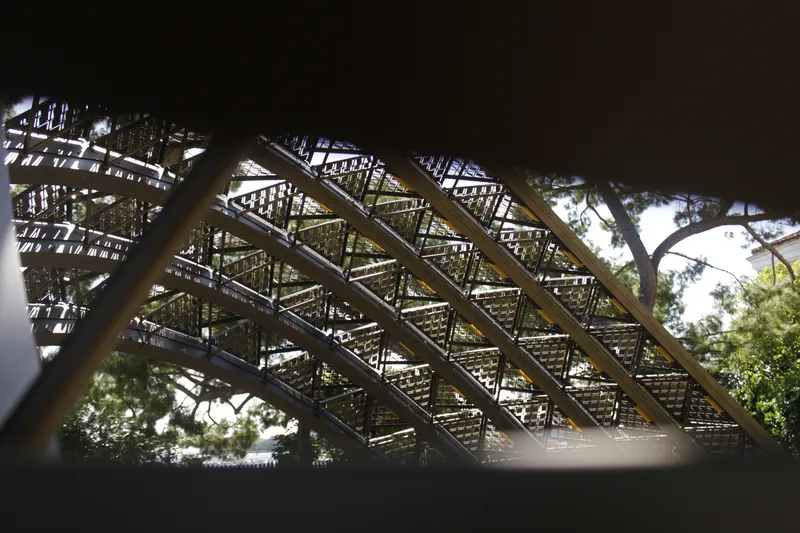
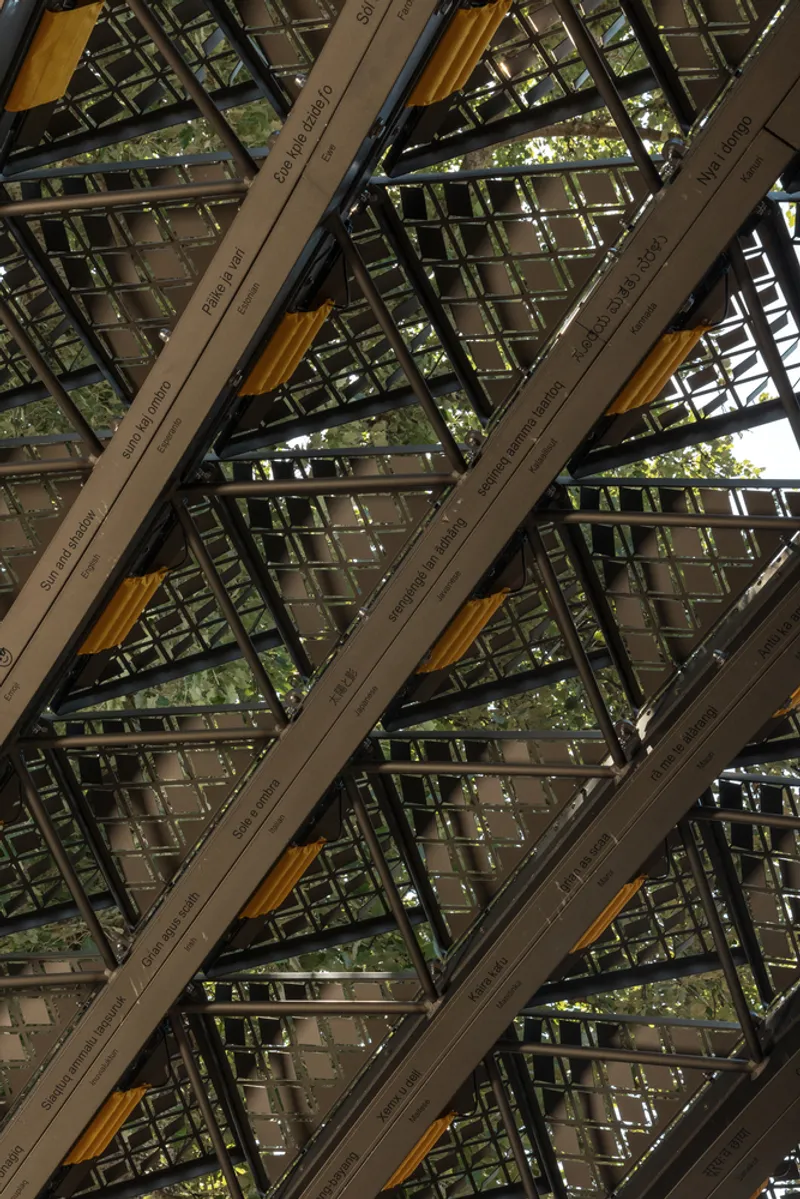
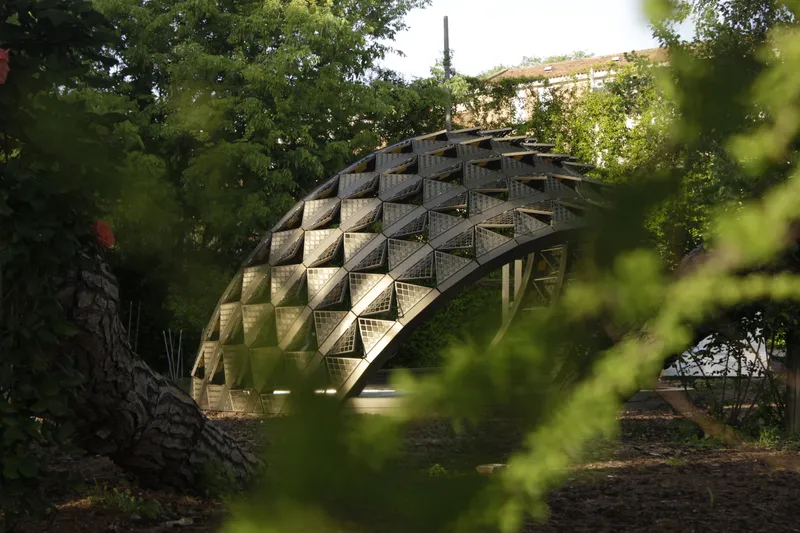
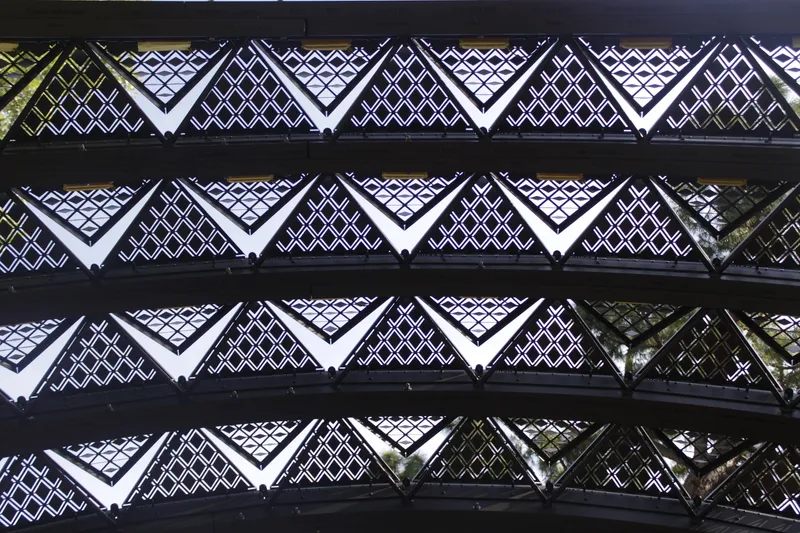
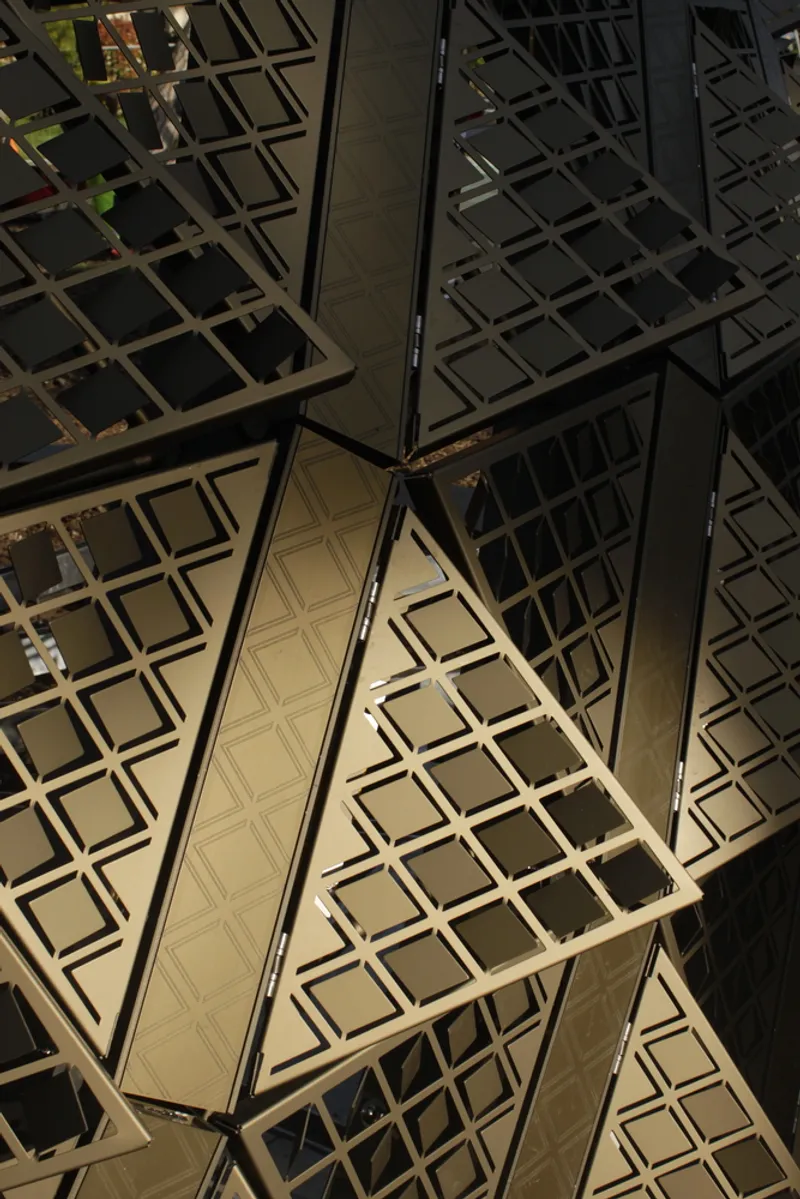
The panels themselves, created from perforated MD Formatura screens by Metadecor, are mounted on reused beams, reinforcing the project’s sustainable ethos. In their resting state, these triangular panels remain open, framing transparent views through the pavilion. When exposed to direct sunlight, they gently close, adjusting like a living organism that reacts to its environment.
A Living Architecture with Zero Operational Emissions
This entire system mimics the biological responsiveness of plants, representing a new frontier in sustainable architecture. According to MVRDV partner Bertrand Schippan, SOMBRA embodies “an architecture that senses its environment and reacts to it,” echoing the behavior of flora rather than mechanical systems. It represents a significant step toward creating architecture that harmonizes with the planet rather than extracting from it.
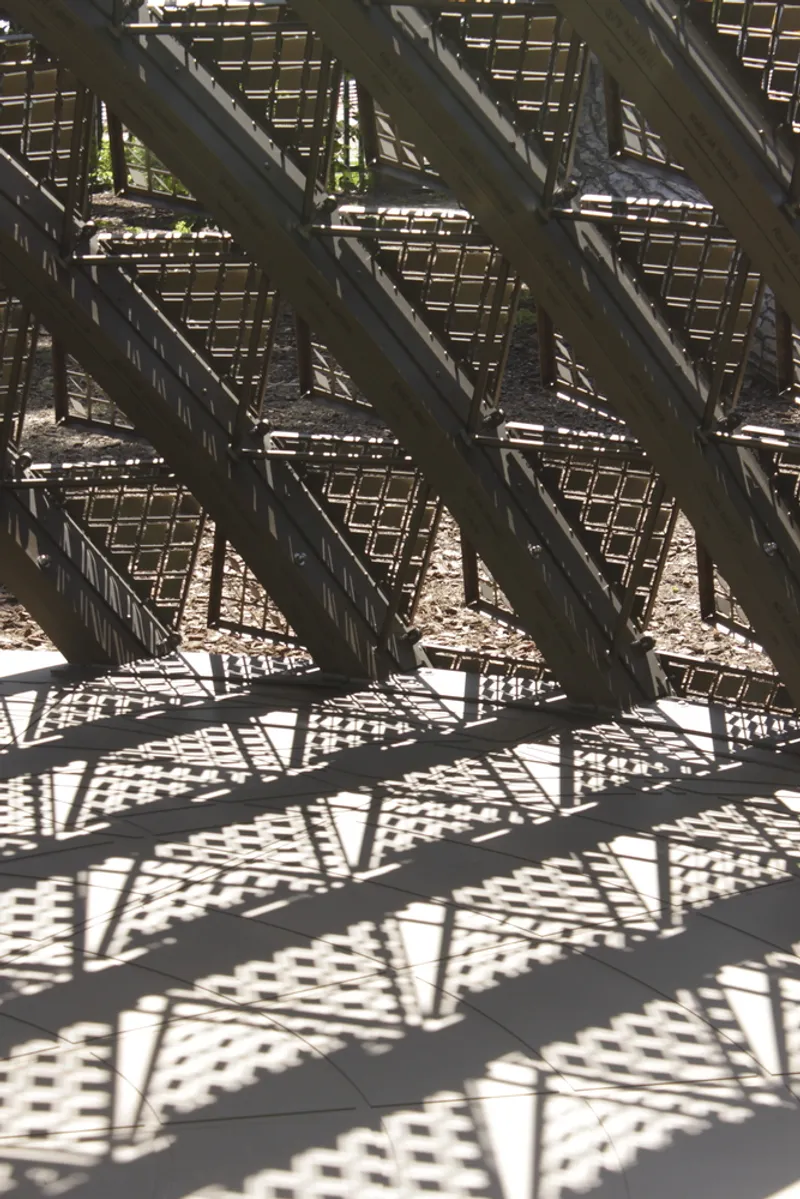
Importantly, SOMBRA achieves all this with zero operational carbon emissions. The air-driven kinetic system eliminates the need for external power sources or programmed technology, aligning with the urgent need for climate-responsive architectural strategies.
Cultural and Solar Symbolism in Design
Beyond its engineering, the SOMBRA Pavilion carries rich symbolic and cultural dimensions. Its circular floor plate is engraved with a polar sun path chart—the very diagram that informed the pavilion’s geometrical orientation. Etched into the undersides of the arched ribs are the words “sun and shade” in over 200 languages, honoring the universality of human interaction with sunlight. This multilingual inscription transforms the pavilion into a cultural and spatial manifesto on global environmental unity.
Collaboration and Exhibition Context
SOMBRA is the result of a broad interdisciplinary collaboration between MVRDV and several pioneering firms and institutions: Metadecor, Airshade, Alumet, Van Rossum Raadgevend Ingenieurs, Arup, Kersten Europe, and the AMOLF Institute. These partnerships enabled a blend of architectural vision and scientific precision, culminating in a structure that exemplifies both innovation and sustainability.
The pavilion is on view during the Time Space Existence exhibition from May 10 through late autumn, with future plans underway to exhibit it in other global locations. The exhibition itself is a platform for architects and designers to explore critical themes around time, existence, and environmental interconnectivity—making SOMBRA a fitting highlight of the event.
Redefining Future Architectural Language
The SOMBRA Pavilion stands as more than a temporary installation. It is a living prototype of what kinetic architecture pavilions can become—structures that not only provide shelter but adapt, evolve, and breathe in tune with the earth. Through minimal environmental impact, aesthetic elegance, and technical ingenuity, SOMBRA paves the way for a new kind of building, one that responds to sunlight with intelligence and grace.
All the photographs are works of Federico Vespignani, Jaap Heemskerk




Popular Articles
Popular articles from the community


Hill & Cross Opera: Sculptural Opera House Architecture Shaped by Tallinn’s Landscape and Identity
Hill & Cross Opera reimagines opera house architecture in Tallinn through its sculptural hill, civic plaza, glass wave and a luminous cross.

The Musturak Paradise: Senior Living Architecture for a Connected Future in Temara, Morocco
The Musturak Paradise reimagines senior living architecture in Temara via private homes, social spaces, culture, community, and shared care.

Play: Fragments of Their World
Familiar architecture becomes modular playground design, creating safe spaces where displaced children can learn, connect, imagine and play.

Conexión: Biophilic Design Reimagines High-Rise Living in Hong Kong
Conexión reimagines high-rise living in Hong Kong through biophilic design, green facades, shared spaces, daylight, water and nature within.


Similar Reads
You might also enjoy these articles

Bamboo Housing Challenge 2026: Design Affordable, Sustainable Homes Using Bamboo
An international design competition by Bamboo U and IBUKU inviting architects and designers to reimagine affordable housing using bamboo — with the winning design built full-scale in Bali.

Computational Design & Education: Beegraphy Design Awards Introduces 7th Category (Featuring Jiyun's Innovative Approach)
Dive into Beegraphy’s 7th Design Awards category, where computational design meets education to create immersive, interactive learning tools, inspired by Jiyun’s work.

From Parametric Lighting to Urban Furniture: Join the 2nd Workshop in Beegraphy’s Computational Design Series
Dive into Cutting-Edge Design Techniques and Practical Applications with Industry Experts

Last Call: Unleash Your Architectural Genius in SHAK's Kindergarten Design Competition
Urgent call for architects to join SHAK's kindergarten design competition before the looming deadline
Explore Kinetic Façade Competitions
Discover active competitions in this discipline



Challenge to reimagine the Iron Throne


Photograph architecture without architects


Illustrate the lost glory of Angkor Wat - Render Challenge


Design challenge to reuse E-waste
Comments (0)
Please login or sign up to add comments
No comments yet. Be the first to comment!