

Space Encounters Crowns a 1980s Dutch House with Corrugated Aluminum and Geometric Apertures
On a water-ringed plot in Broek op Langedijk, a restrained renovation transforms a forgettable brick house into a taut, arcadian composition.


Broek op Langedijk is one of those Dutch places where geography writes the rules. Until the early 1970s, the area was a lattice of hundreds of small islands reachable only by boat. Land consolidation turned part of it into a nature reserve and the rest into a quiet residential district, but the parcel logic persists: each house sits on its own piece of ground, bounded by water. AB House, designed by Space Encounters for a growing family, starts from an unremarkable 1980s dwelling on exactly this kind of plot and turns it into something quietly radical.
The strategy is deceptively simple. Rather than demolish and start over, Space Encounters kept the existing ground floor layout intact, its rooms already sensibly arranged, and built upward to the maximum volume the zoning would allow. What makes the project compelling is not the addition itself but the language it introduces: corrugated aluminium cladding, a black steel structure, abstract geometric openings punched through the roof skin, and a restrained palette that manages to feel both contemporary and deeply rooted in the region's tradition of fragmented volumes and dominant pitched roofs.
A Roof That Does the Talking
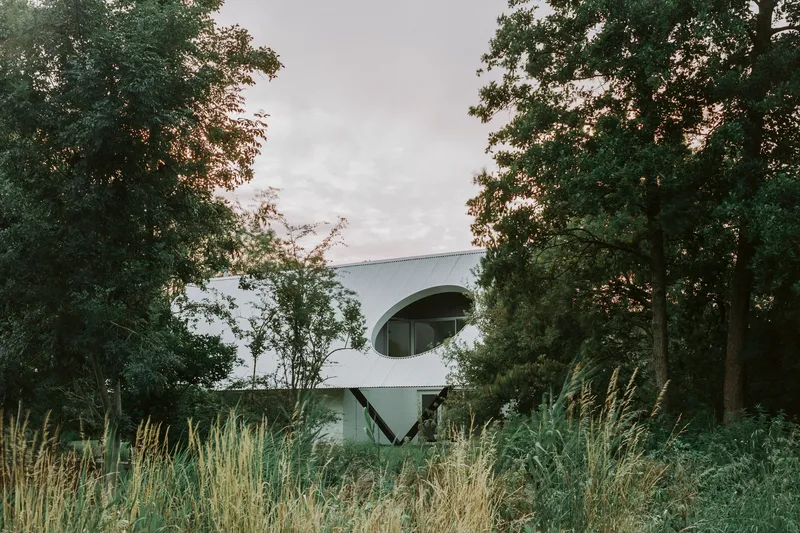
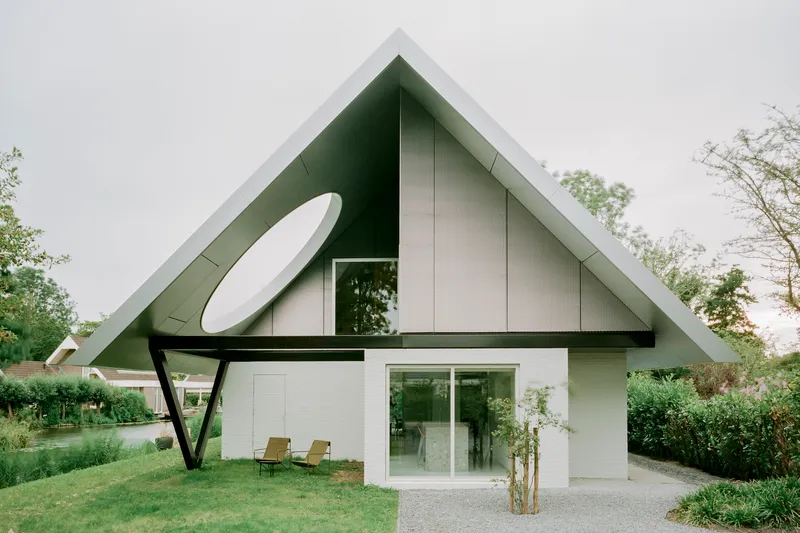
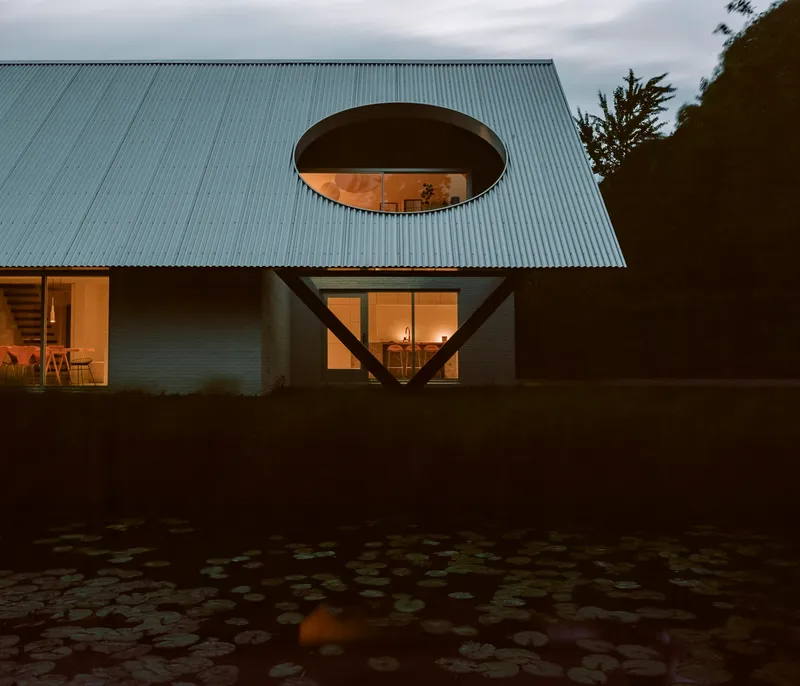
The corrugated aluminium roof is the dominant gesture, and Space Encounters clearly intended it that way. Its pitched form nods to the local vernacular, where gabled profiles are the baseline, but its material is pointedly industrial. The circular aperture cut through the facade is the project's signature: a perfect geometric void that reads as a porthole at close range and a full moon from across the water. At dusk, when interior light spills through the opening, the effect is theatrical without being loud.
Diagonal steel braces, left exposed and painted black, do double duty as structural reinforcement and compositional accent. They give the facade a tension that keeps the house from feeling merely polite. The oval window on the gable end and the triangular aperture elsewhere complete a trio of geometric shapes, circle, triangle, and square, that Space Encounters deploys like a quiet manifesto on abstraction within the vernacular.
The Covered Terrace and Its Steel Canopy
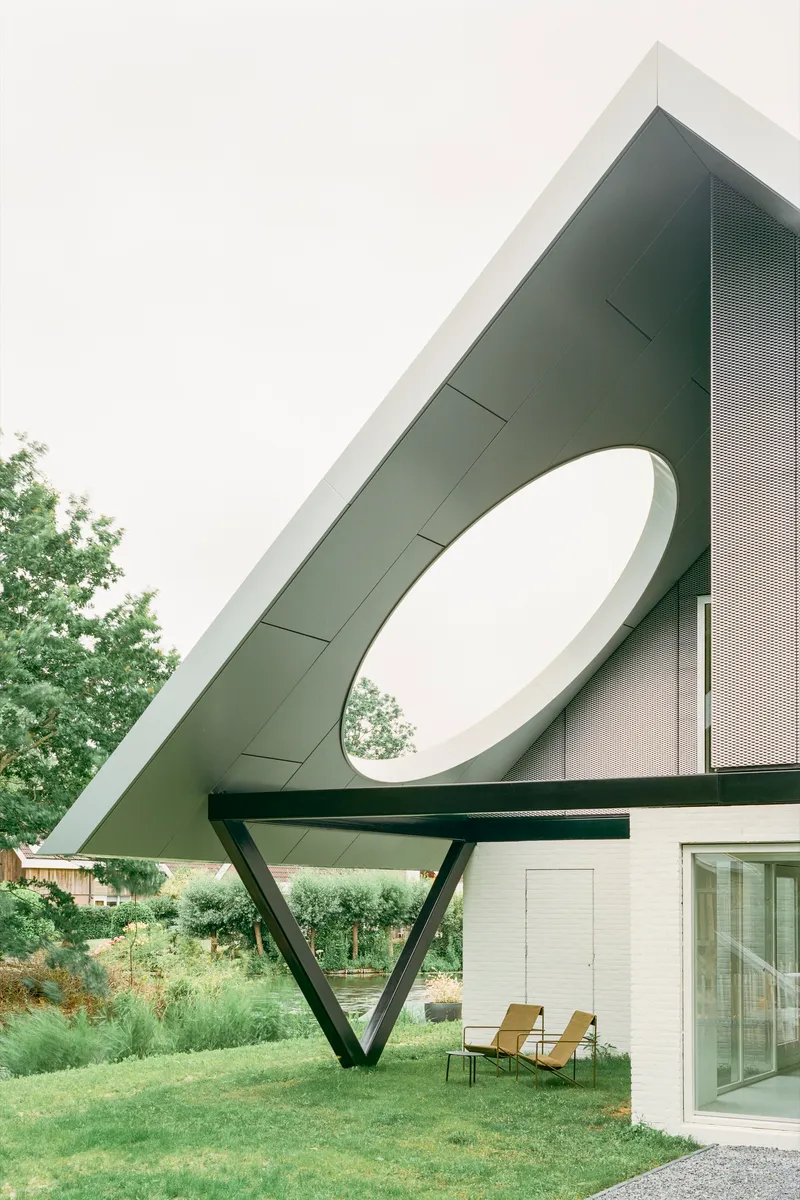
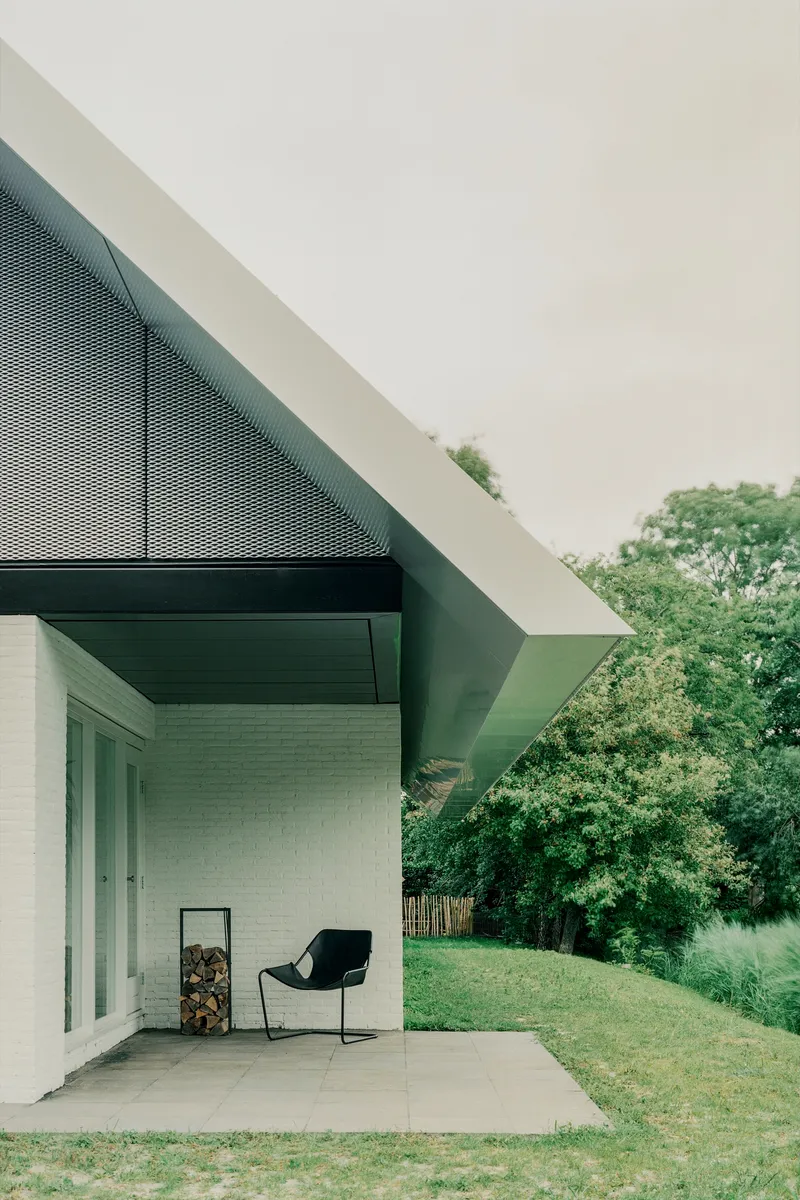
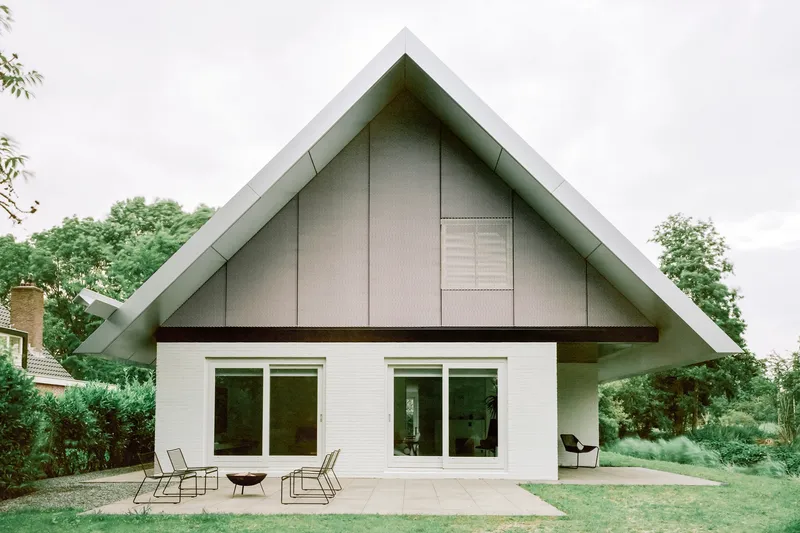
Where the roof meets the ground, the house becomes generous. A cantilevered canopy of perforated metal extends over a terrace at the rear, creating an intermediate zone between garden and living space. The perforations filter light into a soft, dappled pattern on the white brick wall below, transforming what could be a utilitarian overhang into a genuinely atmospheric threshold. Sliding glass doors open the kitchen and living room directly onto this terrace, collapsing the boundary between inside and out.
The steel beam that runs along the roof edge doubles as a rainwater gutter, a detail that references a traditional feature of pitched roof architecture in the region's arcadian landscape. It is the kind of move that separates a renovation done with real knowledge from one merely done with taste.
Ground Floor: Retained, Refined
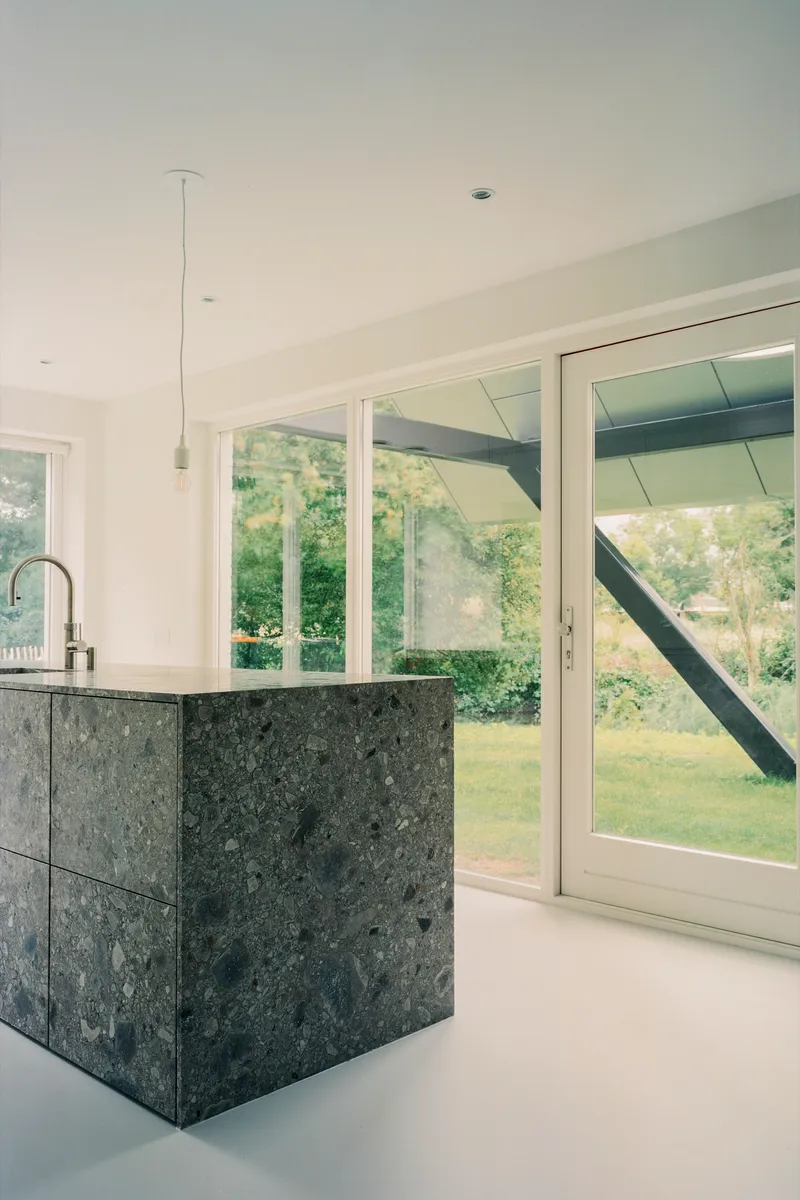
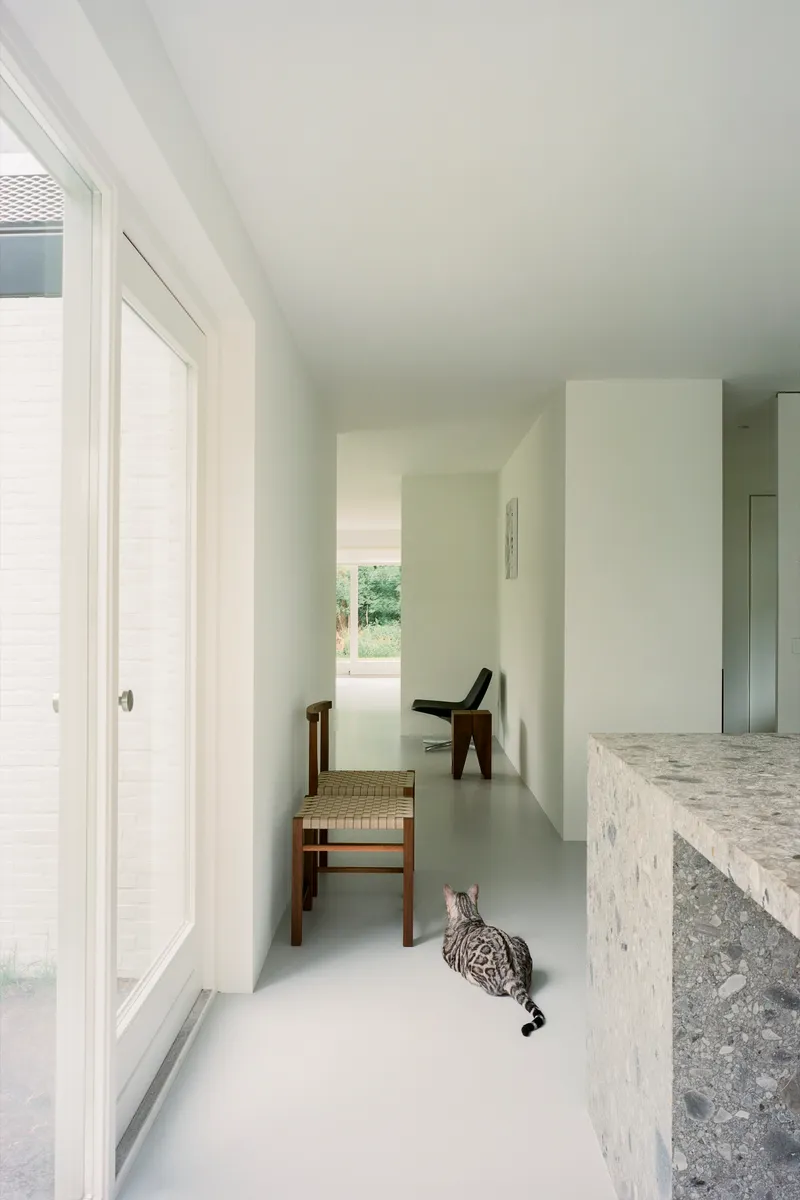
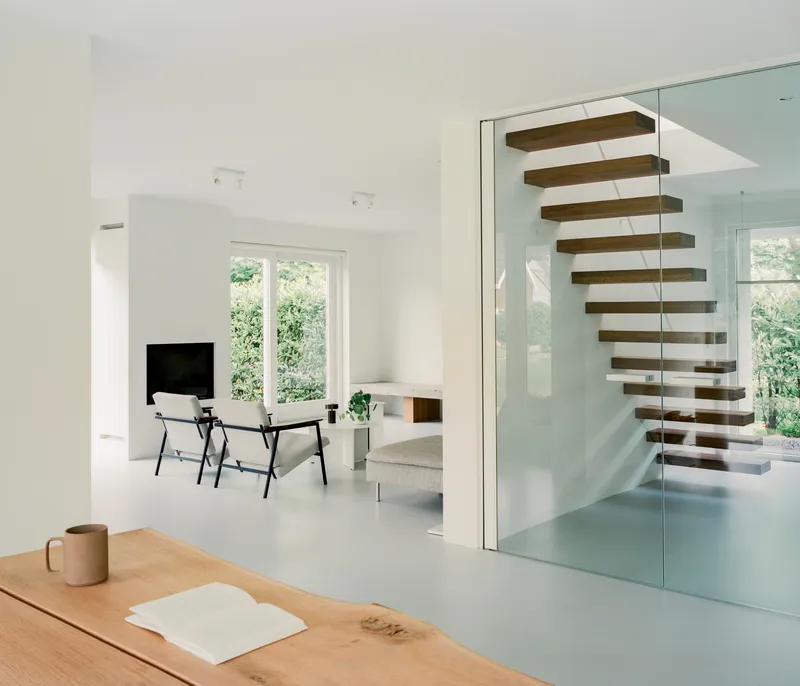
Space Encounters resisted the urge to gut the ground floor. The existing layout, with kitchen, living room, and office, was functional and well proportioned, so they kept it and refined the finishes. A dark stone island anchors the kitchen, while a pale resin floor runs through the open plan, giving the spaces a seamless, calm base. Deep sight lines connect front to back and out to the garden through generous glazed openings. A floating timber staircase, set behind a glass partition, links the two levels without consuming floor area.
The material palette at ground level is deliberately restrained: white painted brickwork, terrazzo edges, and just enough timber to keep things warm. It reads as a stable, grounded layer over which the more expressive upper volume sits.
Upper Level: Plywood and Pitched Ceilings
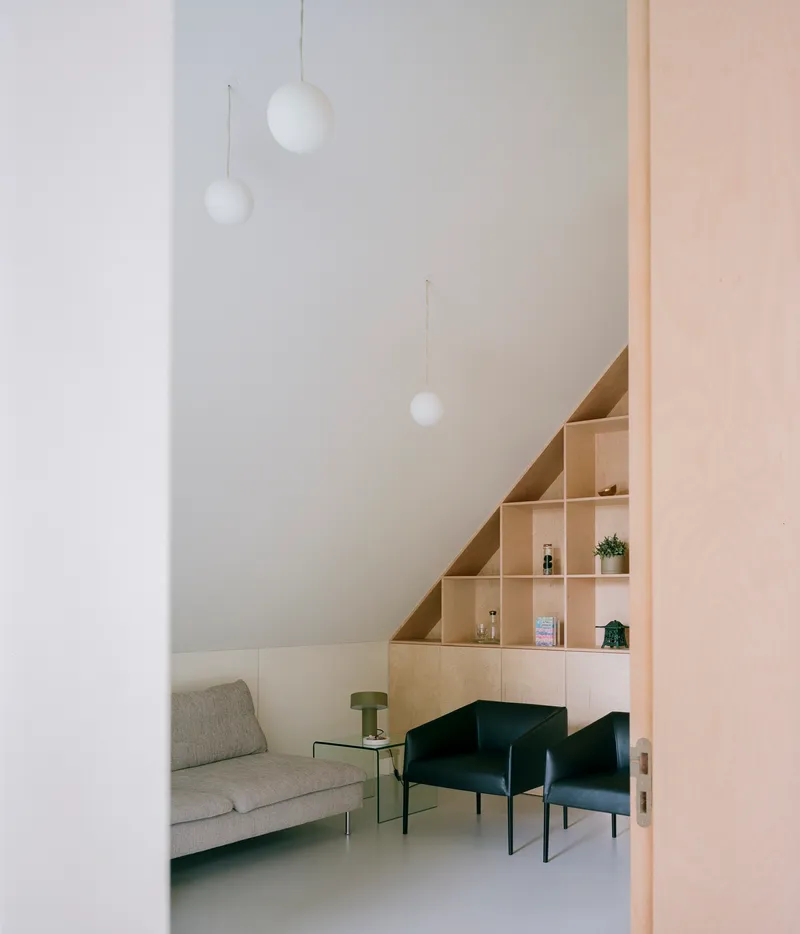
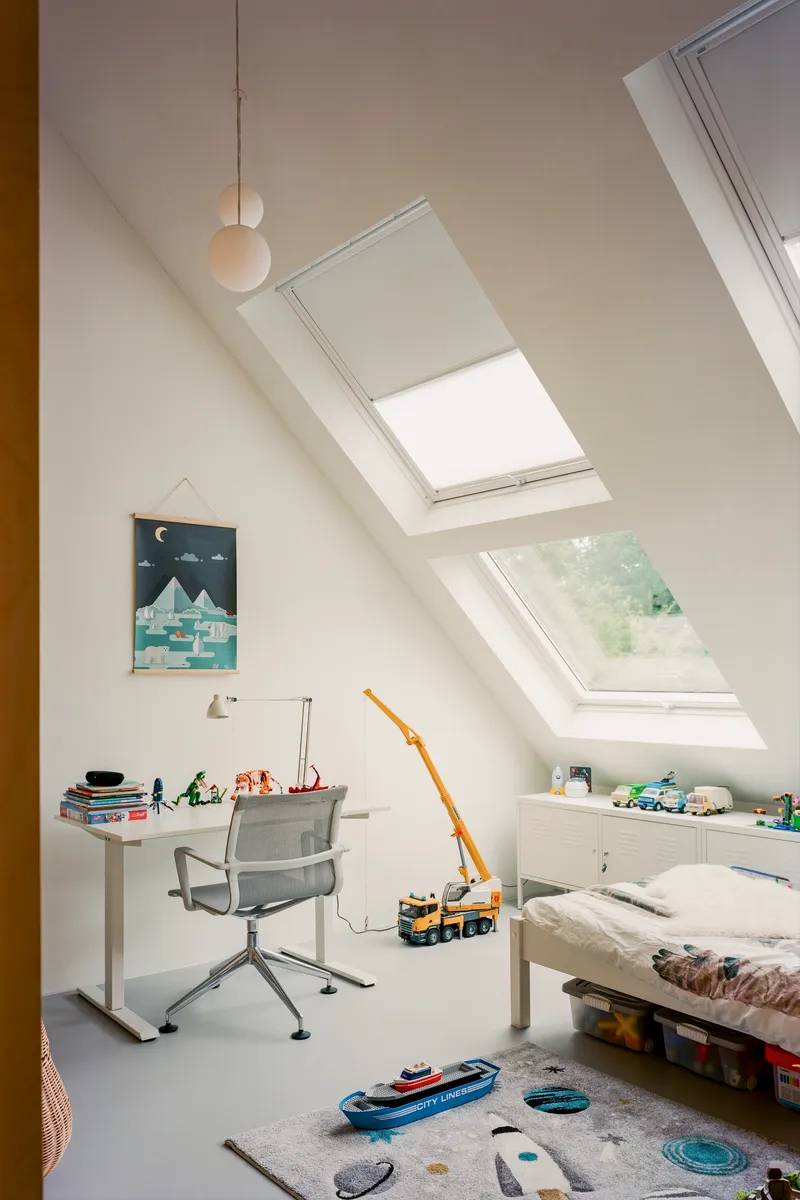
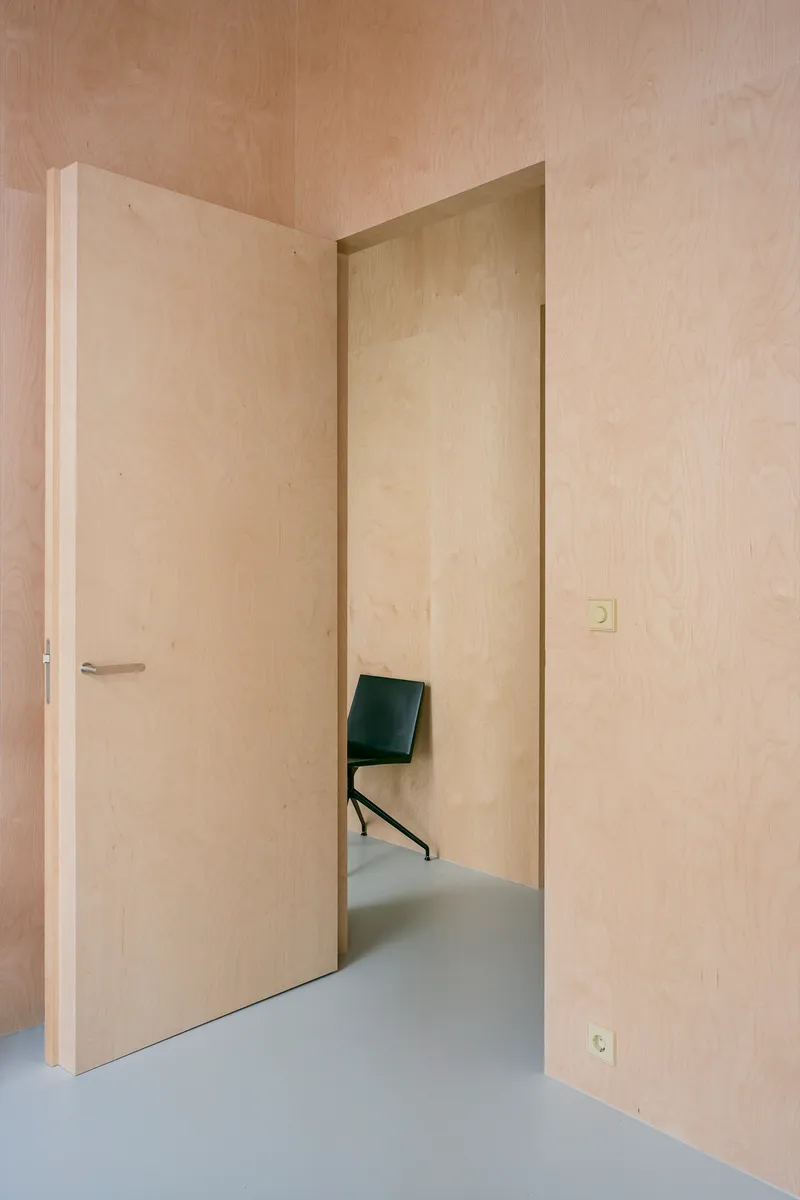
Upstairs, the mood shifts. Pale plywood lines the walls, ceilings, and built-in shelving, wrapping the bedrooms and bathroom in a continuous warm shell. The pitched ceiling follows the roof profile, giving rooms a spatial generosity that belies their modest footprint. Roof skylights pour light into the bedrooms, and the flush plywood doors maintain the sense of a single, carved volume rather than a series of boxes.
The upper floor's facade is notably more closed than the ground level. Where the living spaces below are outward-looking and transparent, the bedrooms above offer privacy through a steel mesh wrap punctuated only by specific, intentional openings. The contrast between the two levels is not just material but experiential: public below, private above, open below, sheltered above.
Landscape and Water
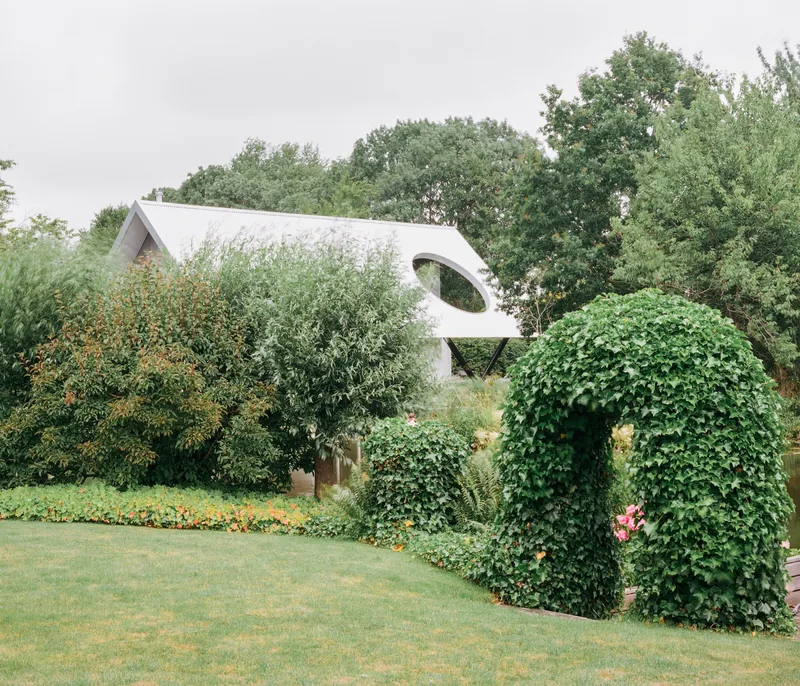
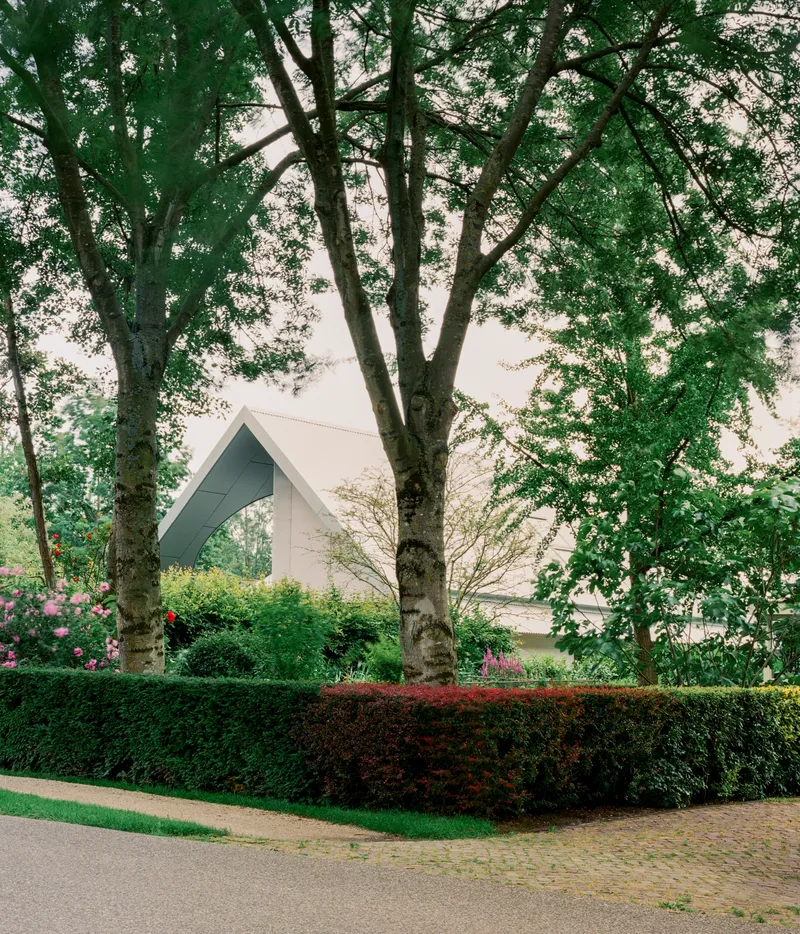
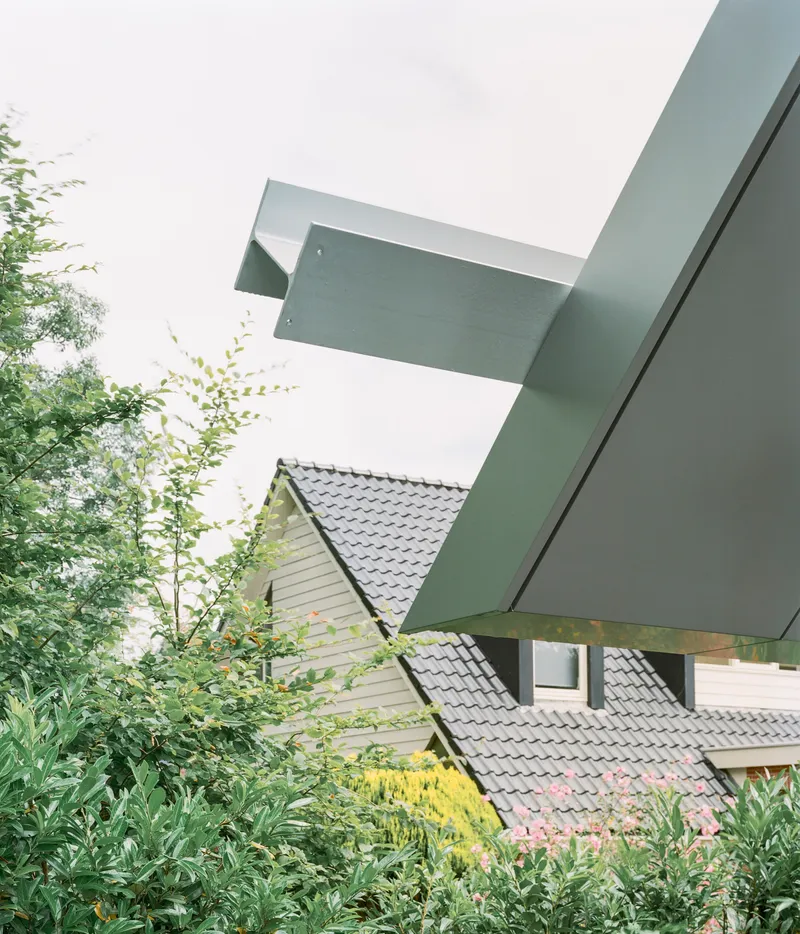
The house does not fight its setting. Mature trees, ivy-covered walls, trimmed hedges, and a pond with water lilies give the plot the character of a small estate. The corrugated roof, seen through layers of foliage, sits comfortably among its neighbors' more conventional tiled roofs. From the curved path that approaches the house, the white gable peeks through greenery like a face half-hidden, which is exactly the kind of quiet presence this landscape demands.
Space Encounters understood that the design needed to absorb the qualities of its water-rich, green surroundings rather than assert dominance over them. The house is specific to this site, and that specificity is its strength.
Plans and Drawings
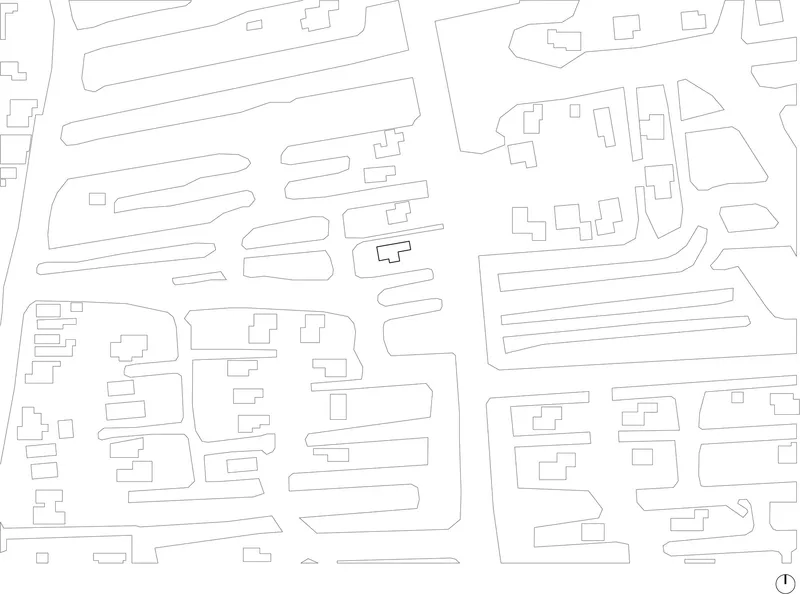
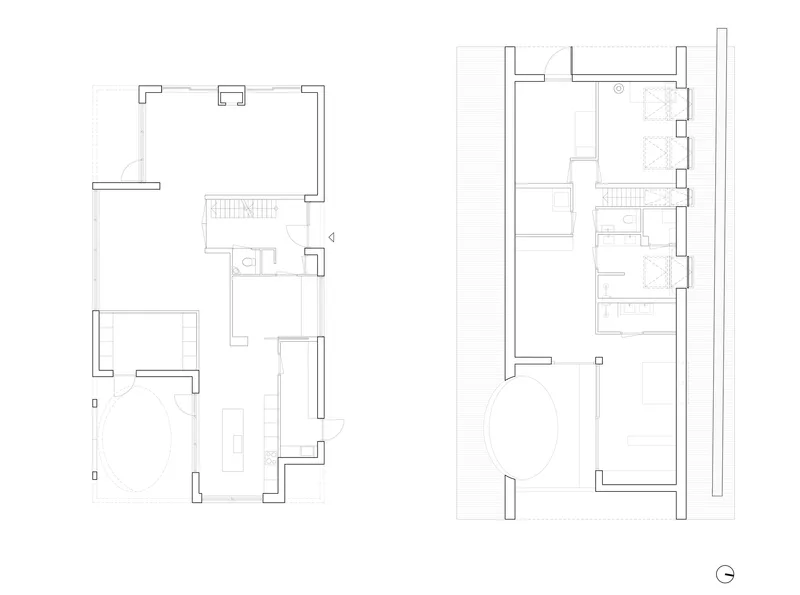
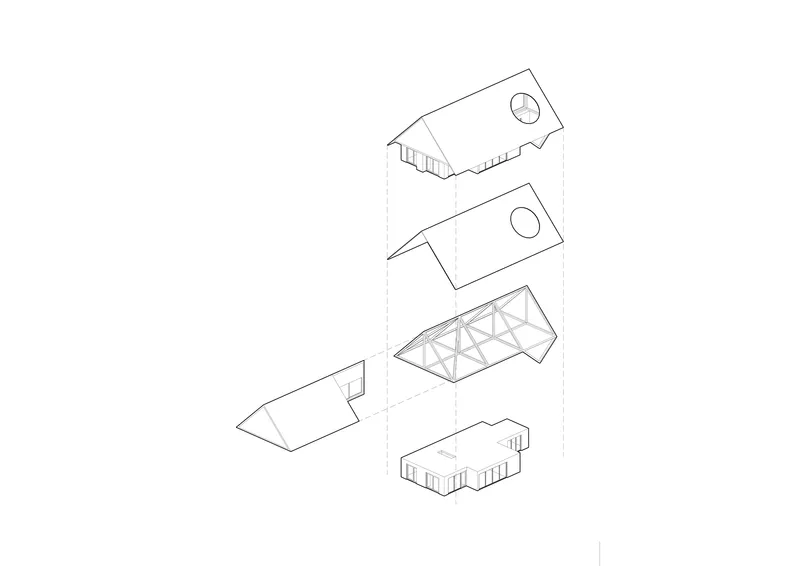
The site plan reveals the island-like quality of the plot, surrounded by water and vegetation. The floor plans show how the existing ground floor organization was preserved, with a central curved element connecting the two levels. The exploded axonometric is the most telling drawing: five distinct volumes, including two pitched roof forms and a triangulated glazed pavilion, are pulled apart to expose the additive logic of the design. The existing brick base, the steel structure, and the aluminium skin each occupy their own layer, making the renovation legible as an act of accumulation rather than erasure.
Why This Project Matters
AB House is a case study in restraint that does not mean timidity. Space Encounters made a series of disciplined decisions: keep the plan, build up, limit the palette, and concentrate the expressive energy in a few geometric gestures. The result is a house that feels inevitable rather than imposed, which is the hardest thing to achieve in residential renovation. Too many architects treat an existing structure as an inconvenience to be overcome. Here, it is treated as a foundation, literally and conceptually.
The project also demonstrates that regional sensitivity and contemporary ambition are not mutually exclusive. The pitched roof, the gutter detail, and the fragmented volumes all come from the local tradition, but the corrugated aluminium, the punched geometric voids, and the black steel structure belong firmly to the present. That blend is not compromise. It is synthesis, and it gives AB House a staying power that most renovations of this scale never achieve.
AB House, designed by Space Encounters, Broek op Langedijk, The Netherlands. Completed 2023. Photography by Lorenzo Zandri.
About the Studio
Share Your Own Work on uni.xyz
If projects like this are the kind of work you want to make, uni.xyz is a place to publish your own, find collaborators, and enter design competitions.


Popular Articles
Popular articles from the community


Faces of the Soviet Avant-Garde: Turning Moscow's Street Names into an Open-Air Museum
A network of sculptural installations across a Moscow residential district transforms forgotten architect names into spatial encounters with cultural memor

Tsunami Convergenics: Turning Catastrophic Ocean Forces into Underwater Housing Infrastructure
A speculative underwater settlement off the coast of Onagawa, Japan, treats tsunamis and typhoons as energy sources rather than threats.

Singing Woman: Contemporary Architecture Inspired by Estonia’s Voice and the Sea
Singing Woman turns Estonia’s song culture into flowing opera house architecture, blending public life, landscape, sea, and national memory.

Opera by the Sea Estonia: Three Shells Dissolving Architecture into Tallinn's Coastline
A winning opera house proposal replaces monumental form with interconnected shells that blur the boundary between building, park and Baltic Sea.

Similar Reads
You might also enjoy these articles

Bao Huynh Watercolor Atelier: A Serene Art Retreat in Hội An
Bao Huynh Watercolor Atelier in Hội An blends multifunctional art spaces, sustainable design, local materials, and family-friendly living in a serene environment.

Atelier Macri Concept Store Interior Design by CASE-REAL
Atelier Macri store features a "ko" counter, walnut wood details, cork displays, blending retail, gallery, and seamless customer experiences.

Manuel Vargas Izquierdo Stadium and High-Performance Sports Center: Architectural Excellence in Jalpa de Méndez
The Manuel Vargas Izquierdo Stadium blends sustainable design, inclusive sports facilities, and cultural-inspired architecture, revitalizing Jalpa de Méndez’s public spaces.

KAKR Buluh Awar Hall: Revitalizing Community and Ecology Through Bamboo Architecture
Community built bamboo hall revitalizes Buluh Awar village, empowering youth, restoring ecology, celebrating vernacular craftsmanship through sustainable architecture and culture.


Comments (0)
Please login or sign up to add comments
No comments yet. Be the first to comment!