

SpActrum Shanghai Office: Reframing Construction Waste as Architectural Identity
SpActrum Shanghai Office transforms discarded construction materials into functional interiors, revealing hidden building processes and celebrating reuse through inventive, industrial-inspired spatial


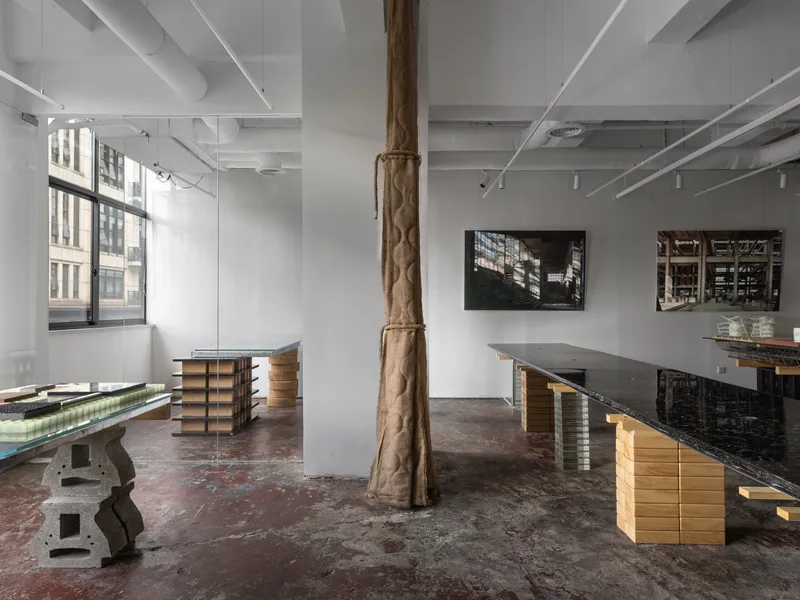
The SpActrum Shanghai Office redefines what an architecture studio can be by transforming overlooked construction-site materials into a meaningful spatial language. Designed by SpActrum and located in Jing’an District, Shanghai, this 107 m² workspace merges architectural experimentation, material research, and spatial storytelling into a single environment that celebrates the hidden processes behind building. Completed in 2024 and documented by SFAP and Terrence Zhang, the project presents a new paradigm: an office born directly from the construction field.
Rethinking the Construction Process as a Design Generator
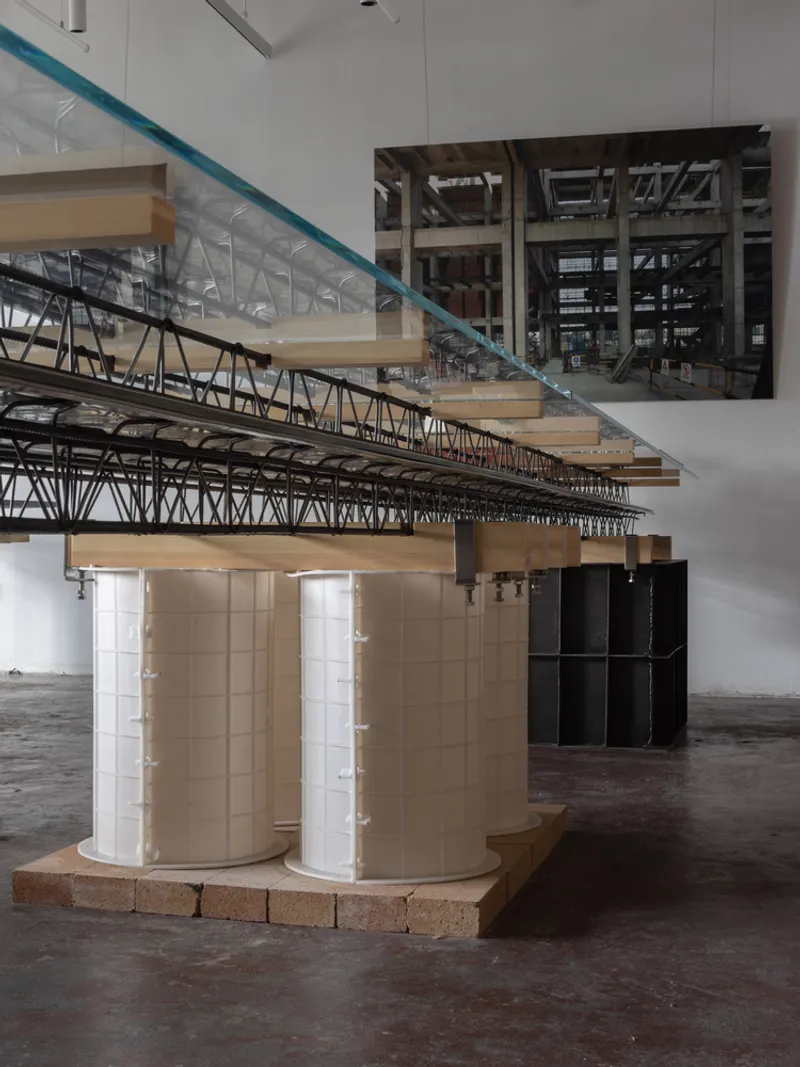
Modern construction is often judged solely by its final form, with the layered processes behind it largely forgotten. Today’s building sites involve complex sequences—forests of scaffolding, formwork installation, reinforcement systems—activities that constantly generate and erase intermediate structures. These temporary forms emerge, disappear, and leave almost no trace in the completed architecture.
SpActrum argues that this constant state of transformation is an untapped source of conceptual and material richness. Historically, the builder and designer were one, allowing direct engagement with materials and the evolution of form. Today, this connection is fragmented. According to SpActrum, contemporary architecture suffers from two blind spots:
- A metaphysical detachment—the temporary forms of construction are not considered as generators of architectural language.
- A material disconnect—architects are increasingly removed from the physical behavior of materials, losing the ability to adjust form-making through hands-on engagement.
A Design Philosophy Formed On-Site
Since 2019, SpActrum architects have embedded themselves deeply in construction sites, participating in every step from formwork assembly to structural installation. Through this immersive practice, they witnessed the industry’s indifference toward temporary material systems—components essential to construction yet quickly discarded, recycled, or hidden forever in the finished building.
When the studio relocated, the team seized the opportunity to challenge this systemic invisibility. They transformed their new office into an experimental space that reintroduces construction-site elements into public awareness. Every material incorporated carries physical traces of its former life—structural patterns, heat marks, wear, and irregularities—revealing an alternative aesthetic rooted in the processes of making.
Material Reuse as Architectural Expression
The SpActrum Shanghai Office repurposes a curated selection of construction-site materials, elevating them beyond their utilitarian origins. Their physical properties guide their new roles, offering honest, textural surfaces and structural clarity. Many visitors may recognize the forms intuitively, reconnecting architecture with its fundamental processes.
Key Repurposed Materials
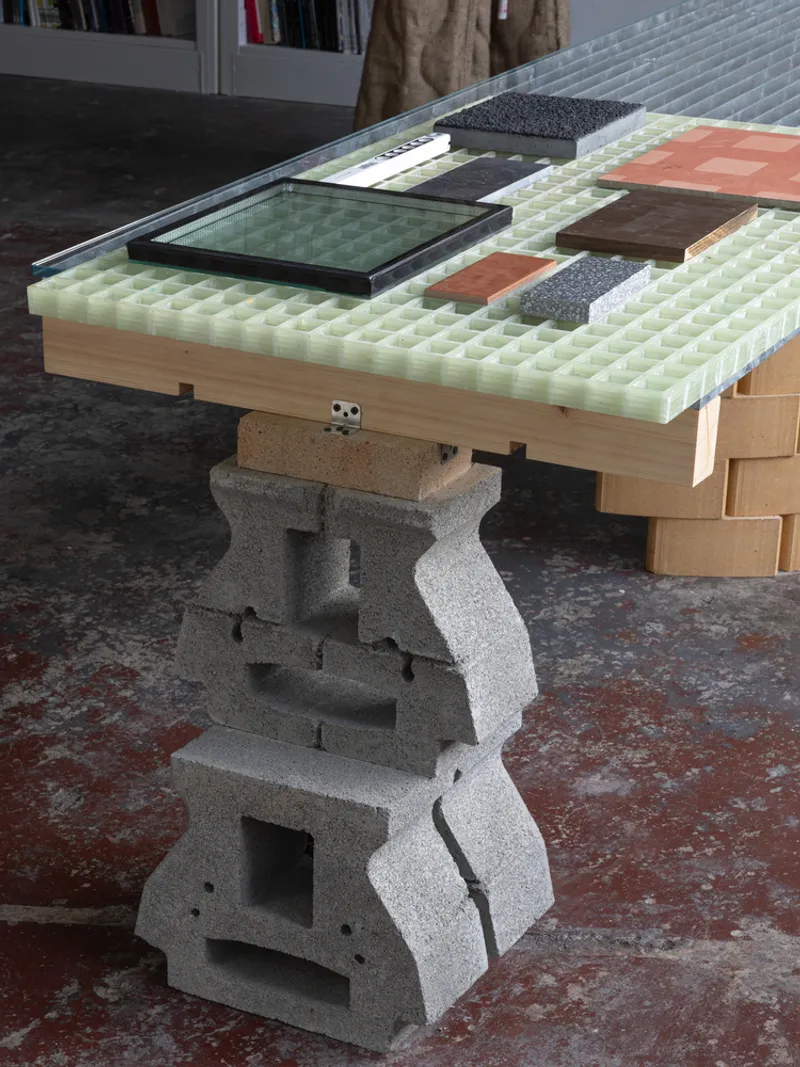
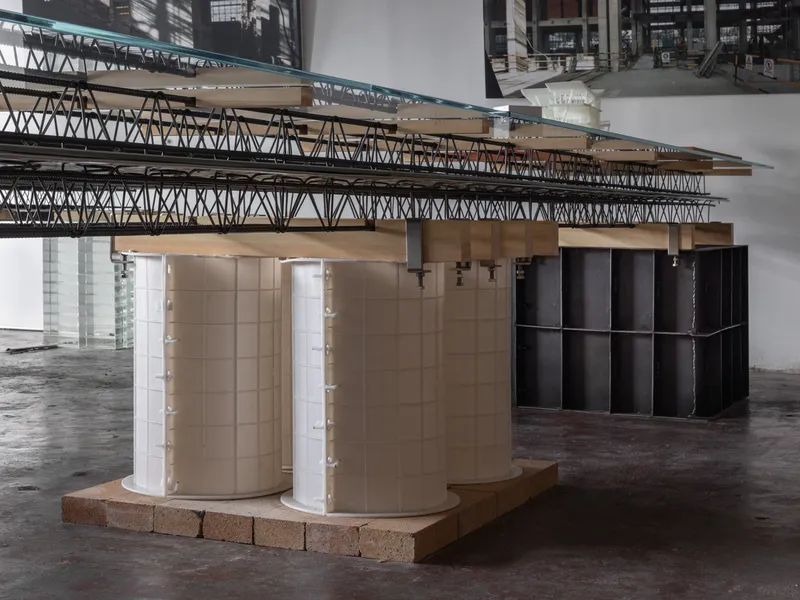
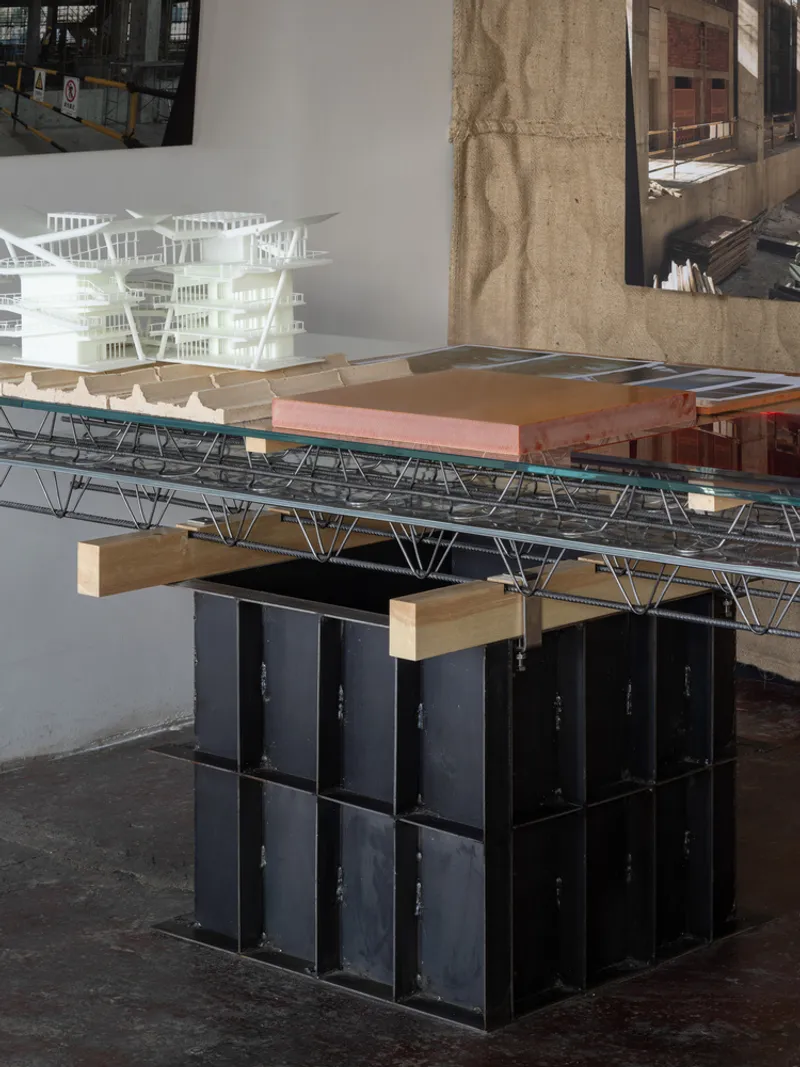
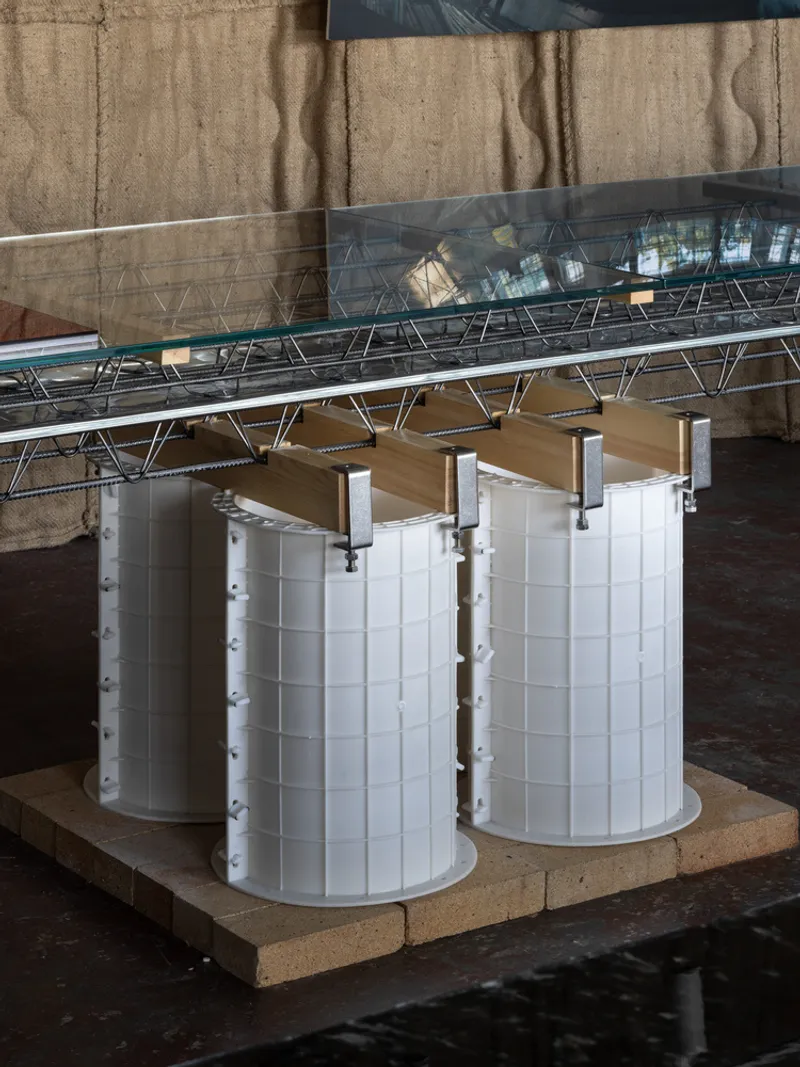
1. Formwork Molds Originally used to shape poured concrete, metal and plastic molds now serve as furniture supports. Their rigidity and imprint patterns enrich the studio’s custom worktables.
2. Firebricks & Refractory Bricks Once used to line industrial kilns, these highly durable ceramics become sculptural bases for furniture, celebrating their thermal history.
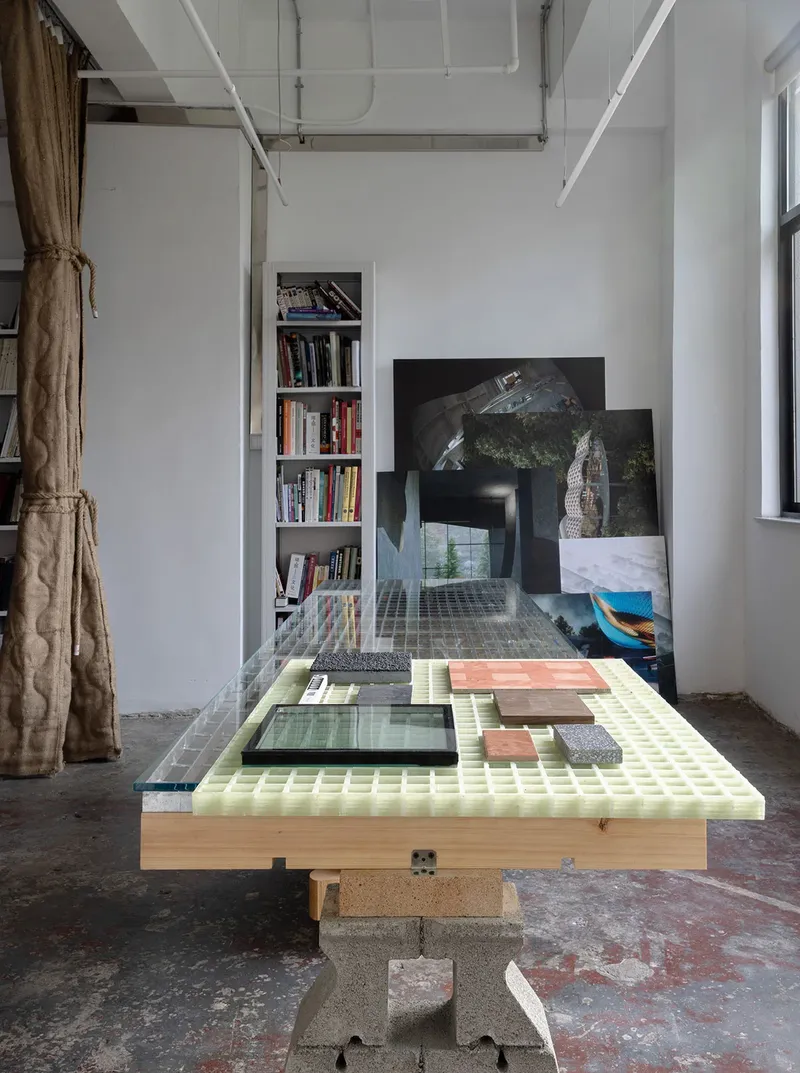
3. GMT Pallets These fire-resistant fiber slabs, used in sintering machine-made bricks, retain striking textures. When coated with resin, they offer a marble-like finish and form the studio’s bench worktops.
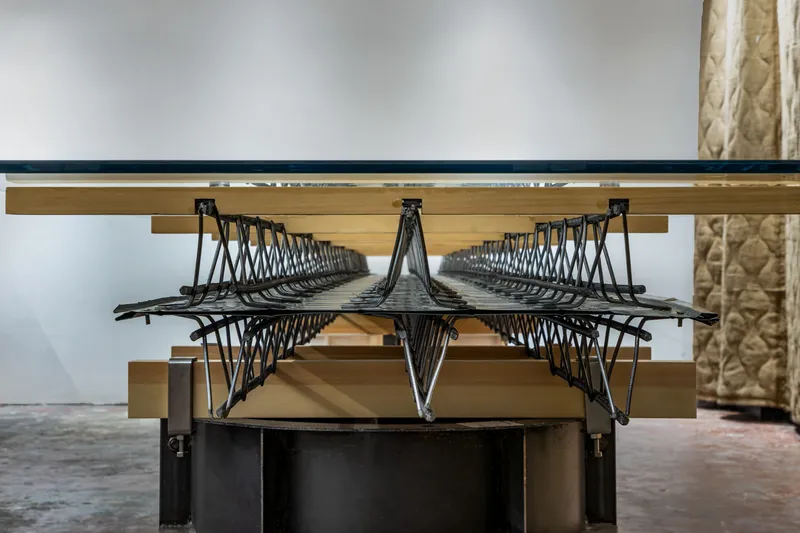
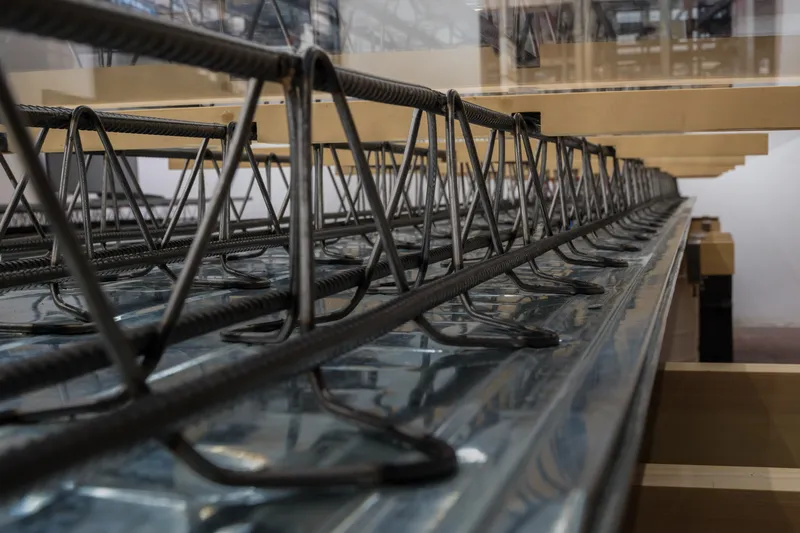
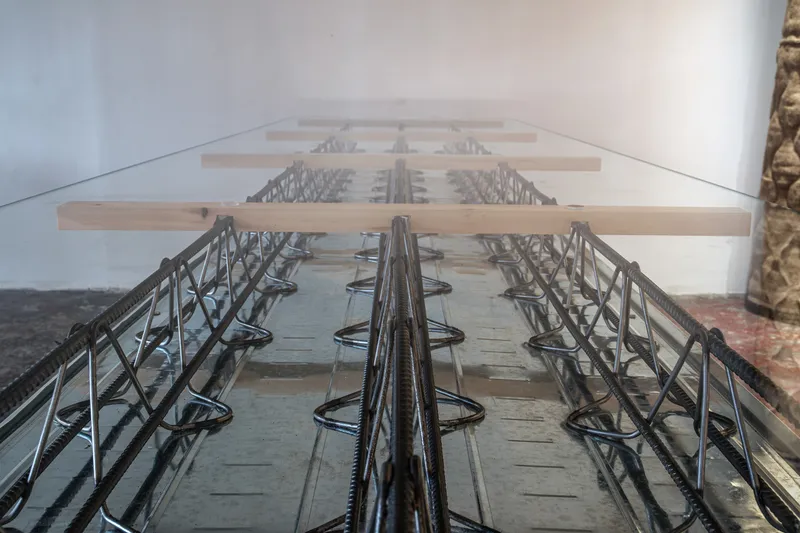
4. Floor Bearing Plates Mass-produced steel plates used as reinforcement and formwork in concrete construction are reintroduced as structural supports for desks, benches, and exhibition tables.
5. Burlap Sacks Simple packaging sacks—once carrying raw materials—are sewn and filled to create tactile space dividers, adding warmth and porous visual privacy.
A New Public Awareness of Construction Materiality
Through this process, SpActrum challenges conventional office aesthetics. Instead of smooth, perfected finishes, the space highlights the imperfect, the temporary, the industrial, and the unpolished. Ingredients of construction that previously lived behind the scenes now form the visual and spatial identity of the studio.
The design also acts as an educational display. Visitors move through an immersive exhibition that communicates how architecture is built—its labor, its components, its hidden formal changes. The studio becomes a physical manifesto advocating for material awareness and sustainable reuse.
An Architecture Office Built From Its Own Practice
By embedding construction-site materials into its workspace, SpActrum creates a closed loop between practice and place. The office becomes both a laboratory and a reflection of the firm’s philosophy: architecture should not discard its origins but should reinterpret them as opportunities for innovation.
All photographs are works of SFAP, Terrence Zhang


Popular Articles
Popular articles from the community


Opera on the Sea: Driftwood Logic Shapes a Timber Opera House on Estonia's Coast
Trevor Orgill's opera house translates the entangled drift of floating timber into a civic building where wood, water, and music converge.

Opera by the Sea Estonia: Three Shells Dissolving Architecture into Tallinn's Coastline
A winning opera house proposal replaces monumental form with interconnected shells that blur the boundary between building, park and Baltic Sea.

Faces of the Soviet Avant-Garde: Turning Moscow's Street Names into an Open-Air Museum
A network of sculptural installations across a Moscow residential district transforms forgotten architect names into spatial encounters with cultural memor
Extended Shell: Retrofitting Kolkata's Balconies as Living Urban Thresholds
A modular retrofit system recovers the social and environmental intelligence of Kolkata's historic verandas for contemporary Park Street residents.

Similar Reads
You might also enjoy these articles


Hodi-Mandai Geram
Project Function: Preservation and revitalization of the Intangible heritage and socio-spatial identity of the Hodi by Housing, Cultural Memory Center, Sacred Grove, landscape, local tourism economy


Olio Towers: A Mid-Rise for Performers That Fuses Housing, Rehearsal, and Stage
Located blocks from Houston's Theater District, this modular tower stacks living units around a central performance atrium.

Oasis: Modular Green Housing Carved into Dhaka's Urban Fabric
A shortlisted Plugin Housing entry reclaims unauthorized settlements in Dhaka with stepped concrete volumes, green roofs, and ventilation-driven design.

Black Hole: A Floating Megastructure for the Post-Physical Era
Emiliano Mazzarotto envisions a spherical, self-scaling arena where e-sports, digital hotels, and holographic stadiums replace traditional public space.

Explore Reclaimed Space Competitions
Discover active competitions in this discipline

Challenge to design luxury tourism on rails

Challenge to reimagine the Iron Throne

Photograph architecture without architects

VR headsets Storefront design competition
Comments (0)
Please login or sign up to add comments
No comments yet. Be the first to comment!