
SPIDER-NET: Parametric Multilayered Mobility Woven into Shanghai's Historic Core
A five-layer vertical circulation system fuses spider web geometry with traditional Chinese joinery at a congested Shanghai intersection.


What if a spider's web could teach a city how to move? At one of Shanghai's most congested heritage intersections, a parametric design proposal stacks five distinct layers of circulation into a single architectural organism, separating pedestrians, cyclists, metro commuters, and tourists while knitting them together through a web-like structural geometry. The result is a vertical urban machine that refuses to choose between preservation and performance.
SPIDER-NET is a conceptual urban design by Robin Zhang, sited at the junction of Huashan Road and Middle Huaihai Road in central Shanghai. The intersection sits among colonial-era buildings, the landmark Wukang Building, residential blocks, and office complexes. Its narrow pedestrian lanes and heritage streetscape generate daily friction between foot traffic, vehicles, and transit riders. Zhang's proposal transforms that friction into architecture: a parametric framework that absorbs the existing street grid and reorganizes it vertically, drawing equally on computational fabrication and traditional Chinese mortise-tenon joinery.
Five Layers Stacked Over a Colonial Street Grid
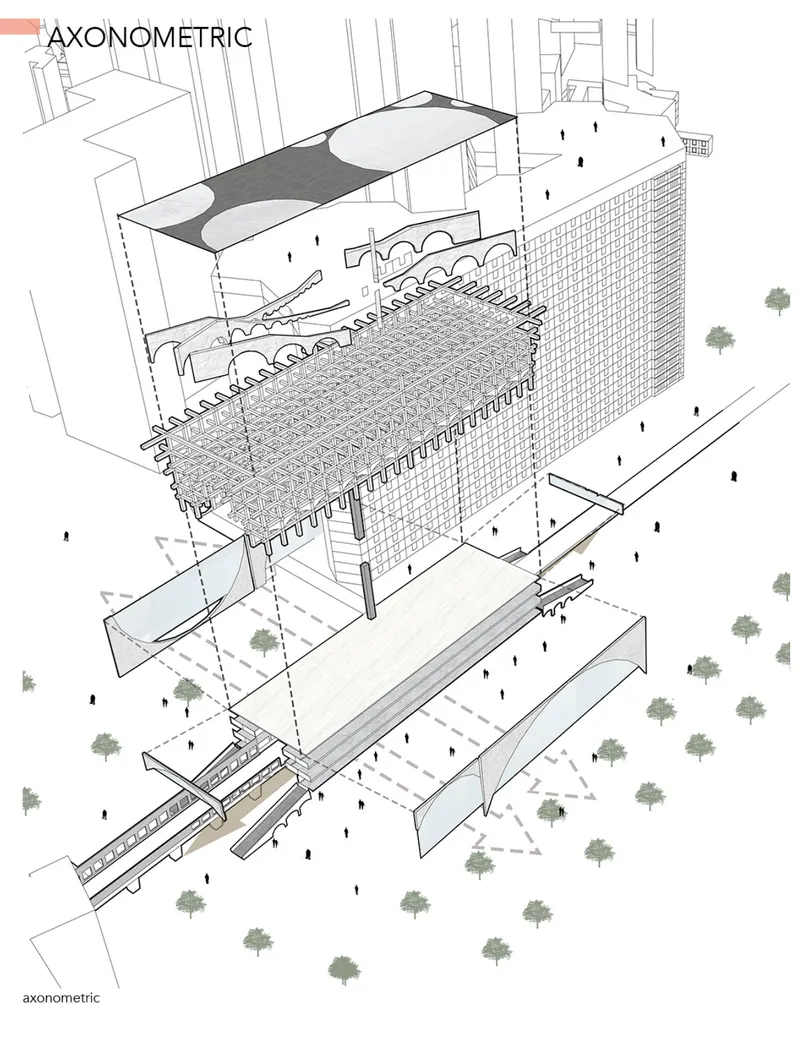
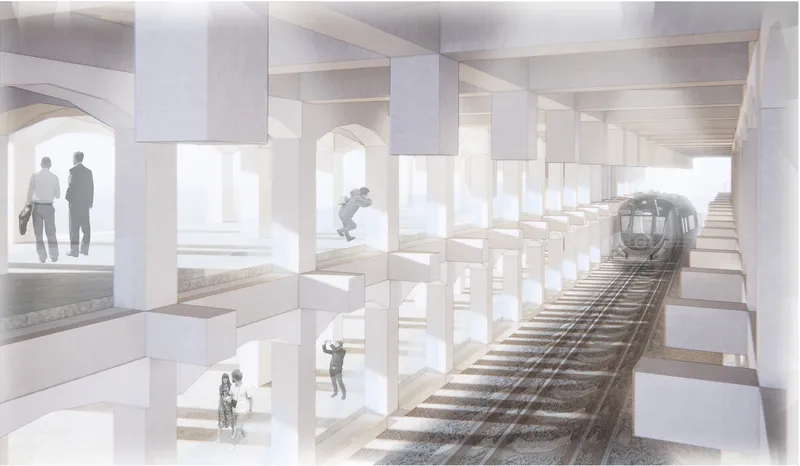
The axonometric drawing reveals the project's core proposition: a multi-level station whose textured roof canopy floats above the surrounding tree line, mediating between the scale of heritage buildings and the ambition of a transit hub. Below that canopy, the interior rendering shows white terraced platforms stepping down toward arched openings where a metro train approaches. These arches are not decorative. They reference the recurring vault motifs found across Shanghai's historic libraries and civic arcades, digitally reinterpreted here as modular structural elements that carry both loads and cultural memory.
The five programmatic layers, from ground to sky, include safe shaded pedestrian walkways, dedicated non-motor vehicle lanes for bikes and e-scooters, direct metro integration points, elevated tourist walkways offering panoramic views, and open public decks for social exchange. Zhang designed this stack after on-site demographic mapping identified three primary user groups: students seeking interactive leisure spaces, white-collar workers needing efficient office-to-transit connections, and elderly residents requiring shaded rest zones with accessible circulation. Each layer directly addresses one or more of those needs.
Tensile Mesh and Mortise-Tenon Logic
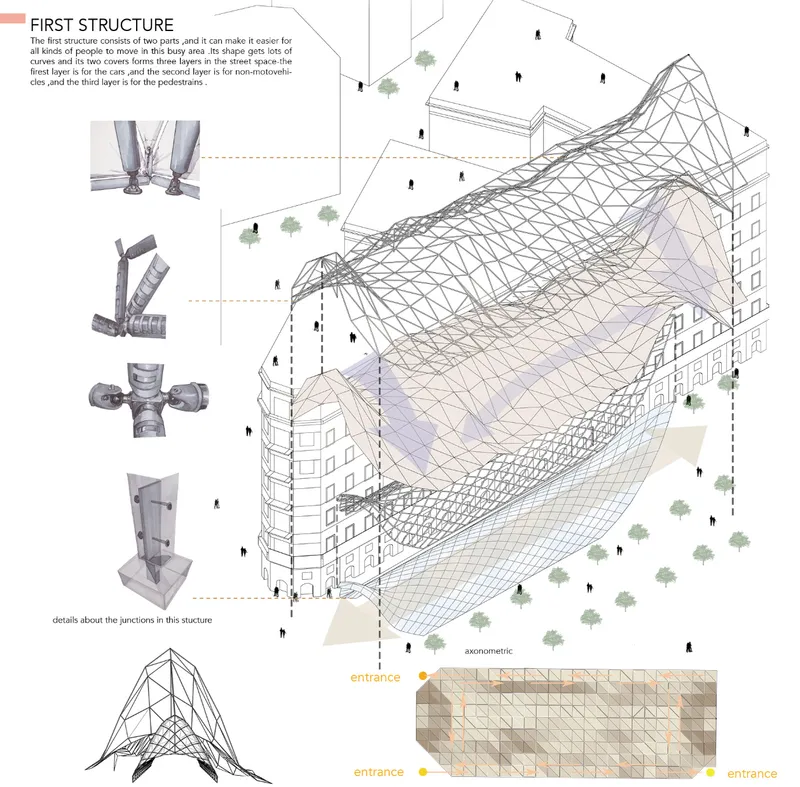
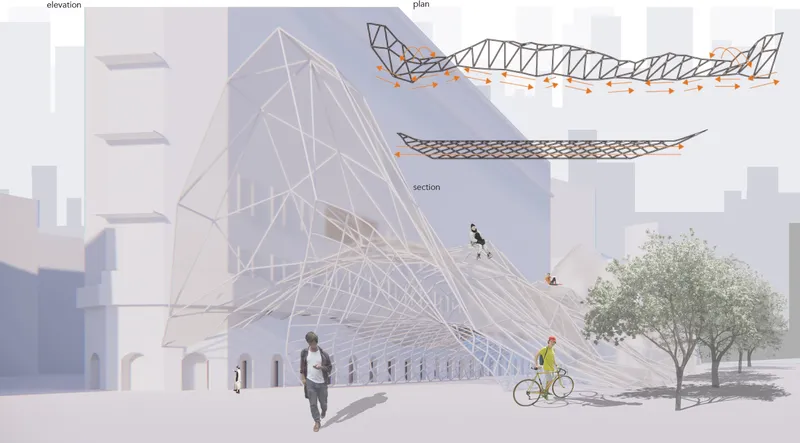
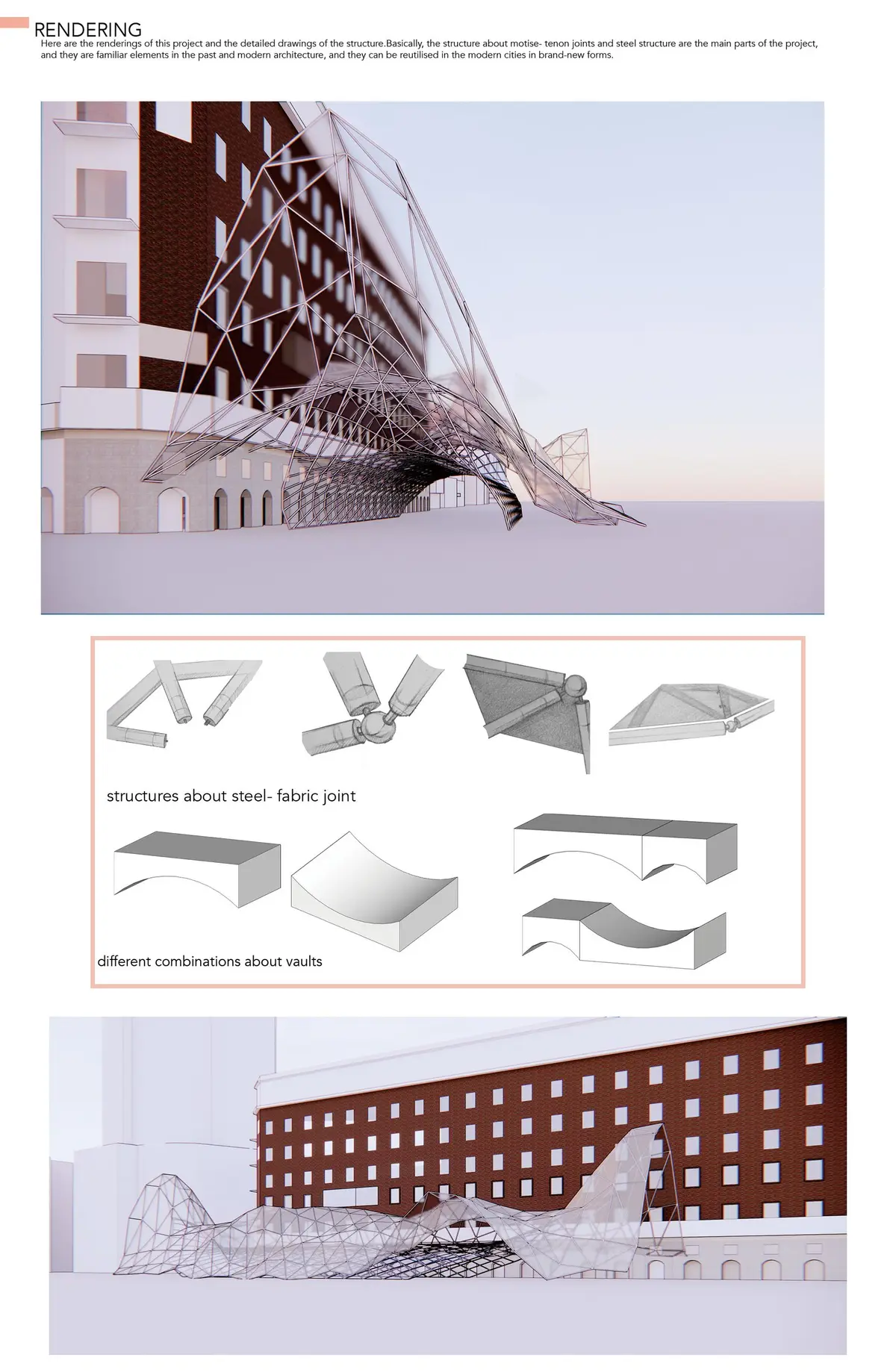
The tensile mesh structure shown wrapping cylindrical towers illustrates how the project's spider web metaphor becomes literal engineering. Detail callouts identify hybrid joints between steel, glass, and fabric, each connection optimized through parametric modeling for structural integrity and what Zhang calls "aesthetic fluidity." The three material combinations, steel-on-steel for load-bearing frameworks, steel-and-cloth for flexible canopy shading, and steel-and-glass for transparent light-infused corridors, are generated through simulations that balance light diffusion, ventilation, and human comfort.
At street level, the composite rendering grounds this structural ambition in everyday life. A triangulated canopy shelters pedestrians and a cyclist crossing an urban plaza, the geometry overhead filtering daylight into shifting patterns on the pavement. The design draws explicitly from traditional Chinese mortise-tenon joinery, a craft system that joins wood without nails through interlocking geometries. Here, that logic scales up to steel and glass, becoming a metaphor for Shanghai itself: a city that holds its historic soul and its rapid modernization in tension, literally and figuratively.
From Web Diagram to Inhabited Volume
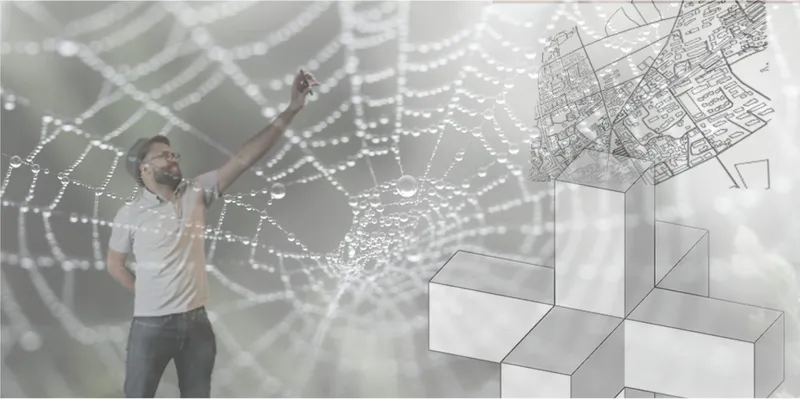

The conceptual collage captures the project's design process in a single frame: a figure reaches toward a network diagram overlaid on exploded axonometric volumes, as if pulling threads of data into inhabitable space. It is a revealing image because it foregrounds the parametric methodology. The web-like geometry is not applied as ornament; it is the organizational engine, abstracting Shanghai's existing street grid into a radial connectivity pattern that distributes movement loads across multiple levels.
The exploded axonometric below breaks the station into its constituent layers: platform levels, the canopy structure above, and a planted green roof crowning the assembly. Vegetation is not an afterthought. The green roof integrates with the shading system, reducing heat island effects at a site surrounded by dense masonry buildings and asphalt. Each layer is legible as an independent system yet interdependent in section, a quality that gives the proposal its depth beyond diagrammatic cleverness.
Why This Project Matters
Urban mobility projects often default to one of two modes: the infrastructure engineer's traffic model or the architect's sculptural gesture. SPIDER-NET resists that split. By grounding its parametric geometry in demographic research and site-specific heritage analysis, the proposal makes a case that computational design can serve social complexity, not just formal novelty. The five-layer system is ambitious, perhaps impractically so at this scale, but its ambition is pointed: it asks what happens when you treat a single intersection as a cross-section of an entire city's needs.
Zhang's synthesis of mortise-tenon joinery with digital fabrication logic is the project's most compelling intellectual thread. It suggests that parametric tools do not require designers to abandon craft traditions; they can extend them into new material systems and scales. At a moment when Shanghai's historic cores face mounting pressure from density and tourism, proposals like SPIDER-NET argue for a third path: not freezing the past in amber, and not bulldozing it for efficiency, but weaving it into the structural DNA of what comes next.
View the Full Project
About the Designers
Designer: Robin Zhang
Enter a Design Competition on uni.xyz
uni.xyz runs architecture and design competitions year-round that reward proposals with spatial conviction and real site intelligence.
Project credits: SPIDER-NET by Robin Zhang.


Popular Articles
Popular articles from the community


LT2A and OPEN Architectes Thread a Brick and Glass High School Through a Wooded Belgian Campus
In Braine-l'Alleud, a 3,000 m² wing for Collège Cardinal Mercier pairs pale brick with a glazed colonnade, deferring to a small chapel and a dense wood.

Jaramillo Van Sluys Arquitectura and Urbanismo Turn a Demolished Registry Lot in Quito into an Orchard Plaza
In Quito's Centro Histórico, a 2,800 m² plaza exposes the San Agustín convent wall and redraws its lost Augustinian orchard in volcanic stone.

Architekt Andreas Gruber Scatters 23 Dark Timber Chalets Across a South Tyrolean Forest Edge
In Molini di Tures, Amonti Chalets breaks a resort into a hamlet of gabled timber houses, with parking, storage and services pushed into the slope.

Juan García Correa, John González and Claudia Rueda Sink a Circular Amphitheater into a Manizales Engineering Building
On the La Nubia campus in Manizales, Colombia, the S1 Building folds labs and offices into a hillside of ramped lawns that double as a campus route.

Similar Reads
You might also enjoy these articles


Aquadapt: An Underwater Habitat That Rewrites Its Rooms by the Hour
Curved modules ring the seabed while one shell shifts from breakfast room to cinema, farm and football pitch as residents' needs change.

Play: Fragments of Their World: Remembered Architecture Rebuilt as a Modular Playground for Refugee Camps
Tom Gardner abstracts domes, arches and towers from the homelands of displaced families into a kit of child-scaled play parts for camp settlements.
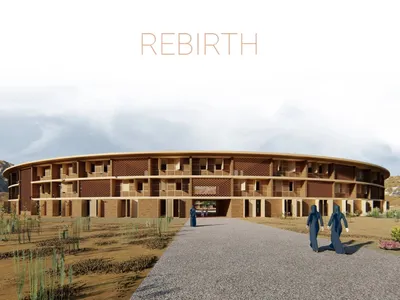
REBIRTH: A Circular Settlement Where Afghan Widows and Their Children Rebuild Life Together
A shortlisted Resile entry turns the circle into a protective ring of timber and brick, gathering homes, classrooms and gardens around a shared landscape.
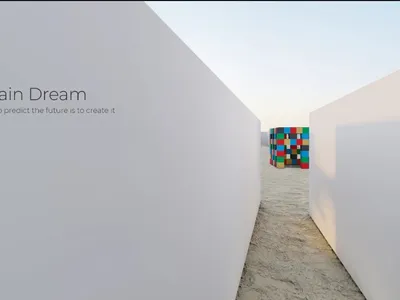
The Main Dream: A Recycled Plastic Kit That Lets Refugee Children Build Their Own Playground
Thirty-centimetre interlocking cubes that connect on three axes turn play into construction, letting children author the spaces they occupy.


Comments (0)
Please login or sign up to add comments
No comments yet. Be the first to comment!