
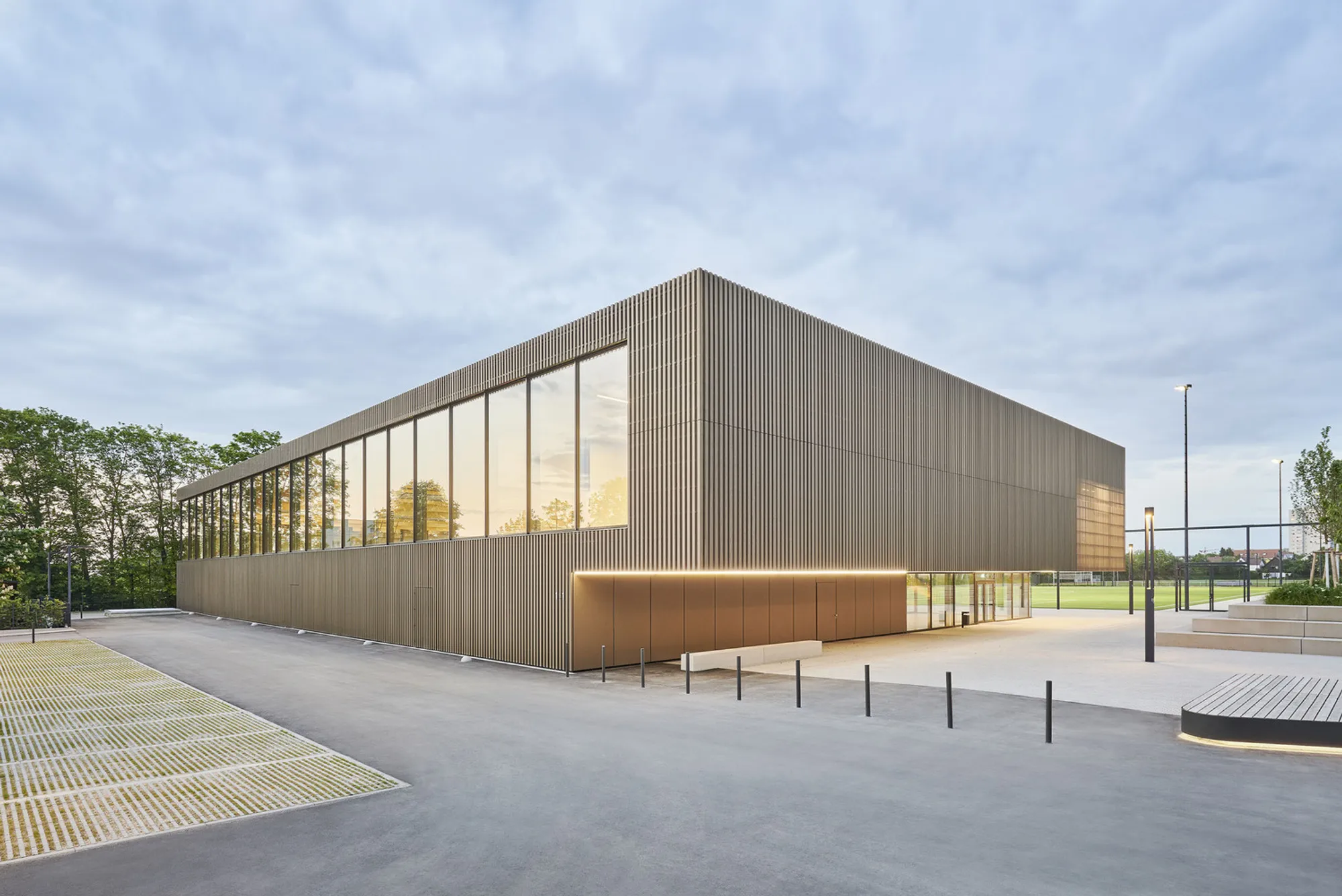
Sports Hall in den Breitwiesen by THOMA. LAY. BUCHLER. Architekten
Sustainable sports hall in Gerlingen blending modern design, timber structure, and natural light with energy-efficient systems and community integration.


Located in Gerlingen, Germany, the Sports Hall in den Breitwiesen by THOMA. LAY. BUCHLER. Architekten is a striking example of sustainable architecture that blends harmoniously into its natural surroundings. Completed in 2022, this 3,237 m² sports facility redefines how sports architecture can respond to both environmental and social contexts.
A Harmonious Connection to Nature and Community
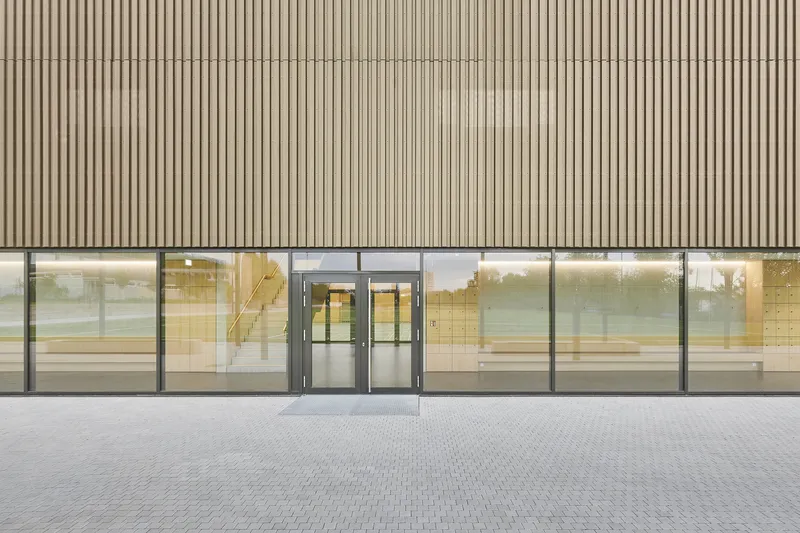
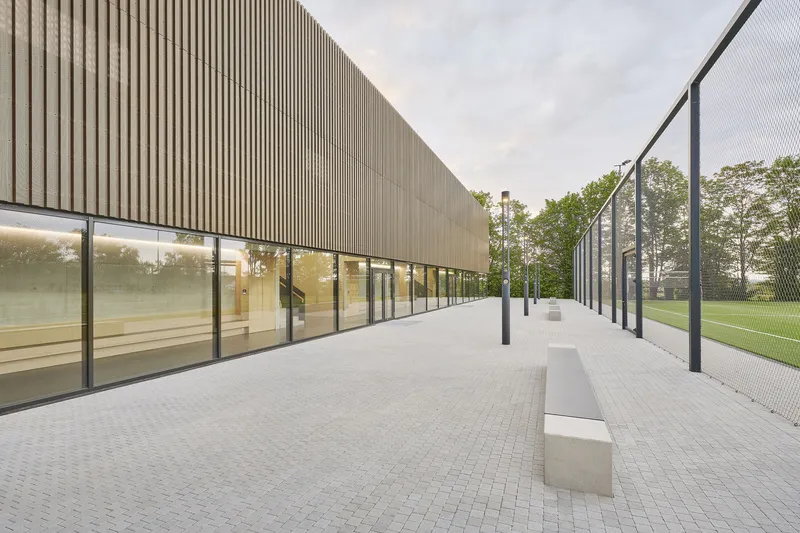
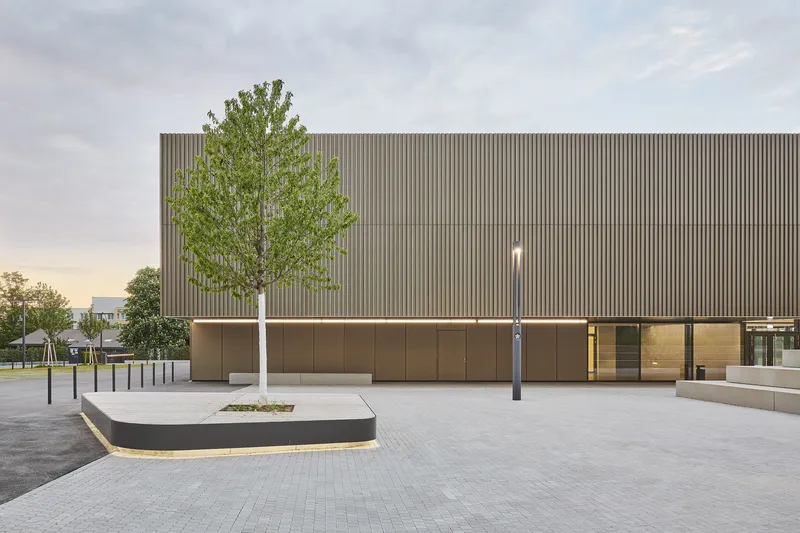
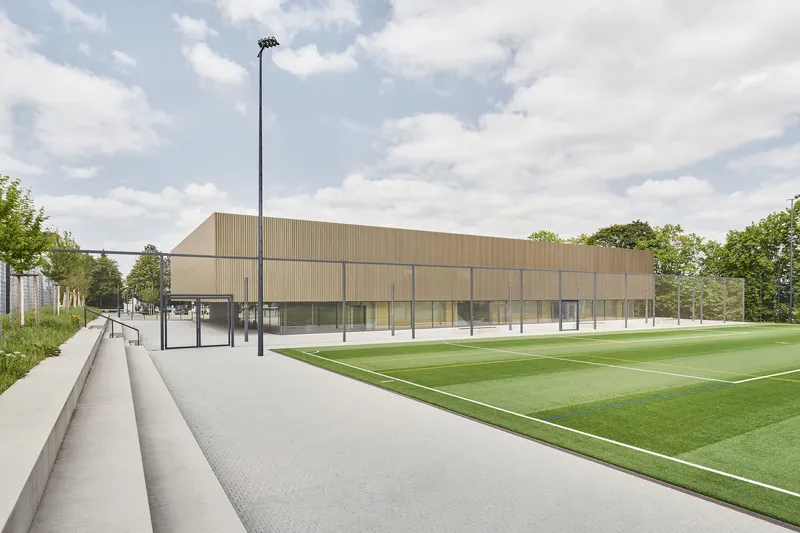
The new Breitwiesen Sports Hall sits at the edge of a sports complex, acting as a welcoming gateway to the broader Breitwiesen Stadion. The building’s clean cubic form is wrapped in a perforated metal facade with fine trapezoidal sheet panels and continuous clerestory windows that create a subtle yet modern identity. Positioned between playing fields, the schoolyard, and the new “Sportlerboulevard” (Athletes’ Boulevard), the building strengthens the link between athletics, education, and the local community.
Thoughtful Public Integration and Design
Upon entering, visitors are greeted by the Athletes’ Forum, an open-air forecourt that encourages social gathering. The western side of the building integrates seamlessly with a tree-lined parking area, where wide concrete seating steps and a shaded bench island beneath a mature tree offer a quiet resting point.
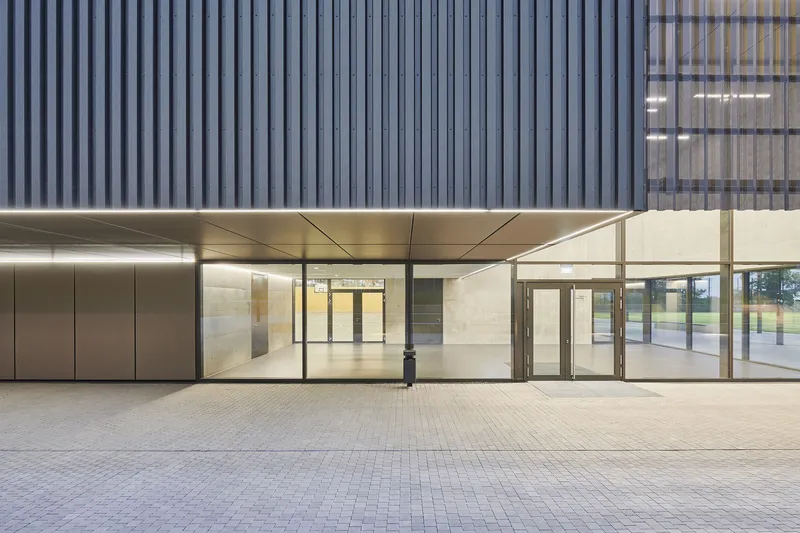
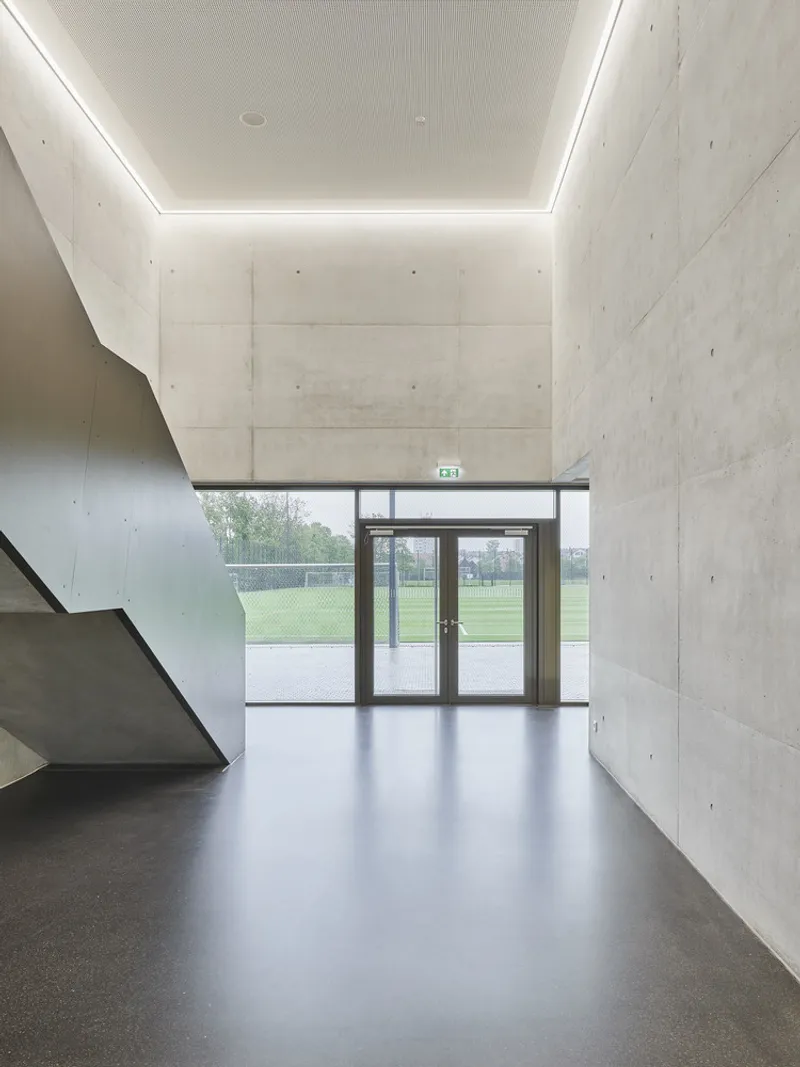
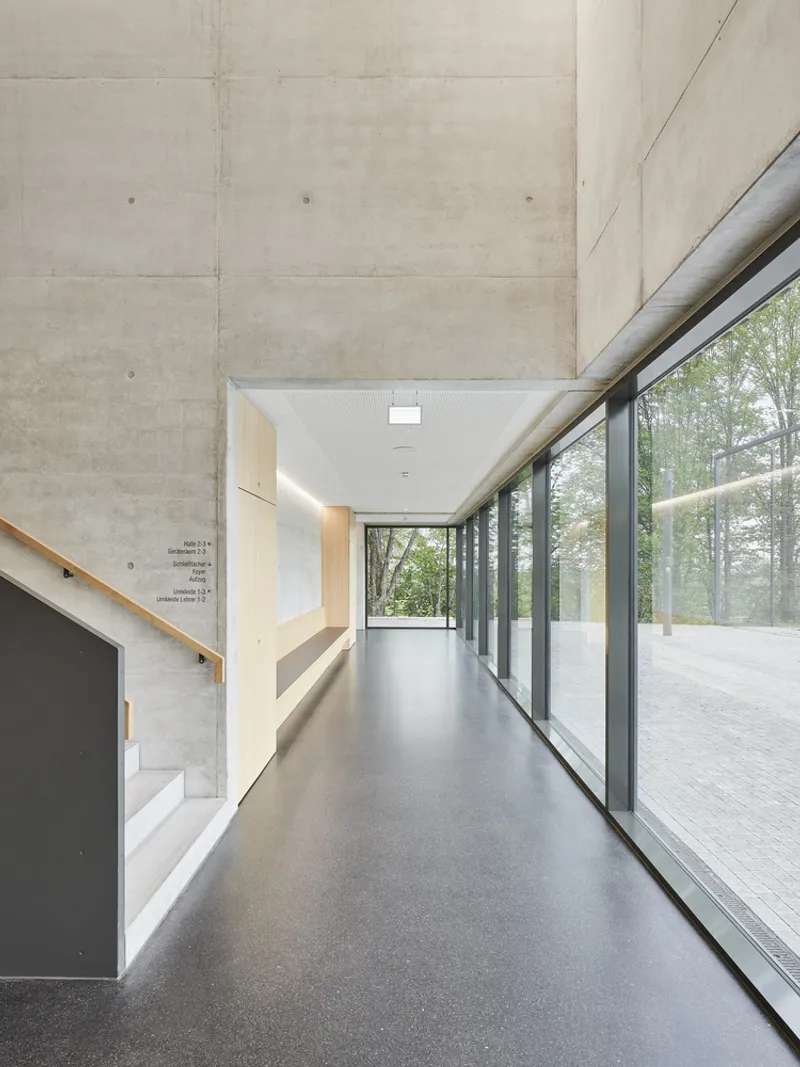
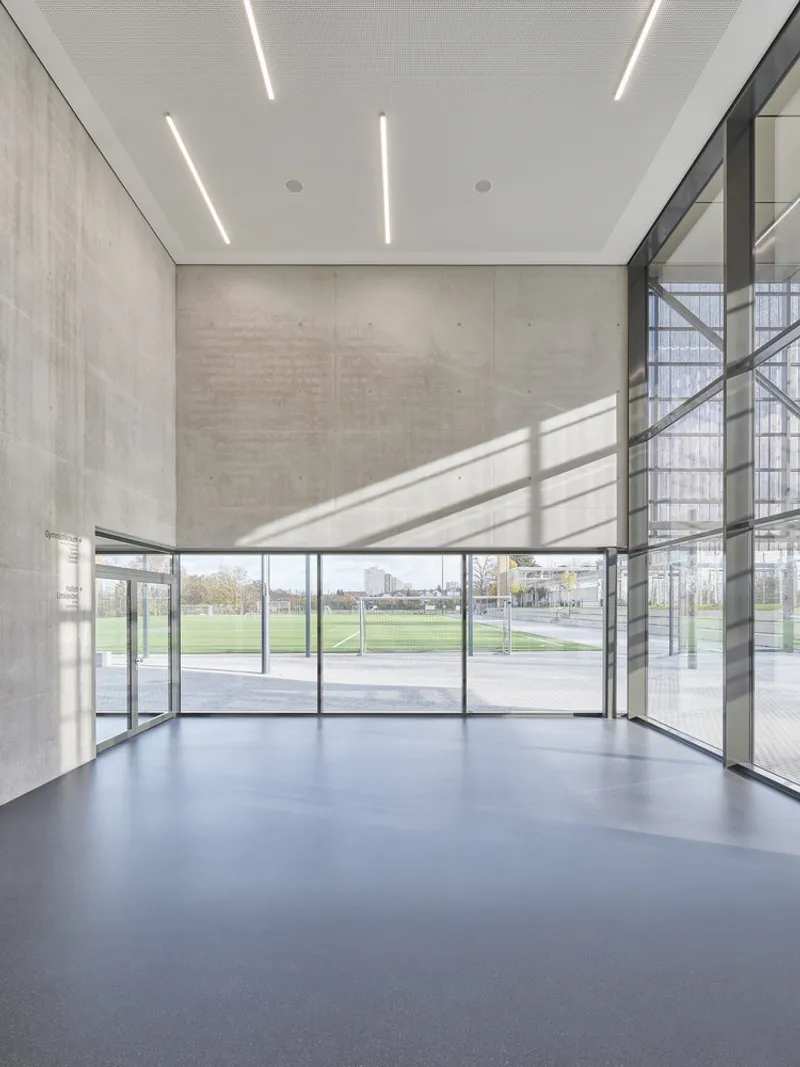
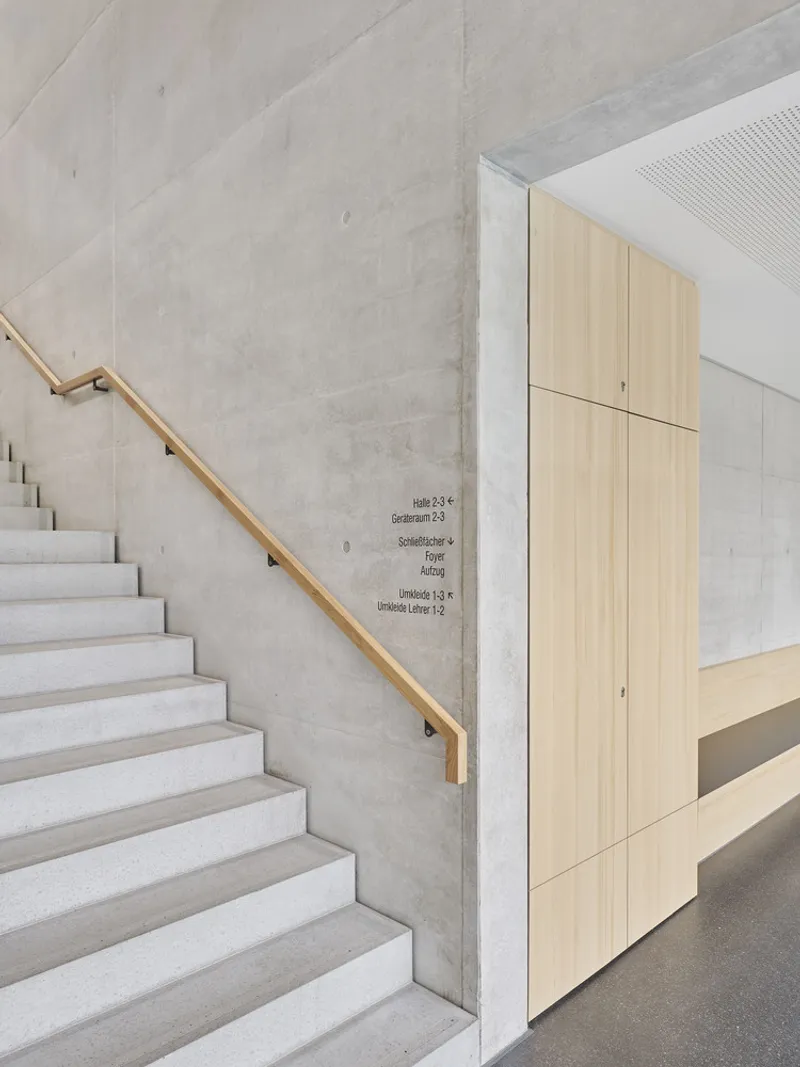
Inside, the sports hall unfolds through a two-story foyer. With exposed concrete walls and full-height glazing, the space exudes durability while remaining open and light-filled. From the foyer, a glass doorway provides direct access to the gymnasium, while a bright corridor to the east frames expansive views of the outdoor sports fields.
Interior Aesthetics and Acoustic Comfort
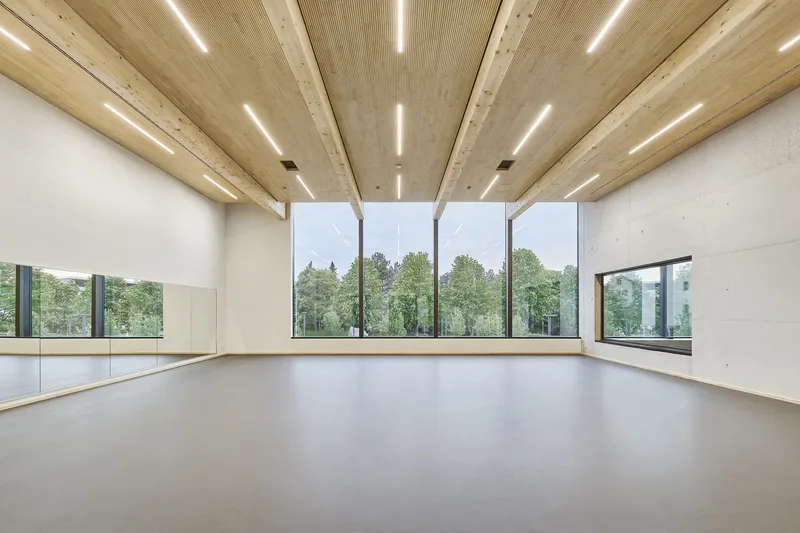
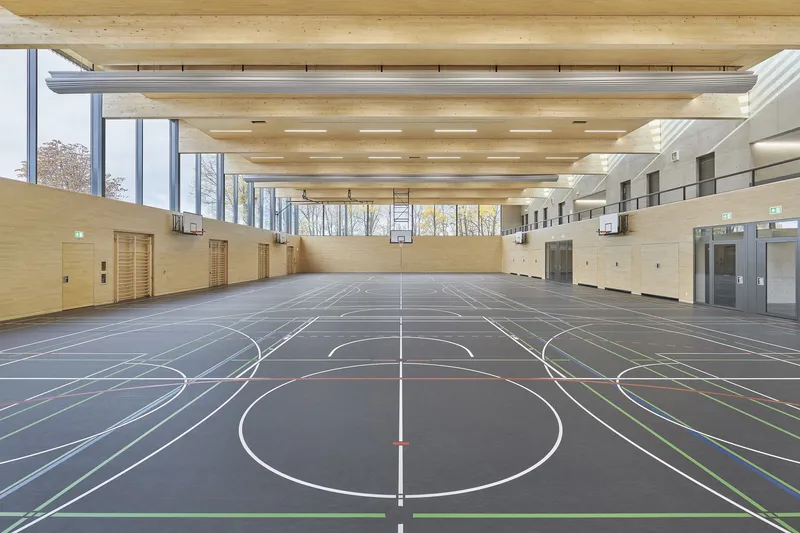
Inside the gymnasium, glulam trusses, suspended acoustic ceilings, and narrow spruce wall slats combine to create a calm, acoustically controlled environment ideal for both physical activity and spectator comfort. The hall can be divided into three sections for multiple simultaneous uses, while ribbon windows and skylights maximize natural daylight and enhance the indoor-outdoor connection.
The interplay of light and shadow—cast through treetop canopies and temperature-responsive awnings—creates a dynamic atmosphere that shifts throughout the day. The upper level features a slim corridor with steel balustrades, functioning as a compact viewing gallery. Nearby, flexibly designed changing rooms and a bright gymnastics room with generous glazing further promote the feeling of being immersed in nature.
Sustainability and Energy Efficiency
Sustainability was central to the design process. The hall features a high-performance thermal envelope, a central ventilation system with heat recovery, and photovoltaic modules for renewable energy generation. All of this is discreetly hidden within the building’s flat roof to preserve its sleek silhouette. The facade’s slatted rhythm and minimal volume ensure the sports hall remains visually connected to its forested context.
This project exemplifies sustainable sports architecture that prioritizes low energy consumption, environmental harmony, and user comfort without compromising on aesthetic quality.
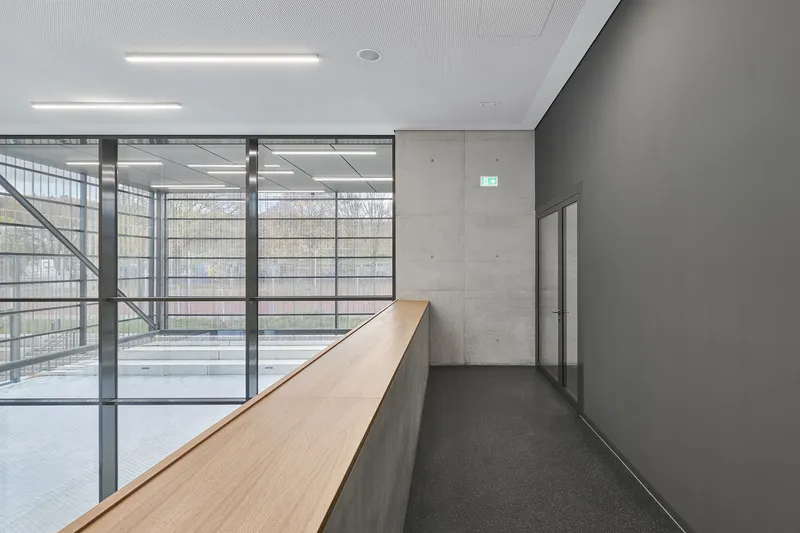
All the photographs are works of Simon Sommer




Popular Articles
Popular articles from the community


The Musturak Paradise: Senior Living Architecture for a Connected Future in Temara, Morocco
The Musturak Paradise reimagines senior living architecture in Temara via private homes, social spaces, culture, community, and shared care.

Riyadh For All: Intergenerational Urban Design for Active Aging in Rabat
Riyadh For All reimagines urban design in Rabat with intergenerational co-living, adaptive courtyards, and Moroccan cultural exchange today.

Hill & Cross Opera: Sculptural Opera House Architecture Shaped by Tallinn’s Landscape and Identity
Hill & Cross Opera reimagines opera house architecture in Tallinn through its sculptural hill, civic plaza, glass wave and a luminous cross.

Co-life: Sustainable Architecture for Age-Friendly Community Living
Co-life reimagines sustainable architecture for seniors through courtyards, rammed earth, shared gardens, and spaces designed for belonging.


Similar Reads
You might also enjoy these articles


Hodi-Mandai Geram
Project Function: Preservation and revitalization of the Intangible heritage and socio-spatial identity of the Hodi by Housing, Cultural Memory Center, Sacred Grove, landscape, local tourism economy


Olio Towers: A Mid-Rise for Performers That Fuses Housing, Rehearsal, and Stage
Located blocks from Houston's Theater District, this modular tower stacks living units around a central performance atrium.

Oasis: Modular Green Housing Carved into Dhaka's Urban Fabric
A shortlisted Plugin Housing entry reclaims unauthorized settlements in Dhaka with stepped concrete volumes, green roofs, and ventilation-driven design.

Black Hole: A Floating Megastructure for the Post-Physical Era
Emiliano Mazzarotto envisions a spherical, self-scaling arena where e-sports, digital hotels, and holographic stadiums replace traditional public space.

Explore Sports Architecture Competitions
Discover active competitions in this discipline



Challenge to design a barrier free sports center


Challenge to design an outdoor ice-rink and park


Challenge to reimagine the Iron Throne


Photograph architecture without architects
Comments (0)
Please login or sign up to add comments
No comments yet. Be the first to comment!