
SSdH Peels Back a Century-Old Chocolate Factory to Reveal a 100 m² Apartment in Melbourne
Inside the former MacRobertson's Chocolate Factory in Fitzroy, three precise insertions turn a raw warehouse shell into a layered home.


Melbourne's Fitzroy neighborhood once smelled like chocolate. The MacRobertson's Chocolate Factory, part of a sprawling complex known as the Great White City, occupied eight full blocks between Smith, Napier, Johnston, and Rose Streets. When the building was converted into apartments between 1998 and 2003, buyers received raw shells: connection points for plumbing, fire services, and power, and not much else. Two decades later, SSdH took on one of these shells and, rather than filling it in, chose to strip it further back.
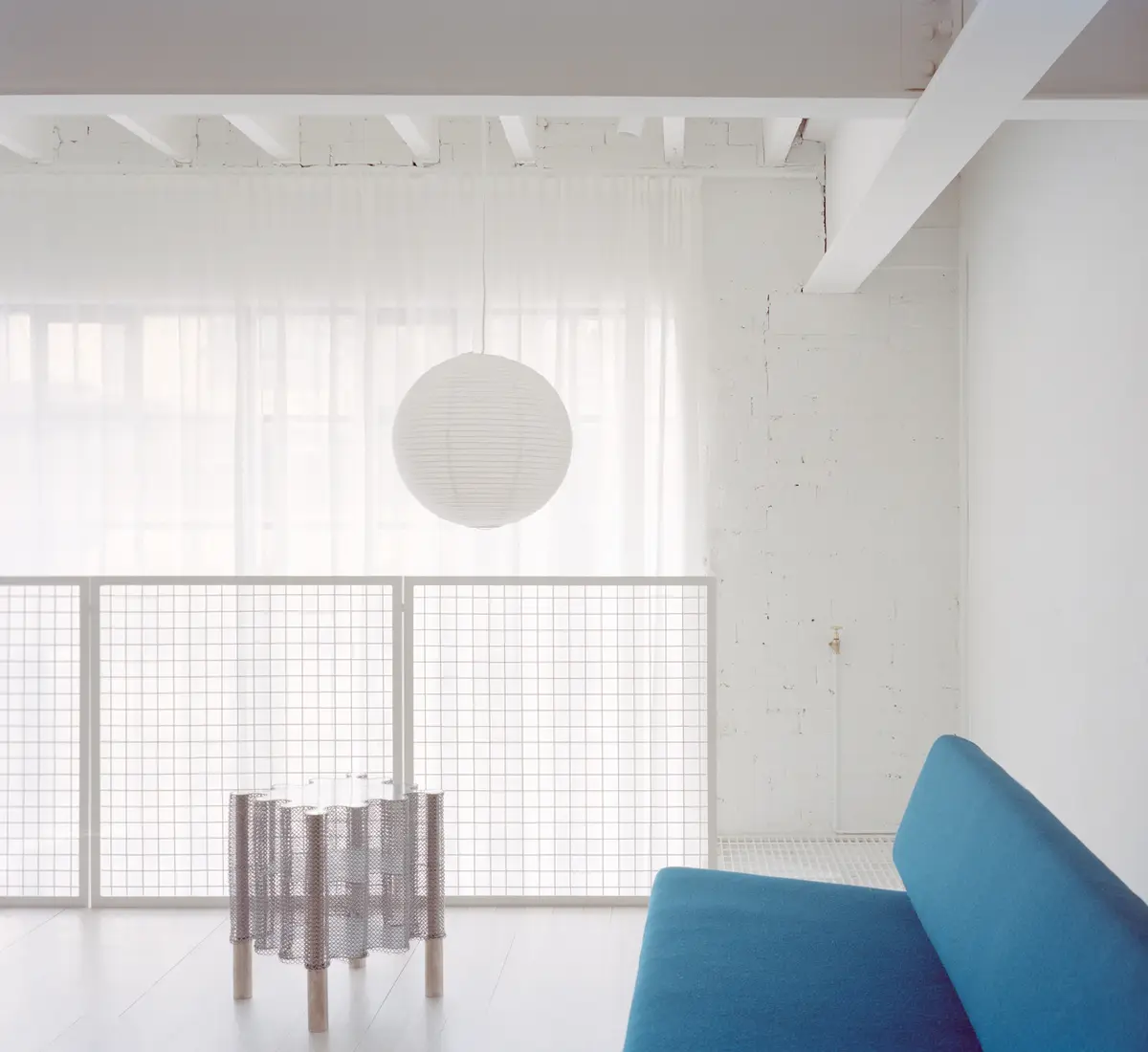
The Kerr Apartment is a 100 m² home split across two levels in a mezzanine configuration, containing three bedrooms and two bathrooms. What makes it worth studying is the discipline of the intervention. SSdH inserted exactly three new elements into the existing volume: an entry portal, a staircase that doubles as a lightwell, and a compact block housing the kitchen, master bedroom, and ensuite on the upper floor. Everything else is about revealing what was already there, concrete columns, steel trusses, exposed blockwork, and then unifying it all with a coat of white paint so the new objects read as distinct things placed inside an older body.
The Portal and the Threshold
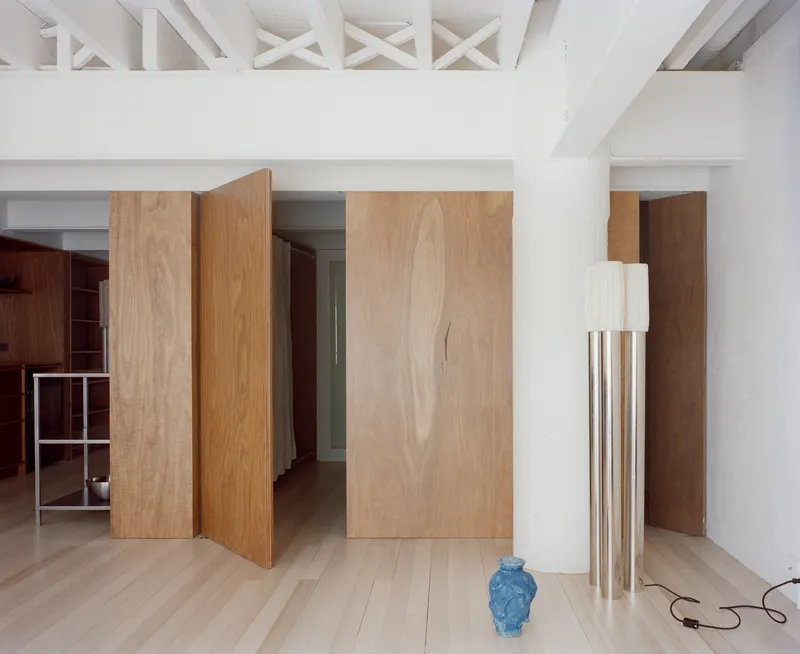
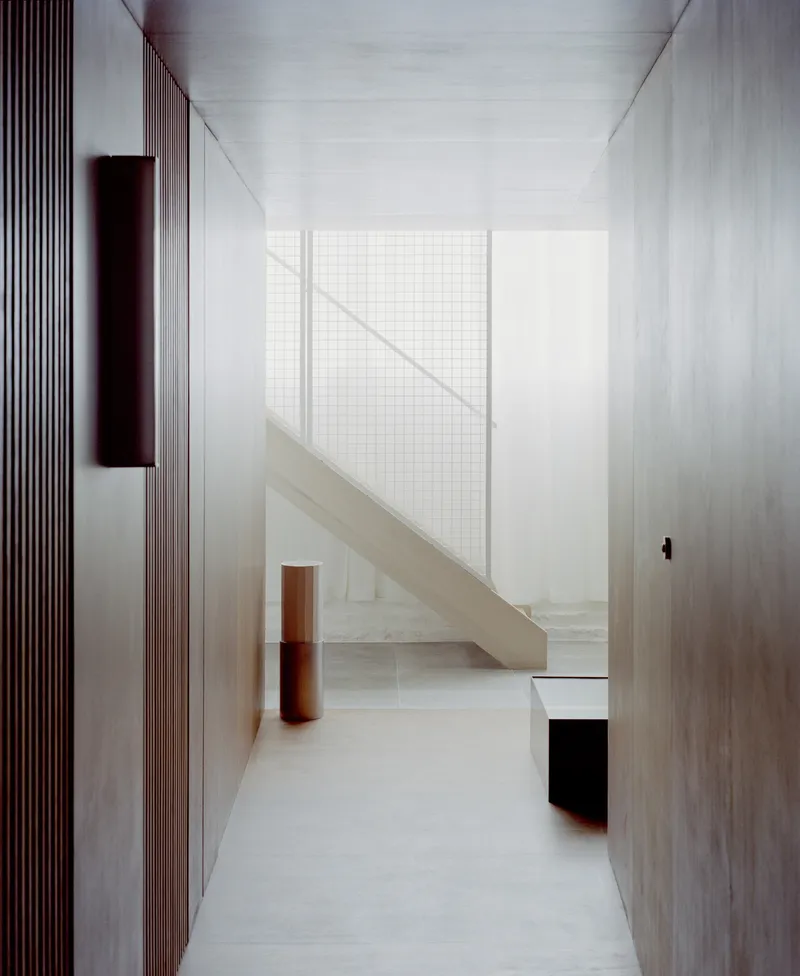
The entry sequence is the apartment's first and most deliberate gesture. A portal clad in spotted gum timber, a local hardwood with warm tonal depth, funnels visitors through a narrow corridor with fluted wall panels. The material shift from white-painted masonry to rich timber signals that you have crossed from the building's communal world into a private one. It is a compression move: the tight hallway heightens the release when you reach the east-facing window and the stair beyond.
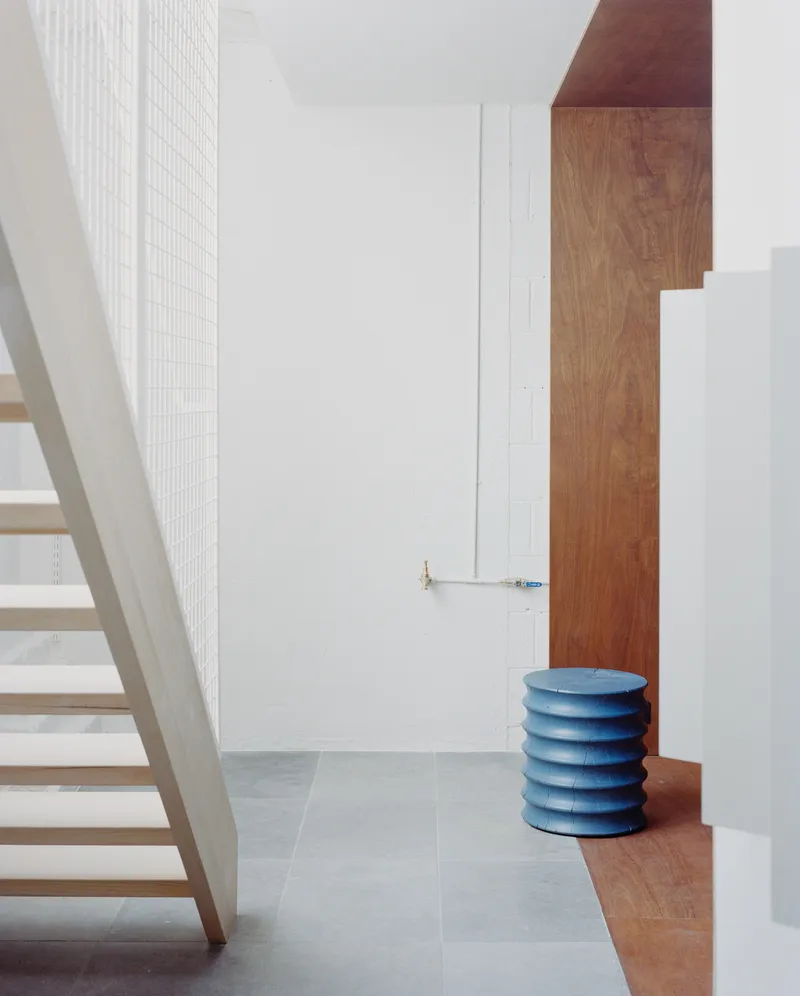
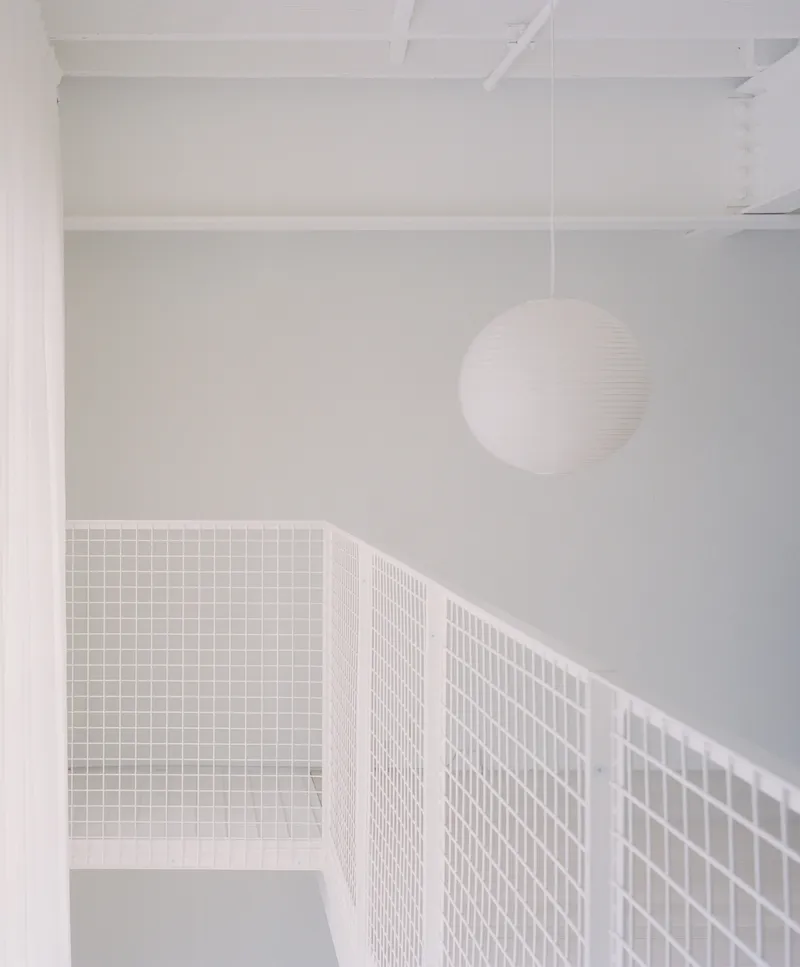
The staircase itself does double duty, functioning as both vertical circulation and a lightwell that pulls daylight down into the ground floor. Its white-painted gridded steel mesh balustrade keeps sightlines open and maintains the sense of layered depth that SSdH used throughout: foreground, middle ground, and background, always visible, always working to make a compact plan feel expansive.
Living with the Bones
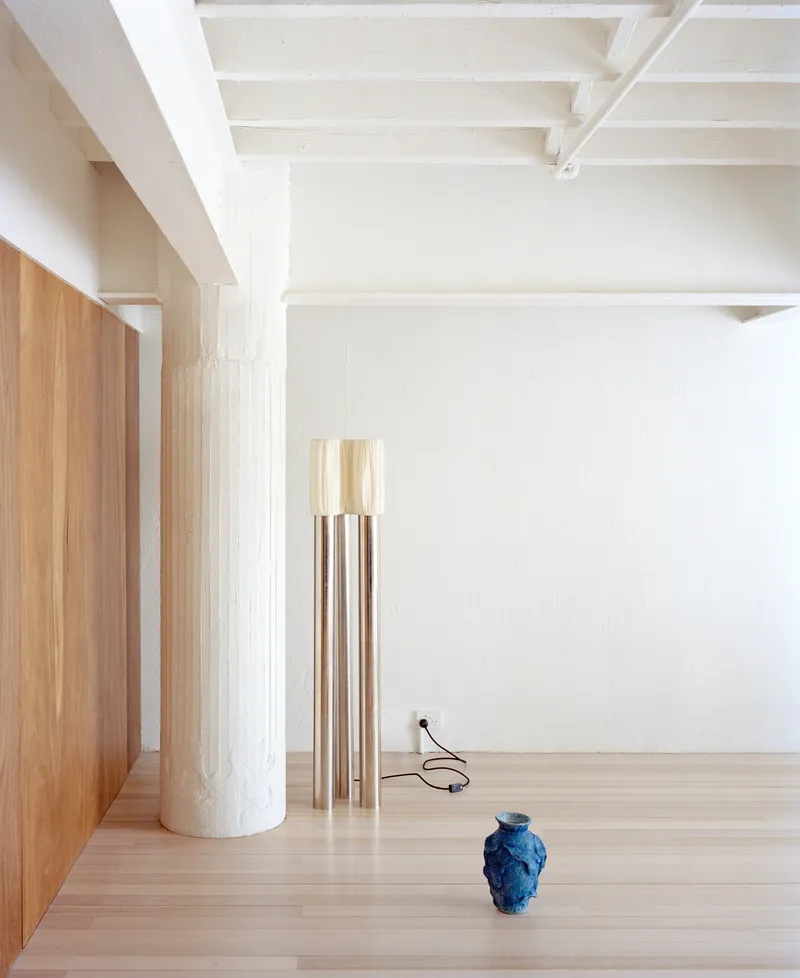
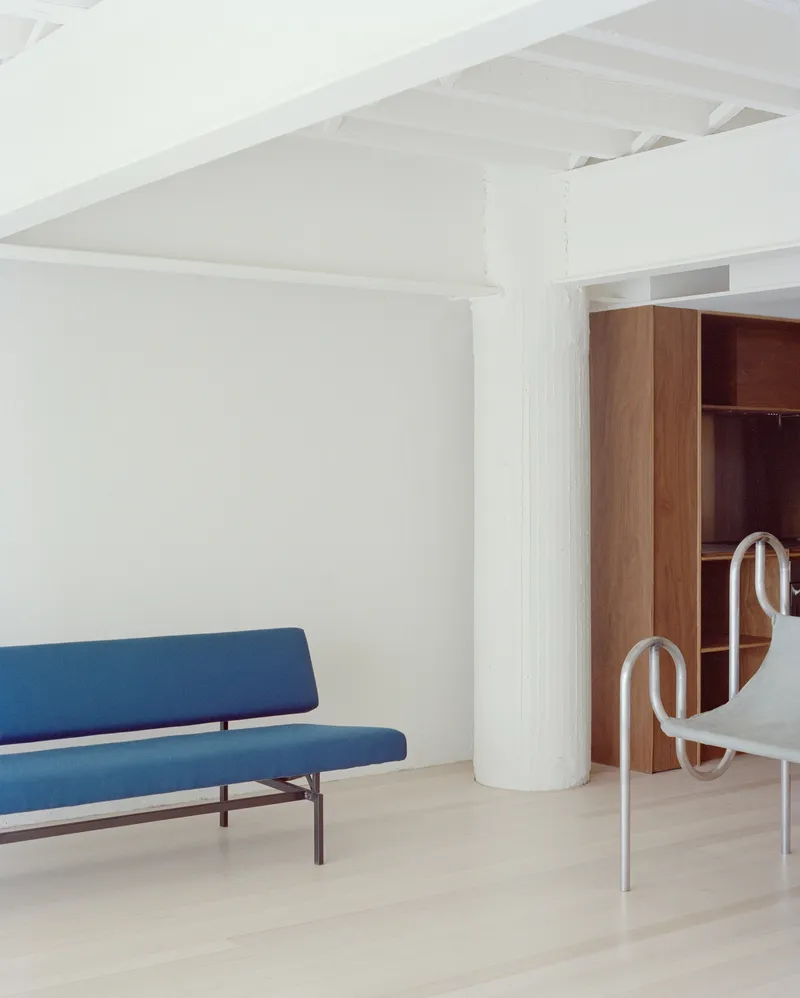
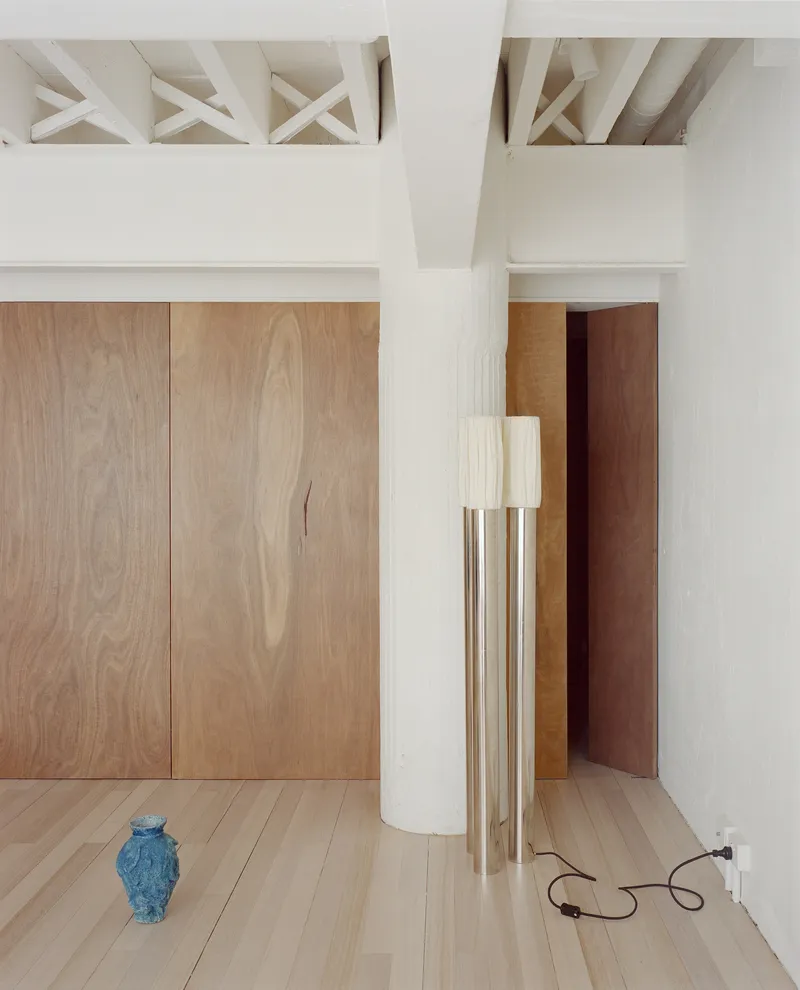
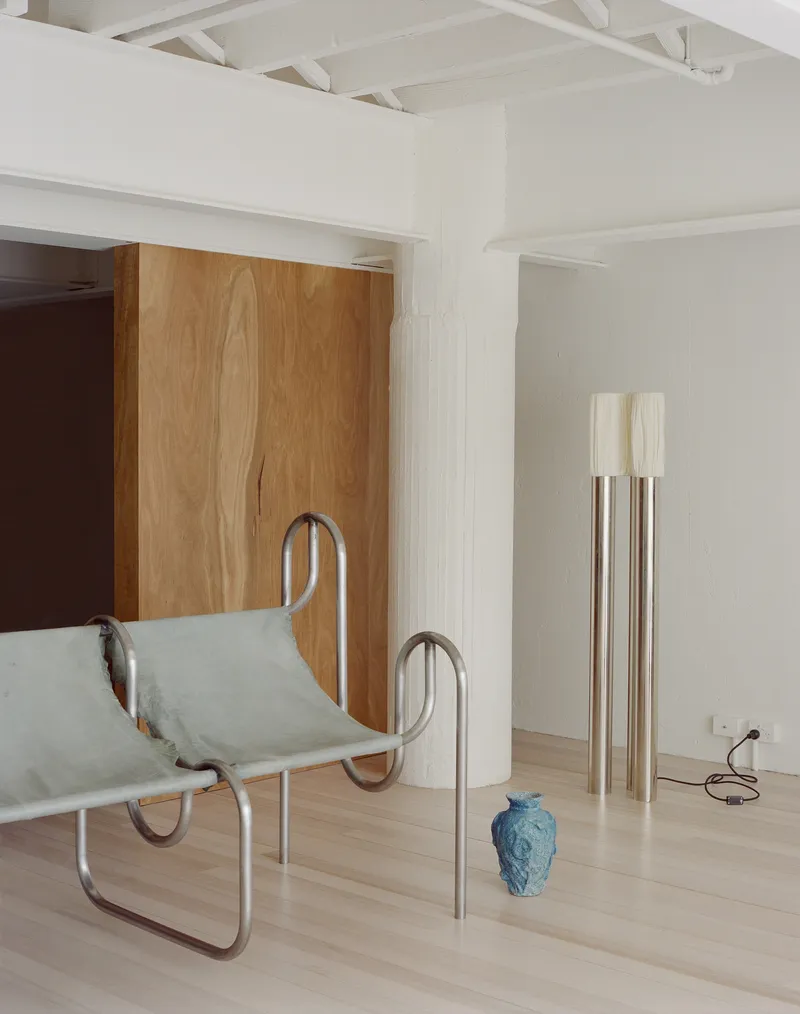
SSdH stripped back old linings to expose the original structural framing, then painted everything white to create a unified backdrop. Concrete columns stand as monolithic markers in the open floor. Timber ceiling joists are left bare overhead. Steel beams trace the roof geometry. The strategy is clear: rather than concealing the industrial skeleton, the architects let it become the architecture.
Against this found texture, the living spaces read as calm and surprisingly domestic. A blue upholstered sofa, a ceramic vessel, clustered copper pendants: these furnishing choices gain weight precisely because the backdrop is raw and consistent. The cylindrical painted column in the living area, clearly original, acts as an accidental sculpture. It is a good reminder that adaptive reuse works best when designers know what not to touch.
The Mezzanine Block
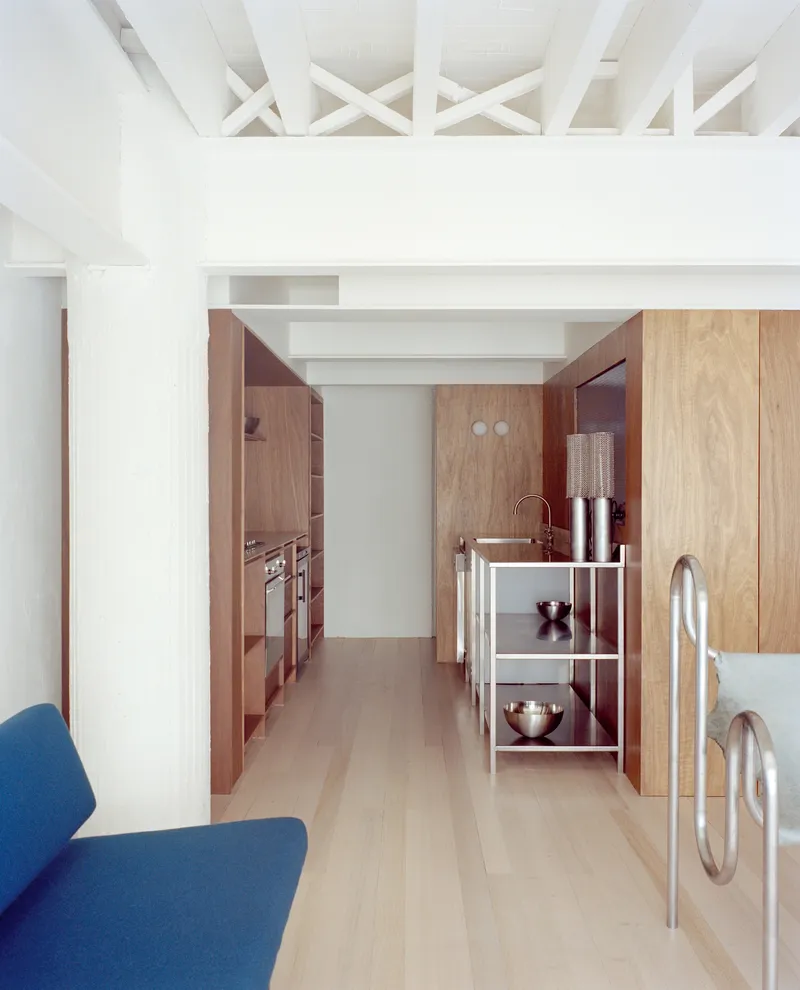
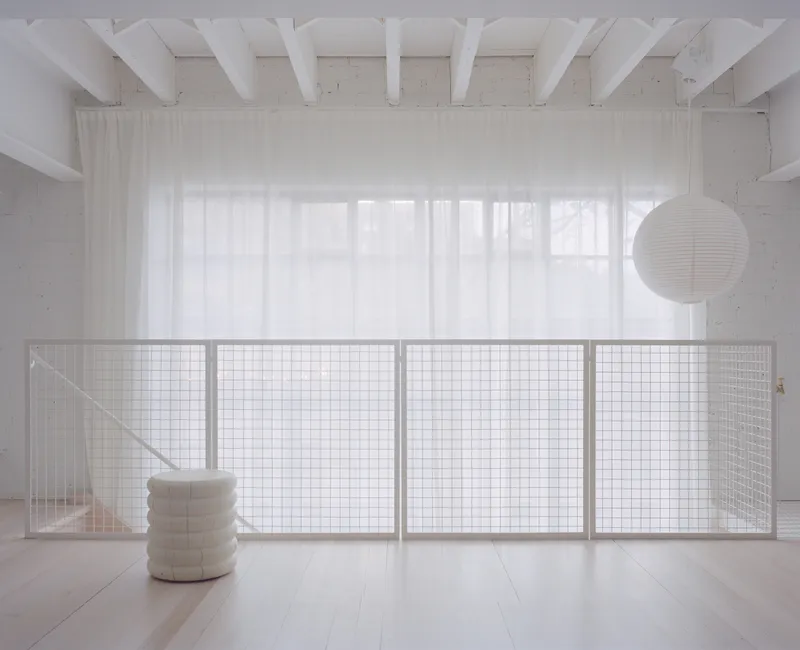
The apartment's layout is reversed from convention. Two bedrooms and the wet areas sit on the ground floor, while the living room, dining area, kitchen, and master suite occupy the mezzanine. The kitchen block, built in spotted gum cabinetry with a brushed stainless steel benchtop, is one of the three inserted elements. Its material specificity, warm timber paired with cool metal, separates it from the white shell around it. Joins are minimized, door handles are integrated, and junctions are hidden so that the new surfaces read as seamless objects.
The upper level passage, with its wire mesh railing and spherical pendant, demonstrates how the stairwell lightwell works in practice. Diffused daylight fills the corridor without the need for artificial sources during the day. The apartment remains un-airconditioned. Cross ventilation comes through the shared building lobby, and the heavy masonry walls provide enough thermal mass to regulate temperature naturally. It is a genuinely passive approach, enabled by the factory's original construction rather than imposed on top of it.
Screens and Filtered Light
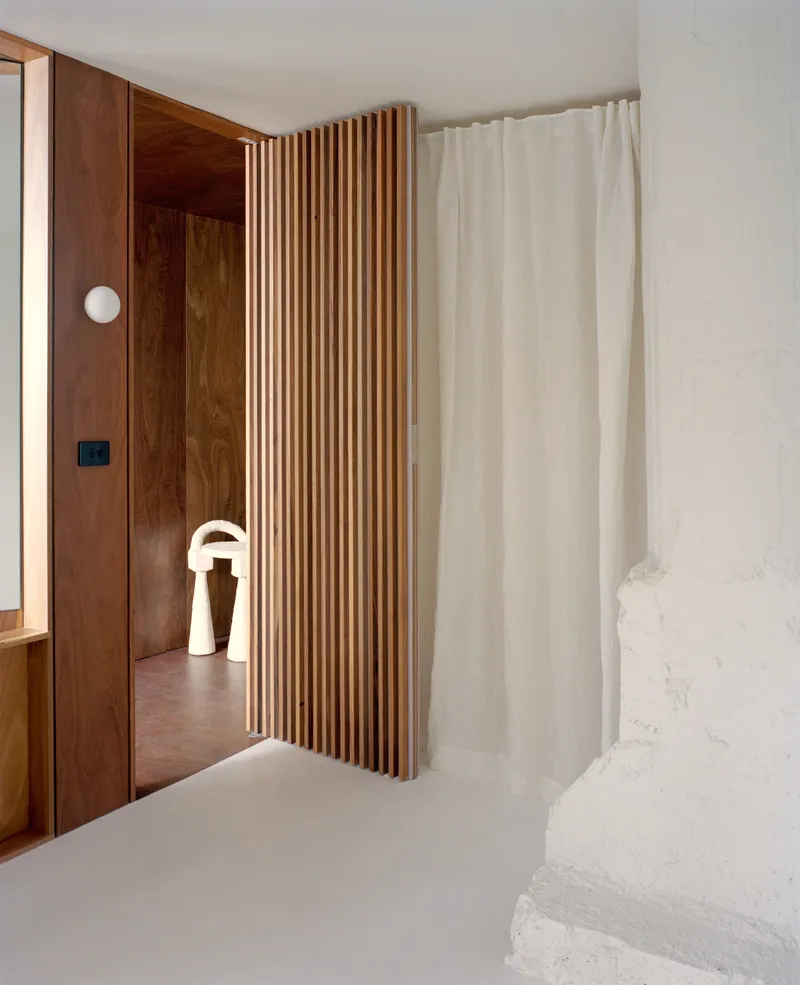
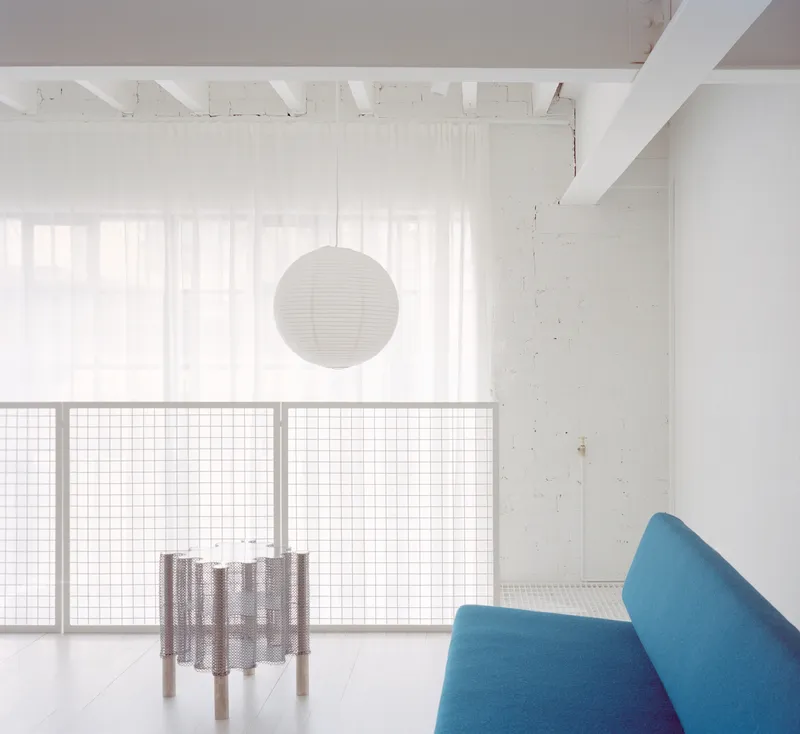
Privacy in a double-height warehouse shell is a problem SSdH solved with a series of sliding and fixed screens. Polycarbonate panels, timber batten screens, and mirrored louvres diffuse light into the bedrooms while maintaining separation between zones. The vertical timber slat screen at the bedroom threshold, visible alongside a white curtain and the spotted gum corridor beyond, is a particularly refined detail: it filters without blocking, and its rhythm echoes the fluted entry portal.
The decision to replace the original frosted glass in the large factory window with clear glazing, then add double glazing for thermal and acoustic performance, is the kind of quiet upgrade that transforms daily life. The east-facing orientation now floods the living space with morning light, while the sheer curtains soften its intensity. It is an apartment that changes mood with the time of day.
Color as Archaeology
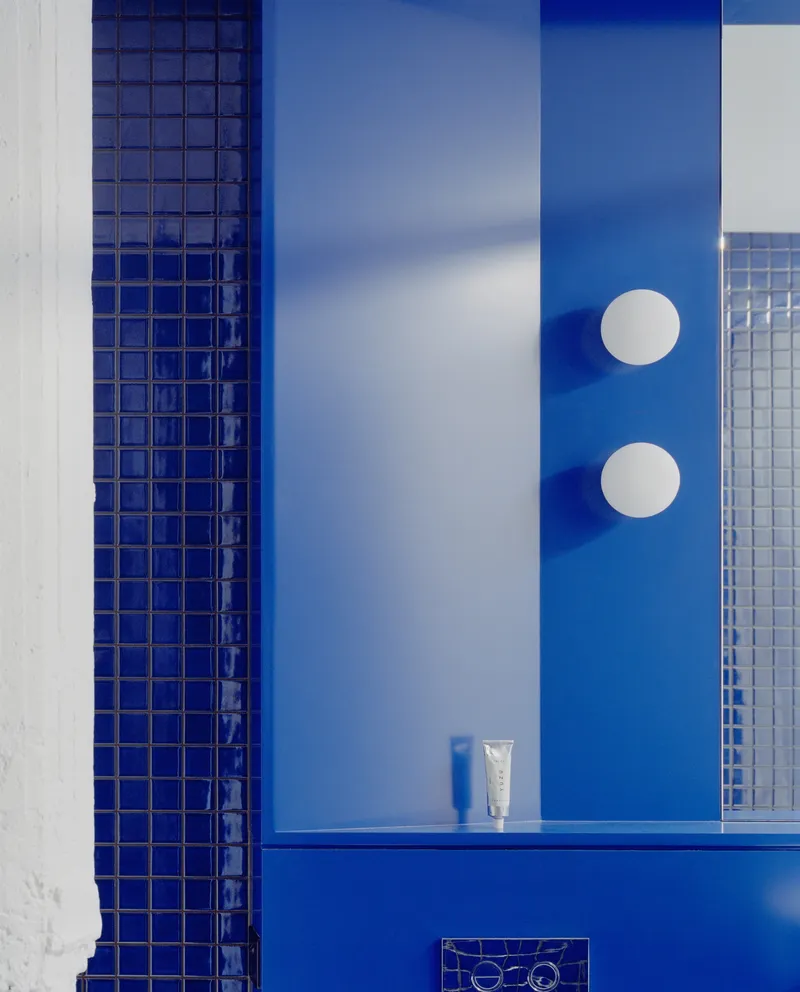
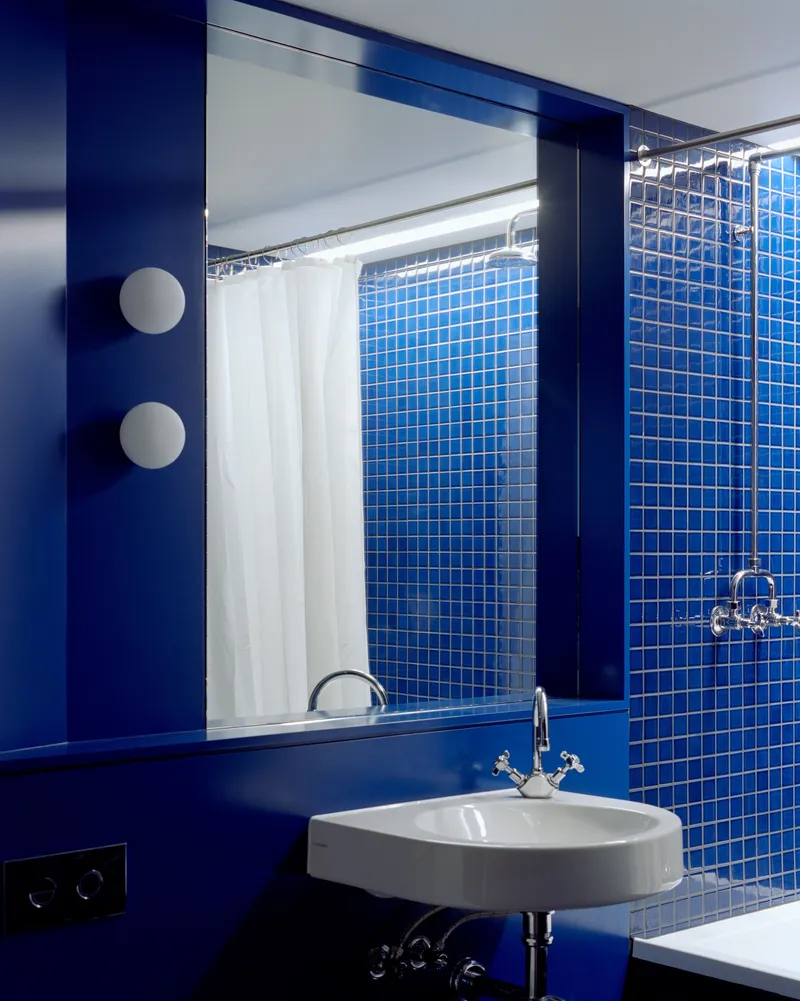
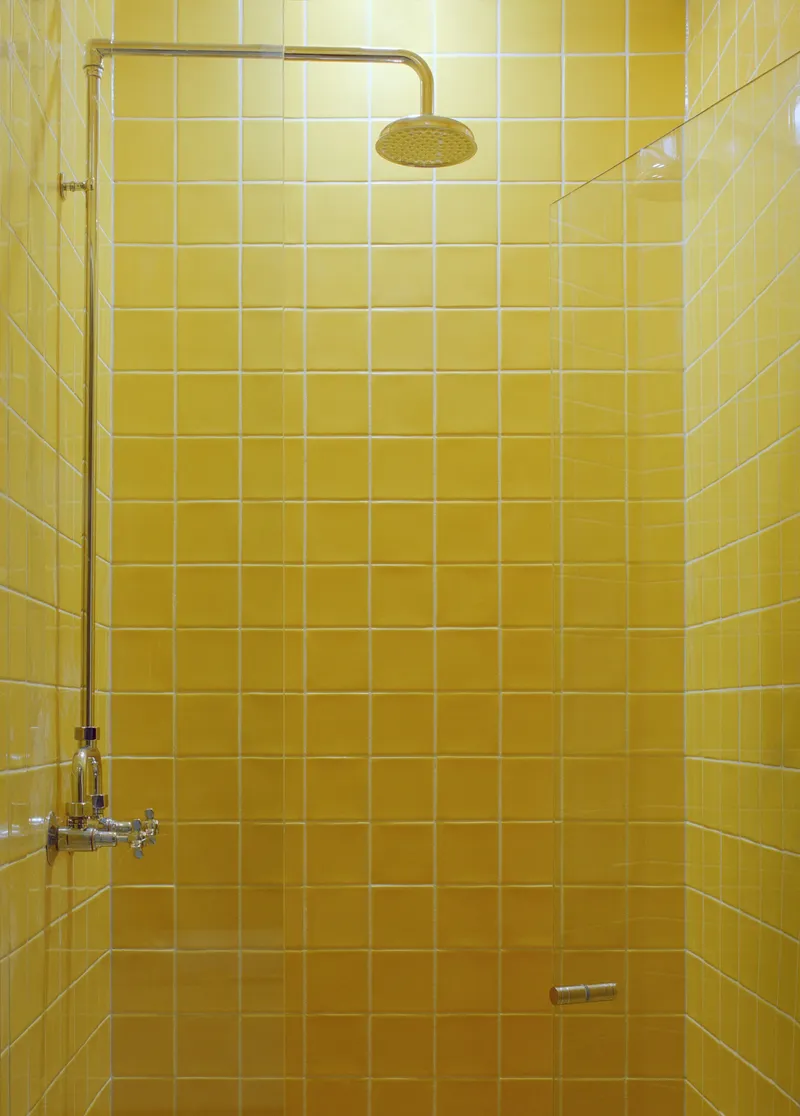
The bathrooms contain the project's most playful move. During demolition, workers uncovered layers of yellow paintwork in the ensuite, a remnant of the factory's original color scheme. SSdH let it influence the design: the shower enclosure is finished in yellow square tiles with brass fittings, and the discovered paint was refreshed rather than covered over. In the second bathroom, blue mosaic tiles wrap the walls, a cooler counterpoint. These are small rooms that punch well above their square meterage in terms of character.
The color choices are not arbitrary decoration. They are a response to what the building offered. Finding a forgotten yellow under decades of plaster and letting it set the palette for an entire room is the kind of archaeological sensitivity that distinguishes thoughtful adaptive reuse from cosmetic renovation.
Details and Furniture as Architecture
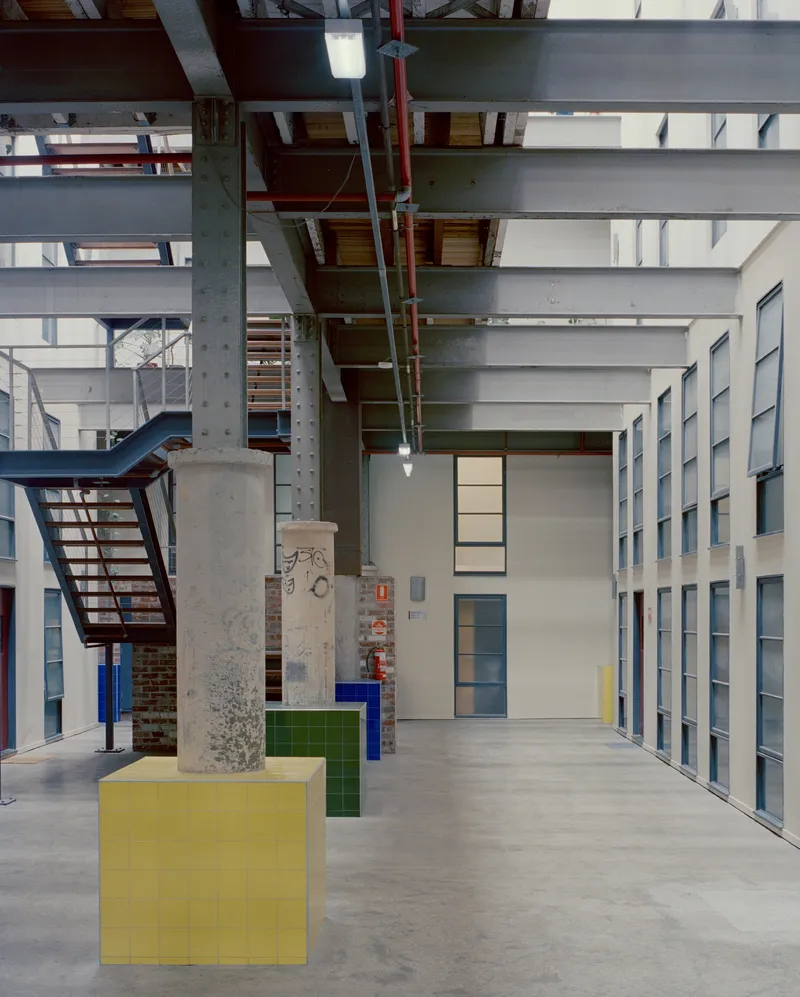
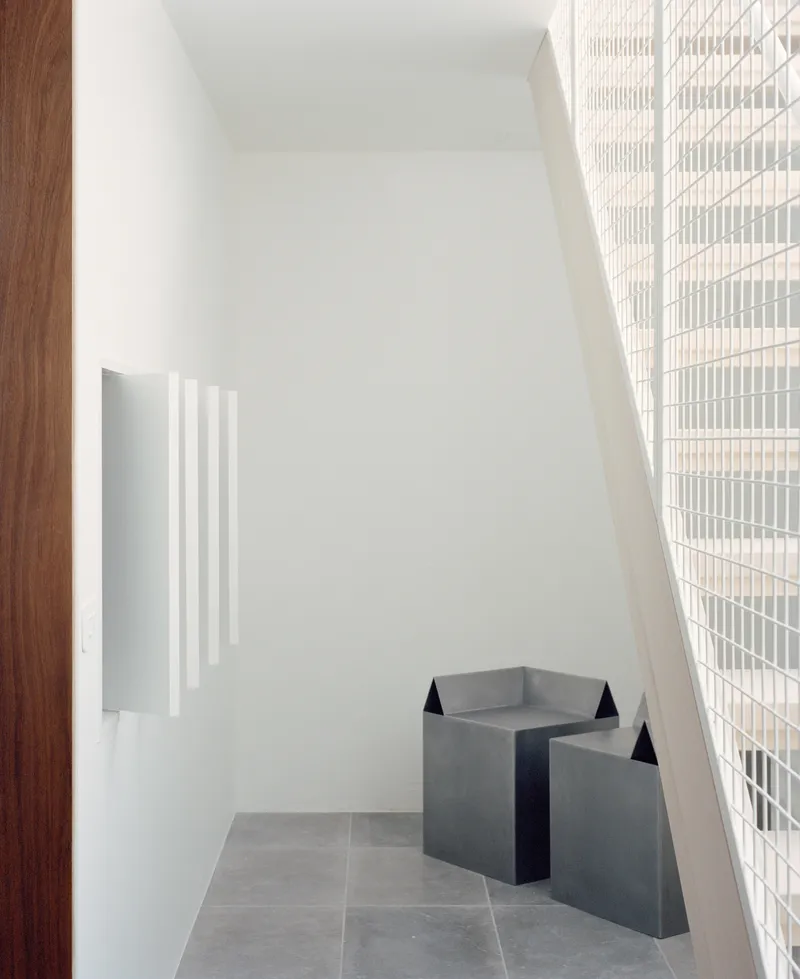
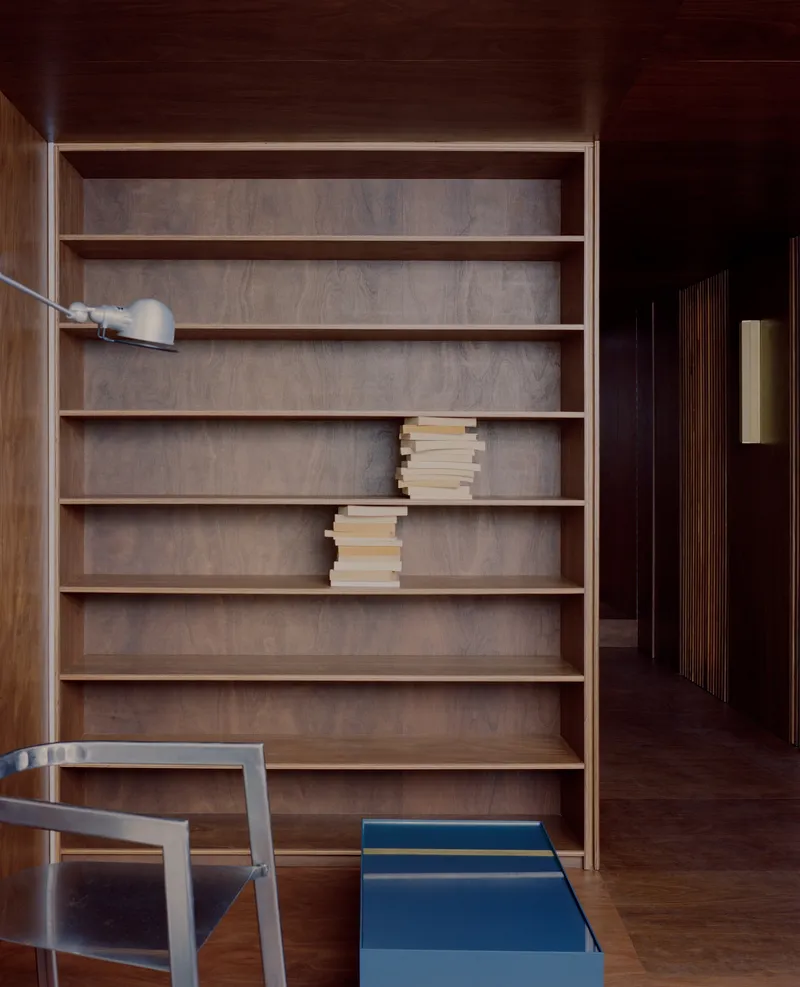
SSdH treated the furnishings and fixtures as extensions of the architectural strategy. Aluminium corner stools, a metal bench sculpture in the alcove, built-in spotted gum shelving: each piece is selected or designed so that its material reads clearly against the white shell. The yellow and green plinth objects in the hallway, visible alongside storage lockers and exposed steel beams, play the same game as the bathroom tiles. Found color and industrial structure coexist with domestic comfort.
Nickel fixtures appear throughout, chosen for their ability to age alongside the building's existing patina rather than compete with it. The apartment is full of moments where careful selection replaces complex detailing. When you minimize joins and hide junctions, each visible element carries more weight.
Living in the Light
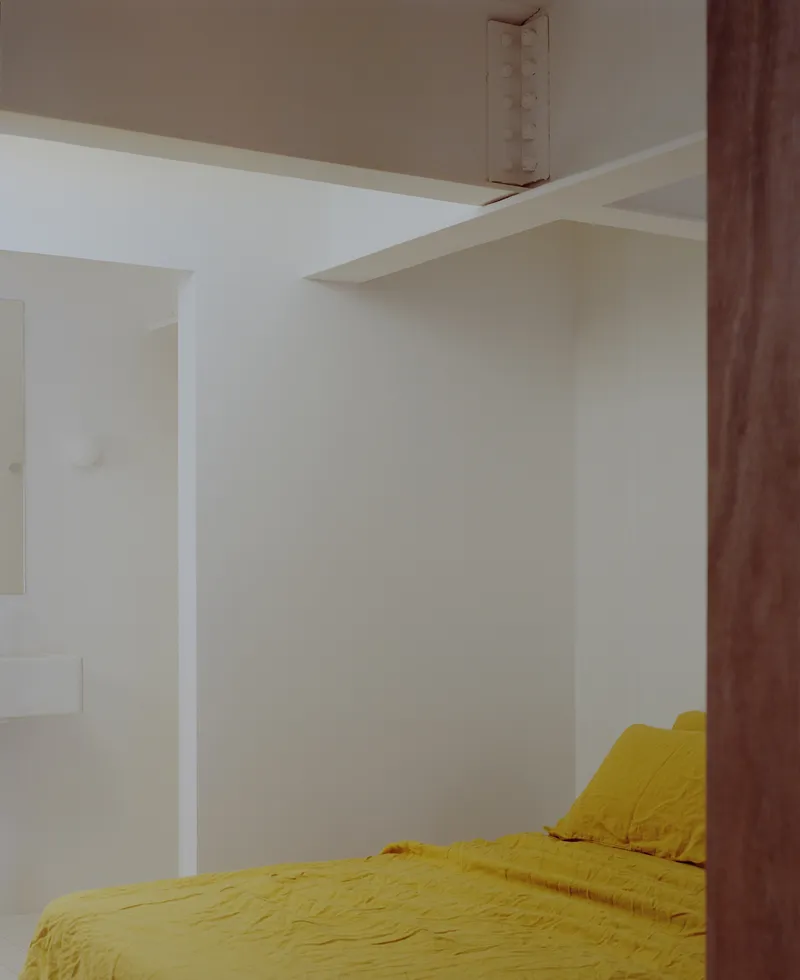
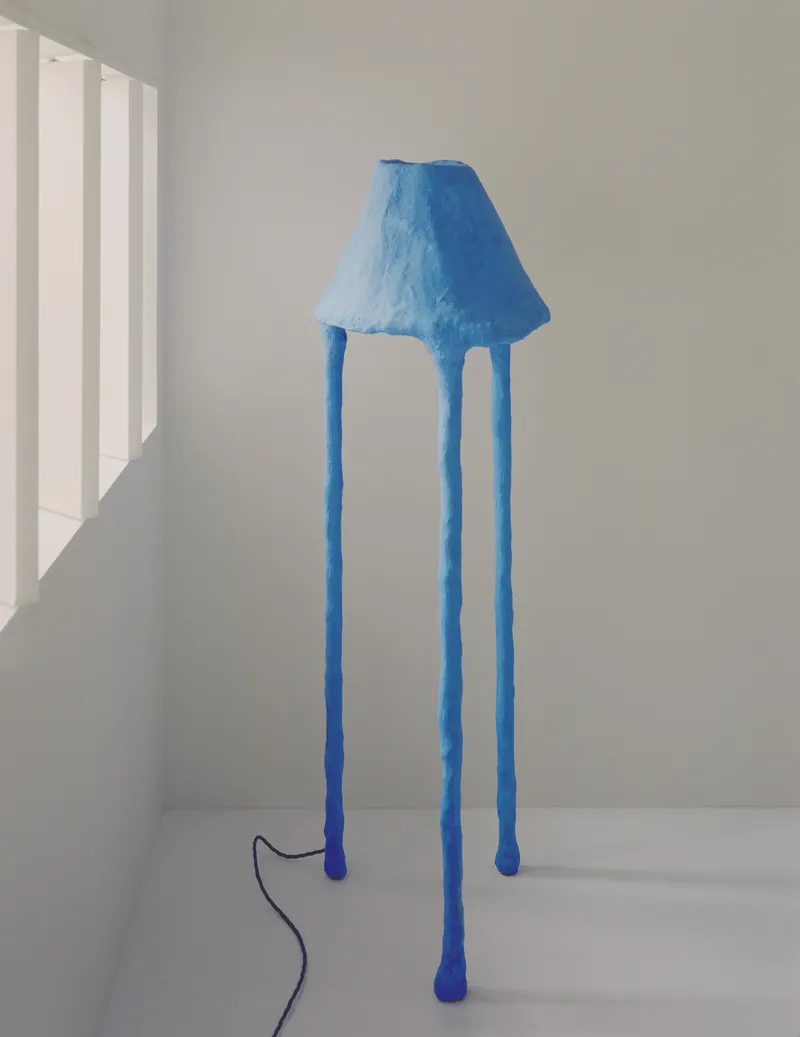
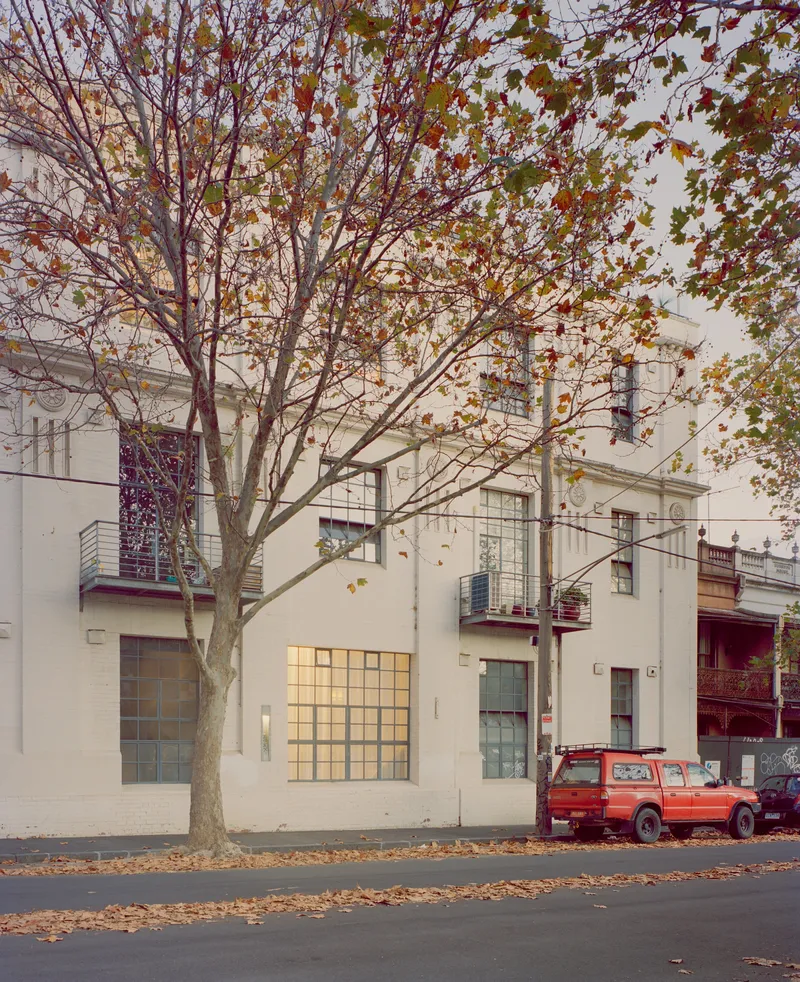
The bedroom corners feel quiet and considered. Yellow bedding next to a timber post and white partition wall; a blue tripod lamp catching morning sun in a bare corner. These are not staged moments but the natural result of an apartment where daylight reaches deep into every room and the material palette is restrained enough that each object, each color, registers. The street view of the white rendered facade, grid windows behind a bare deciduous tree, gives no hint of what has been achieved inside. The factory keeps its public composure.
Why This Project Matters
The Kerr Apartment is a study in restraint applied to a generous canvas. One hundred square meters in a former chocolate factory could easily have become a loft cliché: exposed brick, pendant Edison bulbs, reclaimed timber everything. SSdH resisted that script. Instead, three precisely defined insertions organize the space, and the rest of the effort goes into revealing what was already present. The result is an apartment that feels significantly larger than its footprint and significantly older than its 2022 completion date, in the best possible sense.
For architects working on adaptive reuse projects, particularly those dealing with raw shells or speculative conversions, this project offers a useful lesson. The building does not need you to cover it up. It needs you to decide what to insert and, more importantly, what to leave alone. SSdH's decision to let demolition discoveries, like that yellow paint in the ensuite, shape the design rather than treating them as obstacles is the kind of responsive practice that produces architecture with genuine depth. The best apartments do not feel designed. They feel found.
Kerr Apartment by SSdH. Melbourne, Australia. 100 m². Completed 2022. Photography by Pier Carthew.
About the Studio
Share Your Own Work on uni.xyz
If projects like this are the kind of work you want to make, uni.xyz is a place to publish your own, find collaborators, and enter design competitions.


Popular Articles
Popular articles from the community


Singing Woman: An Opera House That Performs Before the Curtain Rises
Ovidiu Cristian Pavel's conceptual opera house translates Estonia's choral identity into a sculpted waterfront landmark facing the Baltic Sea.
Temporary Home for Dogs: A Reversed Zoo Rethinks Animal Shelter Architecture
In Bucharest, a sinuous corridor and freed landscape flip the logic of containment, designing a shelter that works to make itself unnecessary.

Faces of the Soviet Avant-Garde: Turning Moscow's Street Names into an Open-Air Museum
A network of sculptural installations across a Moscow residential district transforms forgotten architect names into spatial encounters with cultural memor

The Amber Palace Opera: A Geological Fiction Surfaces on Tallinn's Baltic Waterfront
Pierre Brillard reimagines a Baltic legend as a public landscape, opera house, and waterfront promenade rooted in Tallinn's coastal identity.

Similar Reads
You might also enjoy these articles

Pixel Gardens: One Repeated Module Stacked Into a Terraced Social Housing Tower for Famagusta
Salem Bader's shortlisted housing tower builds a vertical neighbourhood from one repeated module, offsetting units to carve terraces, light and air.

Bao Huynh Watercolor Atelier: A Serene Art Retreat in Hội An
Bao Huynh Watercolor Atelier in Hội An blends multifunctional art spaces, sustainable design, local materials, and family-friendly living in a serene environment.

Atelier Macri Concept Store Interior Design by CASE-REAL
Atelier Macri store features a "ko" counter, walnut wood details, cork displays, blending retail, gallery, and seamless customer experiences.

Manuel Vargas Izquierdo Stadium and High-Performance Sports Center: Architectural Excellence in Jalpa de Méndez
The Manuel Vargas Izquierdo Stadium blends sustainable design, inclusive sports facilities, and cultural-inspired architecture, revitalizing Jalpa de Méndez’s public spaces.

Explore Apartment Competitions
Discover active competitions in this discipline

Challenge to reimagine the Iron Throne

Photograph architecture without architects

Illustrate the lost glory of Angkor Wat - Render Challenge

Design challenge to reuse E-waste
Comments (0)
Please login or sign up to add comments
No comments yet. Be the first to comment!