

Startup Village Jülich: A Sustainable and Innovative Hub for Startups in Germany
Startup Village Jülich is a sustainable, modular workspace designed for startups, fostering collaboration and innovation in a vibrant environment.


Redefining Workspaces for the Future
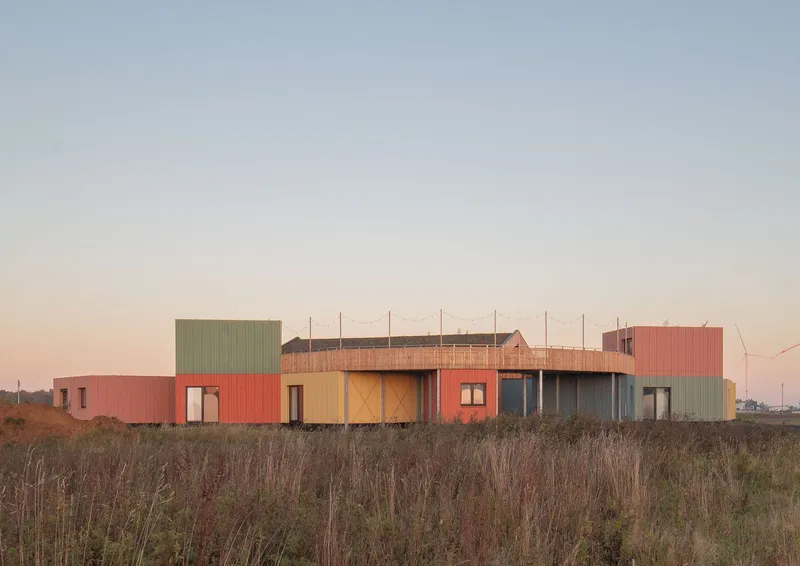
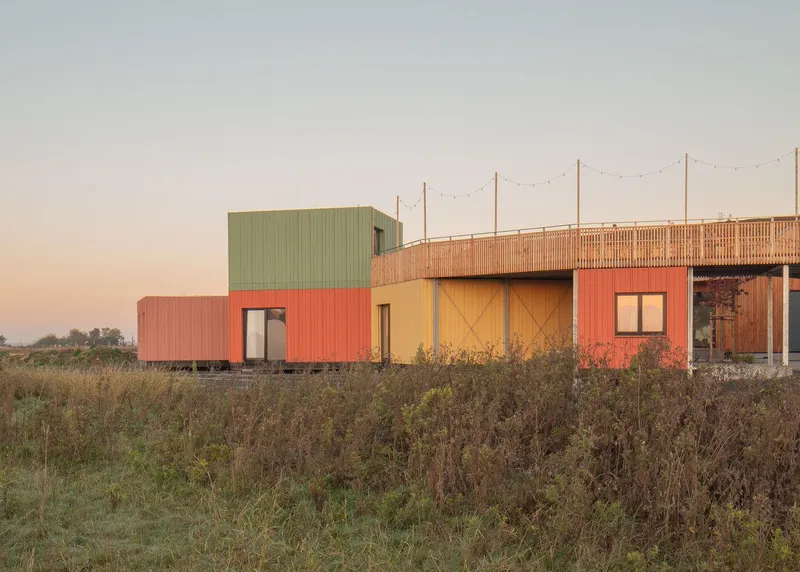
The Startup Village Jülich, designed by Julius Taminiau Architects, represents a bold step in the transformation of Jülich, Germany, from a coal-dependent economy to a sustainable, energy-efficient future. This 1,000 m² vibrant business park is part of the larger Brainergry Park, a 7-hectare energy transition business park. The design contrasts with the park's more formal, white-toned architecture by introducing colorful and dynamically designed structures aimed at fostering creativity, collaboration, and innovation.
Concept and Design: A Modern Interpretation of Historical Influence
A Grid for Flexibility and Growth
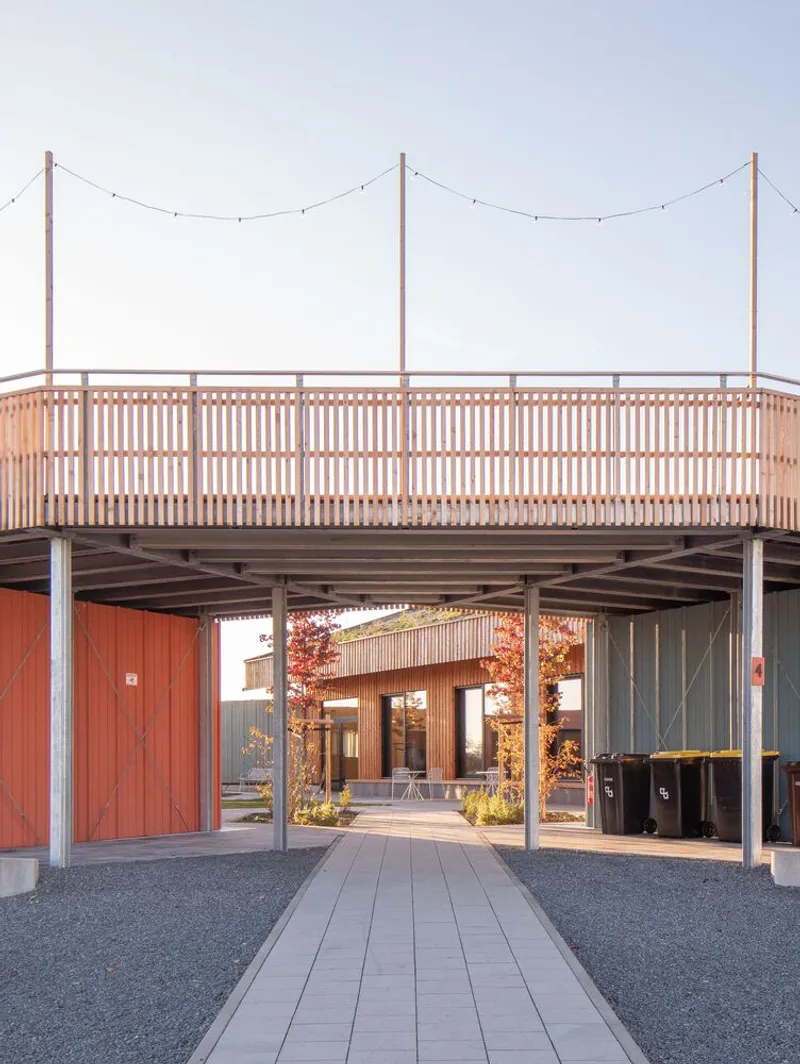
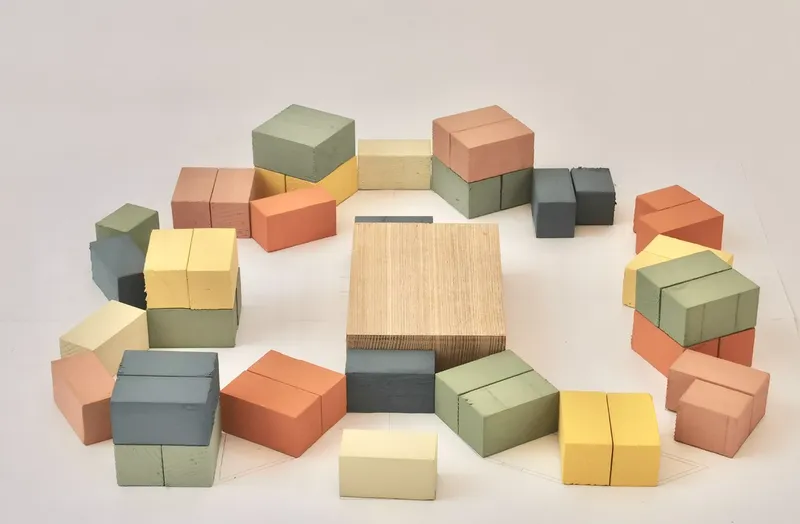
The design of Startup Village is organized on a hexagonal grid, providing a flexible foundation for growth and adaptation. The modular layout of the building allows each unit to serve as an affordable and customizable workspace for startups. This organization supports the needs of innovative companies and creates a sense of community by bringing different sectors together in a shared space.
This approach is reminiscent of the humble garage beginnings of tech giants like Apple and Microsoft, providing an ideal environment for entrepreneurial success. The modular nature allows for organic growth and adaptation, with spaces that are tailored for new businesses and evolving demands.

Architecture Inspired by Jülich’s Citadel
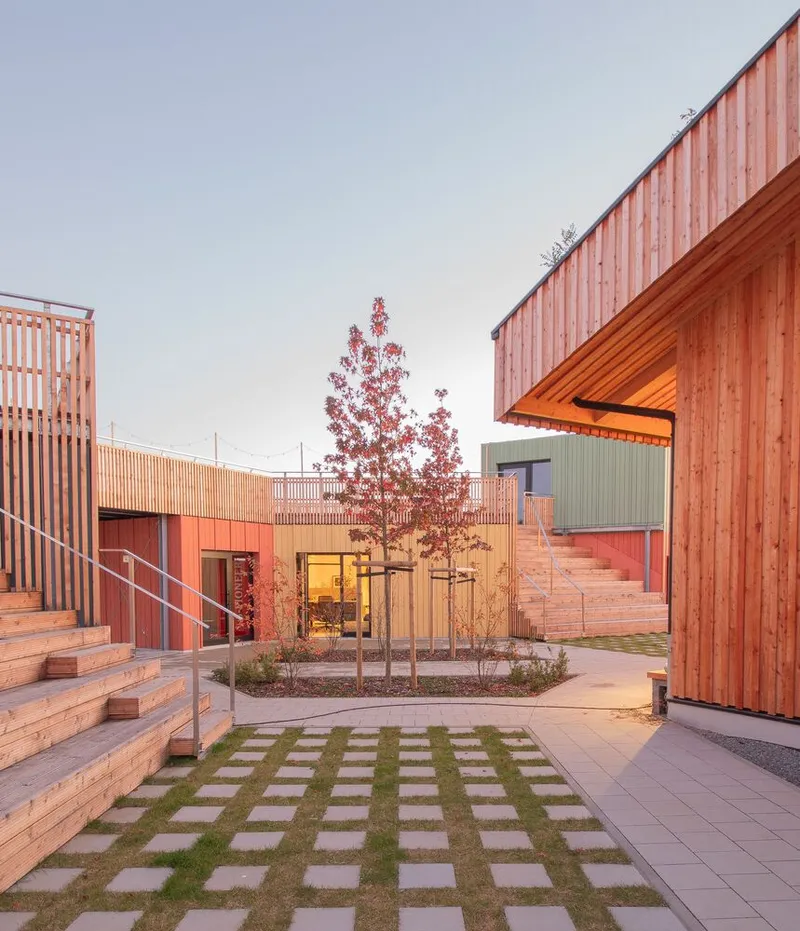
The design of the Startup Village takes cues from the Renaissance citadel of Jülich, a historical structure that once served as a bastion of protection. In contrast, Startup Village is designed to welcome and embrace, symbolizing openness, collaboration, and the pursuit of innovation. The central public hub acts as the heart of the community, offering an inviting space for interaction, idea exchange, and collaboration.
Vibrant, Functional, and Inviting
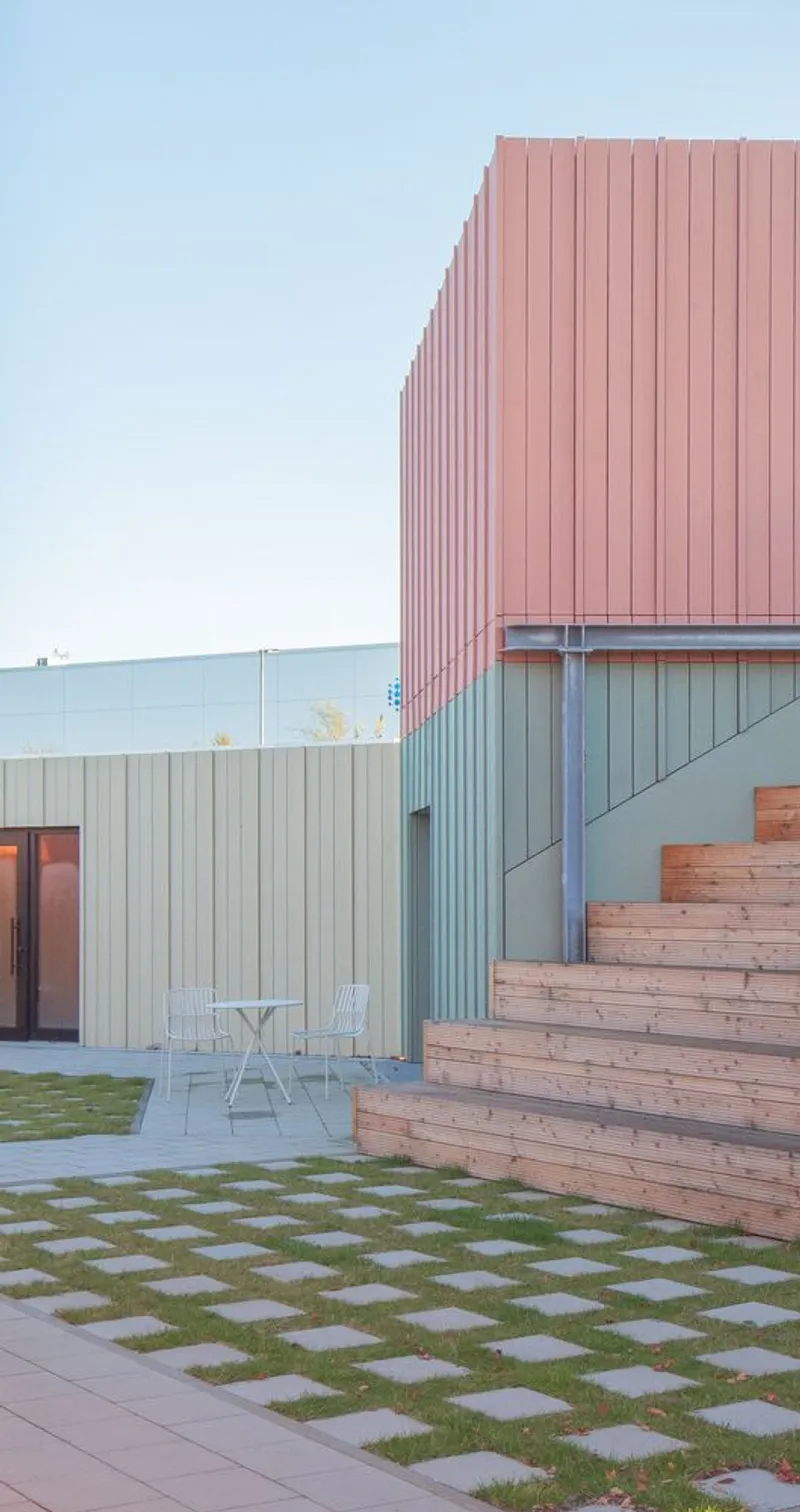
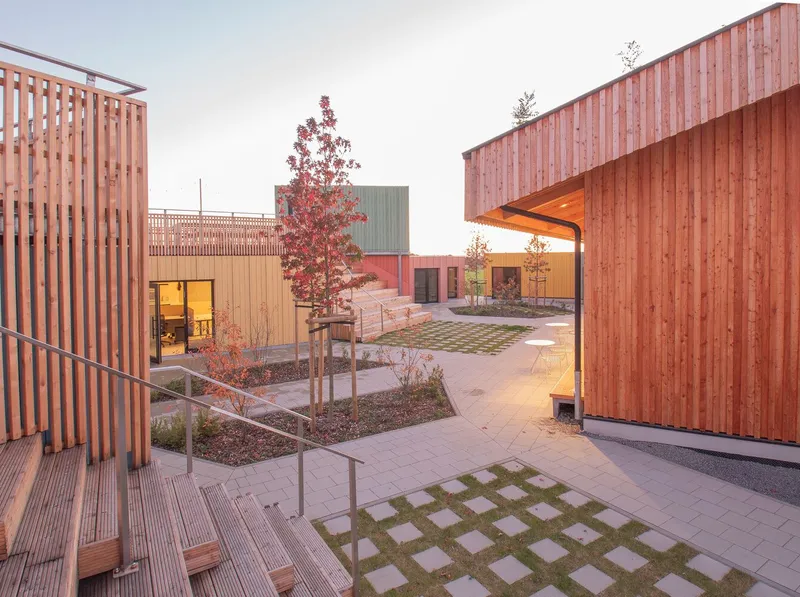
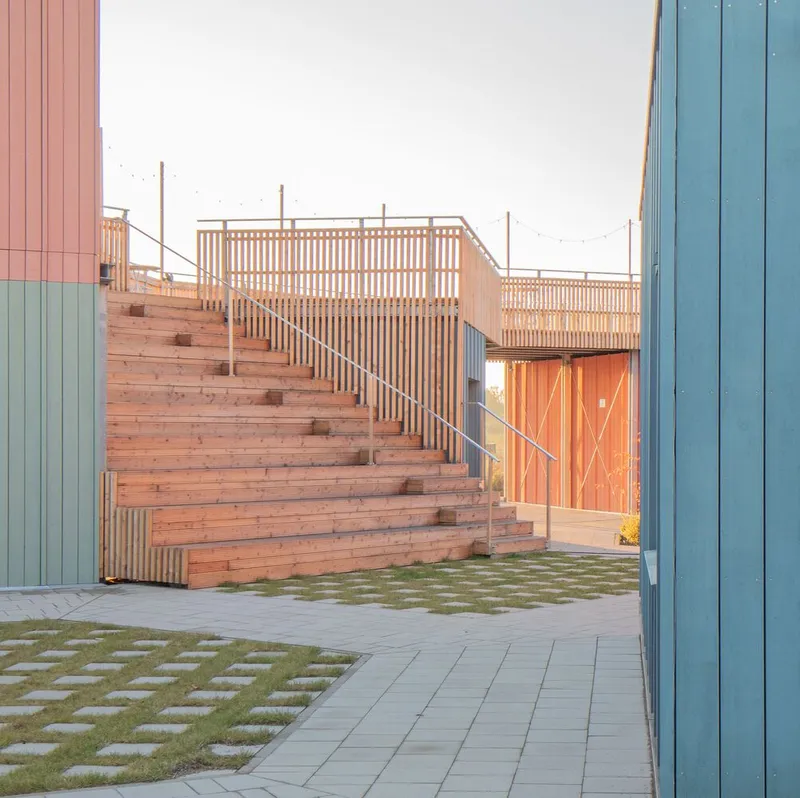
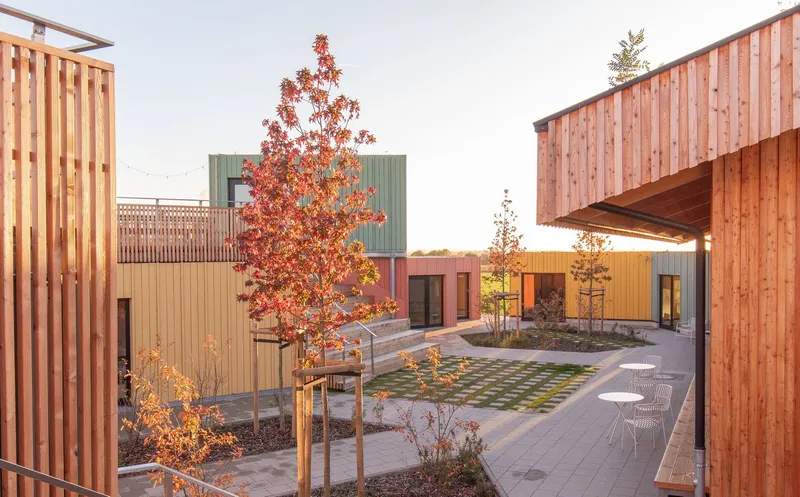
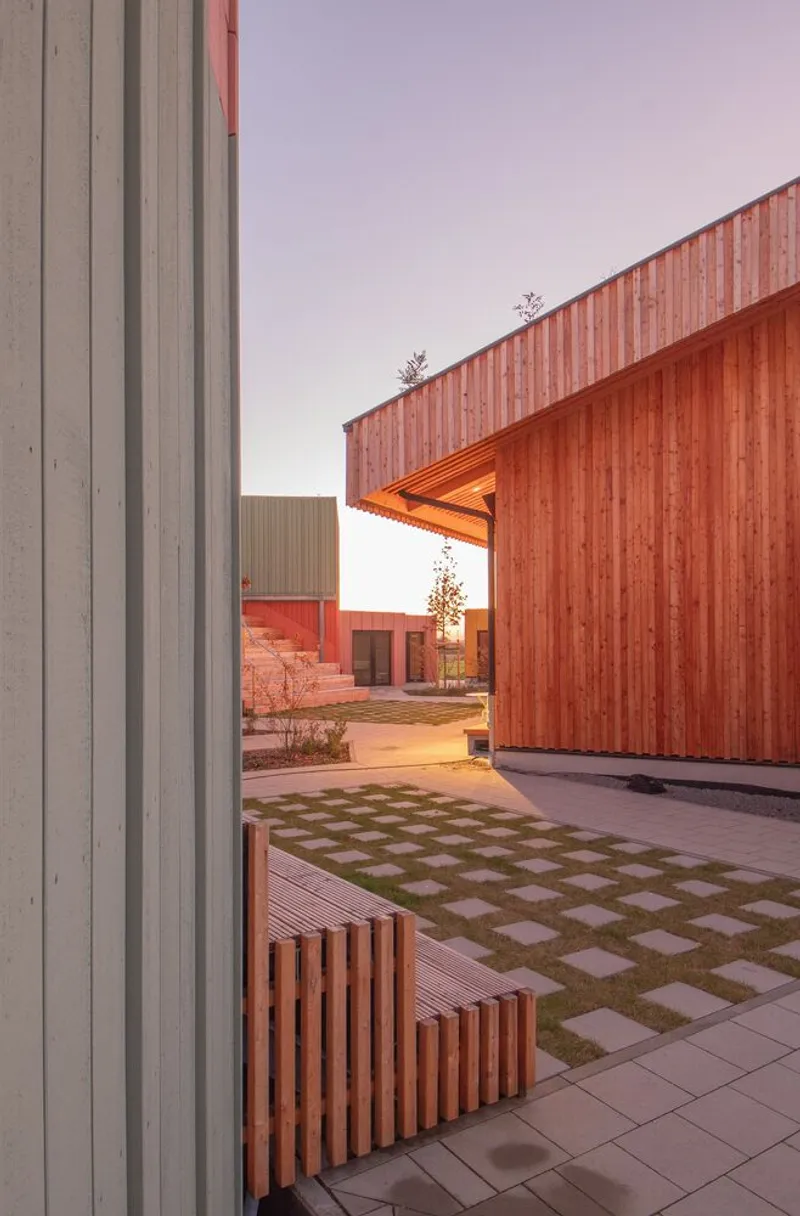
The colorful modular units, inspired by the vibrant hues of nearby village houses, infuse the Startup Village with local charm and warmth. The main building, located at the center of the grid, is designed with large sliding windows and outdoor seating that encourage spontaneous interactions. This space, which integrates seamlessly with the surrounding grid, becomes the focal point for networking and community activities.
The integration of green roofs, carefully planted greenery, and deciduous trees across the site promotes a sustainable environment and provides natural summer shading. These elements contribute to the overall eco-friendly ethos of the village while offering a comfortable and inviting atmosphere for both formal and informal meetings.
Sustainability: Building with Nature
Locally Sourced Materials and Energy Efficiency
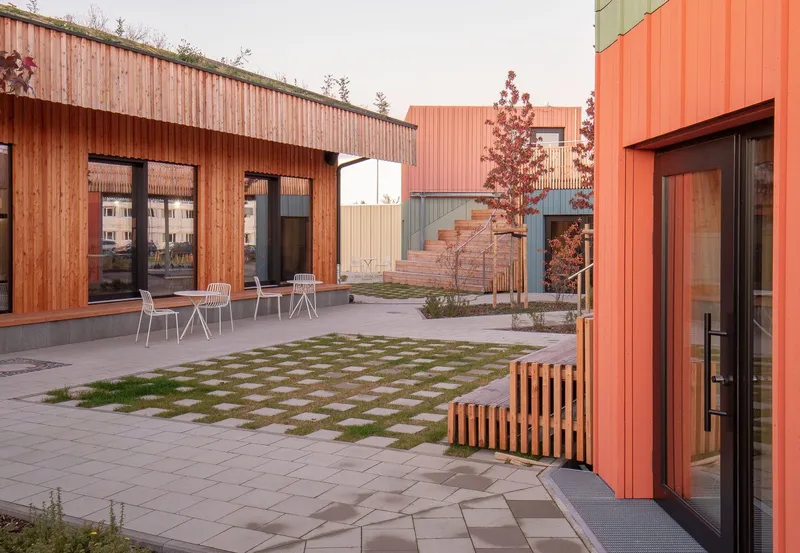
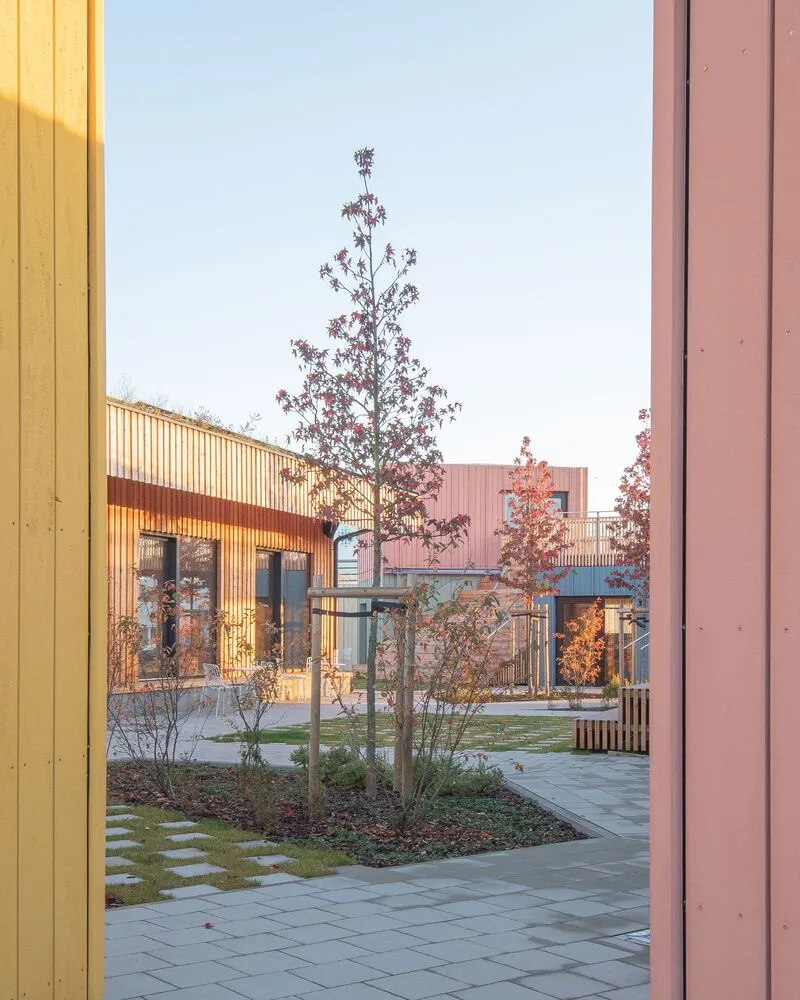
Sustainability is at the core of the design, with each module crafted primarily from locally sourced wood. The structures are held together by wooden nails instead of glue, reinforcing the village's commitment to environmental friendliness. The buildings are highly insulated for energy efficiency, and large windows ensure natural cross-ventilation, minimizing the need for mechanical cooling systems.
Green Infrastructure for a Greener Future
The green roofs serve multiple purposes: they provide insulation, buffer rainwater, and contribute to biodiversity. By integrating abundant plantings and trees throughout the site, the design not only enhances the aesthetic value but also creates a biological habitat, improving the site's ecological footprint. The aim is to foster a biodiverse biotope, supporting both local flora and fauna.
The inclusion of greenery inside and around the grid further promotes natural cooling and air filtration, reinforcing the village's commitment to sustainability and environmental harmony.
The Village as a Catalyst for Innovation and Change
The Startup Village Jülich is more than just a workspace—it is a community-driven incubator for new ideas and sustainable practices. The design provides a nurturing environment for startups to thrive, connect, and collaborate across sectors. By blending innovation, nature, and community, it acts as a catalyst for transformative change.
The village embodies the spirit of collaboration and sustainability, where ideas can grow, partnerships can form, and businesses can flourish in a socially responsible and ecologically balanced setting.
A Model for Future Workspaces
The Startup Village Jülich is a visionary project that combines sustainable architecture with a dynamic and flexible workspace for startups. Designed to foster collaboration and innovation, the village is an example of how contemporary architecture can support a more sustainable future. By integrating green spaces, innovative design, and eco-friendly materials, Startup Village Jülich is creating a new model for startup ecosystems and business parks worldwide.
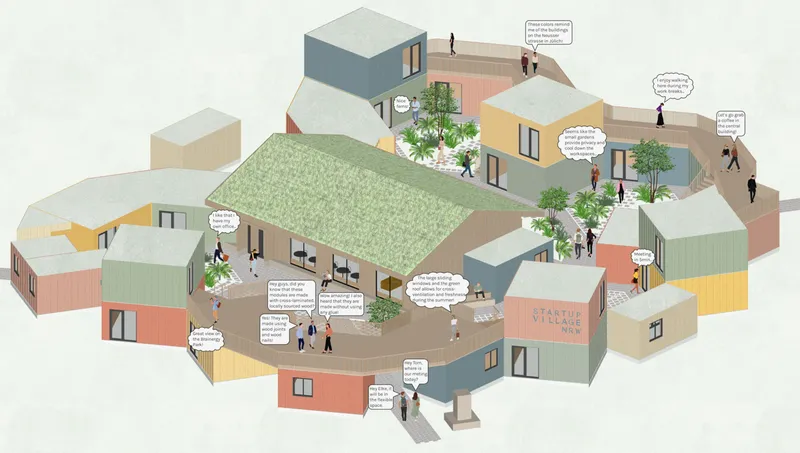
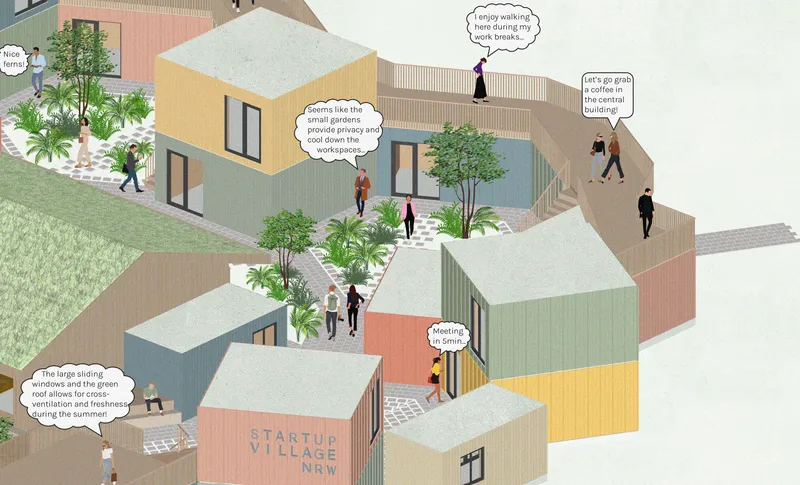

All Photographs are work of Norbert Wunderling & Julius Taminiau


Popular Articles
Popular articles from the community


Cloaked Colonization: A Mobile Underwater Habitat That Moves Like a Fish
Micah Abaya's shortlisted EHC Pacific entry reimagines ocean settlement as a dispersed network of self-sustaining architectural organisms.

Opera on the Sea: Driftwood Logic Shapes a Timber Opera House on Estonia's Coast
Trevor Orgill's opera house translates the entangled drift of floating timber into a civic building where wood, water, and music converge.

Opera by the Sea Estonia: Three Shells Dissolving Architecture into Tallinn's Coastline
A winning opera house proposal replaces monumental form with interconnected shells that blur the boundary between building, park and Baltic Sea.

Manzana Morphosis: Stretching Barcelona's Grid into a Living Landscape for 2050
A radical reworking of the Eixample manzana turns density into a tool for generous public space, vertical ecology, and environmental performance.

Similar Reads
You might also enjoy these articles


Hodi-Mandai Geram
Project Function: Preservation and revitalization of the Intangible heritage and socio-spatial identity of the Hodi by Housing, Cultural Memory Center, Sacred Grove, landscape, local tourism economy


Olio Towers: A Mid-Rise for Performers That Fuses Housing, Rehearsal, and Stage
Located blocks from Houston's Theater District, this modular tower stacks living units around a central performance atrium.

Oasis: Modular Green Housing Carved into Dhaka's Urban Fabric
A shortlisted Plugin Housing entry reclaims unauthorized settlements in Dhaka with stepped concrete volumes, green roofs, and ventilation-driven design.

Black Hole: A Floating Megastructure for the Post-Physical Era
Emiliano Mazzarotto envisions a spherical, self-scaling arena where e-sports, digital hotels, and holographic stadiums replace traditional public space.

Explore Architecture Competitions
Discover active competitions in this discipline

Challenge to reimagine the Iron Throne

Photograph architecture without architects

Illustrate the lost glory of Angkor Wat - Render Challenge

Design challenge to reuse E-waste
Comments (0)
Please login or sign up to add comments
No comments yet. Be the first to comment!