

Stationspostgebouw Renovation: Transforming a Historic Landmark into a Sustainable, Modern Workplace
Historic postal building in The Hague transformed into sustainable, daylight-filled, flexible office spaces, preserving monumentality and innovative modern design.


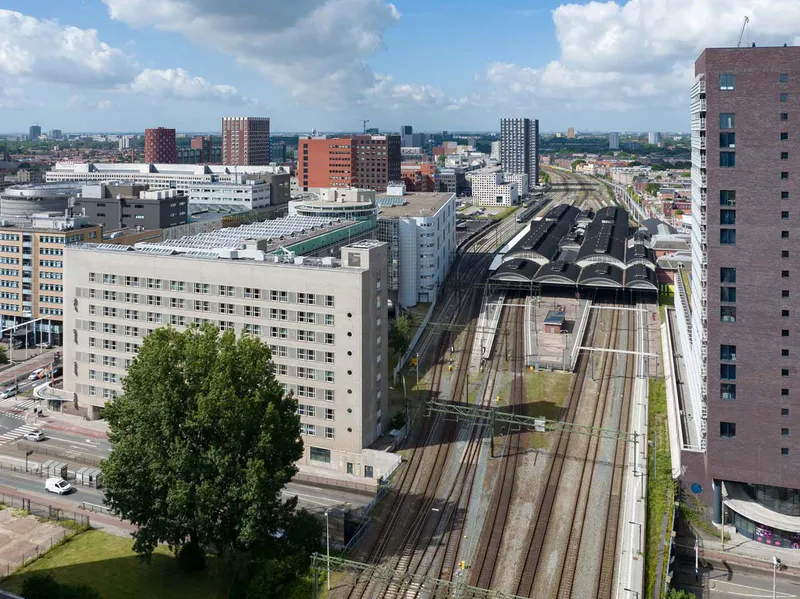
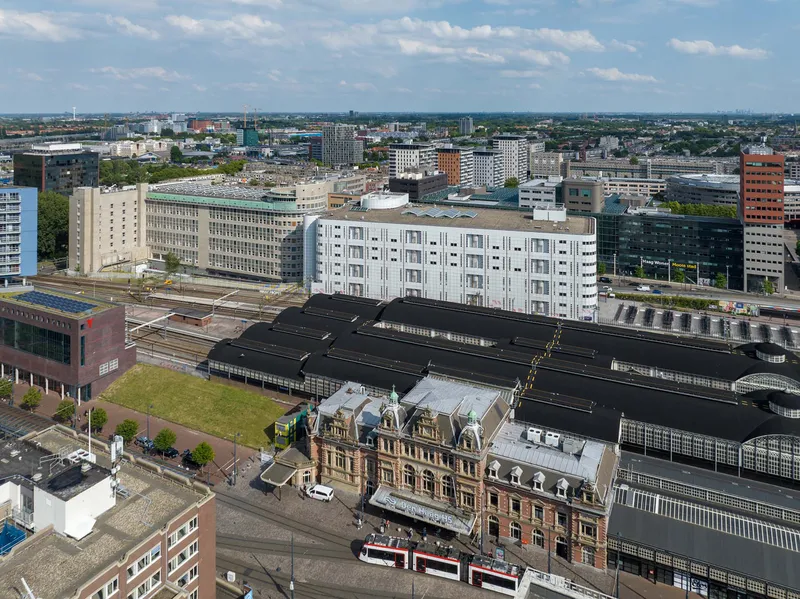
The Stationspostgebouw, originally a bustling postal sorting center beside The Hague’s Hollands Spoor train station, has been meticulously transformed by KCAP and Kraaijvanger Architects into a forward-looking, sustainable office environment. Completed in 2022, the renovation spans 30,000 m² and seamlessly integrates contemporary workplace design while preserving the building’s monumental heritage.
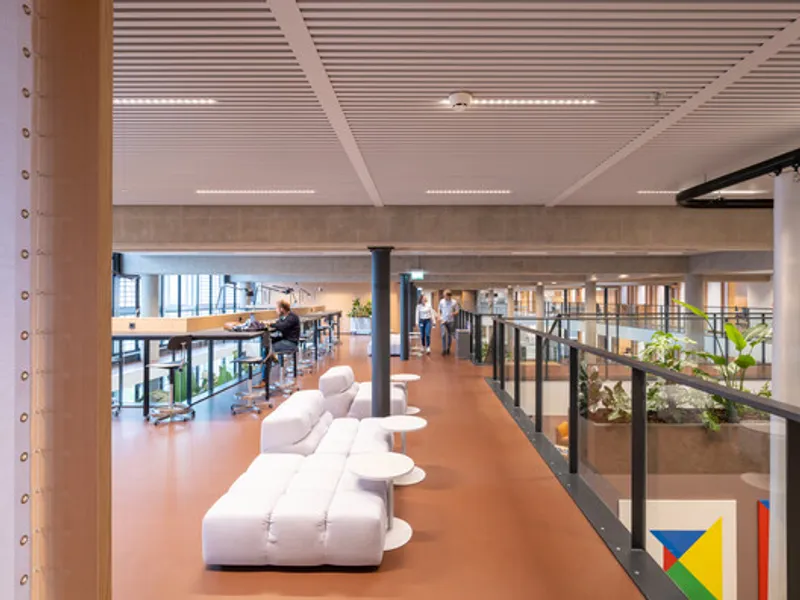
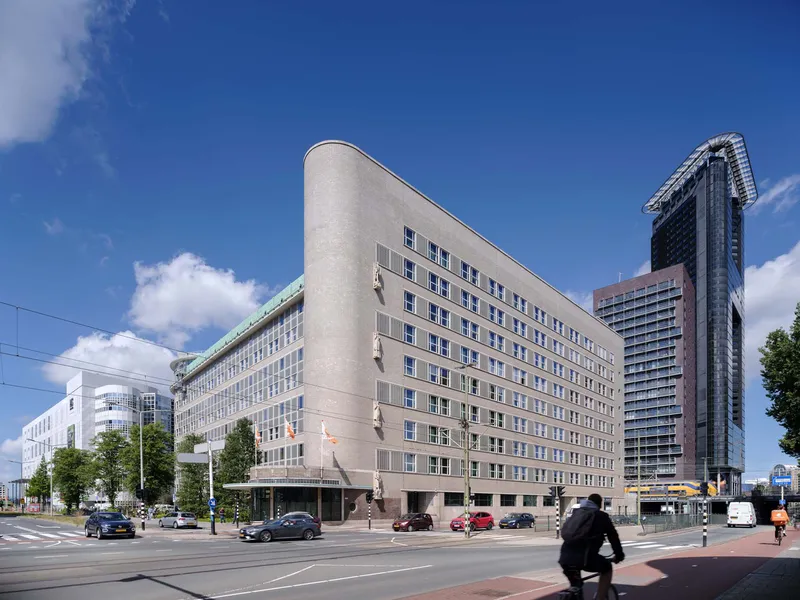
Respecting History While Embracing Modernity
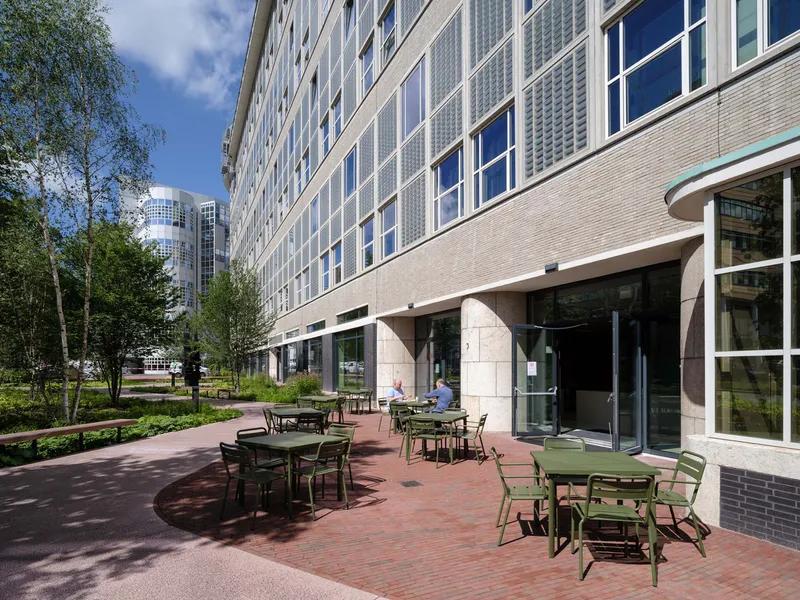
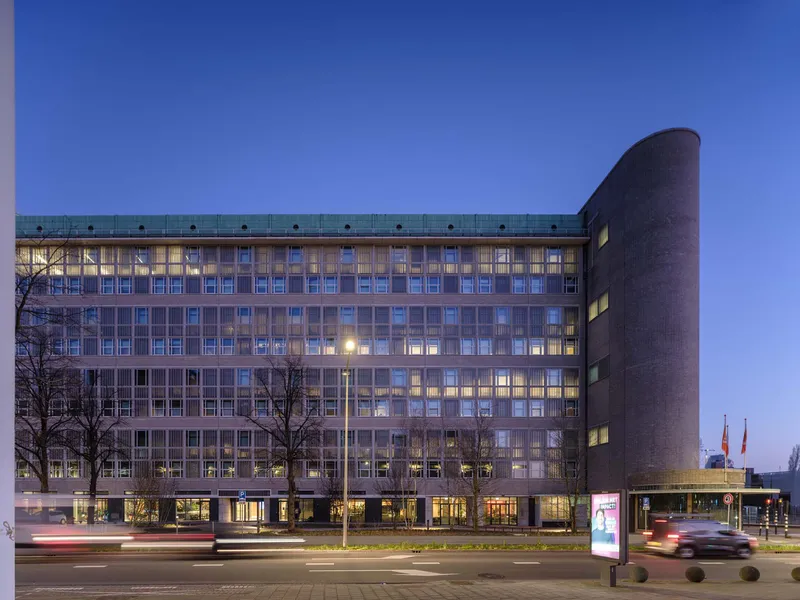
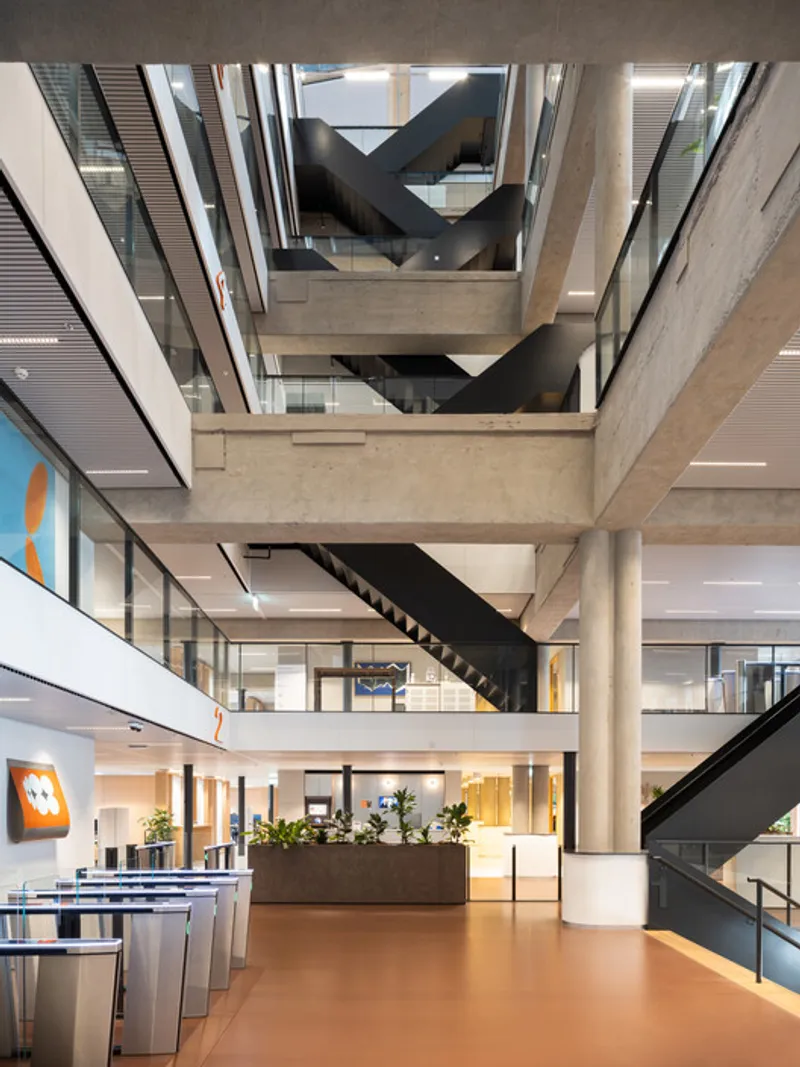
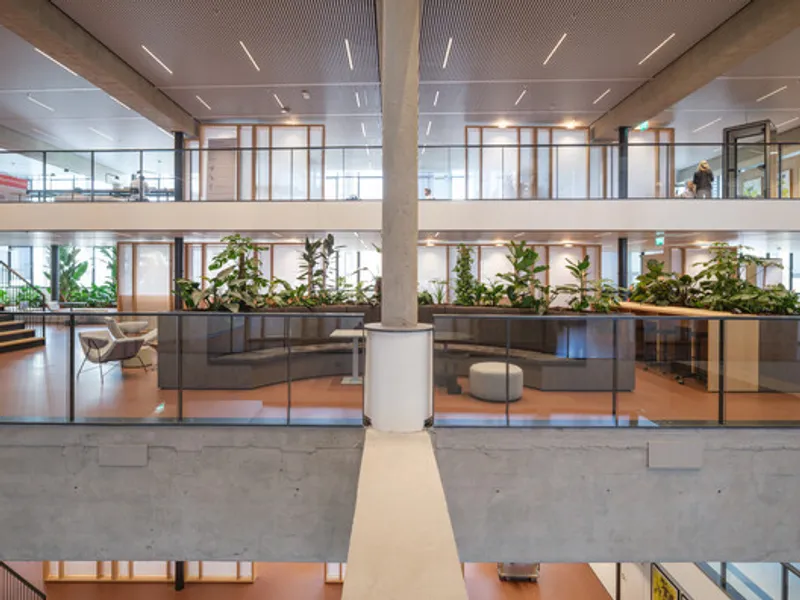
As a prominent landmark along the railway, the Stationspostgebouw has long held symbolic and architectural significance for The Hague. The renovation prioritized maintaining this iconic character, particularly the original prefab concrete columns, which make it one of the earliest examples of prefabricated concrete structures worldwide.
To honor the monument’s status, major structural alterations were avoided, with the restoration focusing on enhancing the existing load-bearing framework, preserving beams, columns, and the overall structural integrity. This sensitive approach not only retained the building’s historical essence but also established a solid foundation for modern interventions.
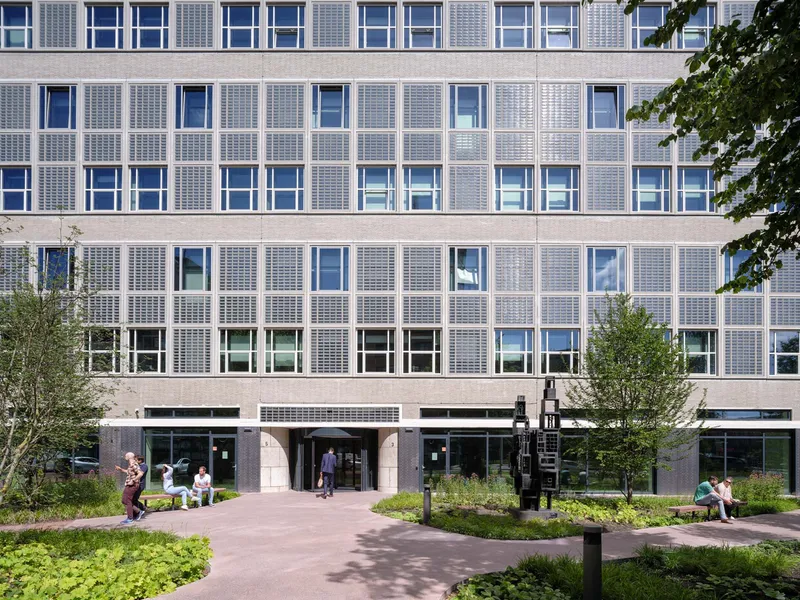
Daylight, Openness, and Social Interaction
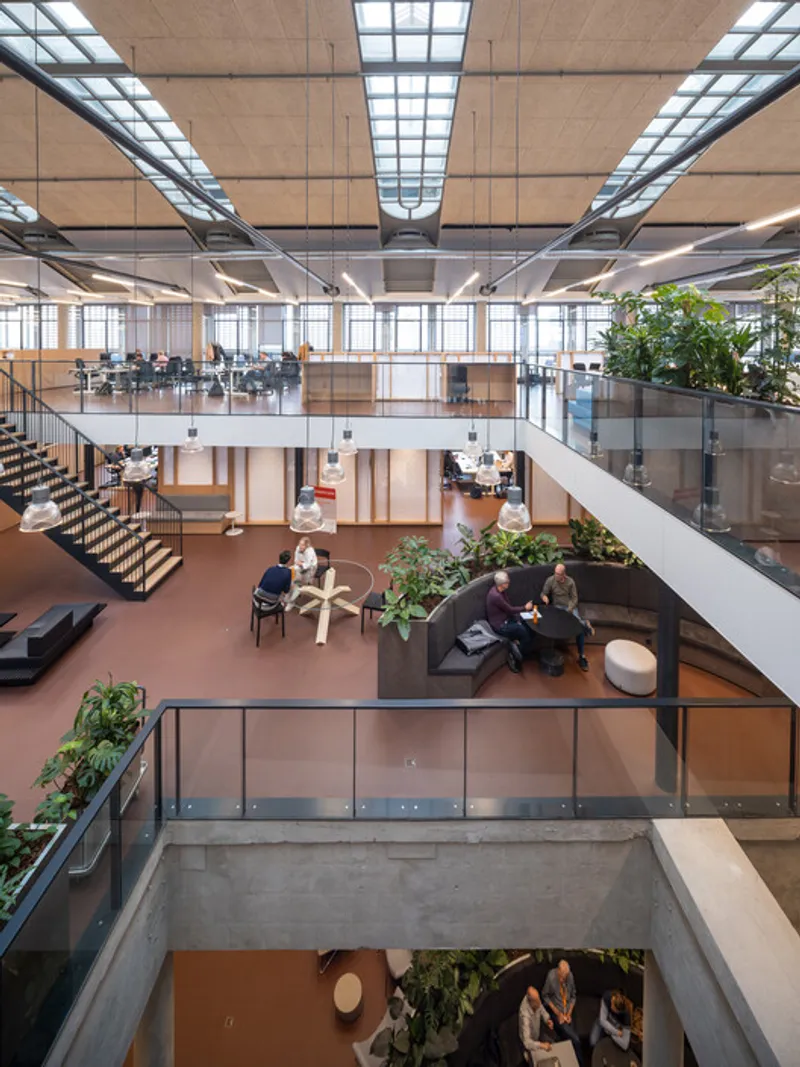
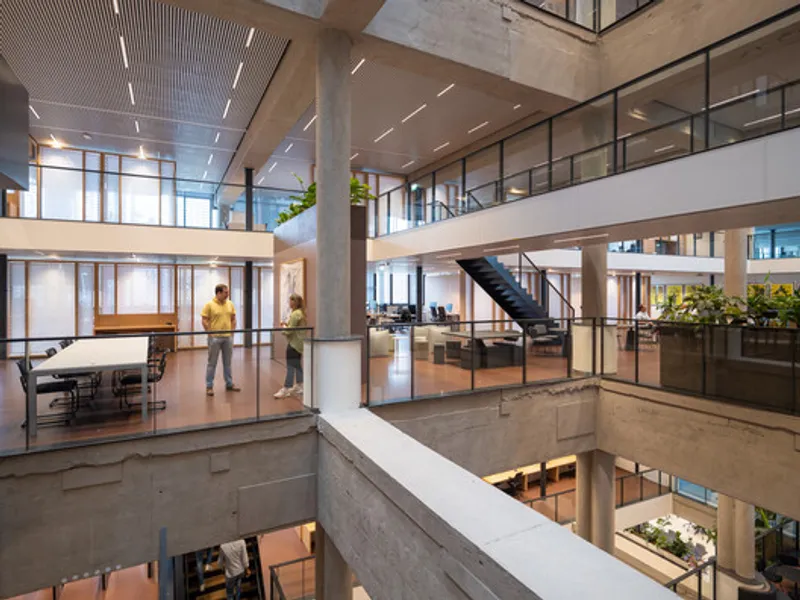
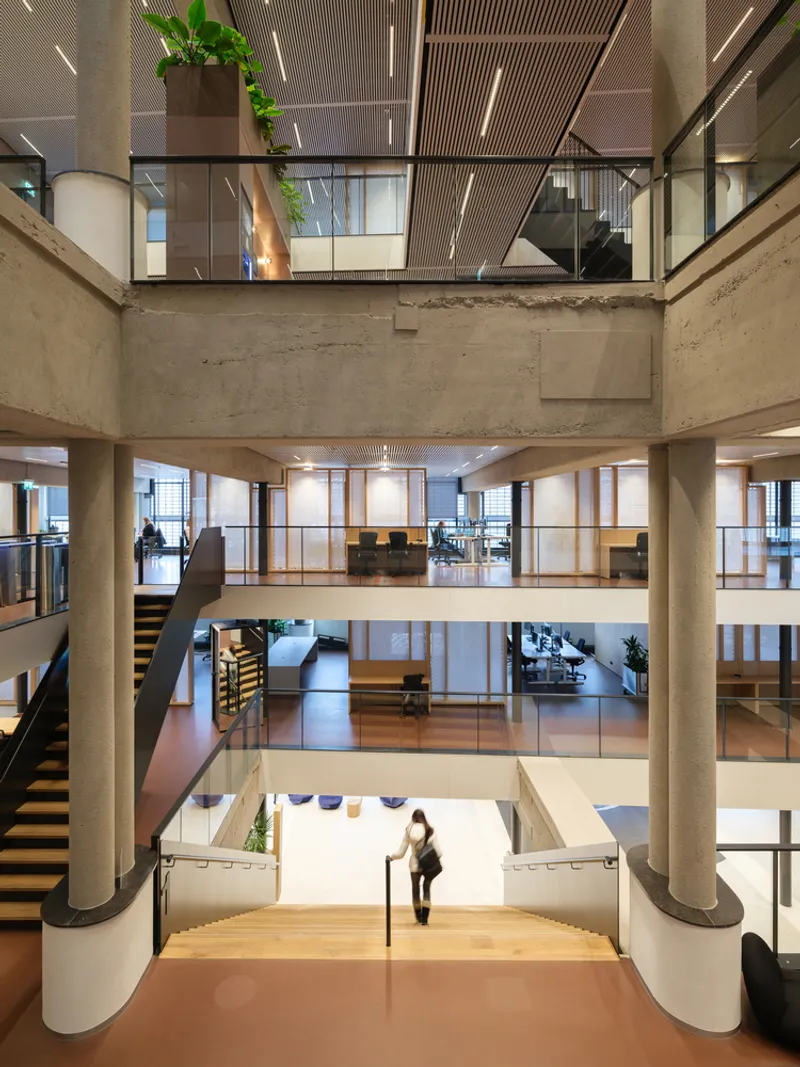
One of the central design objectives was increasing natural light penetration into the building’s deep floor plates. Originally, glass block windows and skylights provided diffuse lighting, but these proved insufficient for modern office needs. KCAP addressed this challenge by introducing staggered interior voids, creating dynamic double-height atria that visually and spatially connect the floors.
These interventions produce a vibrant, transparent office core that encourages interaction while maintaining openness. The interplay between single-height and double-height spaces fosters a lively work environment where people can “see and be seen,” reinforcing the building’s social and collaborative essence.
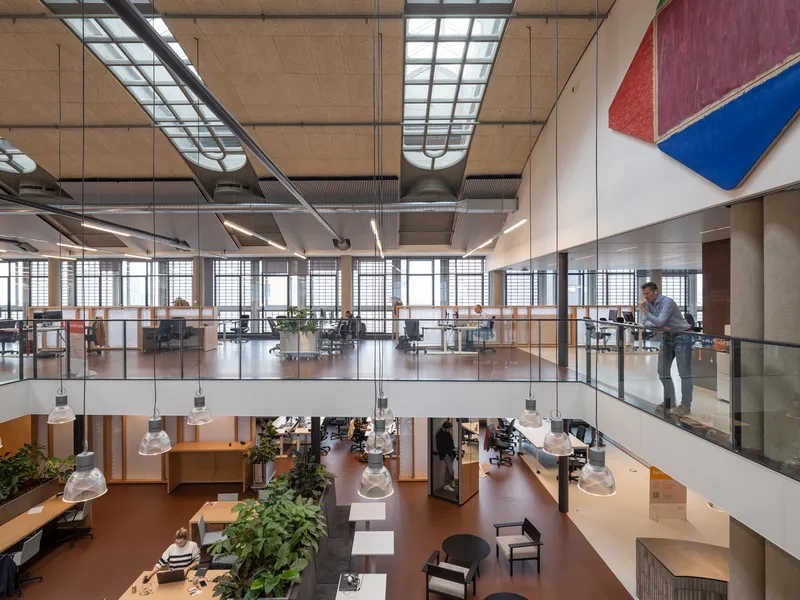
Flexible, Future-Ready Workspaces
The upper floors have been reimagined with flexibility in mind, accommodating varied workplace concepts and user-specific arrangements. Efficient floor layouts, modular office solutions, and state-of-the-art technical systems ensure that the building can adapt to evolving work styles.
Partner Irma van Oort (KCAP) emphasizes the vision of making the office feel like a “living room”: informal yet secure, widely usable, and conducive to both spontaneous interaction and focused work. These design strategies promote an organic, engaging work atmosphere that aligns with contemporary office culture.
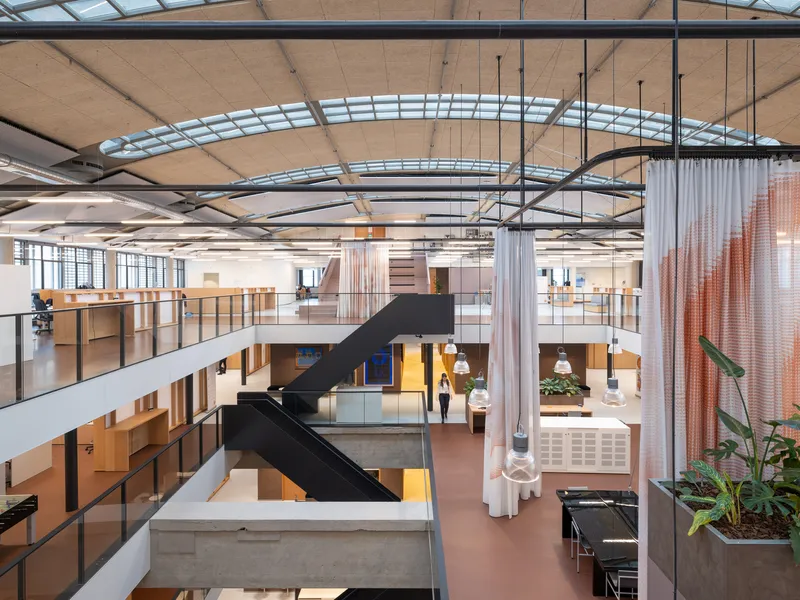
Interior Design Tailored for Modern Work
Kraaijvanger Architects led the interior design, emphasizing the unique spatial qualities of the historic building: the deep floor plates, robust structural features, and the semi-transparent glass block façade. Associate Partner Chantal Vos notes that KCAP’s interventions to open the concrete floors guided the zoning and layout of interior areas.
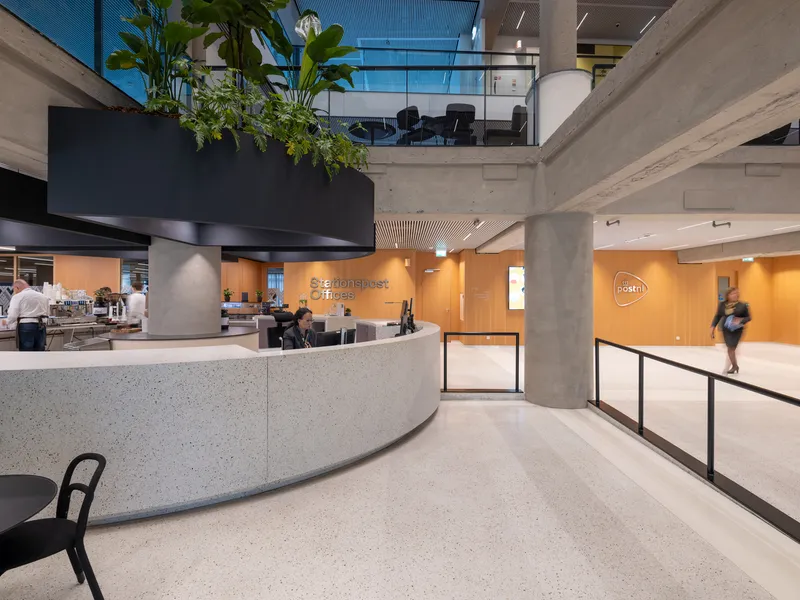
The result is a series of spaces that balance monumentality and intimacy, combining preserved historical elements with contemporary interventions that foster collaboration, creativity, and productivity.
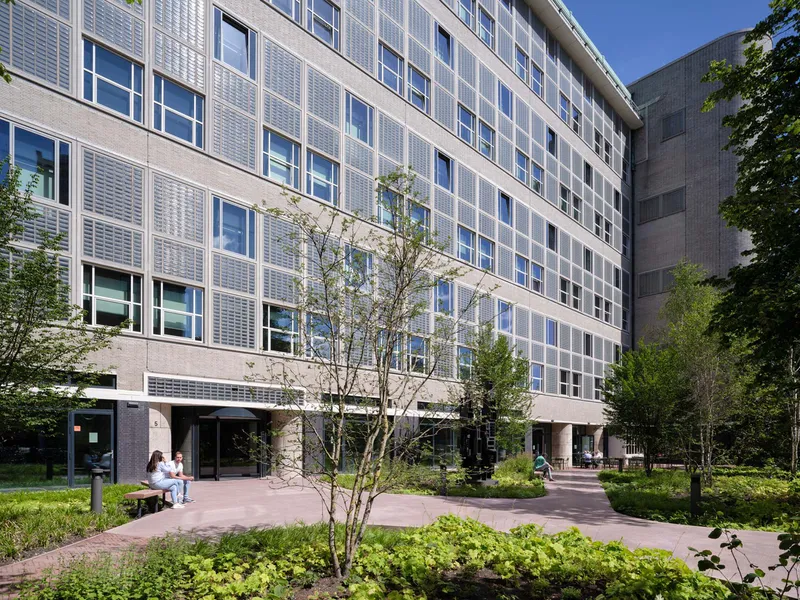
Sustainability and Innovation
The renovation set a new benchmark for sustainable heritage projects. Stationspostgebouw is now the first national monument in the Netherlands to achieve the highest energy label ‘A’, meeting WELL and BREEAM standards.
A glass second skin was added internally, serving as an invisible insulation layer that significantly reduces energy consumption and noise from road and rail traffic. Energy-saving measures and circular economy principles guided material reuse, reinforcing the building’s long-term sustainability.
By integrating innovative insulation, daylight optimization, and energy-efficient systems, the building exemplifies how historic structures can meet 21st-century environmental standards without compromising architectural integrity.
Technical Excellence and Collaboration
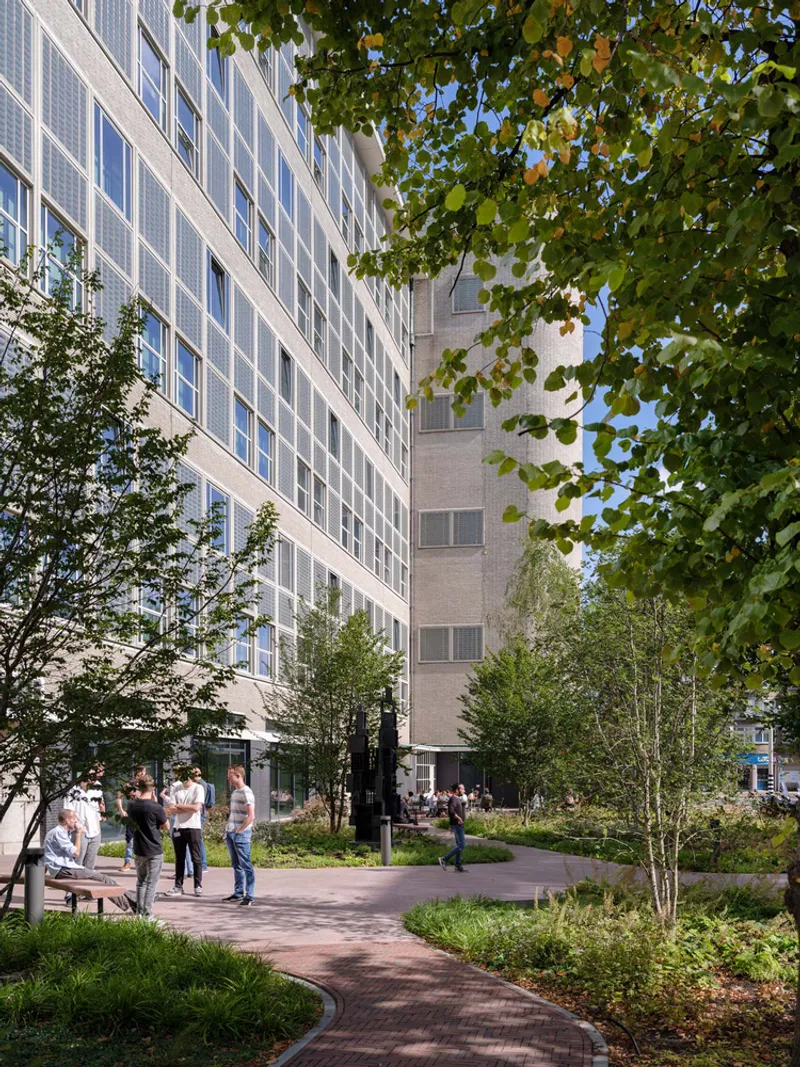
The project was realized with J.P. van Eesteren / BESIX as the construction partner and DELVA Landscape Architecture & Urbanism handling landscape integration. Materials and manufacturers such as Espero and Interalu were carefully selected to ensure aesthetic and functional quality.
The collaborative approach between KCAP, Kraaijvanger Architects, engineers, and landscape designers demonstrates the possibilities of large-scale adaptive reuse, combining heritage preservation, sustainability, and workplace innovation.
The Stationspostgebouw Renovation is a paradigm of how historic buildings can be sensitively and innovatively adapted for contemporary needs. By balancing monumental preservation, natural light enhancement, sustainable solutions, and flexible office design, KCAP and Kraaijvanger Architects have revitalized a landmark for The Hague, setting a global example for adaptive reuse projects.
All photographs are works of
Ossip van Duivenbode


Popular Articles
Popular articles from the community


The Amber Palace Opera: A Geological Fiction Surfaces on Tallinn's Baltic Waterfront
Pierre Brillard reimagines a Baltic legend as a public landscape, opera house, and waterfront promenade rooted in Tallinn's coastal identity.


ETEH Reworks the Shared Spaces of São Domingos School in Brazil Around Timber, Color and Hanging Plants
At São Domingos School in Brazil, 436 m² of hall, refectory and library are recast with timber joinery, a yellow and blue code and trailing greenery.

Cube Design Draws an Ecological Corridor Between Two Shenzhen Hills with the Nankai Building
Beside Shenzhen's container docks, the Nankai Building pairs stacked balconies with a climbing green screen to connect two hillsides across its height.

graciastudio Turns a Viewless Tijuana Lot Inward Around a Courtyard of Concrete, Timber and Trees
In Tijuana, Jorge Gracia's GA2 House stacks a timber-clad private floor over exposed concrete and replaces a missing view with a planted interior patio.

Similar Reads
You might also enjoy these articles

Bamboo Housing Challenge 2026: Design Affordable, Sustainable Homes Using Bamboo
An international design competition by Bamboo U and IBUKU inviting architects and designers to reimagine affordable housing using bamboo — with the winning design built full-scale in Bali.

Computational Design & Education: Beegraphy Design Awards Introduces 7th Category (Featuring Jiyun's Innovative Approach)
Dive into Beegraphy’s 7th Design Awards category, where computational design meets education to create immersive, interactive learning tools, inspired by Jiyun’s work.

From Parametric Lighting to Urban Furniture: Join the 2nd Workshop in Beegraphy’s Computational Design Series
Dive into Cutting-Edge Design Techniques and Practical Applications with Industry Experts

Last Call: Unleash Your Architectural Genius in SHAK's Kindergarten Design Competition
Urgent call for architects to join SHAK's kindergarten design competition before the looming deadline

Explore Architecture Competitions
Discover active competitions in this discipline

Challenge to reimagine the Iron Throne

Photograph architecture without architects

Illustrate the lost glory of Angkor Wat - Render Challenge

Design challenge to reuse E-waste
Comments (0)
Please login or sign up to add comments
No comments yet. Be the first to comment!