
Studio B Wraps a Working Brewery in Mint Green Steel and Local Ash for Wiper and True's Bristol Taproom
A 5,000-square-foot taproom and 7,000-square-foot beer garden occupy a converted industrial unit in Bristol's Old Market district.

Craft breweries have spent the last decade perfecting a visual language that hovers somewhere between reclaimed-warehouse chic and Pinterest mood board. Studio B's taproom for Wiper and True in Bristol's Old Market neighborhood sidesteps that cliché by doing something disarmingly straightforward: letting the brewing process share the room. An 18-meter glass wall, framed in mint green steel, runs the length of the space and puts stainless steel fermentation tanks on full display. You sit in a booth, order a pint, and watch the thing being made six feet away. No mystique, no separation, just process as atmosphere.
What makes the project worth studying is its material discipline. Nearly everything, from the steel framing and custom furniture to the ash wood joinery, was sourced from workshops within a 30-mile radius of the site. Bar countertops came from local supplier Chroma Sparks. The result is a place that feels grown from its supply chain rather than assembled from a catalog. Add a closed-loop carbon capture system that reclaims CO₂ from fermentation, and you have a brewery that takes its environmental commitments as seriously as its lager.
The 18-Meter Wall
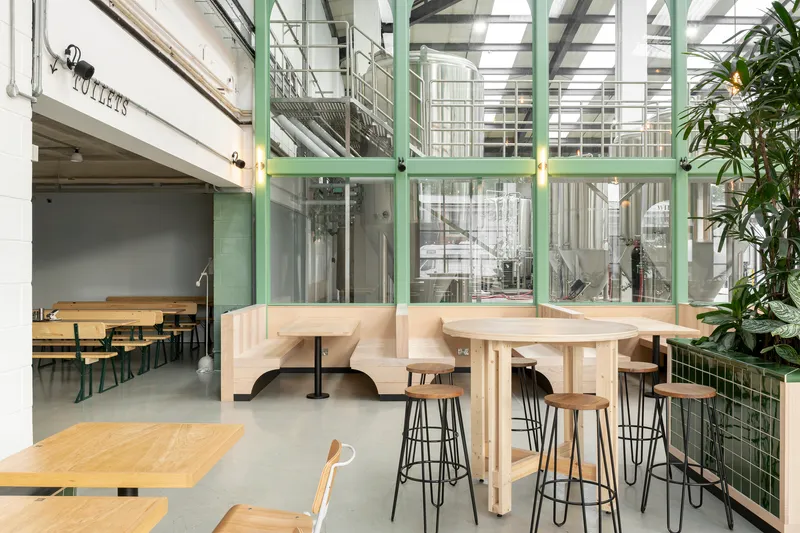
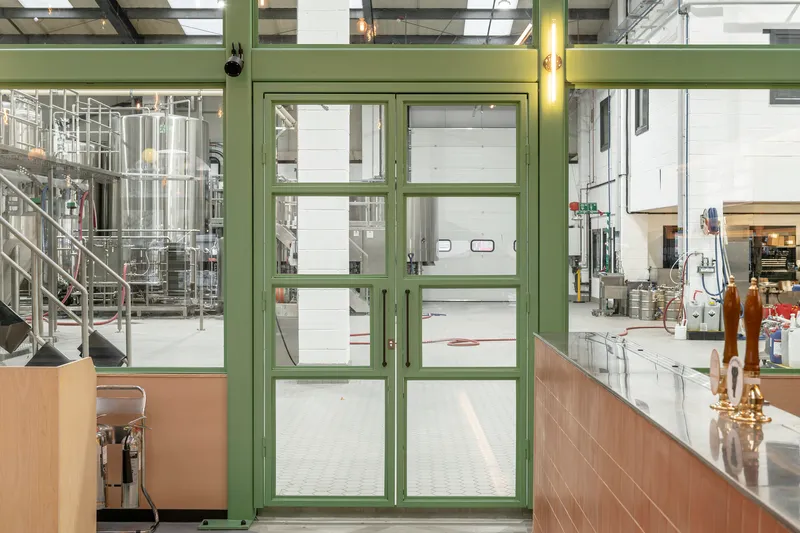
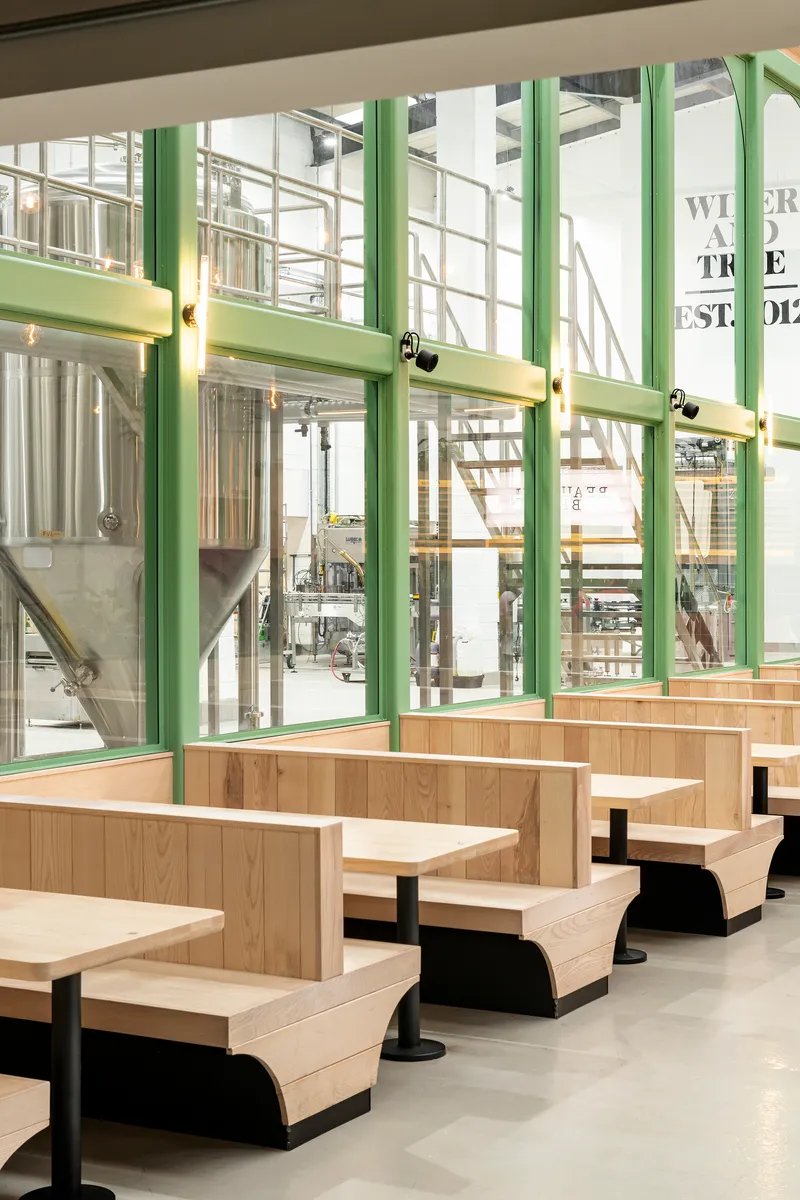
The defining architectural gesture is a single, decisive one. An 18-meter glass wall, gridded in mint green painted steel, slices the interior into two worlds: taproom on one side, brewery on the other. Rather than treating production as back-of-house, Studio B made it the focal point. Customers seated in the pale timber booths look directly through the glazing at towering stainless steel tanks, hoses, and gauges. The effect is theatrical without being contrived.
The green steel framing does double duty. It establishes a color identity that runs through the entire project, from door frames to tile plinths, and it provides the structural rhythm for the glazed partition. The proportions are generous enough to feel like a window wall rather than a shopfront, which keeps the brewery side from reading as a display case.
The Bar as Centerpiece
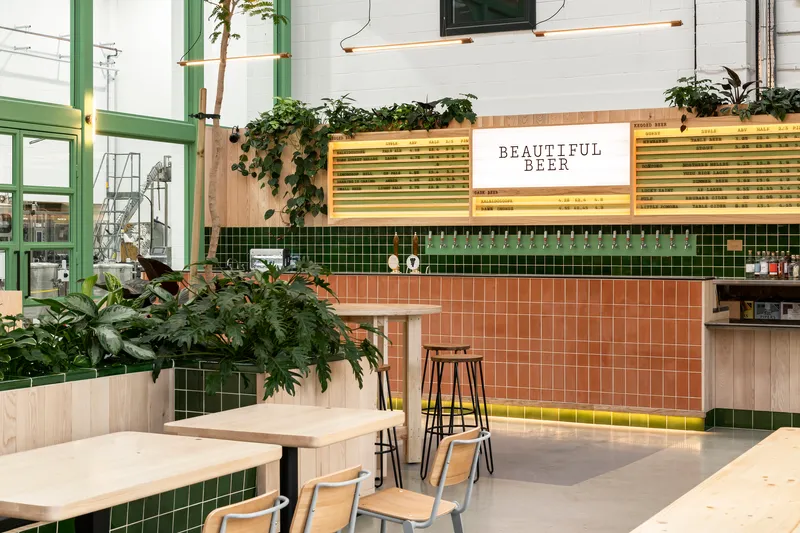
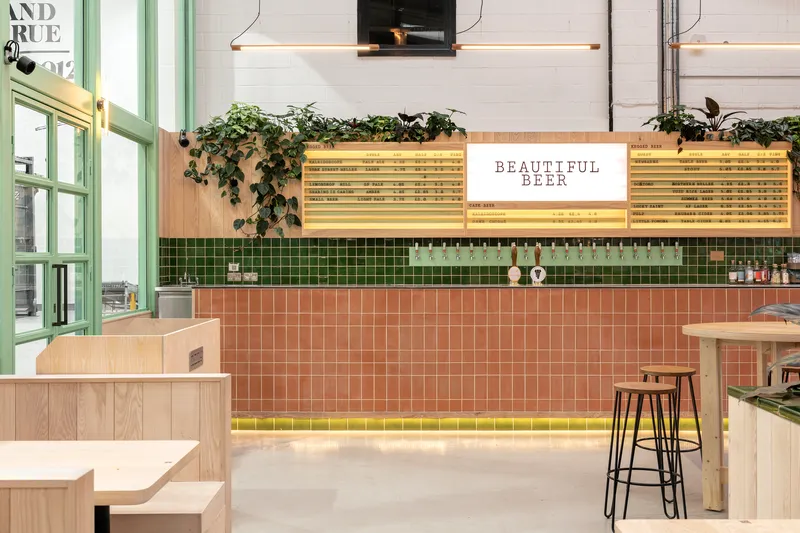
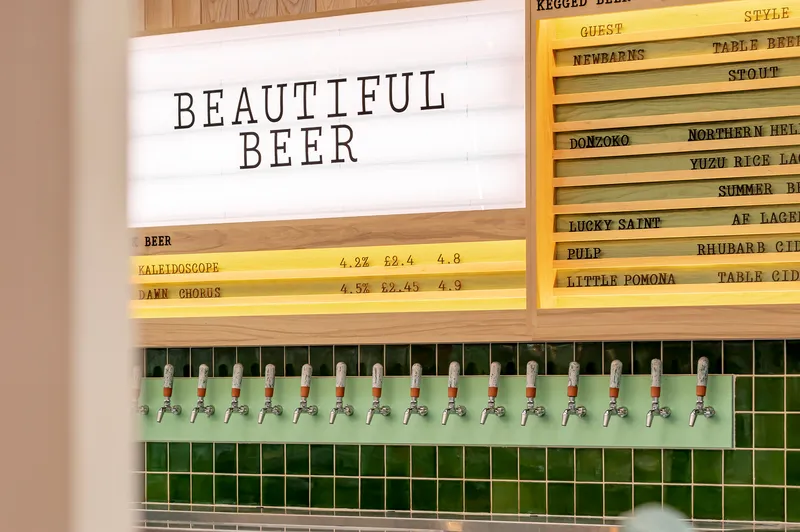
The bar counter is clad in a patchwork of terracotta and green tiles, topped by timber-framed signage and cascading plants from overhead planter boxes. It reads as the social anchor of the space: the thing you orient toward when you walk in. Chrome beer taps are set into a wall of green square tiles beneath backlit menu boards, giving the tap wall a clean, almost galley-kitchen precision.
Studio B resisted the temptation to over-design. The lettering is simple, the lighting is warm filament bulbs, and the planters do the heavy lifting in terms of visual texture. The countertops, fabricated by Chroma Sparks, are robust without being brutalist. It is a bar that wants to be leaned on, not photographed from a distance.
Timber Booths and Biophilic Layering
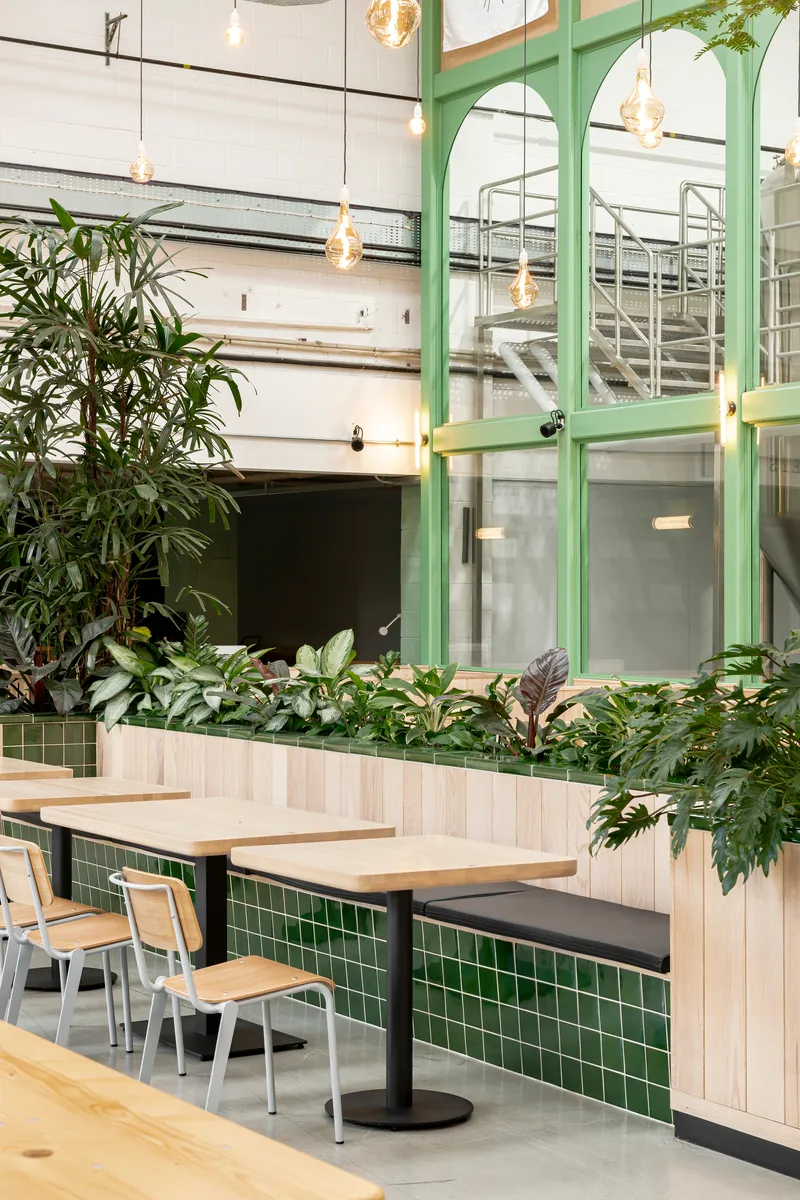
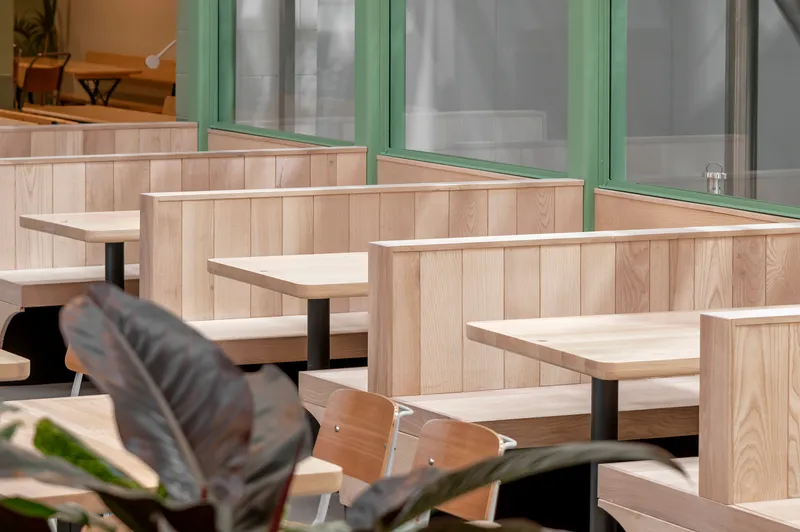
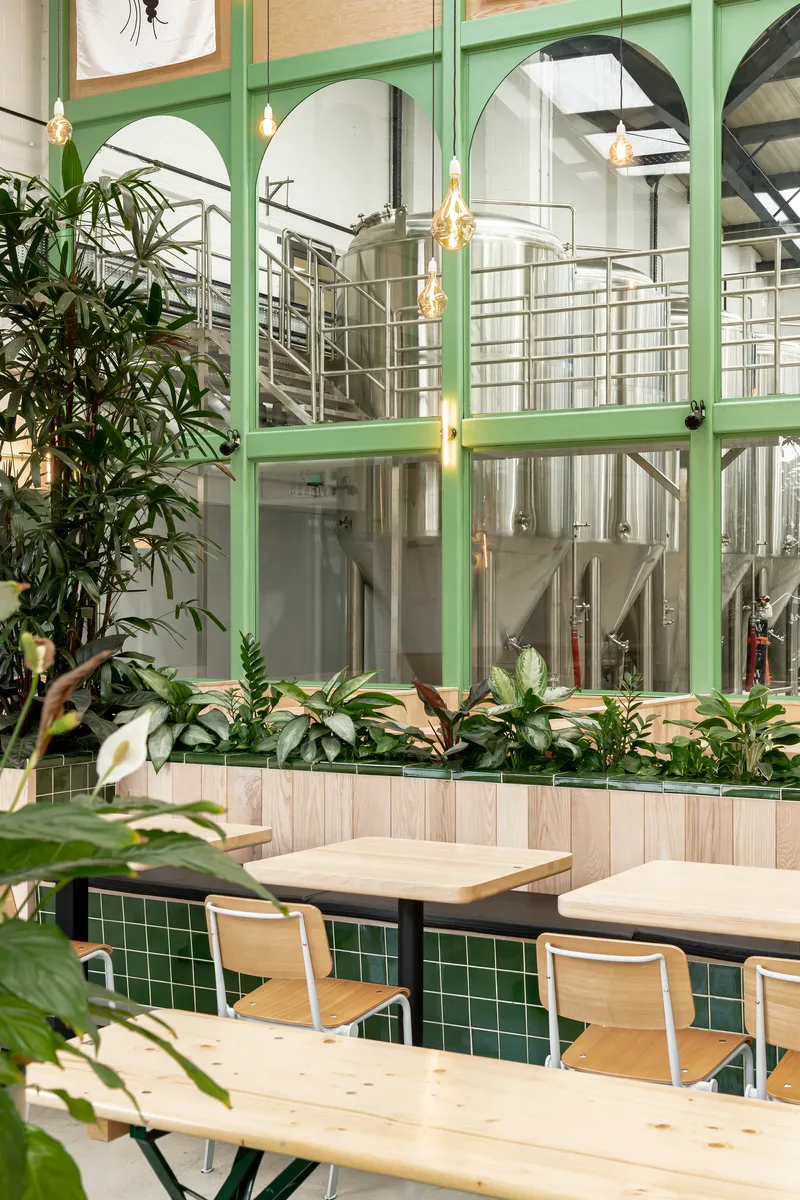
All the carpentry uses locally sourced ash, and it shows in the consistent pale warmth of the booths, tables, and vertical paneling. The booth seating runs in a long row against the glass partition, each unit capped with fixed tabletops and flanked by trailing plants. Green tile plinths anchor the furniture to the floor and tie back to the steel framing above.
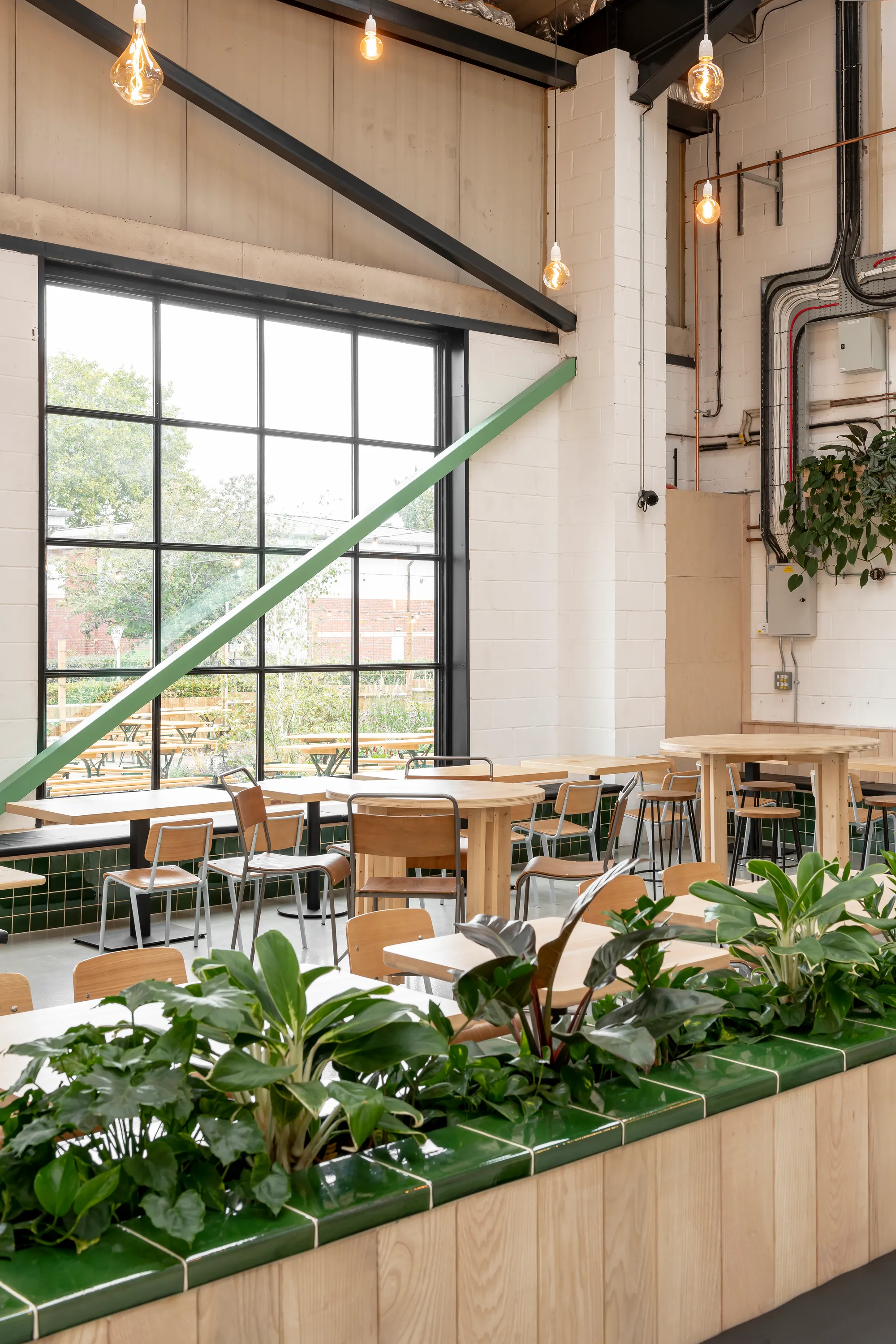
The biophilic strategy here is restrained but effective. Giant tile-covered planters spill greenery over tables and bar alike, creating what the designers describe as a sheltered, green oasis. The plants soften the hard industrial surfaces without disguising them. Painted brick, exposed concrete columns, and corrugated metal walls remain visible, establishing an honest material palette that the vegetation simply inhabits.
Light and Volume
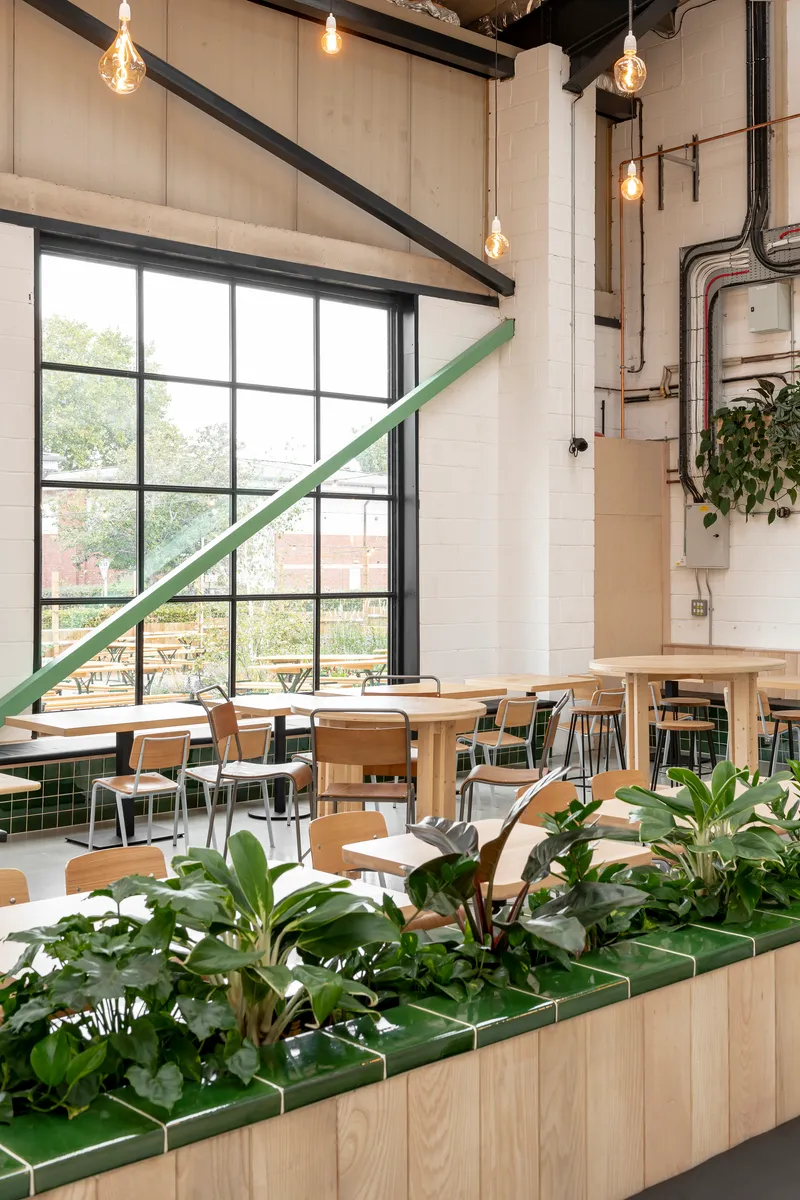
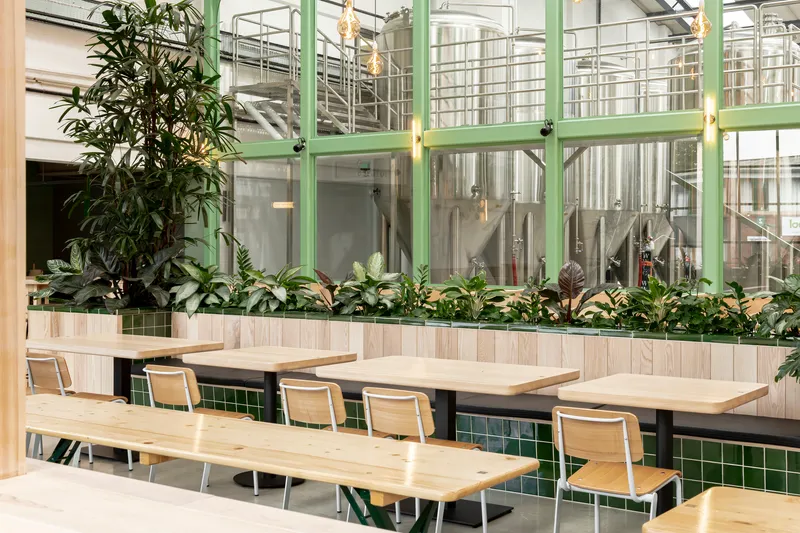
Two new openings were cut into the existing industrial shell specifically to flood the interior with natural light. The result is a double-height dining space where large gridded windows throw daylight across concrete columns and planted booth dividers. For a converted industrial unit tucked into a car park near Temple Meads station, the sense of openness is unexpected.
The long timber tables and benches in the main hall benefit most from this move. Seated here, you are simultaneously aware of the ceiling height overhead, the steel brewing vessels behind glass, and the raised planter beds that break up the sight lines. It is a carefully calibrated balance between intimacy and openness, keeping a 5,000-square-foot room from feeling either cavernous or claustrophobic.
Thresholds and Details
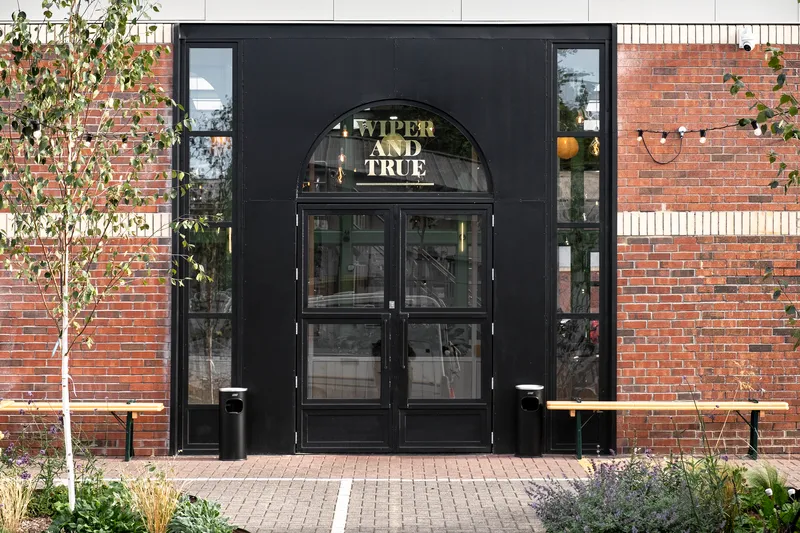
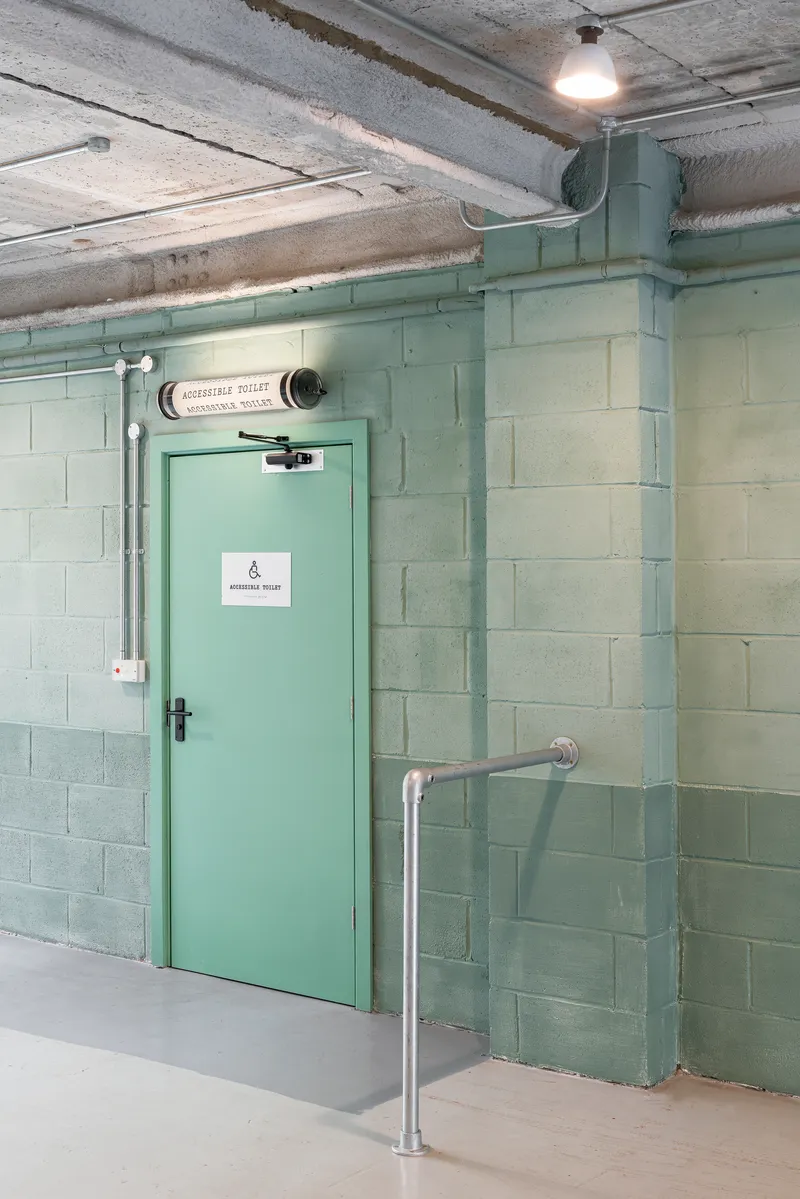
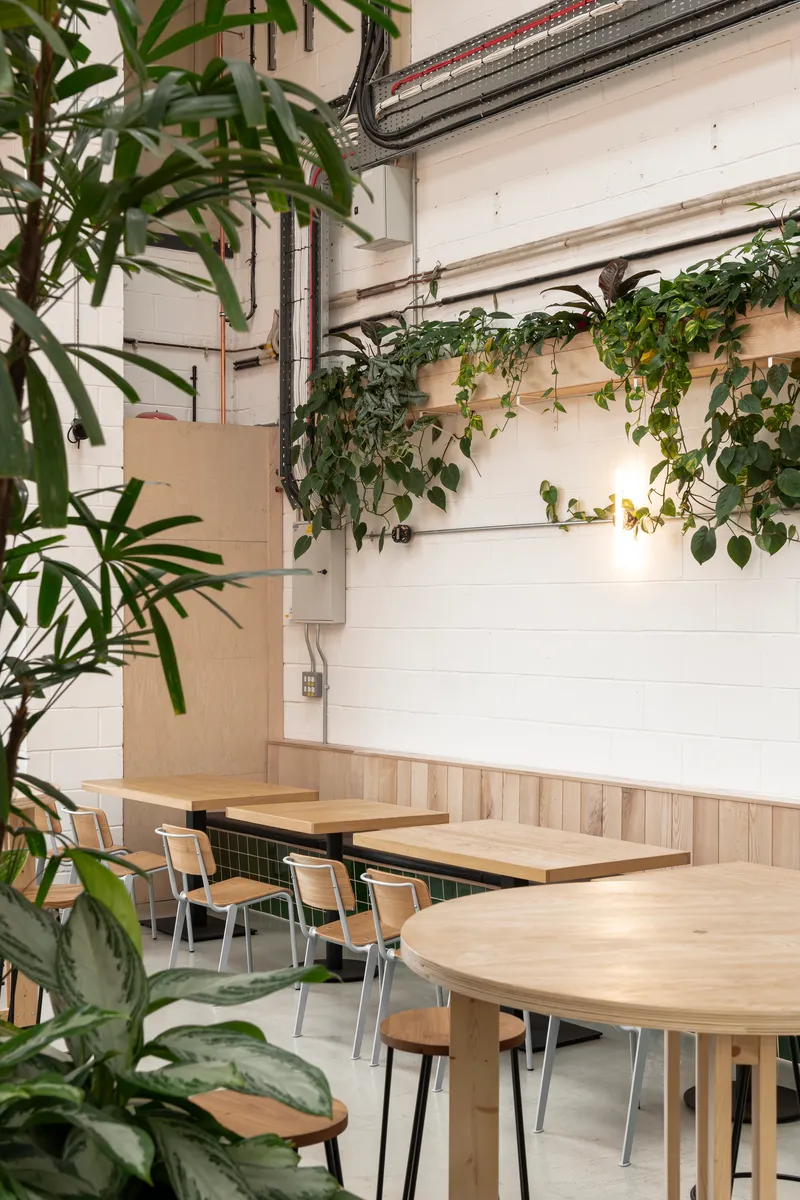
The entrance announces the project's industrial vocabulary plainly: black metal doors with an arched transom sit within a dark frame against original red brick. It is an insertion, not a renovation, and the contrast between old masonry and new metalwork makes that legible. Elsewhere, a mint green steel door with exposed conduit against concrete block walls shows the same logic carried deeper into the plan, where the architecture does not relax into generic finishes.
Corner seating nooks with round timber tables and trailing plants mounted on white corrugated metal walls demonstrate the project's attention to incidental spaces. These are not afterthoughts. They receive the same material rigor as the main hall, which is what gives the taproom its sense of completeness.
The Outdoor Room and Restrooms
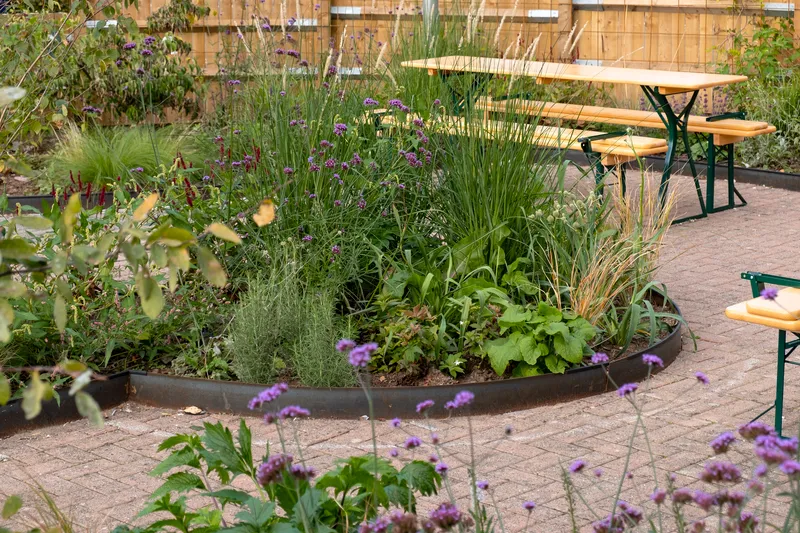
The 7,000-square-foot outdoor space more than matches the taproom in ambition. Circular planted beds hold ornamental grasses and purple flowering plants on a paved courtyard beside folding wooden tables. The planting is deliberate, not decorative, and it extends the biophilic sensibility outdoors where it arguably matters less but signals the project's consistency.
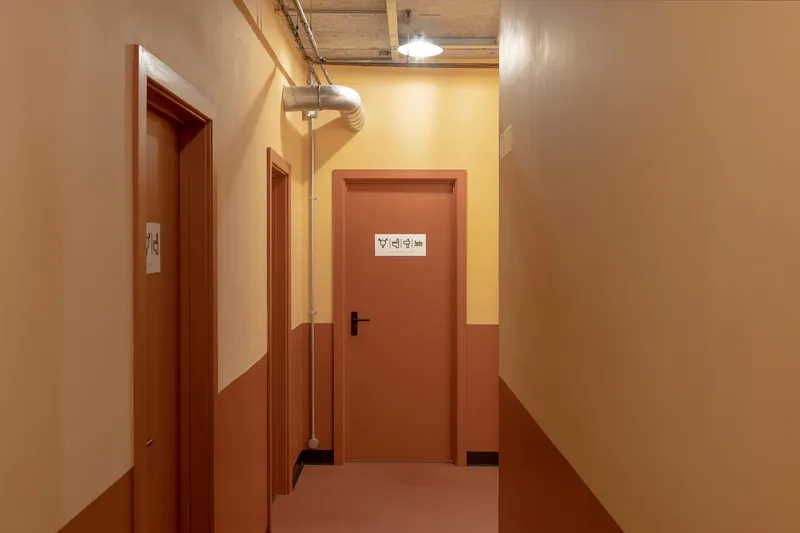
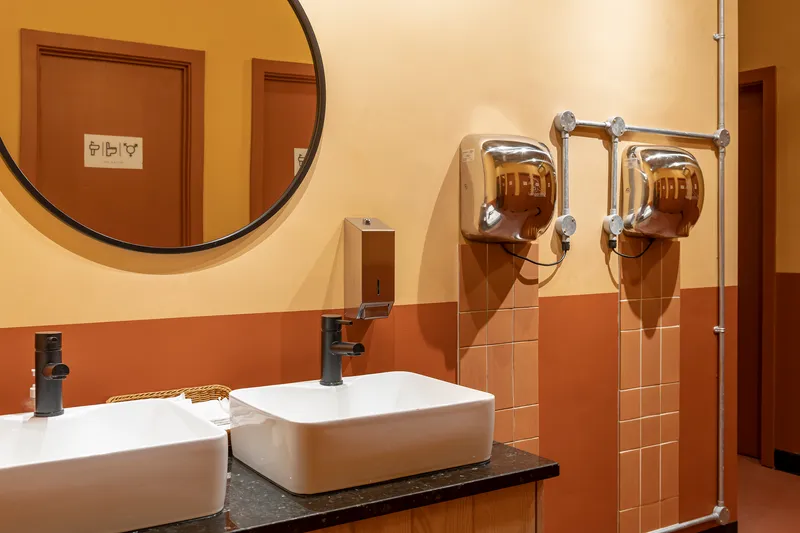
Inside, even the unisex restrooms are resolved. Terracotta tiled walls, twin white basins, and chrome hand dryers sit beneath exposed services in a corridor that transitions through terracotta and cream painted walls. Studio B clearly understood that an inclusive, welcoming design means every room has to hold up, not just the ones people post online.
Plans and Drawings
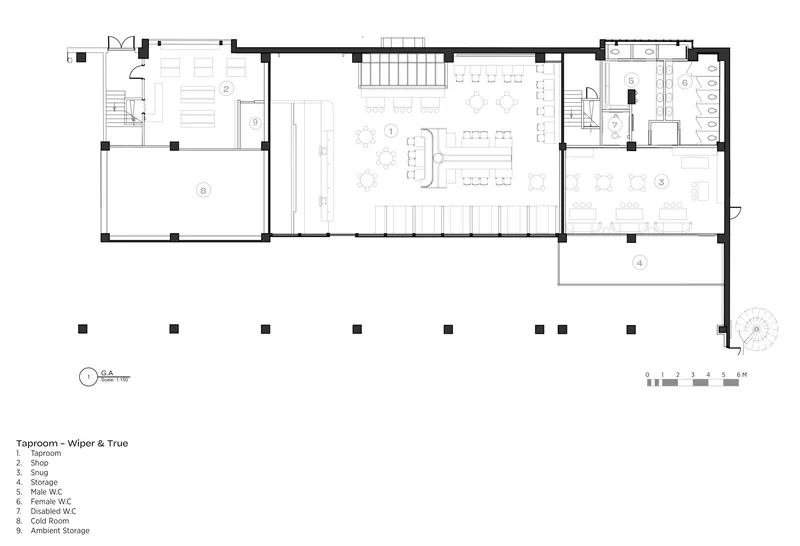
The floor plan reveals the organizational logic behind the experience. A central bar anchors the composition, flanked by dining zones on one side and support spaces, including offices, warehousing, and distribution facilities, on the other. The 18-meter glass wall reads clearly as the primary spatial device, running the full depth of the plan and separating the public taproom from the production line. Restrooms, staff areas, and back-of-house functions are tucked to the periphery, keeping the main volume unobstructed.
Why This Project Matters
The Wiper and True Taproom represents a maturing of brewery design. Instead of relying on the usual palette of reclaimed timber, Edison bulbs, and chalkboard menus to signal authenticity, Studio B built authenticity into the supply chain itself. A 30-mile sourcing radius, local fabricators, and a closed-loop carbon capture system are not design flourishes. They are structural commitments that happen to produce a space with genuine material coherence.
More broadly, the project demonstrates that transparency, both literal and ethical, can be a legitimate design strategy. The glass wall that puts fermentation tanks on view also puts the brewery's confidence in its own process on view. That willingness to show the work, in materials, in environmental systems, in spatial organization, is what separates this taproom from the hundreds of interchangeable craft beer venues that have opened across British cities in recent years. It is a brewery that knows what it is, and an architecture that does not pretend otherwise.
Wiper and True Taproom & Brewery, designed by Studio B, Old Market, Bristol, United Kingdom. 5,000 sq ft taproom with 7,000 sq ft outdoor space. Completed 2022. Photography by Pete Helme.
About the Studio
Studio B
Share Your Own Work on uni.xyz
If projects like this are the kind of work you want to make, uni.xyz is a place to publish your own, find collaborators, and enter design competitions.




Popular Articles
Popular articles from the community

Vaissnavi Shukl Wraps a Single-Storey Ahmedabad Home Around a Courtyard That Breathes
Malhaar Residence uses perforated brick, translucent canopies, and an L-shaped plan to turn a quiet suburban plot into an inward world.


The Memory of World: Skyscraper Architecture as a Vertical Exhibition of Human Civilization
A vertical museum in Hong Kong transforms skyscraper architecture into a journey through six eras of humanity, nature, memory, and progress.
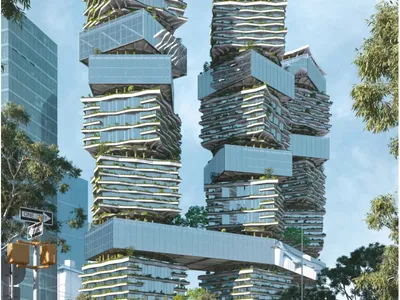
Hierarchy Towers: Sustainable Architecture for Vertical Co-Living in Singapore
Hierarchy Towers reimagines sustainable architecture through co-living, shared workplaces, green terraces, and new public life in Singapore.
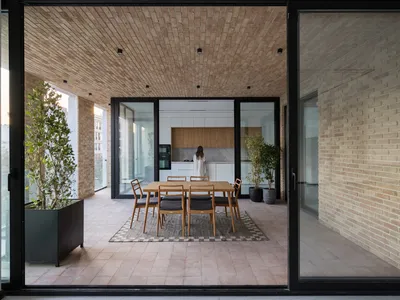
DIM Architecture Studio Revives the Iranian Courtyard Inside a Mashhad Apartment Building
A 2,500-square-meter mid-rise infill project reinterprets the traditional hashti and central courtyard within the dense urban fabric of Mashhad, Iran.


Similar Reads
You might also enjoy these articles
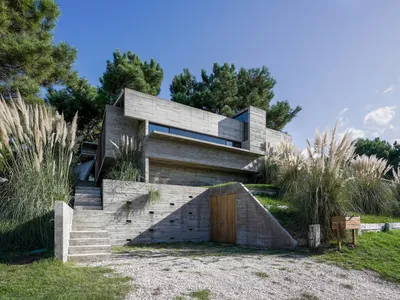
Loma House by Besonias Almeida Arquitectos: Modern Coastal Living in Costa Esmeralda
Loma House by Besonias Almeida Arquitectos is a modern coastal home in Costa Esmeralda, blending exposed concrete, wood, and natural dunes.
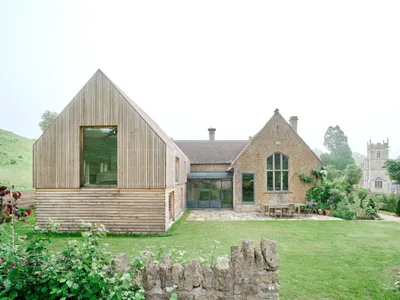
“Pitcombe’s Old School House Renovation by Bindloss Dawes: Blending Heritage and Contemporary Design”
Bindloss Dawes transformed Pitcombe’s 19th-century Somerset schoolhouse with a sustainable timber extension, blending historic charm, contemporary design, and panoramic countryside views.
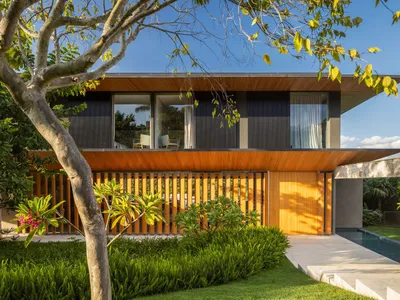
F3 Residence by Belluzzo Martinhão Arquitetos: Contemporary Luxury in São Paulo’s Countryside
F3 Residence in São Paulo blends contemporary design, natural materials, multigenerational living, hillside integration, expansive glass, infinity pool, and seamless indoor-outdoor flow.
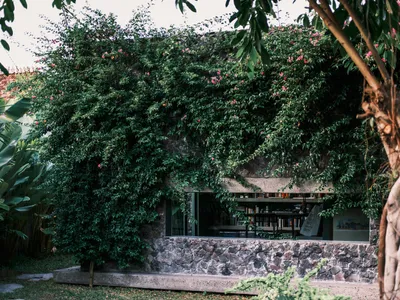
Private Villa in Ubud by BAMM ARCHITECTS: Contemporary Design Amidst Bali’s Jungle
Private Villa in Ubud blends contemporary design with tropical landscape, featuring open-air pavilion, stone and wood materials, suspended master bedroom, and jungle pool views.






Comments (0)
Please login or sign up to add comments
No comments yet. Be the first to comment!