
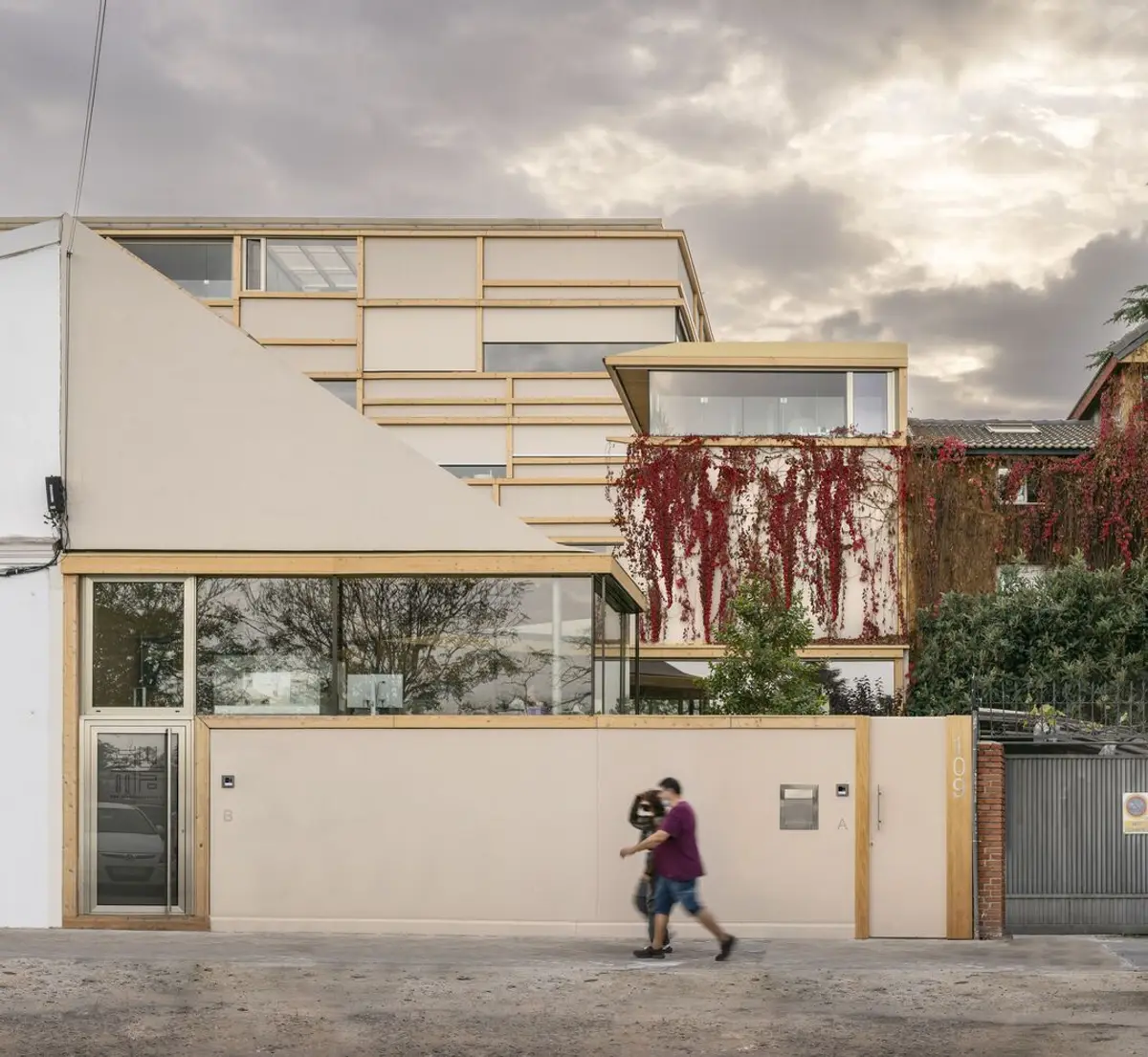
Studio&Home SUMA / SUMA Arquitectura – Optimized Design in Compact Urban Contexts
Compact Madrid home and studio maximize limited space with timber volumes, pergola courtyard, multi-level layout, natural light, and Nordic-Japanese design.


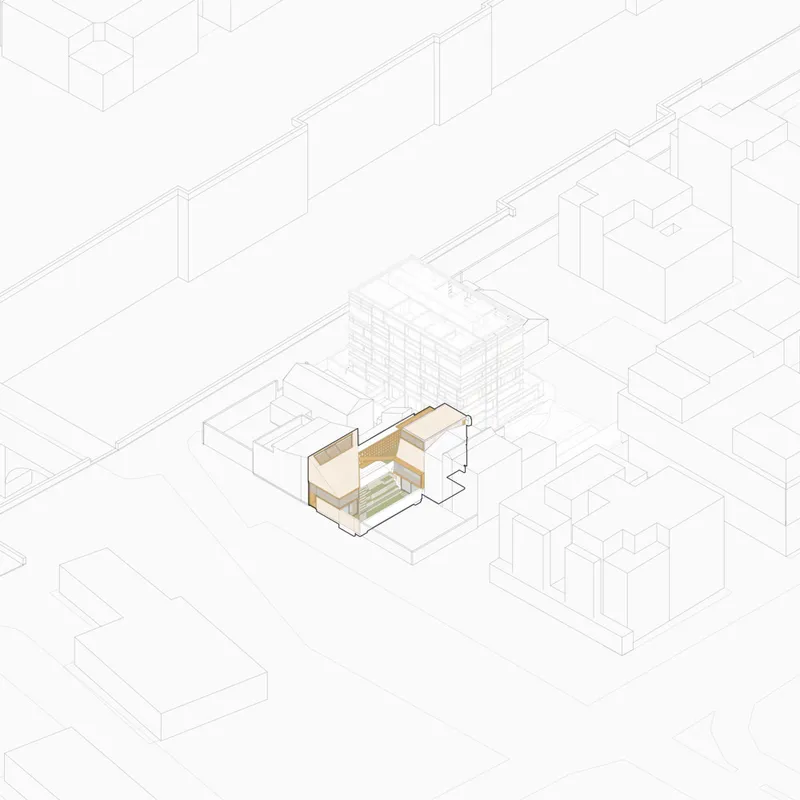
Studio&Home SUMA is an innovative residential and studio project, part of the Our-Shelves-Houses promotion in Madrid. With a compact plot of just 115 m², the design showcases ingenuity and spatial optimization, creating a highly functional and visually engaging home despite strict urban constraints.
Design Concept
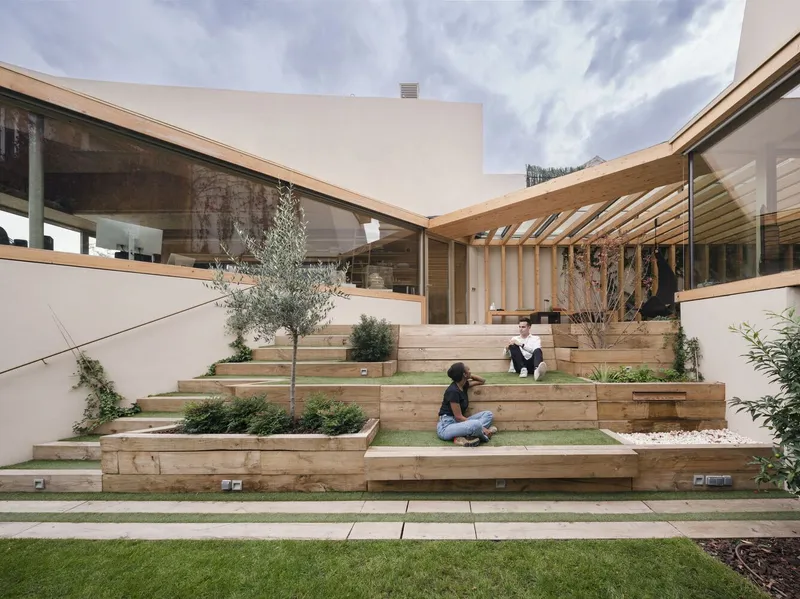
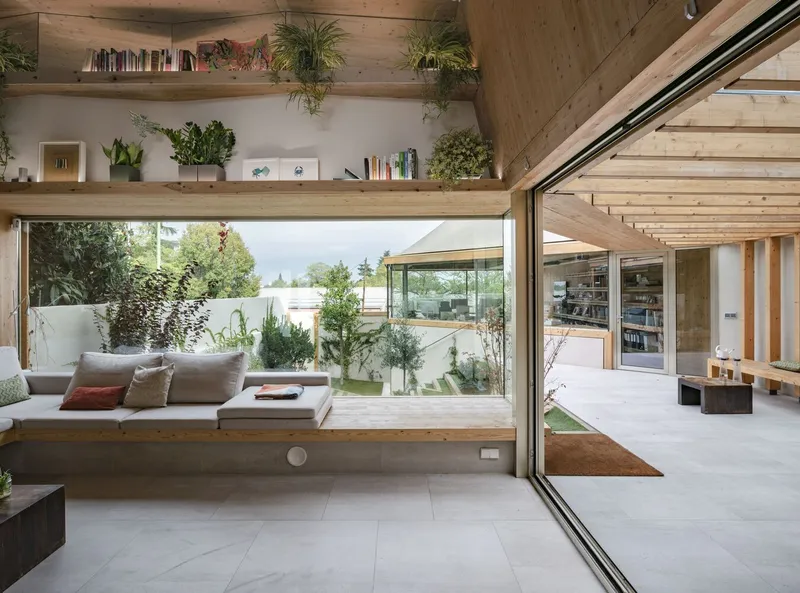
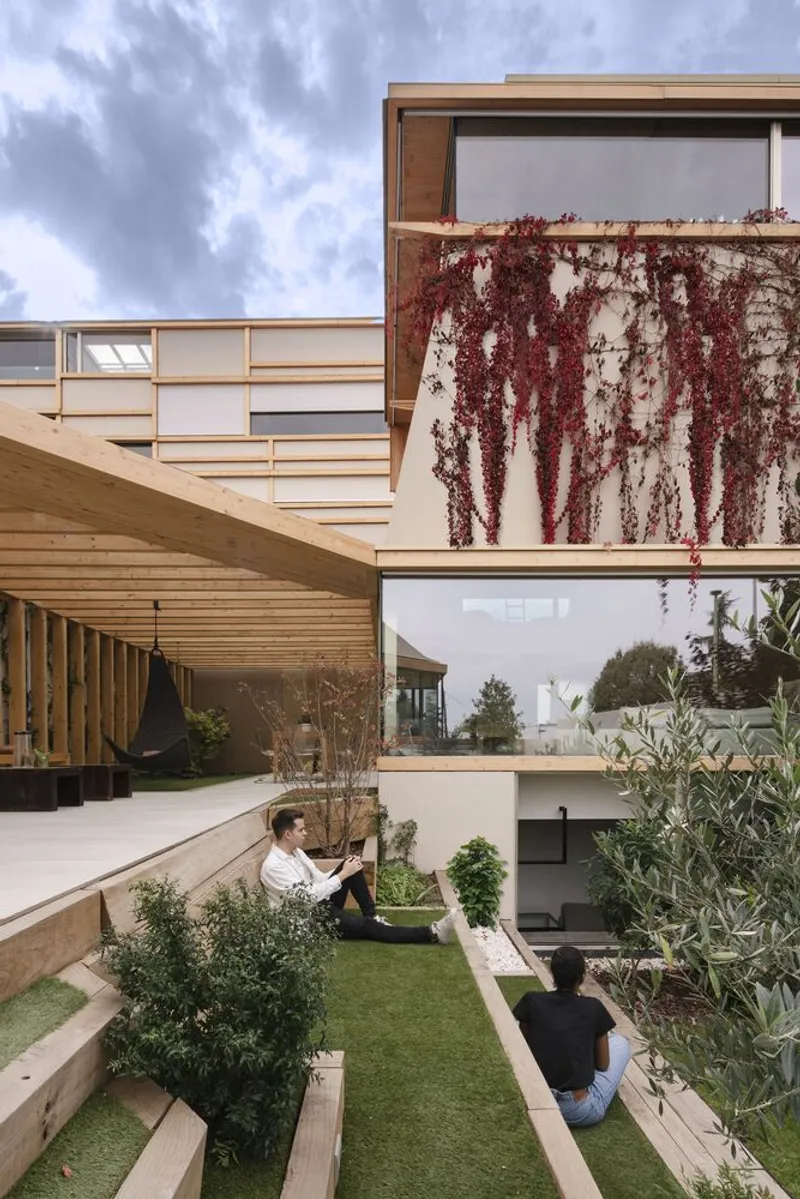
The project is organized into two volumes, attached to existing median walls and connected by a pergola, which embraces a central interior garden. This configuration not only enhances privacy but also protects the home from highway noise. Elevated ground-floor terraces (+1.50 m) provide scenic views while maintaining seclusion, and carefully designed gaps introduce natural light to semi-buried rooms.
Spatial Strategy
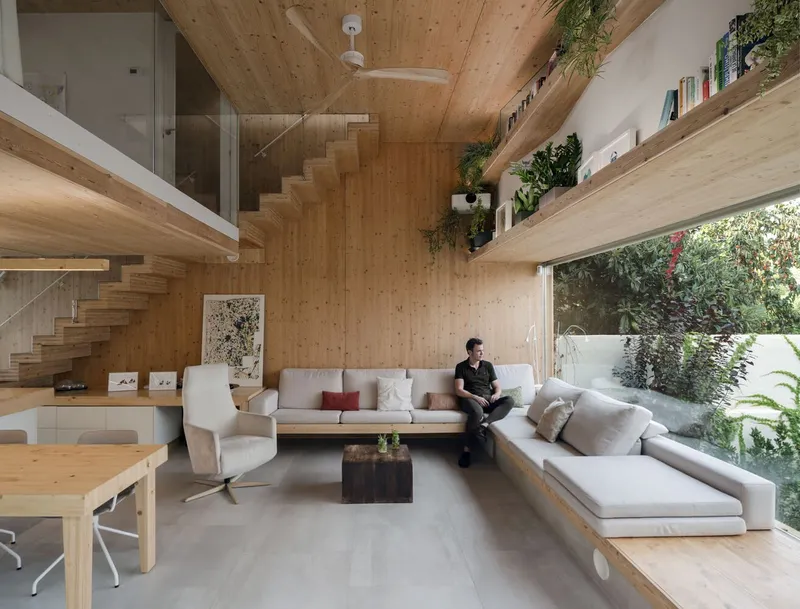
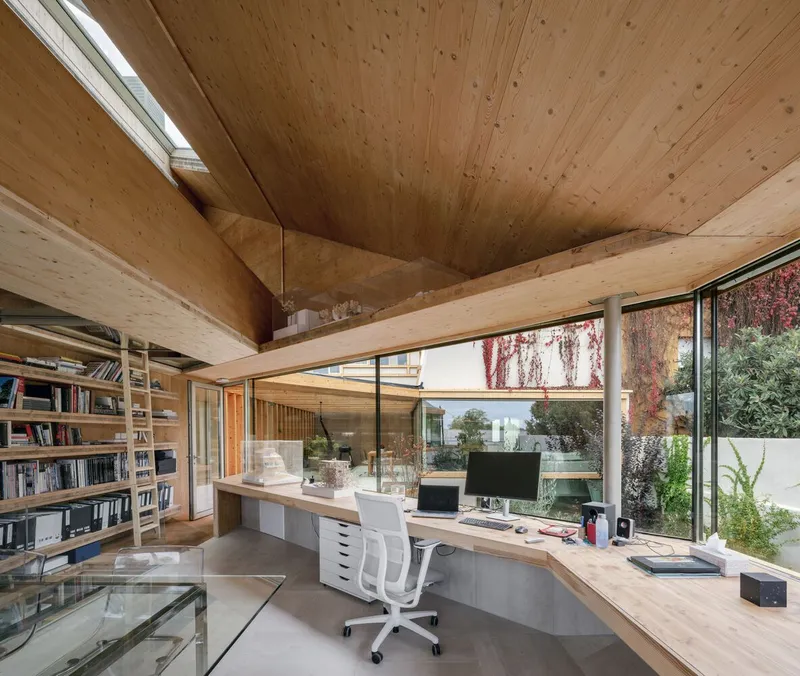
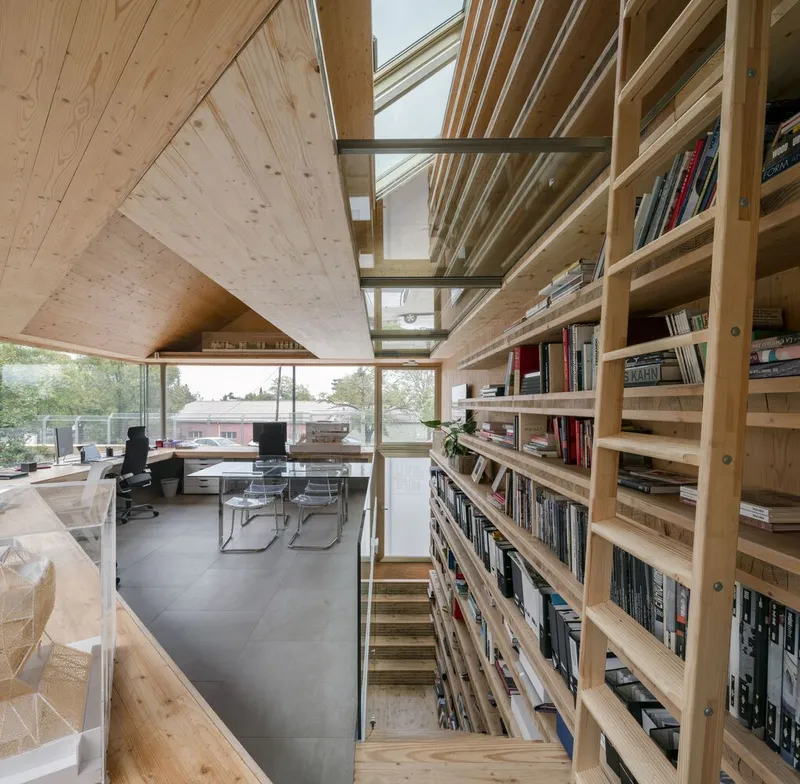
Sloping facades and roofs align with urban planning requirements while responding to the challenging interior program. Multi-level volumes maximize space through visual connections, light wells, and strategic gaps, creating a sense of openness and spatial continuity. The house features four floors and multiple intermediate levels, exceeding the neighboring three-story building, with stairs doubling as circulation and functional surfaces to minimize corridor use.
Materials & Construction
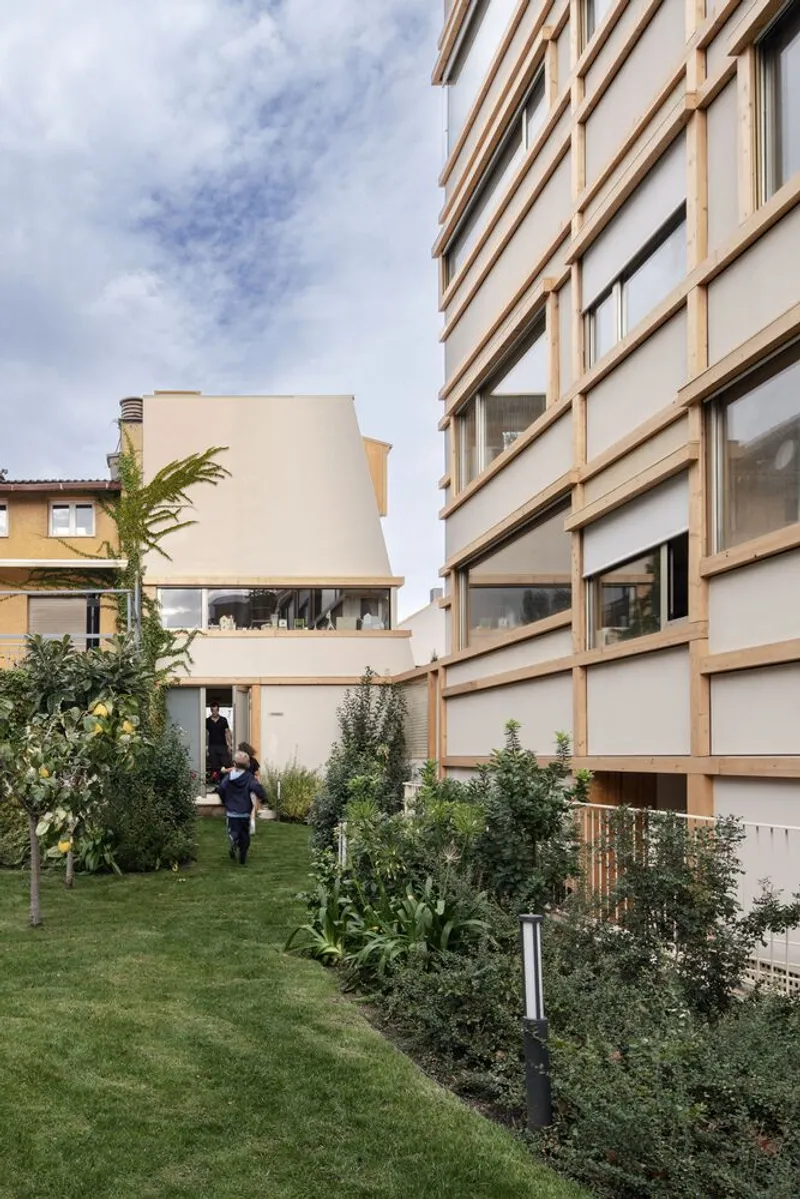
The structure combines a reinforced concrete foundation with above-ground laminated red spruce wood walls. Two median walls integrate insulation and service ducts, while 5-layer laminated wood stairs are suspended from upper-floor slabs, punctuated by discreet metal supports and glass enclosures. Exterior finishes blend cement panels and treated coniferous wood, resulting in a Nordic-inspired aesthetic that harmonizes pragmatism, warmth, and abundant natural light.
Architectural Influences
Studio&Home SUMA draws from Nordic minimalism, emphasizing natural wood, light-filled interiors, and functional living. Japanese architectural principles influence spatial chaining, visual connectivity, and fluid circulation, creating an intimate yet expansive domestic experience.


Popular Articles
Popular articles from the community

Manzana Morphosis: Stretching Barcelona's Grid into a Living Landscape for 2050
A radical reworking of the Eixample manzana turns density into a tool for generous public space, vertical ecology, and environmental performance.
Extended Shell: Retrofitting Kolkata's Balconies as Living Urban Thresholds
A modular retrofit system recovers the social and environmental intelligence of Kolkata's historic verandas for contemporary Park Street residents.

Temporary Home for Dogs: A Reversed Zoo Rethinks Animal Shelter Architecture
In Bucharest, a sinuous corridor and freed landscape flip the logic of containment, designing a shelter that works to make itself unnecessary.

Opera by the Sea Estonia: Three Shells Dissolving Architecture into Tallinn's Coastline
A winning opera house proposal replaces monumental form with interconnected shells that blur the boundary between building, park and Baltic Sea.

Similar Reads
You might also enjoy these articles


Hodi-Mandai Geram
Project Function: Preservation and revitalization of the Intangible heritage and socio-spatial identity of the Hodi by Housing, Cultural Memory Center, Sacred Grove, landscape, local tourism economy


Olio Towers: A Mid-Rise for Performers That Fuses Housing, Rehearsal, and Stage
Located blocks from Houston's Theater District, this modular tower stacks living units around a central performance atrium.

Oasis: Modular Green Housing Carved into Dhaka's Urban Fabric
A shortlisted Plugin Housing entry reclaims unauthorized settlements in Dhaka with stepped concrete volumes, green roofs, and ventilation-driven design.

Black Hole: A Floating Megastructure for the Post-Physical Era
Emiliano Mazzarotto envisions a spherical, self-scaling arena where e-sports, digital hotels, and holographic stadiums replace traditional public space.

Explore Spatial & Interior Design Competitions
Discover active competitions in this discipline

Challenge to reimagine the Iron Throne

Photograph architecture without architects

Illustrate the lost glory of Angkor Wat - Render Challenge

Design challenge to reuse E-waste
Comments (0)
Please login or sign up to add comments
No comments yet. Be the first to comment!