
Subterranean Ruins by A Threshold: A Sustainable Retreat Blending with Nature
A sustainable retreat integrating architecture and nature, using locally sourced materials, passive cooling, rainwater harvesting, and community-driven craftsmanship in Kaggalipura.


A Harmonious Fusion of Architecture and Landscape in Kaggalipura, India
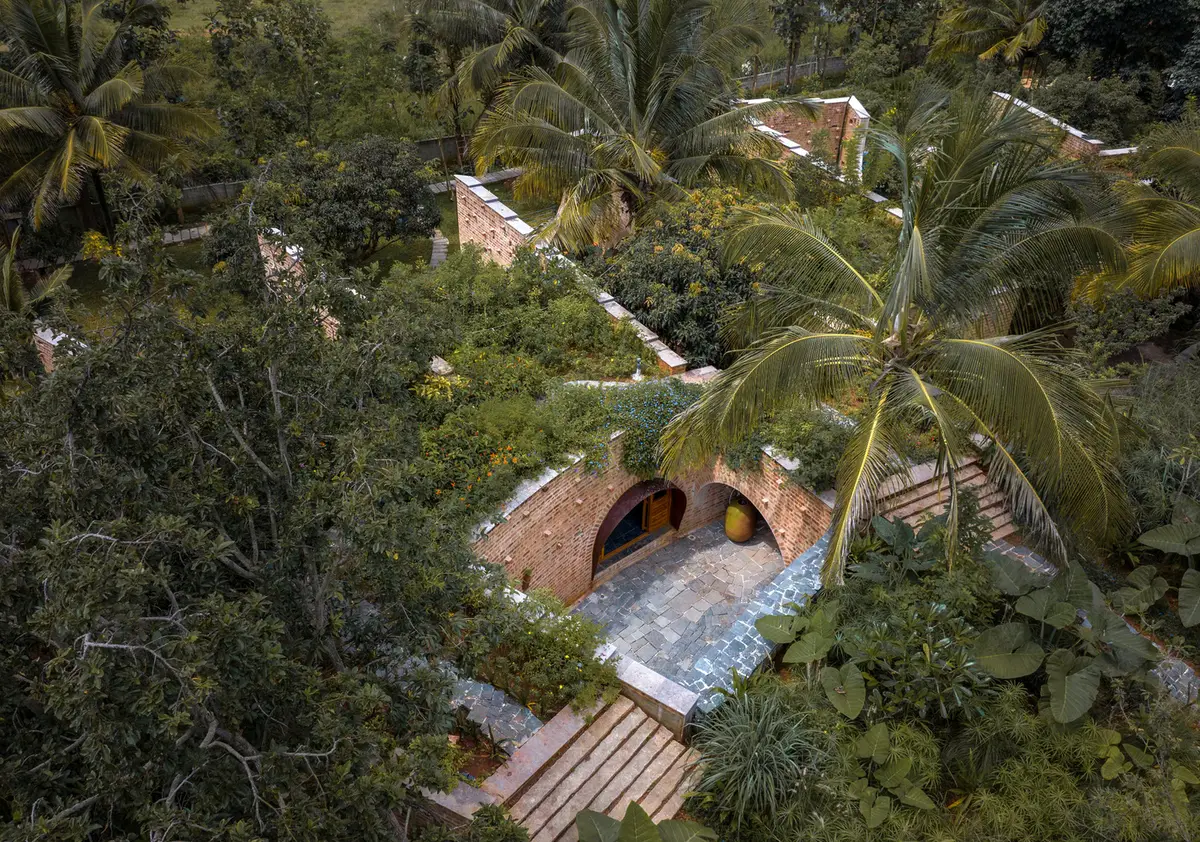
Nestled in the lush farmland of Kaggalipura, a small town 40 kilometers south of Bengaluru, Subterranean Ruins byA Threshold is a visionary architectural intervention that seamlessly integrates built forms with the natural landscape. Designed as a multifunctional retreat, the project reimagines ruins as living spaces, using locally sourced materials and traditional construction techniques. The result is a structure that is both sustainable and deeply rooted in its surroundings.
Site and Landscape Integration
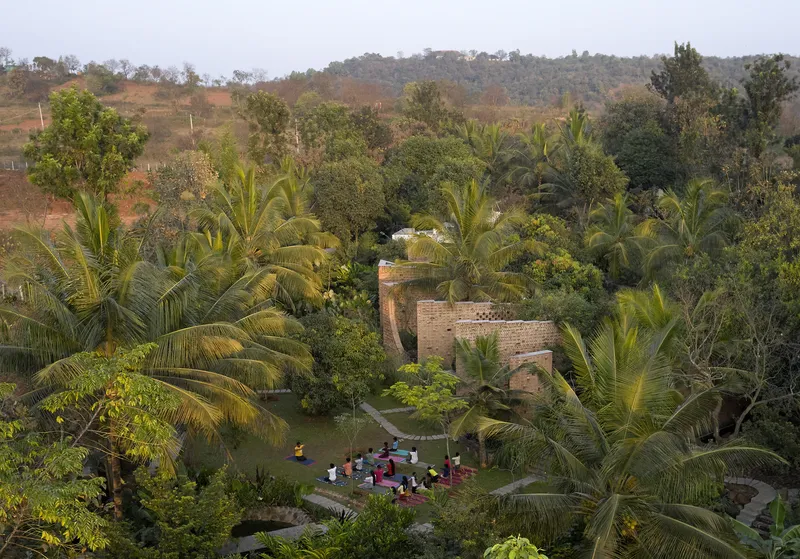
The 3-acre site is a thriving fruit orchard featuring mango, sapota, banana, coconut, butter fruit, and jackfruit trees. The topography, characterized by a gentle slope with a steep four-meter drop, provided an opportunity to embed the structure within the land with minimal excavation. This approach not only preserves the natural terrain but also enhances passive cooling by reducing direct solar exposure on the southern façade while maximizing natural light on the northern side.
Additionally, a rainwater harvesting system has been incorporated to support the existing farming practices, ensuring long-term sustainability. The rooftops, covered with soil and vegetation, further enhance thermal insulation and offer opportunities for small-scale farming, reinforcing the project's ecological ethos.


Design Concept: Modern Ruins in Harmony with Nature
Inspired by the concept of subterranean caves and ancient ruins, the architecture embraces an unfinished aesthetic that allows the structure to blend seamlessly with the landscape. Designed around existing trees, the spaces evolve organically over time, becoming a part of nature rather than imposing upon it.
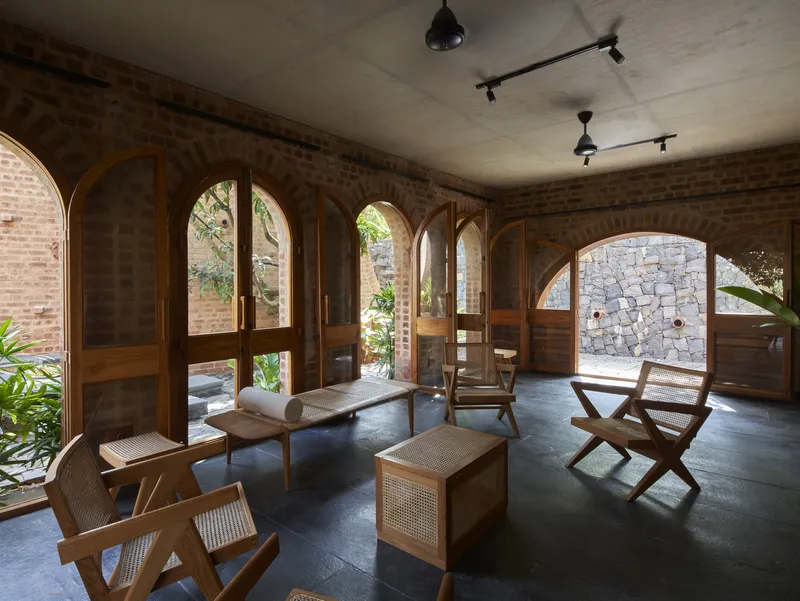
The layout consists of a network of enclosed and open spaces, allowing for flexibility in use. The primary built elements are sunken into the earth, forming shaded courtyards, passageways, and multifunctional enclosures. This built-unbuilt synergy fosters a dynamic environment where activities can spill over between indoor and outdoor spaces.

Locally Sourced Materials and Sustainable Construction
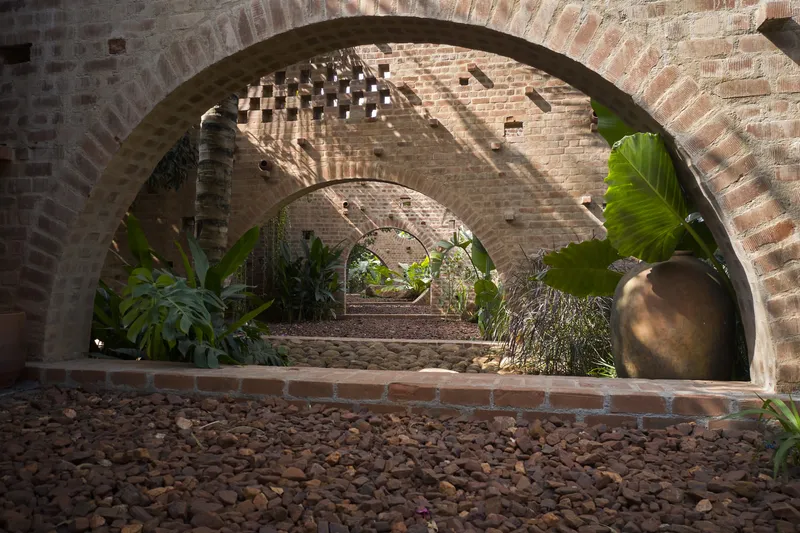
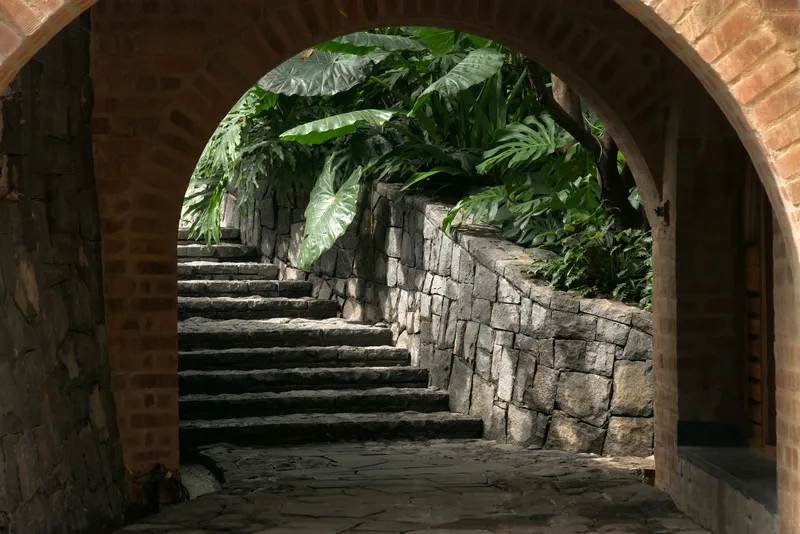
Sustainability is at the core of the project. All materials are locally sourced to reduce the carbon footprint and support the regional economy. Large boulders excavated from the site were repurposed for retaining walls, while smaller stones and pebbles were used for courtyard flooring. Bricks were sourced from nearby kilns in their raw, unfinished form, preserving their natural texture and robustness.
The structure employs a traditional load-bearing construction technique, using minimal concrete and lime-mixed mortar to bind the bricks. The decision to keep the walls exposed without plaster not only enhances the rustic aesthetic but also reduces material consumption and maintenance requirements.
Local artisans, masons, and craftspeople from Kaggalipura were actively involved in the construction process, transforming the project into a community-driven initiative that promotes skill-sharing and economic upliftment.

A Flexible and Community-Oriented Space
Originally conceived as a weekend farmhouse, the project evolved into a versatile space that serves multiple functions, benefiting both the client and the local community. The interconnected caves and courtyards can be adapted for various uses, including:
- A homestay or retreat for visitors seeking an immersive natural experience
- A kindergarten or primary school for local children
- A community gathering space for village events and activities
- An artist residency where artisans can practice, teach, and showcase their crafts
The open courtyards act as flexible spillover spaces that can transition between different functions. For example, they can be used as classrooms during the day and performance areas or markets in the evening. The sunken passageways, lined with niches, serve as exhibition spaces for local crafts, promoting indigenous artistry.
Reimagining Sustainable Living
Subterranean Ruins is a testament to the power of architecture in fostering ecological harmony and social engagement. By embracing local materials, traditional craftsmanship, and a flexible spatial arrangement, the project offers a blueprint for sustainable and community-driven design. It challenges conventional notions of permanence, instead celebrating the evolving relationship between built environments and the natural world.


Popular Articles
Popular articles from the community

Temporary Home for Dogs: A Reversed Zoo Rethinks Animal Shelter Architecture
In Bucharest, a sinuous corridor and freed landscape flip the logic of containment, designing a shelter that works to make itself unnecessary.

The Amber Palace Opera: A Geological Fiction Surfaces on Tallinn's Baltic Waterfront
Pierre Brillard reimagines a Baltic legend as a public landscape, opera house, and waterfront promenade rooted in Tallinn's coastal identity.

Extended Shell: Retrofitting Kolkata's Balconies as Living Urban Thresholds
A modular retrofit system recovers the social and environmental intelligence of Kolkata's historic verandas for contemporary Park Street residents.

Tsunami Convergenics: Turning Catastrophic Ocean Forces into Underwater Housing Infrastructure
A speculative underwater settlement off the coast of Onagawa, Japan, treats tsunamis and typhoons as energy sources rather than threats.

Similar Reads
You might also enjoy these articles


Hodi-Mandai Geram
Project Function: Preservation and revitalization of the Intangible heritage and socio-spatial identity of the Hodi by Housing, Cultural Memory Center, Sacred Grove, landscape, local tourism economy


Olio Towers: A Mid-Rise for Performers That Fuses Housing, Rehearsal, and Stage
Located blocks from Houston's Theater District, this modular tower stacks living units around a central performance atrium.

Oasis: Modular Green Housing Carved into Dhaka's Urban Fabric
A shortlisted Plugin Housing entry reclaims unauthorized settlements in Dhaka with stepped concrete volumes, green roofs, and ventilation-driven design.

Black Hole: A Floating Megastructure for the Post-Physical Era
Emiliano Mazzarotto envisions a spherical, self-scaling arena where e-sports, digital hotels, and holographic stadiums replace traditional public space.

Explore Recycled Ruin Competitions
Discover active competitions in this discipline

Challenge to reimagine the Iron Throne

Photograph architecture without architects

Illustrate the lost glory of Angkor Wat - Render Challenge

Design challenge to reuse E-waste
Comments (0)
Please login or sign up to add comments
No comments yet. Be the first to comment!