
Sunner Museum by Atelier Alter Architects: A Landmark in Agricultural Museum Architecture
An ecological and architectural landmark redefining agricultural museum architecture through landscape integration, sustainability, and public engagement in Fujian.


Introduction to Sunner Museum’s Vision
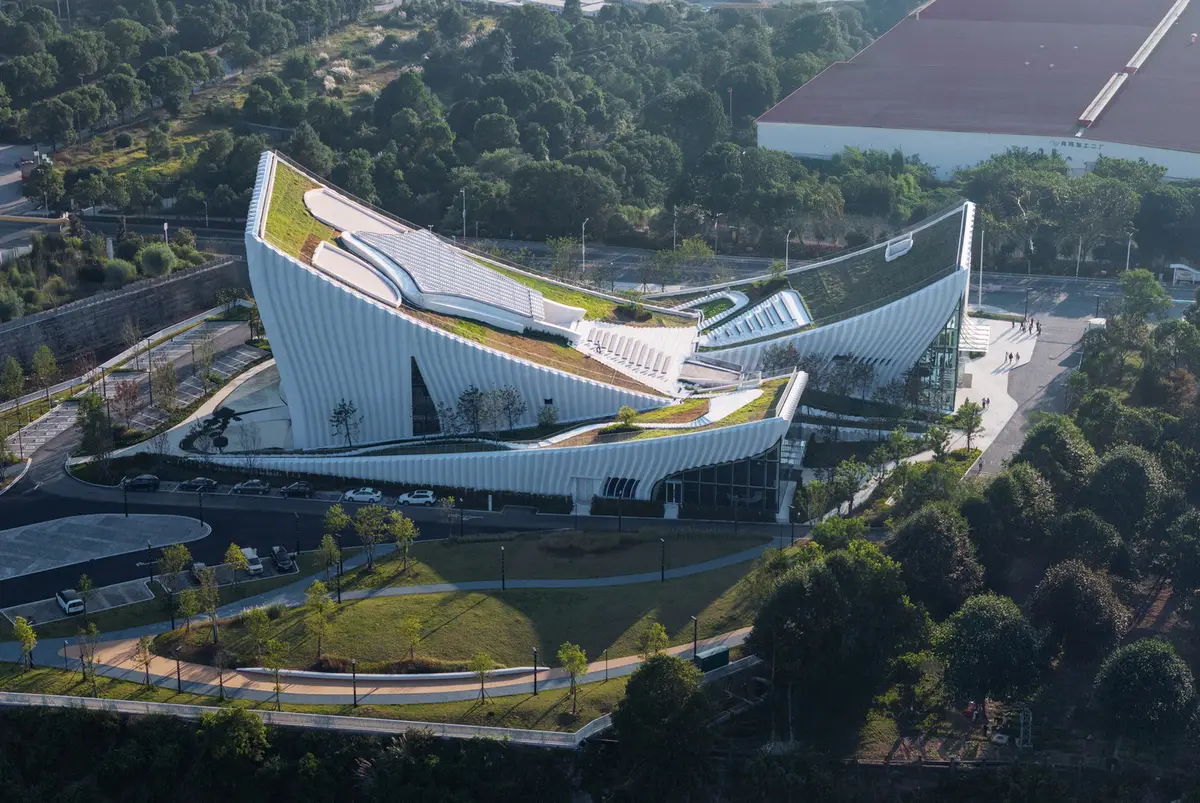
Located in the lush ecological landscape of Guangze County in Nanping, Fujian Province, the Sunner Museum, designed by Atelier Alter Architects, stands as a powerful narrative of agricultural museum architecture. Commissioned by the Sunner Group—China’s leader in white-feathered broiler chicken production—the museum encapsulates the firm’s four-decade legacy in agricultural innovation while serving as a dynamic platform for industry exchange and ecological education.
Architectural Design Inspired by Nature
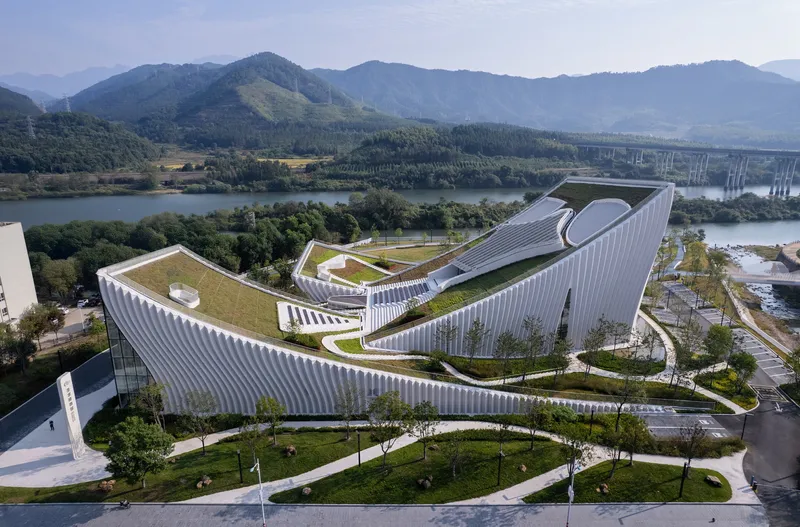
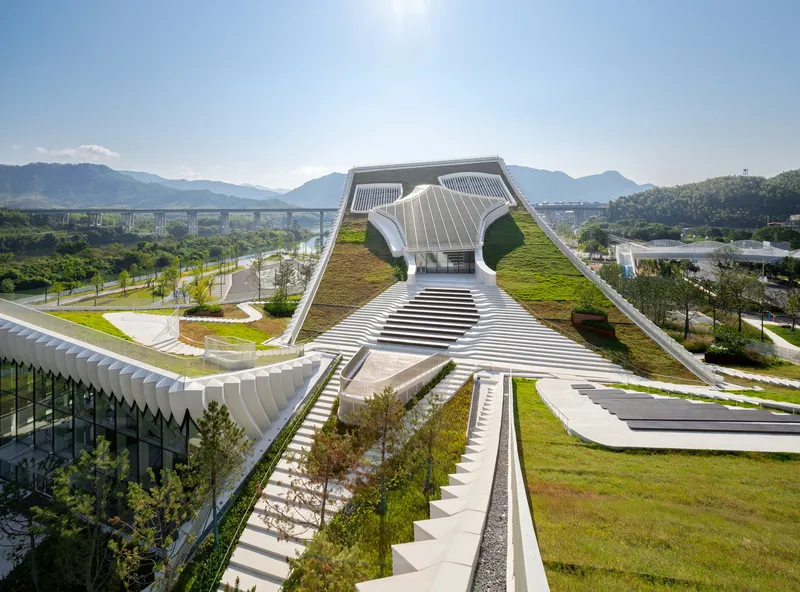
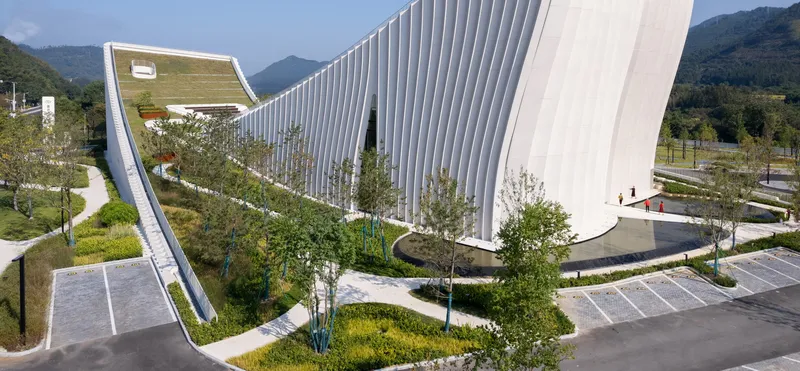
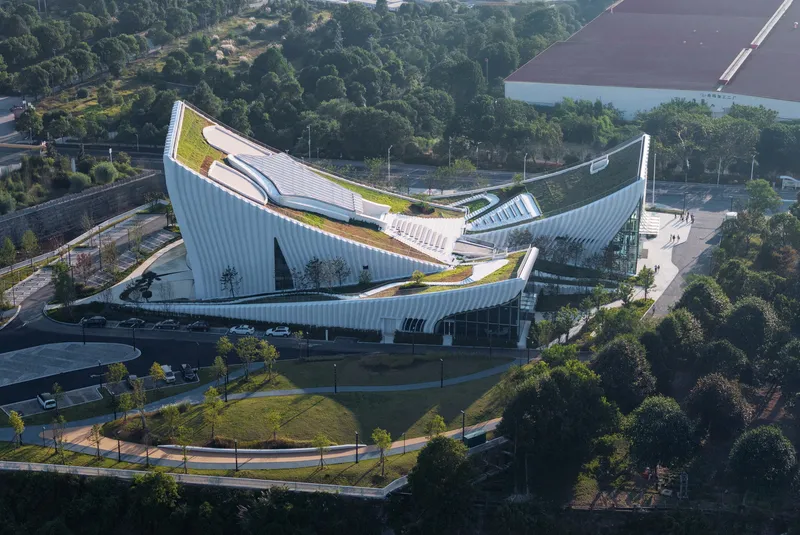
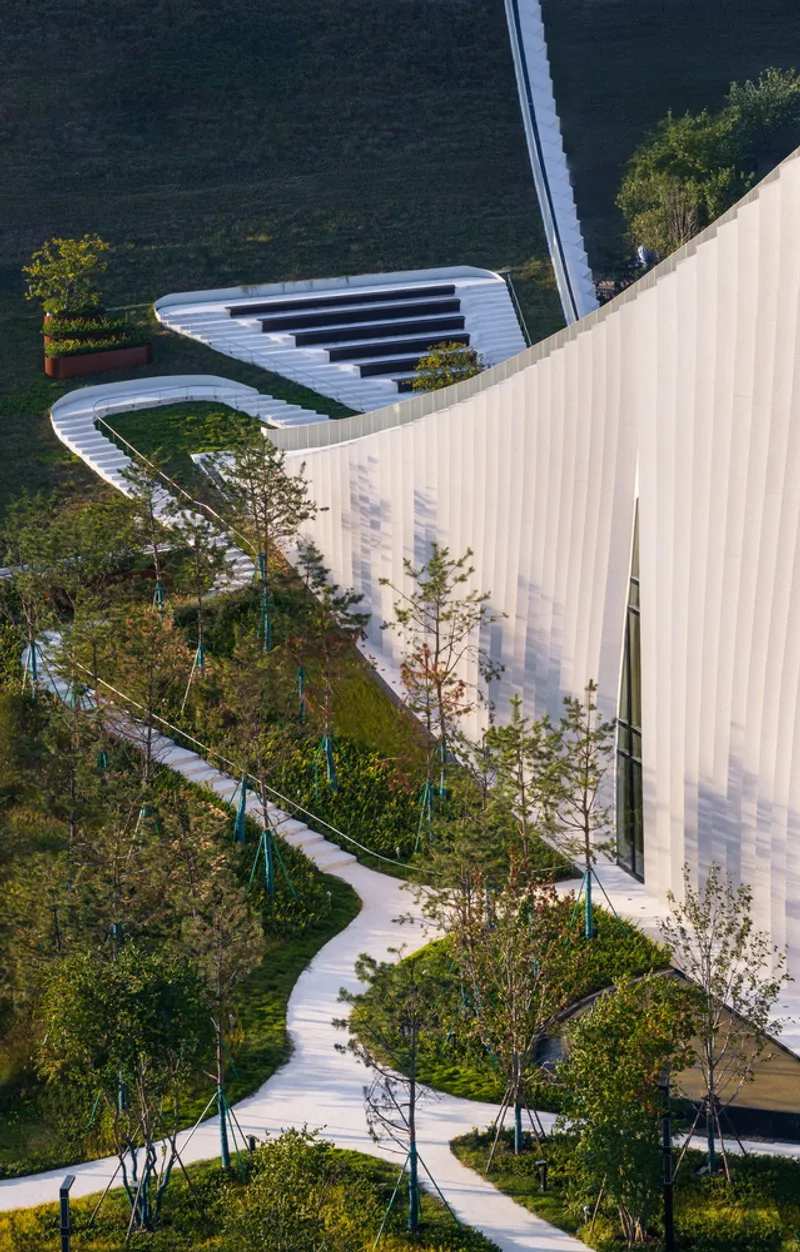
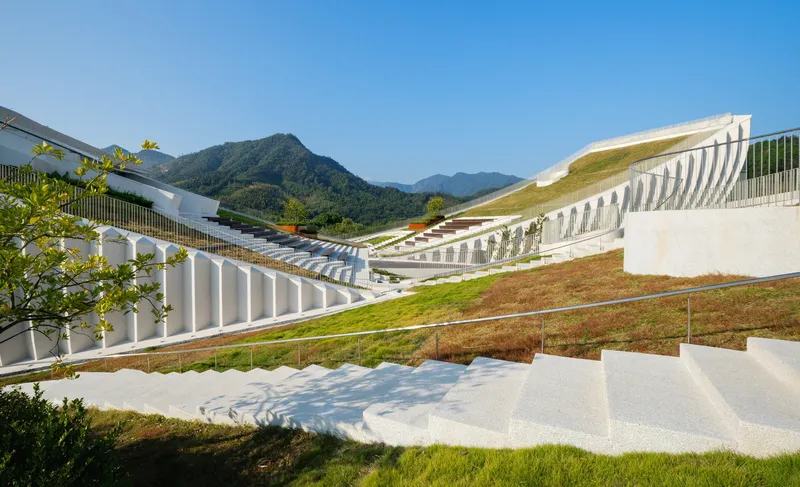
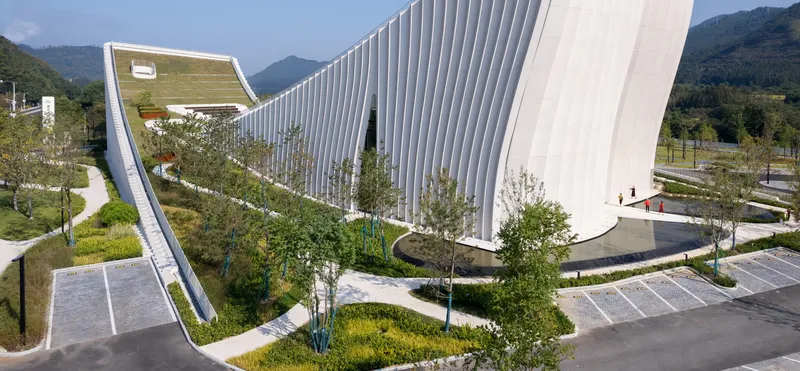
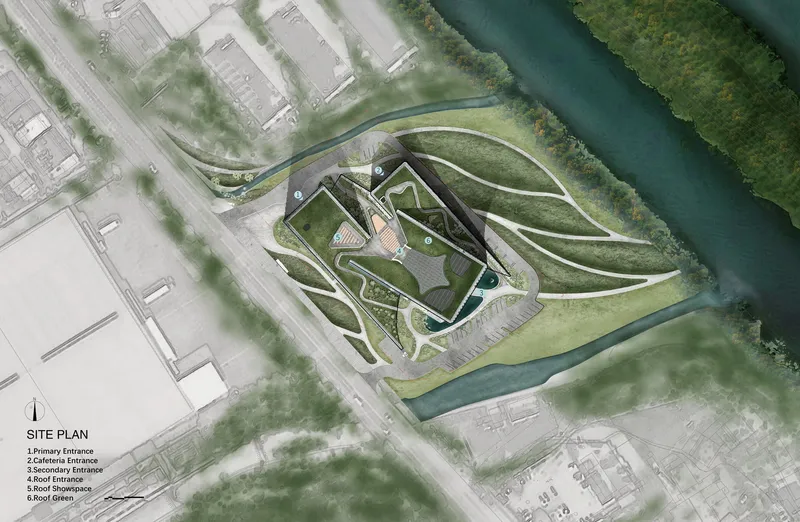
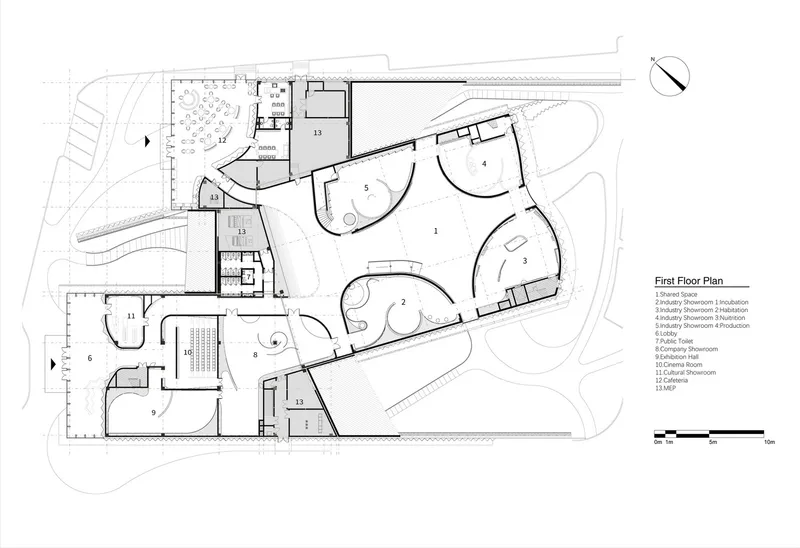
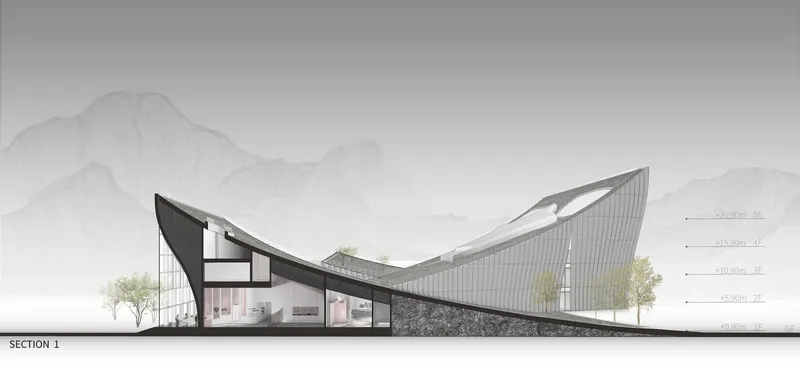
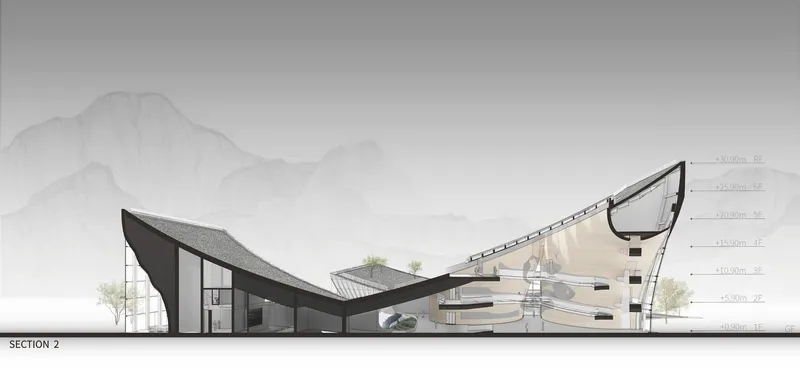
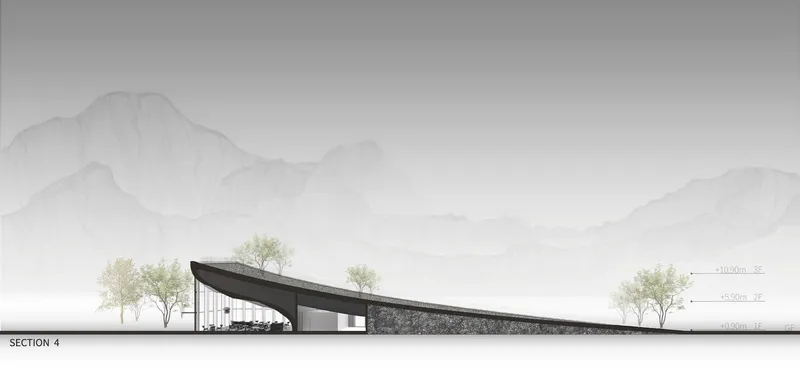
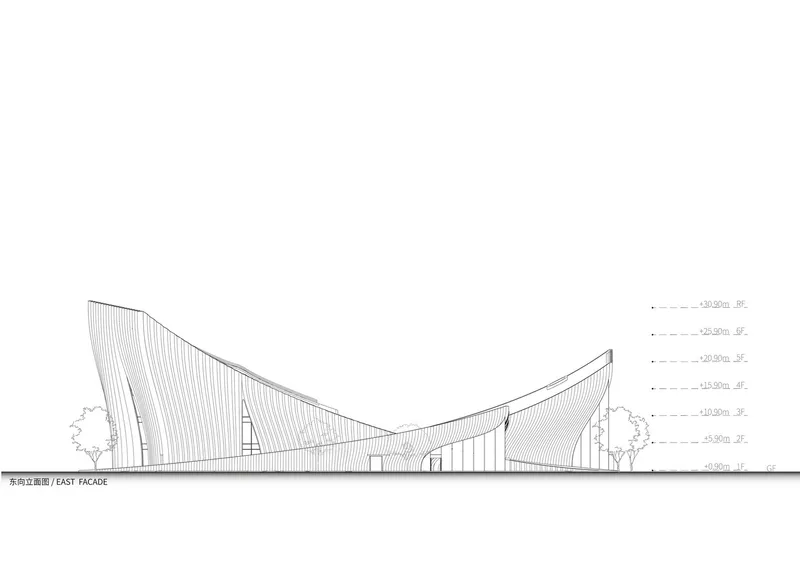
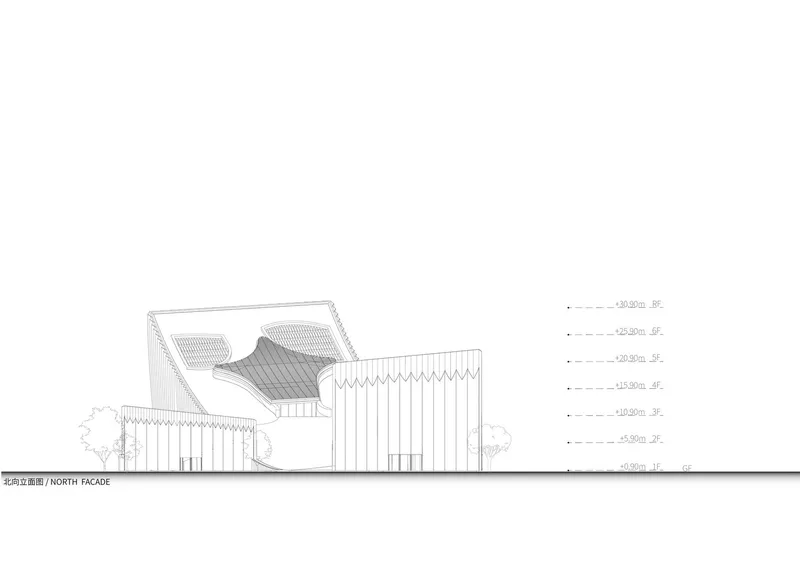
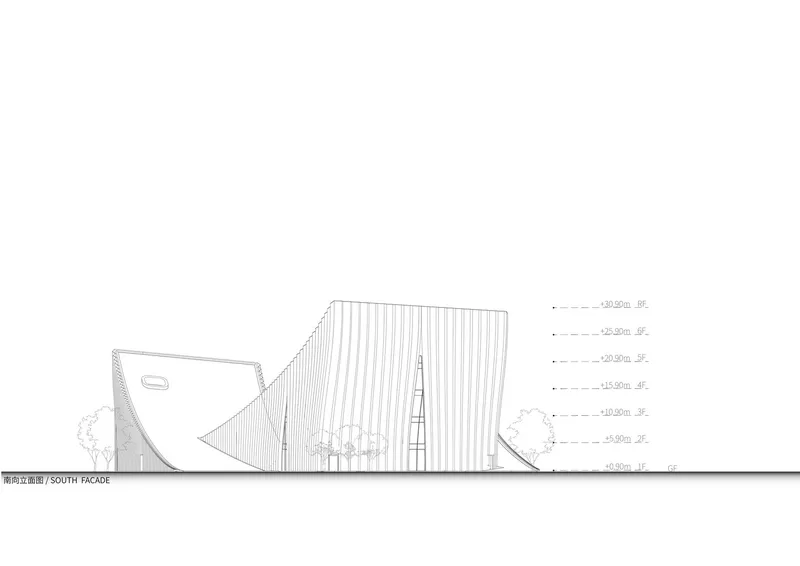
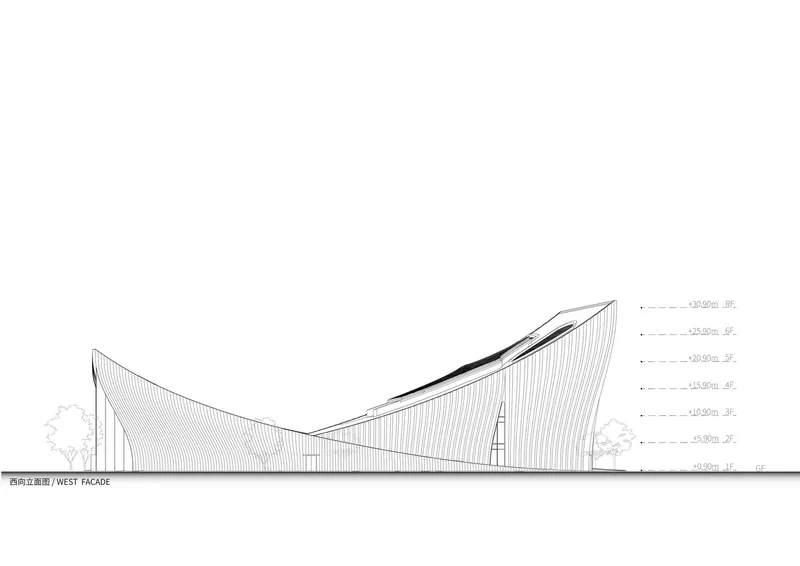
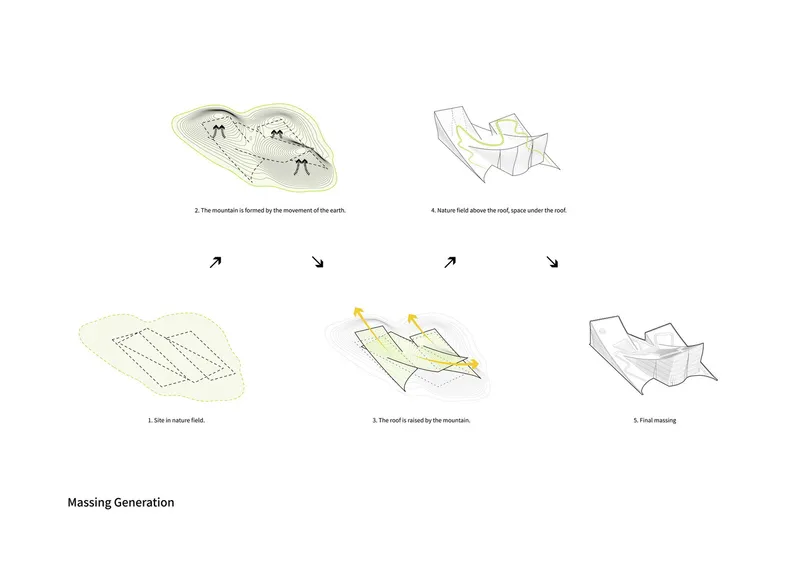
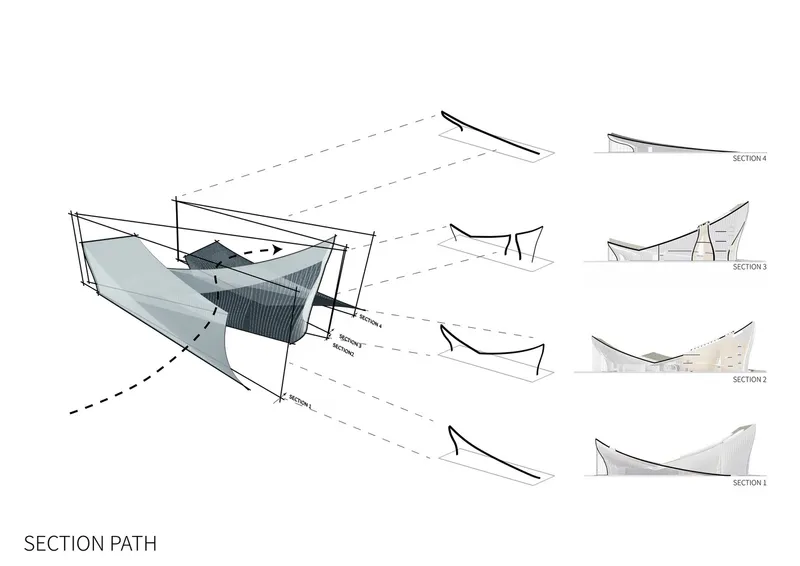
The museum is thoughtfully situated amidst the scenic expanse of the Wuyi Mountains and bordered by the pristine waters of the Futun River. Drawing from this natural context, the design adopts the concept of “recreating the mountain landscape”. Three gentle, curved roof structures rise from the earth, mimicking the rolling hills of the surrounding topography and creating a seamless connection between the built environment and the landscape. These sloped roofs not only define the building’s identity but also offer walkable green terraces with panoramic views.
A Sustainable Approach to Industrial Exhibition Spaces
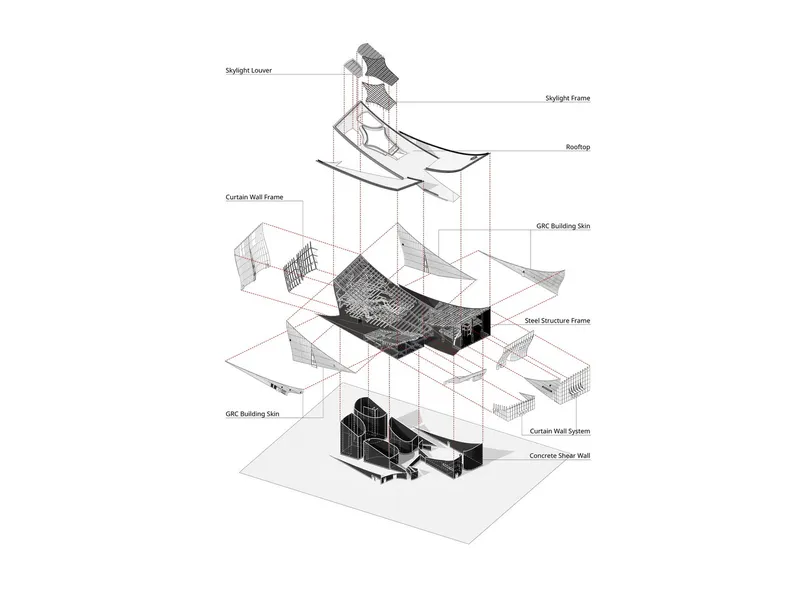
At the heart of this agricultural museum architecture is a holistic sustainability strategy. The design employs a thick soil roof for insulation, effectively shielding the interiors from the region’s hot and humid climate. Rainwater drainage is optimized through the slope design, while a hidden technical layer houses building systems discreetly, maintaining the visual integrity of the “green hill” concept.
Innovative Use of Form and Material
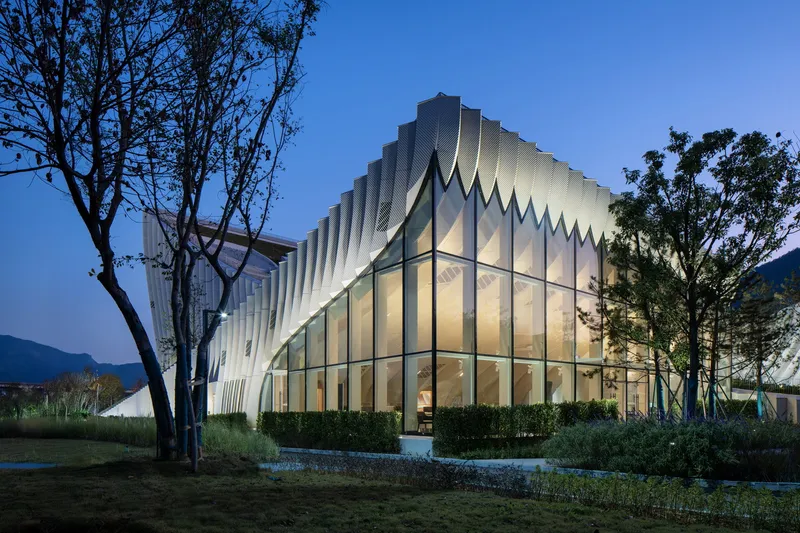
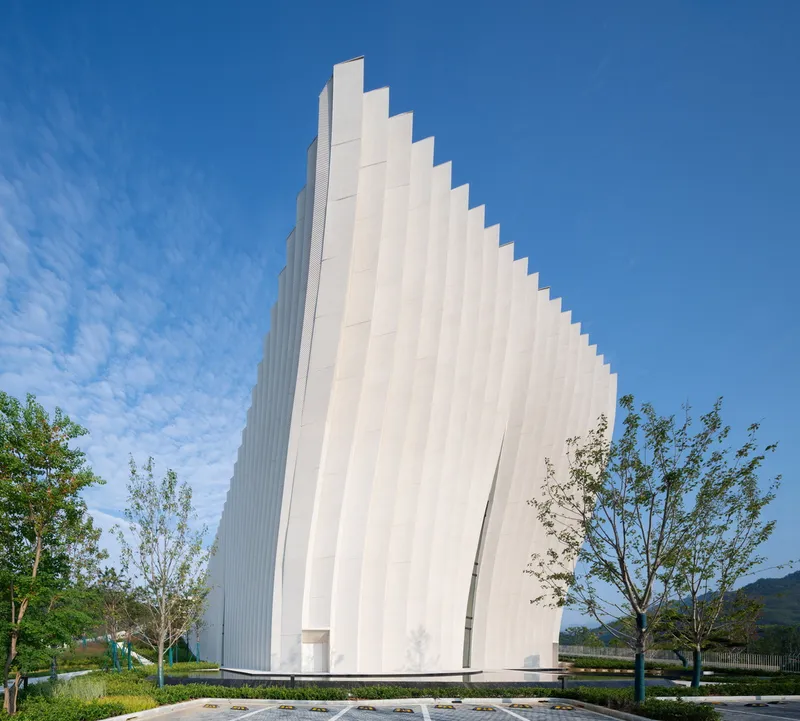
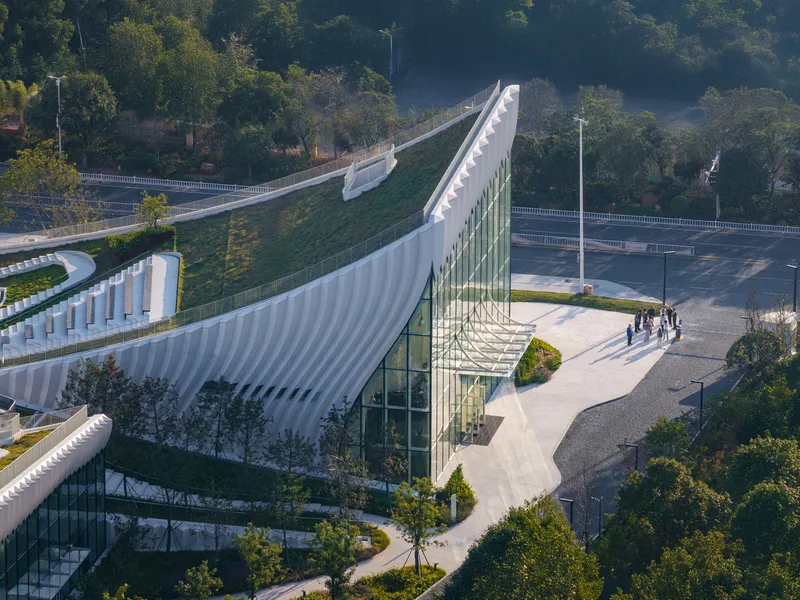
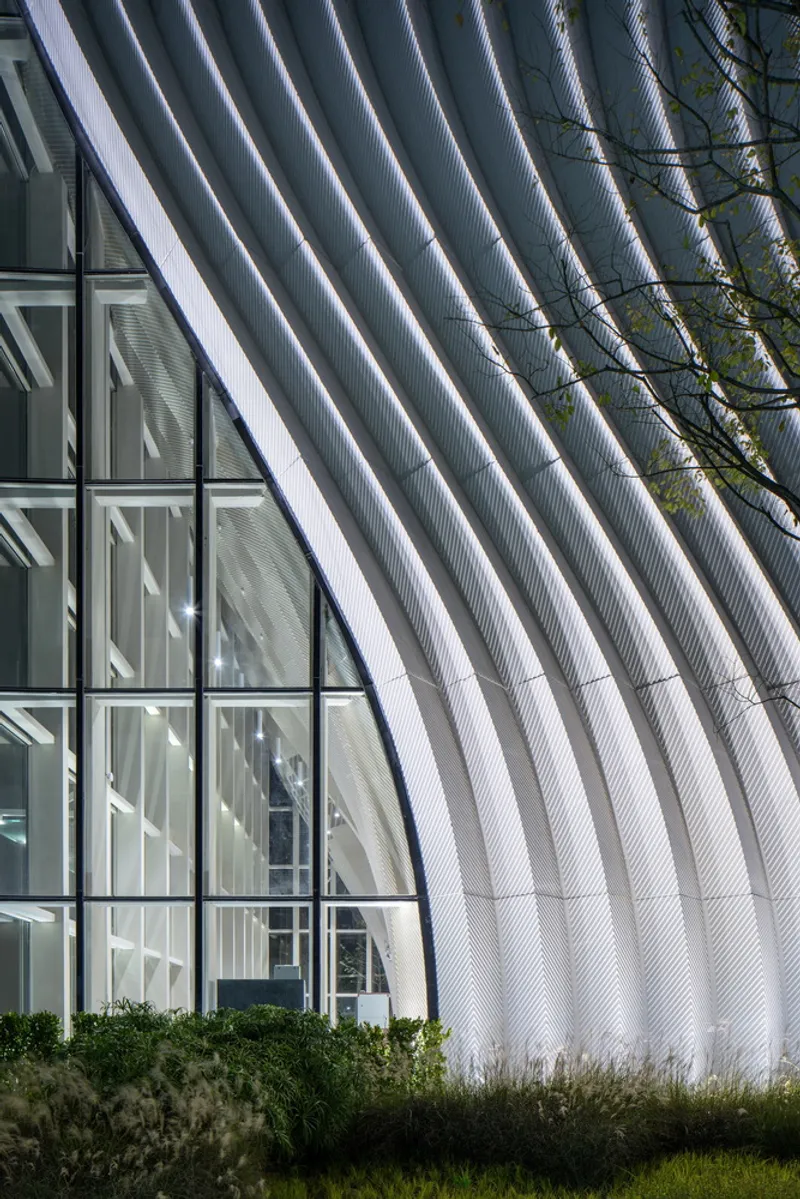
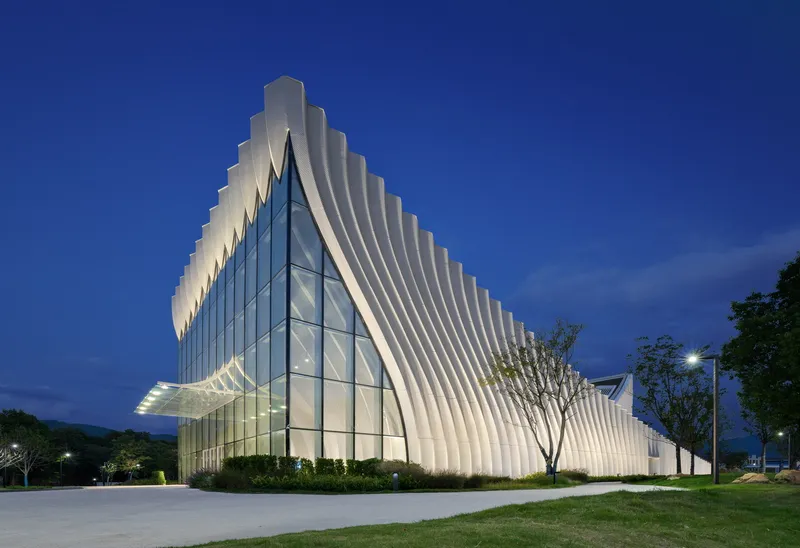
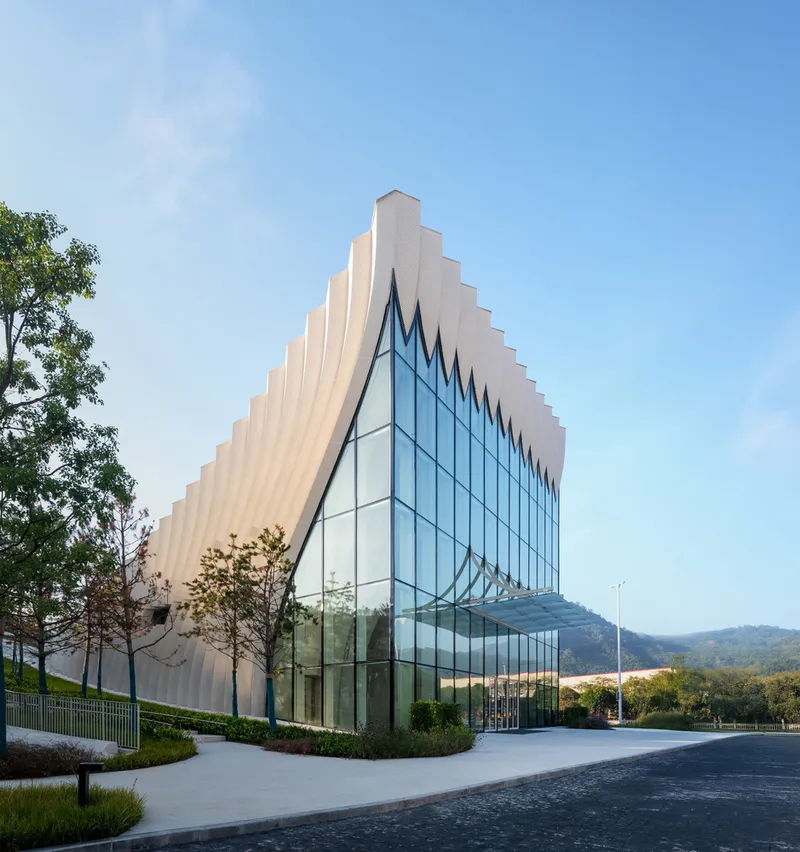
Sunner Museum’s facade features bold folded concrete plates, reminiscent of industrial retaining walls and echoing the agricultural and infrastructural themes of the site. In key public spaces such as the entrance, these folds open up with glass curtain walls, allowing light and visibility while preserving structural rhythm. These angular surfaces are both functional and aesthetic—facilitating ventilation, drainage, and visual texture.
Monumental Interiors for Agricultural Storytelling
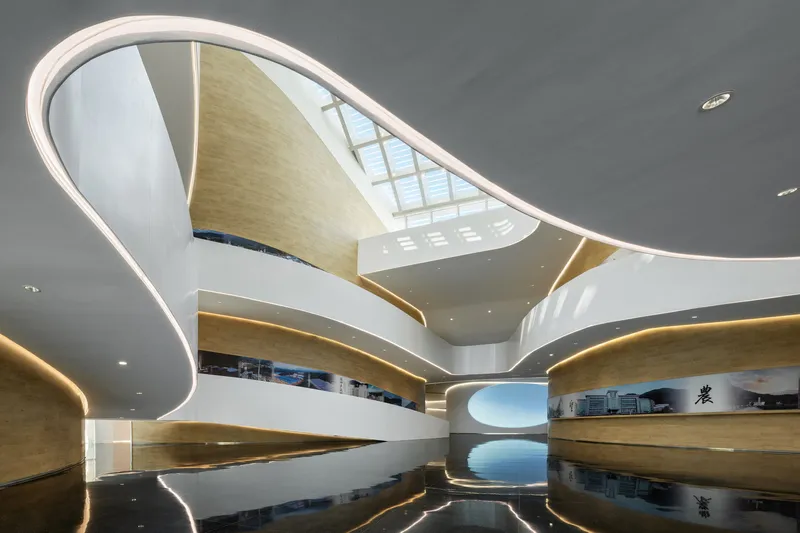
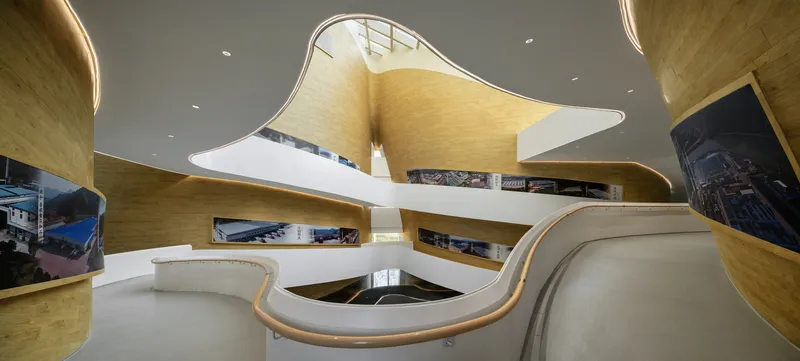
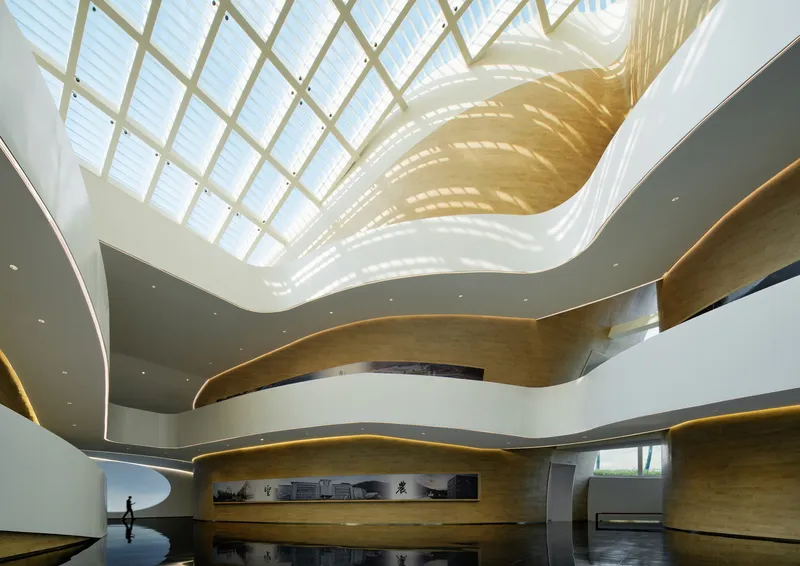
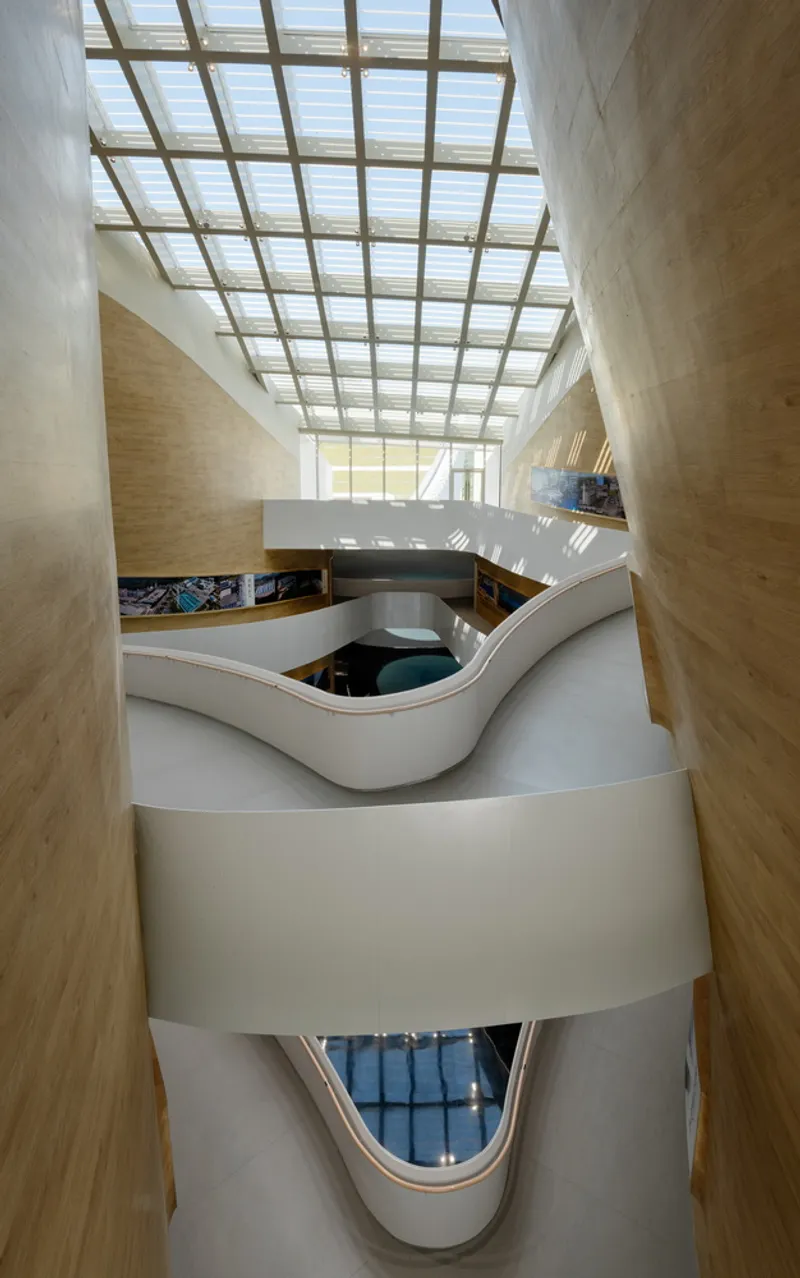
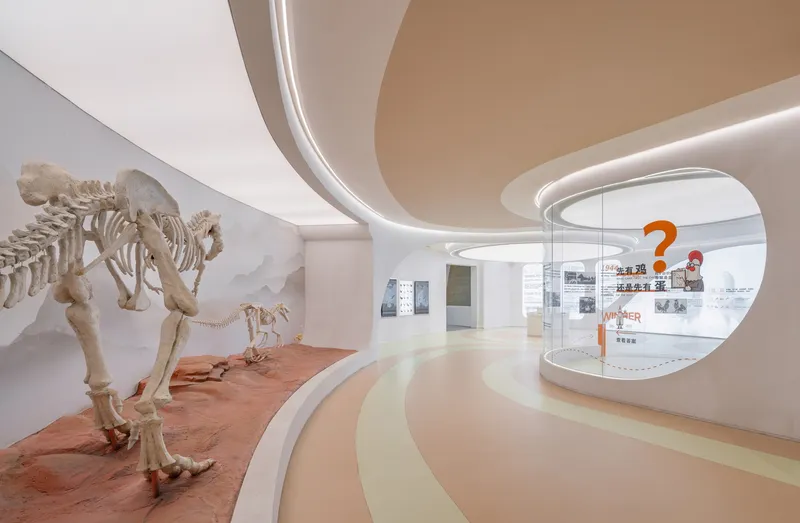
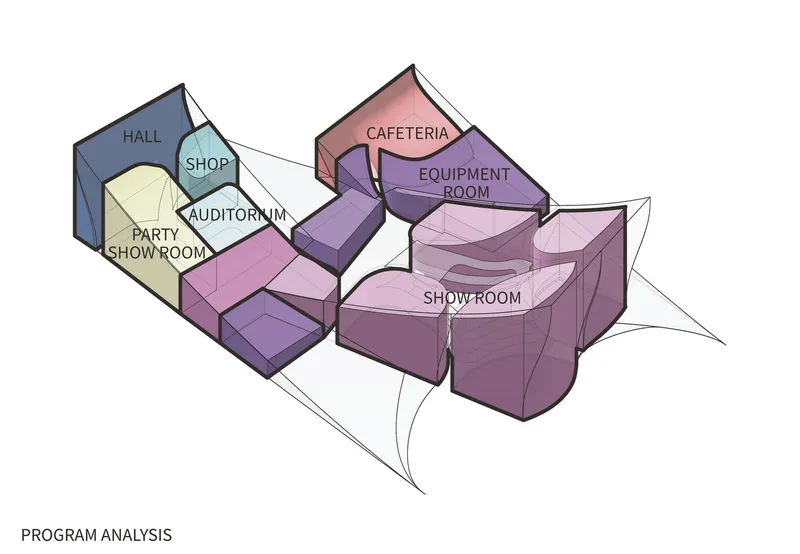
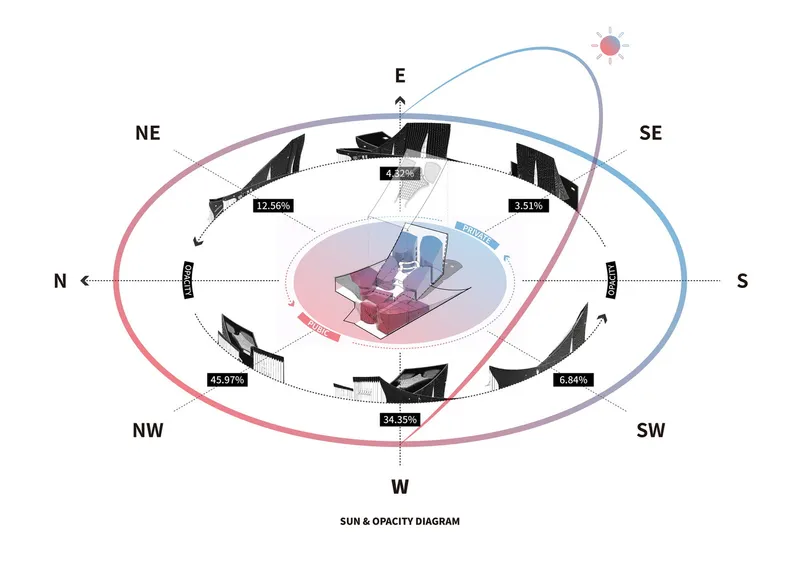
The interior features a soaring 25-meter-tall vertical atrium supported by four massive silo-shaped shear walls. This column-free space enables large-scale installations that depict the evolution and technological advancements in modern agriculture. A north-facing skylight provides ambient, diffused light suitable for exhibits. The main exhibition halls are carved into these silo forms, reflecting the industrial language of grain storage while redefining their purpose for public education.
A Civic Space Beyond Exhibition
One of the most compelling aspects of the project is its accessibility and integration with public life. By day, the museum educates visitors on sustainable agriculture and ecological systems. By night, its rooftop terraces transform into open community spaces, enhancing public engagement and redefining how institutional buildings can coexist with local life. This dual functionality echoes the museum’s overarching goal of fostering symbiosis between architecture and the environment.
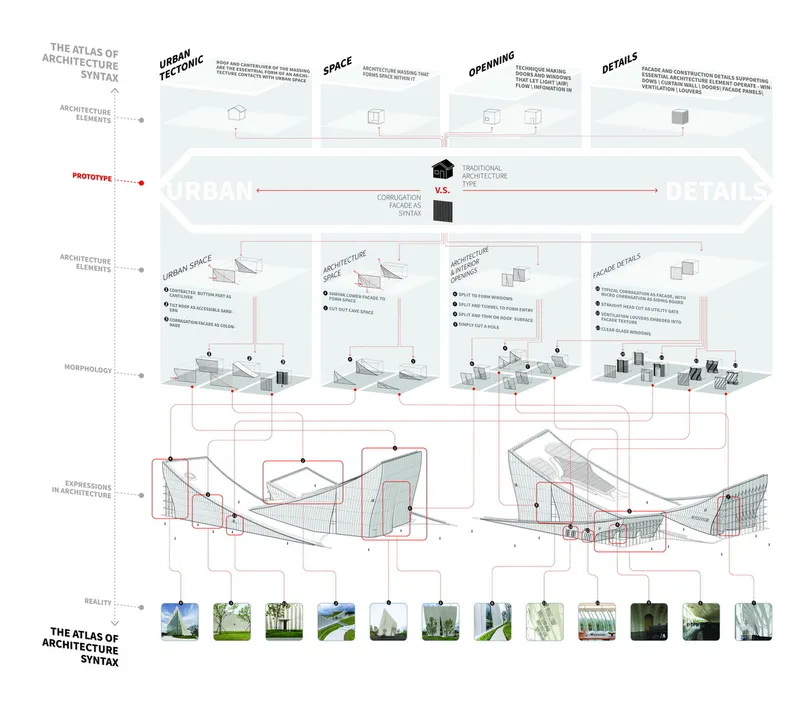
Redefining Agricultural Museum Architecture
Through innovative design, environmental responsiveness, and community integration, Sunner Museum sets a new benchmark in agricultural museum architecture. It not only showcases the achievements of China’s agricultural industry but also reimagines how industrial exhibition buildings can live in harmony with nature and public life.
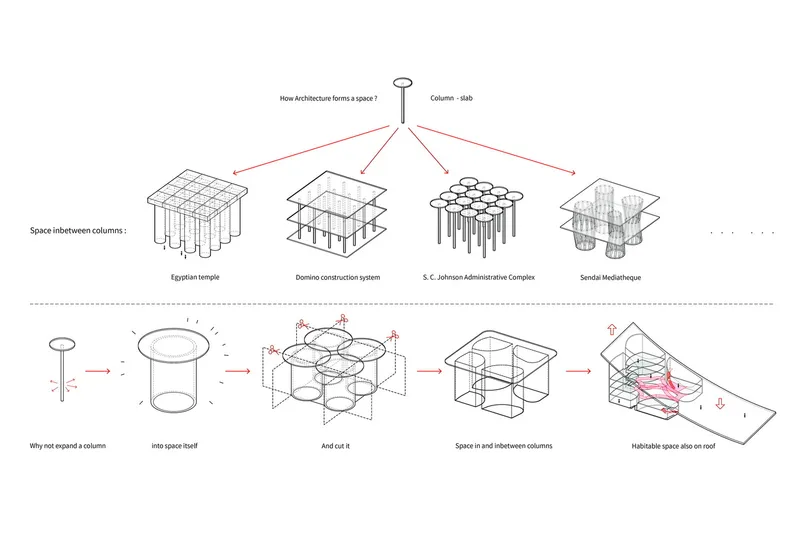
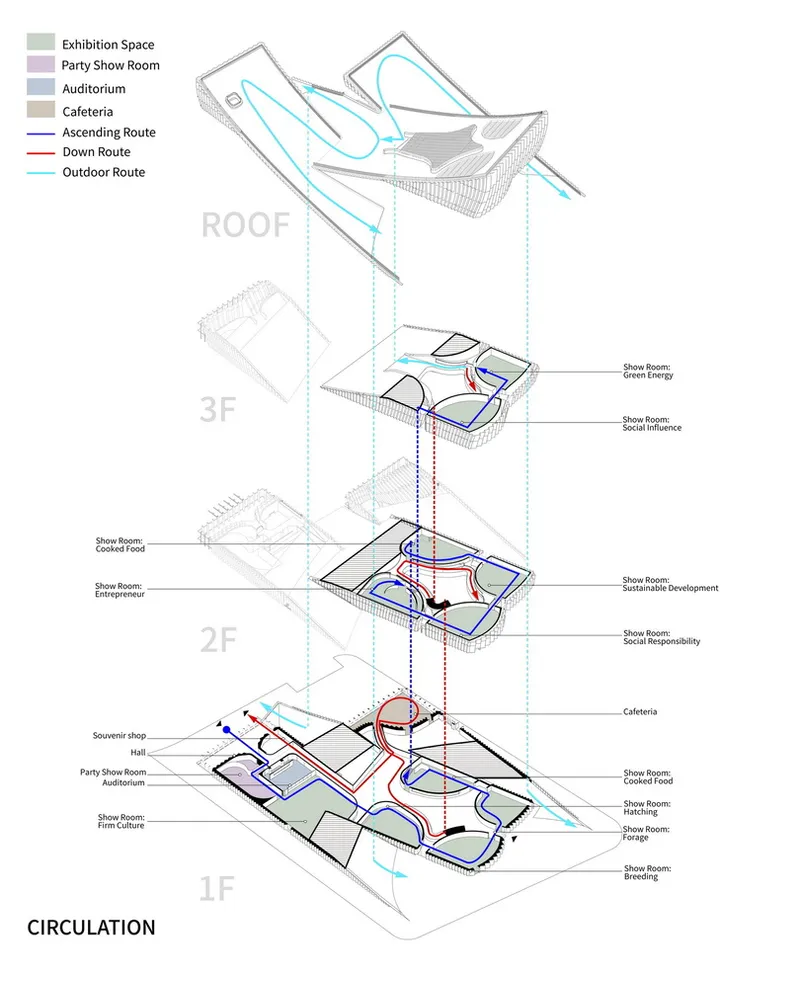
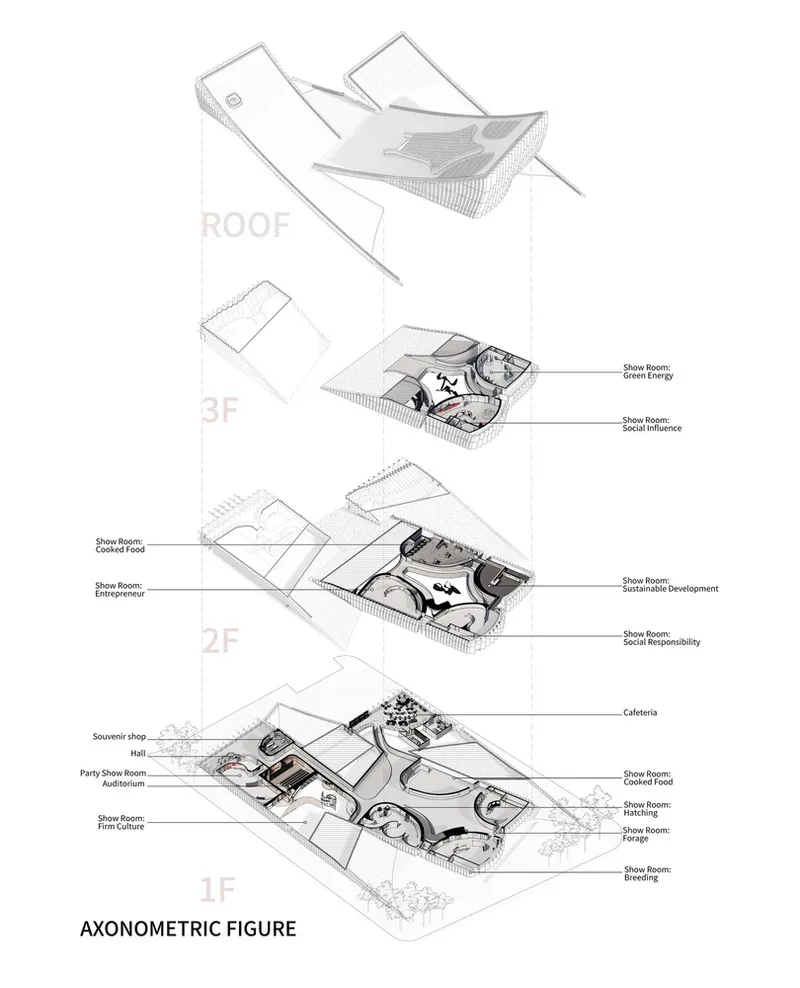
The Sunner Museum is more than just a space for exhibition—it’s a landscape-integrated architecture that narrates the transformation of China’s agricultural practices. As an icon of agricultural museum architecture, it embodies sustainable design, spatial creativity, and a cultural dialogue between industry and nature.
All Photographs are works of Highlite Images, Cyan & Orange Images


Popular Articles
Popular articles from the community


Lunar Spiral: Space Architecture Shaped by the Mathematics of the Universe
Lunar Spiral reimagines space architecture through Fibonacci geometry, lunar regolith, levitating habitats, and self-sustaining Moon living.

The Ocean Hive: Sustainable Architecture for a Self-Sufficient Civilization at Sea
The Ocean Hive imagines sustainable architecture at sea, where modular habitats, algae, wave power and ocean waste sustain a growing colony.

Conexión: Biophilic Design Reimagines High-Rise Living in Hong Kong
Conexión reimagines high-rise living in Hong Kong through biophilic design, green facades, shared spaces, daylight, water and nature within.

Co-Life: Senior Housing Design That Reconnects Older Adults With the City
Co-Life reimagines senior housing design through healing gardens, shared streets, workshops, and a sustainable community across generations.

Similar Reads
You might also enjoy these articles

Bamboo Housing Challenge 2026: Design Affordable, Sustainable Homes Using Bamboo
An international design competition by Bamboo U and IBUKU inviting architects and designers to reimagine affordable housing using bamboo — with the winning design built full-scale in Bali.

Computational Design & Education: Beegraphy Design Awards Introduces 7th Category (Featuring Jiyun's Innovative Approach)
Dive into Beegraphy’s 7th Design Awards category, where computational design meets education to create immersive, interactive learning tools, inspired by Jiyun’s work.
From Parametric Lighting to Urban Furniture: Join the 2nd Workshop in Beegraphy’s Computational Design Series
Dive into Cutting-Edge Design Techniques and Practical Applications with Industry Experts

Last Call: Unleash Your Architectural Genius in SHAK's Kindergarten Design Competition
Urgent call for architects to join SHAK's kindergarten design competition before the looming deadline

Explore Architecture Competitions
Discover active competitions in this discipline

Challenge to reimagine the Iron Throne

Photograph architecture without architects

Illustrate the lost glory of Angkor Wat - Render Challenge

Design challenge to reuse E-waste
Comments (0)
Please login or sign up to add comments
No comments yet. Be the first to comment!