

Sustainable Hotel Architecture in Xuzhou Garden Expo Park: A Fusion of Nature and Design
This article explores Dangkou Hotel's sustainable architecture, blending eco-friendly design with natural landscapes in Xuzhou Garden Expo Park for an immersive experience.


Xuzhou Garden Expo Park and the Dangkou Hotel
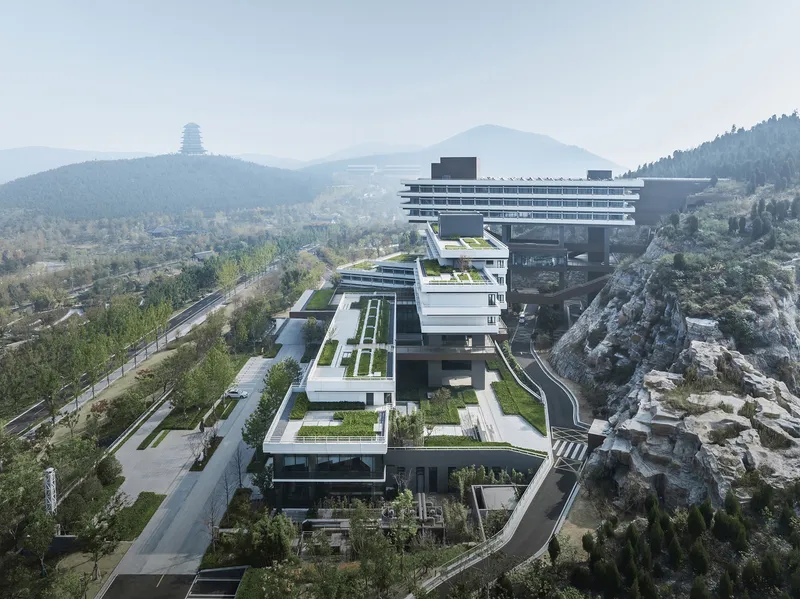
The Dangkou Hotel, a stunning addition to the Xuzhou Garden Expo Park in China, exemplifies sustainable hotel architecture that merges seamlessly with the natural surroundings. Designed by CCTN Design and covering an expansive 28,273 m², the hotel is located on a picturesque mountainside, offering breathtaking views of the park's iconic Hanging Water Lake and lush landscapes. This article delves into the sustainable strategies and architectural innovations that make Dangkou Hotel a landmark in eco-friendly design.

The Essence of Sustainable Hotel Architecture
Sustainable hotel architecture focuses on building structures that integrate environmental harmony, energy efficiency, and modern amenities. In response to rising demand for eco-friendly hospitality, the Dangkou Hotel employs techniques such as BIM technology, modular design, rainwater recycling, daylight-guided lighting, and intelligent operational systems to achieve a LEED Green Building Two-Star certification. These elements contribute to the hotel’s environmental goals while enhancing guest experience through connection to nature.

Location and Site-Specific Design Adaptations
Harmony with the Landscape
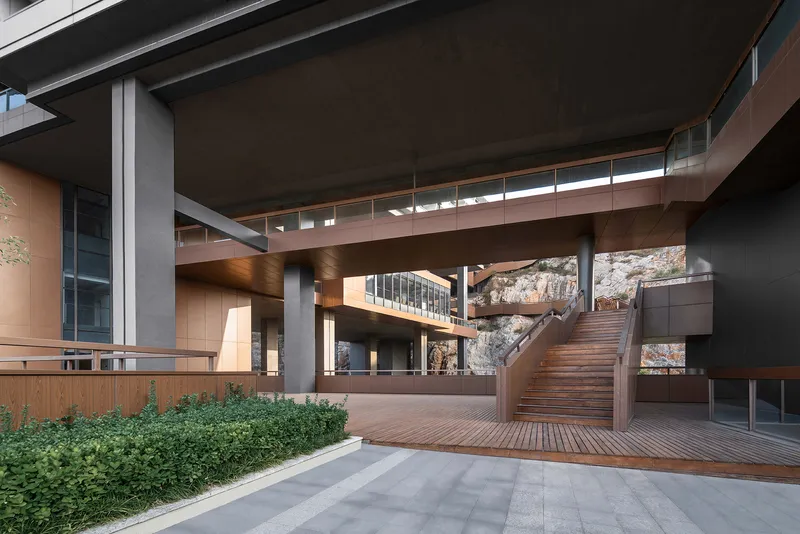
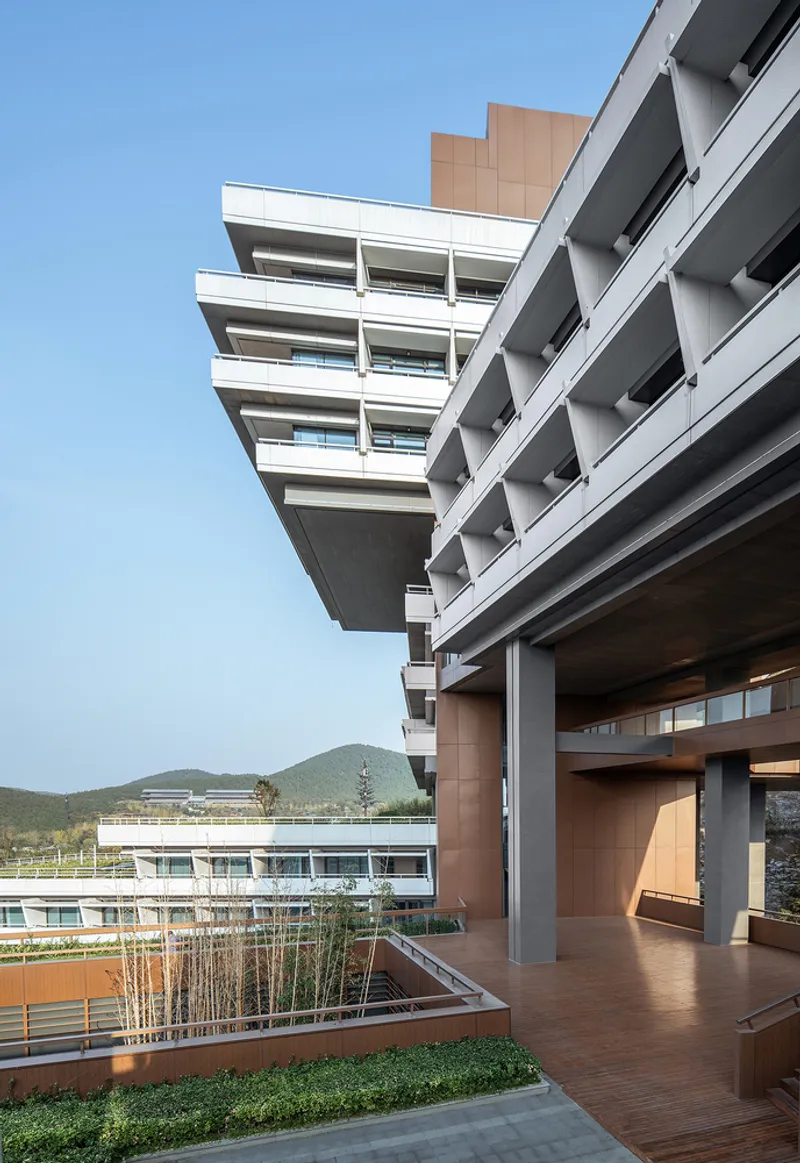
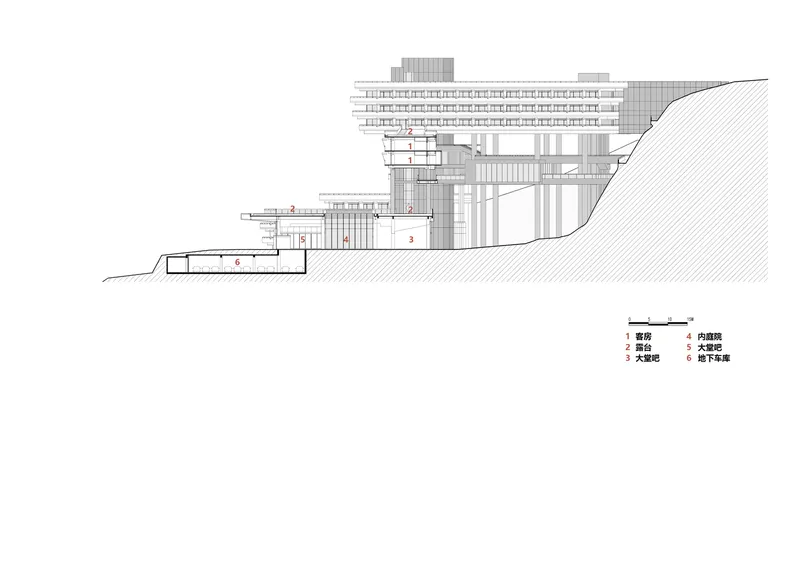
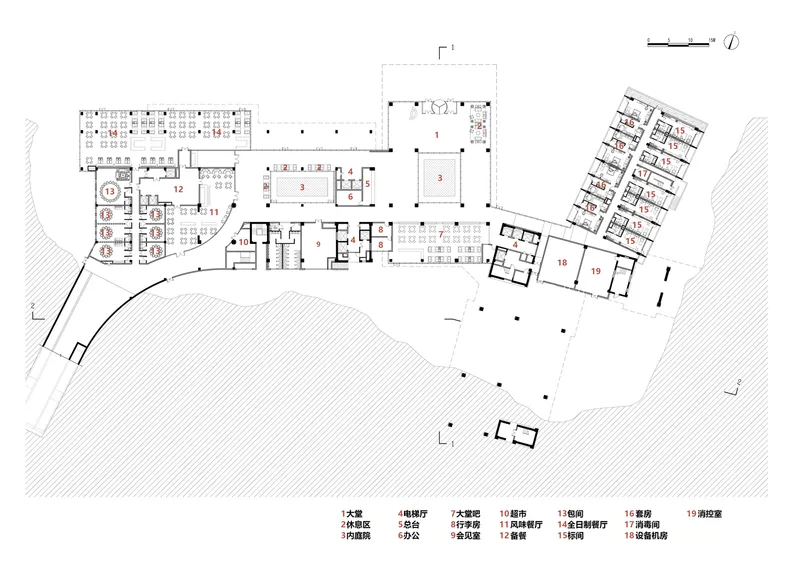
Positioned within an ancient quarry, the Dangkou Hotel respects the natural terrain by adapting to the hillside slope through two distinct terraces. This adaptive design minimizes excavation and allows the structure to blend seamlessly with its environment. Public spaces, including the lobby and dining areas, occupy the upper terrace, while underground parking and logistics are placed on the lower terrace. This approach reduces environmental impact, maximizes space utility, and ensures that guests can enjoy uninterrupted views of the scenic surroundings.

Unique Design Strategies to Maximize Sustainability
Cascading Layout and Suspended Architecture
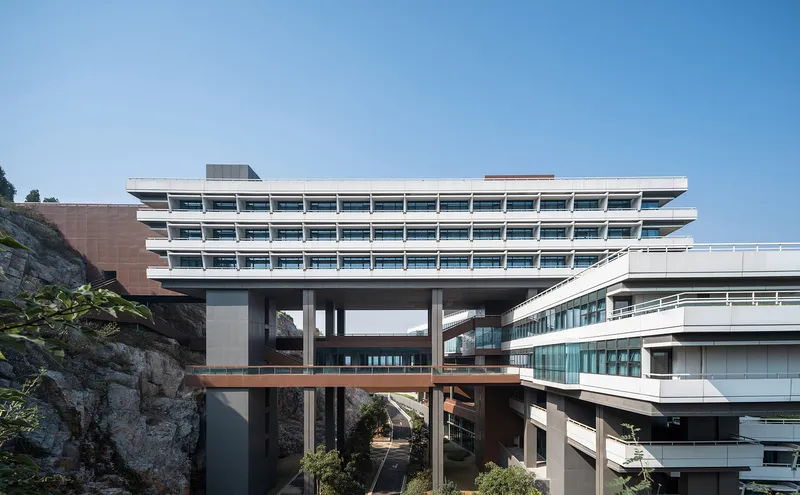
The Dangkou Hotel incorporates a cascading layout to enhance the connection between the building and nature. The architects divided the structure into smaller, elevated volumes to create a harmonious multi-layered landscape. Walkways and circular paths lead visitors from the hotel base to the mountain summit, allowing for diverse activities like scenic hikes, bridge crossings, and lake-view experiences. This cascading arrangement not only preserves the natural landscape but also adds layers of spatial variety for visitors, transforming a stay at the Dangkou Hotel into a holistic experience with nature.
Elevated Platforms for Enhanced Views
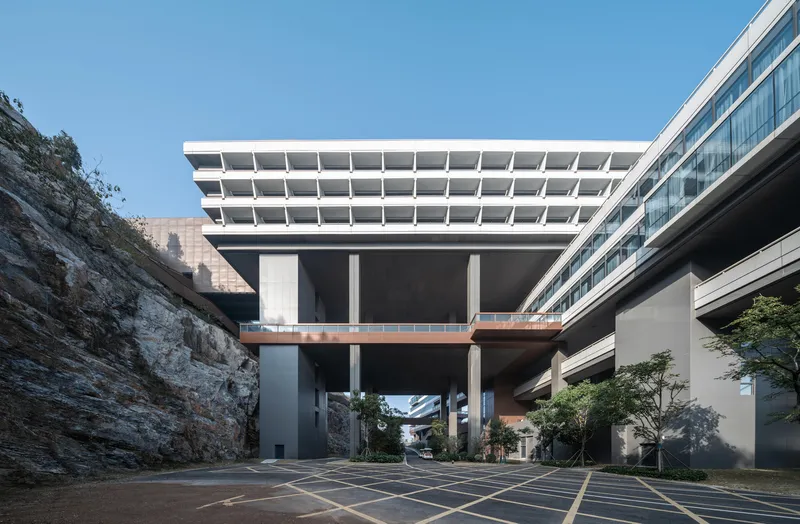
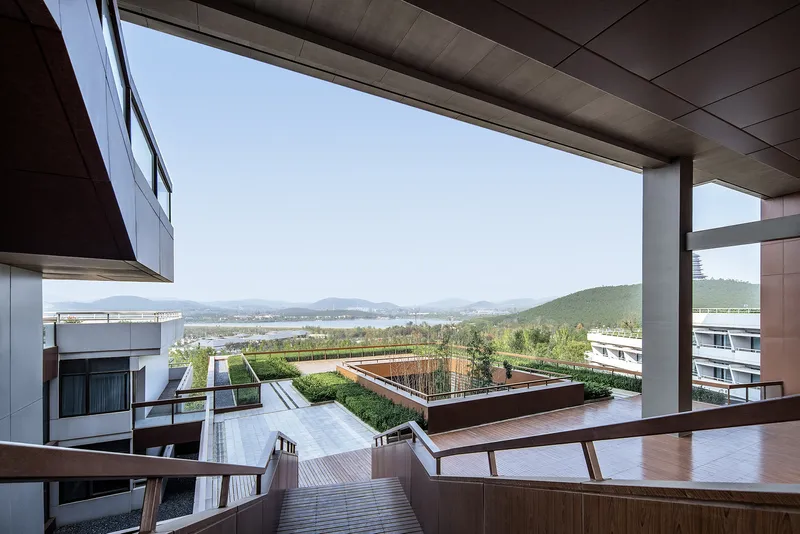
Elevated architectural elements allow the hotel to provide expansive lake and mountain views for guests. The fifth-floor open-air coffee bar is an example of this design philosophy, featuring a skylight that allows guests to stargaze while enjoying an elevated view of the cliff and the surrounding landscape. This design leverages height and open space to create unique viewing experiences, allowing visitors to fully appreciate the beauty of Xuzhou Garden Expo Park.

Eco-Friendly Construction and Structural Design
Using Reinforced Concrete and Steel for Structural Integrity
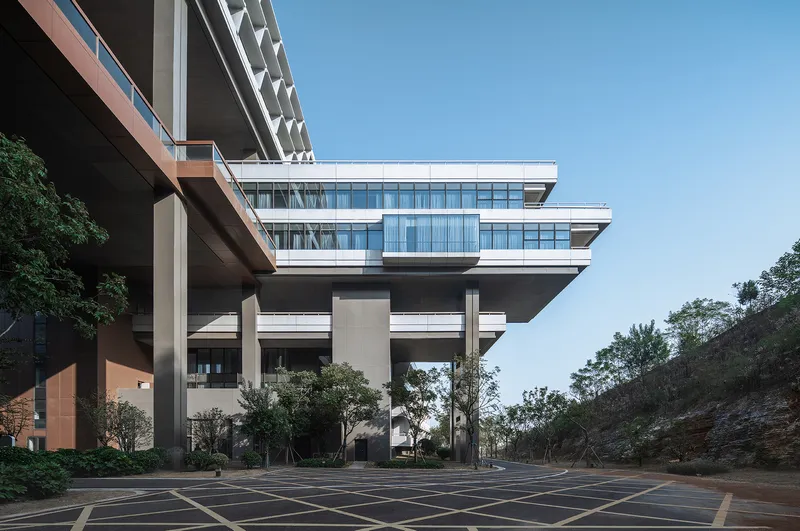
The architectural complexity of the Dangkou Hotel required innovative solutions in structural design. The building’s high-rise sections incorporate a reinforced concrete core and steel columns for stability, reducing the impact of structural elements on guest room layouts. By minimizing the number of cross-sectional columns, the hotel ensures open and flexible interior spaces that promote comfort while supporting the unique shape and form of the building.

Green Building Techniques
As part of its commitment to sustainable hotel architecture, the Dangkou Hotel incorporates BIM (Building Information Modeling) technology for efficient design, planning, and maintenance. Additionally, modular construction techniques were employed to minimize waste and streamline construction processes. The hotel also includes rainwater reuse systems and daylight-guided lighting to reduce reliance on artificial energy sources, making it a benchmark in sustainable building practices.


Fostering Interconnected Spaces and Shared Facilities
Connecting with Neighboring Structures for Resource Efficiency
The Dangkou Hotel is situated alongside another themed hotel across a narrow ridge, and the two buildings are connected through a 10-meter multifunctional hall. This connection allows the hotels to share operational resources, reducing overall costs and minimizing environmental footprint. The multifunctional hall, which can serve as a wedding venue, fitness center, or unique library space, offers a variety of activities that enhance the guest experience while fostering a sense of community between the two structures.
Visitor Experience and Connection to Nature
Designing for a Unique Visitor Journey
Through its carefully planned pathways, viewing platforms, and elevated spaces, the Dangkou Hotel offers visitors a memorable experience that transcends typical hospitality. Guests can walk along scenic routes, explore bridges, and relax on terraced platforms while taking in breathtaking views of the landscape. The hotel’s layout promotes engagement with nature, inviting guests to connect with the environment through every step of their journey.

Balancing Comfort with Eco-Responsibility
While the Dangkou Hotel emphasizes sustainability, it does not compromise on luxury or comfort. The hotel's eco-friendly amenities, such as intelligent energy systems and daylight harvesting, provide a seamless blend of modern conveniences and environmental responsibility. The integration of green building techniques ensures that guests enjoy a high level of comfort while minimizing their ecological impact.

The Future of Sustainable Hotel Architecture: Lessons from Dangkou Hotel
The Dangkou Hotel serves as a model of sustainable hotel architecture, proving that luxury and environmental responsibility can coexist. Its success highlights the importance of site-specific design, efficient resource utilization, and the thoughtful integration of green technologies. As sustainability becomes increasingly vital in architecture, the Dangkou Hotel exemplifies how eco-friendly practices can elevate guest experiences and harmonize with natural landscapes.

A New Standard in Eco-Conscious Hospitality
The Dangkou Hotel in Xuzhou Garden Expo Park stands as a testament to the power of sustainable hotel architecture. Through innovative design strategies and a commitment to preserving the natural landscape, CCTN Design has created a unique hospitality experience that fosters a connection between guests and nature. As architects and developers continue to embrace sustainable practices, the Dangkou Hotel offers valuable insights into creating environmentally harmonious structures that inspire and elevate.
All Photographs are work of:Wen Pei


Popular Articles
Popular articles from the community


The Amber Palace Opera: A Geological Fiction Surfaces on Tallinn's Baltic Waterfront
Pierre Brillard reimagines a Baltic legend as a public landscape, opera house, and waterfront promenade rooted in Tallinn's coastal identity.


graciastudio Turns a Viewless Tijuana Lot Inward Around a Courtyard of Concrete, Timber and Trees
In Tijuana, Jorge Gracia's GA2 House stacks a timber-clad private floor over exposed concrete and replaces a missing view with a planted interior patio.

Cube Design Draws an Ecological Corridor Between Two Shenzhen Hills with the Nankai Building
Beside Shenzhen's container docks, the Nankai Building pairs stacked balconies with a climbing green screen to connect two hillsides across its height.

Juan García Correa, John González and Claudia Rueda Sink a Circular Amphitheater into a Manizales Engineering Building
On the La Nubia campus in Manizales, Colombia, the S1 Building folds labs and offices into a hillside of ramped lawns that double as a campus route.

Similar Reads
You might also enjoy these articles


Hodi-Mandai Geram
Project Function: Preservation and revitalization of the Intangible heritage and socio-spatial identity of the Hodi by Housing, Cultural Memory Center, Sacred Grove, landscape, local tourism economy


Olio Towers: A Mid-Rise for Performers That Fuses Housing, Rehearsal, and Stage
Located blocks from Houston's Theater District, this modular tower stacks living units around a central performance atrium.

Oasis: Modular Green Housing Carved into Dhaka's Urban Fabric
A shortlisted Plugin Housing entry reclaims unauthorized settlements in Dhaka with stepped concrete volumes, green roofs, and ventilation-driven design.

Black Hole: A Floating Megastructure for the Post-Physical Era
Emiliano Mazzarotto envisions a spherical, self-scaling arena where e-sports, digital hotels, and holographic stadiums replace traditional public space.

Explore Hospitality Building Competitions
Discover active competitions in this discipline

Challenge to reimagine the Iron Throne

Photograph architecture without architects

Illustrate the lost glory of Angkor Wat - Render Challenge

Design challenge to reuse E-waste
Comments (0)
Please login or sign up to add comments
No comments yet. Be the first to comment!