
Sustainable MOL Group HQ Completed in Budapest
Foster + Partners unveils new headquarters for a Hungarian energy company, emphasizing energy efficiency and green design

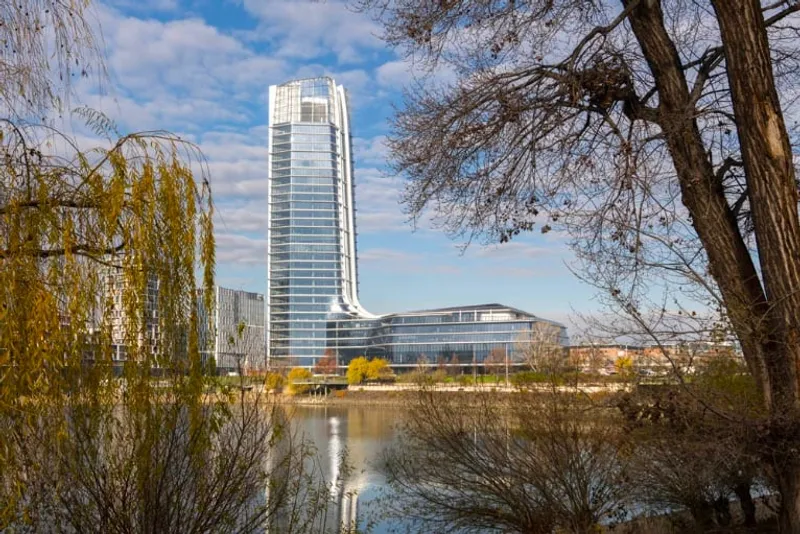
The MOL Group's new headquarters in southern Budapest has officially opened. Designed by Foster + Partners in partnership with Finta Studio, the building brings all of the company's Budapest operations under one roof. It is a key component of the MOL Group's 2030 sustainability plan, serving as a model for future office spaces.
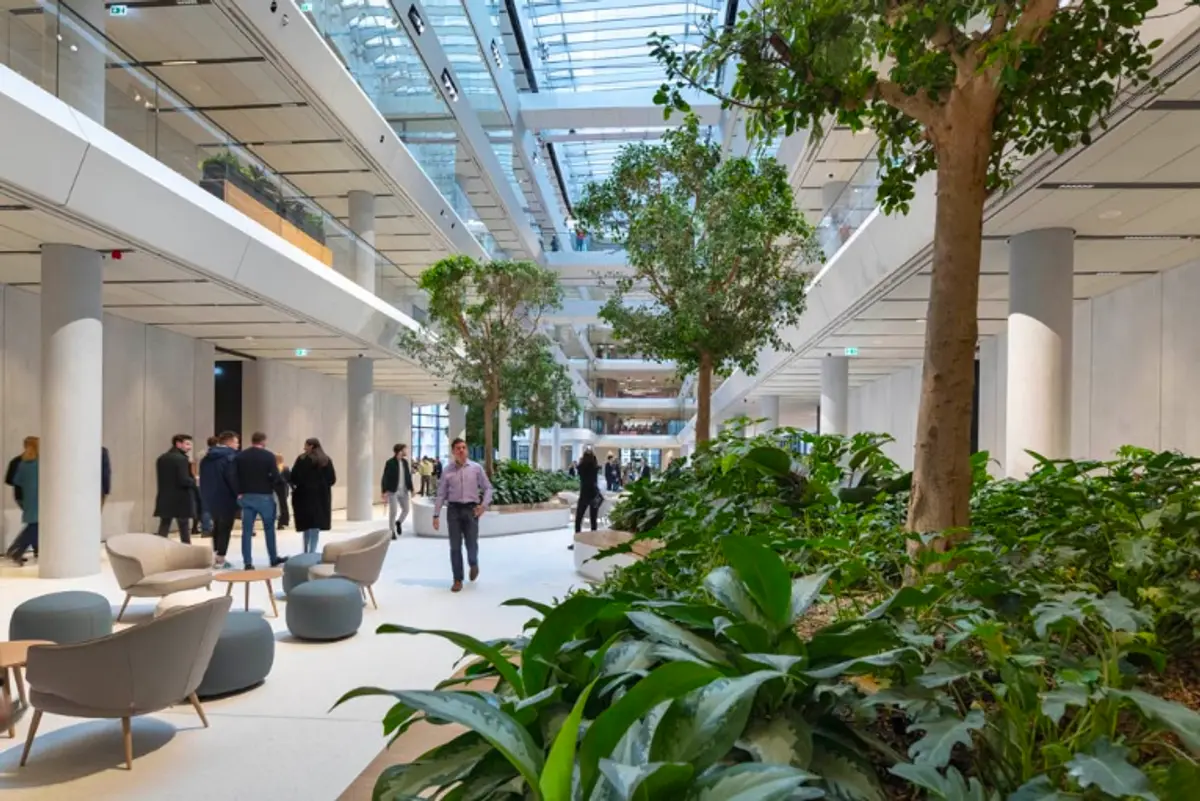
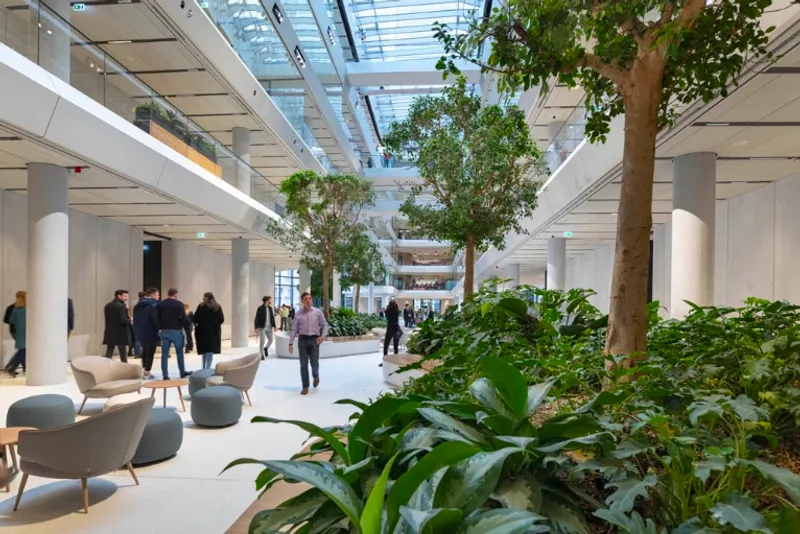
Nigel Dancey, Head of Studio, Foster + Partners said: “We are delighted to celebrate the opening of our new headquarters for MOL Group in Budapest. The architectural, structural and environmental engineering team at Foster + Partners aimed to set new standards for sustainable projects in the city and push the boundaries of workplace design. The tower and the podium are merged into a singular form, to create a unified campus that is enhanced by nature. The office spaces are connected by lush gardens which seamlessly link the floors together, encouraging collaboration and relaxation.”
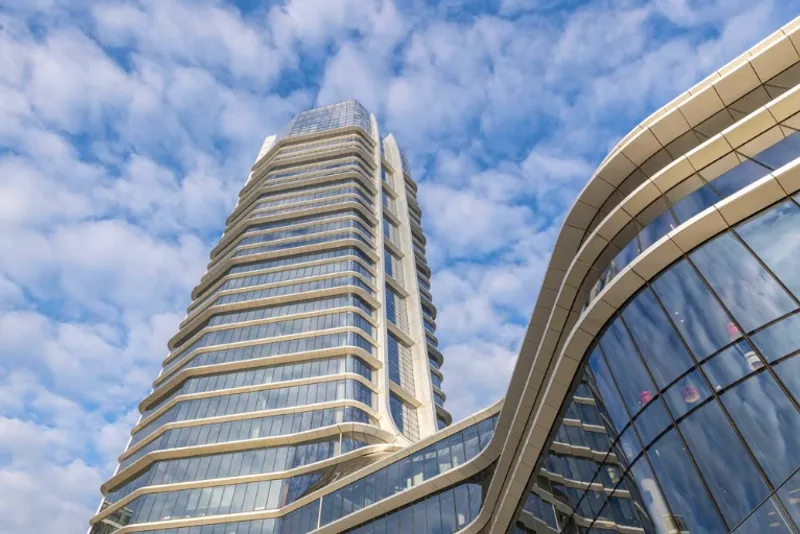
The building, which stands 28 storeys tall, features a variety of amenities on its lower floors, including restaurants, a gym, a conference centre, and other facilities for staff. The upper levels of the building are dedicated to flexible office spaces.
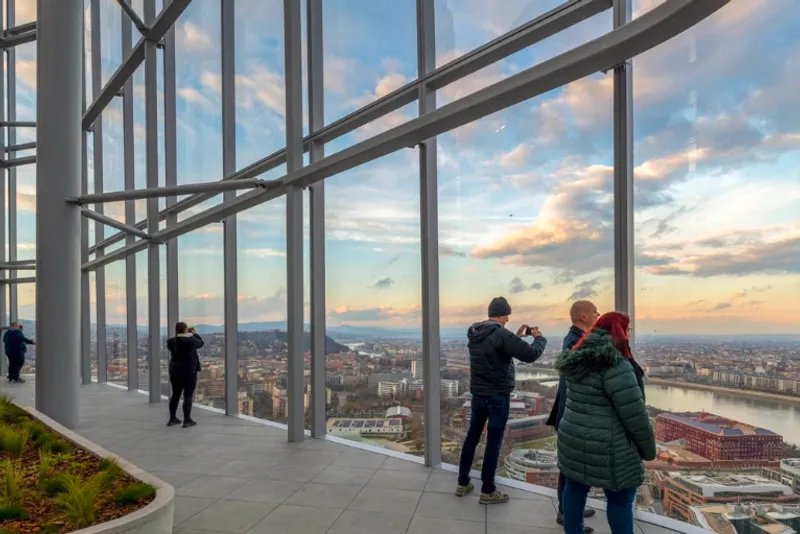
Nature is seamlessly integrated into the heart of the building, with greenery flowing from the central atrium to the rooftop. This not only brings the outdoors closer to the workspace, but also serves as a social hub for collaboration, relaxation, and inspiration. The strategically placed service cores allow for ample flexible spaces that foster teamwork and productivity. Utilizing advanced technology to regulate light, temperature, and views, the workspaces are expertly designed to create an optimal working environment. Every occupant has direct access to natural light and outdoor views, making for a bright and inspiring atmosphere.
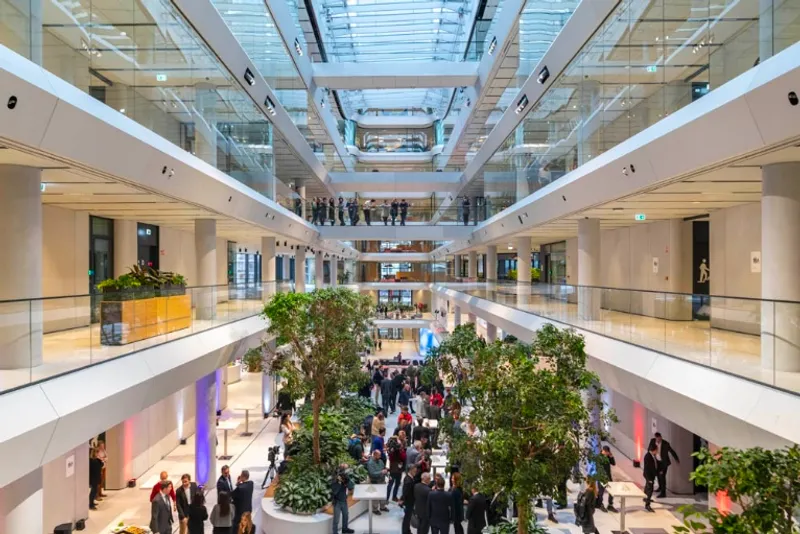
The MOL Headquarters aims to maintain a balance between work and living as a key aspect of the city lifestyle. This includes encouraging employees to walk or cycle to work. The building is on target to receive LEED Platinum and BREEAM Excellent certifications, setting new standards for sustainability in both Budapest and Hungary. The design of the building seamlessly integrates into its urban surroundings and promotes a sustainable approach.
Press release and photos courtesy of Foster + Partners
Photos ©Nigel Young / Foster + Partners
References (1)

Popular Articles
Popular articles from the community


David Ortega Stacks a Two-Story Mexico City Penthouse Around a Steel Stair and a Pergola-Shaded Roof Terrace
In Colonia Roma, a 300 m² penthouse uses oak joinery, a planted steel stair and a slatted roof pergola to make a new-build apartment feel like a house.

Cube Design Draws an Ecological Corridor Between Two Shenzhen Hills with the Nankai Building
Beside Shenzhen's container docks, the Nankai Building pairs stacked balconies with a climbing green screen to connect two hillsides across its height.

U.GA Architects Wraps an Oval Rooftop Pool in Curved Board-Formed Concrete on Busan's Jeollidan-gil
In Busan's Jeonpo-dong, a 454 m² mixed-use block stacks a neighborhood facility, guest rooms and an oval rooftop pool inside spiraling concrete walls.

David Macias Steps a Doorless Stone and Plaster House Down a Tropical Colombian Hillside
In the humid hills of Colombia, Threshold House replaces the front door with an open void and terraces its 850 m² down the slope instead of fighting it.

Similar Reads
You might also enjoy these articles


Rede Arquitetos Turns Circulation into Civic Space at the Educar II SESC School in Fortaleza
In Fortaleza, Brazil, Educar II SESC-CE trades a signature form for mesh screens, yellow thresholds and courtyard walkways built for equatorial heat.
116 Rokeby Building, Collingwood
Sustainable Collingwood office building featuring double-skin façade, natural ventilation, rooftop amenities, and carbon-neutral design focused on wellbeing and longevity.
Contemporary Apartment Renovation in Spain: RV House by BIAN Opens Up to the Sea
A minimalist 1930s apartment in Santander is transformed into a flexible, sea-facing home through contemporary Spanish renovation.
3 Marías House: A Contemporary Mediterranean Courtyard Retreat by Bajet Giramé + Burckhardt
Mediterranean courtyard home blending traditional architecture with modern design, terracotta flooring, flexible interiors, sustainable climate strategies, and garden integration.

Explore Sustainable Design Competitions
Discover active competitions in this discipline


Challenge to reimagine the Iron Throne

Photograph architecture without architects

Illustrate the lost glory of Angkor Wat - Render Challenge

Design challenge to reuse E-waste
Comments (0)
Please login or sign up to add comments
No comments yet. Be the first to comment!