
Sustainable Office Architecture in Nantes: Multimodal Hub and Offices by DREAM + AIA Life Designers
The Multimodal Hub and Offices in Nantes showcase sustainable office architecture, uniting mobility, ecology, and human-centered design in a transformative landmark.


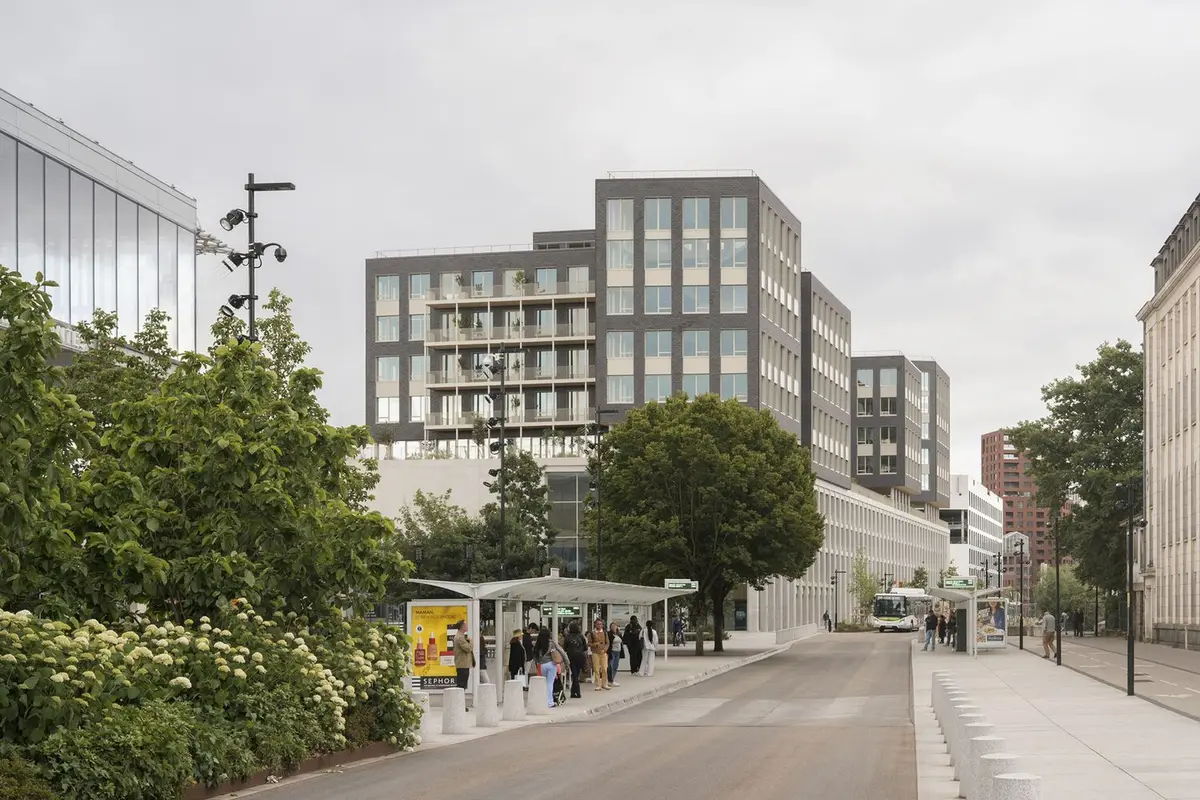
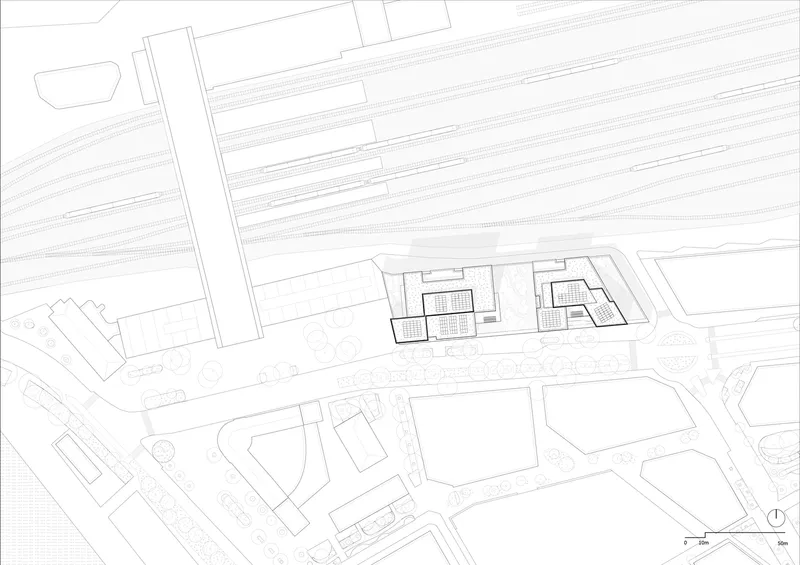
The Multimodal Hub and Offices in Nantes, designed by DREAM and AIA Life Designers, stands as a model of sustainable office architecture in Nantes. Strategically located next to the new Nantes train station, the complex symbolizes the city’s ongoing transformation, linking historic neighborhoods with the emerging Euronantes district. This architectural landmark embodies mobility, sustainability, and workplace well-being, reflecting the evolving needs of contemporary cities.
Urban Integration and Purpose
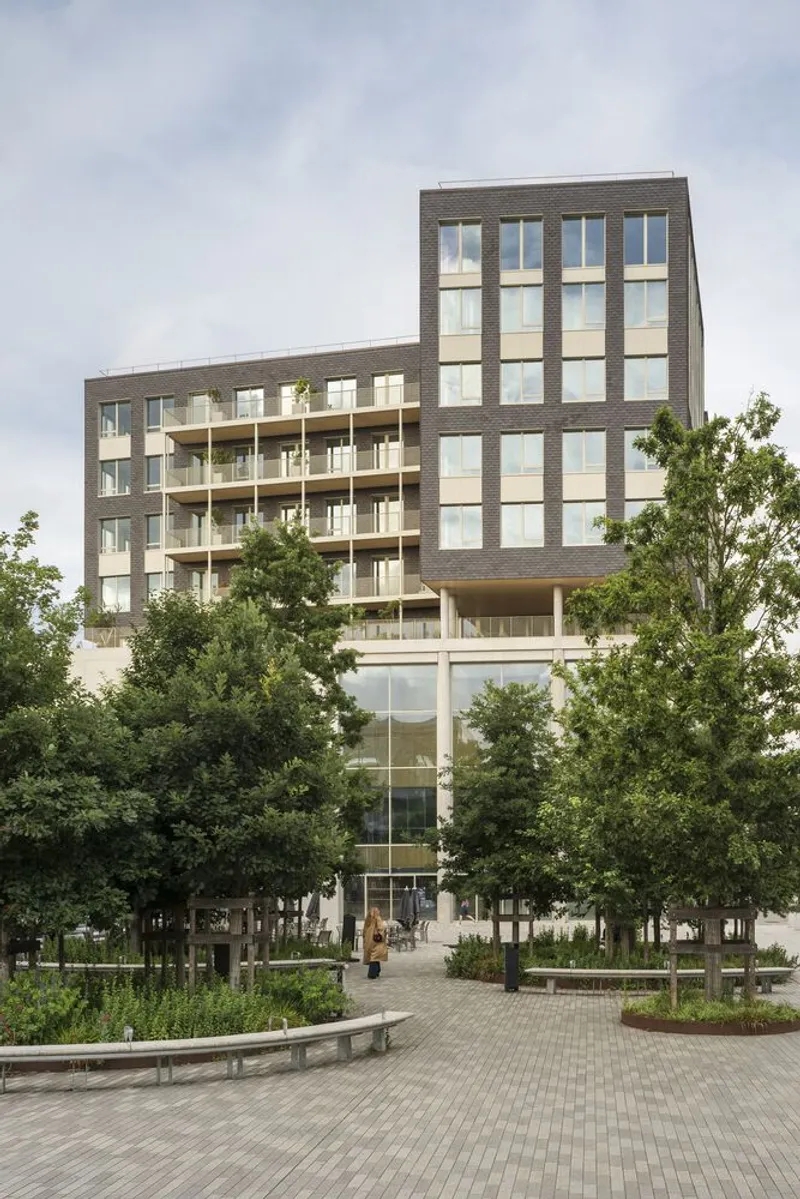
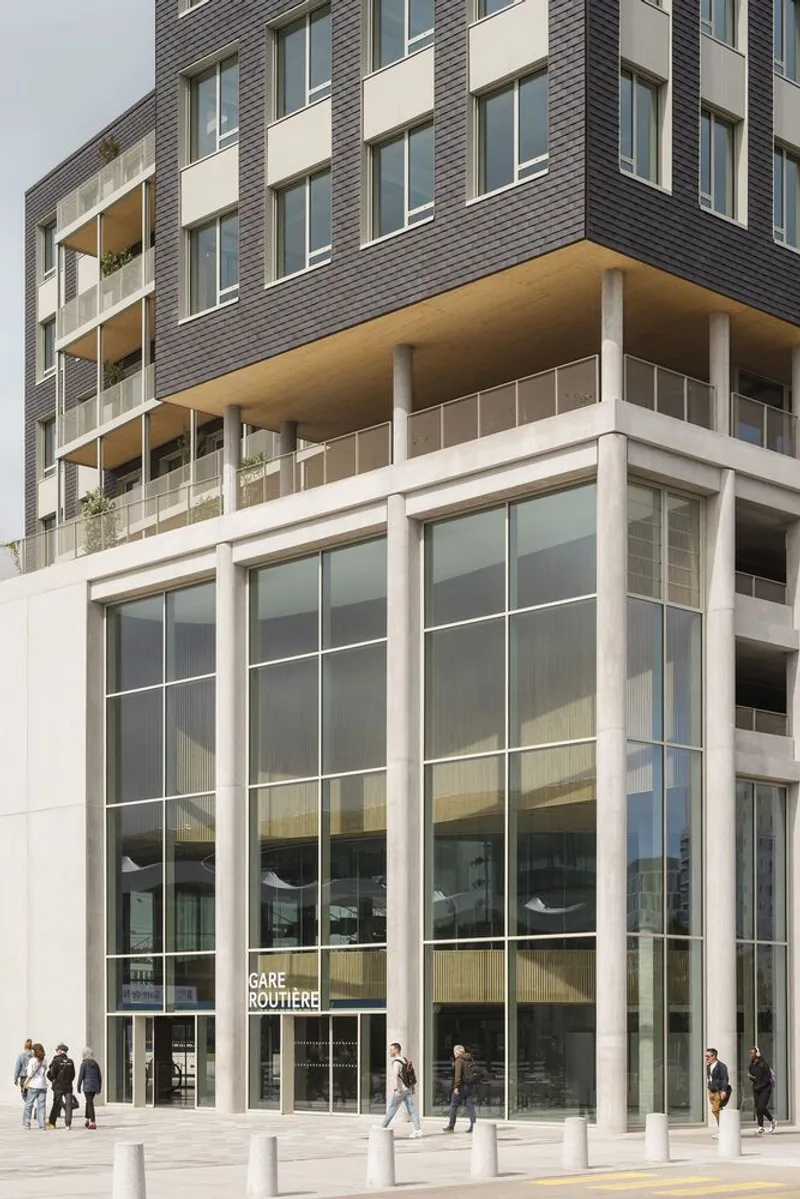
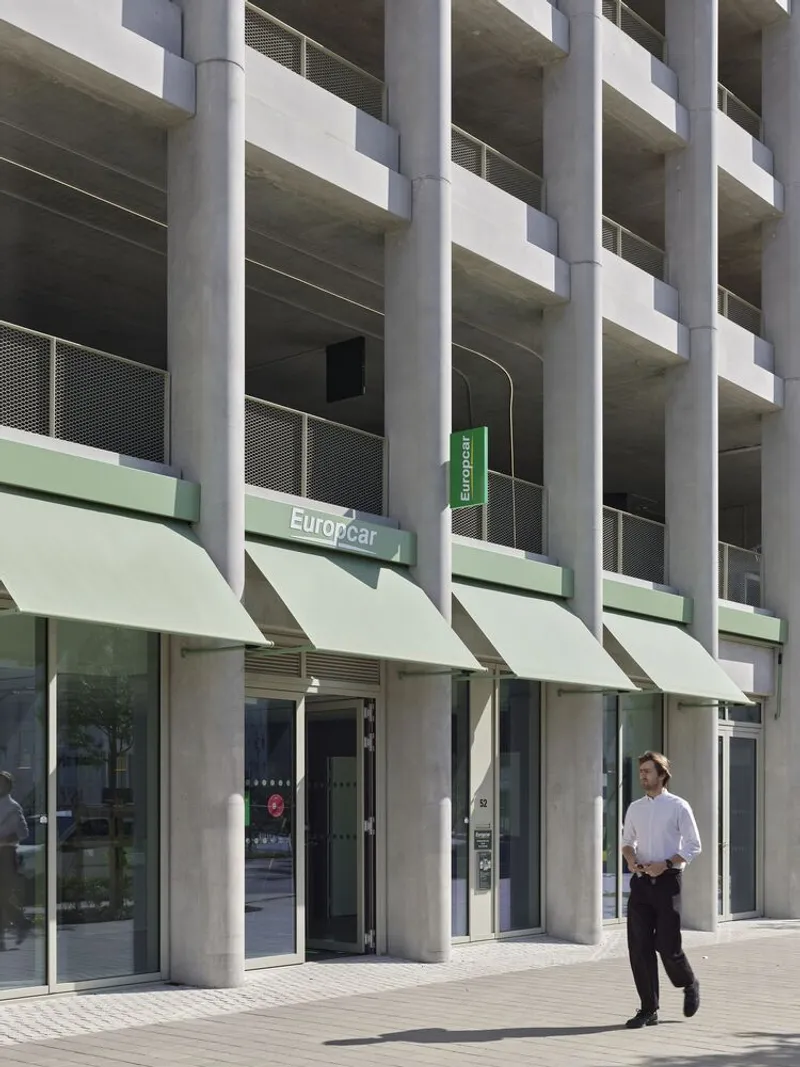
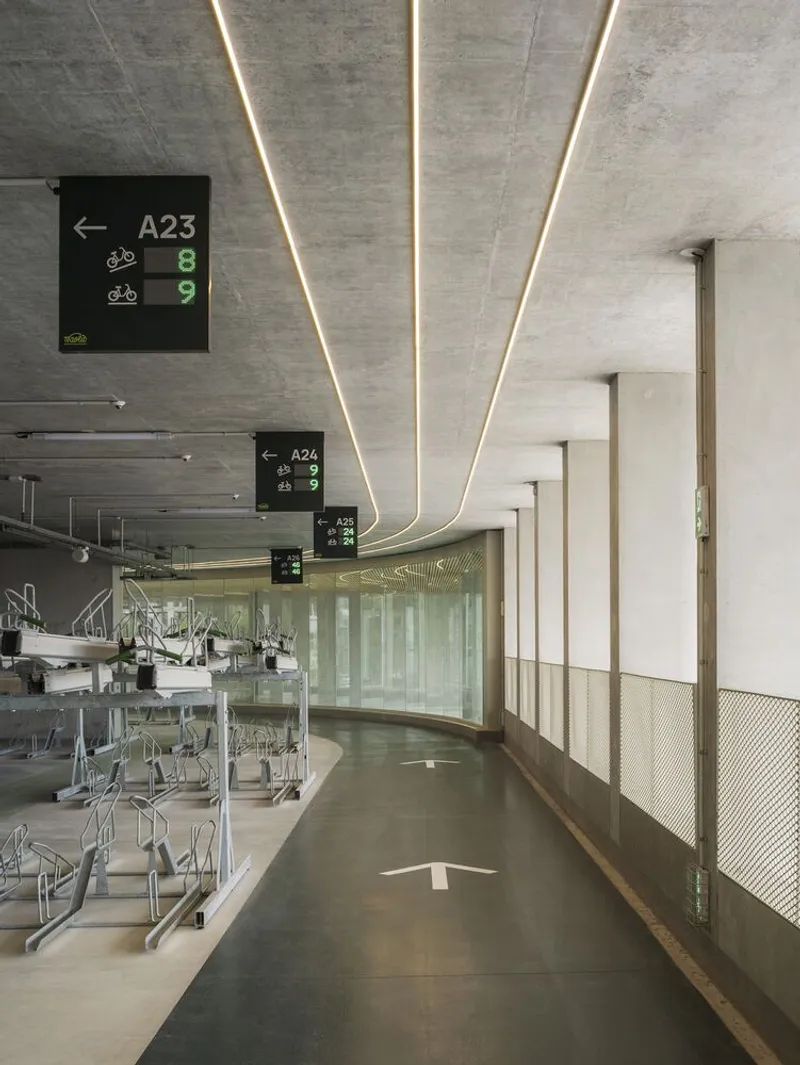
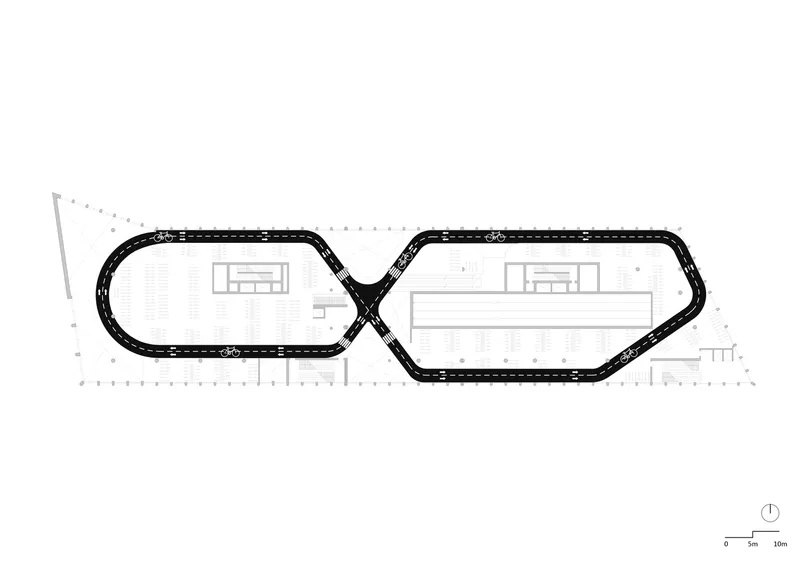
As one of Western France’s most dynamic cities, Nantes continues to reshape its urban landscape. The Multimodal Hub and Offices form part of this renewal, uniting transport infrastructure with corporate headquarters for Lucca and Lhyfe. By incorporating one of France’s largest bicycle parks, with 1,470 spaces, the project actively promotes sustainable mobility. The hub also integrates bus facilities, car rental services, and pedestrian connections, making it a central node in the city’s transportation ecosystem.
Vertical Mixed-Use Design
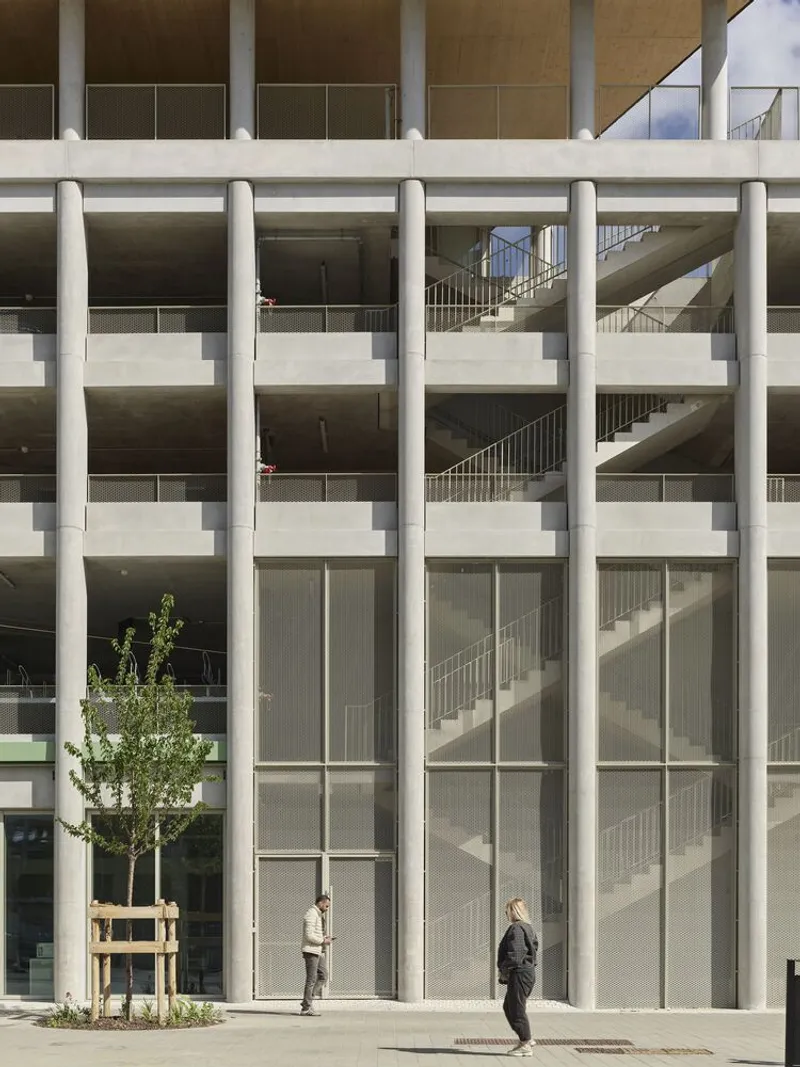
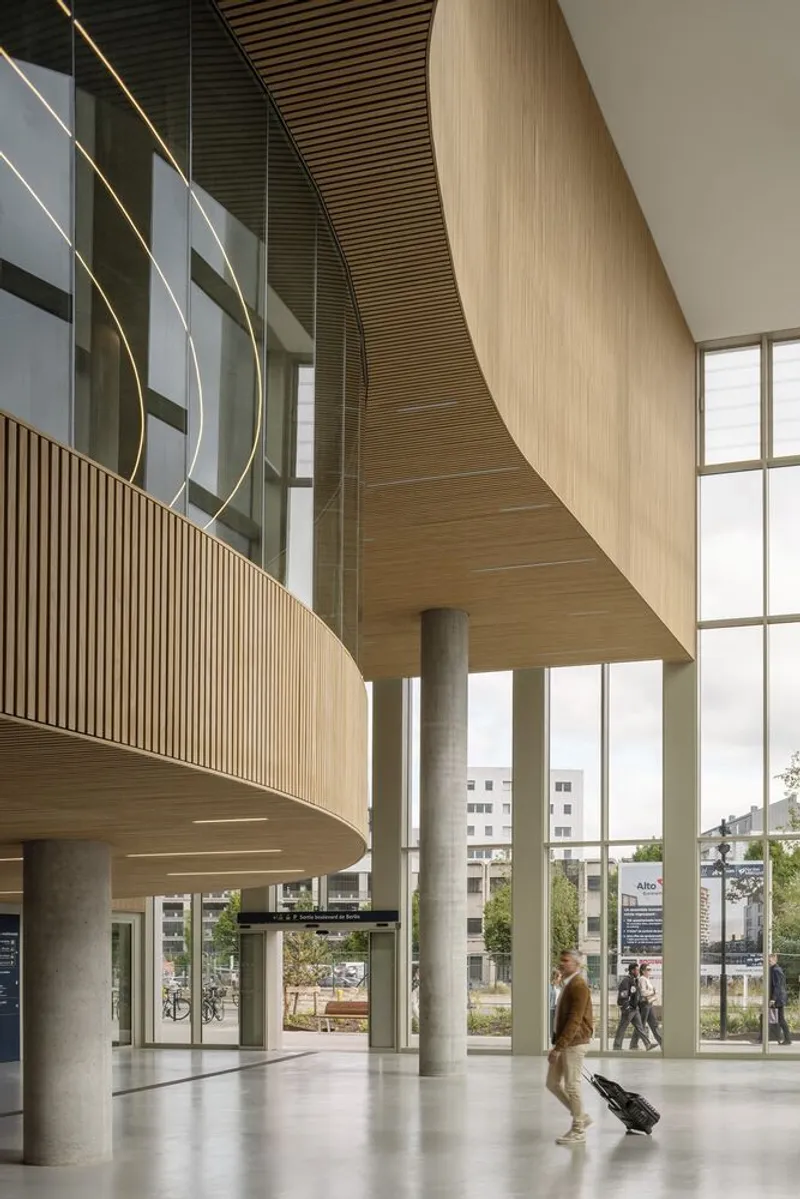
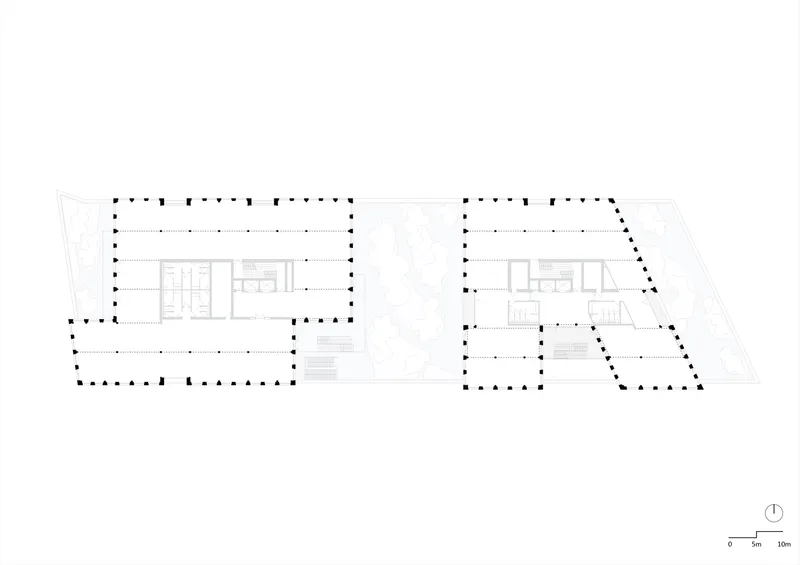
The project rises across nine levels: four dedicated to the multimodal hub and five to office spaces. The vertical layout reduces ground coverage, fostering efficient urban density. Accessibility defines the design, with ramps, escalators, and moving walkways creating seamless circulation. This approach embodies inclusivity and efficiency, presenting a fluid architectural experience that responds to the rhythm of modern urban life.
Flexibility and Openness
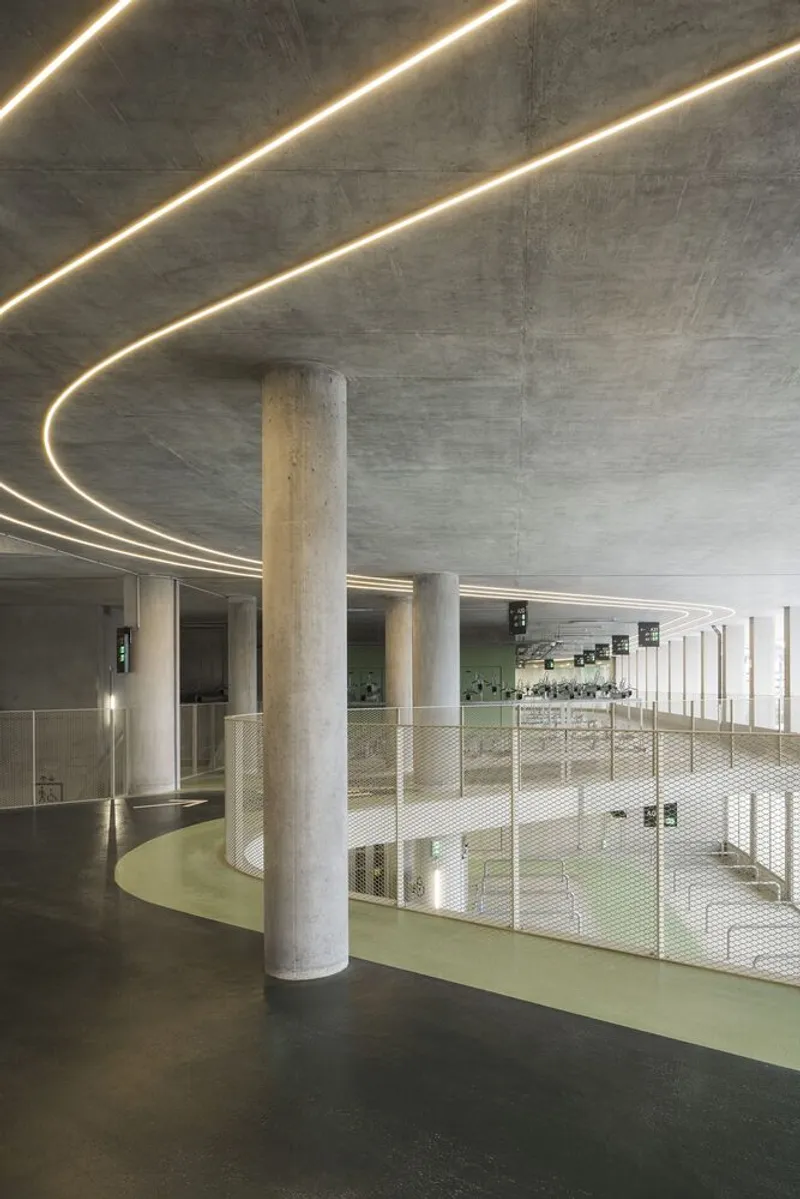
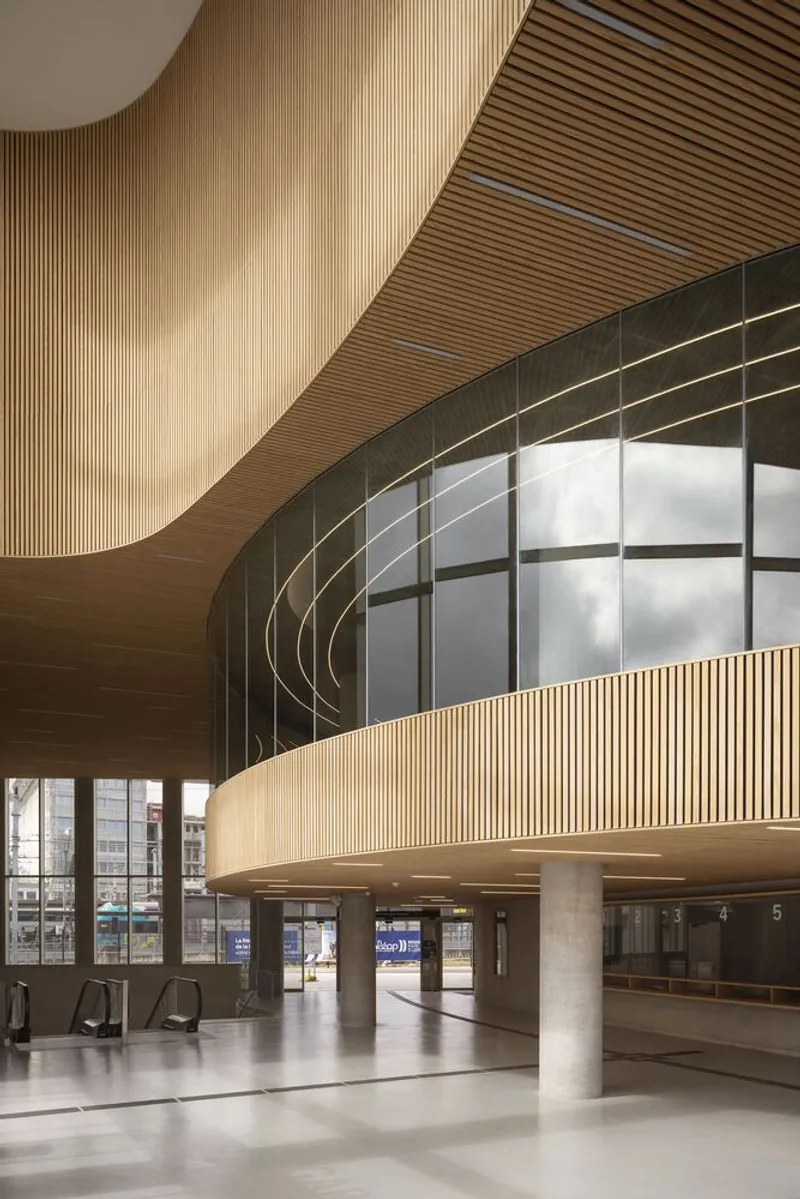
The hub’s concrete post-and-beam structure allows for long spans, flexible layouts, and visual openness. Large bay windows and curved lines establish direct connections with public space, inviting light and movement into the interiors. The “Grand 8” bicycle parking loop—visible from the mezzanine lobby—anchors the hub as both a functional and symbolic feature. By decompartmentalizing uses, the project fosters interaction and flow across spaces.
Offices Rooted in Domesticity
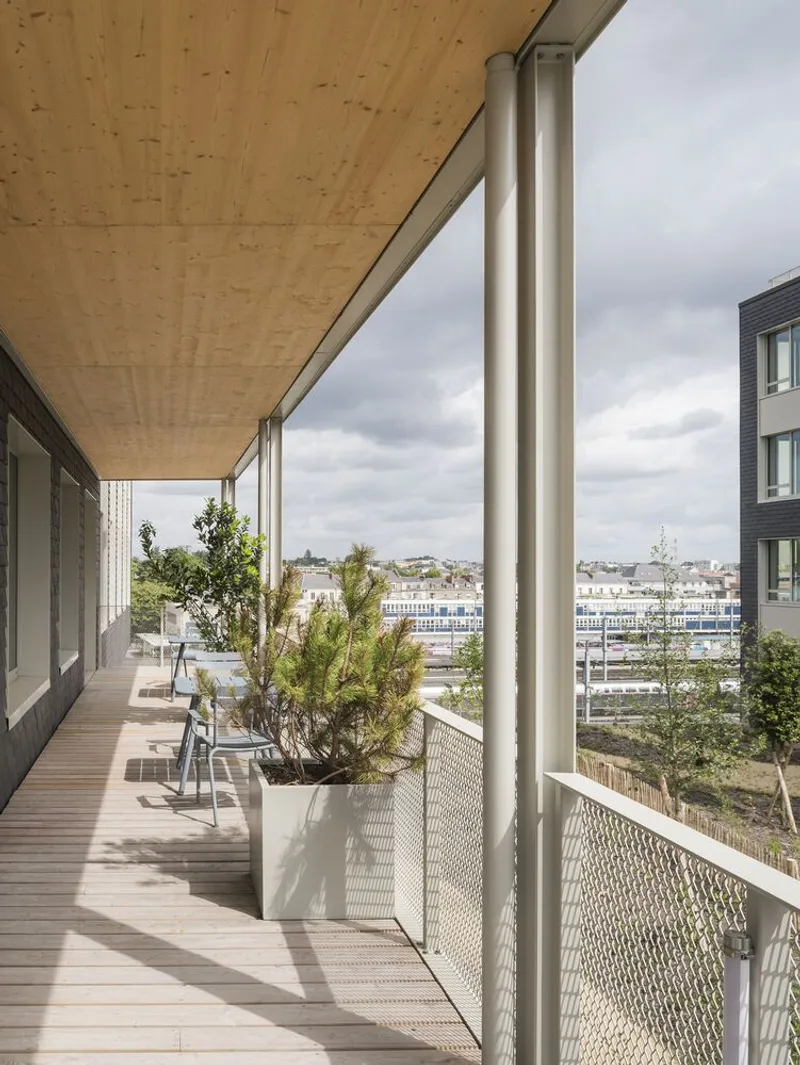
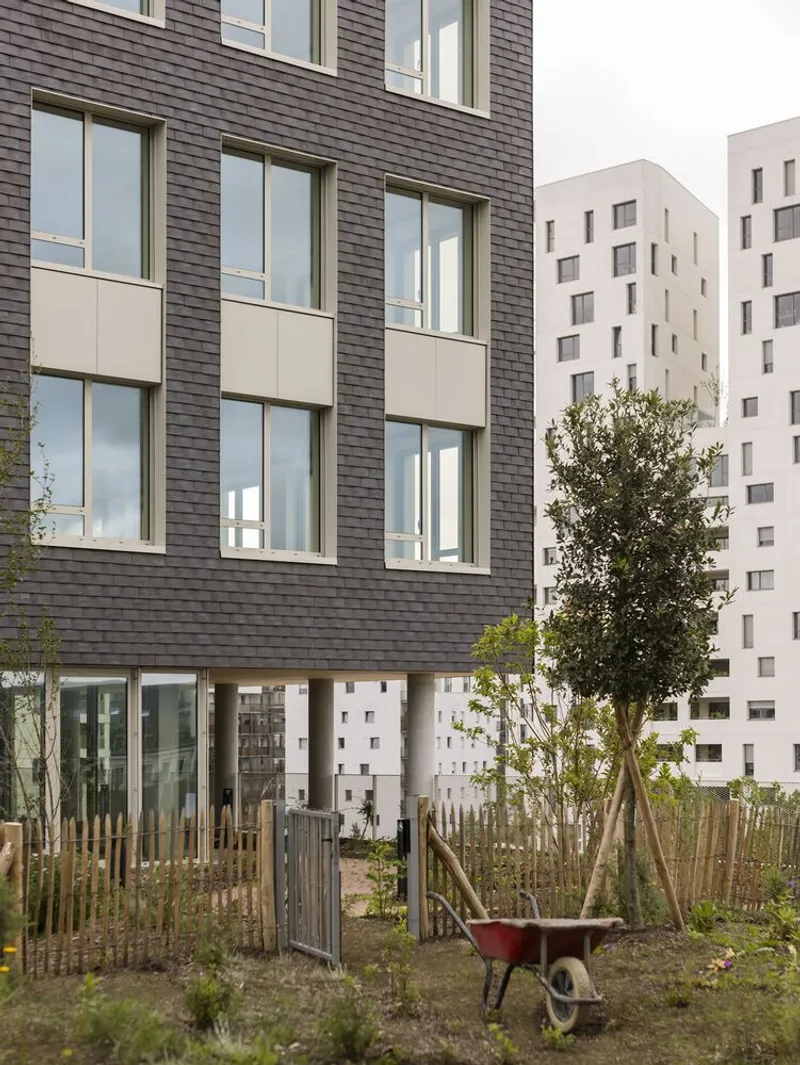
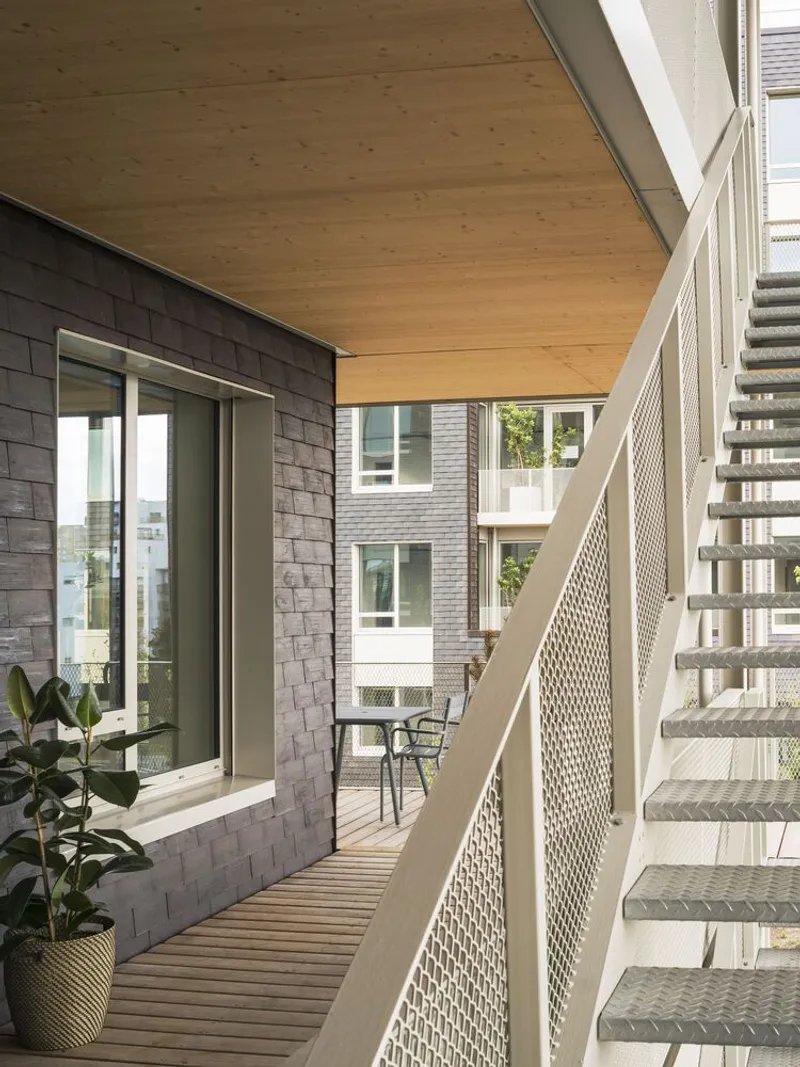
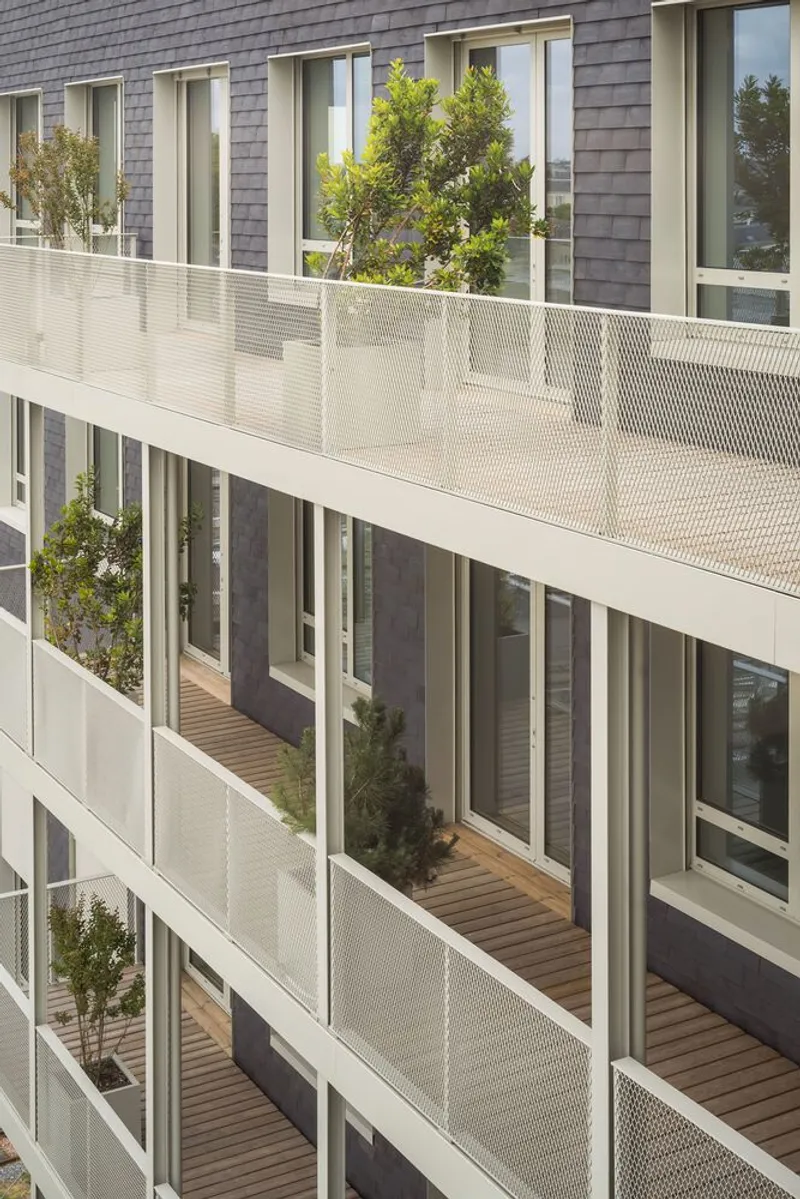
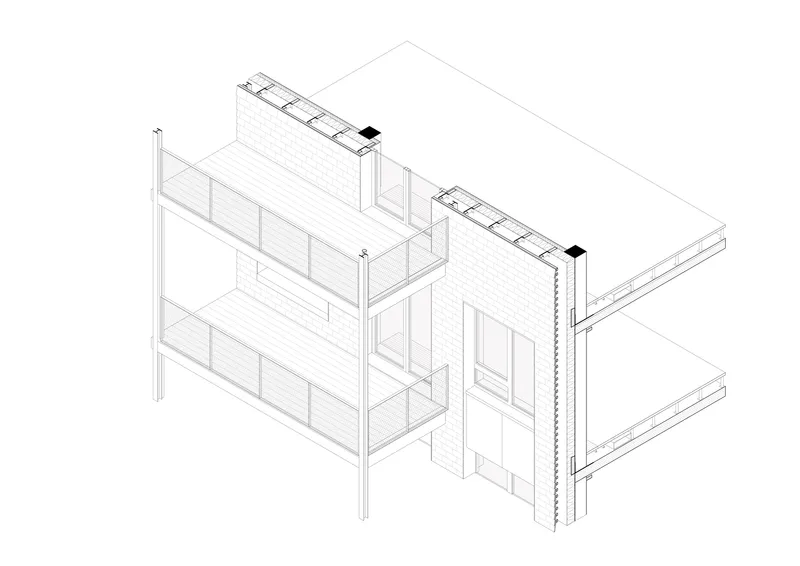
Above the transport layers, the offices adopt a human-centered design. Outdoor terraces extend the work environment, encouraging informal exchanges and a balance between professional and social life. Raw materials—wood, terracotta tiles, and vegetation—establish warmth and familiarity, moving away from cold corporate typologies. Exterior circulation reinforces movement and spontaneous encounters, shaping a permeable architecture that resonates with the energy of the district.
Visible Wood as an Architectural Statement
Inside, the offices are a manifesto for timber architecture. Solid wood structures and CLT floors remain exposed, expressing material honesty and environmental responsibility. Networks are concealed within raised floors, freeing up volumes and highlighting the beauty of raw wood. The luminous interiors, combined with natural ventilation, create flexible and health-oriented workplaces, aligning architecture with well-being.
The Collective Rooftop Garden
Twelve meters above the city, a 1,690 m² rooftop garden crowns the building. This elevated green space enhances biodiversity, improves thermal comfort, and offers panoramic views of Nantes. Beyond ecology, it functions as a communal space for employees and visitors, fostering social interaction and reinforcing the project’s commitment to shared well-being. With regional plantings and local stone, the garden pays homage to the cultural and natural identity of the Loire region.
Sustainable and Off-Site Construction
The project demonstrates environmental responsibility through off-site construction techniques. Prefabricated timber facades, CLT floors, and laminated wood structures were manufactured regionally, reducing construction time and environmental impact. This modular approach ensured precision and quality while minimizing disruption in the dense urban site.
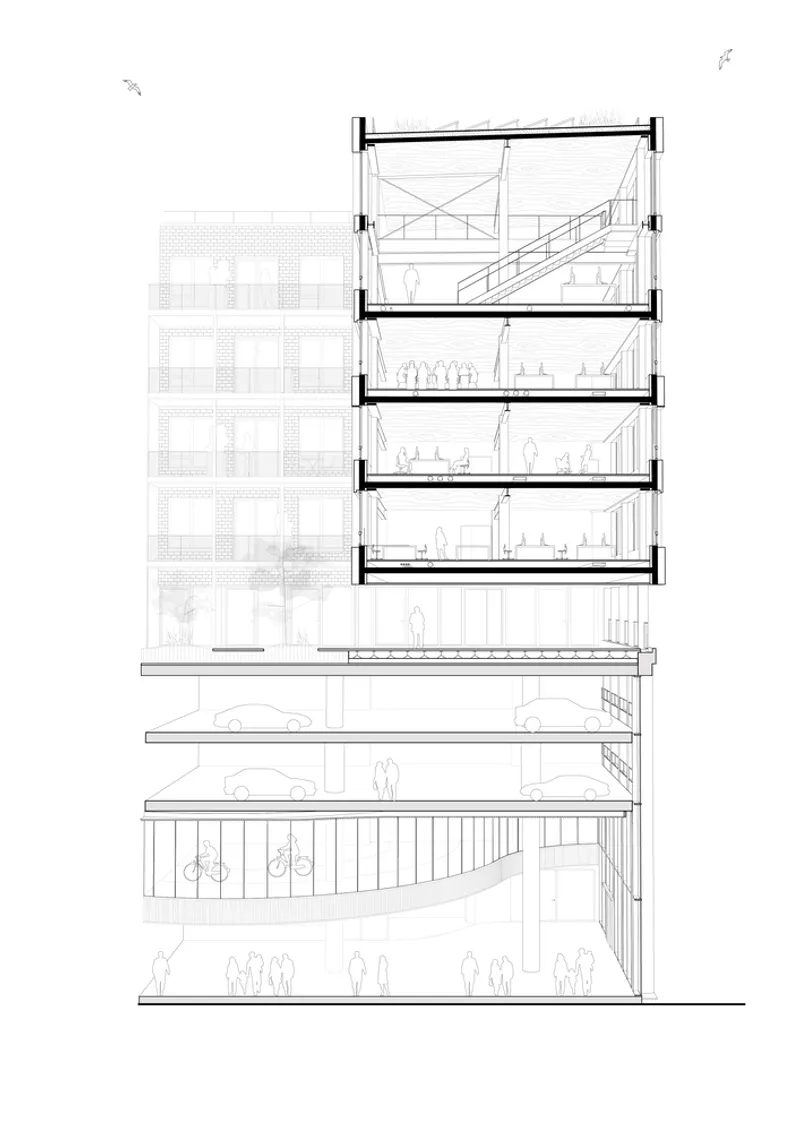
The Multimodal Hub and Offices redefine sustainable office architecture in Nantes, blending mobility, ecological responsibility, and workplace well-being. More than a functional building, it is a living manifesto for the future of urban development—flexible, inclusive, and deeply connected to its city.
All Photographs are works of Cyrille Weiner, Stéphane Chalmeau


Popular Articles
Popular articles from the community


Conexión: Biophilic Design Reimagines High-Rise Living in Hong Kong
Conexión reimagines high-rise living in Hong Kong through biophilic design, green facades, shared spaces, daylight, water and nature within.

Little Red Riding Hood: Architectural Design as a Journey Through Fear, Light, and Storytelling
Little Red Riding Hood reimagines the fairy tale through architectural design shaped by fear, light, scale, memory, uncertainty, and choice.

Co-life: Sustainable Architecture for Age-Friendly Community Living
Co-life reimagines sustainable architecture for seniors through courtyards, rammed earth, shared gardens, and spaces designed for belonging.

Lunar Spiral: Space Architecture Shaped by the Mathematics of the Universe
Lunar Spiral reimagines space architecture through Fibonacci geometry, lunar regolith, levitating habitats, and self-sustaining Moon living.

Similar Reads
You might also enjoy these articles

Bamboo Housing Challenge 2026: Design Affordable, Sustainable Homes Using Bamboo
An international design competition by Bamboo U and IBUKU inviting architects and designers to reimagine affordable housing using bamboo — with the winning design built full-scale in Bali.

Computational Design & Education: Beegraphy Design Awards Introduces 7th Category (Featuring Jiyun's Innovative Approach)
Dive into Beegraphy’s 7th Design Awards category, where computational design meets education to create immersive, interactive learning tools, inspired by Jiyun’s work.
From Parametric Lighting to Urban Furniture: Join the 2nd Workshop in Beegraphy’s Computational Design Series
Dive into Cutting-Edge Design Techniques and Practical Applications with Industry Experts

Last Call: Unleash Your Architectural Genius in SHAK's Kindergarten Design Competition
Urgent call for architects to join SHAK's kindergarten design competition before the looming deadline

Explore Architecture Competitions
Discover active competitions in this discipline

Challenge to reimagine the Iron Throne

Photograph architecture without architects

Illustrate the lost glory of Angkor Wat - Render Challenge

Design challenge to reuse E-waste
Comments (0)
Please login or sign up to add comments
No comments yet. Be the first to comment!