
Sustainable Wooden House: The Organic Architecture of LUM House
LUM House is a sustainable wooden house that harmonizes organic architecture, passive design, and spiritual connection with nature.


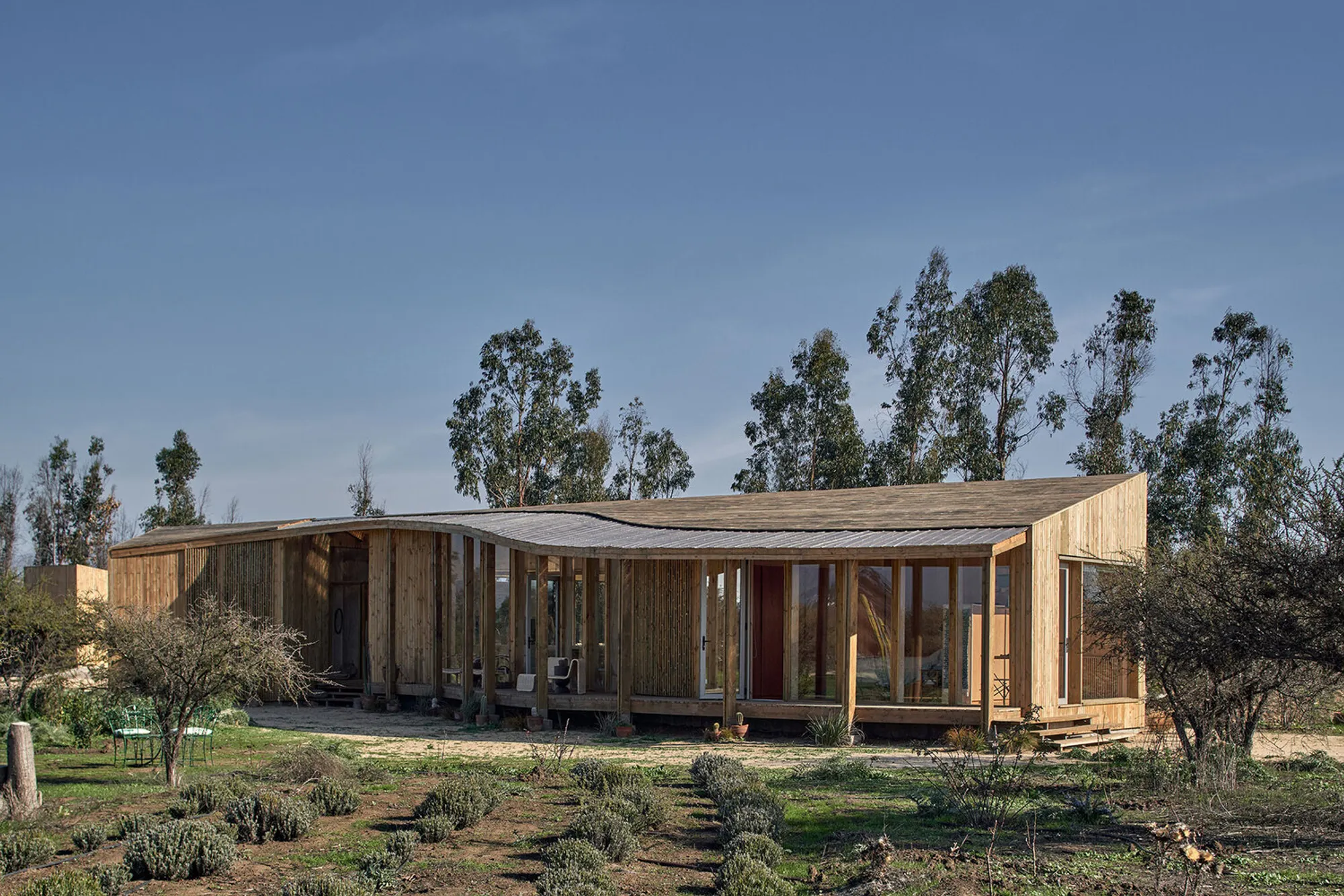
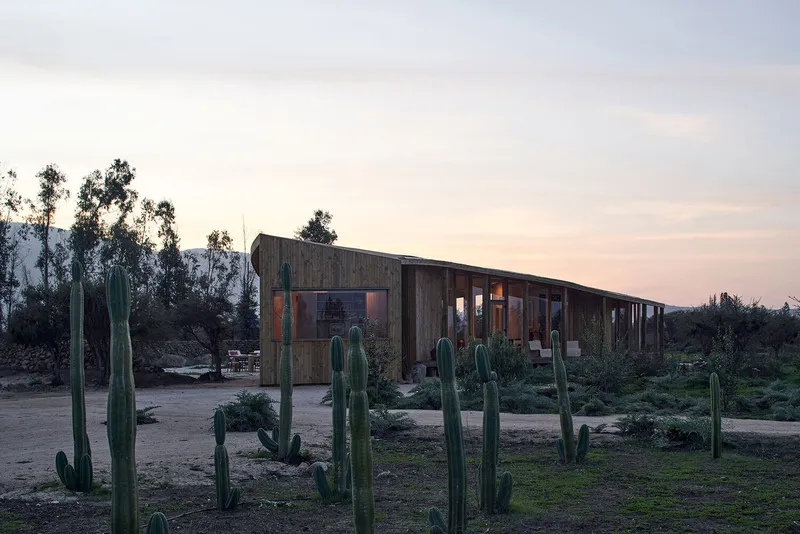
A sustainable wooden house is more than just a shelter—it is a dialogue between architecture and nature. Designed by renowned Chilean architect Cazú Zegers, the LUM House is a prime example of how architecture can integrate with its surroundings while maintaining a strong design narrative. Located in the Chilean countryside, this project embodies an organic approach to construction, responding to the natural rhythms of the landscape and the personal rituals of its owners.
A House Inspired by Nature and Spirituality
The story of LUM House begins with its owners, a middle-aged couple devoted to working with plants and essential oils. They envisioned a home that would reflect their deep connection to nature and their daily rituals of meditation and contemplation. The name "LUM," derived from "La Ultima Morada" (The Last Resting Place), encapsulates the idea of a peaceful retreat in harmony with the land.
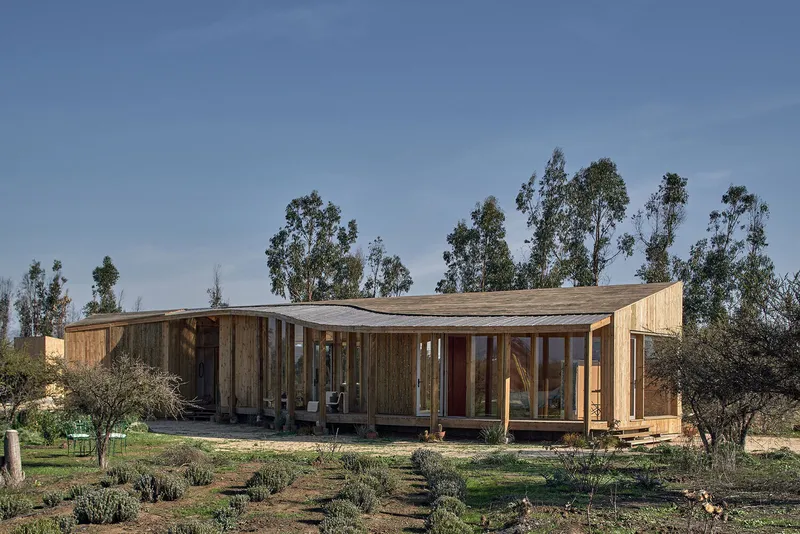
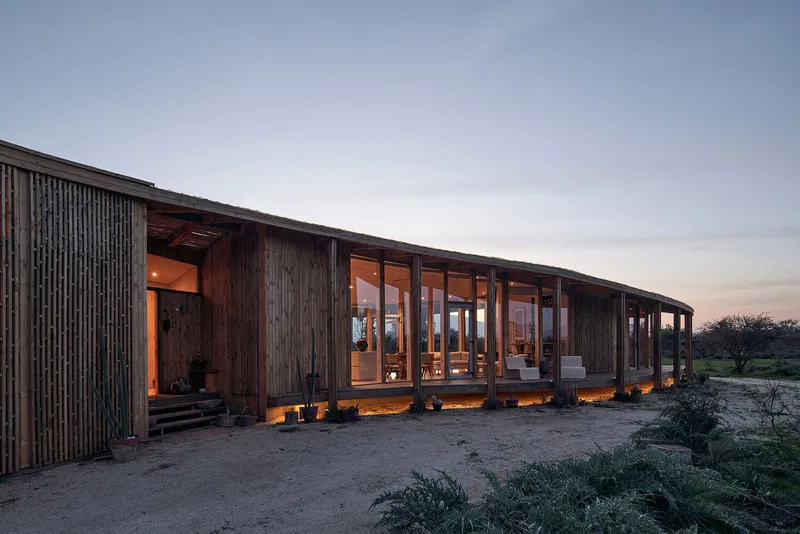
The architectural concept is rooted in the Fibonacci sequence, a mathematical pattern often found in plant growth. The house follows a serpentine form that mirrors these spirals, seamlessly blending into the landscape. The design is also aligned with astrological events, particularly the sunrise and moonrise, reinforcing the owners’ spiritual connection to the cosmos.
A Pavilion That Floats Over the Land
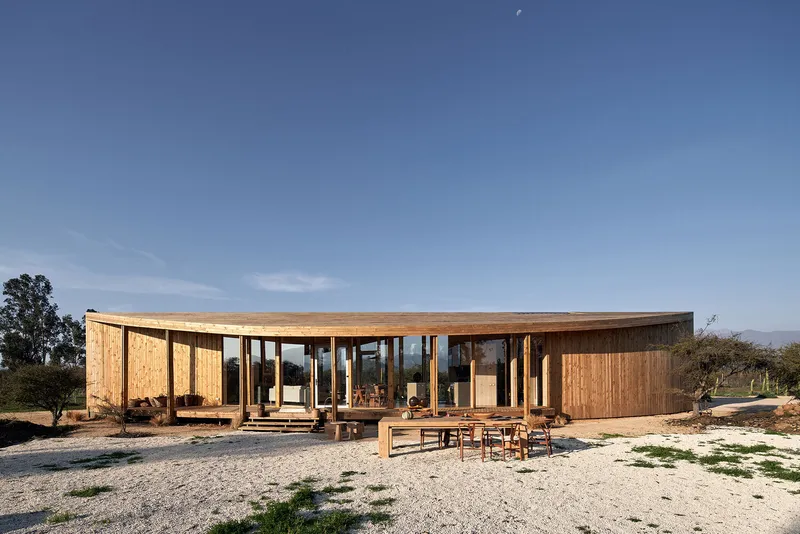
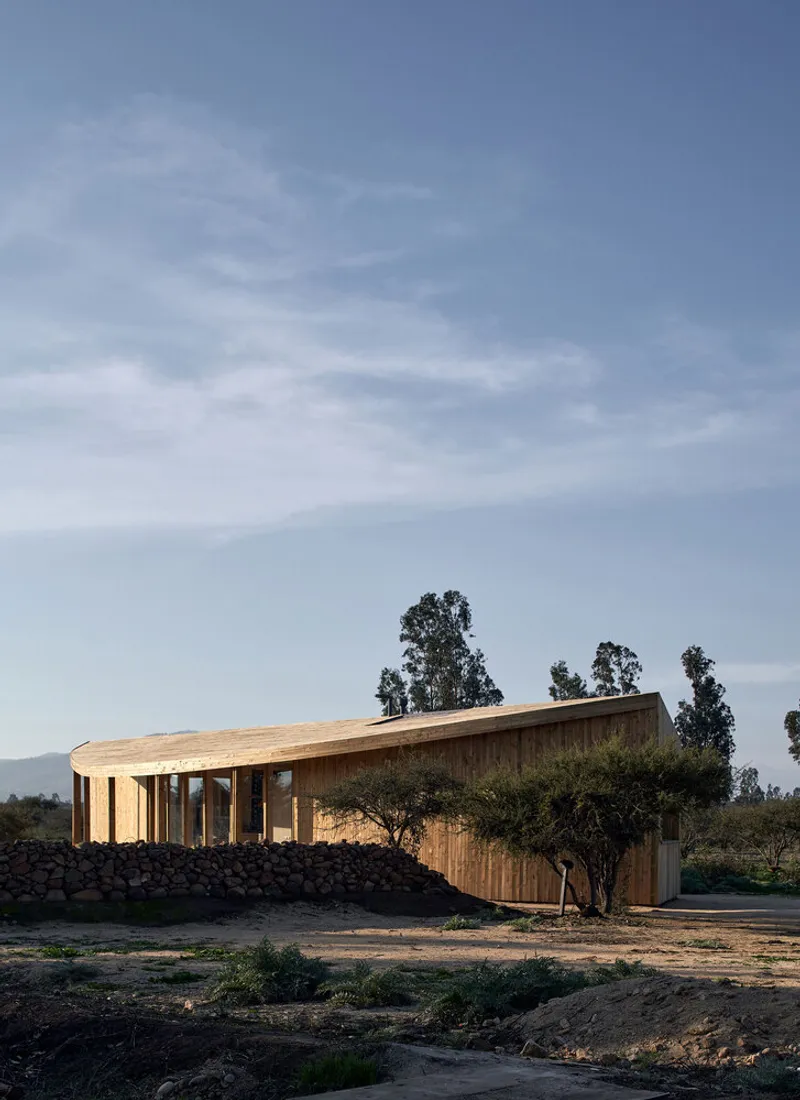
One of the defining characteristics of this sustainable wooden house is its sense of weightlessness. To address the region’s tendency to flood in winter, the entire structure is elevated 40 centimeters above the ground. This not only ensures practical protection from water but also enhances the visual effect of a floating pavilion.
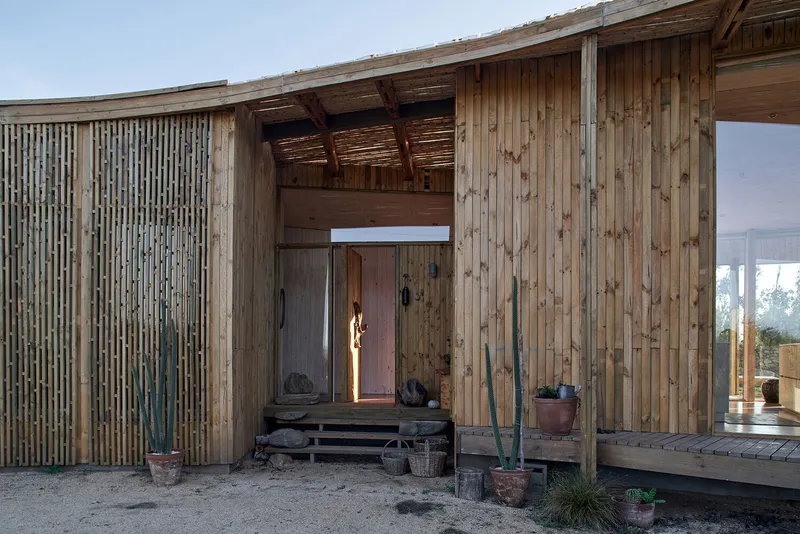
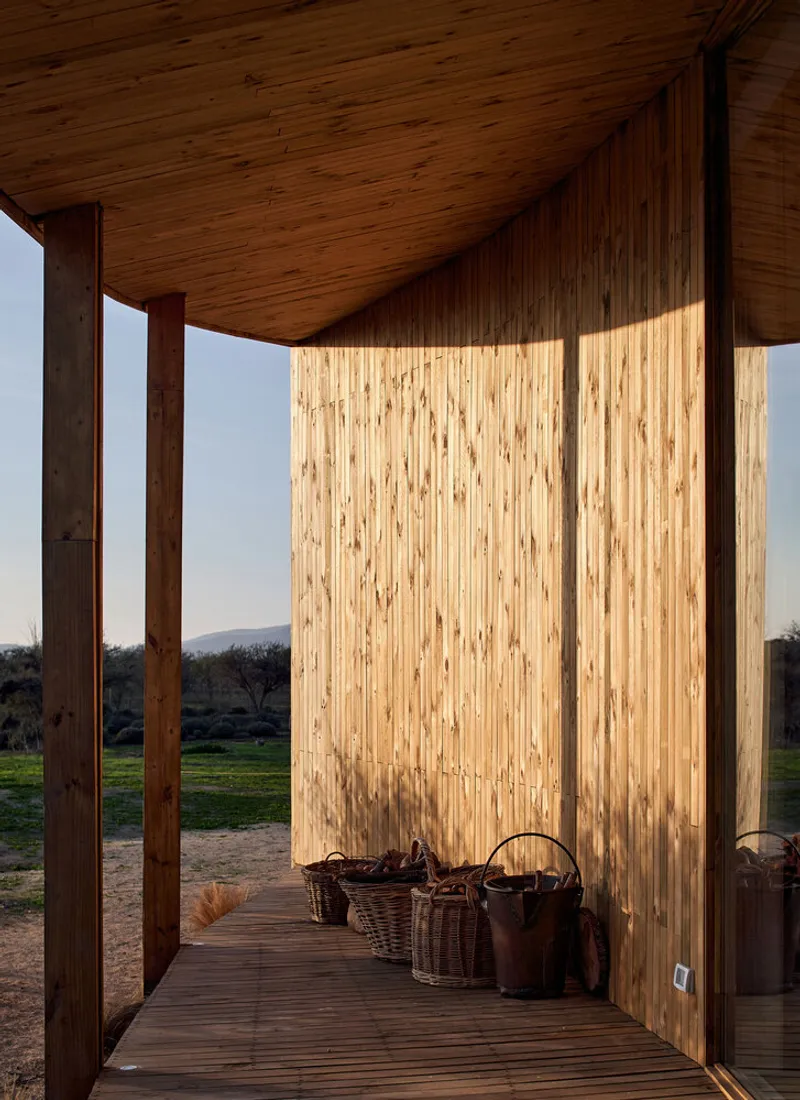
The design emphasizes openness, allowing the house to engage with its surroundings while maintaining an intimate atmosphere. Timber columns extend from the ground to support the terraces, reinforcing the idea of an architectural structure that is both rooted in the earth and suspended above it.
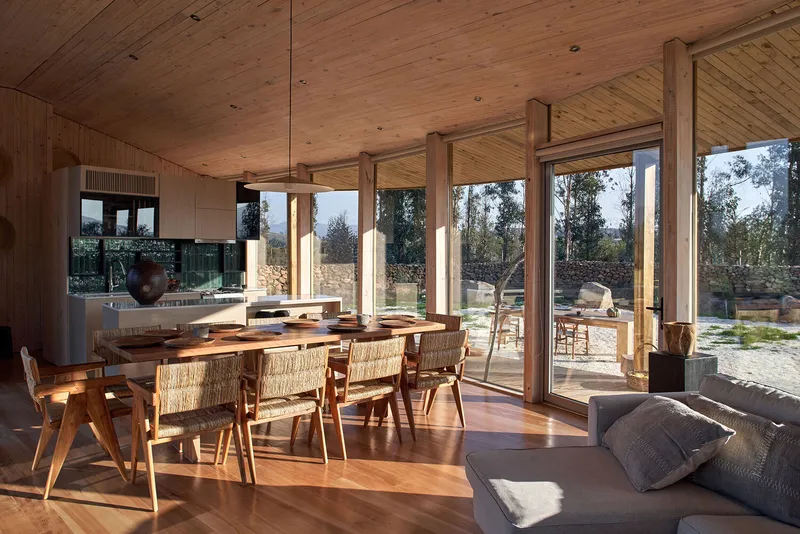
Organic Forms and Seamless Interiors
The architectural composition of LUM House is dominated by smooth, flowing curves. The roof, which defines the entire volume, follows a diagonal ridge that creates a compact yet dynamic structure. Inside, walls continue this fluidity, with curving lines that erase the presence of doors, making spaces feel continuous and immersive.
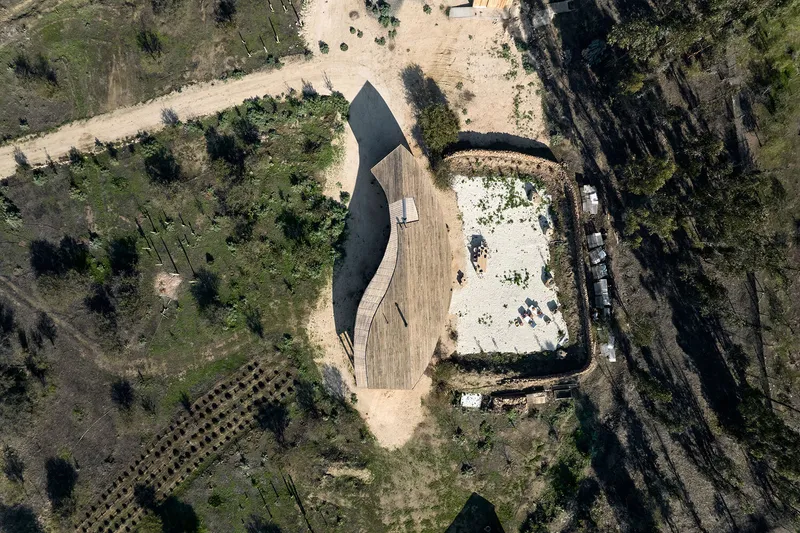
The spatial organization is both functional and poetic. The living area and bedroom can merge into one private space, providing flexibility depending on the presence of guests. The entrance, positioned between the main house and the studio, introduces a sense of transition that reflects the natural movement of the site.
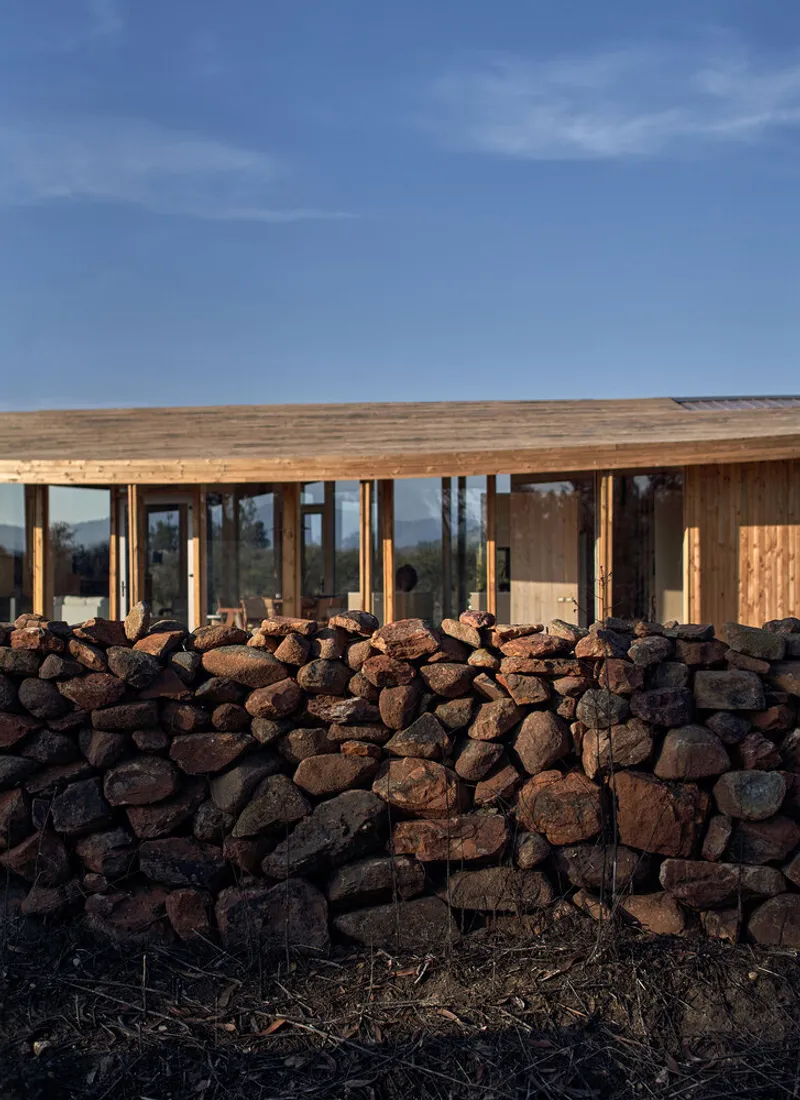
Sustainability and Passive Design Strategies
LUM House is a model of sustainability, designed with both energy efficiency and environmental harmony in mind. The architects prioritized the thermal performance of the walls, floors, and roof by implementing Passivhaus principles. This approach minimizes energy consumption by optimizing insulation and controlling solar exposure.
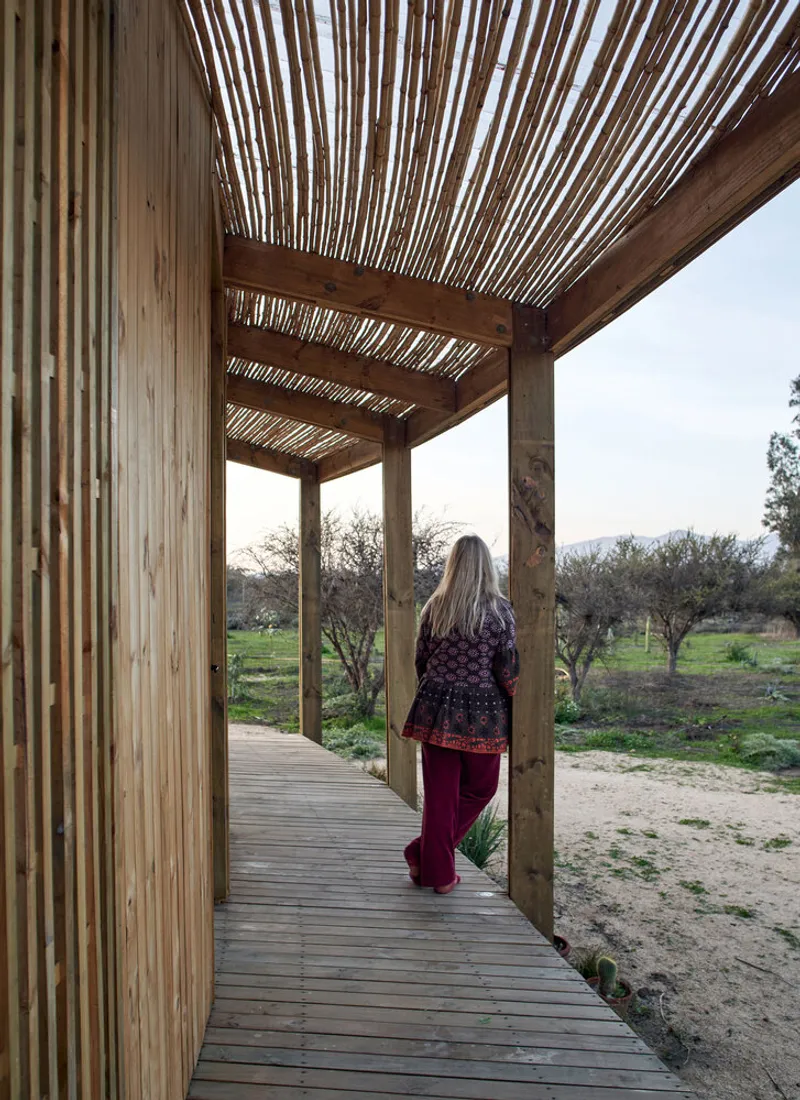
Externally covered corridors act as climate buffers, protecting the house from excessive heat while maintaining a connection with the outdoors. These semi-open spaces are oriented to the east and west, ensuring a balanced microclimate throughout the day. Despite some climatic inefficiencies—such as the quartz rock garden placed to enhance spiritual rituals rather than solar efficiency—the overall design successfully integrates ecological responsibility with the owners' personal philosophies.
The Essence of a Sustainable Wooden House
LUM House is more than just an architectural project; it is a testament to the power of design to reflect human aspirations and environmental consciousness. The seamless integration of wood, organic forms, and passive sustainability strategies makes it a compelling example of a modern sustainable wooden house.
By respecting the rhythms of nature and incorporating the owners' way of life into its design, this house proves that sustainability is not just about energy efficiency—it is about creating a living space that enhances well-being and deepens the connection between people and their environment.
All Photographs are works of Cristóbal Palma



Popular Articles
Popular articles from the community


The Ocean Hive: Sustainable Architecture for a Self-Sufficient Civilization at Sea
The Ocean Hive imagines sustainable architecture at sea, where modular habitats, algae, wave power and ocean waste sustain a growing colony.

Play: Fragments of Their World
Familiar architecture becomes modular playground design, creating safe spaces where displaced children can learn, connect, imagine and play.

Hill & Cross Opera: Sculptural Opera House Architecture Shaped by Tallinn’s Landscape and Identity
Hill & Cross Opera reimagines opera house architecture in Tallinn through its sculptural hill, civic plaza, glass wave and a luminous cross.

Co-Life: Senior Housing Design That Reconnects Older Adults With the City
Co-Life reimagines senior housing design through healing gardens, shared streets, workshops, and a sustainable community across generations.
Similar Reads
You might also enjoy these articles

Bamboo Housing Challenge 2026: Design Affordable, Sustainable Homes Using Bamboo
An international design competition by Bamboo U and IBUKU inviting architects and designers to reimagine affordable housing using bamboo — with the winning design built full-scale in Bali.

Computational Design & Education: Beegraphy Design Awards Introduces 7th Category (Featuring Jiyun's Innovative Approach)
Dive into Beegraphy’s 7th Design Awards category, where computational design meets education to create immersive, interactive learning tools, inspired by Jiyun’s work.
From Parametric Lighting to Urban Furniture: Join the 2nd Workshop in Beegraphy’s Computational Design Series
Dive into Cutting-Edge Design Techniques and Practical Applications with Industry Experts

Last Call: Unleash Your Architectural Genius in SHAK's Kindergarten Design Competition
Urgent call for architects to join SHAK's kindergarten design competition before the looming deadline
Explore Lumion Competitions
Discover active competitions in this discipline



Challenge to reimagine the Iron Throne


Photograph architecture without architects


Illustrate the lost glory of Angkor Wat - Render Challenge


Design challenge to reuse E-waste
Comments (0)
Please login or sign up to add comments
No comments yet. Be the first to comment!