
Sydney Central Station Renovation by Woods Bagot: A Landmark Transformation for Australia’s Largest Transport Hub
Sydney Central Station Renovation creates a light-filled, intuitive, and sustainable transport hub with new metro platforms, improved circulation, and enhanced heritage integration.


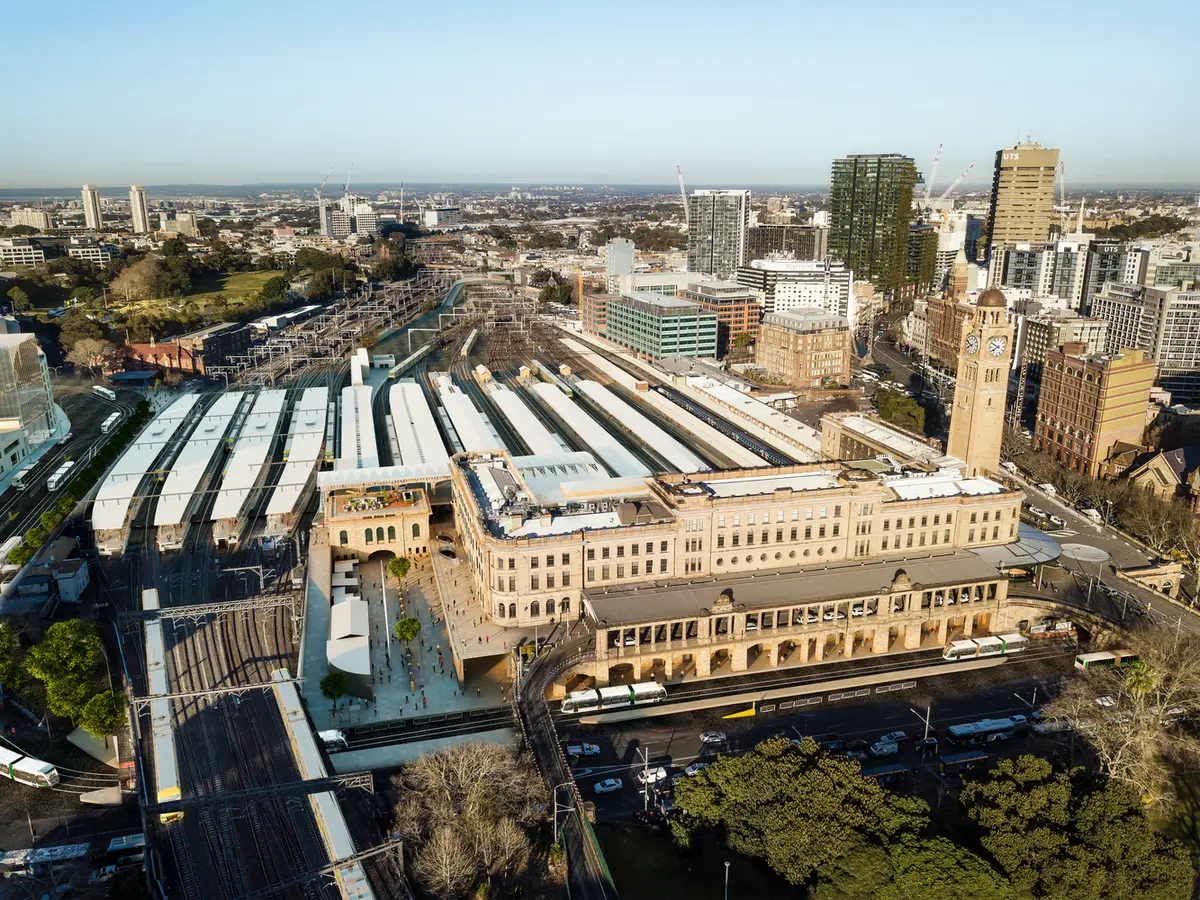
The Sydney Central Station Renovation by Woods Bagot represents one of the most ambitious transport infrastructure upgrades in Australia’s history. As part of the monumental Sydney Metro expansion, the project redefines the heart of the city’s rail network through advanced engineering, contemporary design, and a customer-centric vision. The result is a future-ready station that strengthens Sydney’s capacity, enhances public movement, and celebrates the historic identity of one of the country’s most iconic transport landmarks.

A Once-in-a-Century Transformation
Sydney Metro stands as the nation’s largest infrastructure initiative, introducing 31 new metro stations and over 66 kilometres of high-capacity metro rail across the metropolitan region. At its core lies Central Station, serving 96 percent of Sydney’s train services and acting as the anchor of the entire network. The renovation dramatically expands the station’s capacity, now able to accommodate 40,000 metro passengers per hour, a 60 percent increase from previous limits.
The redesign, led by Woods Bagot in collaboration with John McAslan + Partners and delivered by Laing O’Rourke, positions the customer experience and intuitive wayfinding as the central design drivers. The upgraded station now stands as a world-class transport interchange for a global city.


Design Vision: Open, Intuitive, and Human-Centered
Woods Bagot’s Principal and Transport Lead, John Prentice, describes the design approach as one that places users at the forefront. The introduction of expansive, light-filled spaces: most notably the new Northern Concourse roof and the highly legible Central Walk: dramatically improves circulation, comfort, and accessibility. Passengers now navigate the station with ease due to improved clarity, simplified routes, and enhanced visibility across levels.
Purposeful materials and sculptural forms have been carefully integrated to complement the station’s historic structure. A refined palette grounds the new architectural interventions within the local context while offering durability and a civic sense of permanence.


New Metro Platforms: Connecting Sydney’s Transport Future
At the heart of the renovation is the construction of two new metro platforms positioned beneath Intercity platforms 13 and 14. This engineered insertion creates a seamless interchange between the metro and Sydney’s suburban, intercity, and regional networks. The result is a transport environment that encourages faster transfers, reduces congestion, and supports long-term mobility growth across the city.
Central Walk: A High-Capacity Underground Concourse
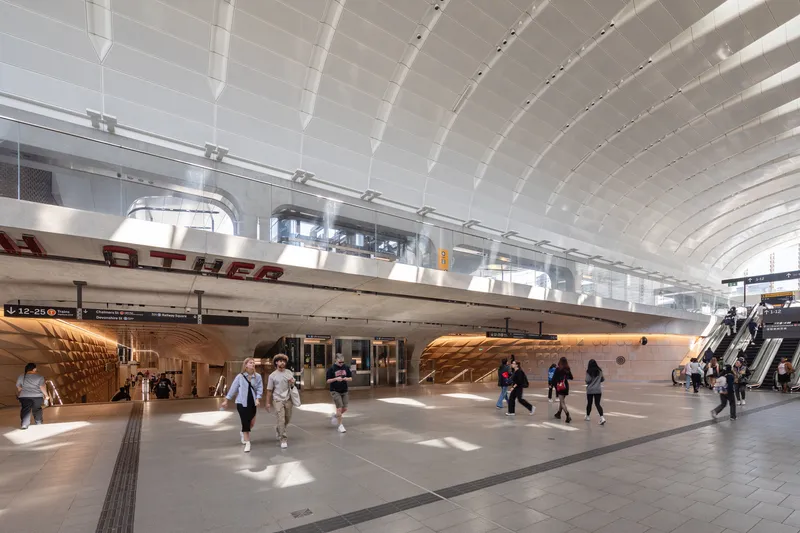
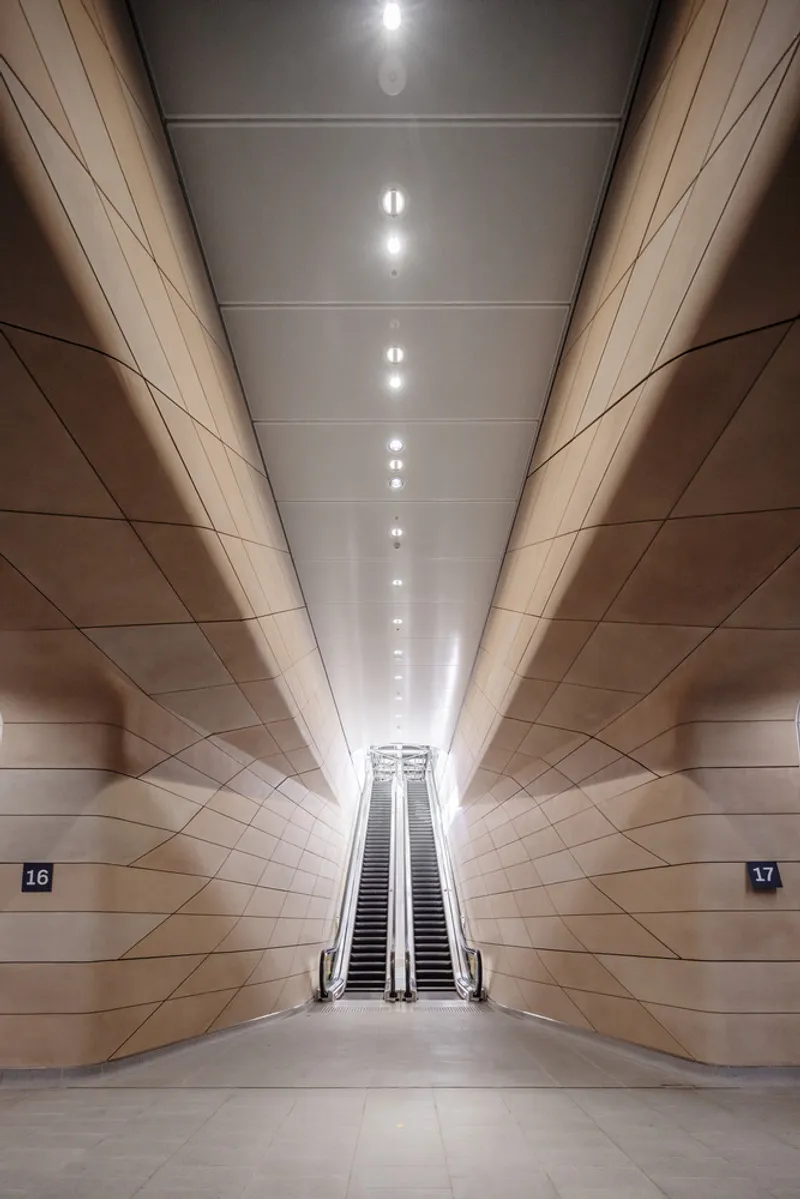
Another major feature of the project is Central Walk, a 19-metre-wide pedestrian concourse designed to optimize movement. This underground spine links Chalmers Street, the Sydney Light Rail, and suburban platforms 16 to 23 directly to the new metro platforms. Escalators and lift access have been added for the first time, transforming the station’s accessibility and enabling universal movement across all levels.
Materiality and Identity Rooted in Sydney’s Heritage
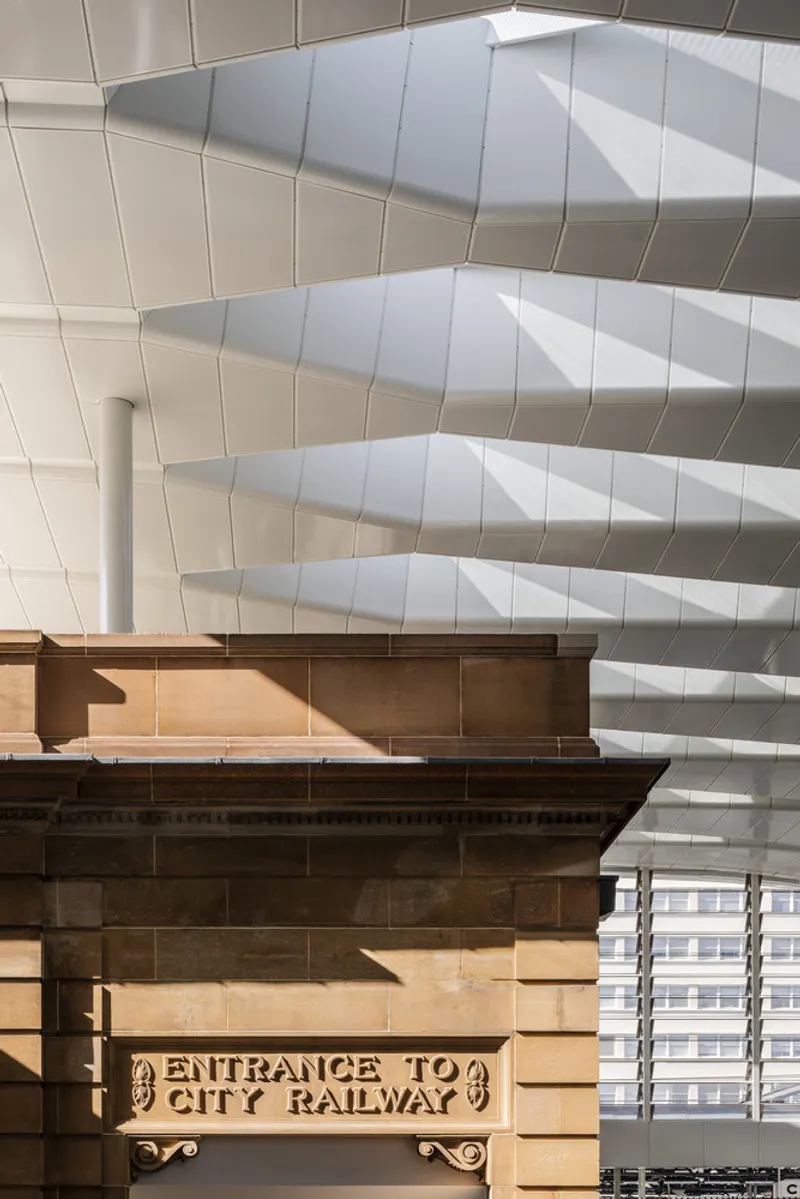
Global Design Director Domenic Alvaro highlights that the material choices reflect Sydney’s architectural nostalgia. The station’s elements are crafted to evoke the character and timelessness of the city while ensuring durability and clarity for mixed passenger flows. The result is a commuter experience that mirrors major international stations while delivering a distinctly local identity.


Unifying the Station: The North, South Concourse
A defining move in the renovation is the creation of a large, unified North, South Concourse and the refurbishment of the Northern Concourse. These interventions replace once-dark, fragmented pedestrian tunnels with an open, light-filled hall akin to grand train stations worldwide. Connectivity between precincts is significantly improved, offering a more intuitive and uplifting commuter journey.
McAslan + Partners’ Director in Sydney, Troy Uleman, describes the reimagined Northern Concourse as a new civic heart. The contemporary roof structure intersects respectfully with the historic Edwardian sandstone buildings, while kite-shaped skylights punctuate the space with natural daylight and a unique sense of place.

Sustainability and Innovation at the Forefront
The Sydney Central Station Upgrade has achieved exceptional sustainability recognition, including a 6-Star Green Star Design and As Built rating for the metro works and a Leading Infrastructure Sustainability (IS) rating for the refurbished station above. The new metro also reduces travel time across key destinations: just 4 minutes to Martin Place, 9 minutes to North Sydney, and 15 minutes to Chatswood.
A World-Class Station for a Global City
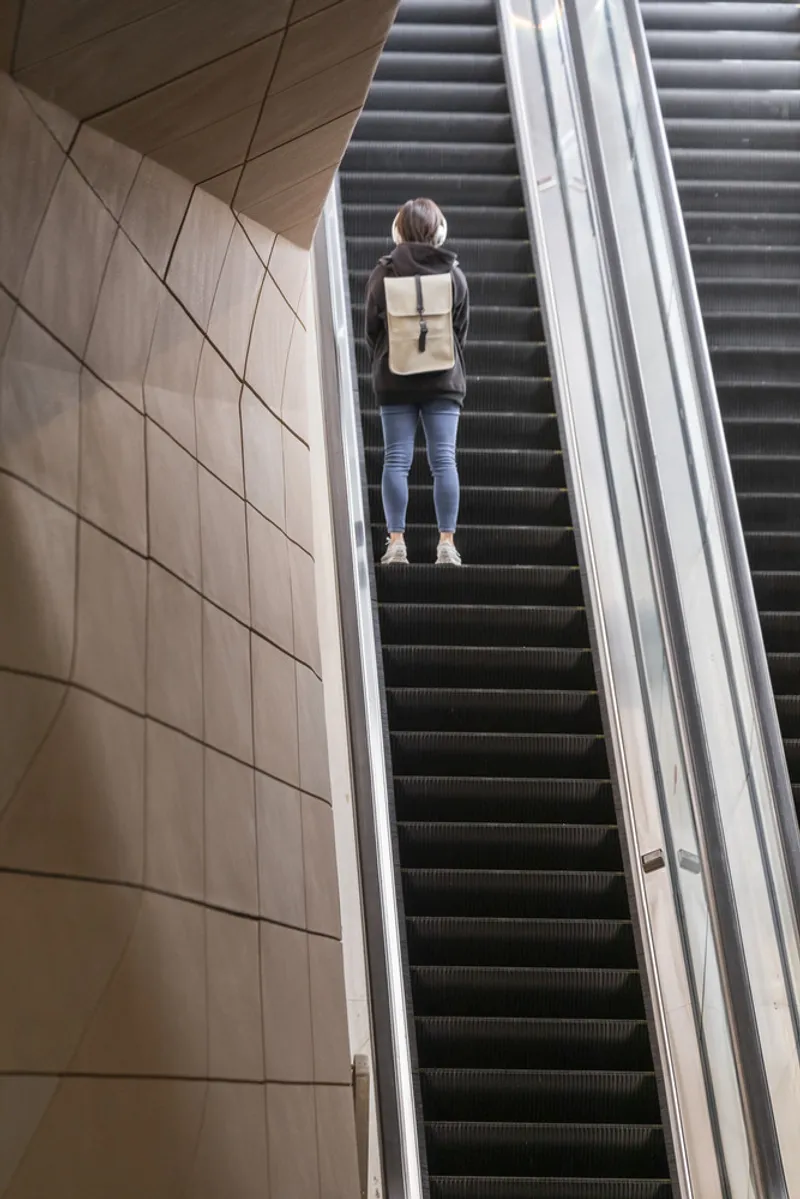
The Sydney Central Station Renovation elevates the commuter experience through thoughtful architecture, intuitive circulation, heritage integration, and sustainable innovation. Woods Bagot and its partners have delivered a transport environment that aligns with Sydney’s future aspirations: functional, sculptural, and deeply connected to its historic roots.


Popular Articles
Popular articles from the community


LT2A and OPEN Architectes Thread a Brick and Glass High School Through a Wooded Belgian Campus
In Braine-l'Alleud, a 3,000 m² wing for Collège Cardinal Mercier pairs pale brick with a glazed colonnade, deferring to a small chapel and a dense wood.

Juan García Correa, John González and Claudia Rueda Sink a Circular Amphitheater into a Manizales Engineering Building
On the La Nubia campus in Manizales, Colombia, the S1 Building folds labs and offices into a hillside of ramped lawns that double as a campus route.

longwave studio Reorganizes a 112 m² Tainan Apartment Around the Daily Routines of a Family and Two Cats
In Tainan, Taiwan, birch plywood, rust-red furniture and a freestanding plaster wall link arrival, storage, work and family life in one apartment.

David Macias Steps a Doorless Stone and Plaster House Down a Tropical Colombian Hillside
In the humid hills of Colombia, Threshold House replaces the front door with an open void and terraces its 850 m² down the slope instead of fighting it.

Similar Reads
You might also enjoy these articles


Hodi-Mandai Geram
Project Function: Preservation and revitalization of the Intangible heritage and socio-spatial identity of the Hodi by Housing, Cultural Memory Center, Sacred Grove, landscape, local tourism economy


Olio Towers: A Mid-Rise for Performers That Fuses Housing, Rehearsal, and Stage
Located blocks from Houston's Theater District, this modular tower stacks living units around a central performance atrium.

Oasis: Modular Green Housing Carved into Dhaka's Urban Fabric
A shortlisted Plugin Housing entry reclaims unauthorized settlements in Dhaka with stepped concrete volumes, green roofs, and ventilation-driven design.

Black Hole: A Floating Megastructure for the Post-Physical Era
Emiliano Mazzarotto envisions a spherical, self-scaling arena where e-sports, digital hotels, and holographic stadiums replace traditional public space.

Explore Citylink Competitions
Discover active competitions in this discipline

Challenge to reimagine the Iron Throne

Photograph architecture without architects

Illustrate the lost glory of Angkor Wat - Render Challenge

Design challenge to reuse E-waste
Comments (0)
Please login or sign up to add comments
No comments yet. Be the first to comment!