

Tecorral House by Claudia Rodriguez + Louise Rouzaud: A Low-Impact Earth Architecture Retreat in Valle de Bravo
Tecorral House blends earth architecture, stone tecorrales, and landscaped pathways to create a sustainable, nature-immersed retreat in Valle de Bravo.


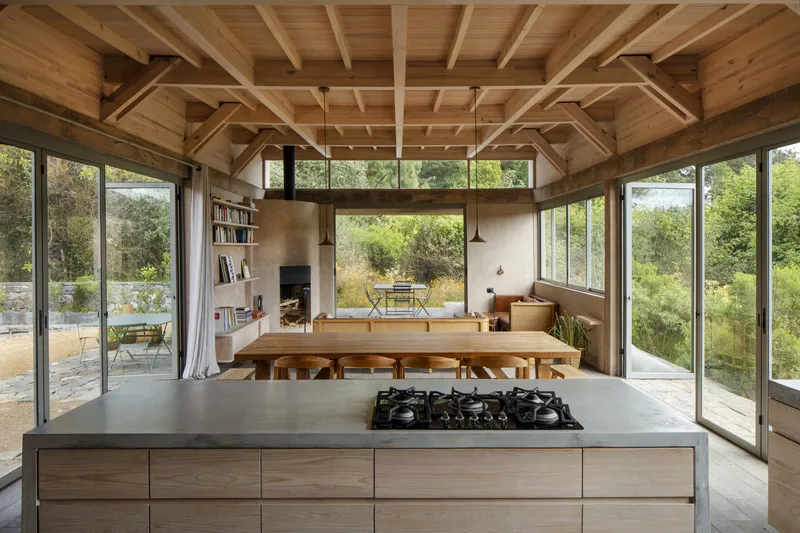
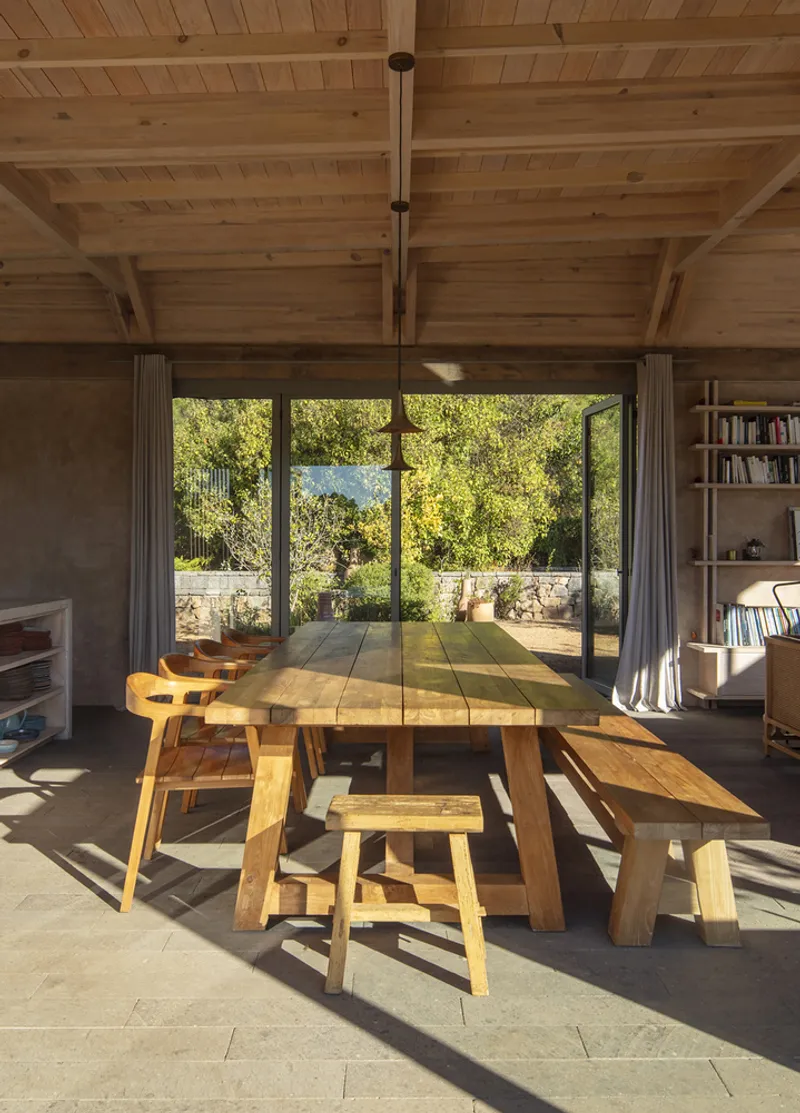
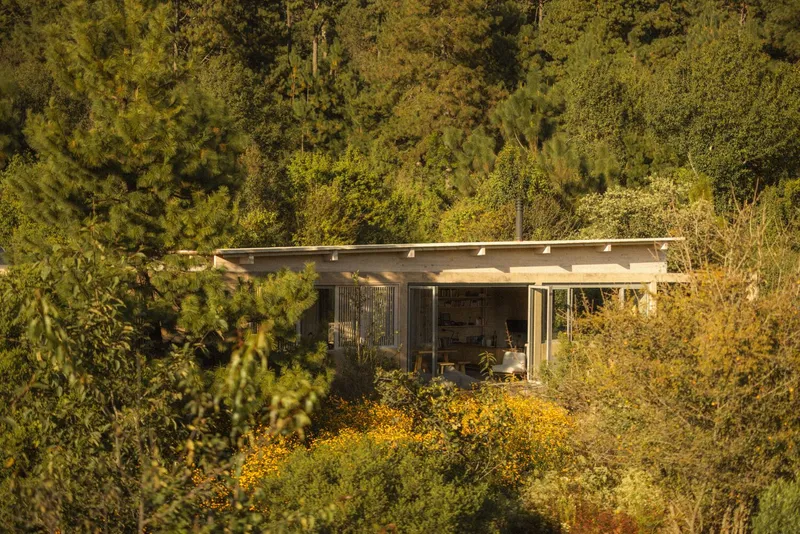
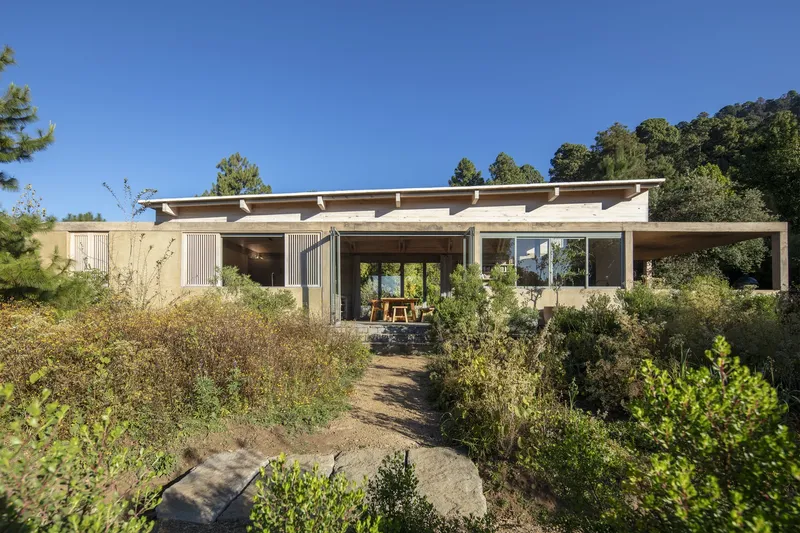
Tecorral House, designed by architects Claudia Rodriguez and Louise Rouzaud, stands within an ecological reserve near Valle de Bravo, Mexico, embracing a deep connection between contemporary living and the natural forested landscape. Completed in 2024 and spanning 380 m², the residence is composed of multiple single-story volumes distributed across the sloping terrain. This careful placement maximizes south-facing views, enhances passive environmental performance, and creates a sequence of intimate exterior and interior experiences defined by earth materials, stone walls, and lush gardens.
Landscape-Driven Composition
The house unfolds across the site in a series of independent volumes positioned at various levels to follow the natural contours. At the highest point, three main blocks form an enclosed interior garden that frames the surrounding mountains and anchors the home’s central living spaces. Additional private program elements extend outward among gardens, creating secluded pockets of retreat.
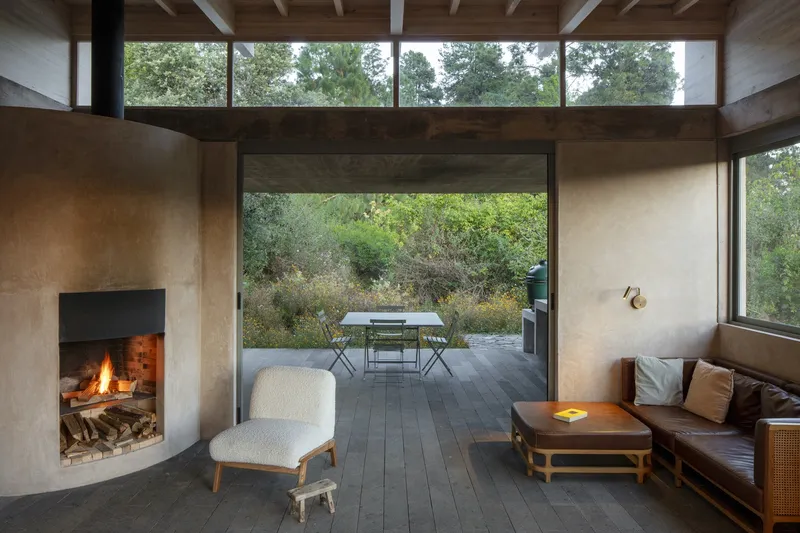
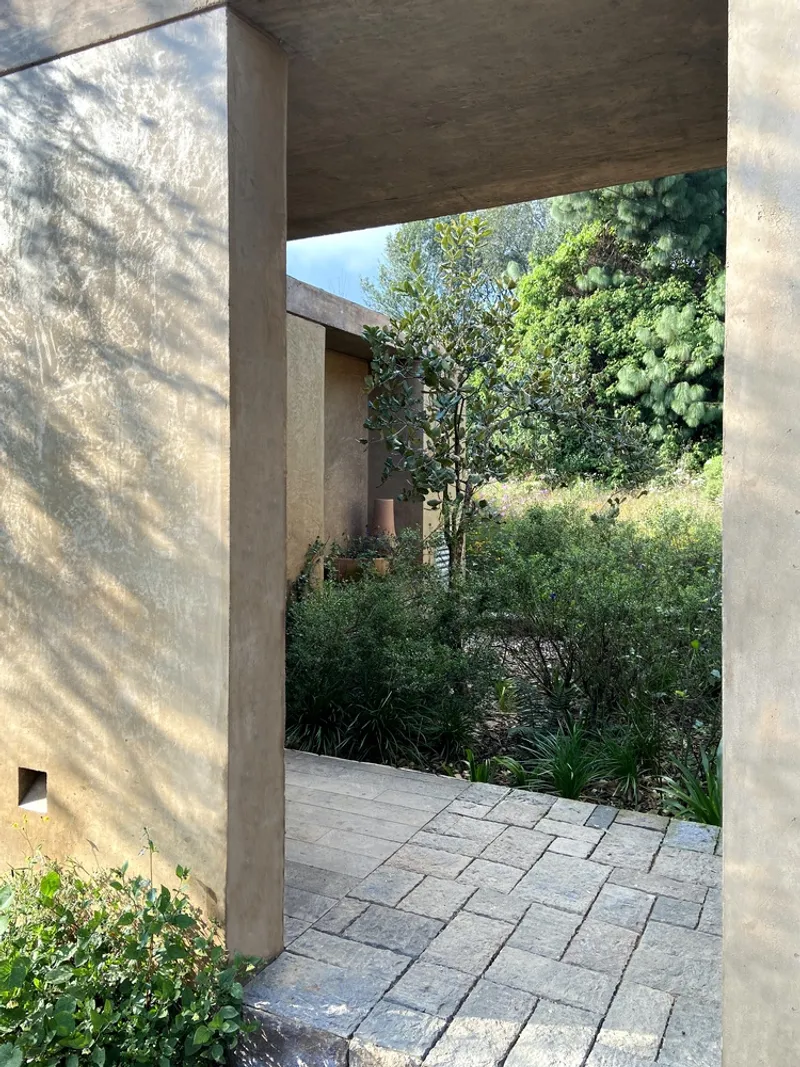
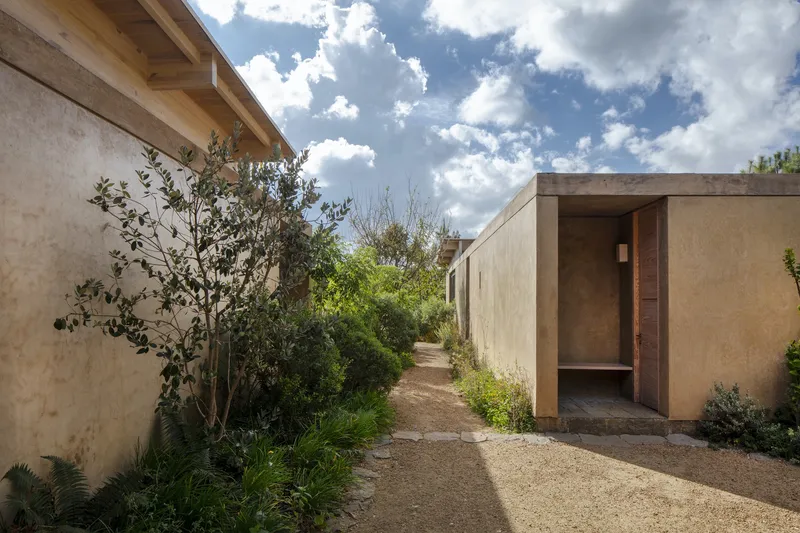
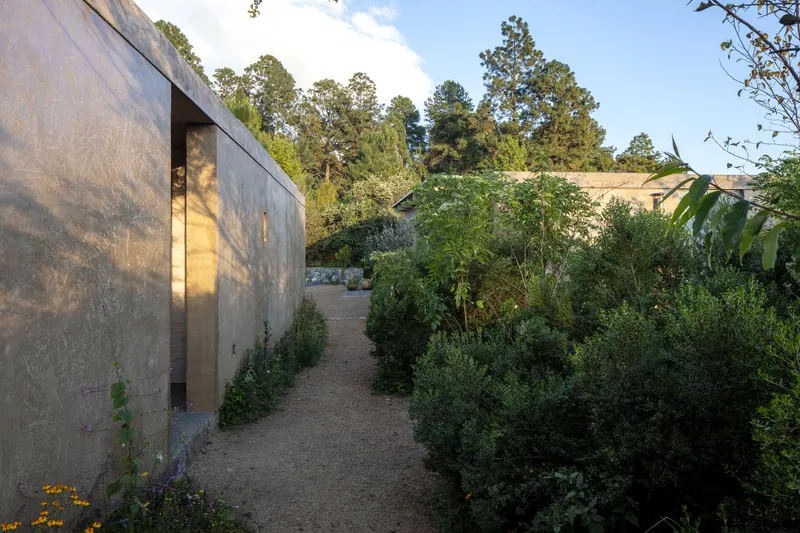
Circulation becomes a landscape journey: pathways weave between hallways, access patios, and covered terraces, functioning as transitional thresholds between forest and architecture. These interstitial spaces soften the boundary between indoors and outdoors, allowing the residence to breathe with the natural rhythms of the site.
The Tecorrales: Stone Lines That Shape the Architecture
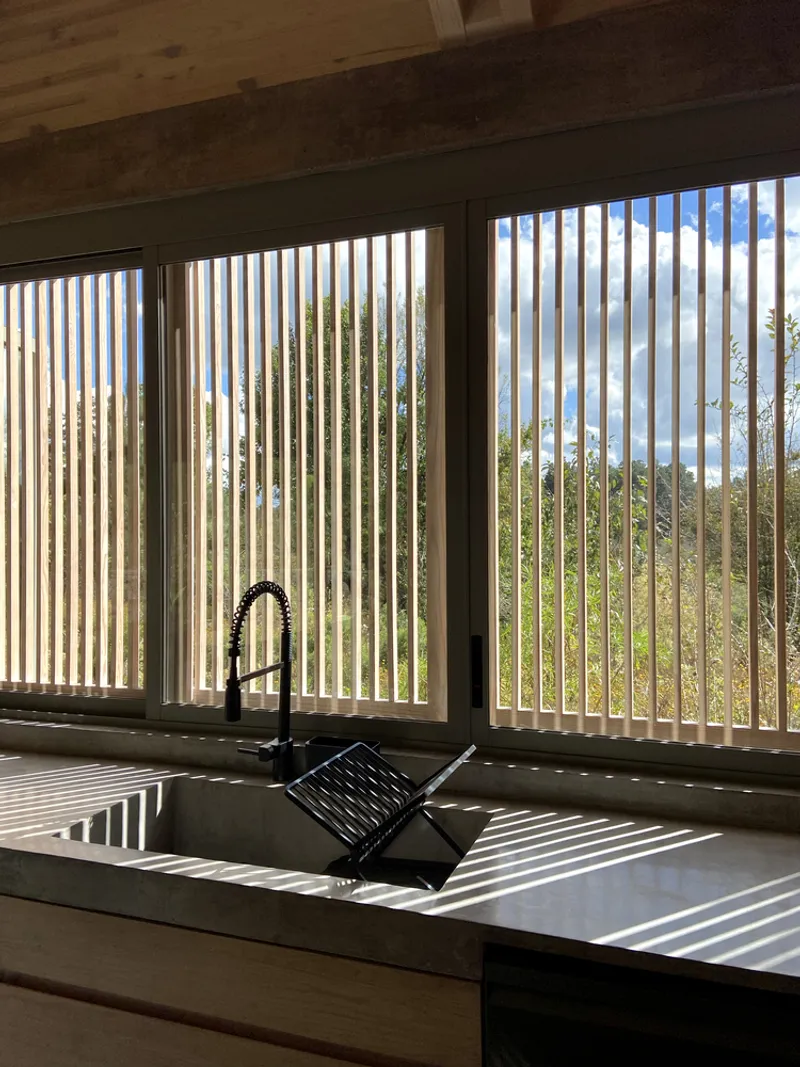
A defining feature of the project is the use of tecorrales—low, dry stone walls traditionally found in the region. These stone bases and linear walls extend horizontally across the site, reinforcing the project’s grounded presence and emphasizing the sweeping horizontal lines of the architecture.
The tecorrales guide movement, outline garden edges, and integrate water-management trenches, all while supporting the planting of fruit trees, shrubs, and native vegetation. By following the land’s contour lines, they anchor the architecture to the terrain, blending the home seamlessly into its ecological context.
Earth Architecture and Material Authenticity
Materiality serves as the soul of Tecorral House. The architects prioritized local, low-impact materials, returning to construction traditions from the region:
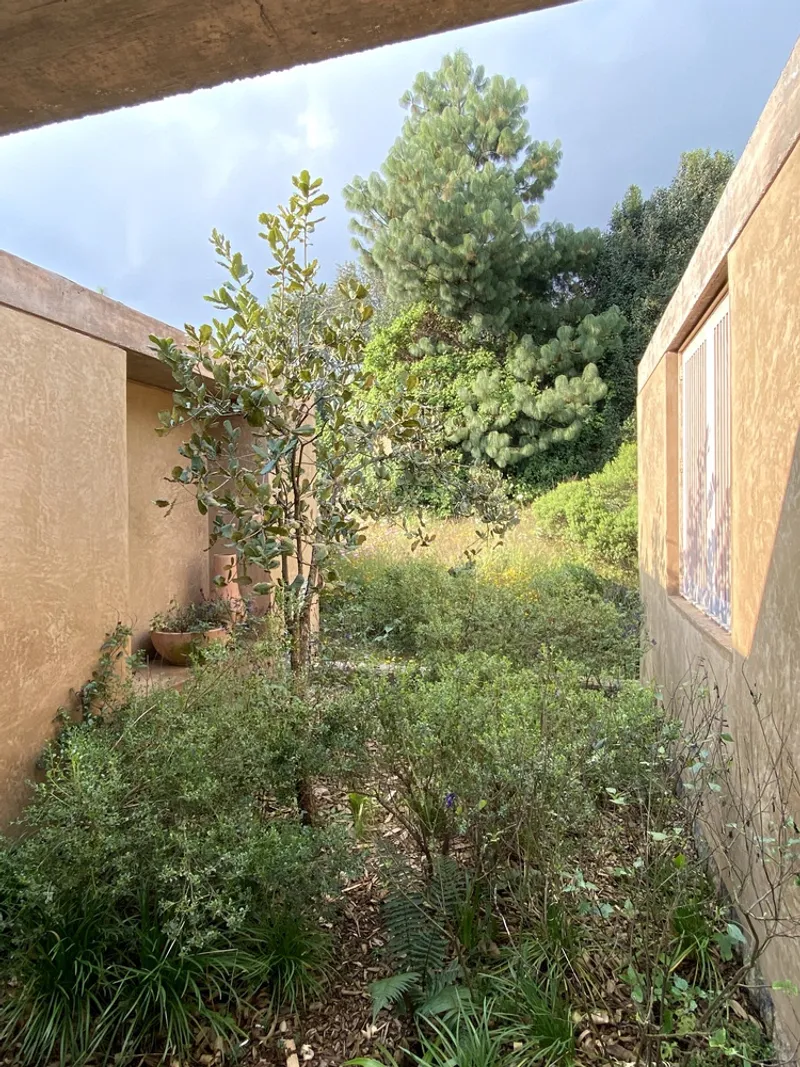
- Raw earth "machimblock" walls provide thermal mass, acoustic comfort, and a tactile natural character.
- Earth and nopal mucilage plaster finishes the exteriors, preserving breathability and maintaining traditional craft techniques.
- Lime stucco with natural pigments defines the interior surfaces with soft, warm tonalities.
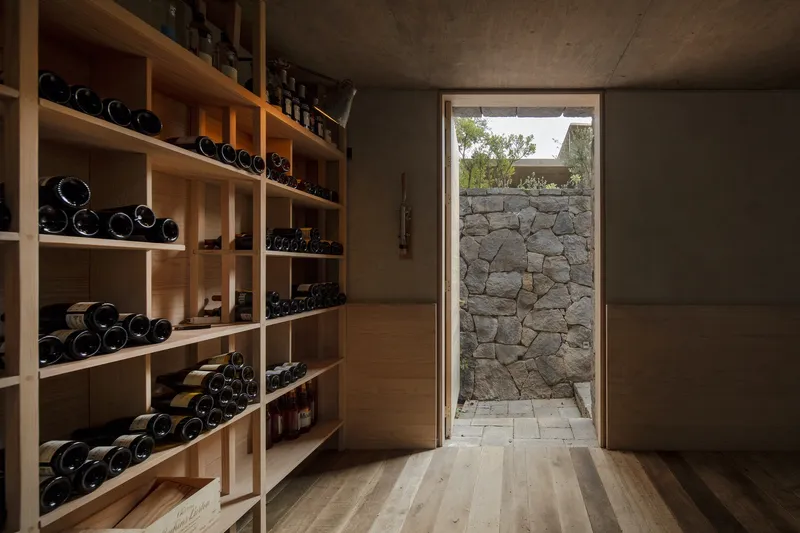
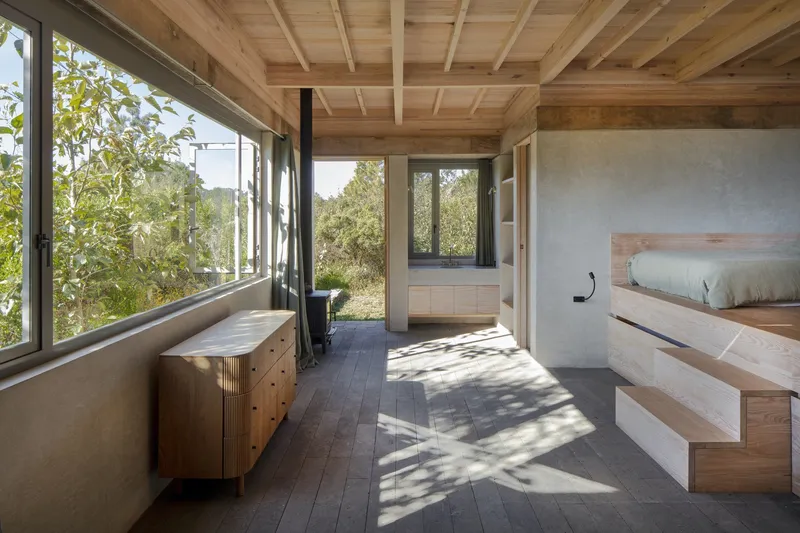
- Select spaces—such as the wine cellar and sauna—feature rich wood paneling for spatial contrast and warmth.
- Floors combine carved stone, brick, and reused wood salvaged from the construction formwork, reinforcing the project’s commitment to circularity.
- The structure of the sloped roofs is built from pine wood topped with clay tiles, while slabs, columns, and beams utilize pigmented concrete mixed with on-site soil for visual harmony.
Through these material strategies, the home not only minimizes environmental impact but also celebrates regional craftsmanship and the tactile qualities of earth-based construction.
Integrated Sustainability and Water Management
Sustainability is embedded holistically throughout the project. The architecture incorporates:
- Solar energy generation
- Water treatment and reuse systems
- Rainwater harvesting from all roof surfaces
Collected rainwater is stored for domestic use, and any surplus is directed toward a natural pool located at the lowest point of the terrain. This pool becomes both a key landscape feature and the final element in a closed-loop water management system that enhances biodiversity and supports passive thermal comfort.
A Contemporary Sanctuary Rooted in Place
Tecorral House represents a thoughtful synthesis of earth architecture, ecological sensitivity, and slow living. By weaving together local materials, handcrafted textures, and a landscape-led spatial arrangement, the project honors the cultural and environmental heritage of Valle de Bravo while offering a serene contemporary retreat. The residence embodies a design philosophy grounded in sustainability, place-making, and respectful coexistence with nature, positioning it as a referential model for responsible residential architecture in Mexico.
All photographs are works of Ramiro Chaves, Louise Rouzaud, Estudio Ome + Maureen M. Evans


Popular Articles
Popular articles from the community


Extended Shell: Retrofitting Kolkata's Balconies as Living Urban Thresholds
A modular retrofit system recovers the social and environmental intelligence of Kolkata's historic verandas for contemporary Park Street residents.

Temporary Home for Dogs: A Reversed Zoo Rethinks Animal Shelter Architecture
In Bucharest, a sinuous corridor and freed landscape flip the logic of containment, designing a shelter that works to make itself unnecessary.

Singing Woman: An Opera House That Performs Before the Curtain Rises
Ovidiu Cristian Pavel's conceptual opera house translates Estonia's choral identity into a sculpted waterfront landmark facing the Baltic Sea.

Tsunami Convergenics: Turning Catastrophic Ocean Forces into Underwater Housing Infrastructure
A speculative underwater settlement off the coast of Onagawa, Japan, treats tsunamis and typhoons as energy sources rather than threats.

Similar Reads
You might also enjoy these articles


Hodi-Mandai Geram
Project Function: Preservation and revitalization of the Intangible heritage and socio-spatial identity of the Hodi by Housing, Cultural Memory Center, Sacred Grove, landscape, local tourism economy


Olio Towers: A Mid-Rise for Performers That Fuses Housing, Rehearsal, and Stage
Located blocks from Houston's Theater District, this modular tower stacks living units around a central performance atrium.

Oasis: Modular Green Housing Carved into Dhaka's Urban Fabric
A shortlisted Plugin Housing entry reclaims unauthorized settlements in Dhaka with stepped concrete volumes, green roofs, and ventilation-driven design.

Black Hole: A Floating Megastructure for the Post-Physical Era
Emiliano Mazzarotto envisions a spherical, self-scaling arena where e-sports, digital hotels, and holographic stadiums replace traditional public space.

Explore Architecture Competitions
Discover active competitions in this discipline

Challenge to reimagine the Iron Throne

Photograph architecture without architects

Illustrate the lost glory of Angkor Wat - Render Challenge

Design challenge to reuse E-waste
Comments (0)
Please login or sign up to add comments
No comments yet. Be the first to comment!