

Tehrani Taxi Terminal By Moloudi Architecture: A Contemporary Transportation Hub Inspired by Landscape and Movement
Tehrani Taxi Terminal by Moloudi Architecture transforms urban transit with dynamic rooflines, functional taxi lines, cultural references, and safety-focused modern design.


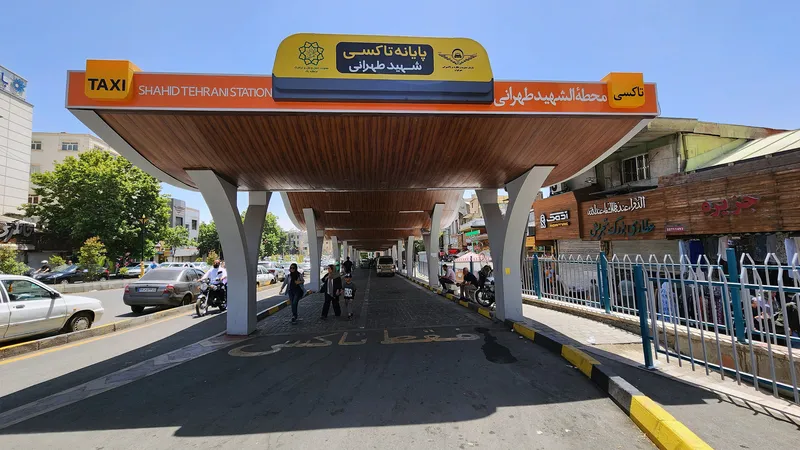
The Tehrani Taxi Terminal, designed by Moloudi Architecture, is a forward-looking transportation infrastructure project in Tehran, Iran, completed in 2025. With a built area of 1,330 m², the terminal reimagines a previously disorganized urban transit space into a clear, functional, and visually engaging public facility. The project responds to complex spatial limitations, urgent functional demands, and a sensitive natural context—most notably the iconic presence of the Alborz Mountains.
Urban Challenges and Design Intent
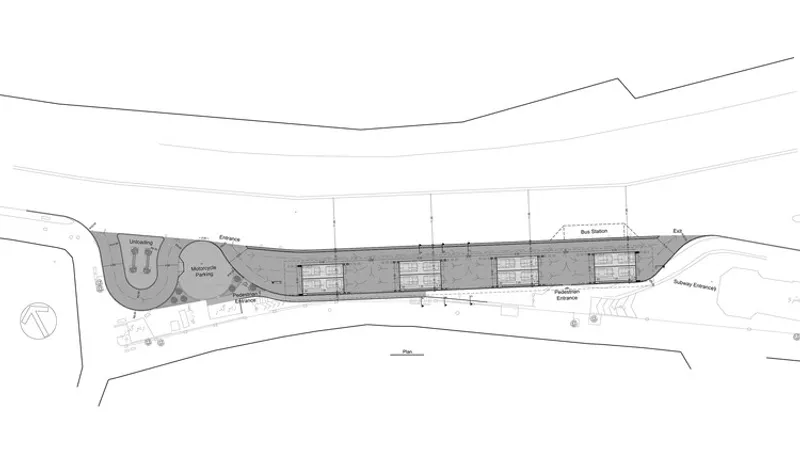
The project began with a series of critical challenges: undefined site boundaries, limited space for a dedicated terminal, the need to accommodate eight taxi lines, lack of weather protection, operational disorganization, and a monotonous urban streetscape. Additionally, the existing condition obstructed views toward the Alborz mountain range, a defining element of Tehran’s natural identity.
Moloudi Architecture approached these constraints as opportunities to develop a flexible, future-oriented terminal that could efficiently serve both drivers and passengers while contributing positively to the city’s visual and spatial quality. Extensive analysis of user needs, climate, urban context, and global precedents for taxi terminals informed a design concept rooted in clarity, rhythm, and movement.
Linear Organization and Functional Clarity
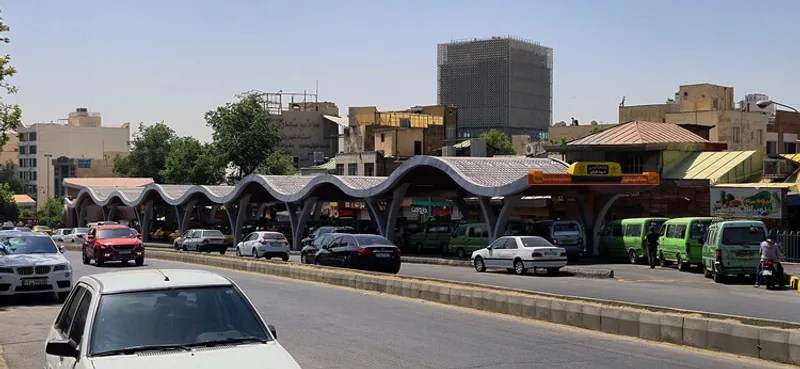
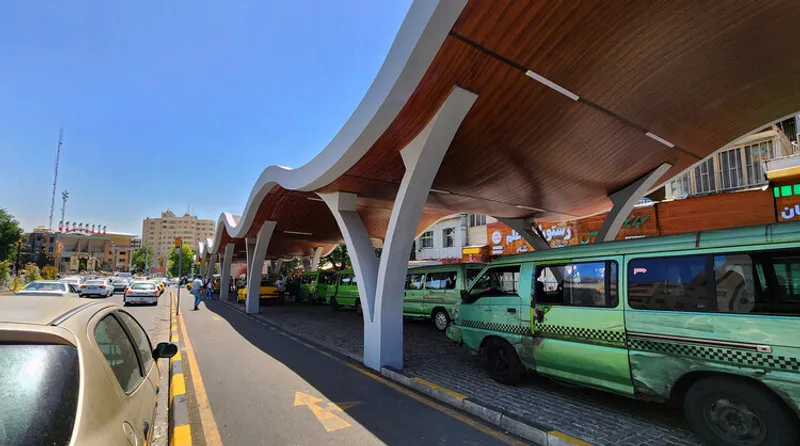
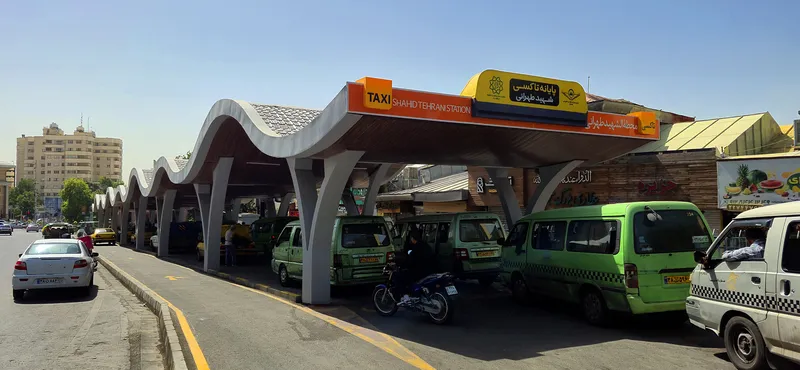
The terminal is organized along a linear layout, allowing each taxi line to have a clearly defined and dedicated space. This configuration improves circulation, reduces congestion, and brings order to daily operations. The linear form also ensures intuitive navigation for users, enhancing safety and comfort in a high-traffic public environment.
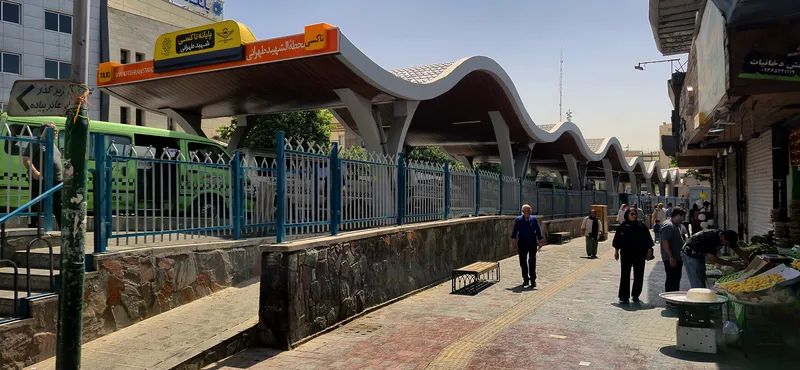
At the heart of the project is a continuous roof structure, designed to provide immediate shelter from sun and rain—an urgent requirement for both passengers and drivers. The roof unifies the terminal into a single architectural gesture while clearly marking it as a civic infrastructure.
Roof as Landscape and Motion
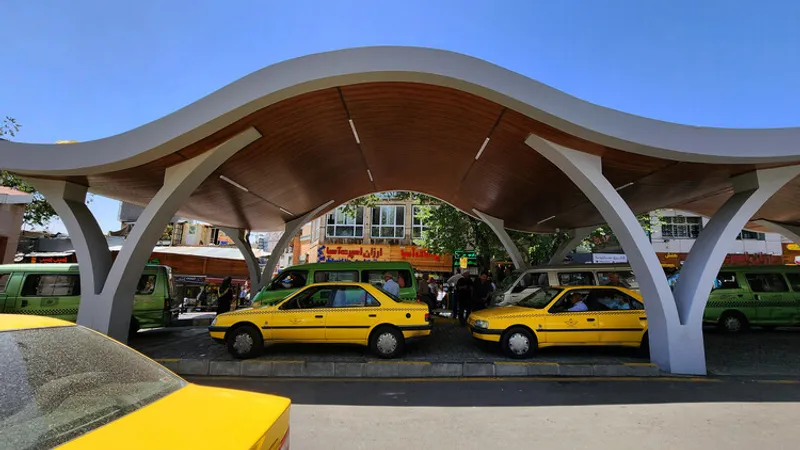
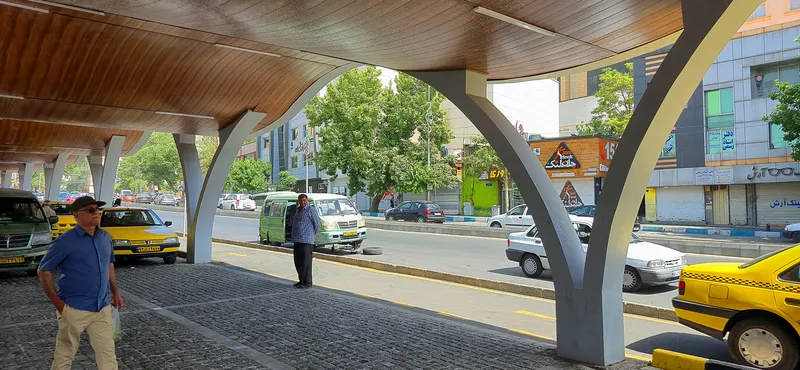
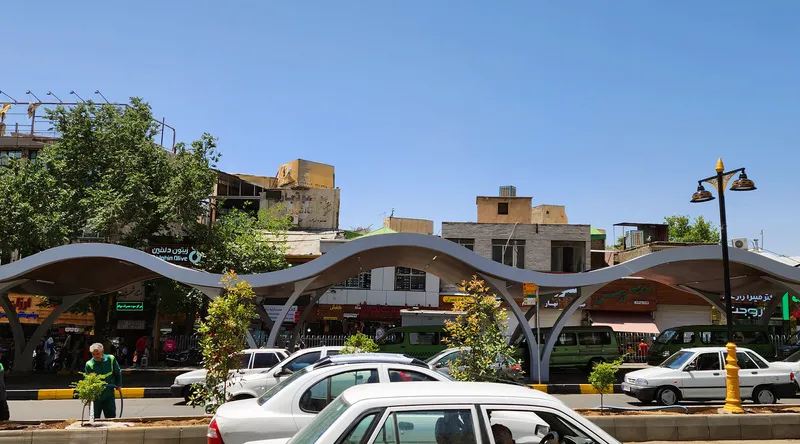
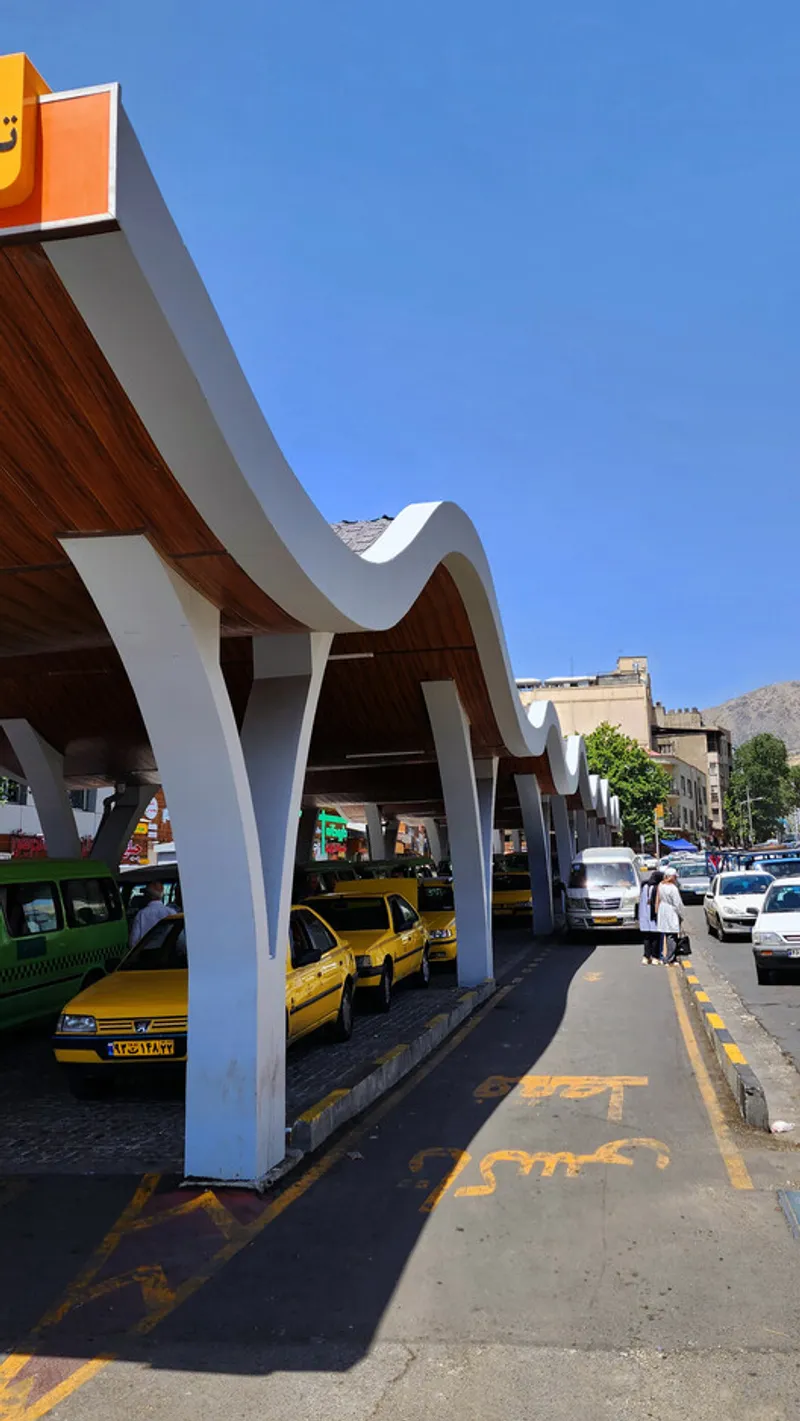
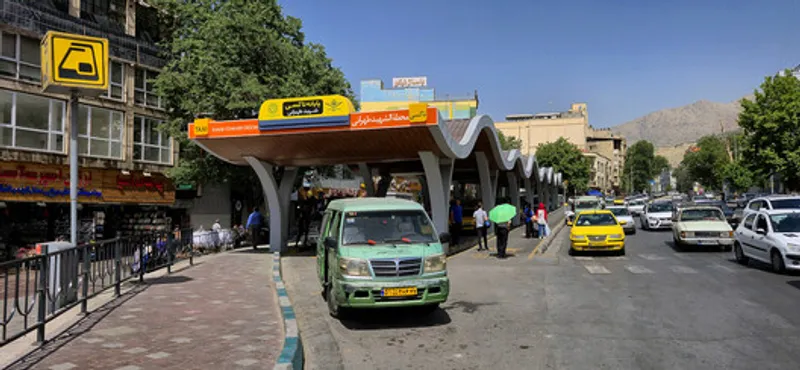
The roof design is the project’s most expressive feature. A series of arched lines, set at three height levels—4, 4.5, and 5 meters—create a sequential and interconnected rhythm across the terminal. These curves subtly reference the topography of the Alborz Mountains, translating the surrounding natural landscape into an architectural form.
Beyond symbolism, the flowing geometry evokes movement and dynamism, aligning closely with the function of transportation. The roof lines extend downward to form the columns, reinforcing structural and visual continuity and giving the terminal a cohesive and legible identity.
Cultural References and Contemporary Expression
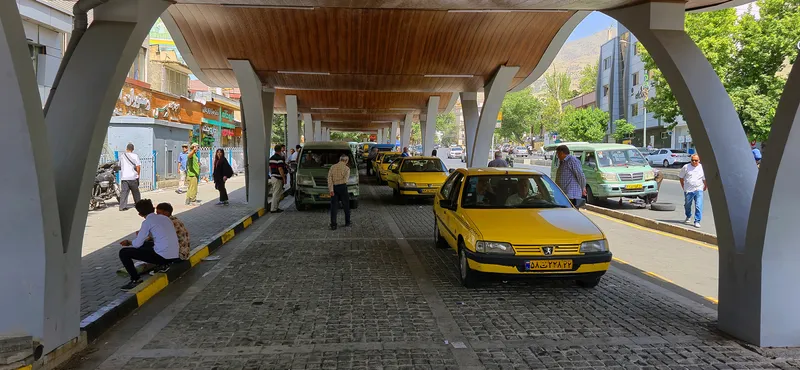
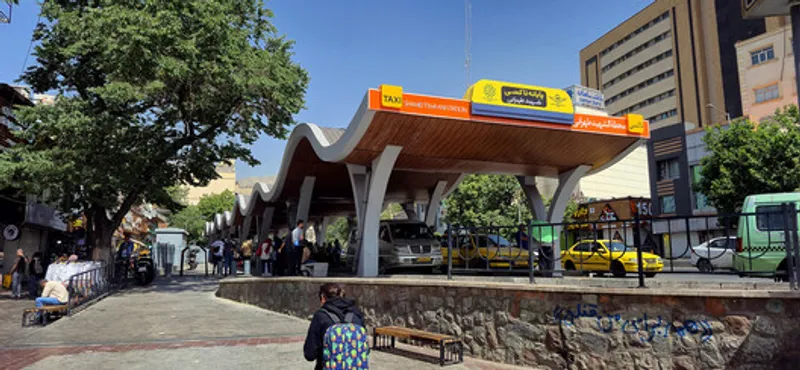
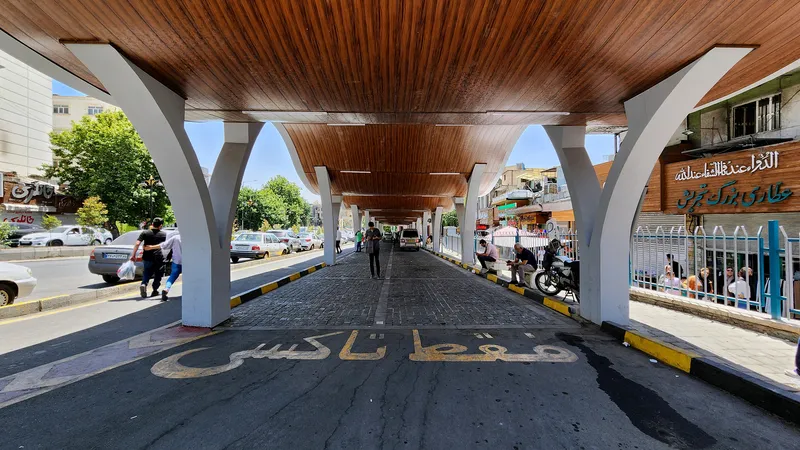
The structural logic and the entrance–exit openings beneath the roof recall the traditional Eivan, a significant spatial element in Iranian architecture. This reference grounds the project culturally while remaining abstract and modern. Careful attention was given to the column composition and facade articulation to ensure that the terminal does not disrupt the adjacent commercial urban frontage, particularly on the southern side of the site.
Material Strategy and User Safety
Material selection balances durability, safety, and contemporary character. Cubic stone paving is used across the terminal floor to naturally reduce vehicle speed, improving passenger safety. Woodplast panels line the underside of the roof, adding warmth and texture to the space, while metal sheets define column edges and roof borders, lending the structure a modern and urban appearance suited to its context.
A New Identity for Urban Mobility
The Tehrani Taxi Terminal stands as an example of how public transportation architecture can move beyond pure utility. By integrating landscape inspiration, cultural references, and user-centered design, Moloudi Architecture has created a terminal that is efficient, recognizable, and expressive. The project enhances everyday urban experience while restoring a visual connection to Tehran’s natural backdrop.
All the photographs are works of Alireza Moloudi


Popular Articles
Popular articles from the community

Opera by the Sea Estonia: Three Shells Dissolving Architecture into Tallinn's Coastline
A winning opera house proposal replaces monumental form with interconnected shells that blur the boundary between building, park and Baltic Sea.

Singing Woman: Contemporary Architecture Inspired by Estonia’s Voice and the Sea
Singing Woman turns Estonia’s song culture into flowing opera house architecture, blending public life, landscape, sea, and national memory.
Temporary Home for Dogs: A Reversed Zoo Rethinks Animal Shelter Architecture
In Bucharest, a sinuous corridor and freed landscape flip the logic of containment, designing a shelter that works to make itself unnecessary.

Tsunami Convergenics: Turning Catastrophic Ocean Forces into Underwater Housing Infrastructure
A speculative underwater settlement off the coast of Onagawa, Japan, treats tsunamis and typhoons as energy sources rather than threats.

Similar Reads
You might also enjoy these articles


Hodi-Mandai Geram
Project Function: Preservation and revitalization of the Intangible heritage and socio-spatial identity of the Hodi by Housing, Cultural Memory Center, Sacred Grove, landscape, local tourism economy


Olio Towers: A Mid-Rise for Performers That Fuses Housing, Rehearsal, and Stage
Located blocks from Houston's Theater District, this modular tower stacks living units around a central performance atrium.

Oasis: Modular Green Housing Carved into Dhaka's Urban Fabric
A shortlisted Plugin Housing entry reclaims unauthorized settlements in Dhaka with stepped concrete volumes, green roofs, and ventilation-driven design.

Black Hole: A Floating Megastructure for the Post-Physical Era
Emiliano Mazzarotto envisions a spherical, self-scaling arena where e-sports, digital hotels, and holographic stadiums replace traditional public space.

Explore Transportation Competitions
Discover active competitions in this discipline

Challenge to reimagine the Iron Throne

Photograph architecture without architects

Illustrate the lost glory of Angkor Wat - Render Challenge

Design challenge to reuse E-waste
Comments (0)
Please login or sign up to add comments
No comments yet. Be the first to comment!