
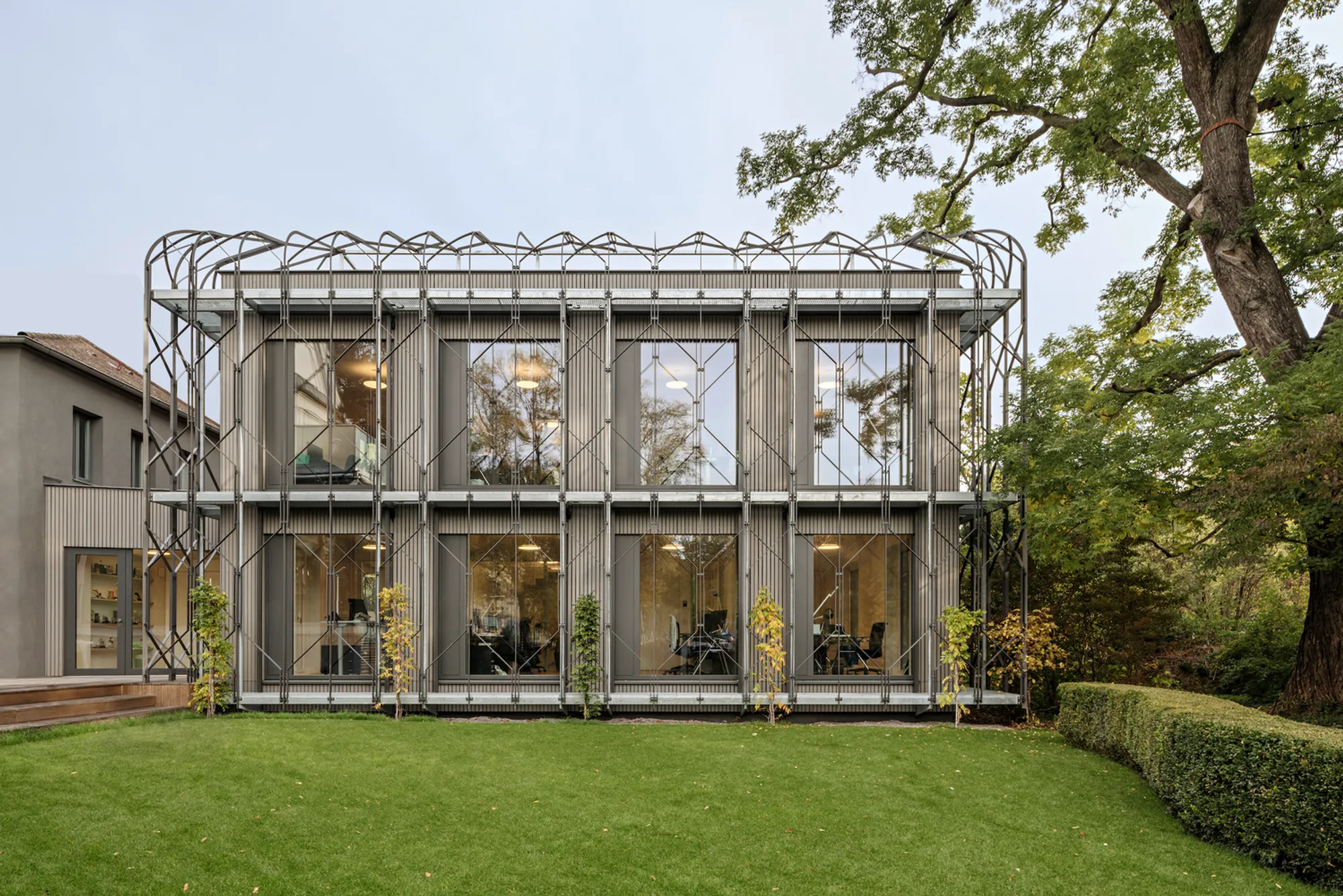
Terra Mater Factual Studios by Berger Parkkinen + Architects
Sustainable timber pavilion expanding Terra Mater Studios, blending heritage with innovation through biophilic design, flexible spaces, and a living green façade.


A Sustainable Expansion Rooted in Nature and Film Innovation
Located in the serene villa district of Vienna-Hietzing, Terra Mater Factual Studios—a globally acclaimed film production company specializing in nature documentaries—has undergone a remarkable architectural transformation. Designed by the Austrian-Finnish practice Berger Parkkinen + Architects, the project reimagines the studio’s historic Art Nouveau villa into a sustainable, future-ready creative campus.
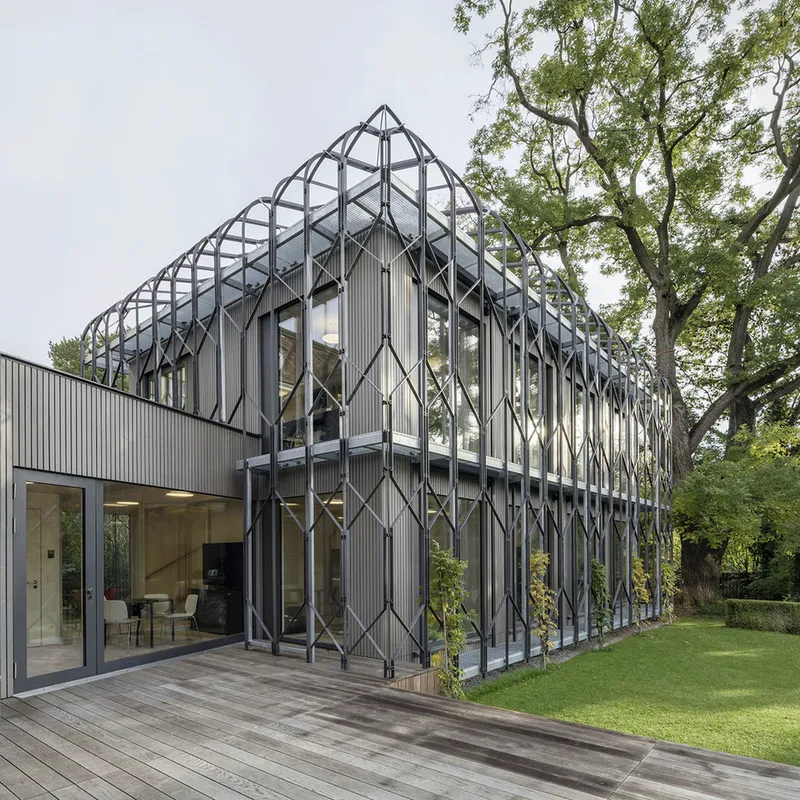
The architects were tasked with reorganizing and expanding the existing facilities to meet the growing spatial and technical demands of the studio while maintaining harmony with its lush surroundings. The result is a contemporary wooden pavilion that seamlessly connects old and new structures, expressing Terra Mater’s commitment to both innovation and environmental stewardship.
Balancing Heritage and Modern Functionality
Terra Mater’s original Art Nouveau villa had previously undergone several modifications—including an extension in the 1980s and the addition of a glass bridge entrance and garden-facing meeting cube in 2003. The latest intervention continues this architectural evolution with sensitivity, creating a dialogue between heritage and modernity.
The new extension includes office spaces, meeting rooms, an employee lounge, and a server cooling center discreetly integrated into the building’s design. Despite the complex technical infrastructure required for film production, the architects managed to preserve the elegance and natural character of the property.
Central to the design philosophy was the preservation of the site’s iconic “house tree”, a mature feature of the garden that continues to anchor the ensemble visually and symbolically.
Sustainable Architecture and Timber Construction
Sustainability was a guiding principle throughout the project. The new pavilion was constructed entirely from solid wood, reflecting both ecological responsibility and architectural craftsmanship. This choice not only reduced the project’s carbon footprint but also created a warm, tactile interior atmosphere.
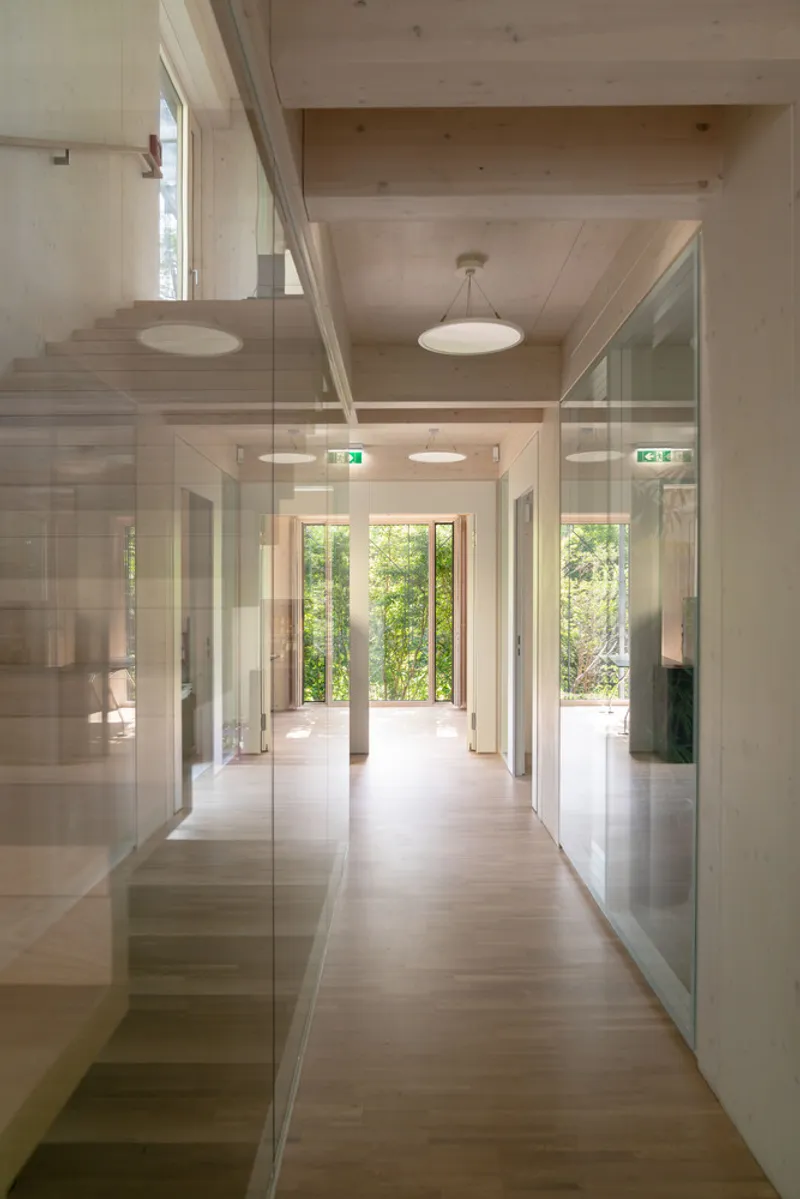
The architects faced the challenge of integrating extensive mechanical and electrical systems within the timber framework—a task achieved through precise spatial planning and flexible structural design. The interiors reveal the exposed wooden beams, walls, and ceilings, finished with a soft white glaze that enhances light diffusion and accentuates the surrounding greenery.
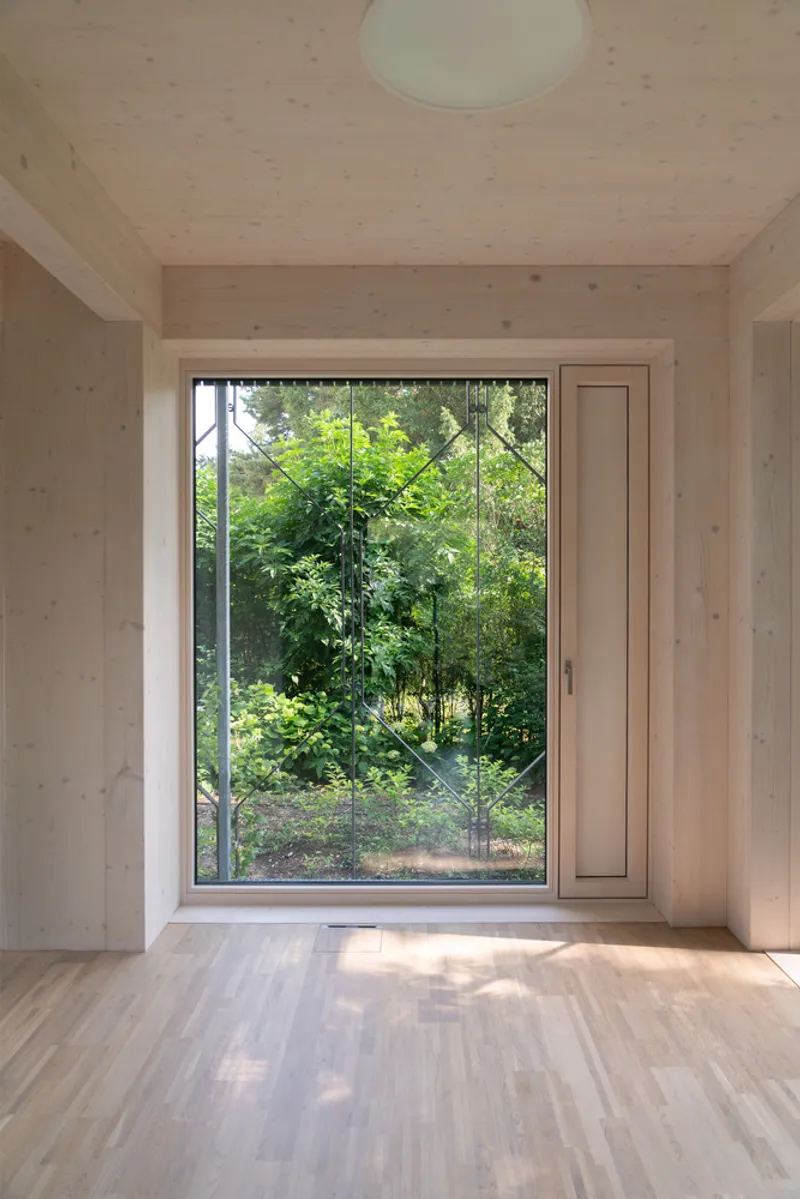
A Living Façade in Dialogue with Nature
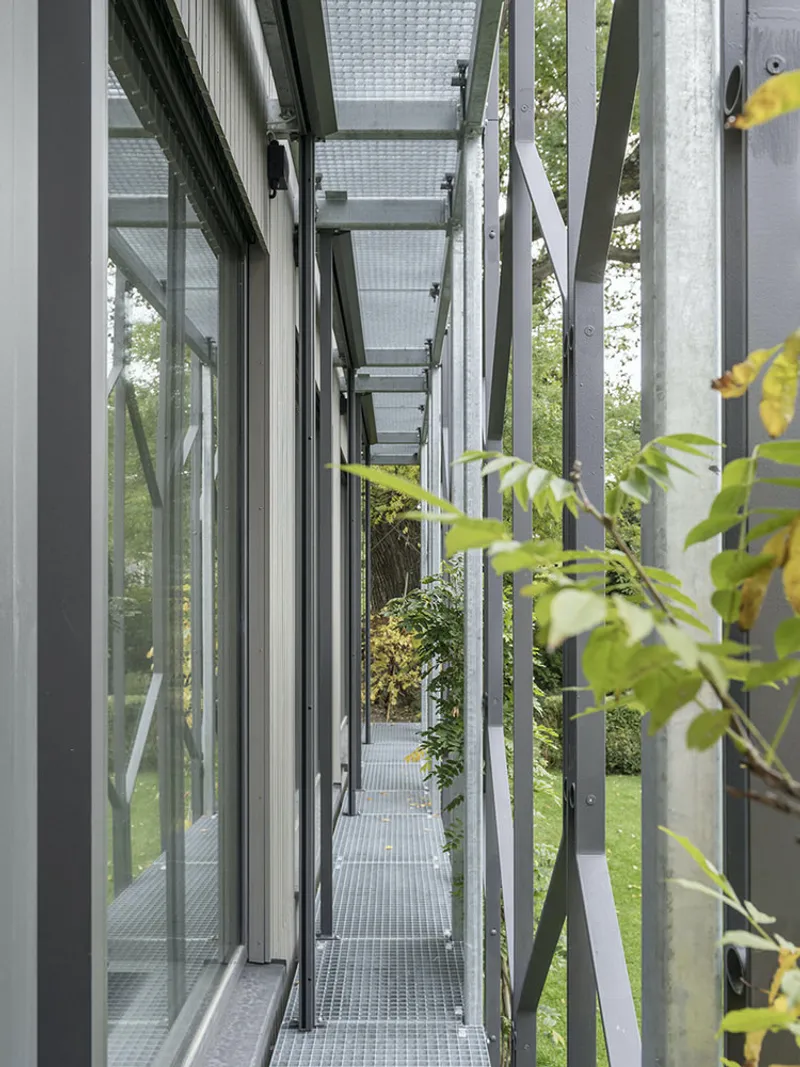
Encasing the building is a striking metal Rank structure—a geometric, ornamental shell that both protects and defines the pavilion. Over time, climbing plants and seasonal vegetation will envelop this façade, turning the building into a living, breathing organism that changes with the seasons.
This biophilic design strategy ensures a dynamic connection between architecture and ecology. As vines grow and colors shift throughout the year, the building evolves continuously, mirroring Terra Mater’s ethos of celebrating life and natural diversity.
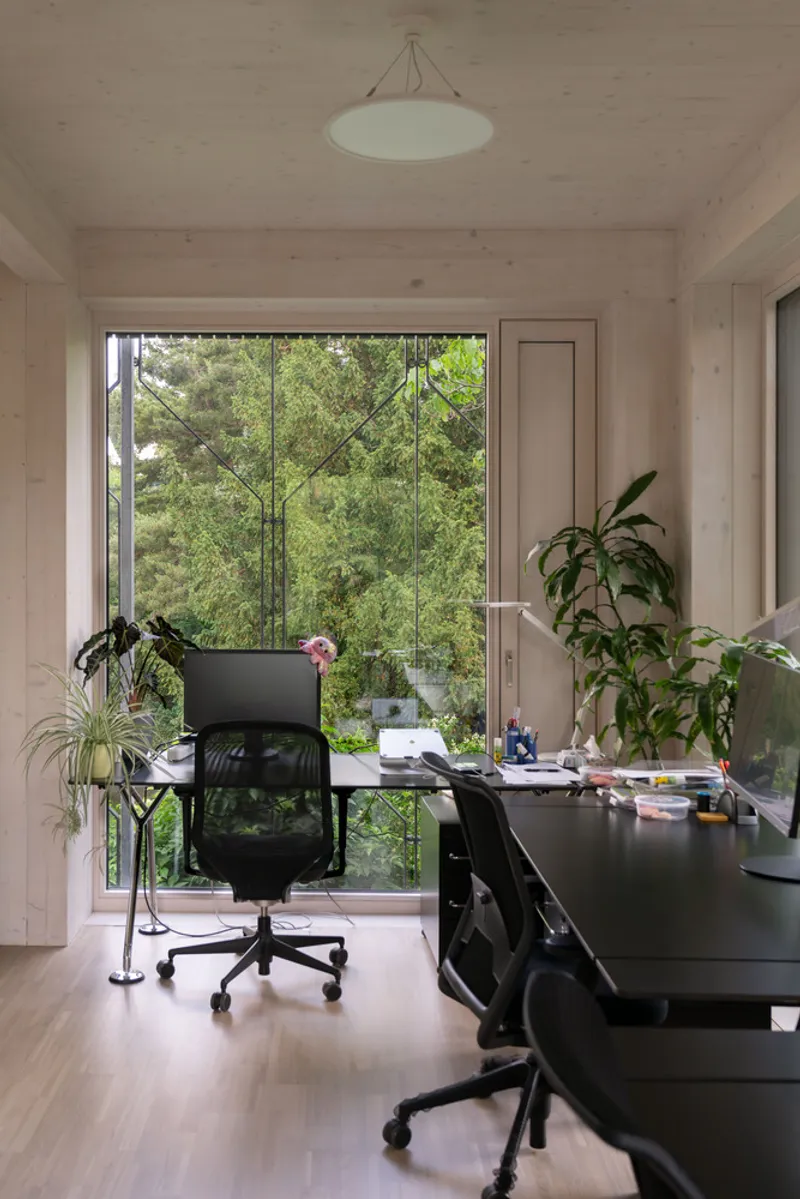
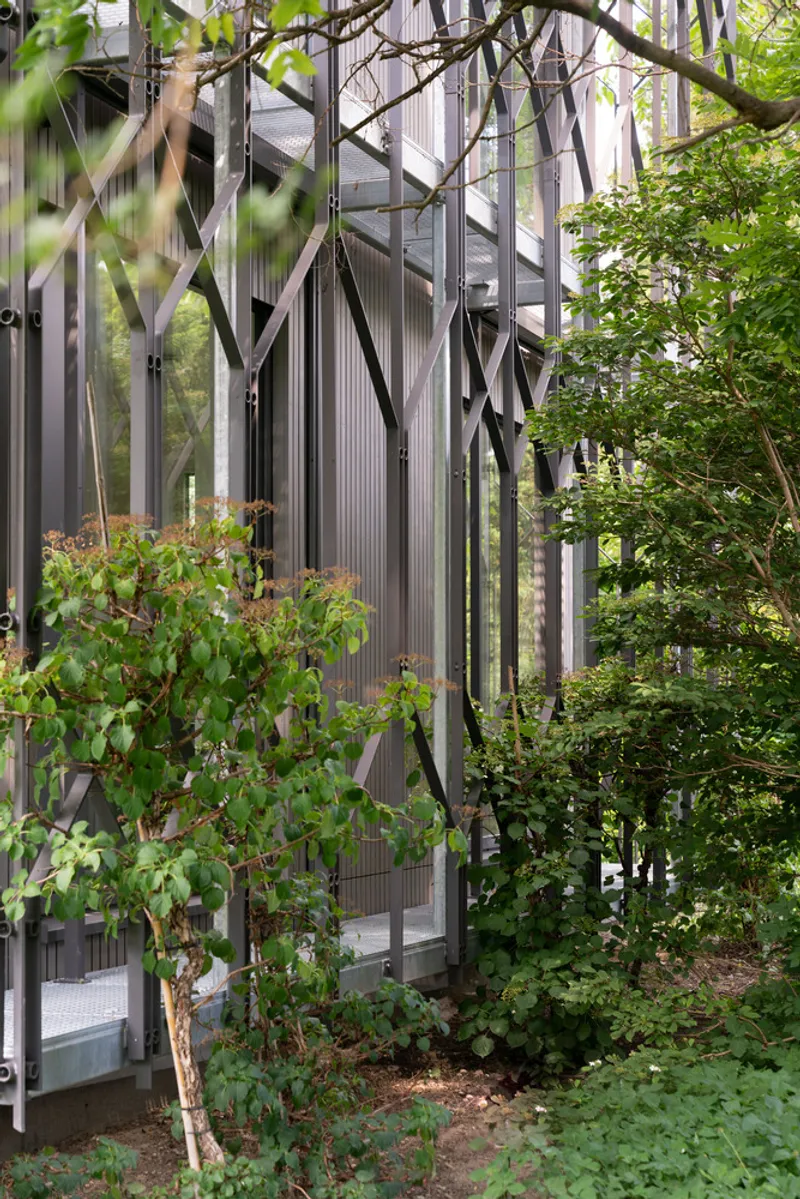
Spatial Harmony and Environmental Awareness
The project’s design emphasizes flexibility, transparency, and connection—to nature, to light, and to human activity. The interior’s clear tectonic rhythm and adaptable layout allow for future transformations, ensuring long-term functionality.
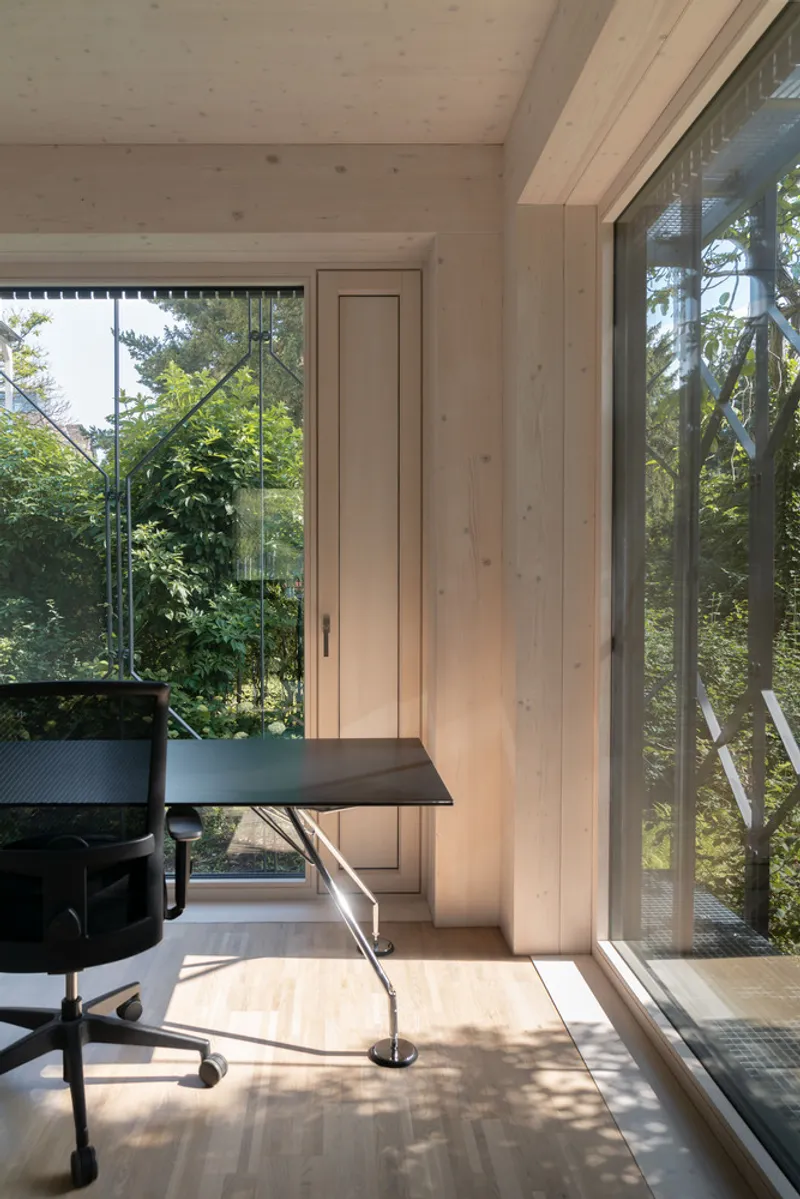
All photographs are works of Hertha Huraus, Ana Barros, Alfred Berger



Popular Articles
Popular articles from the community


Co-life: Sustainable Architecture for Age-Friendly Community Living
Co-life reimagines sustainable architecture for seniors through courtyards, rammed earth, shared gardens, and spaces designed for belonging.

Co-Life: Senior Housing Design That Reconnects Older Adults With the City
Co-Life reimagines senior housing design through healing gardens, shared streets, workshops, and a sustainable community across generations.

The Musturak Paradise: Senior Living Architecture for a Connected Future in Temara, Morocco
The Musturak Paradise reimagines senior living architecture in Temara via private homes, social spaces, culture, community, and shared care.

The Earth Pod: 3D Printed Homes for Resilient Refugee Communities
The Earth Pod reimagines refugee housing through 3D printed homes made from clay, combining resilience, self-sufficiency, and rapid shelter.


Similar Reads
You might also enjoy these articles


Hodi-Mandai Geram
Project Function: Preservation and revitalization of the Intangible heritage and socio-spatial identity of the Hodi by Housing, Cultural Memory Center, Sacred Grove, landscape, local tourism economy


Olio Towers: A Mid-Rise for Performers That Fuses Housing, Rehearsal, and Stage
Located blocks from Houston's Theater District, this modular tower stacks living units around a central performance atrium.

Oasis: Modular Green Housing Carved into Dhaka's Urban Fabric
A shortlisted Plugin Housing entry reclaims unauthorized settlements in Dhaka with stepped concrete volumes, green roofs, and ventilation-driven design.

Black Hole: A Floating Megastructure for the Post-Physical Era
Emiliano Mazzarotto envisions a spherical, self-scaling arena where e-sports, digital hotels, and holographic stadiums replace traditional public space.
Explore Architecture Competitions
Discover active competitions in this discipline



Challenge to reimagine the Iron Throne


Photograph architecture without architects


Illustrate the lost glory of Angkor Wat - Render Challenge


Design challenge to reuse E-waste
Comments (0)
Please login or sign up to add comments
No comments yet. Be the first to comment!