
The Arches by The DHaus Company: Redefining Contemporary Housing in London’s Dartmouth Park
The Arches by The DHaus Company transforms a former petrol station into sustainable brick townhouses, blending Victorian context, arches, and greenery.


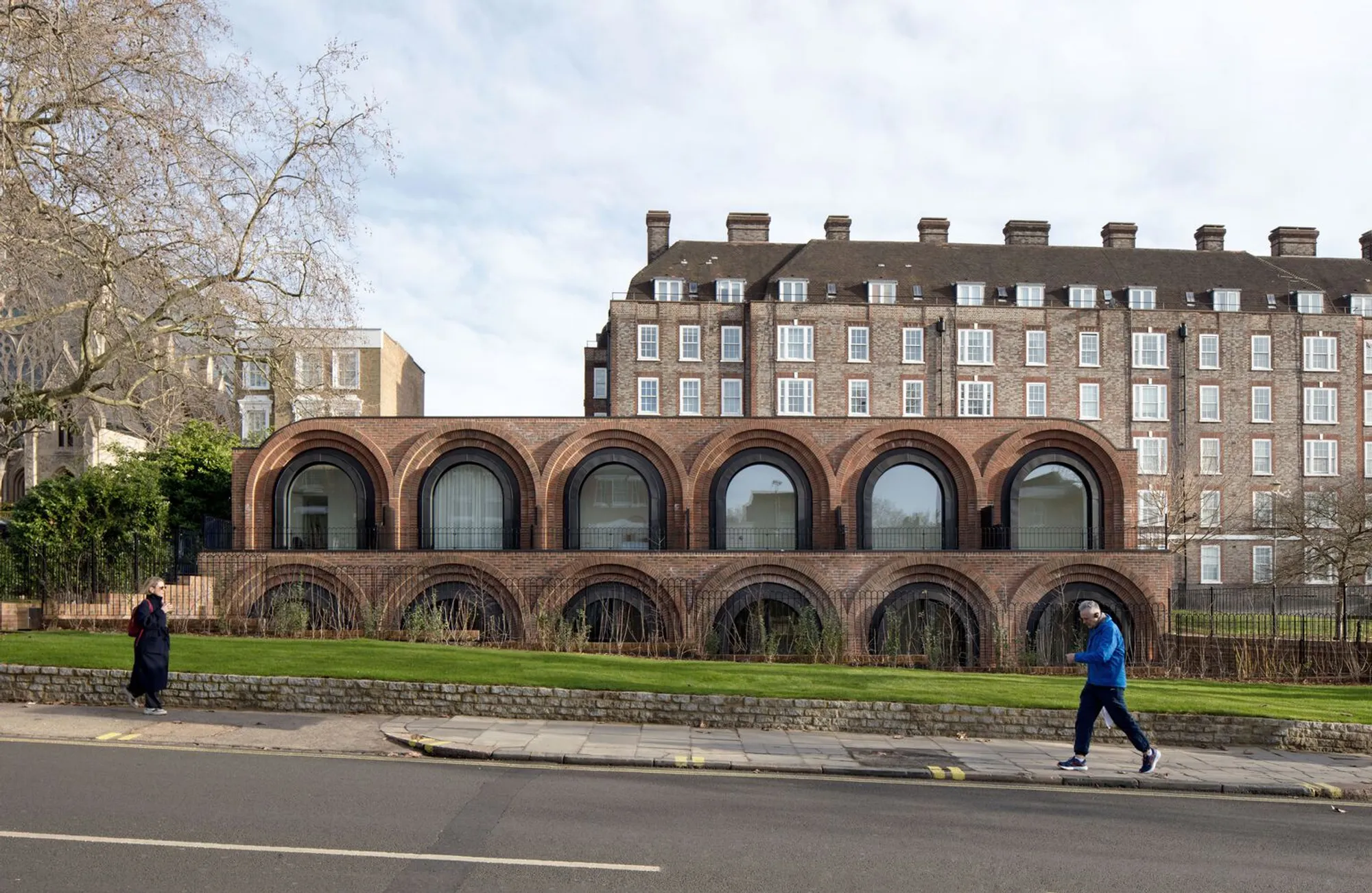
Completed in 2023 by The DHaus Company, this 780 m² project in Dartmouth Park, North-West London showcases a refined contemporary design. The architecture blends clean lines, crafted details, and spatial clarity, captured elegantly through AVR London’s photography. The result is a modern, contextually sensitive residence with strong visual and material coherence.
A Vision Shaped by Time and Context
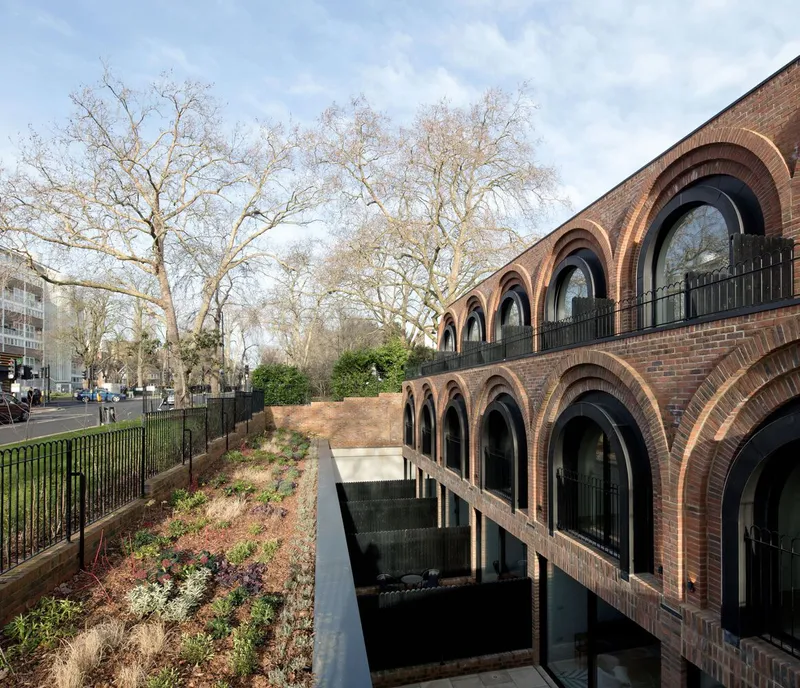
The Arches, a residential development designed by The DHaus Company, represents the transformation of a disused petrol station site into a carefully considered series of six terraced townhouses. Nestled within the Dartmouth Park Conservation Area of North-West London, the project bridges the past and present through architectural form, materiality, and urban integration.
The development required a rigorous two-year planning process followed by another two years of construction, coinciding with Brexit, the COVID-19 pandemic, and other global challenges. For the design team, led by Daniel Woolfson and David Ben-Grunberg, the project became more than just a construction site—it was a creative sanctuary and collaborative effort uniting specialists, planners, engineers, and craftspeople.
Urban Context and Inspiration
Positioned near the historic Grove Terrace, one of London’s finest Georgian streets, the scheme responds to its conservation setting with sensitivity. The site sits along Highgate Road, a historic “green lung” corridor of open space. Early discussions with Camden Council led to a design strategy that restored this historic greenery, re-linking two public green areas on either side of the site.
From Highgate Road, the development appears discreet, maintaining an unbroken green line in the landscape. The townhouses are accessed from College Lane, aligning with the Victorian grain of nearby historic cottages. This subtle integration preserves the district’s character while introducing new life and security to a previously derelict and antisocial corner.
Architectural Language: Arches and Rectangles
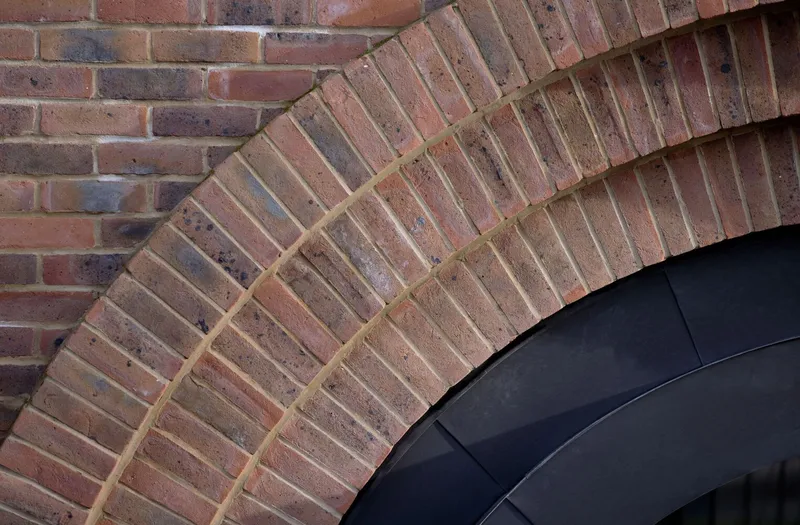
The design draws on local precedents, particularly railway infrastructure and Neo-Classical British architecture. Dartmouth Park is defined by brick facades punctuated with rectangular and arched motifs, echoing Palladian influences and the work of Inigo Jones.
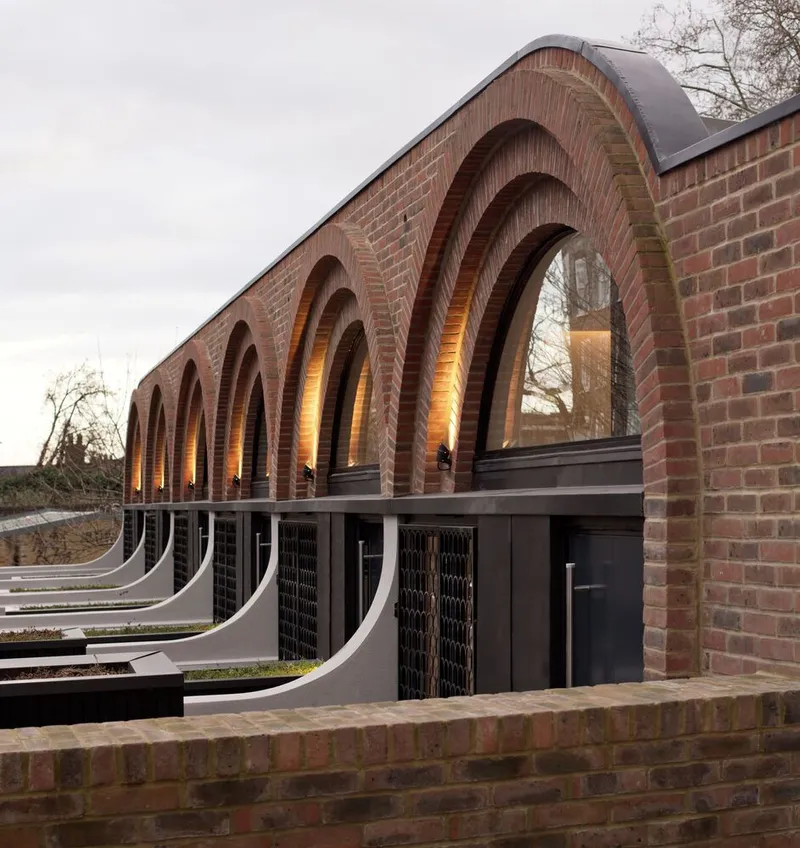
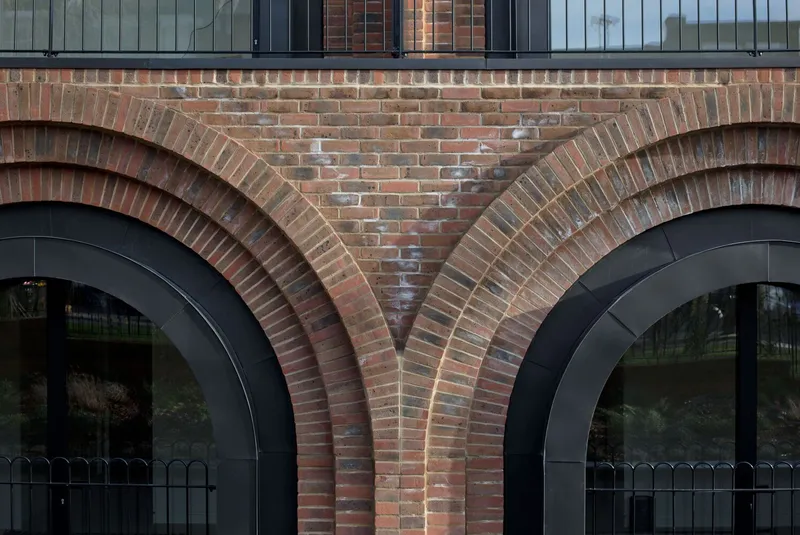
The DHaus team distilled these architectural elements into their purest forms—rectangles and arches—to shape the identity of the new homes. London stock brick forms the facades, while concrete arches clad in brick slips reference nearby railway structures. The architecture is therefore both contextual and explorative, paying homage to history while pushing for contemporary reinterpretation.
Construction and Sustainability
The transformation of the old petrol station offered both environmental and urban benefits. The contaminated soil and 1950s-era petrol tanks were removed, allowing the land to be remediated and turned into a safe, green public buffer zone.
Key sustainability strategies include:
- Timber-frame construction for lightweight prefabricated structures assembled on-site.
- Green roofs that harvest rainwater, support biodiversity, and soften views for neighboring residents.
- Photovoltaic panels providing renewable energy.
- Brick façade exploration, with Ibstock Bexhill Red Multi brick used in varying bonds to give rhythm and character to each unit.
The combination of reinforced concrete retaining walls, lightweight steel cross-bracing, and prefabricated arches ensured structural stability while minimizing on-site disruption.
Dwelling Layout and Spatial Experience
Each townhouse measures around 130 m², organized across multiple levels due to the site’s sloping topography. Key features include:
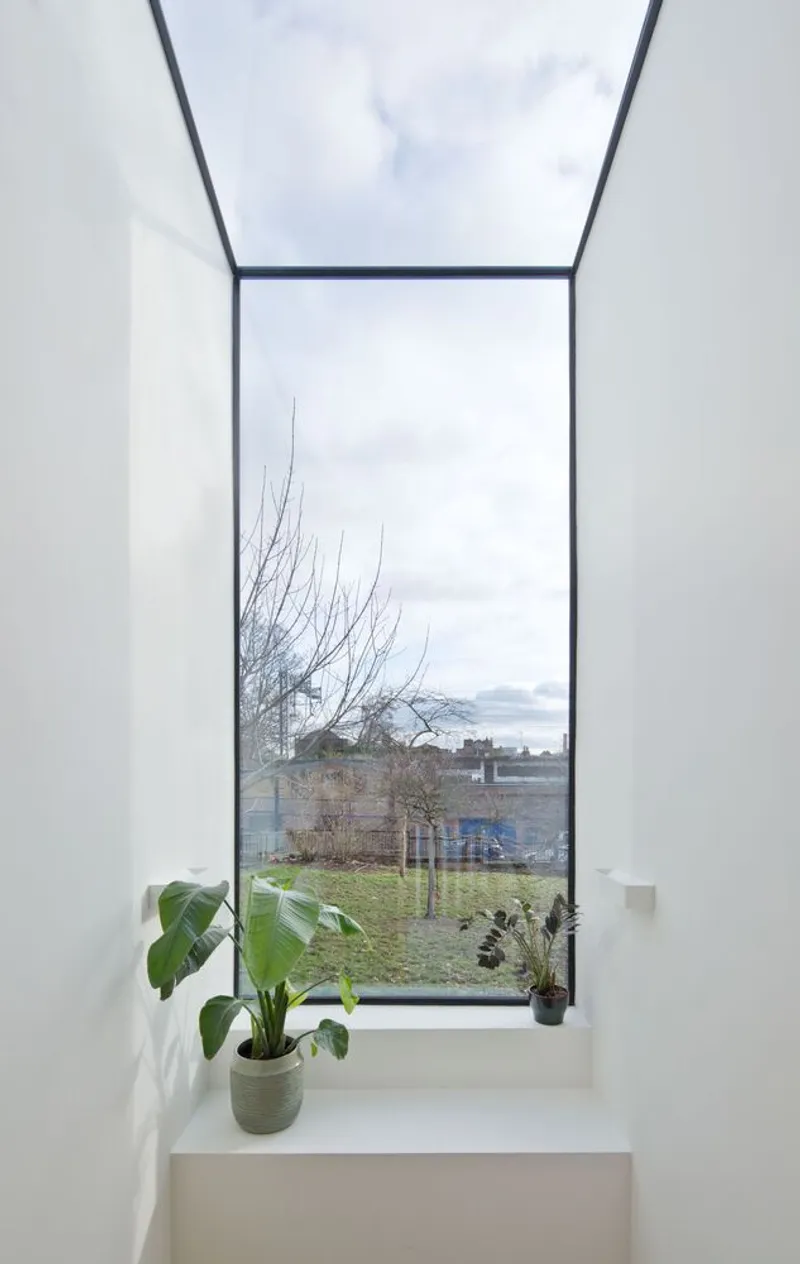
- Lower ground floor: Two bedrooms, bathrooms, and lightwells facing College Lane.
- Basement level: An open-plan living, dining, and kitchen space that opens onto a sunken rear garden, ensuring natural light and privacy despite proximity to Highgate Road.
- Upper levels: Additional bedrooms, study spaces, and connections to outdoor areas.
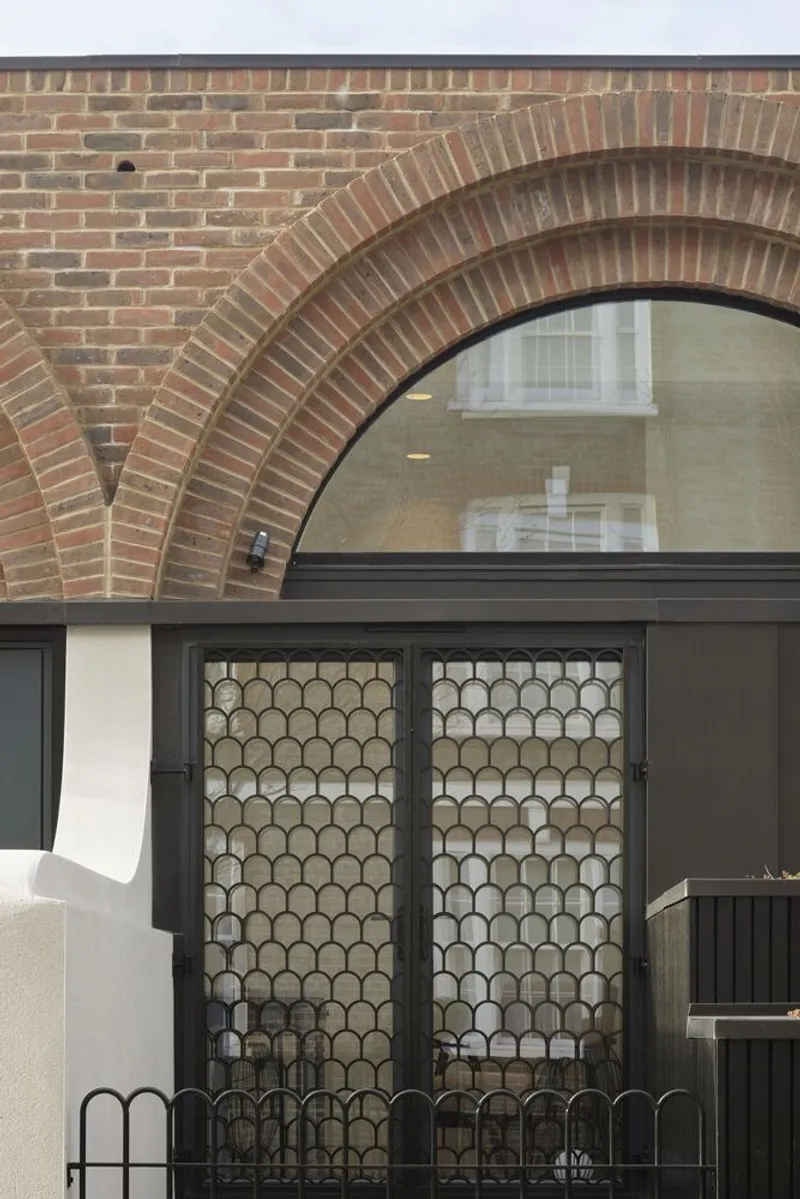
- Front gardens: Integrating storage, entrances, and landscaping that enhance the pedestrian experience along College Lane.
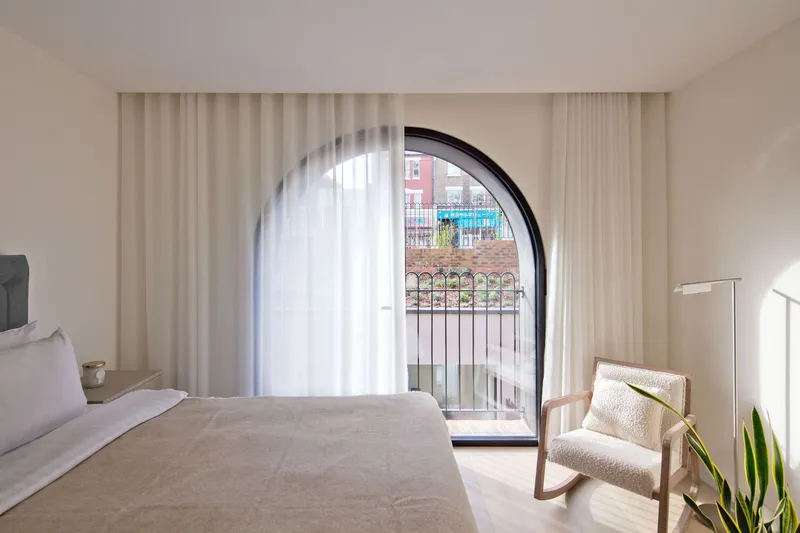
The houses balance urban density with light-filled interiors, green views, and private outdoor connections—qualities often missing in compact London housing.
A Regenerative Urban Intervention
Where once stood an abandoned petrol station attracting antisocial behavior, The Arches now offers sustainable housing, public green space, and architectural continuity. By weaving together history, context, and modern living needs, The DHaus Company has delivered a project that enriches both its immediate neighborhood and London’s broader conservation heritage.
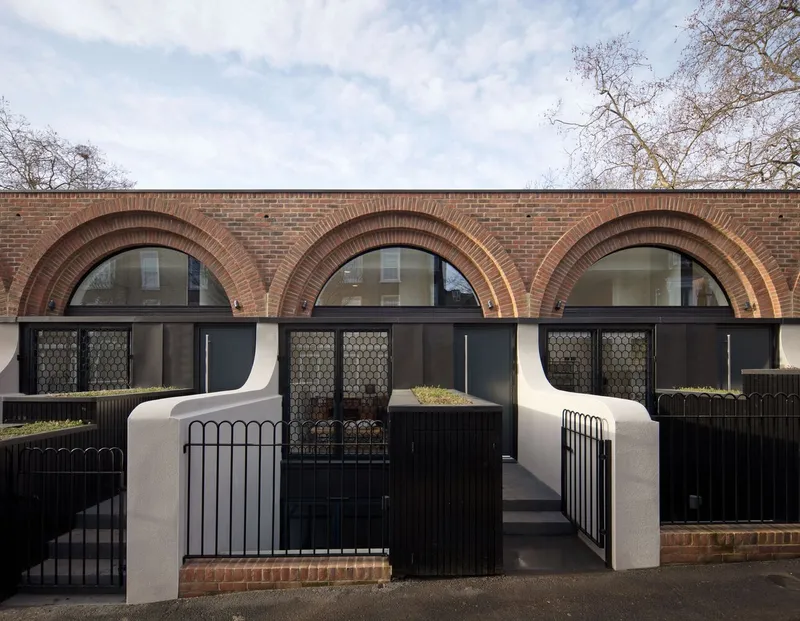
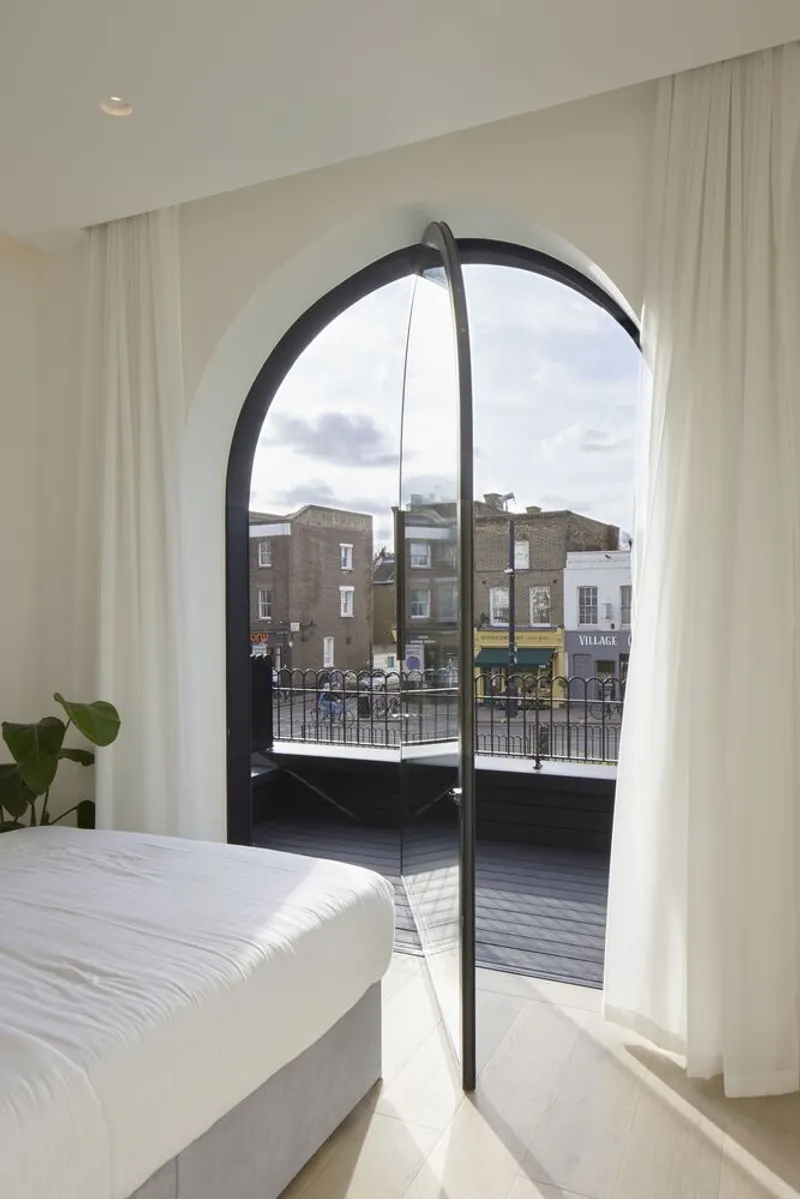
All photographs are works of AVR London




Popular Articles
Popular articles from the community


The Musturak Paradise: Senior Living Architecture for a Connected Future in Temara, Morocco
The Musturak Paradise reimagines senior living architecture in Temara via private homes, social spaces, culture, community, and shared care.

Lunar Spiral: Space Architecture Shaped by the Mathematics of the Universe
Lunar Spiral reimagines space architecture through Fibonacci geometry, lunar regolith, levitating habitats, and self-sustaining Moon living.

Co-Life: Senior Housing Design That Reconnects Older Adults With the City
Co-Life reimagines senior housing design through healing gardens, shared streets, workshops, and a sustainable community across generations.

Hill & Cross Opera: Sculptural Opera House Architecture Shaped by Tallinn’s Landscape and Identity
Hill & Cross Opera reimagines opera house architecture in Tallinn through its sculptural hill, civic plaza, glass wave and a luminous cross.


Similar Reads
You might also enjoy these articles


Hodi-Mandai Geram
Project Function: Preservation and revitalization of the Intangible heritage and socio-spatial identity of the Hodi by Housing, Cultural Memory Center, Sacred Grove, landscape, local tourism economy


Olio Towers: A Mid-Rise for Performers That Fuses Housing, Rehearsal, and Stage
Located blocks from Houston's Theater District, this modular tower stacks living units around a central performance atrium.

Oasis: Modular Green Housing Carved into Dhaka's Urban Fabric
A shortlisted Plugin Housing entry reclaims unauthorized settlements in Dhaka with stepped concrete volumes, green roofs, and ventilation-driven design.

Black Hole: A Floating Megastructure for the Post-Physical Era
Emiliano Mazzarotto envisions a spherical, self-scaling arena where e-sports, digital hotels, and holographic stadiums replace traditional public space.

Explore Adp Architects Competitions
Discover active competitions in this discipline



Challenge to reimagine the Iron Throne


Photograph architecture without architects


Illustrate the lost glory of Angkor Wat - Render Challenge


Design challenge to reuse E-waste
Comments (0)
Please login or sign up to add comments
No comments yet. Be the first to comment!