
The Black Taj: A Contemporary Reflection of Timeless Architecture
A poetic reinterpretation of Mughal legacy, The Black Taj bridges memory and modernity through contemporary architectural design.

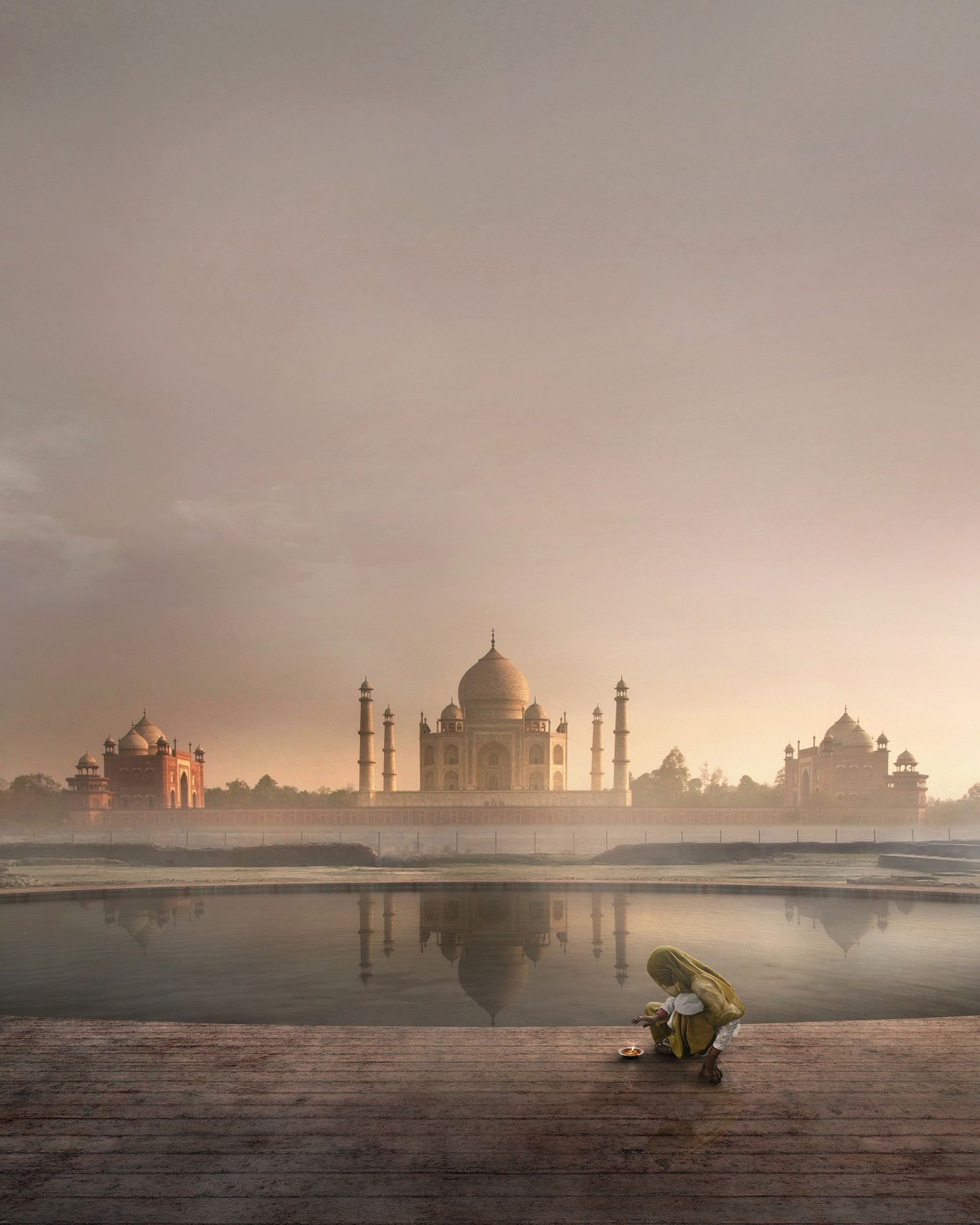
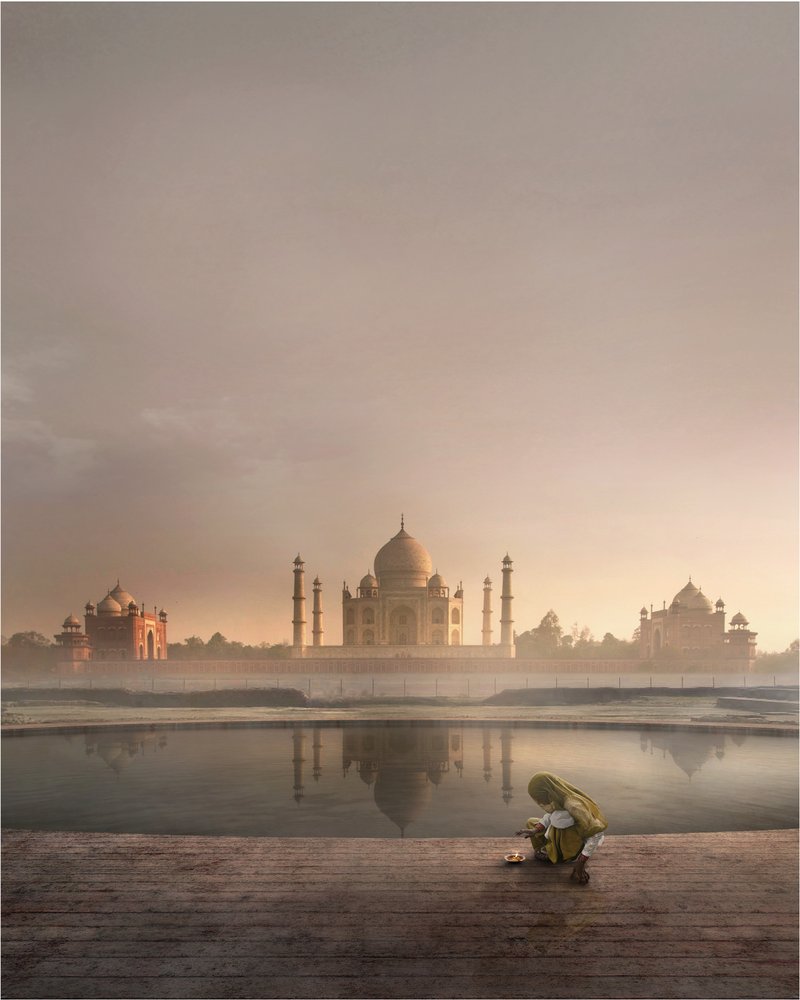
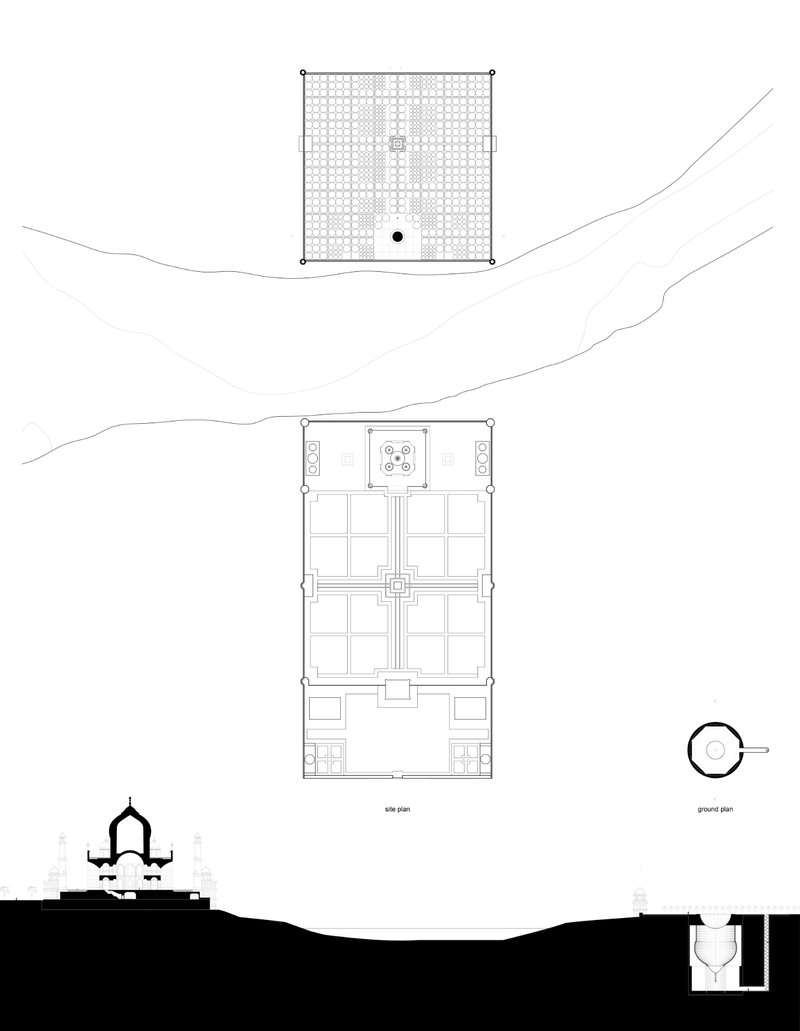
The Taj Mahal rises above the Yamuna River like a solitary tear suspended on the cheek of time. Inspired by this immortal imagery, The Black Taj reinterprets one of the world’s most celebrated symbols of love through a contemporary architectural design that transcends temporal and cultural boundaries. Conceived as a counterpart across the river, it reflects both physical and emotional duality—mourning, reflection, and rebirth.
Designed by Gregor Loeber, Johnny, and Leon Vohl, the project The Black Taj - XBST88 explores how architecture can bridge the tangible and the metaphysical—material and emotion, structure and story—while resonating with the spiritual energy of the Mughal landscape.
The Site: Mehtab Bagh — Between Ruin and Revival
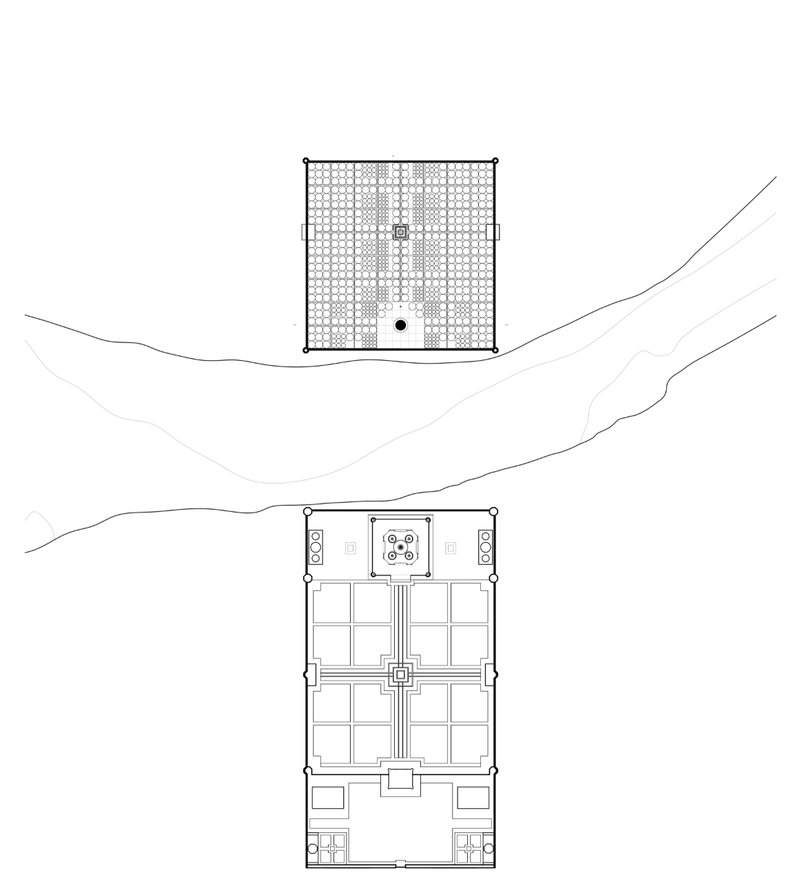
The Black Taj proposal draws its foundation from Mehtab Bagh, the eleventh and final garden of the Mughal charbagh sequence along the Yamuna. Once part of a continuous landscape composition framing the Taj Mahal, the garden’s geometry mirrored perfection—water channels, reflection pools, and terraced forms celebrating celestial symmetry. However, centuries of neglect and flooding transformed it into a ruin of memory.
This project restores Mehtab Bagh not just as a historical site, but as an emotional landscape—a threshold between the physical Taj and its imagined reflection. The designers reestablish its symbolic equilibrium with a structure that redefines loss as illumination, absence as essence.
Conceptual Framework: Death, Reflection, and Continuity
The concept emerges from the philosophical notion that architecture should speak of its time and place, yet yearn for timelessness. While the Taj Mahal immortalized love through marble and form, The Black Taj reinterprets its narrative as a spatial meditation on impermanence.
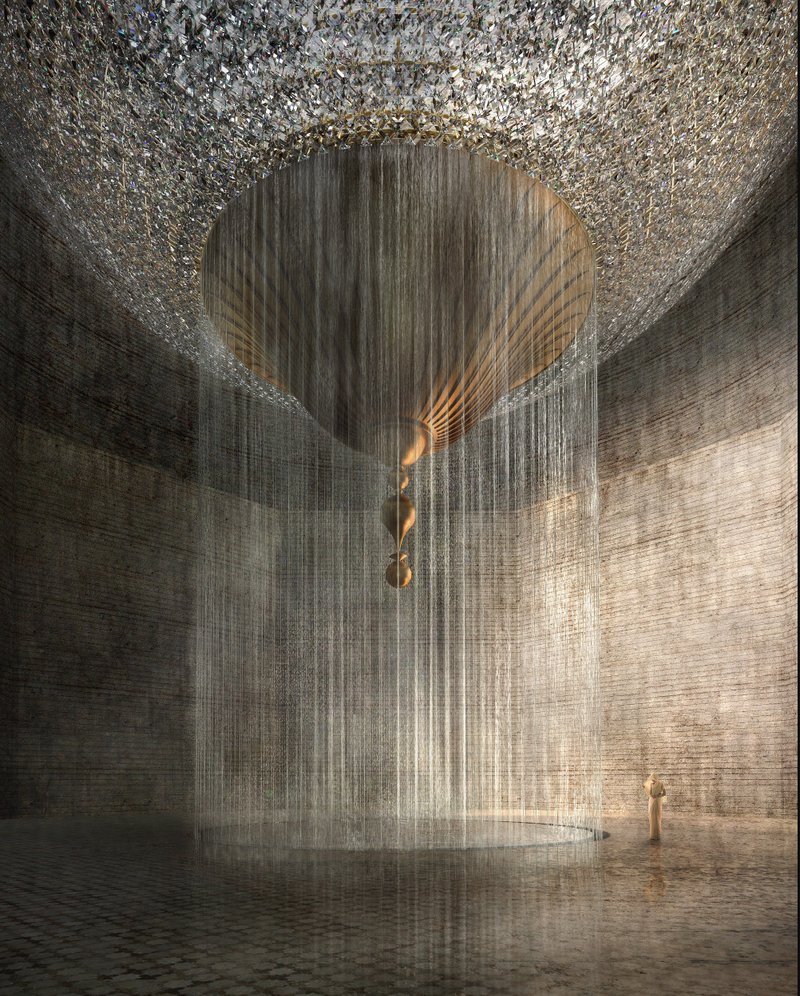
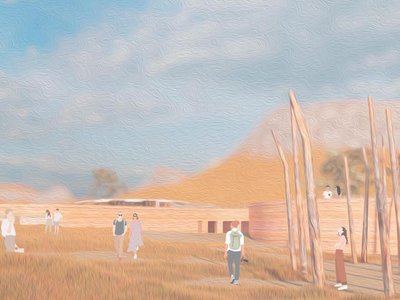
The proposal places the structure beneath the ground—literally and metaphorically underlining the Taj. Here, the design becomes a vessel for the unseen: a subterranean sanctuary shaped by water, gravity, and silence. A golden droplet suspended from the dome’s apex forms the core of the experience—a metaphorical inversion of the Taj’s white dome that symbolizes ascension through descent.
Design Expression: The Subterranean Architecture of Reflection
Inside the Black Taj, light, sound, and water shape the sensory architecture. The circular chamber, carved in stone, receives filtered daylight through a crystalline lattice. Streams of falling water trace the contours of the inverted dome, blurring the boundary between the real and the reflected.
The lotus form—a recurring motif in Mughal and Hindu architecture—emerges as a sculptural void. Its downward bloom represents release from attachment, drawing the visitor inward into contemplation.
Architecturally, the design’s restraint conveys spiritual minimalism. Every element—brick, light, shadow, and droplet—acts in dialogue with the Taj’s ornate perfection, achieving harmony through contrast.
The Duality of Above and Below
While the Taj Mahal’s brilliance radiates outward, The Black Taj absorbs light inward. Together, they form a cosmic balance—life and death, fullness and void, reflection and refraction.
The axis of the Yamuna River becomes not a divider but a mirror, extending the architecture’s presence across dimensions. In this way, the Black Taj redefines monumentality—not through scale or ornament, but through depth, silence, and the choreography of perception.
Contemporary Architectural Design and Cultural Dialogue
This reinterpretation exemplifies contemporary architectural design rooted in heritage yet liberated from nostalgia. It does not replicate Mughal ornamentation but translates its essence through spatial experience—using light, material, and geometry as emotional tools.
In the broader discourse of modern architecture, The Black Taj becomes a metaphor for renewal. It invites visitors to pause, descend, and reflect—both literally within its chamber and metaphorically within themselves.
By bridging memory and modernity, it argues that architecture’s timelessness lies not in stone or symmetry but in its power to evoke emotion and transcend eras.
A Mirror to the Eternal
The Black Taj is less a monument and more a meditative dialogue—between heaven and earth, form and void, love and loss. It redefines the act of memorialization for a contemporary era where spirituality is personal yet collective.
In a world rushing toward futurism, this project reminds us that to build timelessly is to build reflectively.
Project Credits
Project: The Black Taj – XBST88 Designers: Gregor Loeber, Johnny, Leon Vohl
Recognition: Runner-up entry, The Black Taj Competition




Popular Articles
Popular articles from the community


The Ken Roberts Memorial Delineation Competition (Krob)
As the most senior architectural drawing competition currently in operation anywhere in the world, it draws hundreds of entries each year, awarding the very best submissions in a series of medium-based categories.

Free Architecture Competitions You Can Enter Right Now
No entry fees, real prizes. Here are the best free architecture competitions open for submissions in 2026.

Fifth NRE Jazz Club – De Bever Architecten: Eindhoven’s Revitalized Cultural Hub
Historic gas factory transformed into Fifth NRE Jazz Club blending modern sustainability, jazz culture, dining, and heritage architecture seamlessly.
Split House: A Compact Urban Home Blending Privacy, Light, and Flexible Living in Japan
Compact Japanese home featuring DOMA space, flexible café potential, passive lighting, privacy zoning, and sustainable urban living design.

Similar Reads
You might also enjoy these articles
Digital Façade Design for our cities’ urban fronts
Prima Facie - Result Story
Protecting avian biodiversity: Bird observatories to help spread awareness & save rare bird species.
Results for ‘Fly’ - Landscape design competition out now
Connecting with nature: Forest interpretation center in Australia's Wollemi National Park
‘Asatti’ - Landscape design competition - Result story


Explore Architecture Competitions
Discover active competitions in this discipline




The International Standard for Design Portfolios


The Global Benchmark for Architecture Dissertation Awards


The Global Benchmark for Graduation Excellence


Challenge to reimagine the Iron Throne
Comments (0)
Please login or sign up to add comments
No comments yet. Be the first to comment!