

The Copper Coil Research Center by Sehw Architektur
Copper-clad research center blending sustainable design, flexible academic spaces, and innovative daylighting, symbolizing electrical engineering through architecture.


The Copper Coil by Sehw Architektur in Rostock, Germany, is a cutting-edge research center that redefines contemporary academic architecture through innovation, sustainability, and spatial clarity. Designed as a technical center for the University of Rostock’s Institute of Electrical Engineering, the project supports advanced research in applied microelectronics and communications engineering while embodying scientific identity through architectural form.
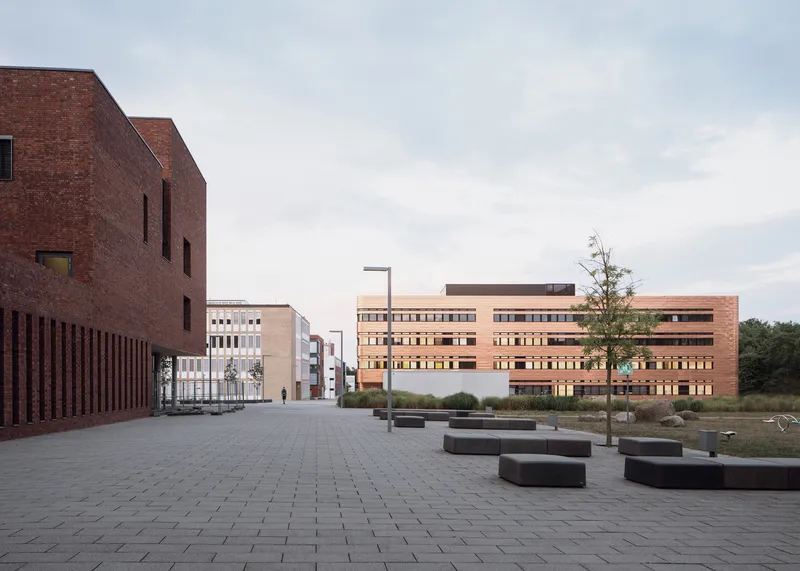
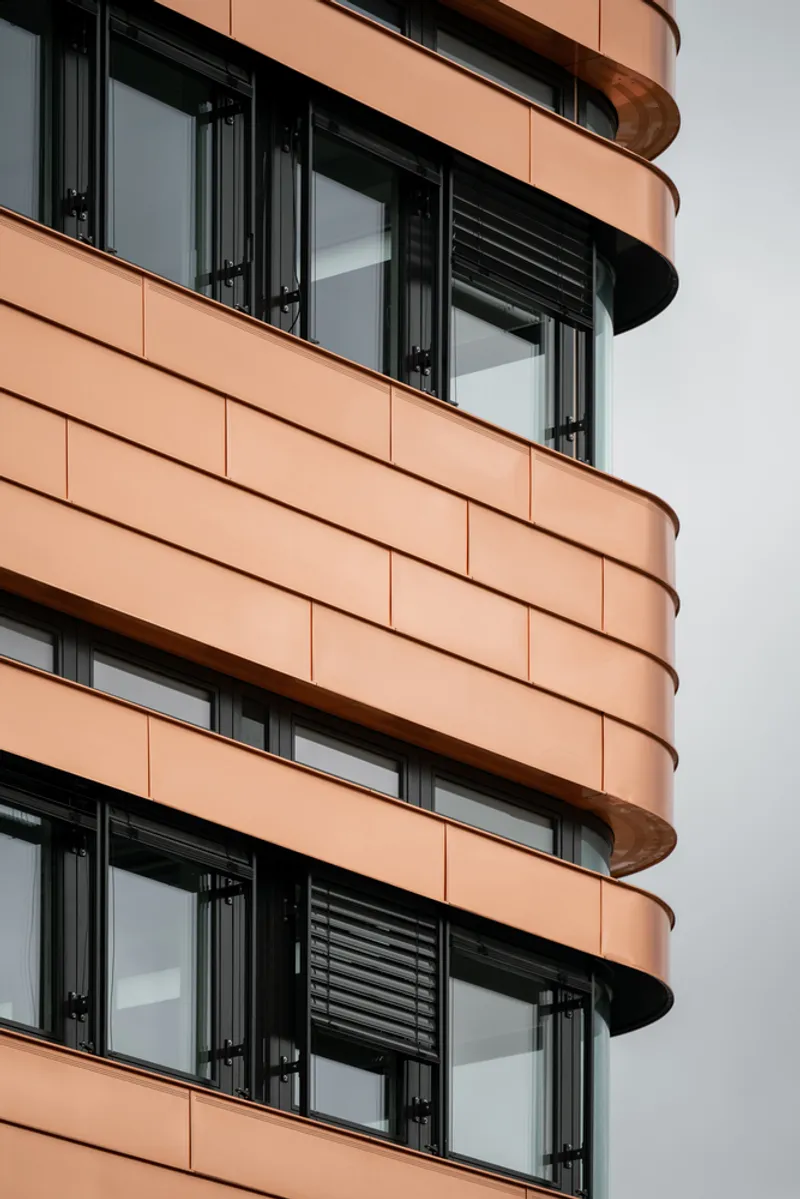
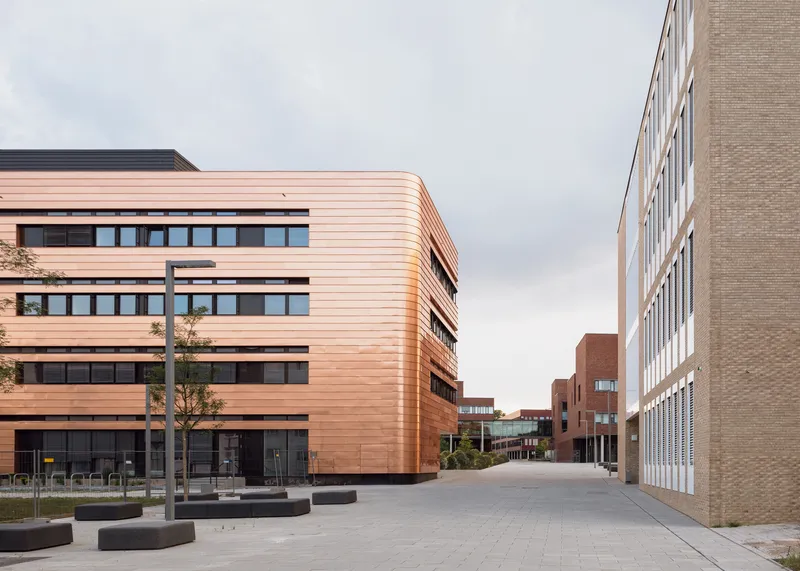
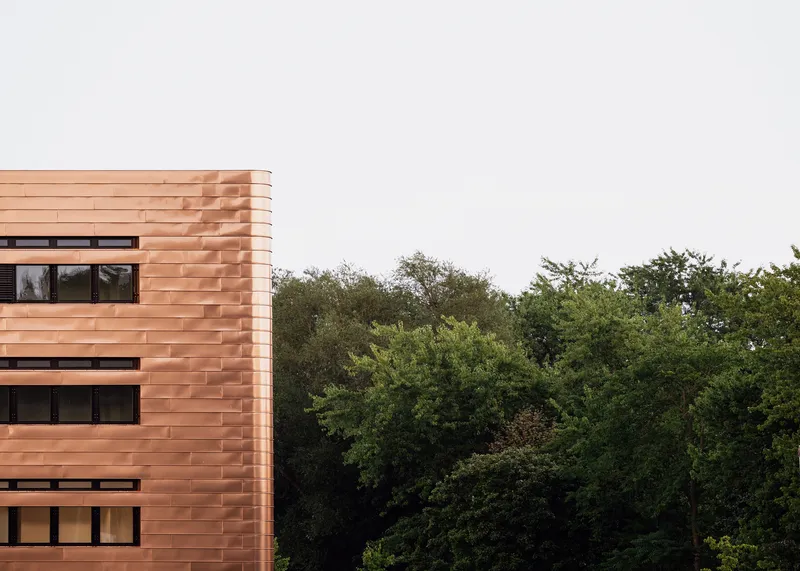
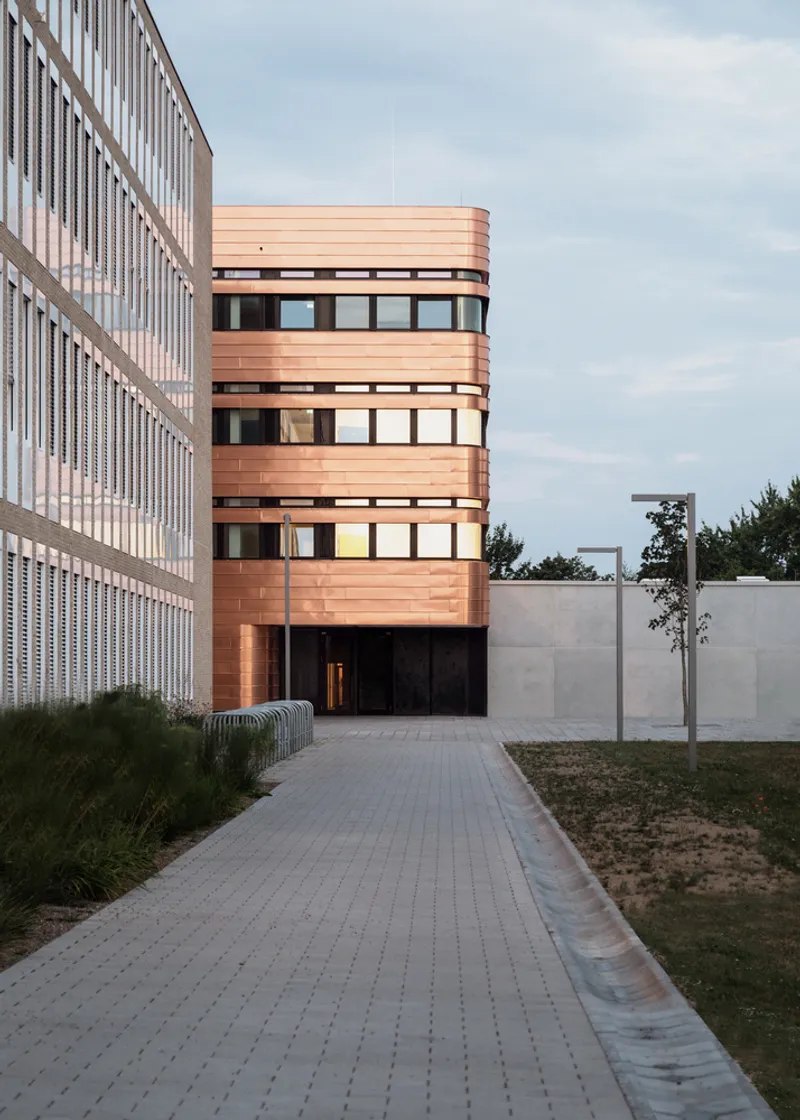
Covering an area of 3,944 m² and completed in 2022, the building is distinguished by its iconic copper façade, inspired by the geometry of an electrical coil. The horizontally banded copper exterior with rounded edges creates a dynamic visual expression while reflecting the building’s technological function. This carefully crafted façade not only enhances the campus identity but also integrates harmoniously with the surrounding red-toned architecture, balancing contextual sensitivity with a bold architectural statement.
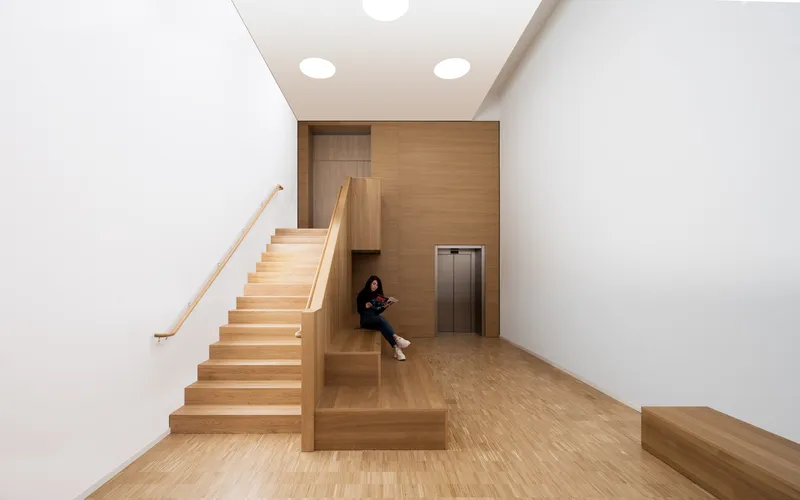
The elongated building volume is strategically positioned according to the campus master plan, featuring a clear linear form with an adjoining lecture hall volume. The façade design incorporates a dual ribbon window system that maximizes natural daylight penetration into deep laboratory and seminar spaces. The lower window band ensures direct light on workspaces and external views, while the upper band distributes daylight deeper into the interiors, optimizing energy efficiency and user comfort.
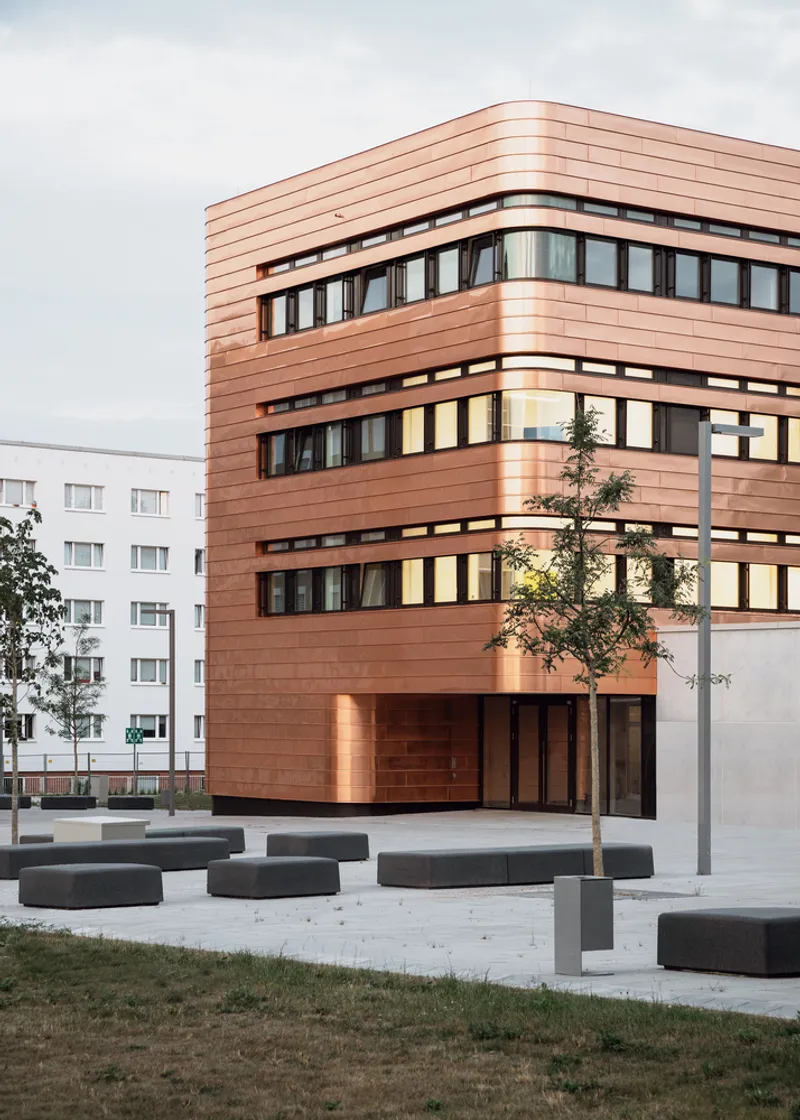
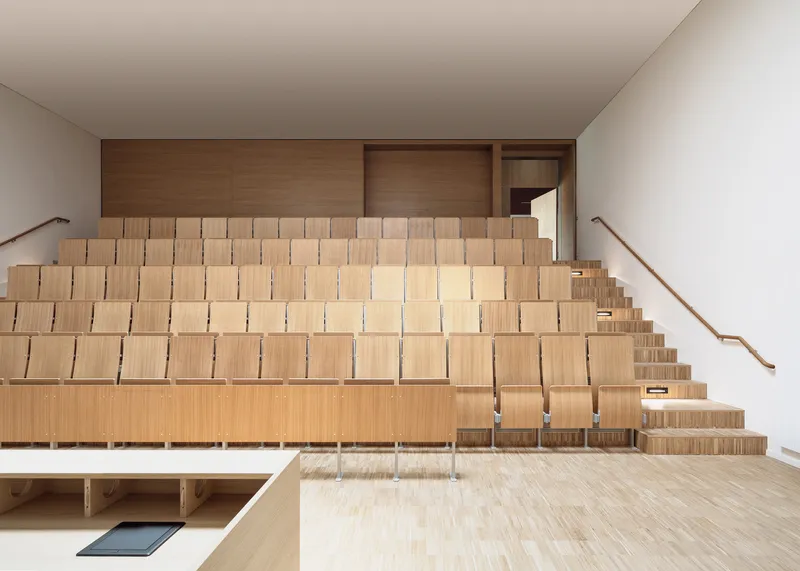
At the heart of the building, a spacious and welcoming foyer connects the campus axis to the internal circulation, creating a fluid transition between public and academic spaces. The ground floor accommodates administrative offices alongside the lecture hall, which is expressed as a distinct concrete volume, emphasizing its functional importance. Upper floors are dedicated to research institutes, organized through a rational central corridor system that balances efficiency with opportunities for interaction.
The interior architecture emphasizes flexibility, collaboration, and adaptability. Offices, laboratories, and seminar rooms are arranged in a layered configuration, while expanded corridor zones act as informal meeting spaces, fostering communication and knowledge exchange. This spatial strategy supports both focused research and dynamic academic engagement, reflecting contemporary educational design principles.
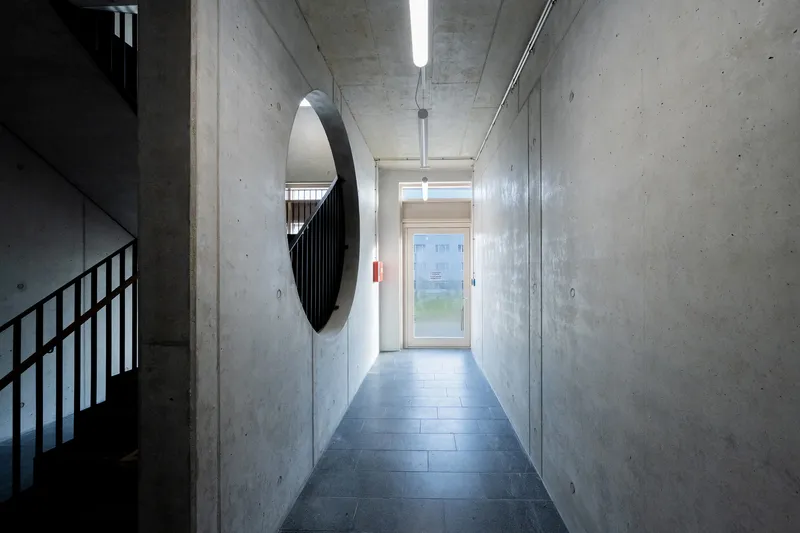
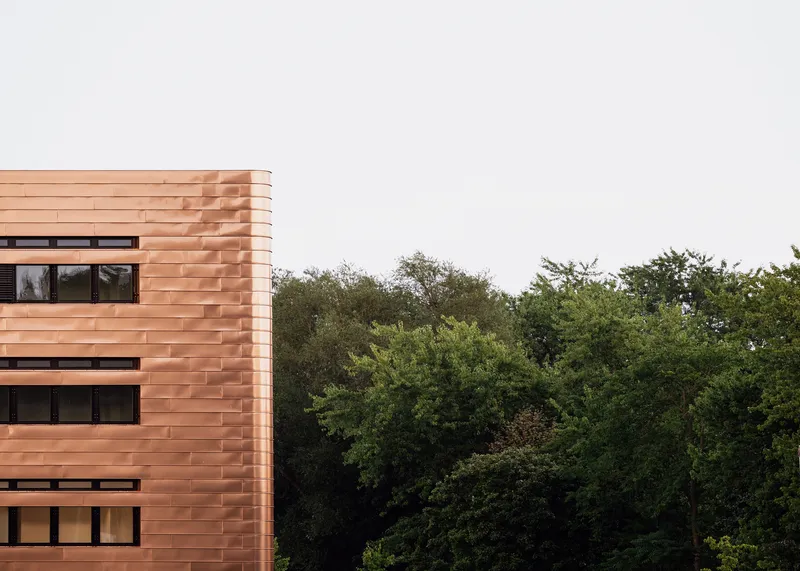
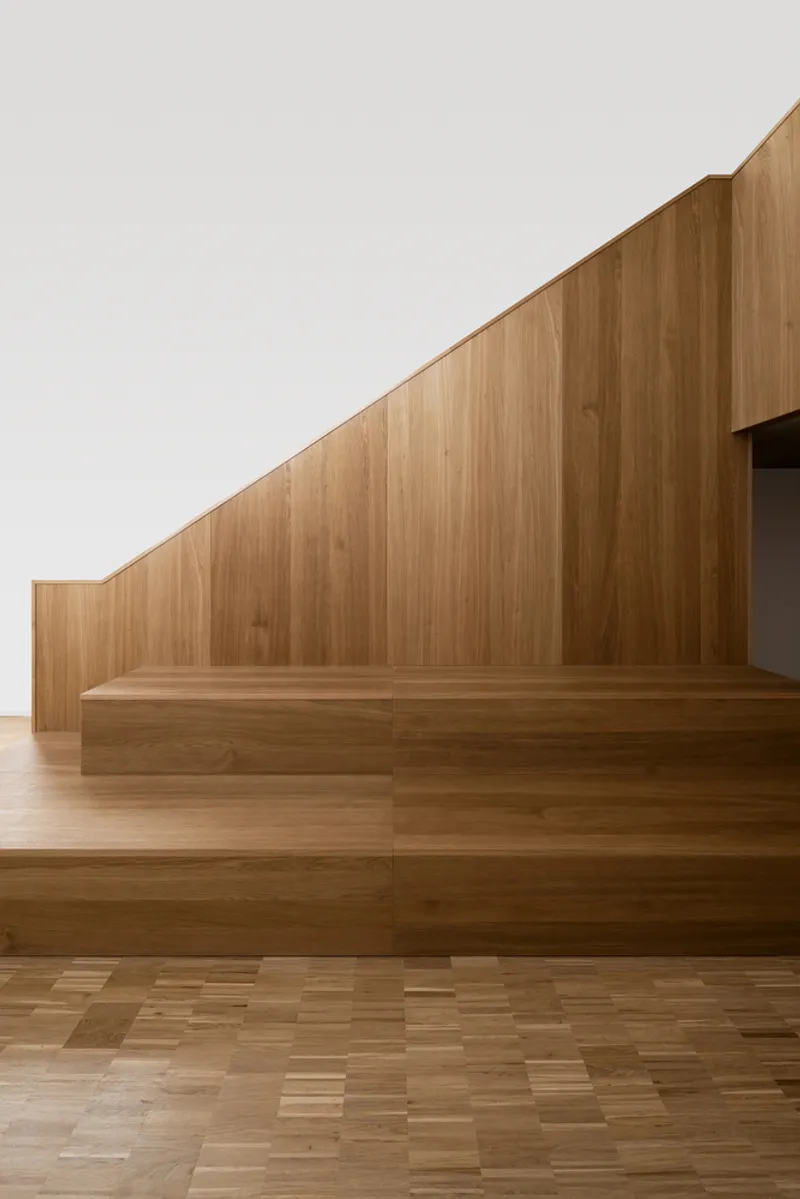
Materiality plays a crucial role in defining the building’s identity. The contrast between metallic copper surfaces and warm wooden elements creates a balanced sensory experience. Interiors feature neutral white finishes complemented by bold red accents in communal areas, exposed concrete staircases, and oak-lined lecture halls, offering a rich and varied architectural language.
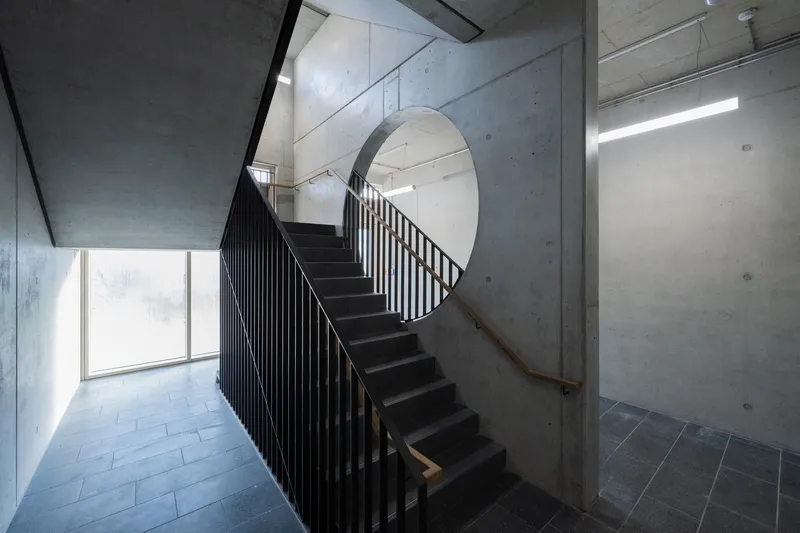
Sustainability is central to the design, aligning with Sehw Architektur’s Sustainability Compass. The compact form, energy-efficient façade, durable materials, and flexible spatial planning ensure long-term usability and resilience. The building’s adaptability allows it to respond to evolving academic needs, making it a future-ready infrastructure for research and innovation.
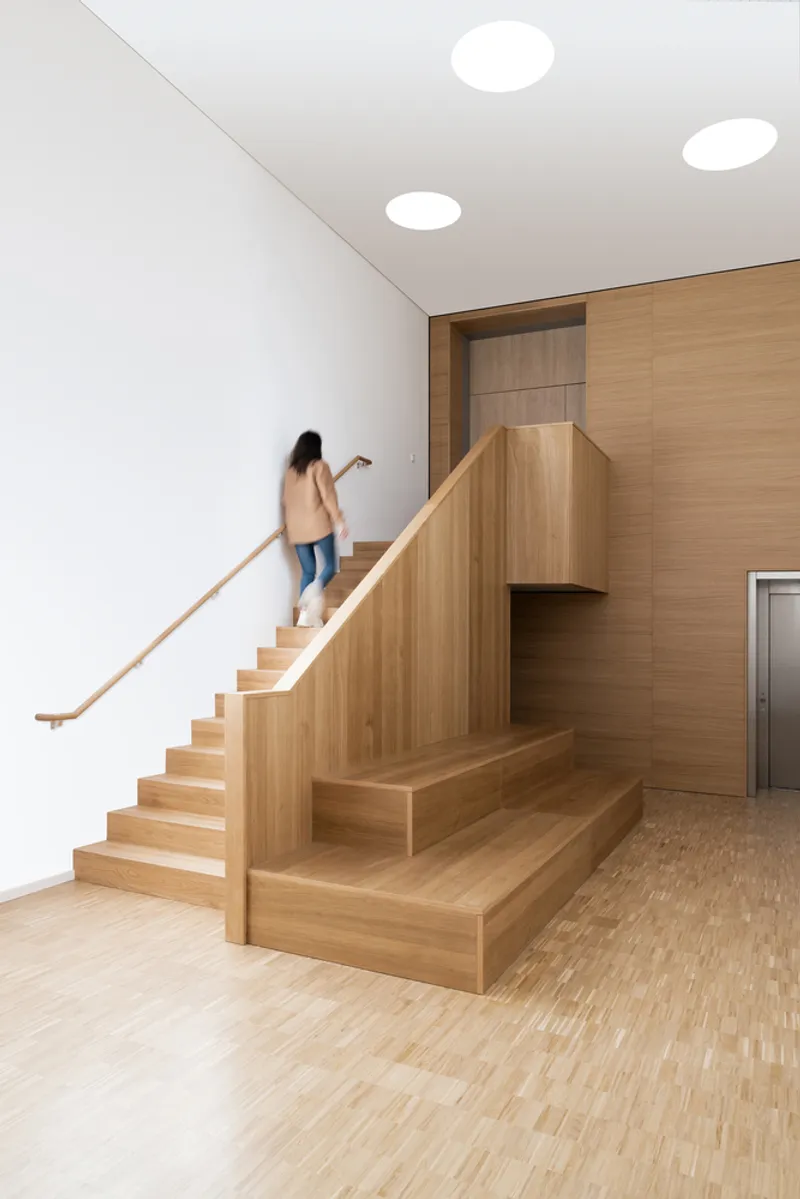
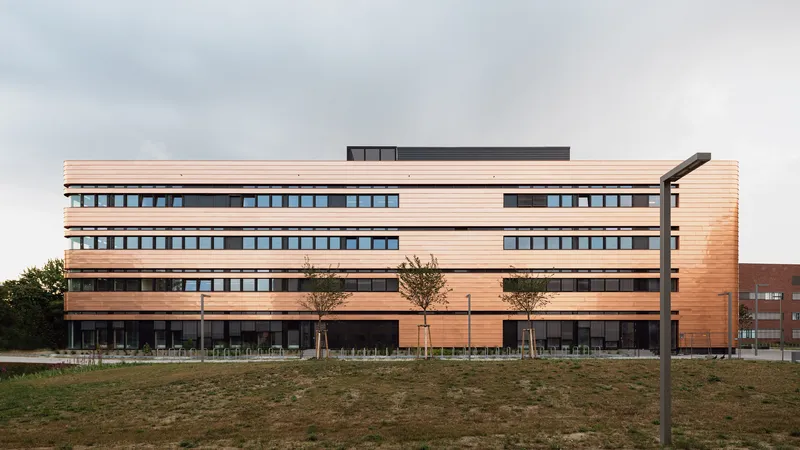
The Copper Coil stands as a symbol of technological progress and architectural excellence, translating the principles of electrical engineering into a built form that inspires learning, collaboration, and sustainable development.
All photographs are works of
Philipp Obkircher, Helin Bereket


Popular Articles
Popular articles from the community


Jaramillo Van Sluys Arquitectura and Urbanismo Turn a Demolished Registry Lot in Quito into an Orchard Plaza
In Quito's Centro Histórico, a 2,800 m² plaza exposes the San Agustín convent wall and redraws its lost Augustinian orchard in volcanic stone.

Architekt Andreas Gruber Scatters 23 Dark Timber Chalets Across a South Tyrolean Forest Edge
In Molini di Tures, Amonti Chalets breaks a resort into a hamlet of gabled timber houses, with parking, storage and services pushed into the slope.

David Macias Steps a Doorless Stone and Plaster House Down a Tropical Colombian Hillside
In the humid hills of Colombia, Threshold House replaces the front door with an open void and terraces its 850 m² down the slope instead of fighting it.

LT2A and OPEN Architectes Thread a Brick and Glass High School Through a Wooded Belgian Campus
In Braine-l'Alleud, a 3,000 m² wing for Collège Cardinal Mercier pairs pale brick with a glazed colonnade, deferring to a small chapel and a dense wood.

Similar Reads
You might also enjoy these articles

Bamboo Housing Challenge 2026: Design Affordable, Sustainable Homes Using Bamboo
An international design competition by Bamboo U and IBUKU inviting architects and designers to reimagine affordable housing using bamboo — with the winning design built full-scale in Bali.

Computational Design & Education: Beegraphy Design Awards Introduces 7th Category (Featuring Jiyun's Innovative Approach)
Dive into Beegraphy’s 7th Design Awards category, where computational design meets education to create immersive, interactive learning tools, inspired by Jiyun’s work.

From Parametric Lighting to Urban Furniture: Join the 2nd Workshop in Beegraphy’s Computational Design Series
Dive into Cutting-Edge Design Techniques and Practical Applications with Industry Experts

Last Call: Unleash Your Architectural Genius in SHAK's Kindergarten Design Competition
Urgent call for architects to join SHAK's kindergarten design competition before the looming deadline

Explore Architecture Competitions
Discover active competitions in this discipline

Challenge to reimagine the Iron Throne

Photograph architecture without architects

Illustrate the lost glory of Angkor Wat - Render Challenge

Design challenge to reuse E-waste
Comments (0)
Please login or sign up to add comments
No comments yet. Be the first to comment!