

The Dune
the pavilion

What was the concept behind the project?
The Dune project was conceptualized as a Pavillion to mark the interconnection between vernacular and technocratic methodology. Along with that it also hopes to question the hegemony of occularcentrism and generate a multi-sensory experience.
I knew I wanted a challenging environmental context as the pavilion needed to be optimized for solar gain reduction. I wanted to do this computationally and build upon the design from there.
What was the intent behind the organization of elements across various levels (Architectural, Site, Urban)?
The organization of space is rather straightforward. the pavilion provides seating spaces and a few entry points. The smaller modules that are assembled together to occupy the pavilion volume are generated algorithmically.
How many iterations were tried to arrive at the final outcome?
The modules went through at least 10 stages of development. the constraints on the modules were its 3d printability, the size limitation on terracotta 3d printing. it had to be able to contain a medium-sized atomizer for the cloud machine.
The volume itself went through maybe 5 iterations as the volume is optimized algorithmically first. It is only altered to generate interesting moments / allow wind through the pavilion.
Which methods of design investigation?
There were physical sketches, theoretical research of design methodology(discrete), construction techniques( 3d printing + aggregation), material research and finally a dive into computational algorithms.
How will the project transform with the passing time?
The project was designed such that its parts can be re-assembled into different configurations and compositions to respond to different contexts. I would imagine that after the pavilion is disassembled from its proposed site it lives its life as a vagabond travelling to other interesting hot and dry places all over the world.



Popular Articles
Popular articles from the community

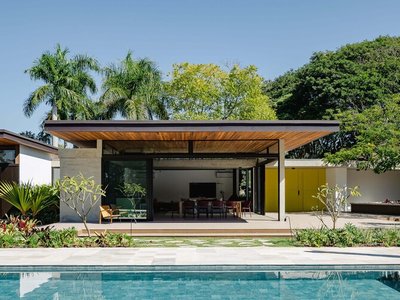
Flamboyant House by Juliana Camargo + Prumo Projetos
Modern Brazilian house integrating existing tree, pool, and volumes with glass, wood, and transitional spaces blending interior, exterior, and landscape seamlessly.


The Ken Roberts Memorial Delineation Competition (Krob)
As the most senior architectural drawing competition currently in operation anywhere in the world, it draws hundreds of entries each year, awarding the very best submissions in a series of medium-based categories.
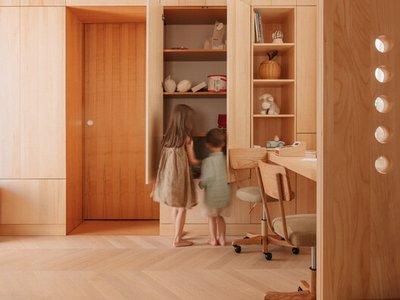
Treehouse Apartment: A Warm Timber Interior Blending Craft, Play, and Contemporary Living
Warm timber apartment with integrated treehouse, combining natural materials, craftsmanship, and playful design to create a flexible, family-oriented living environment.
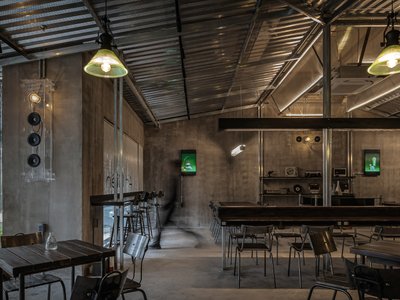
An Miên Lumière Cafe by xưởng xép, Ho Chi Minh City, Vietnam
An industrial-inspired café where layered steel and warm light create a dynamic, immersive environment shaped by reflection, depth, and perception.


Similar Reads
You might also enjoy these articles
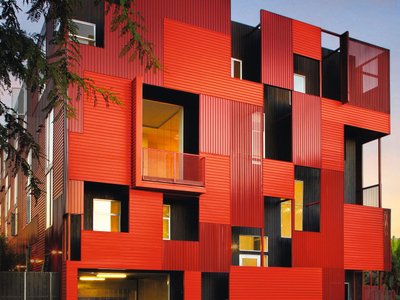
Converge Hub – A Human-Centered and Sustainable Mobility Hub at the Urban Edge
Its open and permeable design promotes sustainable movement through walkable connections, green axes, and integrated public transport
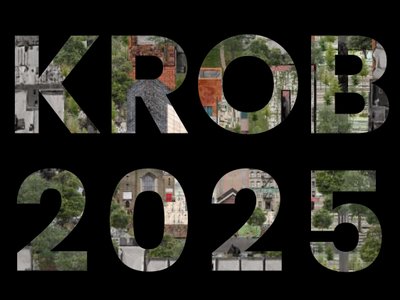
51st Annual KRob - Ken Roberts Memorial Delineation Competition
Join us in celebrating 51 years in excellence in architectural representation! With $2,400 in prize money awarded across 8 categories, this prompt-less competition is accessible to all!


Explore Installations Competitions
Discover active competitions in this discipline




The Global Benchmark for Architecture Dissertation Awards

Challenge to design a portable theatre


Challenge to design a portable music platform

Challenge to design an open learning module for the elderly
Comments (0)
Please login or sign up to add comments
No comments yet. Be the first to comment!