
The Era of Hustlers
Providing for the dreamers of today

Background
Hong Kong — One of the world’s biggest financial hubs, the state is home to a growing population of millions. Sparkling, trendy, and chic, it is a picture-perfect frame of the city of aspirations.
New York — The glittering city, famously known for its skyline, houses the world’s most famous buildings and boasts of a magnanimous, larger-than-life reputation as one of the world’s top destinations to live in.
Mumbai — The literal city of dreams. Mumbai is the commercial hub of India and is very much on its way to becoming every inch of the urban promise it is touted to be.
Introduction
One thing common in the descriptions of these three cities is how they showcase the potential for a better life. Another thing in common, hidden behind the dreamy promises, is that these cities, among many others, are going through one of the worst housing crises in history. The main cause is high demand and low supply, leading to astronomically high real-estate prices. With millions migrating every year and having nowhere to go, the urban centers of the world are gradually bleeding from within.
With metropolis’ being the hub of all action, millennials from modest backgrounds are being led into pursuing the opportunities being offered in return for riches and success. The problem arises when they land in these cities having nowhere to go. Living opportunities are extremely slim at the moment, and the ones that do have an affordable price point are more often than not small and dingy and exist outside the realms of the main city, or in a ‘bad part of town. The relatively new ‘rental’ culture, of renting apartments on a monthly or quarterly basis, was meant to be a more comfortable alternative for those who could not afford to buy residential spaces, and at the same time would allow one to save money. The extremely high real estate prices, however, have led to higher rental prices as well, which benefit the owner but are a bane for the renter. This quid pro quo has led to dreams being killed way before they could be realized.
Around the world
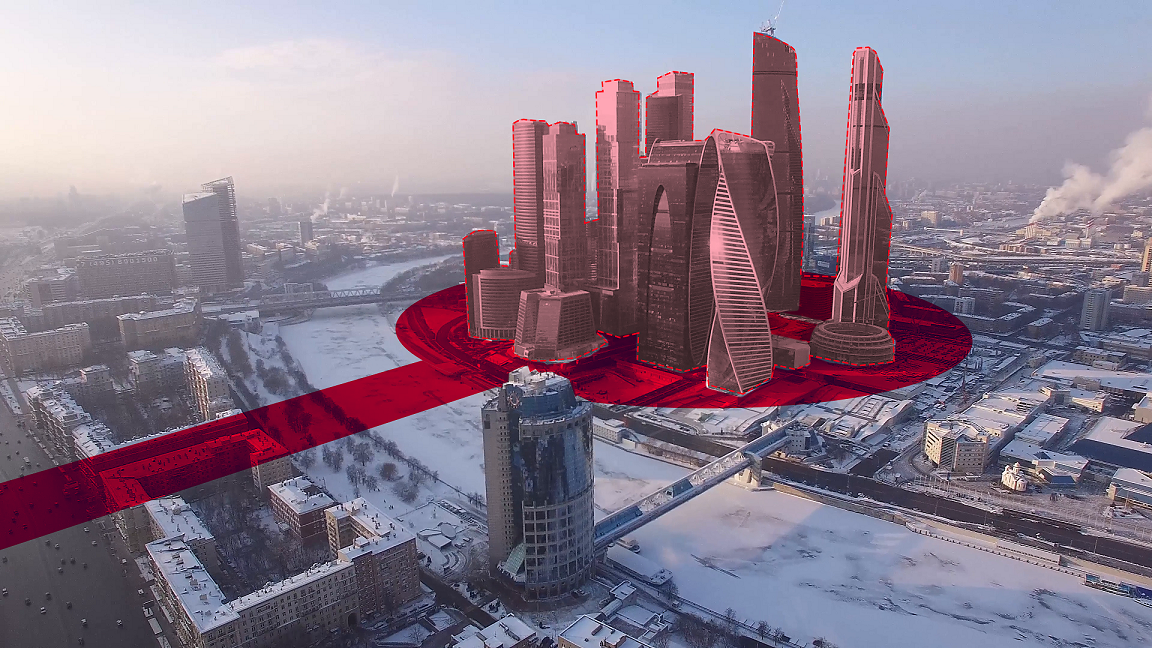
Governments and design organizations have been instrumental in taking out policies and concepts respectively that promote affordable standardized housing to meet the demands of the younger generations, much like the post-world war I period of industrialization. For example in Moscow, the government recently announced their plans of destroying old Soviet-period apartment blocks to give way for modern architecture that will cement the city’s status as a global metropolis in the world. With the new development, newer price points will be introduced — which in turn might not be very favorable for the majority of the young residents. This is explained better by the architects of DNK ag, an architectural firm based in Moscow, “Currently, the Moscow region is reaching ever higher up, both at its center and the outskirts — and I don’t think we need to explain the drawbacks of high-density construction in those places where it is there without any apparent reason. In such places, the monstrous construction density destroys the environment, and, ultimately, it destroys people.
The example of Moscow is of importance here because modern-day urbanization has been sentenced on the city — but, it has not yet been implemented. There is a case to be made for introducing something radically different which is inclusive of millennials, instead of benefiting only the government and developers. There is an opportunity available, to not only change the typology of new developments but to also introduce a different character for the same, residing in the same budget. OSA Architects, another firm based out of Moscow, rightly explain the architect’s responsibility by saying, “Large developers are trying to understand how to structure their product better, how to make it more typological and ultimately more affordable. And from our side, we have an opportunity to sit down with ourselves and just think — people of today, people that buy the housing — what are they like? How do we reconcile the requirements of tomorrow with the necessary standardization?”[ii]
Co-working
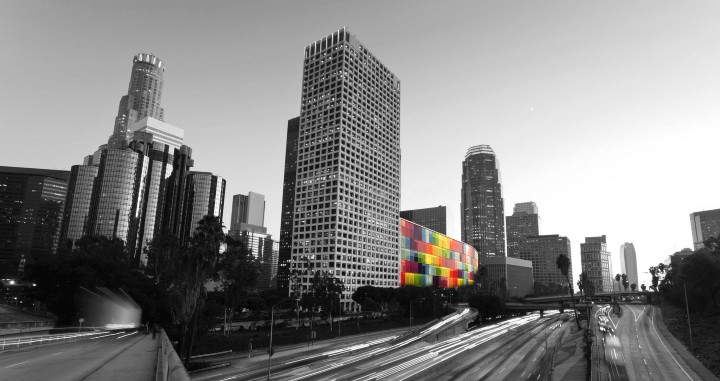
It is necessary to mention here that the introduction of co-working spaces is largely credited to millennials entering the corporate space with fresh ideas and a thirst for innovation, but a lack of resources. Why this is important is because this was a fresh and radical typology that gained strength due to the lack of solutions for the millennial era, which is similar to the problem being faced here. Taking Moscow as a base, it is possible, as a concept, to create what could be known as a ‘co-living space’ within the framework of the infrastructure revamp. This typology could reflect the lives of end-users- in this case, millennials — into the design and planning itself. Incorporating spaces of living, productivity, and interaction (much like the concept of ‘live, work and play’) will help in creating a holistic environment that will focus on both personal and professional growth.

The advantages of the system
There are various ways the typology can be formulated, but it mostly stems from the idea of a ‘hustling’ complex that promotes shared living and activities. It can eradicate the problem on hand, provided the user is kept in the loop of designing at every step. Modern, minimal, and open, this kind of a complex would be comparatively cheaper to develop and maintain, relieving the target user group of the stress of finding an economical home, in a good neighborhood, and practically designed. Shared living is also a way to promote interactions between people of common skills, backgrounds, and/or interests, opening them up to more opportunities and hence allowing the city to provide for all.
Conclusion
The youth of today is mostly residing on hope, barely making ends meet but still not letting go of their dreams. They are hustling to make a living off their fresh ideas and giving them a space that is flexible, interactive, and synonymous with innovation will reap high rewards in terms of the economy later on. A co-living space, possibly a Hustle Hub, can significantly help in decreasing the housing crisis in developing cities at least. Architects and designers can use their expertise to design this new typology in a manner that is fruitful to both developers as well as users. It is a challenge that can quantitatively contribute to a current issue that is plaguing the world, and UNI is inviting concept entries for the same in its competition ‘Hustle Hub’ — designing housing for the youth.
The competition will be judged by Daniil Lorenz of DNK ag and Stanislav Belykh of OSA Architects, both based in Moscow, Russia, and Joel Kopli, of KUU Architects based in Estonia.
For more information on the same, visit https://uni.xyz/competitions/hustle-hub/entries
Sources:
[i] “DNK ag: ‘To us, this competition became an opportunity to propose an optimum model of a high-quality and diverse living environment’”,www.archi.ru, 15 February 2018
[ii] “OSA: ‘We are excited to work with human habitat’”, www.archi.ru, 19 September 2017




Popular Articles
Popular articles from the community

Treehouse Apartment: A Warm Timber Interior Blending Craft, Play, and Contemporary Living
Warm timber apartment with integrated treehouse, combining natural materials, craftsmanship, and playful design to create a flexible, family-oriented living environment.

Solar Steam: A Climate-Responsive Architecture That Redefines the Monument
A climate-responsive memorial architecture that transforms heat, decay, and time into a living system reflecting humanity’s ecological impact.
On the Brooks House by Monsoon Collective – A Contemporary Kerala Home Rooted in Tradition
Kerala home blending tradition and modernity with water-inspired design, brick architecture, courtyard planning, and sustainable rainwater harvesting strategies.
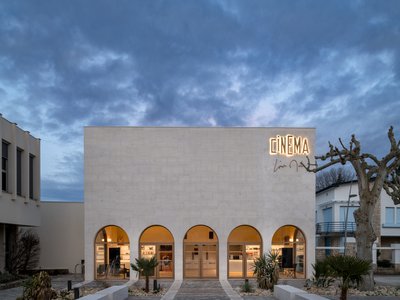
Louis Malle Cinema: A Limestone Cultural Landmark Revitalizing Community Life in Prayssac
Limestone cinema extension with public forecourt, blending heritage and modern design to create flexible cultural spaces and strengthen community interaction.


Similar Reads
You might also enjoy these articles


The Ken Roberts Memorial Delineation Competition (Krob)
As the most senior architectural drawing competition currently in operation anywhere in the world, it draws hundreds of entries each year, awarding the very best submissions in a series of medium-based categories.
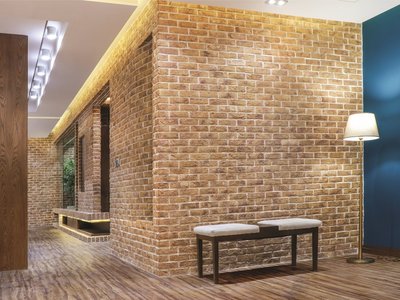
A Contemporary Take on Iranian Residential Architecture
A modern interior design in Mashhad that reinterprets brick, light, and spatial flow to create a warm, contemporary residential architecture.
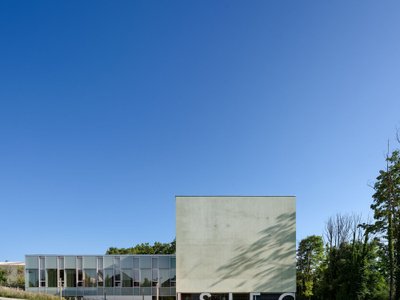
Franche-Comté Advanced School of Engineering by Dominique Coulon & associés, Besançon
A flexible engineering school immersed in woodland, combining concrete minimalism, adaptable spaces, and natural light to support evolving educational environments.


Documentation Work on Buddhist Wooden Temple
Architectural syncretism and cultural hybridity: A comparative study of the Buddhist temples in Chattogram Hill tracks

Explore Residential Building Competitions
Discover active competitions in this discipline




The Global Benchmark for Architecture Dissertation Awards


Challenge to design mud housing for contemporary communities
Comments (0)
Please login or sign up to add comments
No comments yet. Be the first to comment!