
The Hidden Paradise
Modern Oasis in Marocco

What’s the concept behind this project?
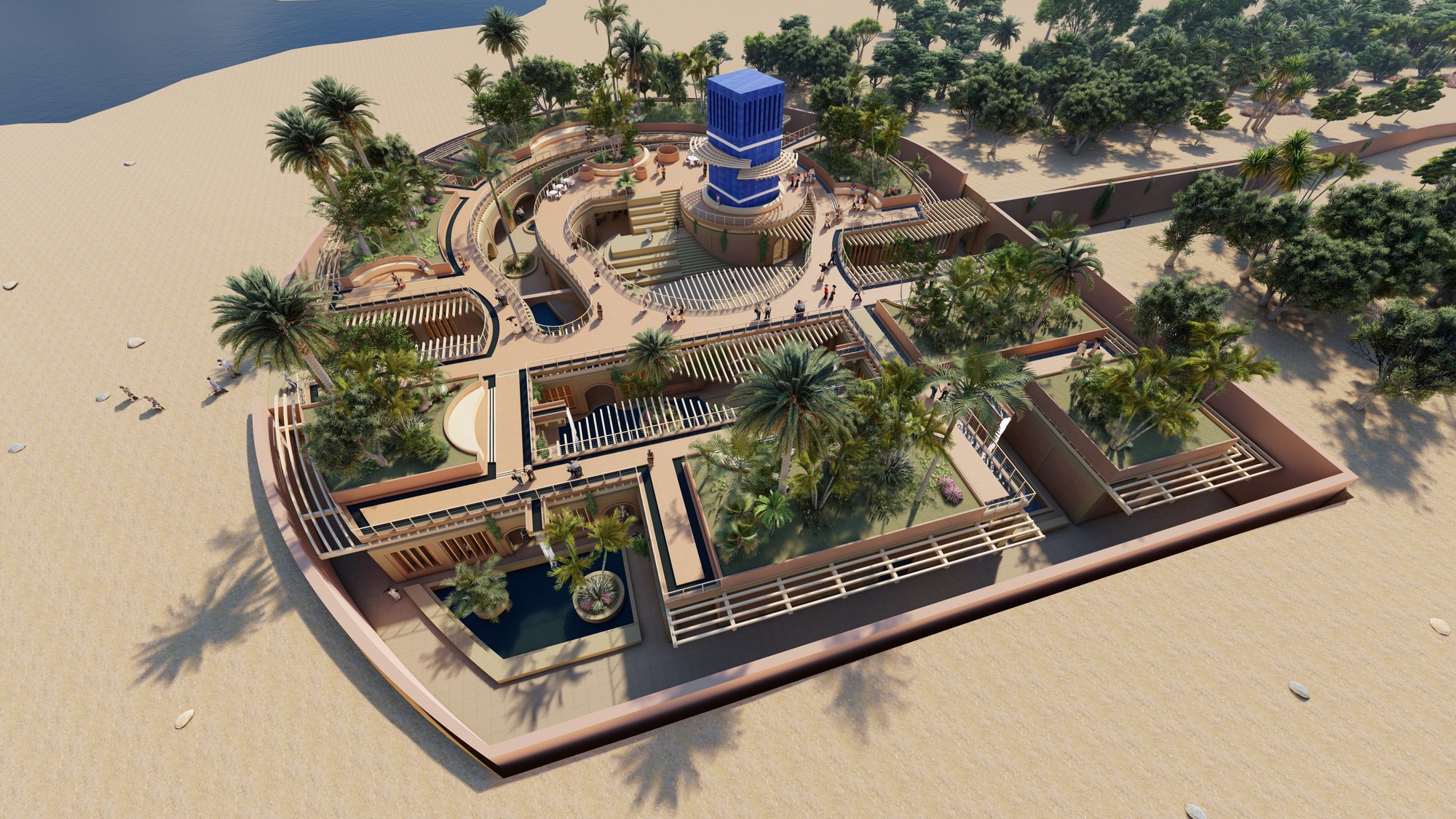
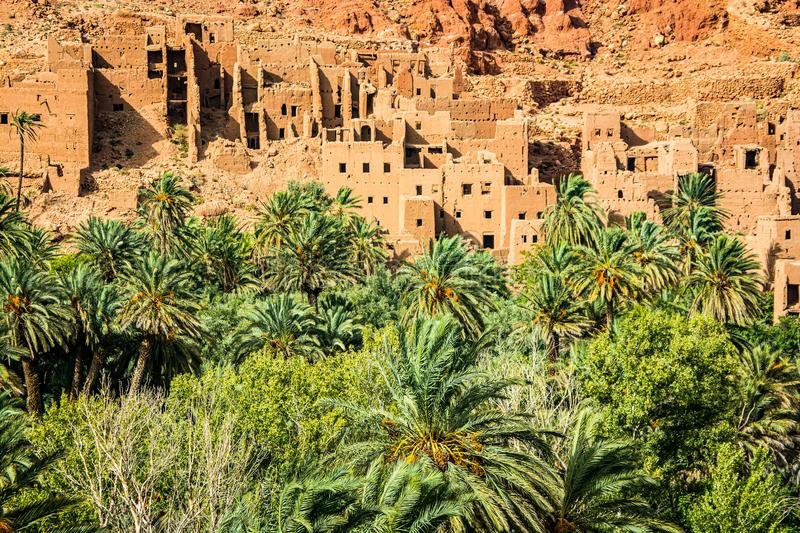
Two criteria appeared to us essential, the oasis culture and the Moroccan traditional building archetypes. The project spotlights the landscape while the Oasis remains the prime focus. The water point around which the two sparsely inhabited cities are organised today along with a few stores and restaurants offers a new but quiet scenery. The omnipresence of water is the guiding element of the project. The vegetation, the dunes and the mountain find themselves pushed into the background.
The key concept of the project is an interpretation of the feeling someone has when he or she discovers an Oasis in the desert – discovering a new and totally unexpected environment,- reassuring by the contrast that surround the place and a place where life and activities are growing.
What’s the intention behind the organisation of the elements through the different levels ?
To better meet the expectation of the project it was necessary to understand the environment in which the project takes place. 40 km south Marrakech this Oasis is very popular. Water is scarce in this environment stuck between the desert and the mountains that is why it is even important than elsewhere. / it is a very special place. It was than crucial to take it into account.
We wanted to keep this Oasis the main visual component. The project is hidden an environment mainly covered with vegetation subtly showing the presence of a certain activity /a human activity. It is about respecting the landscape heritage. The field limit is situated at the end of a bay which is at the edge of the Oasis and is in the continuity of the walk leading to the water.
In this context our project is a stopping place before reaching this goal.
We were highly inspired by traditional Moroccan shapes and structures along with the Oasis way of living. We intentionally chose materials from the region such as local soil, wood and stone. The wind tower positioned at the center of the project creates a natural ventilation while symbolizing a visual landmark across the landscape.
Finally, we also wanted to pay tribute to the image that evokes an Oasis by the omnipresence of water and vegetation in the project.
How did you sum up the programme at the end ?
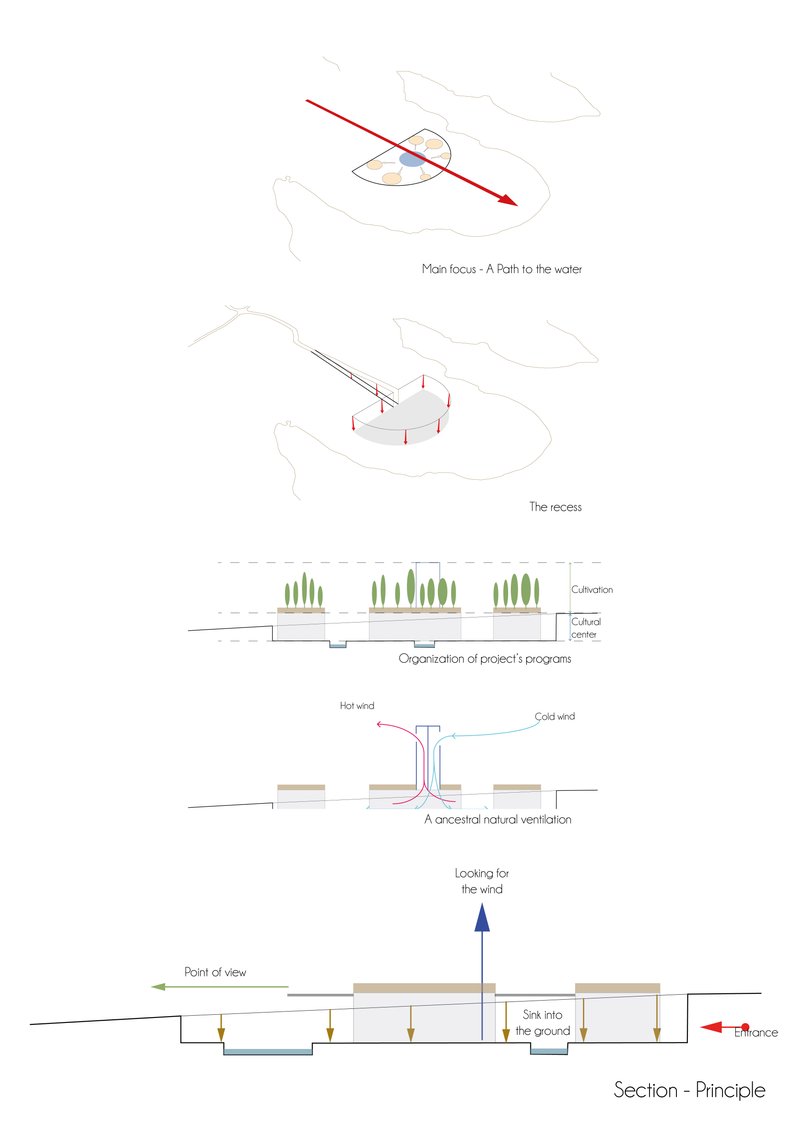
The project is 5 meters below the current topographic level, in this sense it’s at the same level of the oasis water in order to meet several criteria :
- to be sheltered from sun and the wind exposure and rays
- to be protected from prevailing winds that bring dust
- to use water from the oasis without heavy machinery in order to irrigate our project easily.
The place is situated on the way leading to the closest road to the head of the bay. This traffic junction crosses the place from both sides. As a stop for quest of water, this project is a break offering multitude of programs, because they are disconnected from one another.
Each programme is intended to be independent within the project. They have totally different aim and use but are united by network of covered paths. This several parts are unified around a large and central place just as the traditional Moroccan granaries (spaces built into a desert where the crops are protected from the sun exposure and the heat, and moreover that encourage people interaction). Characterized by the wind-collected tower site, this meeting area is used as a market place and offers a large choice of atmosphere. The wind-tower ensures natural ventilation to keep constant fresh through the structure.
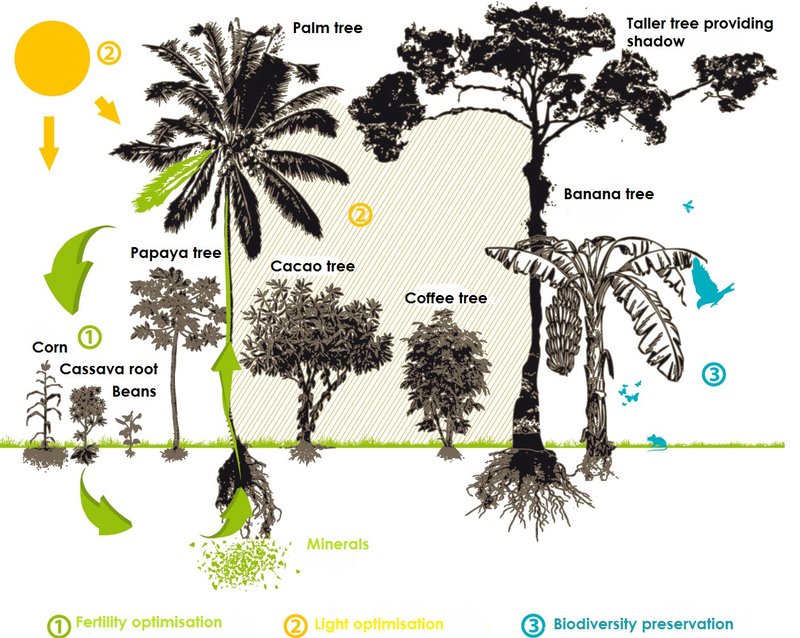
Moreover, several pools open to the sky above, offer safe water sources for the day-to-day life and for the vegetation. As the oasis agriculture is built on three levels, our project is meant to be on three levels as well.
A first level below the ground forms the cultural center. At the second level passageways become a set a walkways allowing people to walk through different garden areas. Every roof has been designed to welcome typical oasis vegetation that will be cultivated: palm trees and other fruit trees. Roof terraces offer public and dense oasis landscapes in which visitors can easily ramble. They are irrigated by rivers along the project – as “seghia” (water channel designed to irrigate fields around oasis). The visitors’ perception is focused on two visible elements: the blue Majorelle wind-tower and the oasis landscape.
The third level is the wind-tower. It is 15 meters high above the topographic level, and is oriented according dominant regional winds (coming from north and west side for the major point). The wind-tower is the heart of the project; it’s both a landmark in this arid area which is major element of life in a desert. The structure is distinguished by its color as well: the Majorelle blue. Popularized in this region and used in Marrakesh for major monuments, it allows the tower to be rooted into the Moroccan heritage and underlines its importance.
Which materials did you choose and how did you select them?
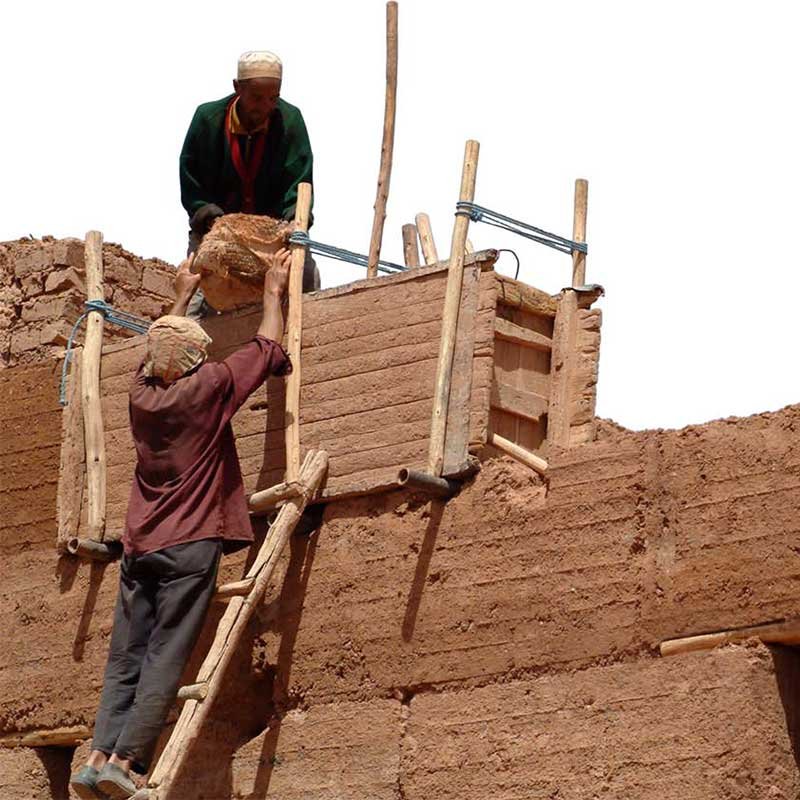
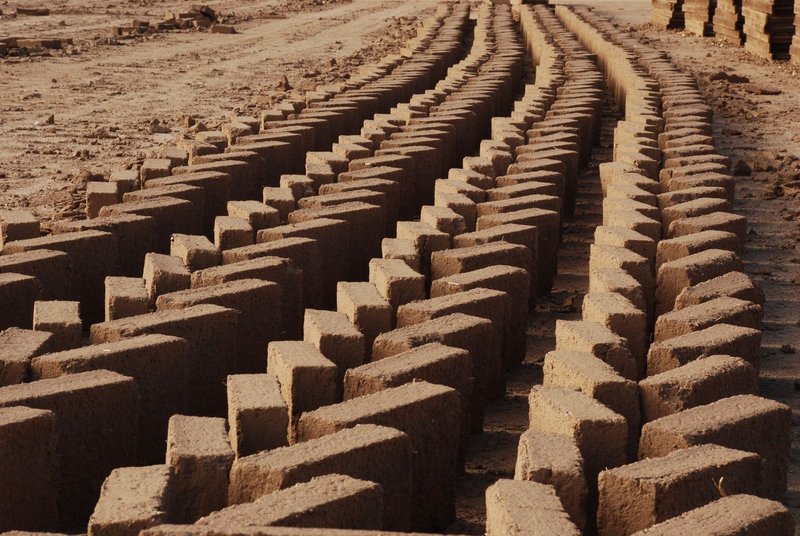
Traditional Moroccan buildings are mainly made of terracotta bricks, wood and stone. They are totally appropriate for the climate. These materials from the region production support the participation of local manufacturers and maintain a savoir- faire that has been preseVnt for generations.
First of all, the soil presents thermal properties favouring the inertia of the structures and guarantees a constant refreshing coolness. Moreover, various implementation solutions are conformed to the current seismic standards. Finally, being a natural material the soil can be recycled in different ways.
The stone and the wood are also local and natural materials which implementation respects the environment. They ensure a solid and sober structure that perfectly integrates itself with clay building systems.
What is the expansion plan of the project?
We imagine the Cultural center as an ending point of a long development: Re-Establish the way of living the Oasis.
Respecting environment, local culture and traditional knowledge at once.
Full of life, theses places need to be maintained permanently. Following our construct scheme, a huge number of activities can take place in theses oasis while giving space to the fundamental elements: water and vegetation.
It’s about finding the balance between human activity and nature development.
This way we can modernize the oasis in order to make them more attractive. This project wants to inspire the future oasis spaces.
In time past, the oasis were a mix of trading, meeting and passage places, the idea of our project is to giving back theses original values
How will the project transform with the passing time?
The Cultural center galvanize its surrounding, no only with its activities, through the local inhabitants, job’s creation and commerce places.
As an oasis is thriving, our project depends on people’s involvement.
For long as the garden live, the Cultural center will grow.

Popular Articles
Popular articles from the community

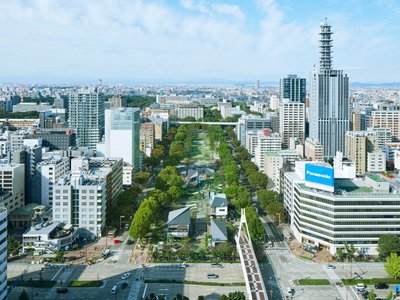
On the Brooks House by Monsoon Collective – A Contemporary Kerala Home Rooted in Tradition
Kerala home blending tradition and modernity with water-inspired design, brick architecture, courtyard planning, and sustainable rainwater harvesting strategies.
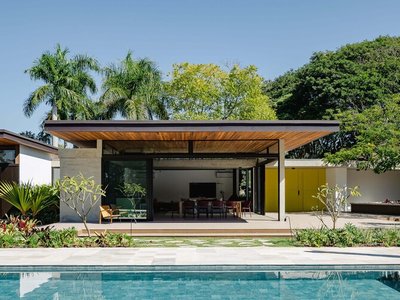
Flamboyant House by Juliana Camargo + Prumo Projetos
Modern Brazilian house integrating existing tree, pool, and volumes with glass, wood, and transitional spaces blending interior, exterior, and landscape seamlessly.
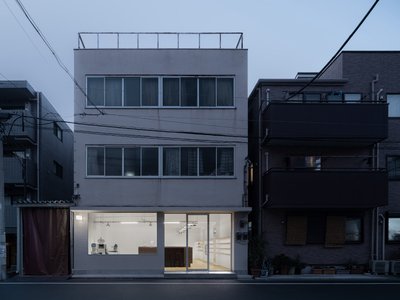
Atelier Macri Concept Store Interior Design by CASE-REAL
Atelier Macri store features a "ko" counter, walnut wood details, cork displays, blending retail, gallery, and seamless customer experiences.
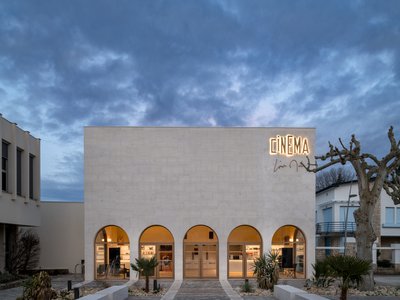
Louis Malle Cinema: A Limestone Cultural Landmark Revitalizing Community Life in Prayssac
Limestone cinema extension with public forecourt, blending heritage and modern design to create flexible cultural spaces and strengthen community interaction.


Similar Reads
You might also enjoy these articles


The Ken Roberts Memorial Delineation Competition (Krob)
As the most senior architectural drawing competition currently in operation anywhere in the world, it draws hundreds of entries each year, awarding the very best submissions in a series of medium-based categories.
A Contemporary Take on Iranian Residential Architecture
A modern interior design in Mashhad that reinterprets brick, light, and spatial flow to create a warm, contemporary residential architecture.
Franche-Comté Advanced School of Engineering by Dominique Coulon & associés, Besançon
A flexible engineering school immersed in woodland, combining concrete minimalism, adaptable spaces, and natural light to support evolving educational environments.

Waterfront Redevelopment and Urban Revitalization in Mumbai: Forging a New Dawn for Darukhana
A transformative waterfront redevelopment project reimagining Darukhana’s shipbreaking heritage into an inclusive urban future.

Explore Cultural Architecture Competitions
Discover active competitions in this discipline




The Global Benchmark for Architecture Dissertation Awards


The Global Benchmark for Graduation Excellence

Challenge to design an urban locus of culture and heritage

Bring back Drive In's
Comments (0)
Please login or sign up to add comments
No comments yet. Be the first to comment!