
The Hovering Building: A Circular Exhibition Complex Suspended Over Water
A tubular structure in Rio de Janeiro lifts galleries, workshops, and underwater cinemas above the harbor on lattice-clad volumes.

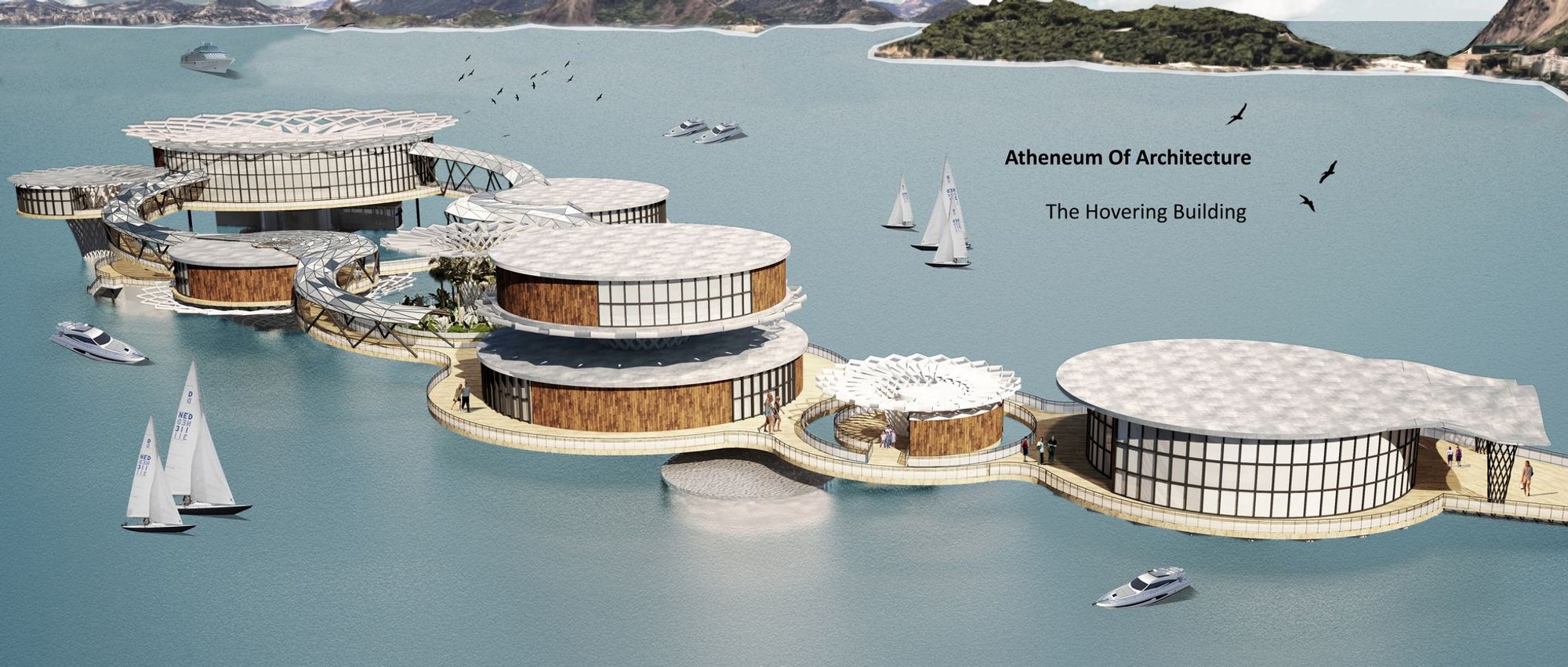
What if an entire building could float? Not literally, but perceptually: a series of cylindrical volumes raised above turquoise water, connected by lattice bridges, their rooftops thick with gardens. The Hovering Building takes that provocation seriously, proposing a circular exhibition complex where craft, education, and leisure orbit one another inside a tubular structure that seems to defy its own weight. The geometry is continuous, looping visitors through galleries, workshops, libraries, and even an underwater cinema without ever breaking the spatial rhythm.
Designed by Khadidja Moussa Abakar, Dana Amro, and Farbod Fathi, the project was submitted as a People's Choice Award entry for the Athenaeum competition. Sited along Rio de Janeiro's waterfront, the proposal leverages the city's coastal breezes for natural ventilation while orienting its primary volumes to frame harbor views. The program is aimed at craftspersons but opens generously to tourists and residents, making the building both a professional resource and a public destination.
Timber Lattice Ceilings and a Library That Breathes
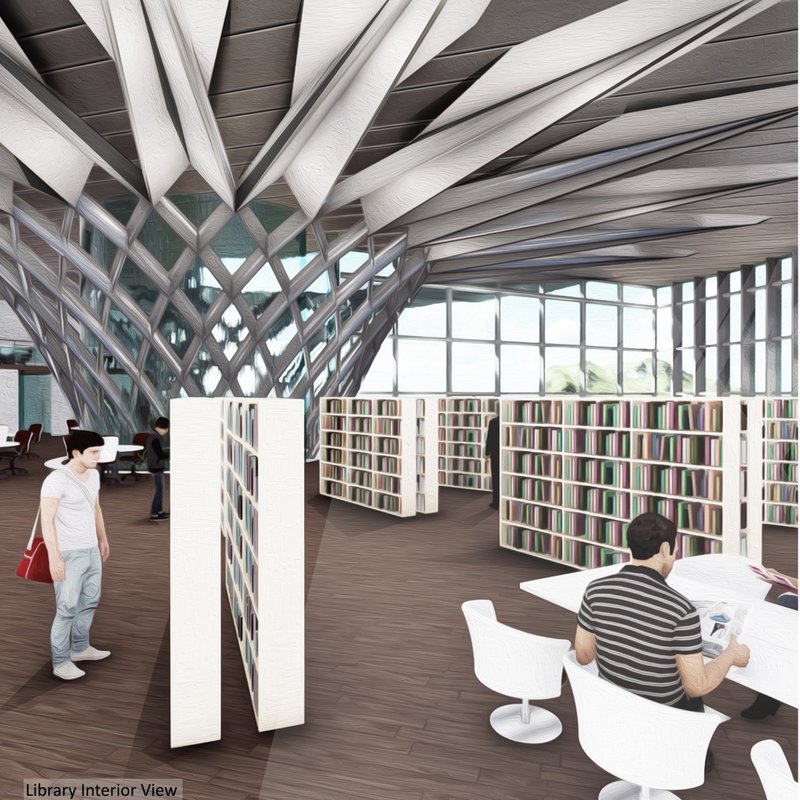
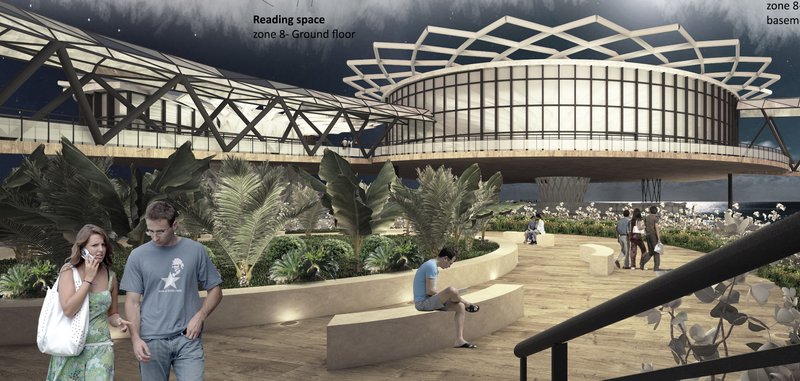
Inside the library volume, diagonal timber beams weave into a lattice ceiling that filters light across white bookshelves and reading tables below. The structural pattern is not decorative afterthought; it organizes the roof span while giving the interior a rhythm that draws the eye upward and outward. Below this level, the basement opens into a curved, tiered seating area flanked by planted palms, with a suspended reading space hovering overhead. The section creates a productive tension between enclosure and openness: readers sit within a lush, semi-subterranean pocket while remaining visually connected to the floors above.
Terraces Framed by Triangulated Canopies
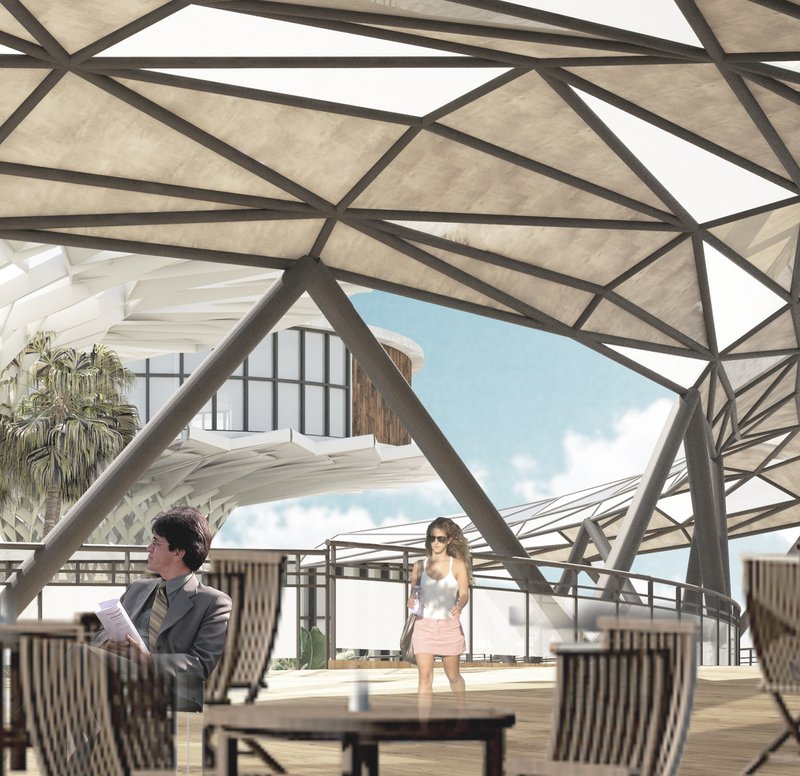
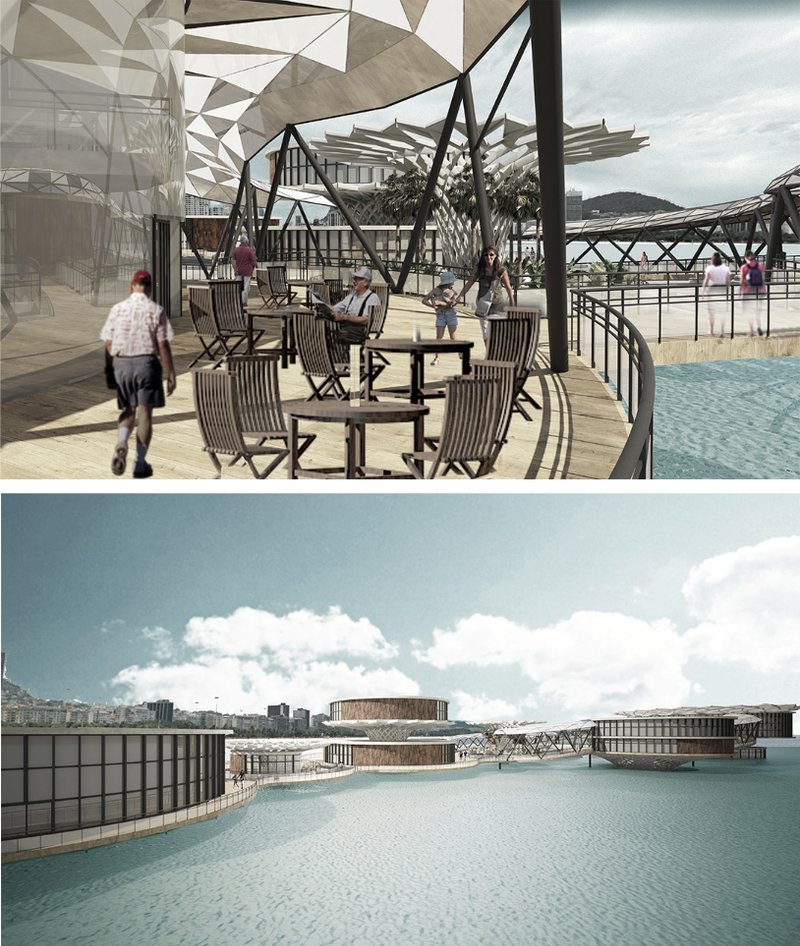
The outdoor terraces reveal how the building mediates between interior program and waterfront environment. A triangulated canopy structure frames glazed volumes against the sky, offering shade without sealing off Rio's breezes. From the waterfront terrace, dining furniture sits beneath geometric overhead framing, and the view extends across the harbor to the interconnected volumes beyond. These in-between spaces are critical to the project's logic: they ensure that moving through the complex never feels like corridor marching. Instead, each transition offers a moment of open air, a shift in light, a new angle on the water.
Stacked Volumes, Lattice Bridges, and the Harbor Crossing
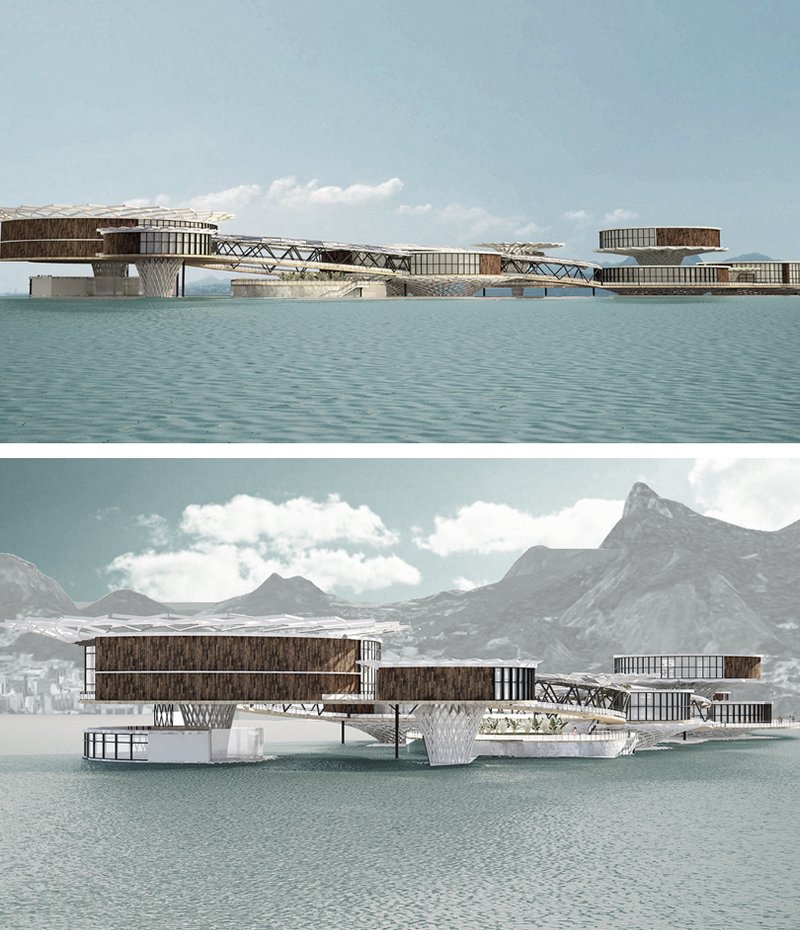
The elevation rendering makes the project's ambition legible in a single frame. Stacked volumes clad in timber sit on either side of the harbor, linked by a lattice bridge that stretches over turquoise water. The bridge is not merely connective tissue; it is inhabitable space, continuing the exhibition program across the gap. The timber cladding unifies the complex visually while signaling the project's material commitment to sustainability alongside its solar panels and green roofs.
Rooftop Gardens and the Radiating Canopy
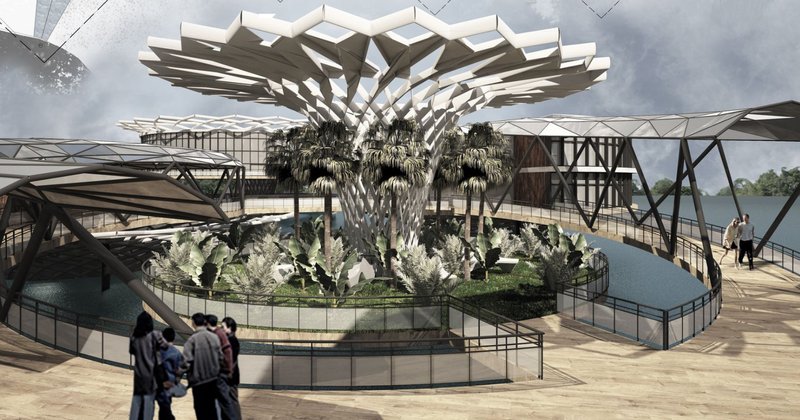
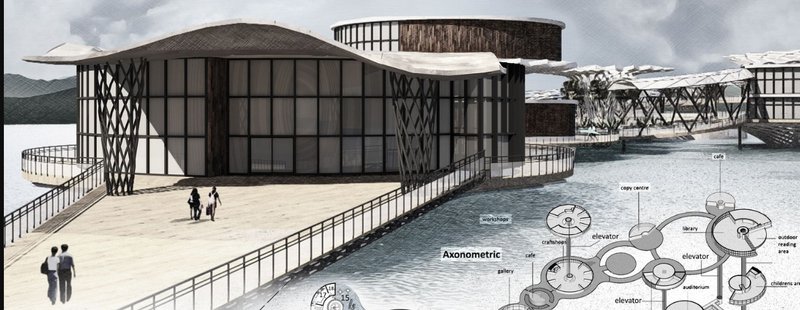
At roof level, circular planted beds are arranged beneath a radiating canopy structure, transforming what could be dead space into a productive landscape. The green roof is not just environmental performance; it gives the building a visible fifth facade, relevant for a structure designed to be seen from surrounding waterfront promenades and elevated vantage points across the harbor. The axonometric drawing clarifies the overall composition: cylindrical volumes with lattice walls and an undulating roof sit alongside a waterfront plaza, anchoring the project to its public edge. The drawing reveals the programmatic density packed inside the circular forms, from gallery and retail spaces to craft shops enriched with virtual reality, meeting rooms, auditoriums, and outdoor reading areas.
Why This Project Matters
The Hovering Building treats sustainability and spectacle as complementary rather than competing goals. Solar panels, green roofs, and natural ventilation driven by Rio's breezes are embedded into a form that is genuinely exciting to look at and move through. The circular geometry is not arbitrary: it generates continuous circulation that keeps visitors oriented while eliminating dead-end corridors, a real functional benefit in a complex with this many overlapping programs.
More ambitiously, the project asks what a building for craftspersons could look like if it rejected the warehouse-as-default model. By floating workshops, galleries, and cinemas above water and connecting them with inhabitable bridges, the design argues that the spaces where people learn and make things deserve the same spatial generosity typically reserved for museums and cultural institutions. That conviction, carried through every level from underwater cinema to rooftop garden, is what makes the proposal worth paying attention to.
View the Full Project
About the Designers
Designers: Khadidja Moussa Abakar, Dana Amro, Farbod Fathi, Athenaeum
Enter a Design Competition on uni.xyz
uni.xyz runs architecture and design competitions year-round that reward proposals with spatial conviction and real site intelligence.
Project credits: The Hovering Building by Khadidja Moussa Abakar, Dana Amro, Farbod Fathi, Athenaeum.




Popular Articles
Popular articles from the community

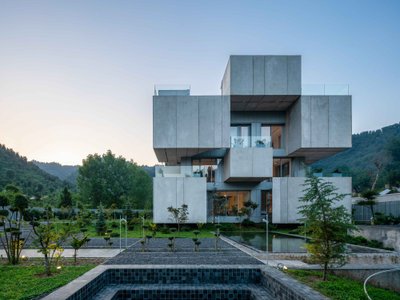
Bood Design Bureau Splits a Gilan Residence in Two to Let the Forest In
Double Side House negotiates privacy and openness through interlocking concrete volumes and planted courtyards in northern Iran's humid Caspian lowlands.
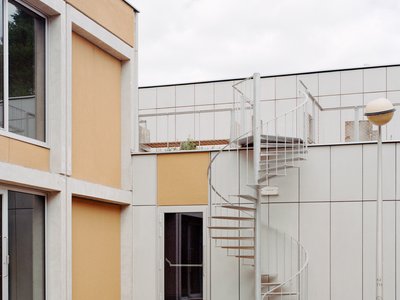
MAKER architecten Rewire a 1972 Brutalist Dormitory on the VUB Campus as a Living Lab
A modular renovation strategy in Belgium breathes new life into Willy Van Der Meeren's modernist student housing without erasing its concrete bones.
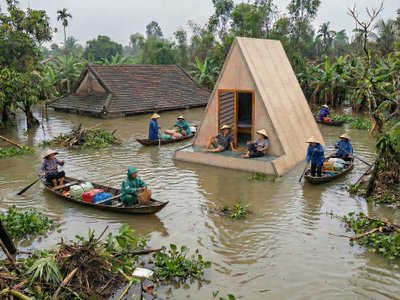
CTA | Creative Architects Designs Triangular Floating Shelters for Vietnam's Flood-Ravaged Communities
A timber-louvered triangular shelter rises on concrete pontoons to keep Vietnamese families safe and together when floodwaters come.
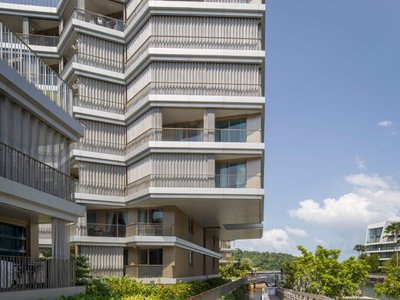
KCAP and DCA Architects Build a Stepped Urban Village on Singapore's King's Dock Waterfront
A 26,000 square meter residential development in Singapore trades tower isolation for terraced courtyards and a planted promenade along the harbor.

Similar Reads
You might also enjoy these articles

Arch Aid Builds a Bamboo and Earth School in Bihar Where Government Education Failed
In one of India's poorest villages, a participatory construction process and local materials create a 230-square-meter primary school that resists floods a

Filtering Space: A Gradual Spatial Experience
From urban intensity to spatial calm.
Longbranch Residence: A Forest-Integrated Contemporary Home in Key Center, Washington
Forest-integrated Washington residence blending concrete, cedar, and meadow roof to restore landscape continuity and celebrate sustainable contemporary living.
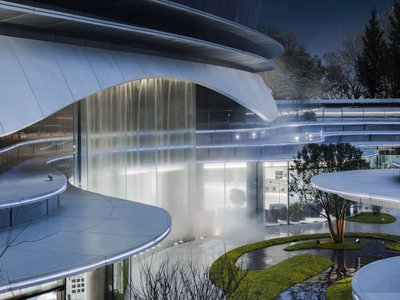
CIFI Sales Center Park Mansion: Harmonizing Architecture with Nature
CIFI Sales Center Park Mansion in Hefei blends water-inspired design, fluid interiors, and immersive experiences, creating vibrant, calming, and sustainable residential showcase architecture.


Explore Conceptual Architecture Competitions
Discover active competitions in this discipline




The Global Benchmark for Architecture Dissertation Awards


The Global Benchmark for Graduation Excellence


Bring back Drive In's
Comments (0)
Please login or sign up to add comments
No comments yet. Be the first to comment!