
The Martian Vein: Pioneering a Geological Power Plant Colony on Mars
Harnessing Mars' mineral wealth to fuel energy needs and human expansion.


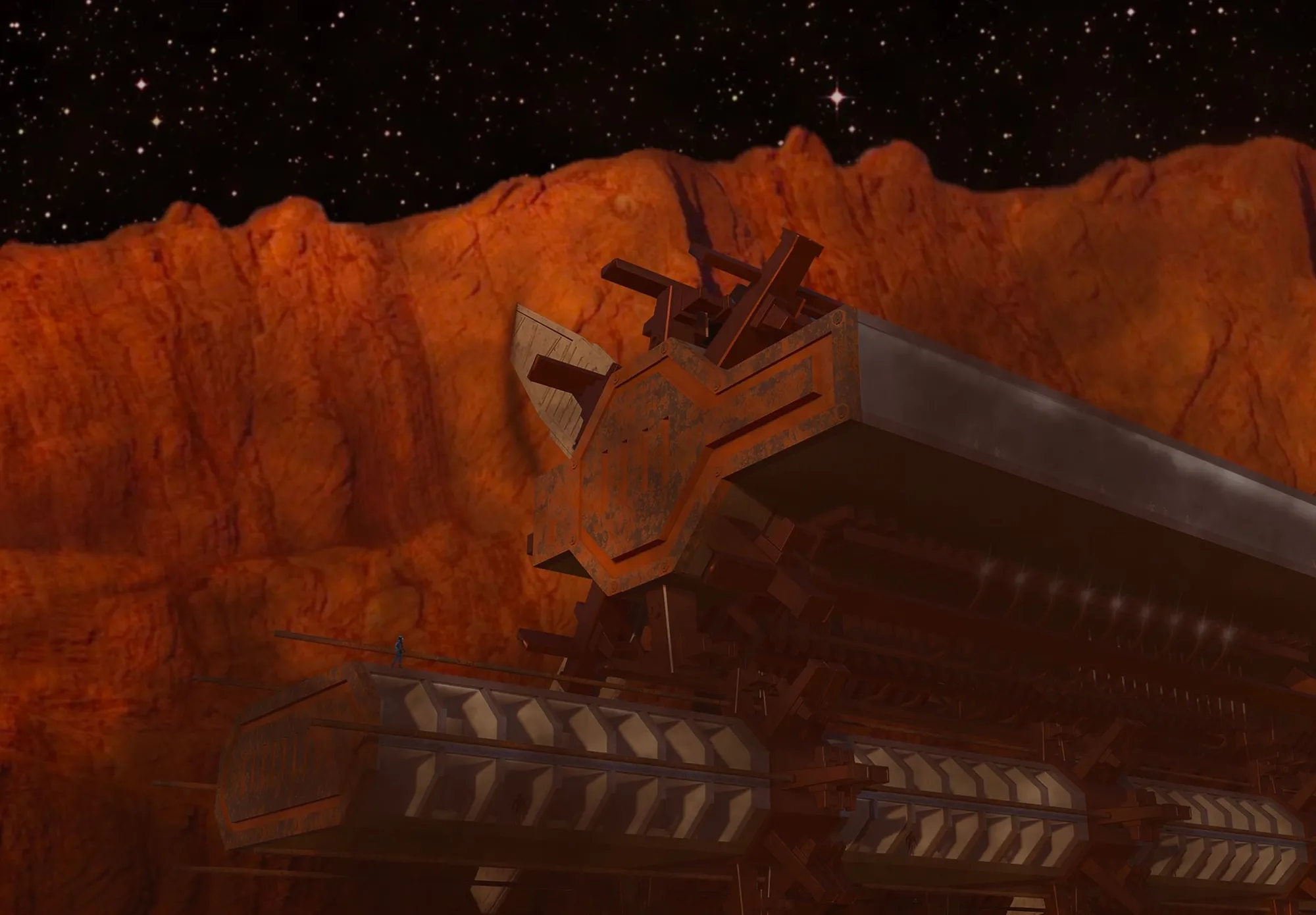
As humanity’s gaze turns toward space exploration, Mars has emerged as the prime candidate for establishing an extraterrestrial colony. The Martian Vein, a visionary architectural project created by Dena Asaad, offers a groundbreaking approach to sustaining life on Mars. This proposal, shortlisted in the Red Planet Renaissance competition, conceptualizes a geological power plant colony that capitalizes on Mars' rich mineral resources to produce essential energy. By transforming Mars' geological landscape into a renewable energy powerhouse, the Martian Vein envisions a habitat that not only supports human survival but also fosters growth and expansion.
It explores the architectural, geological, and technological foundations of the Martian Vein. We will delve into how the project aims to harness Martian resources for sustainable energy production and the innovative strategies it employs to overcome Mars' hostile environment. By combining modular architecture with cutting-edge technology, the Martian Vein could lay the groundwork for permanent human settlement on Mars.
Transforming Martian Geology into Sustainable Energy
The Revolutionary Idea
The discovery of water traces on Mars by NASA ignited excitement about the planet’s potential for life. Building on this milestone, the Martian Vein aims to do more than just survive on Mars—it envisions thriving on the planet by utilizing its natural resources. Leveraging advanced technology and innovative design, the project proposes a habitat that transforms Martian geology into a self-sustaining energy hub.
The colony's design integrates with the planet’s mineral-rich environment, creating a power plant that turns Martian resources into essential energy. By harnessing the planet's untapped reserves of iron, sulfur, and nickel, the Martian Vein offers a sustainable energy solution, making Mars not just habitable, but capable of supporting human growth and expansion.
Utilizing Mars' Natural Resources
Mars’ geology presents unique opportunities for energy production. Rich in minerals like iron, sulfur, and nickel, Mars offers abundant resources that can be converted into energy through innovative processes. Sulfur combustion, for example, could provide a renewable source of power for the colony.
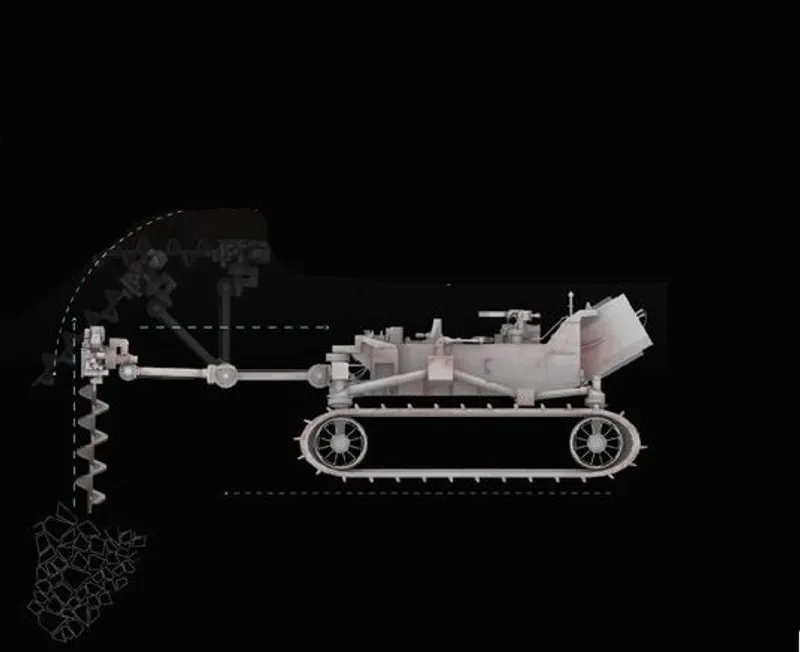
The Martian Vein employs AI-driven technologies to survey the Martian landscape, identifying resource-rich areas and extracting the necessary materials. AI drones equipped with SWIM (Subsurface Water Ice Mapping) technology pinpoint deposits of minerals and water ice, while robotic mining rovers extract these resources. This automated system ensures efficient energy production while minimizing human labor and exposure to Mars’ harsh environment.
Modularity for Expansion
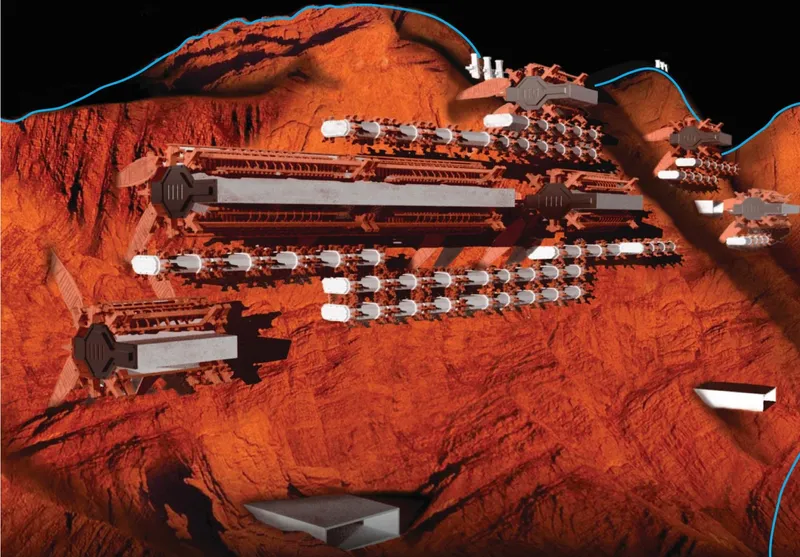
The architectural design of the Martian Vein revolves around modularity, which allows for gradual expansion as the colony grows. The habitat is composed of various interconnected units that can be adapted and scaled according to the colony's needs. Initially, the colony starts with compact "micro" units for early settlers, with the potential to expand to larger living spaces as more resources become available and more people arrive.
The colony’s infrastructure includes different hubs, each serving distinct purposes—housing, research, and energy production. These hubs are linked through an interconnected system of tunnels and pathways, promoting a sense of community and collaboration among the settlers. Each module is designed to withstand the extreme Martian environment, providing insulation from temperature fluctuations and protection from dust storms.
Integration with the Martian Landscape
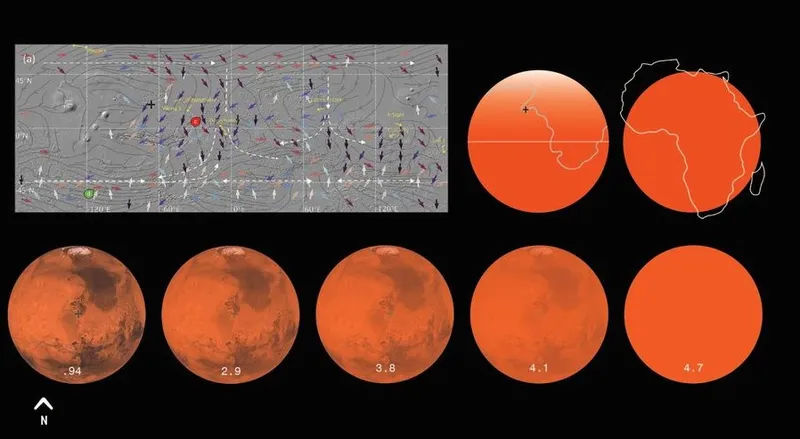
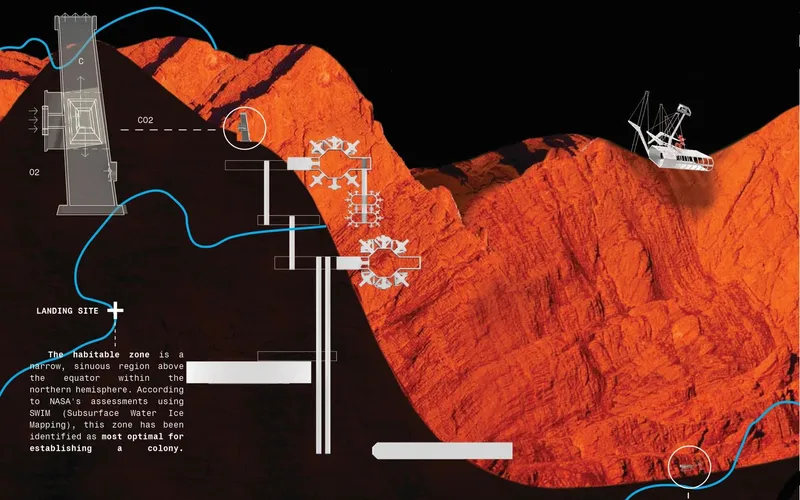
The Martian Vein colony is embedded into the planet’s natural rock formations, taking advantage of the Martian topography to shield itself from the elements. The chosen location, a narrow, sinuous region above the Martian equator, is optimal for habitation according to NASA’s SWIM assessments. This area provides natural protection from wind and dust storms, which are common on Mars and can last for weeks.
By integrating the habitat into Mars' geological features, the design reduces energy consumption needed for heating and cooling, while also providing natural insulation. The colony's connection to the landscape goes beyond survival—it symbolizes humanity’s ability to adapt to and thrive in new environments.
Dust-to-Energy Conversion
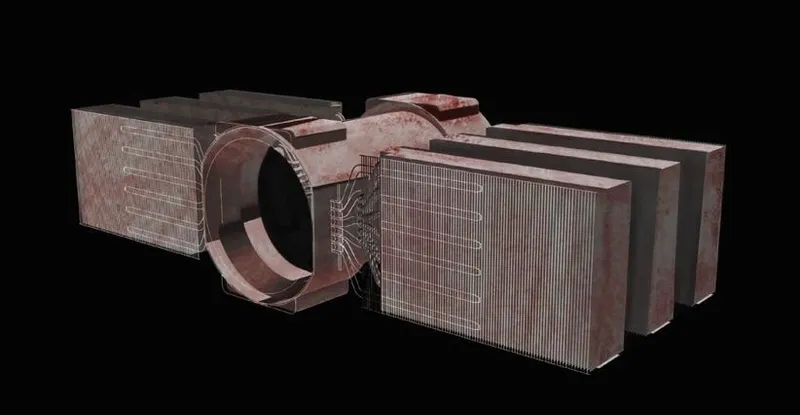
One of the most innovative technologies proposed in the Martian Vein is the dust-to-energy converter. Mars' notorious dust storms, which obscure sunlight and disrupt solar energy collection, are turned into an asset rather than a liability. The dust-to-energy converters use wind and dust particles to generate electricity, ensuring a continuous power supply even during long storms.
These converters work by propelling dust particles through fans, which generate electricity as they move through specially designed coils. This method not only compensates for the loss of sunlight during dust storms but also provides a reliable and renewable energy source.
MOXIE: Converting CO2 into Oxygen
Breathable oxygen is one of the most critical resources for human survival on Mars, where the atmosphere is primarily composed of carbon dioxide. The Martian Vein incorporates NASA's MOXIE (Mars Oxygen In-Situ Resource Utilization Experiment) technology to address this challenge. MOXIE converts carbon dioxide from the Martian atmosphere into oxygen, which can then be used for life support and as fuel for future missions.
The oxygen produced by MOXIE can also be combined with hydrogen to produce water, another vital resource for the colony. This technology not only sustains human life but also reduces the need for frequent resupply missions from Earth, making the colony more self-sufficient.
Water Vapor Collection
While liquid water is scarce on Mars, the planet’s atmosphere contains trace amounts of water vapor. The Martian Vein includes water vapor collectors, which draw moisture from the atmosphere, filter it, and condense it into usable water. This water is then stored in reserves for drinking, agriculture, and industrial use.
By tapping into Mars' atmospheric moisture, the Martian Vein takes another step towards self-sufficiency, ensuring that the colony can produce its own water without relying on external supplies.
Overcoming Harsh Environmental Conditions
Mars presents numerous challenges for human habitation, from its thin atmosphere and freezing temperatures to its unpredictable and violent dust storms. The Martian Vein addresses these challenges through its flexible and resilient design. The colony is embedded in the Martian landscape to reduce exposure to environmental extremes, and its modular structure allows for easy expansion or modification based on the needs of the settlers.
Technologies like the dust-to-energy converters ensure that the colony remains powered even during long periods of darkness caused by dust storms. Meanwhile, the MOXIE system and water vapor collectors guarantee a steady supply of oxygen and water, two of the most essential resources for sustaining life.
Preparing for Expansion
The Martian Vein is designed with future expansion in mind. As the colony becomes more self-sufficient and additional resources are extracted, the settlement can grow to accommodate more inhabitants, research facilities, and infrastructure. AI-controlled excavators and mining systems prepare the ground for future construction, enabling the colony to expand its footprint while continuing to extract vital resources from the planet.


Popular Articles
Popular articles from the community


Lunar Spiral: Space Architecture Shaped by the Mathematics of the Universe
Lunar Spiral reimagines space architecture through Fibonacci geometry, lunar regolith, levitating habitats, and self-sustaining Moon living.

Co-Life: Senior Housing Design That Reconnects Older Adults With the City
Co-Life reimagines senior housing design through healing gardens, shared streets, workshops, and a sustainable community across generations.

Riyadh For All: Intergenerational Urban Design for Active Aging in Rabat
Riyadh For All reimagines urban design in Rabat with intergenerational co-living, adaptive courtyards, and Moroccan cultural exchange today.

The Musturak Paradise: Senior Living Architecture for a Connected Future in Temara, Morocco
The Musturak Paradise reimagines senior living architecture in Temara via private homes, social spaces, culture, community, and shared care.

Similar Reads
You might also enjoy these articles

Day and Night Park: A Time-Based Urban Newsstand in Beijing
A temporary urban newsstand in Beijing blending travel, light, and reading through poetic colors, compact form, and community-focused design.

Modernist Patio Renovation in El Masnou, Barcelona by Oliver Segura Arquitectura + Cebrià Arquitectura
Modernist patio renovation blending tradition and innovation with a movable pool, leveled floors, and Catalan materials in El Masnou.

Alto Residencial Coop: Cooperative Housing Development in Santiago de Compostela by Carbajo Barrios Arquitectos
A linear cooperative housing complex blending white volumes and perforated metal façades, enhancing community living, natural light, privacy, and urban integration.
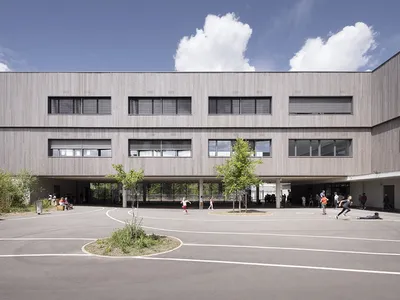
Vil Genis School by BPA ARCHITECTURE – Massy, France
Vil Genis School in Massy, France, features sustainable design, south-facing classrooms, community integration, accessible spaces, and modern educational architecture.
Explore Moon Colony Competitions
Discover active competitions in this discipline



Challenge to reimagine the Iron Throne


Photograph architecture without architects


Illustrate the lost glory of Angkor Wat - Render Challenge


Design challenge to reuse E-waste
Comments (0)
Please login or sign up to add comments
No comments yet. Be the first to comment!