
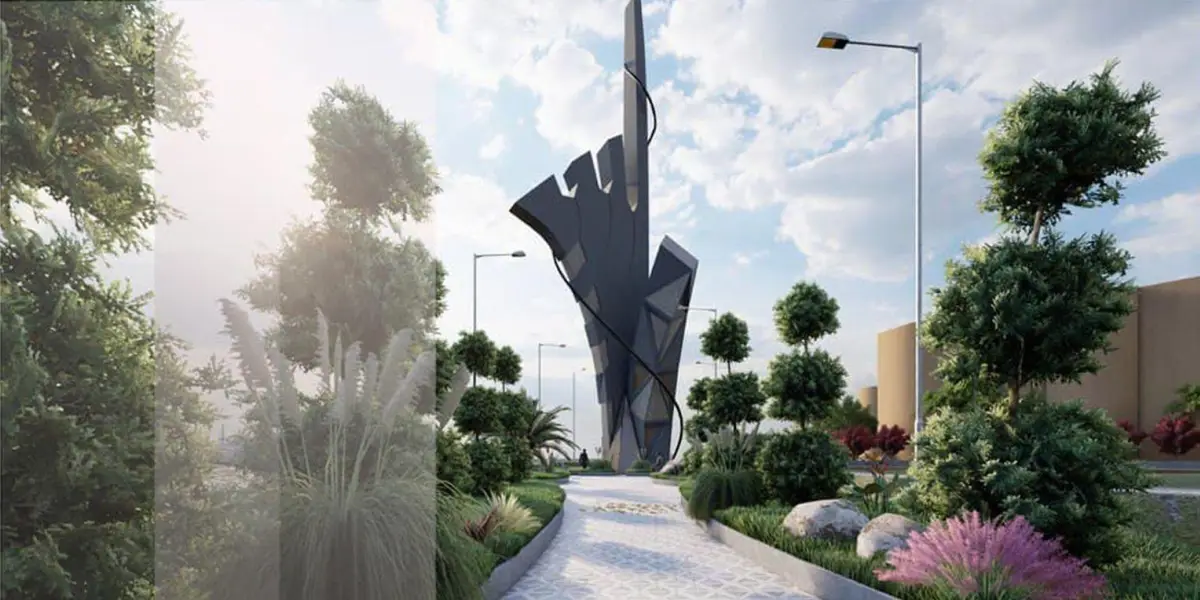
A Pulsating Modern Clock Tower
‘Transcend’ - Urban design competition - Result story


‘Time is the most valuable thing a man can spend’, this philosophy will hold true for eternity. Time can neither be stopped nor reversed and measuring it is what helps us make sense of the world. Obelisks for shadows, hourglasses with sand, candles melting away, all of these were the earliest devices of measuring time.
These ingenious methods were used to design the form of a clock. When mechanisms emerged, they were embedded in timepieces for precision time-keeping. Clocks with pendulums, which are now obsolete, are still known for their antique aesthetic.
In their time, pendulum clocks reduced the gain and loss of seconds by a huge range, compared to their predecessors, leading to a decline in their usage. Although they are obscure now, these ancient timepieces had charming looks that drove curiosity and mysticism, as compared to the clocks of today. Meanwhile, modern clocks serve their purpose with ease, accuracy, and efficiency.
The intricacies of modern timekeeping devices are as complicated as their older counterparts, but since they incorporate technological features like digitization instead of analog parts. The design is left to the consumer, to choose from a range of aesthetic features that fulfill their desire.
The market for timepieces has grown exponentially since its inception. In mass production, a functional and generic version of the clock became popular, and the characteristic features of timepieces were lost. Visual articulation is key to drawing in the gaze of its viewer, but peculiarity and enigma are missed, in the refined versions of clocks.
The concepts of past and present are derived from time, and every era that has passed has a different story to tell. It is necessary to retain the essence of the ancient timepieces in present-day gadgets, to ensure the continuance of human legacy.
Can we articulate a clock that preserves the essence of past time in a futuristic version?
Any monument, erected in public, needs to serve a purpose as it is capable of affecting the thinking of people. In any case, criticism is constant, since one design cannot appease everyone. Instead of focusing on how it is received, we must design so as to stimulate… anticipation, conversation and contemplation, and so on.
Brief: The challenge was to design a public timepiece that reflects the advancement of humans through millennia.
Basic design principles can be used to play with, create a conceptual timepiece design that uses contextual elements and history, to instill uniqueness. The effect materials have on public spaces is also a major feature that should be taken into consideration.
The aim of the challenge was to understand how the physical device that measures the abstract concept of time, can be designed to be a representation of time itself. A public timepiece that stands as a philosophical and technological timestamp, could become a modern monument of timekeeping, for generations to come.
The jury for the competition consisted of esteemed designers, professionals, and academicians from around the world. The Lead Jurors for the competitions were as follows:
Yong Ju Lee, Principal, Yong Ju Lee Architecture, South Korea
Zhang Hetian, Founder / Principal, unarchitecte, China

Some of the Best of competition projects are as follows:
Winning Project: Transcend: The Sun Play
By: Ritu Deshmukh
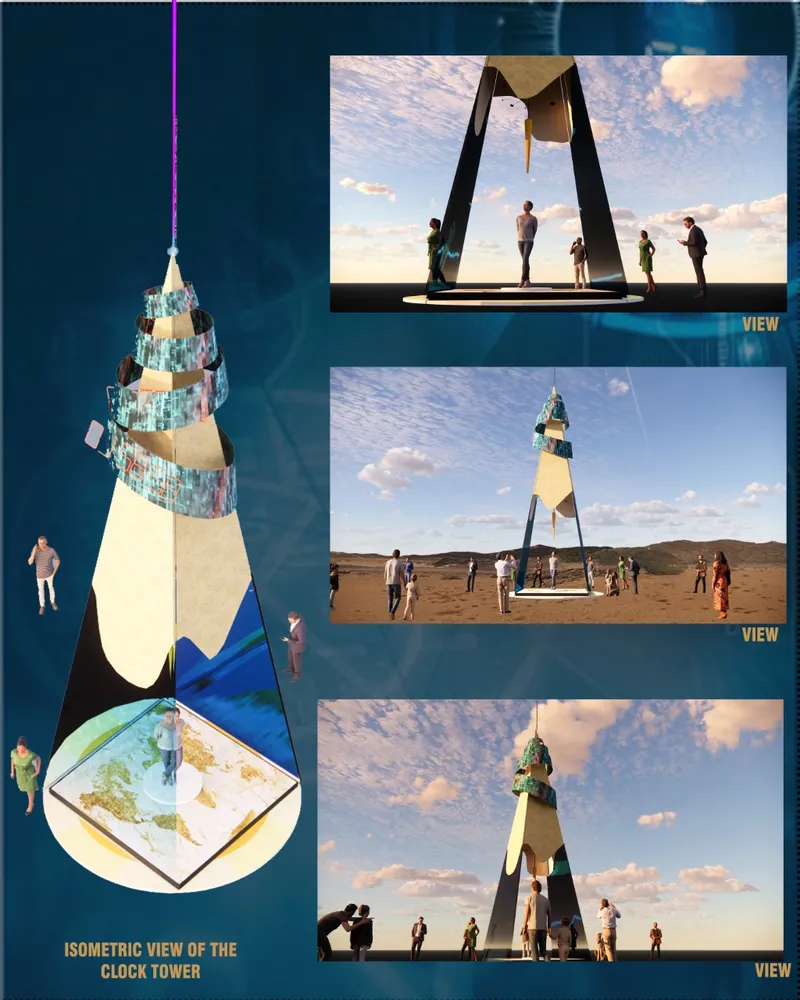
Fig: 1 Isometric view of the clock tower
Description: Transcending the boundaries of time is the attempt to make a Public Interface that creates the feeling of a Public Square with people's participation in this space. The idea behind this design was to connect the historic past of the site with the present generation and try to link the concept of Time through the idea of a Pyramid of different proportions.
Jury Comments: Overall design is well developed with measuring the concept.
--------------------
People’s Choice: Transcend Clock Tower, Alexandria
By: Maha Ali, Reem Awad, Sherif Khalil & Mayar Mohamed
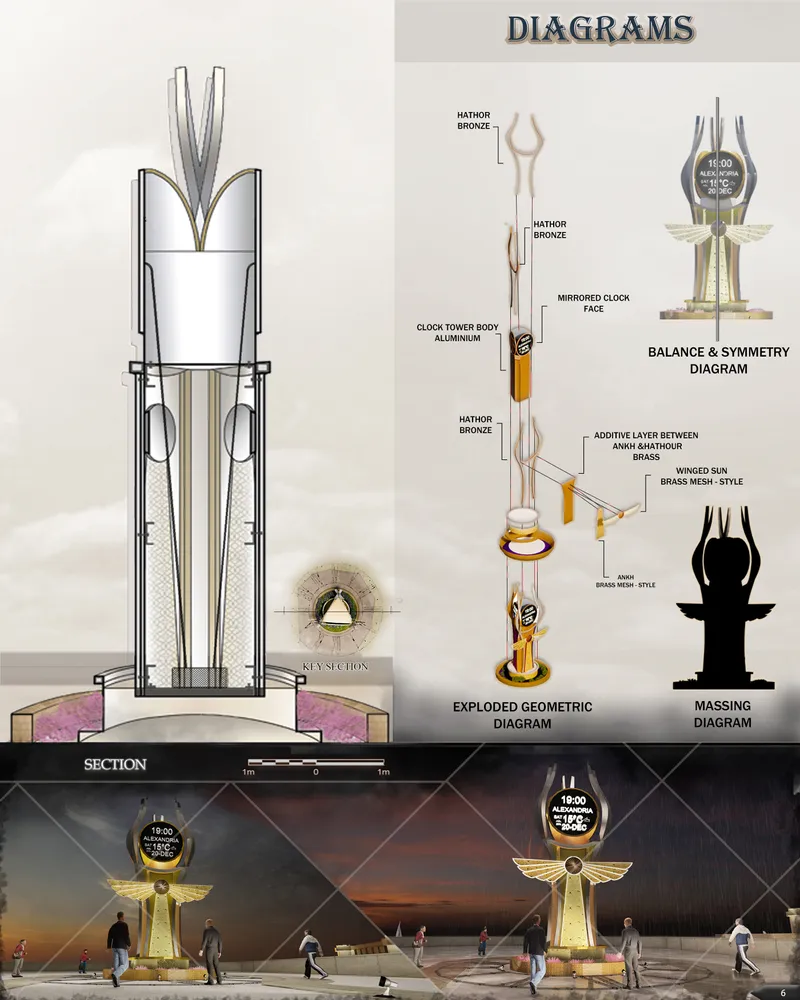
Fig: 2 Exploded geometric diagram and Section view
Description: It's a clock in Al-Anfoushy district - Alexandria trying to combine all the eras in one Tower. Our site is located by the citadel of Quitbay, a harbor-front fortress built in the 15th century. It is now a historic battle museum that attracts a lot of visitors. The site is a man-made platform that is currently serving as a viewpoint for the fortress, facing the ocean.
Jury Comments: Interesting idea, but too ornamental.
-----------------
Editor’s Choice: Transcend Public square clock tower
By: Edalat Sadr & Zahra Babaahmadi
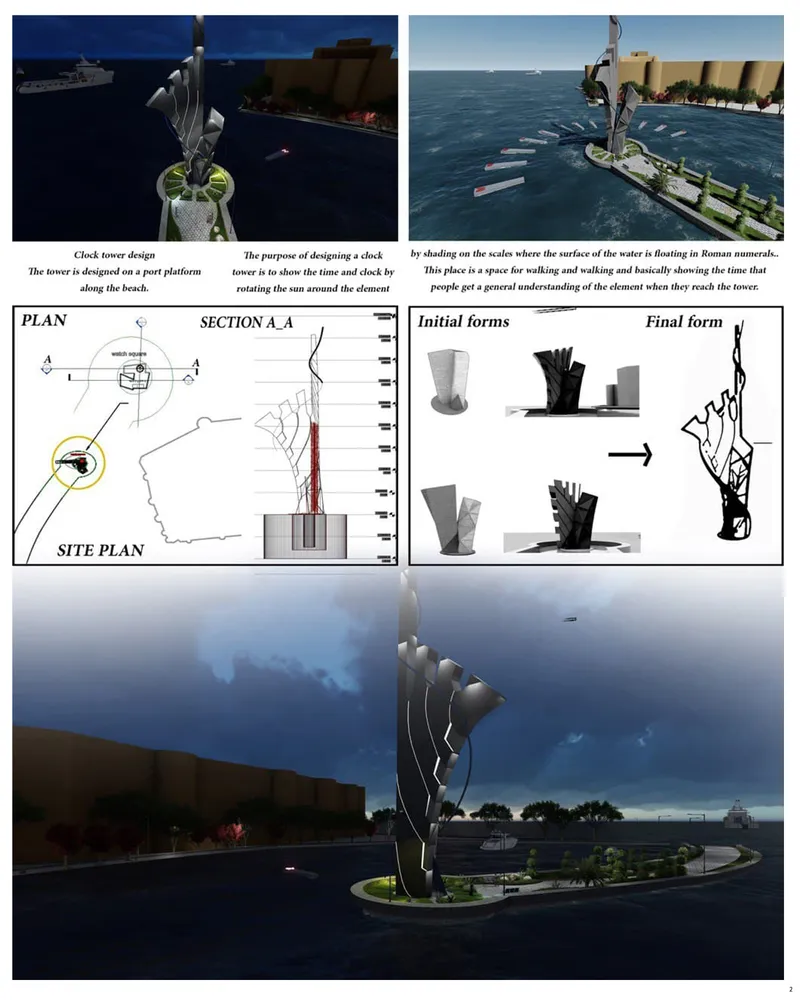
Fig: 3 Site plan, section plan, and site view
Description: This project is designed for transcend, Public square clock tower competition. The tower is designed on a port platform along the beach. The purpose of designing a clock tower is to show the time and clock by rotating the sun around the elements by shading on the scales where the surface of the water is rotating in roman numeral.
Jury Comment: The hydraulic idea is unique, but not detailed enough.
------------------------
Follow us on social media: Facebook | Instagram | LinkedIn | Twitter | Youtube
References (3)


Popular Articles
Popular articles from the community


Cloaked Colonization: A Mobile Underwater Habitat That Moves Like a Fish
Micah Abaya's shortlisted EHC Pacific entry reimagines ocean settlement as a dispersed network of self-sustaining architectural organisms.
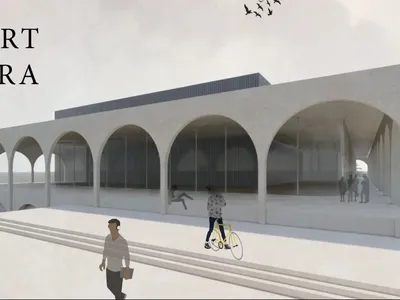
PÄRT OPERA: A Monumental Stone Platform That Turns an Opera House into Public Infrastructure
Raised above the waterfront on stepped terraces and rhythmic colonnades, this opera house invites the city in before the curtain rises.

Extended Shell: Retrofitting Kolkata's Balconies as Living Urban Thresholds
A modular retrofit system recovers the social and environmental intelligence of Kolkata's historic verandas for contemporary Park Street residents.

Opera by the Sea Estonia: Three Shells Dissolving Architecture into Tallinn's Coastline
A winning opera house proposal replaces monumental form with interconnected shells that blur the boundary between building, park and Baltic Sea.

Similar Reads
You might also enjoy these articles

Tsunami Convergenics: Turning Catastrophic Ocean Forces into Underwater Housing Infrastructure
A speculative underwater settlement off the coast of Onagawa, Japan, treats tsunamis and typhoons as energy sources rather than threats.
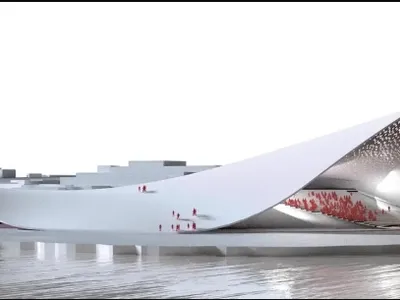
Sound Waves: An Opera House That Opens Its Stage to the Baltic Sea
A shortlisted proposal for Tallinn's waterfront dissolves the boundary between auditorium, public hill, and Baltic horizon.
Cloaked Colonization: A Mobile Underwater Habitat That Moves Like a Fish
Micah Abaya's shortlisted EHC Pacific entry reimagines ocean settlement as a dispersed network of self-sustaining architectural organisms.
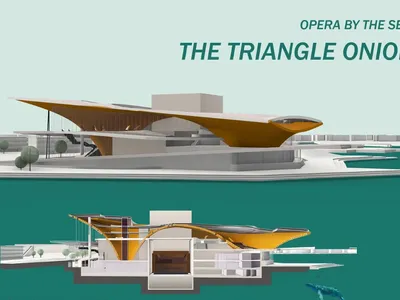
The Triangle Onion: Peeling Back Layers to Find an Opera House Inside a Public Landscape
A shortlisted opera house proposal stacks triangular planes into an explorable terrain of ramps, terraces, and curved performance volumes.

Comments (0)
Please login or sign up to add comments
No comments yet. Be the first to comment!