
The Museum Of Culture, Matera: Contextual Architecture
A contemporary museum in Matera where contextual architecture, sculpted light, and sustainable design merge seamlessly with a historic urban landscape.


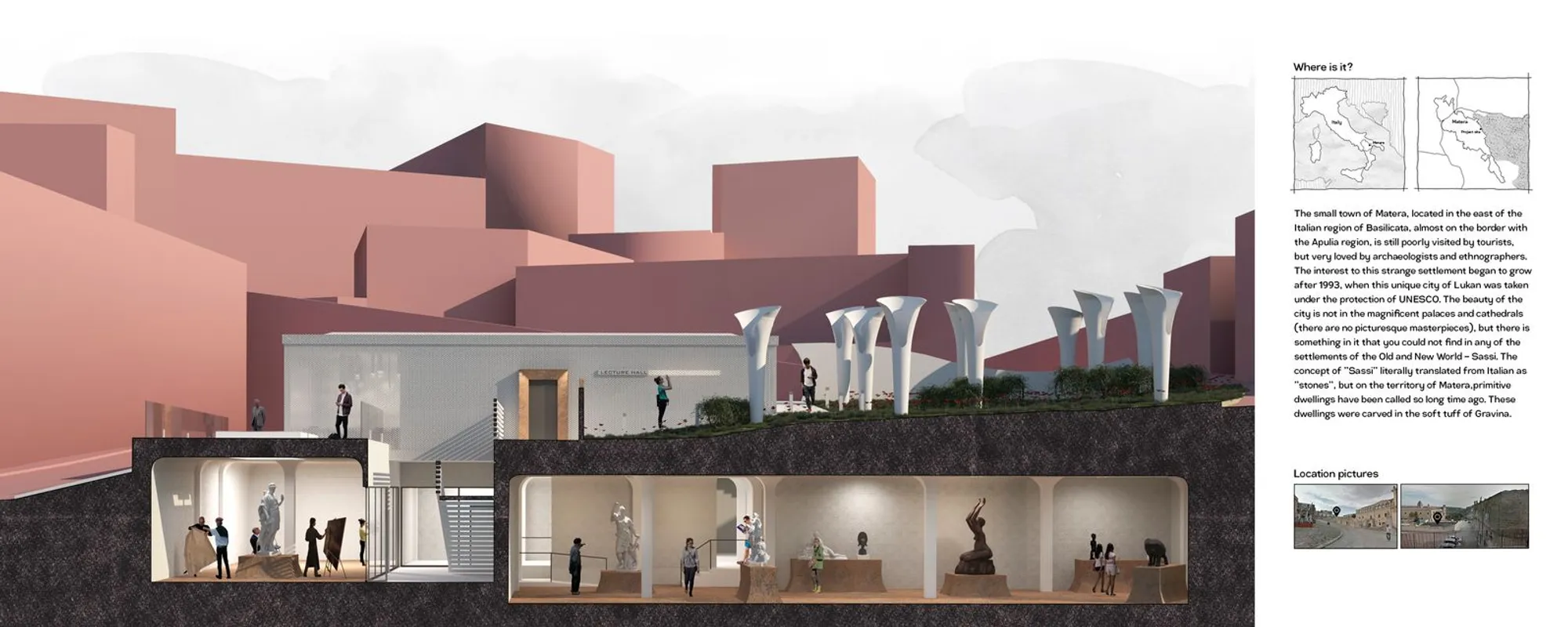
Set within the historic city of Matera, in the eastern part of the Basilicata region of Italy, The Museum of Culture in Matera is conceived as a sensitive architectural intervention that balances heritage preservation with contemporary design. Developed as a diploma and competition project by Gleb Agapov, the proposal explores how contextual architecture can respond to layered history, complex topography, and cultural identity while embracing environmentally responsible design principles.
Matera is globally recognized for its ancient urban fabric, particularly the Sassi districts carved into rock. Any new architectural insertion within this setting demands restraint, clarity, and a deep understanding of place. The Museum of Culture positions itself not as an object of dominance, but as an extension of the city’s existing logic, both spatially and culturally.

Reading the Site: Topography and Urban Continuity
A defining aspect of the project is its response to Matera’s cascading urban topography. Rather than interrupting or overpowering the existing skyline, the museum is partially embedded into the terrain. This strategic decision preserves the visual continuity of surrounding buildings while maintaining uninterrupted views across the historic cityscape.
The organizational logic of the existing buildings becomes a guiding principle. By lowering substantial portions of the museum below the relief line, the project reinforces Matera’s characteristic stepped morphology. This approach exemplifies contextual architecture, where new construction derives its form from the physical and cultural patterns already present on site.
Minimal Surface, Sculpted Light
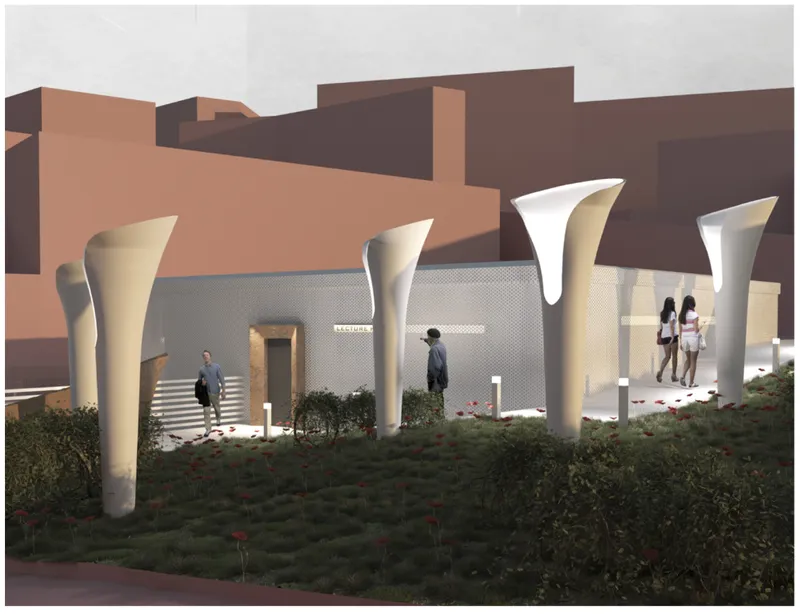
Visually, the museum presents a restrained and almost uninformative exterior volume. This minimal expression is deliberate, allowing the building to remain subdued within its sensitive surroundings. In contrast, the light guides emerging from the structure introduce a sculptural and expressive counterpoint.
These sculpted light elements serve multiple roles: they act as visual markers within the urban fabric, guide visitors through the site, and bring controlled daylight into interior spaces. Their form changes with the movement of the sun, reinforcing a dynamic relationship between architecture, time, and environment. The contrast between the simple massing and expressive light guides highlights the project’s careful balance between humility and identity.
Interior Organization and Public Engagement
The internal layout of the Museum of Culture is designed to encourage interaction, visibility, and continuity between functions. Exhibition halls, workshops, lecture spaces, and public amenities are arranged to promote visual connections between visitors, creators, and staff. This spatial transparency enhances visitor engagement and transforms the museum into an active cultural platform rather than a passive exhibition container.
Circulation paths are intuitive and guided by light, allowing visitors to navigate the museum naturally. The architectural language inside remains understated, ensuring that exhibits and cultural activities remain the focal point.
Environmental Responsibility as Design Strategy
Sustainability is not treated as an added feature but as an integral component of the design process. The partial underground placement of the building improves thermal performance, reducing energy demand for cooling and heating. Controlled daylighting through the sculpted light guides minimizes reliance on artificial lighting while creating atmospheric interior conditions.
Material choices, surface treatments, and construction logic are aligned with long‑term environmental performance and durability. The project demonstrates how contextual architecture can be both ecologically responsible and culturally respectful.
Architecture Rooted in Place
The Museum of Culture in Matera by Gleb Agapov stands as a thoughtful example of how contemporary architecture can coexist with historic environments without mimicry or disruption. Through careful massing, sensitive site integration, and an intelligent use of light, the project reinforces Matera’s identity while offering new cultural infrastructure.
By prioritizing contextual architecture, the proposal shows that innovation does not require visual dominance. Instead, it can emerge through restraint, environmental awareness, and a deep understanding of place, qualities that define the most enduring architectural interventions.




Popular Articles
Popular articles from the community


AL-JANNAH: Sustainable Architecture and Permaculture for Afghan Widows
AL-JANNAH uses sustainable architecture and permaculture to create resilient oasis of housing, learning, work and renewal for Afghan widows.

Conexión: Biophilic Design Reimagines High-Rise Living in Hong Kong
Conexión reimagines high-rise living in Hong Kong through biophilic design, green facades, shared spaces, daylight, water and nature within.
EW PARK: Sustainable Architecture Reimagines the Future of Urban Parking
EW PARK reimagines city parking as a modular wooden tower combining automation, solar energy, electric mobility, and adaptable urban design.

Riyadh For All: Intergenerational Urban Design for Active Aging in Rabat
Riyadh For All reimagines urban design in Rabat with intergenerational co-living, adaptive courtyards, and Moroccan cultural exchange today.


Similar Reads
You might also enjoy these articles

Eco Chapel: A Green Architecture Pavilion Designed in Symbiosis with the Forest
Eco Chapel uses green architecture to weave prayer, learning and reuse into a forest pavilion shaped by modular hexagonal canopies for life.
Kaffeebühnen: Coffee Shop Architecture Designed as a Civic Stage Between Vienna’s City and Park
Kaffeebühnen turns coffee shop architecture into a civic stage, linking Vienna’s park edge, urban life, warm timber yards, and coffee craft.
Healing Façade: Sustainable Architecture for Reforestation, Community, and Sacred Ecology in Ethiopia
Healing Façade reimagines sustainable architecture as a living wall that restores soil, catches water and renews Ethiopia's forest churches.


Urban Forest: A Vertical Ecosystem for 5,000 Workers in Singapore's Changi Business Park
Radially stacked pods and layered green decks turn a 7-acre plot into 47 acres of ecological workspace projected for 2040.

Comments (0)
Please login or sign up to add comments
No comments yet. Be the first to comment!