
The Nursery Pavilion in Timișoara: A Vertical Garden Installation Blending Architecture, Art & Sustainability
A vertical garden pavilion in Timișoara blending greenery, architecture, and culture to promote sustainability, biodiversity, and urban interaction.


A Temporary Urban Landmark with a Lasting Environmental Message
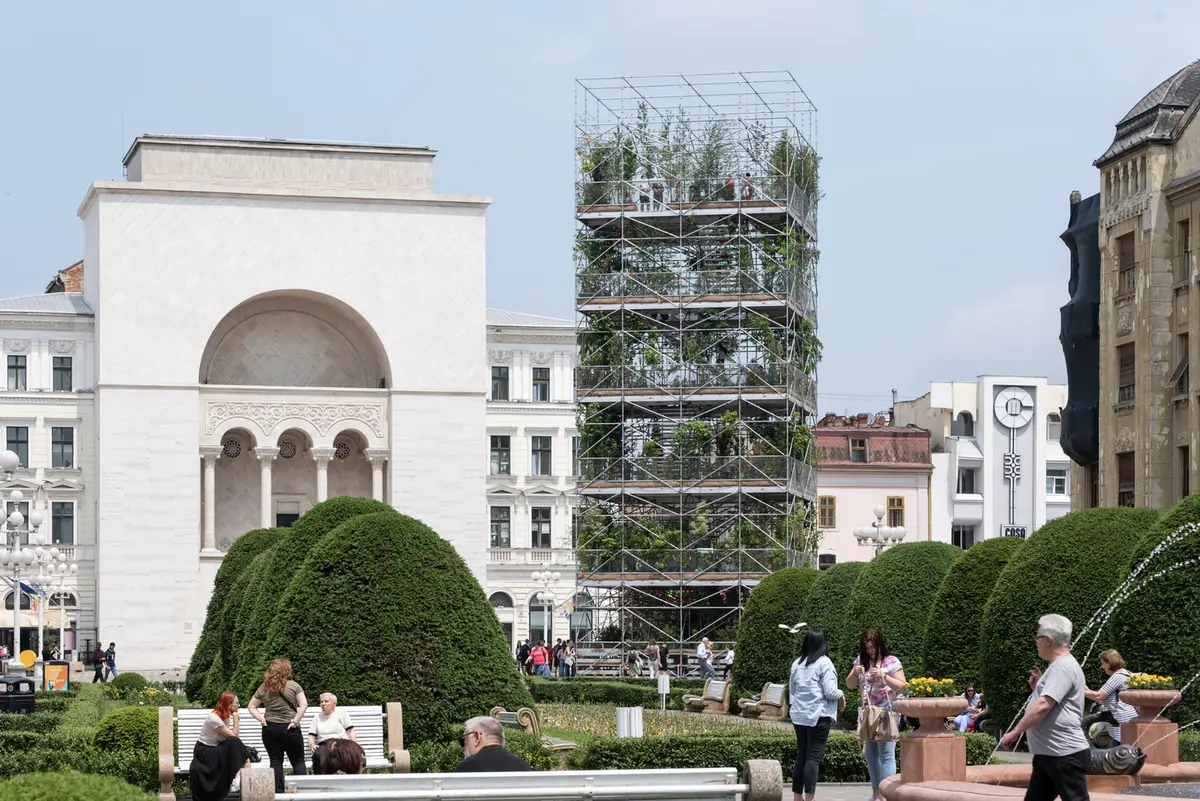
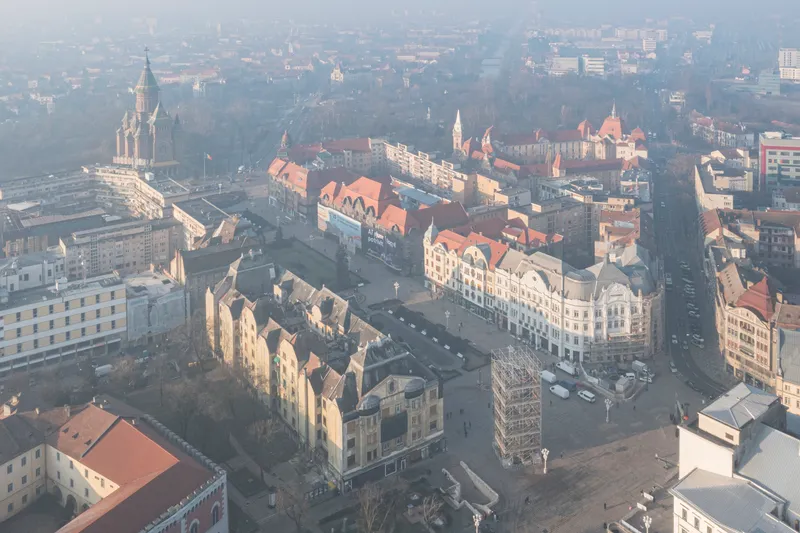
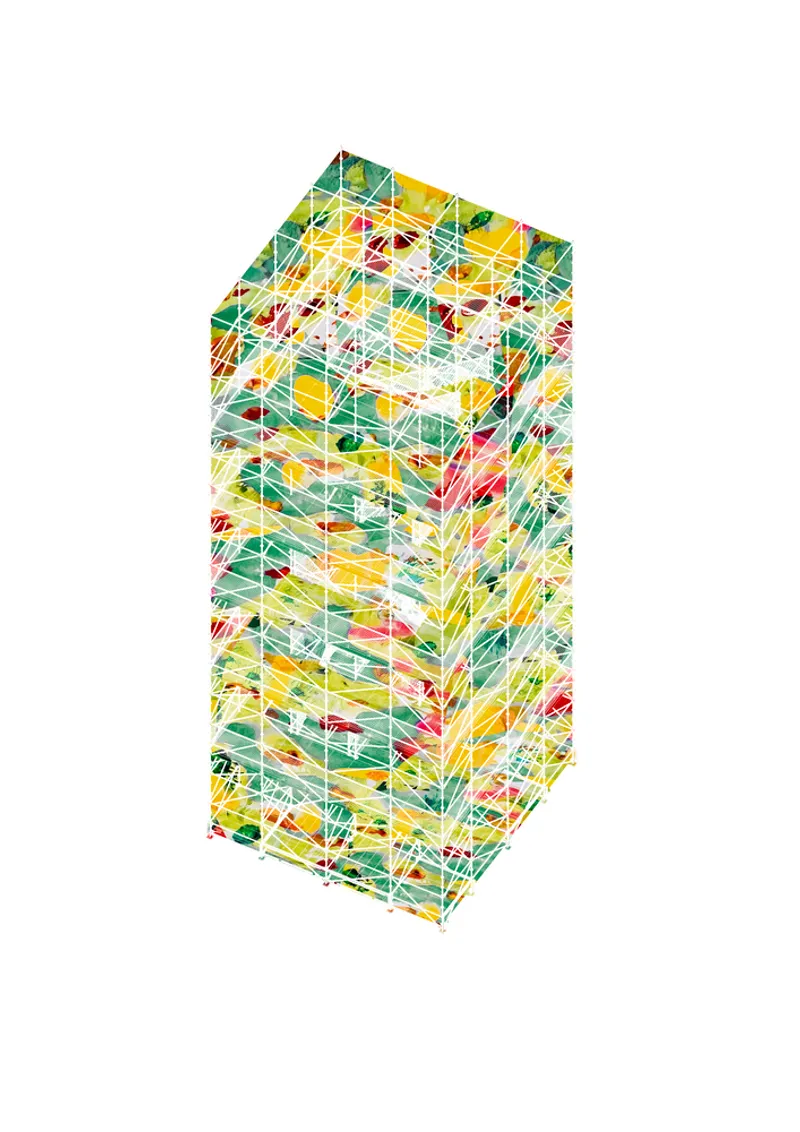
The Nursery Pavilion: 1306 Plants for Timișoara is a groundbreaking temporary installation that redefines urban architecture and sustainable landscape design. Positioned in the heart of Victory Square, the structure combines scaffolding architecture, vertical gardens, and adaptive reuse into a unified spatial concept. Designed by MAIO, Nomadic Studio, and Studio Peisaj, the installation stands as a bold symbol of how cities can creatively reimagine public space through green infrastructure and community engagement.
Rethinking Urban Green Space through Vertical Design
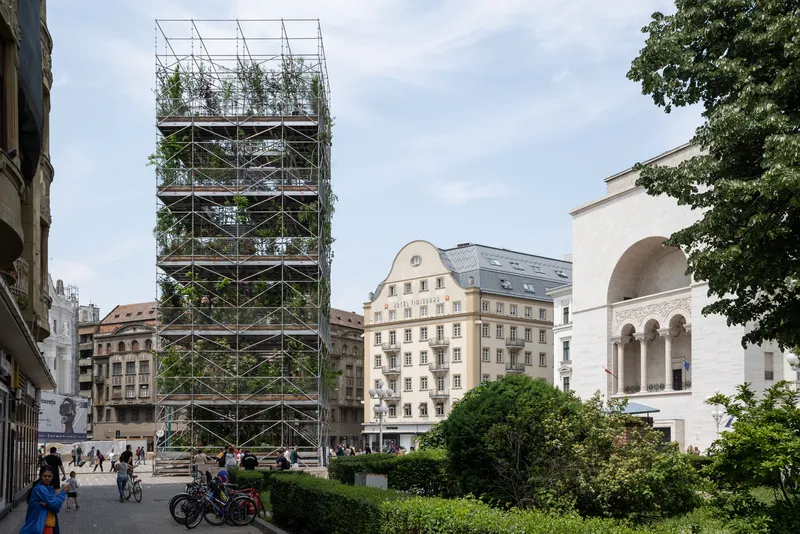
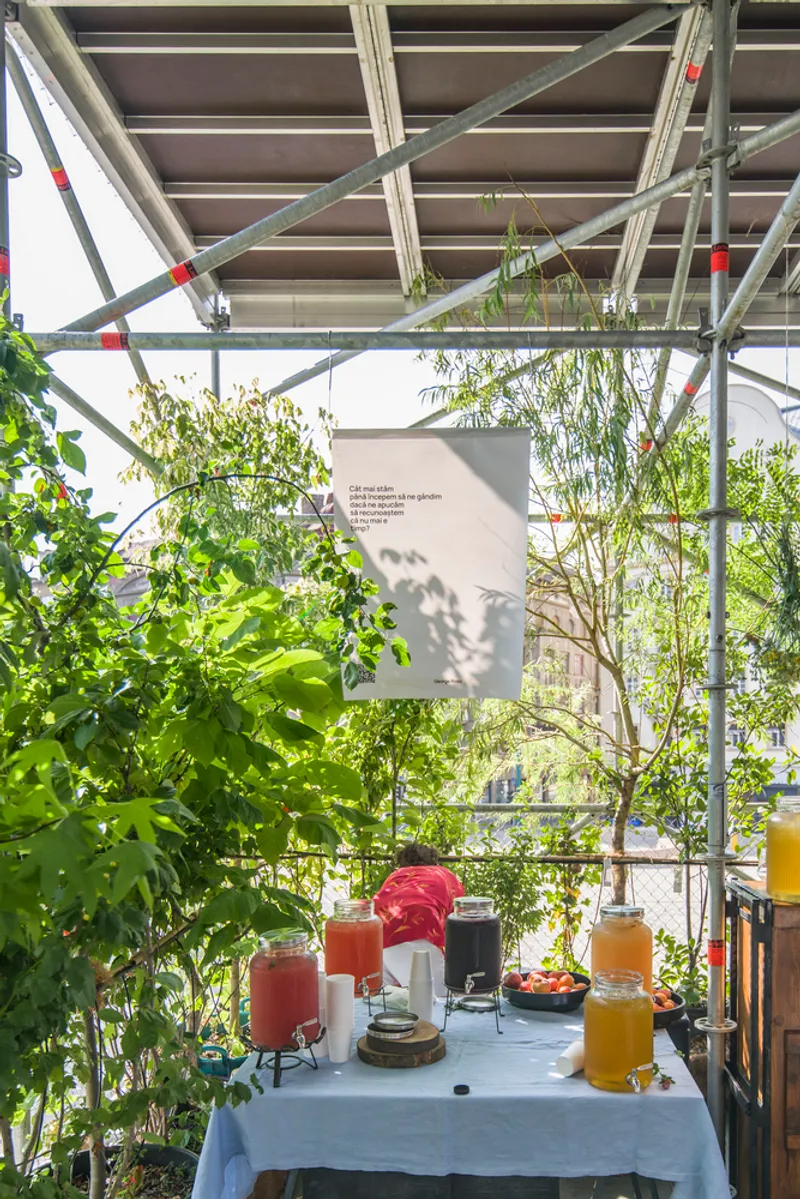
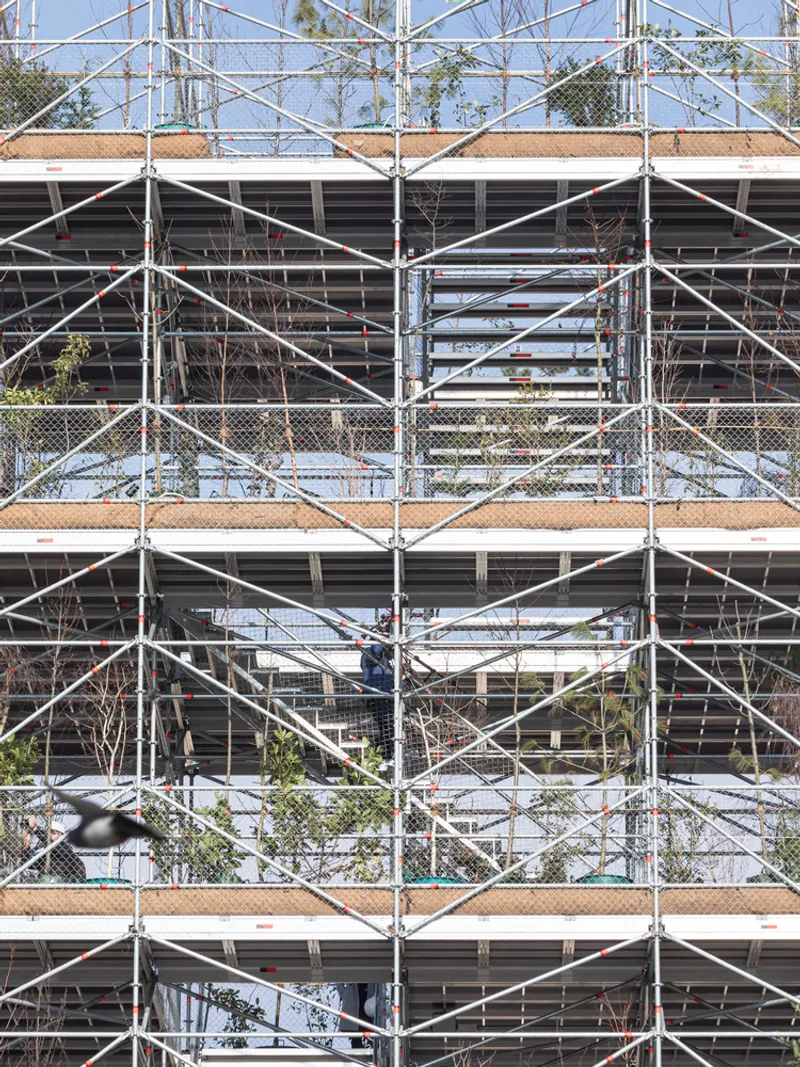
Breaking away from traditional urban greening strategies limited to parks and rooftops, the Nursery Pavilion extends vertically. Its structure, composed of recyclable scaffolding, creates a multi-layered terrace that holds a wide variety of plant species, including edible urban flora. This elevation transforms the installation into a living, breathing façade that supports biodiversity, reduces the urban heat island effect, and absorbs air pollutants—all while creating a striking visual identity within the historic city square.
Architectural Contrast and Cultural Dialogue
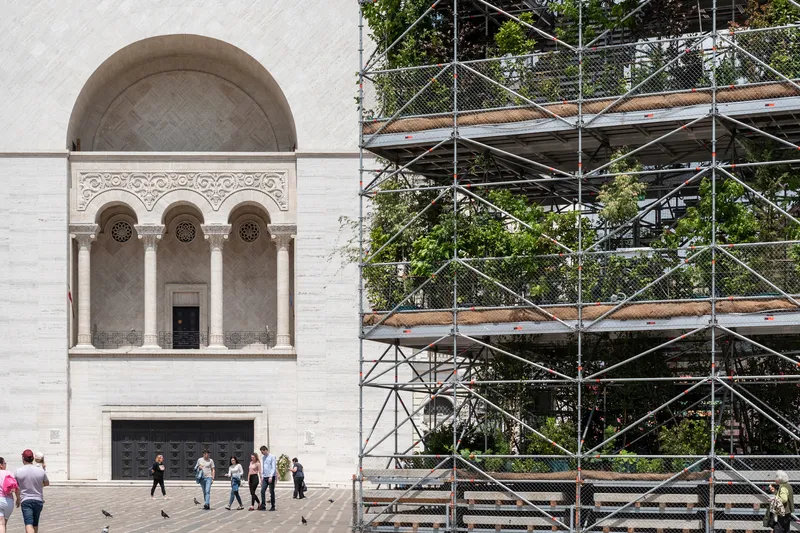
Set against Timișoara’s rich backdrop of Baroque and Art Nouveau architecture, the modernist scaffolding installation sparks a unique contrast. It opens a dialogue between historical permanence and modern temporality, symbolizing the city’s ongoing evolution. The Nursery’s dynamic, transparent frame invites passersby to explore a new way of interacting with both nature and built form—offering a moment of reflection in the bustling city center.
Urban Ecology and Biodiversity
The Pavilion integrates over 1300 plants across its vertical terraces, creating a new model of urban ecological design. The greenery provides vital microhabitats for birds and insects, while edible plants promote urban gardening practices. The installation acts not only as a beacon for sustainability but also as a functional ecosystem within the urban core.
A Space for Community, Culture & Creativity
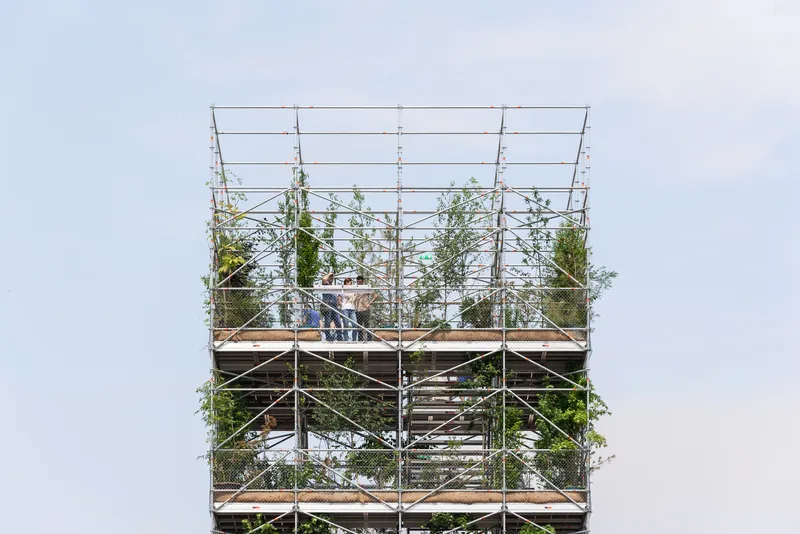
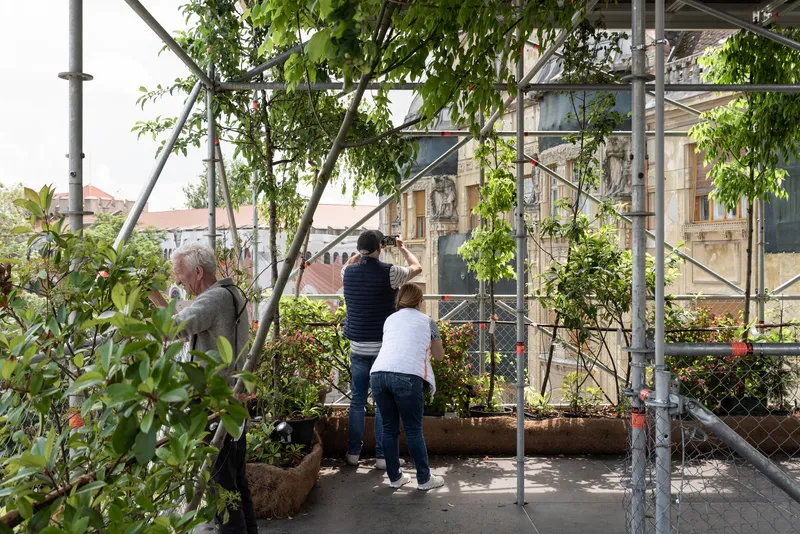
More than just an architectural statement, the Nursery Pavilion doubles as a community gathering space and cultural venue. With each level offering a new vantage point of the surrounding cityscape, it allows visitors to ascend and discover views of iconic heritage buildings and monuments. These elevated platforms become informal stages for performances, workshops, and public events.
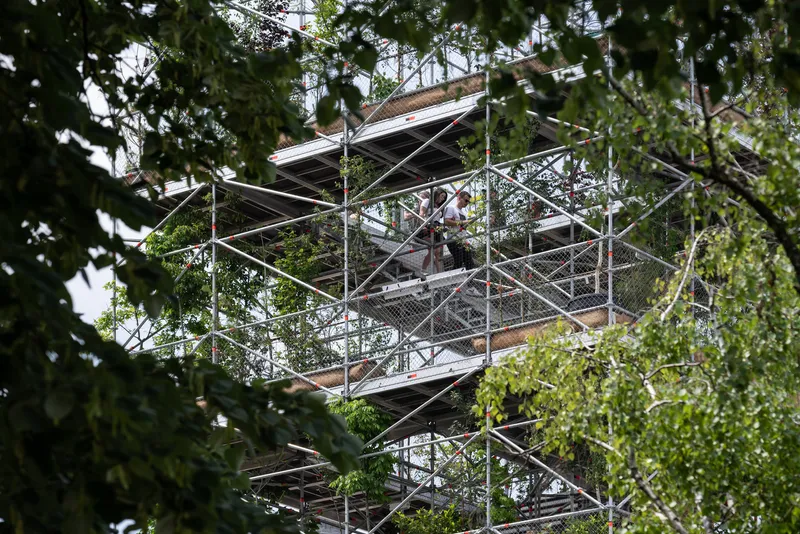
Artists and creators are invited to interact with the space through an online platform, fostering an evolving program of exhibitions and installations. This artistic adaptability ensures the Pavilion stays dynamic and responsive to its cultural context, embodying the spirit of urban placemaking.
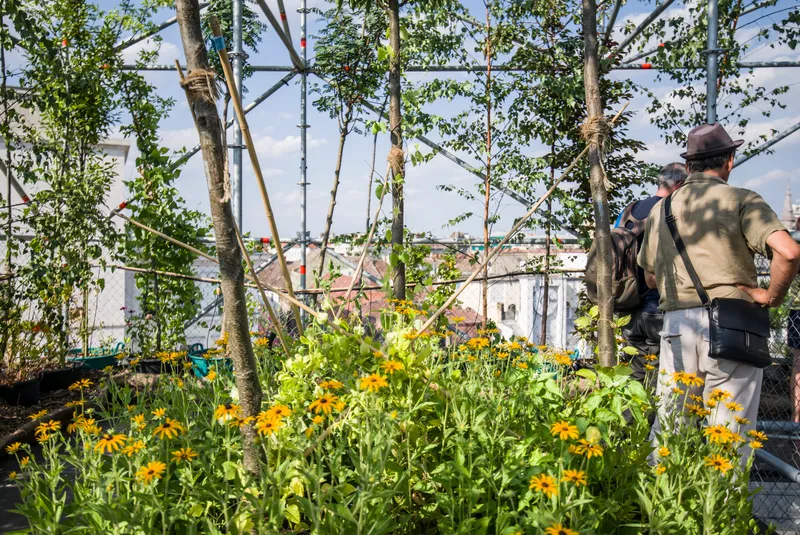
Sustainability and Circular Design
True to its principles of circular architecture, the Nursery Pavilion is designed to be disassembled and reused. At the end of its 10-month lifespan in November 2023, the plants will be transplanted to Timișoara’s green public spaces, and the scaffolding will be returned for future construction or cultural projects. This model demonstrates how temporary installations can leave a permanent environmental legacy.
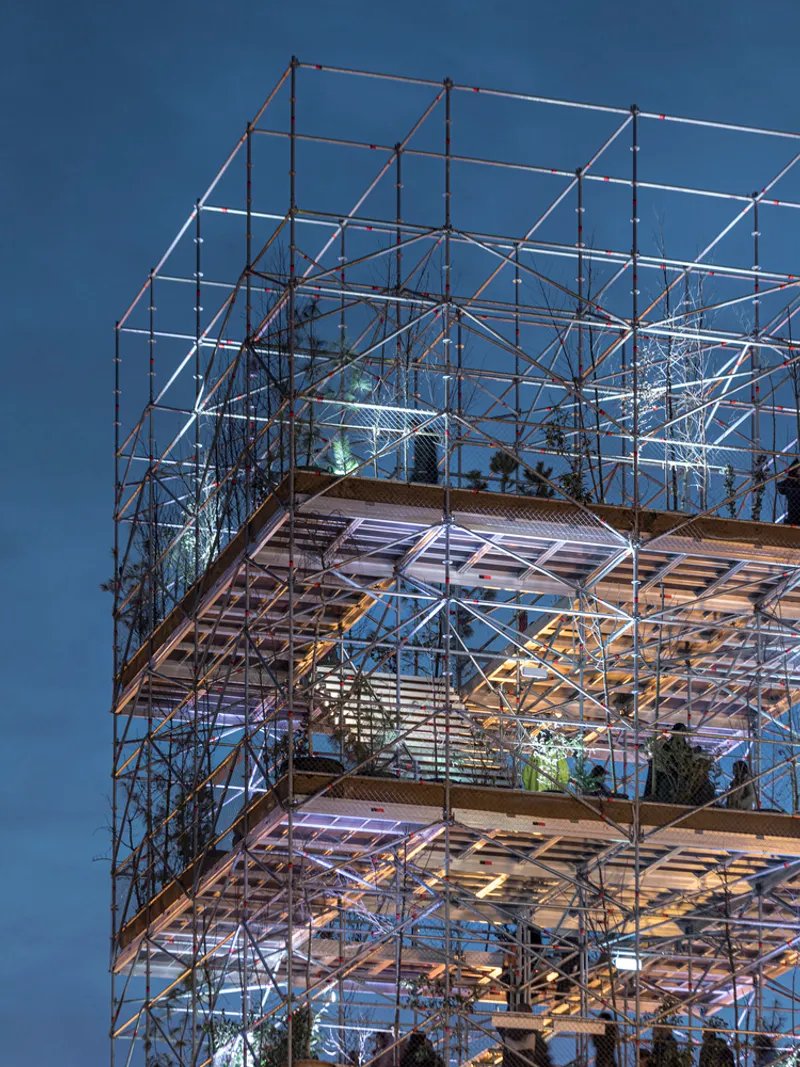
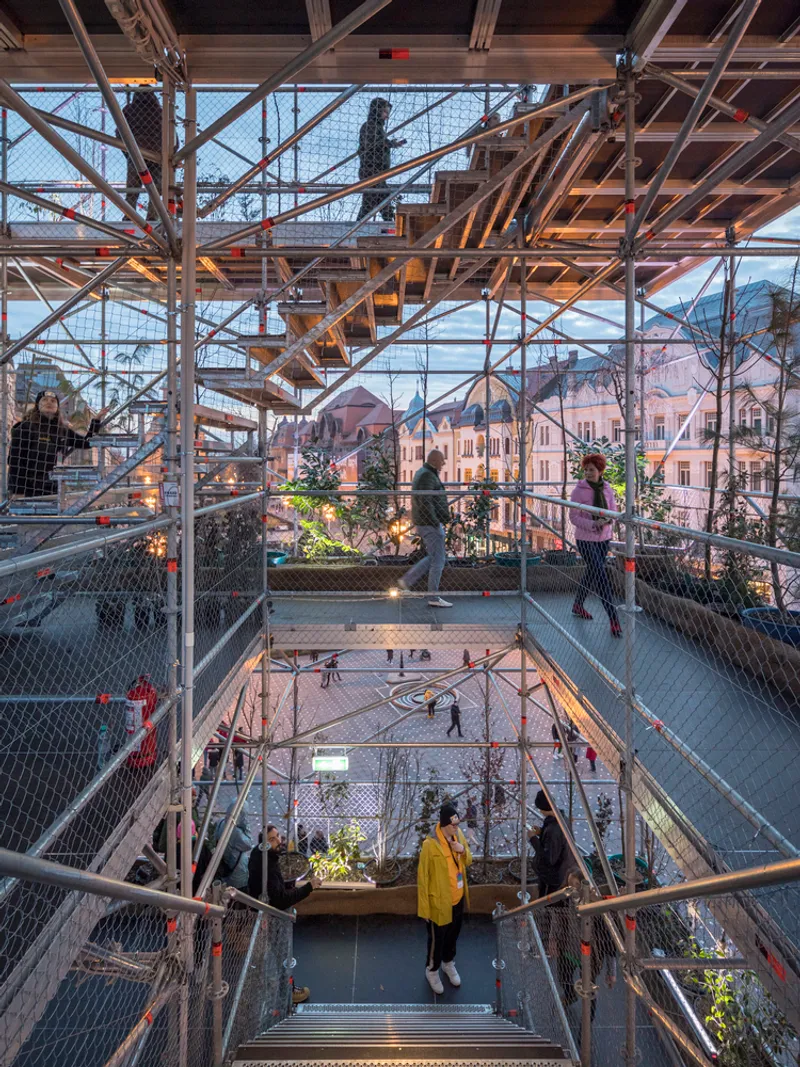
All the photographs are works of Marius Vasile, Bianca Azap + Dan Purice, Laurian Ghinitoiu


Popular Articles
Popular articles from the community


David Macias Steps a Doorless Stone and Plaster House Down a Tropical Colombian Hillside
In the humid hills of Colombia, Threshold House replaces the front door with an open void and terraces its 850 m² down the slope instead of fighting it.

David Ortega Stacks a Two-Story Mexico City Penthouse Around a Steel Stair and a Pergola-Shaded Roof Terrace
In Colonia Roma, a 300 m² penthouse uses oak joinery, a planted steel stair and a slatted roof pergola to make a new-build apartment feel like a house.

GROUP A Strips a 1969 Rotterdam Harbor Headquarters to Its Frame and Wraps It in Timber Louvers
In Rotterdam's M4H harbor district, Ferro Offices reuses a 1969 frame, adds one timber storey and reaches BREEAM-NL Outstanding.

LT2A and OPEN Architectes Thread a Brick and Glass High School Through a Wooded Belgian Campus
In Braine-l'Alleud, a 3,000 m² wing for Collège Cardinal Mercier pairs pale brick with a glazed colonnade, deferring to a small chapel and a dense wood.

Similar Reads
You might also enjoy these articles


Hodi-Mandai Geram
Project Function: Preservation and revitalization of the Intangible heritage and socio-spatial identity of the Hodi by Housing, Cultural Memory Center, Sacred Grove, landscape, local tourism economy


Olio Towers: A Mid-Rise for Performers That Fuses Housing, Rehearsal, and Stage
Located blocks from Houston's Theater District, this modular tower stacks living units around a central performance atrium.

Oasis: Modular Green Housing Carved into Dhaka's Urban Fabric
A shortlisted Plugin Housing entry reclaims unauthorized settlements in Dhaka with stepped concrete volumes, green roofs, and ventilation-driven design.

Black Hole: A Floating Megastructure for the Post-Physical Era
Emiliano Mazzarotto envisions a spherical, self-scaling arena where e-sports, digital hotels, and holographic stadiums replace traditional public space.

Explore Vertical Garden Competitions
Discover active competitions in this discipline

Challenge to reimagine the Iron Throne

Photograph architecture without architects

Illustrate the lost glory of Angkor Wat - Render Challenge

Design challenge to reuse E-waste
Comments (0)
Please login or sign up to add comments
No comments yet. Be the first to comment!