
The Pebbles
and the story of scattering them around

For the beginning I need to say what I see when I hear deconstructivism. I see bold ideas. I see what great architecture is all about, which is expressing your vision in a unrestricted way. Creating spaces that challenge people’s perception. Sometimes it can confuse people and be misunderstood but creating objects that make people think is for me the greatest value in the world of simplicity, obviousness and cheaply build housing.
The movement itself is very diverse and doesn’t seem to have many rules which is probably the thing that I like the most about it. Even though its borders are broad, I have found a few core values that I have incorporated into the project.
The first one is chaos, well the controlled one. Chaos, as in the beginning of Greek mythology, is also the starting point for my pavilion design. As you can see the first sketch is just a set of disorganized lines and curves.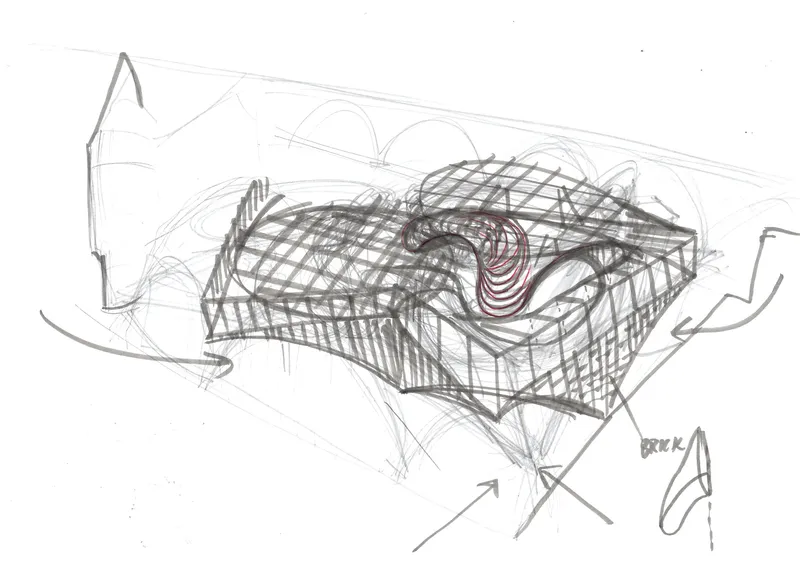
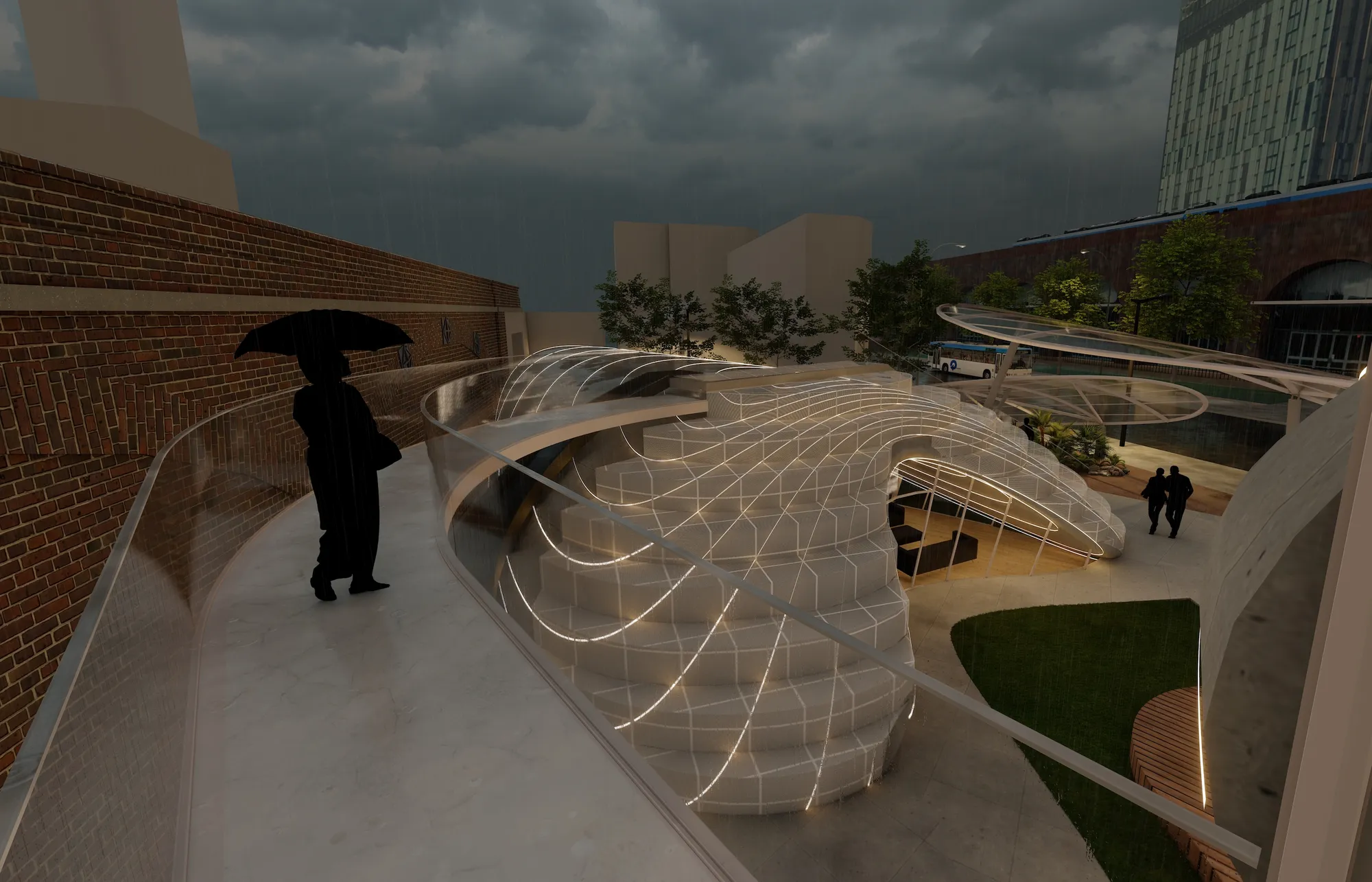
Firstly, I wanted to build a single building that will rise above ground, leaving it to the visitors, but then I thought that walking under such structure wouldn’t be that pleasant, so I exploded it into separate pavilions. Defragmentation become the second core value. The whole concept is organized around curvy staircase placed on top of the Conference Room. However, to understand the concept and the inspiration behind it, we’ll need to think of Manchester’s history and what it is famous of. Obviously, it is home to two world renowned football clubs and the birthplace of socialism but besides of that its development history is similar to the history of my hometown (Lodz, sometimes called the Polish Manchester). It grew due to the industrial revolution in XIX century and the most crucial factor needed for it to happen was access to water. Water needed by the steam engines, needed in textile coloring process, needed to ship in cotton and ship out products. Rivers and canals are therefore the key features of the city and what can be found in rivers? Pebbles! Which is why I have chosen them as a symbol of the city, its past and transformed them into a contemporary landmark.
So, as I was saying, the core of the project is the conference building. It serves two purposes. It has a Conference Room that can be used for conferences, lectures for students, meetings or can be easily transformed into a small art gallery. It also has stairs, on top of the roof, on which people can seat and watch performances meet and talk to friends or just rest. There is a slide for kids as well. Having that thought out and designed I was then struggling to design the café building of which I had a couple of concepts before I ended up with the final one. In all of them I wanted to put the café above the Performance Stage. I won’t tell you much about each of the designs because you can see their features on your own.
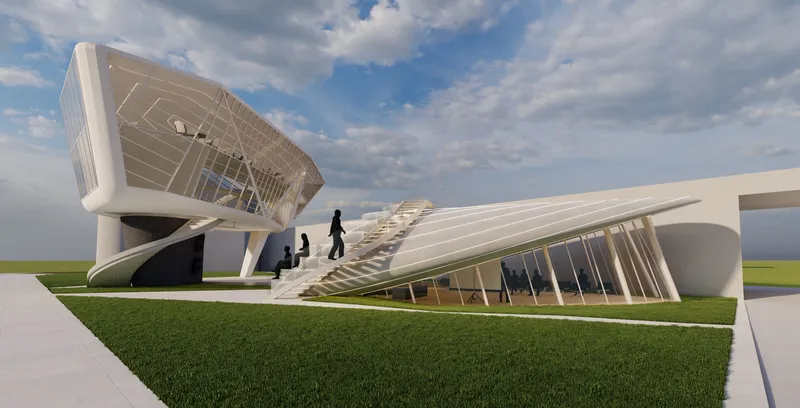
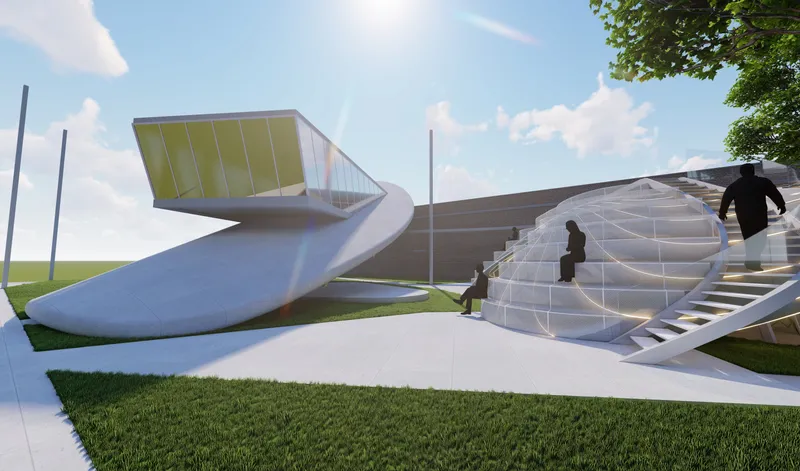
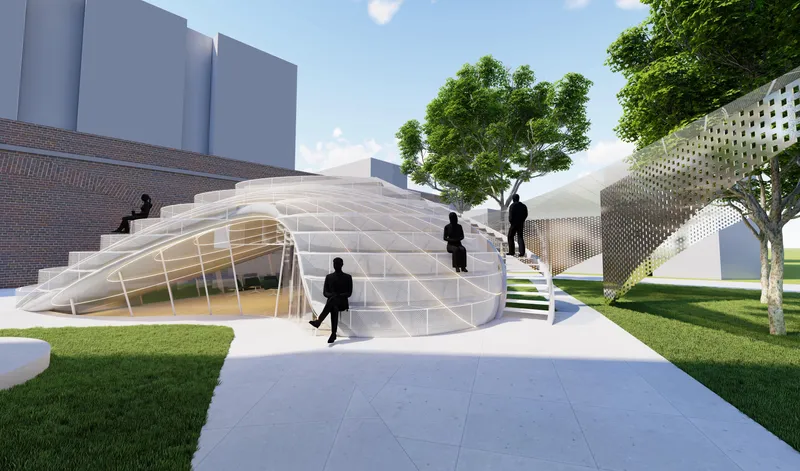
I will just say why I didn’t liked them and why the final one is better. The first one had too sharp edges which didn’t really fit to curvy and smooth conference building. I must admit that it also too much resembled the Zaha Hadid’s (of which I am a huge fan) design in Antwerp. And so, I have started to think of a deferent idea, and I came up with an idea of more than just one pebble but many pebble shaped buildings and canopies. I’ve made a quick model that really cleared up my mind.
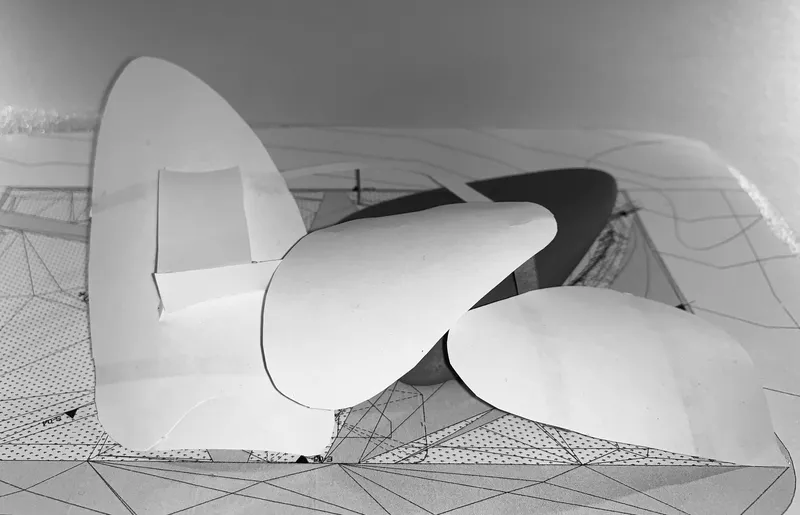
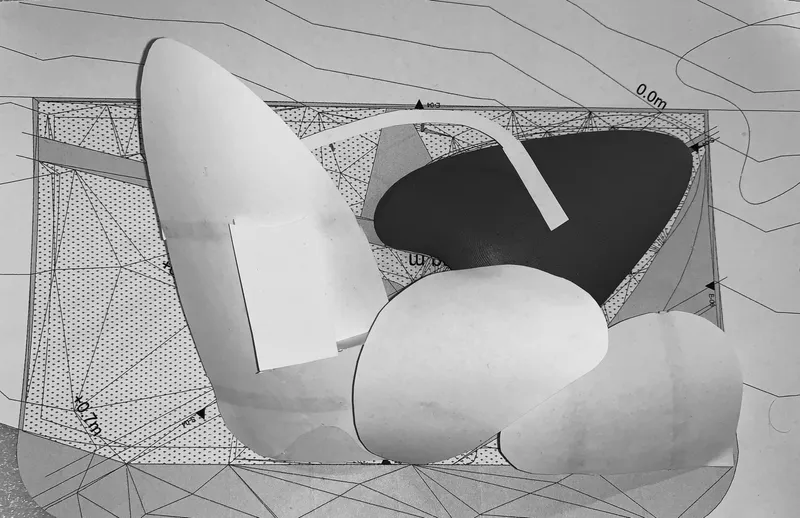
From then I was more or less sure how the complex will look like. Thus, the second concept features a café that penetrates the structure covering the stage. However, it looked a bit strange and so I thought, hey, why instead of just a surface, make the whole pebble and carve the café into it? And that’s what I have done. So now the café windows cut through the “stone”. It is like a tiny mountain. Café can be reached by a lifted walkway leading from the conference building’s roof or more easily by an elevator. On the highest level, there is an outdoor terrace from which guest can enjoy a nice view and a storge unit providing supply for the café.
The next part of the project consists of two rounded canopies that provide visitors protection from the famous English weather. One of them also works as a greenhouse enabling tropical plants to grow. Both are made of glass supported by a steel frame. Speaking of the materials. The choice of them is simple and straightforward which is the third feature of deconstructivist movement. Pebble like elements are made from concrete formed into plates based on steel frame. I first wanted to use more brick, which more common material in Manchester, but concrete better resembles pebbles. I chose steel structure, because it can be more easily dismantled and reuse as well as glass, which is also easy to recycle.
Last but not least, green areas. I wanted to spare the most area for nature as I could and so I left most of the east side of the plot unbuilt. It is a Multipurpose Area occupied only by a few benches. It can be used as an extension of the audience for bigger events or serve just as a lawn for people to play and rest.
To sum up, the project tells how I see deconstructivism. Nevertheless, it is not just a emanation of form, I think. It provides a symbiotic correlation between form and function in which one can affect the other. At the end I must genuinely say that the whole design challenge wasn’t easy and so I liked it a lot! It demanded learning new things which is a prize itself. After three years of study, I know that there is no project that can be called entirely finished without any ideas for change and so isn’t this one.


Popular Articles
Popular articles from the community


Co-life: Sustainable Architecture for Age-Friendly Community Living
Co-life reimagines sustainable architecture for seniors through courtyards, rammed earth, shared gardens, and spaces designed for belonging.

Play: Fragments of Their World
Familiar architecture becomes modular playground design, creating safe spaces where displaced children can learn, connect, imagine and play.

Co-Life: Senior Housing Design That Reconnects Older Adults With the City
Co-Life reimagines senior housing design through healing gardens, shared streets, workshops, and a sustainable community across generations.

Lunar Spiral: Space Architecture Shaped by the Mathematics of the Universe
Lunar Spiral reimagines space architecture through Fibonacci geometry, lunar regolith, levitating habitats, and self-sustaining Moon living.
Similar Reads
You might also enjoy these articles

Day and Night Park: A Time-Based Urban Newsstand in Beijing
A temporary urban newsstand in Beijing blending travel, light, and reading through poetic colors, compact form, and community-focused design.

Modernist Patio Renovation in El Masnou, Barcelona by Oliver Segura Arquitectura + Cebrià Arquitectura
Modernist patio renovation blending tradition and innovation with a movable pool, leveled floors, and Catalan materials in El Masnou.

Alto Residencial Coop: Cooperative Housing Development in Santiago de Compostela by Carbajo Barrios Arquitectos
A linear cooperative housing complex blending white volumes and perforated metal façades, enhancing community living, natural light, privacy, and urban integration.
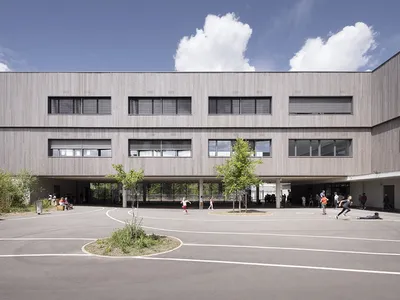
Vil Genis School by BPA ARCHITECTURE – Massy, France
Vil Genis School in Massy, France, features sustainable design, south-facing classrooms, community integration, accessible spaces, and modern educational architecture.




Comments (0)
Please login or sign up to add comments
No comments yet. Be the first to comment!