

The Ragon Institute by Payette: A Landmark in Sustainable Research Building Design
The Ragon Institute by Payette redefines sustainable research building design, blending scientific innovation, energy efficiency, and biophilic architecture in Cambridge.


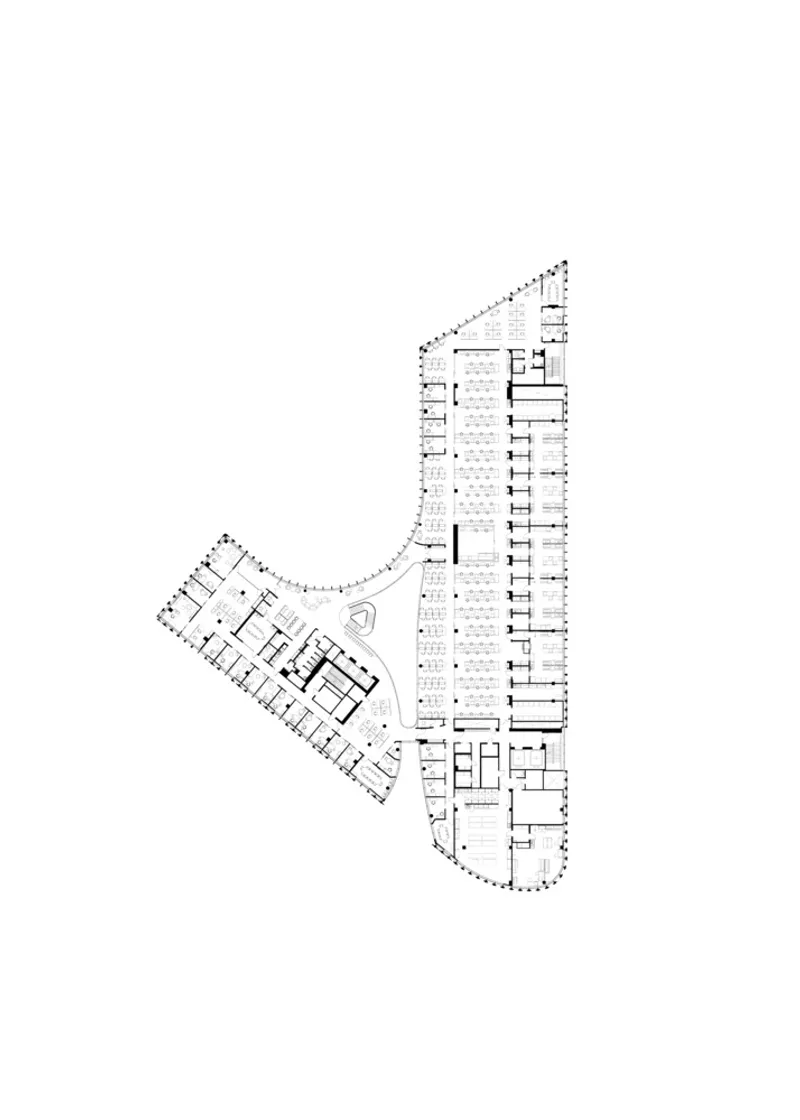
The Ragon Institute in Cambridge, Massachusetts, designed by Payette, redefines the possibilities of sustainable research building design. Serving as the new home for a unique collaboration between Mass General, MIT, and Harvard, the 323,000-square-foot facility is dedicated to groundbreaking infectious disease research, including HIV-AIDS and COVID-19. Beyond its mission, the building itself stands as an architectural statement, blending energy performance, climate resilience, and biophilic design into one integrated vision.


Embracing a Unique Triangular Site
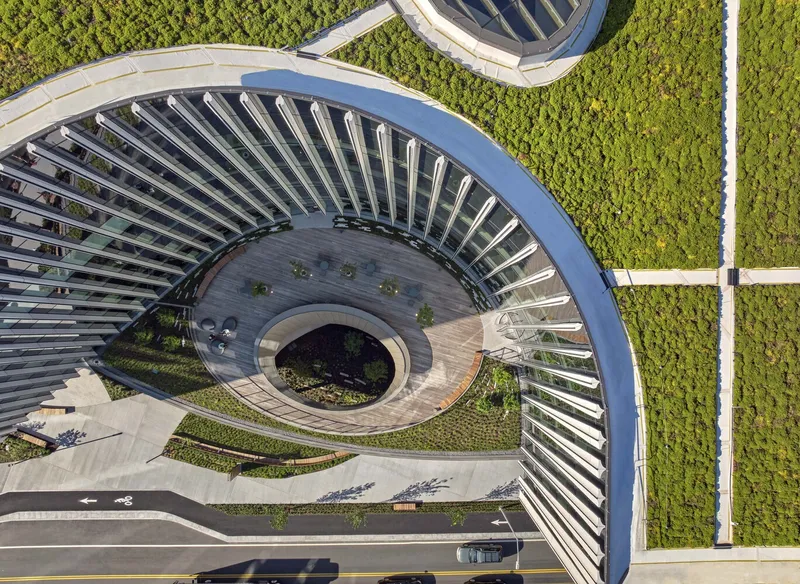
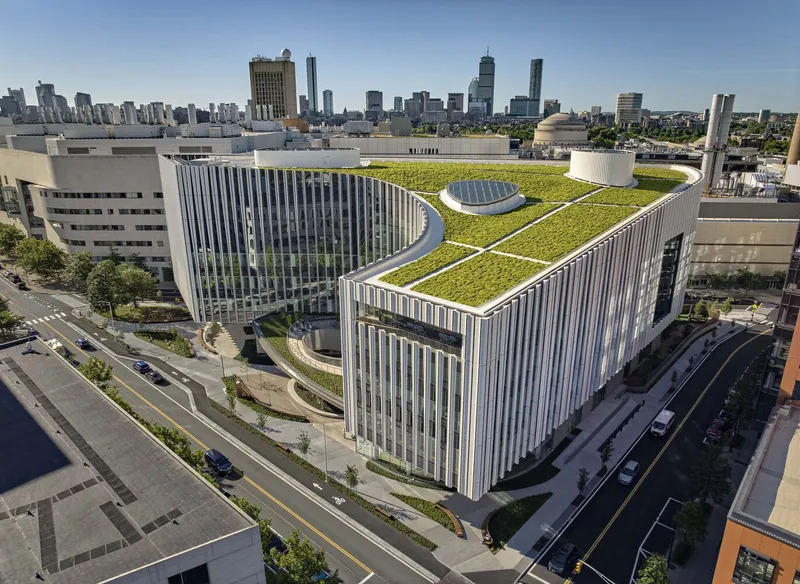
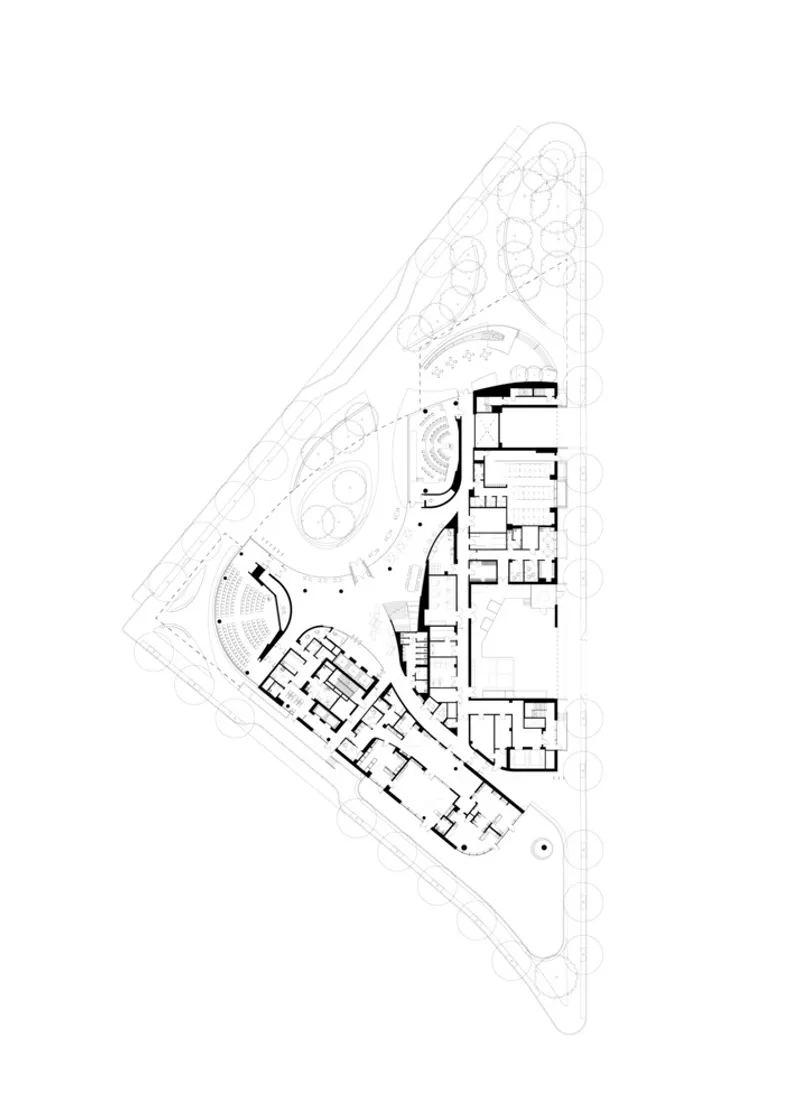
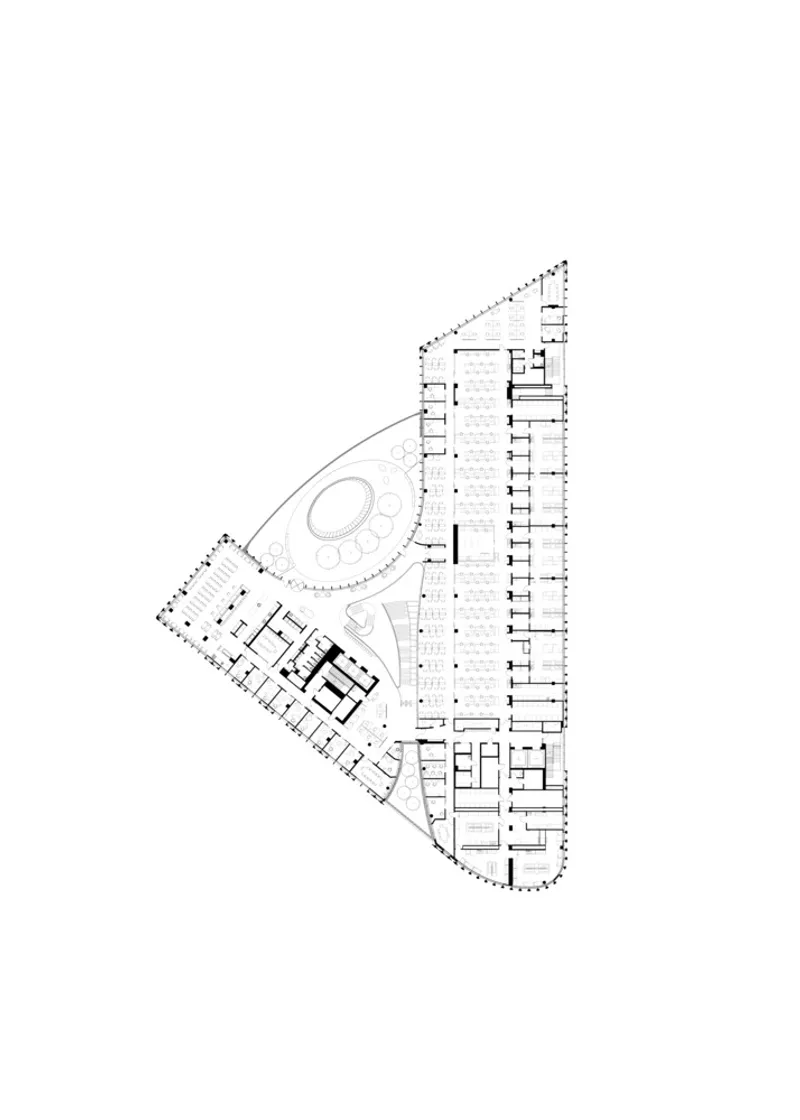
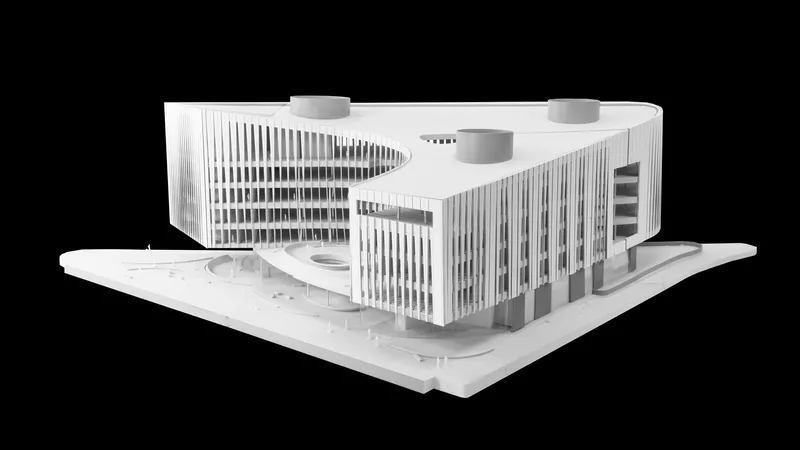
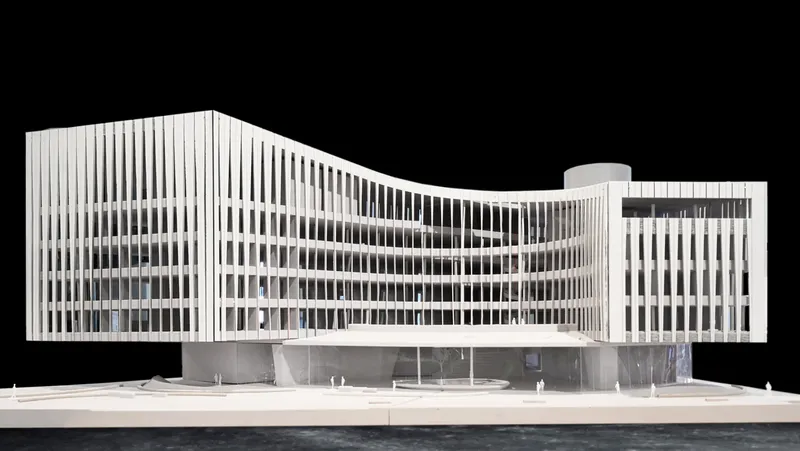
Situated at the edge of Kendall Square, the Ragon Institute occupies a freestanding triangular plot that demanded a creative architectural response. The mass of the building is dramatically cantilevered on three corners, floating above a continuous landscaped base. Its sweeping green roof slopes gracefully down three stories, softening the geometry and creating a fluid relationship with the city. The design embraces its role as both a scientific hub and a civic landmark.


Minimalist Exterior and Dynamic Façade
The façade of the Ragon Institute embodies performance and elegance. Clad in vertical scalloped aluminum sunshades, the exterior is responsive to programmatic and climatic needs, tapering apertures to optimize daylight and shading. This soft, minimalist language contrasts sharply with the surrounding corporate towers, giving the institute a light and welcoming presence. The sunshades not only reduce energy consumption but also evoke the timeless materiality of historic buildings at MIT, Harvard, and Mass General.


A Network of Green Public Spaces
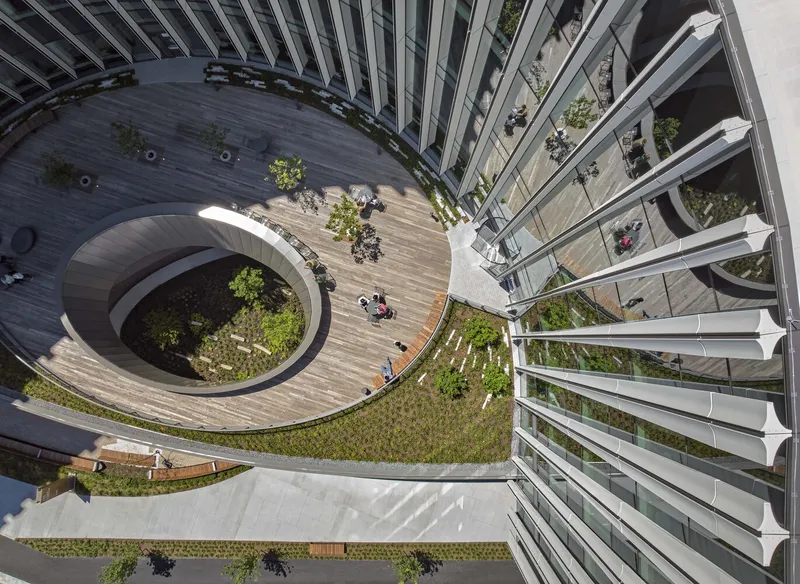
Landscape and architecture are inseparably woven into the design. The institute creates an urban forest within Cambridge through green roofs, linear parks, and a series of carefully curated gardens. The Oculus Garden at the entrance, the Cantilever Terrace, the Day Care Garden, and the elevated Courtyard Garden each provide restorative outdoor experiences for staff, visitors, and researchers. These spaces also serve climate resilience, managing stormwater, enhancing biodiversity, and offering much-needed green infrastructure in the urban core.


Interior Spaces and Materiality
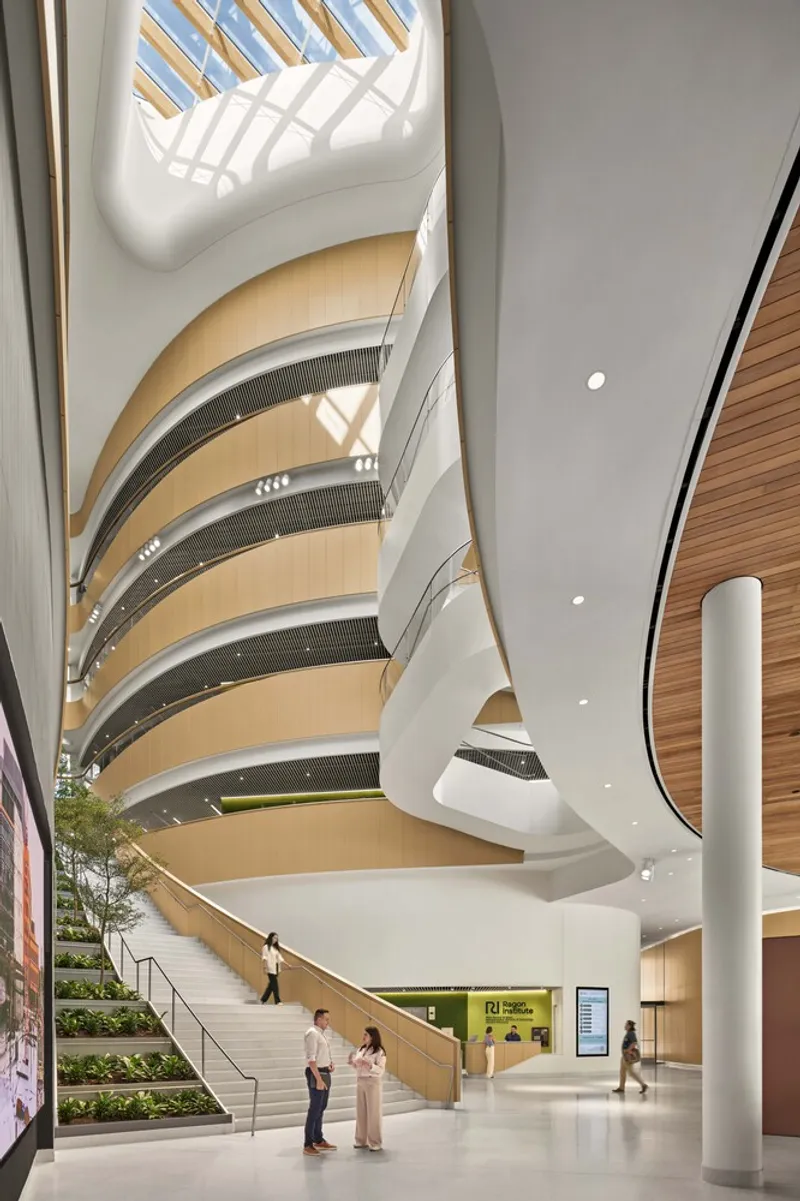
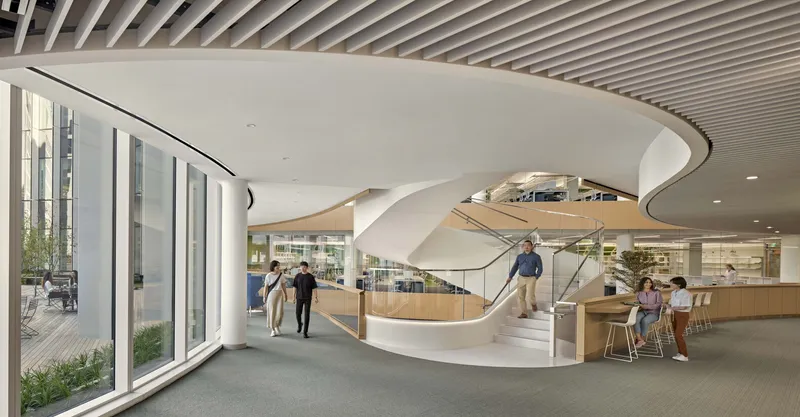
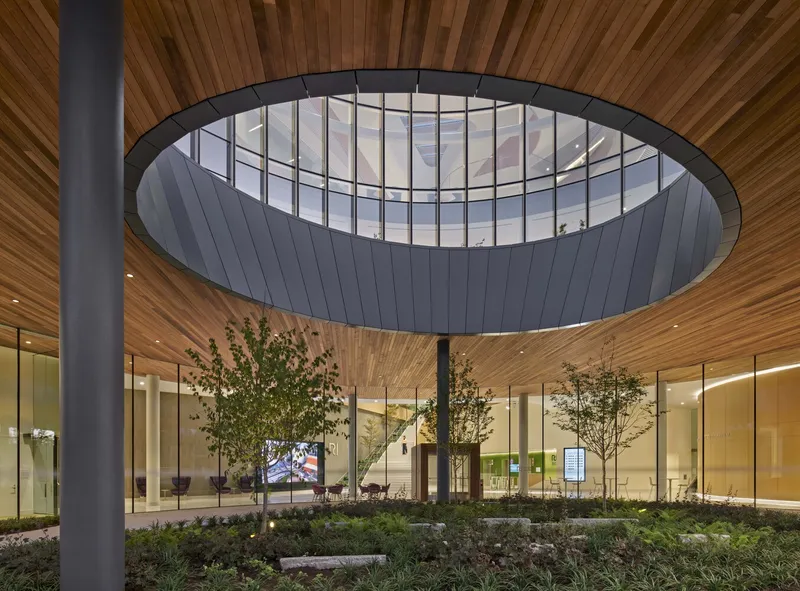
Inside, the atrium and organically carved courtyard bring light deep into the building, fostering collaboration and community among researchers. Warm tones of Vals Quartzite, anodized copper, and timber curtain walls connect interior spaces to the natural material palette of the exterior. Daylight, operable windows, and visual links to gardens promote a biophilic environment that supports both productivity and well-being.


Performance and Sustainability Strategies
The sustainable research building design is underpinned by advanced performance strategies. Parametrically modeled sunshades were optimized for both energy yield and embodied carbon reduction. Triple glazing, low-carbon timber curtain walls, and all-electric-ready HVAC systems deliver a 61% reduction in energy consumption, equivalent to the annual use of 716 homes.

Water systems also reflect innovation: recovered lab purification water and mechanical condensate are reused for irrigation, cooling towers, and site water features. Stormwater systems, green roofs, and elevation above the floodplain protect the building while enhancing resilience against future climate challenges.

A Model for the Future of Research Architecture
The Ragon Institute is more than a laboratory and research facility. It is a model for the future of sustainable research building design, merging architectural innovation with environmental responsibility. By prioritizing collaboration, daylight, resilience, and health, the institute creates spaces that empower discovery while reducing environmental impact.
Through its dynamic architectural language, landscape integration, and sustainable strategies, the Ragon Institute by Payette establishes itself as a pioneering research hub and an urban landmark. It exemplifies how cutting-edge science can coexist with climate-conscious architecture, making it a global benchmark for sustainable research building design.


All Photographs are works of Robert Benson , Warren Jagger




Popular Articles
Popular articles from the community


The Musturak Paradise: Senior Living Architecture for a Connected Future in Temara, Morocco
The Musturak Paradise reimagines senior living architecture in Temara via private homes, social spaces, culture, community, and shared care.

Co-life: Sustainable Architecture for Age-Friendly Community Living
Co-life reimagines sustainable architecture for seniors through courtyards, rammed earth, shared gardens, and spaces designed for belonging.

AL-JANNAH: Sustainable Architecture and Permaculture for Afghan Widows
AL-JANNAH uses sustainable architecture and permaculture to create resilient oasis of housing, learning, work and renewal for Afghan widows.
EW PARK: Sustainable Architecture Reimagines the Future of Urban Parking
EW PARK reimagines city parking as a modular wooden tower combining automation, solar energy, electric mobility, and adaptable urban design.
Similar Reads
You might also enjoy these articles


Bamboo Housing Challenge 2026: Design Affordable, Sustainable Homes Using Bamboo
An international design competition by Bamboo U and IBUKU inviting architects and designers to reimagine affordable housing using bamboo — with the winning design built full-scale in Bali.

Computational Design & Education: Beegraphy Design Awards Introduces 7th Category (Featuring Jiyun's Innovative Approach)
Dive into Beegraphy’s 7th Design Awards category, where computational design meets education to create immersive, interactive learning tools, inspired by Jiyun’s work.

From Parametric Lighting to Urban Furniture: Join the 2nd Workshop in Beegraphy’s Computational Design Series
Dive into Cutting-Edge Design Techniques and Practical Applications with Industry Experts

Last Call: Unleash Your Architectural Genius in SHAK's Kindergarten Design Competition
Urgent call for architects to join SHAK's kindergarten design competition before the looming deadline


Explore Architecture Competitions
Discover active competitions in this discipline



Challenge to reimagine the Iron Throne


Photograph architecture without architects


Illustrate the lost glory of Angkor Wat - Render Challenge


Design challenge to reuse E-waste
Comments (0)
Please login or sign up to add comments
No comments yet. Be the first to comment!