
The Shrike
Symbiosis with the environment

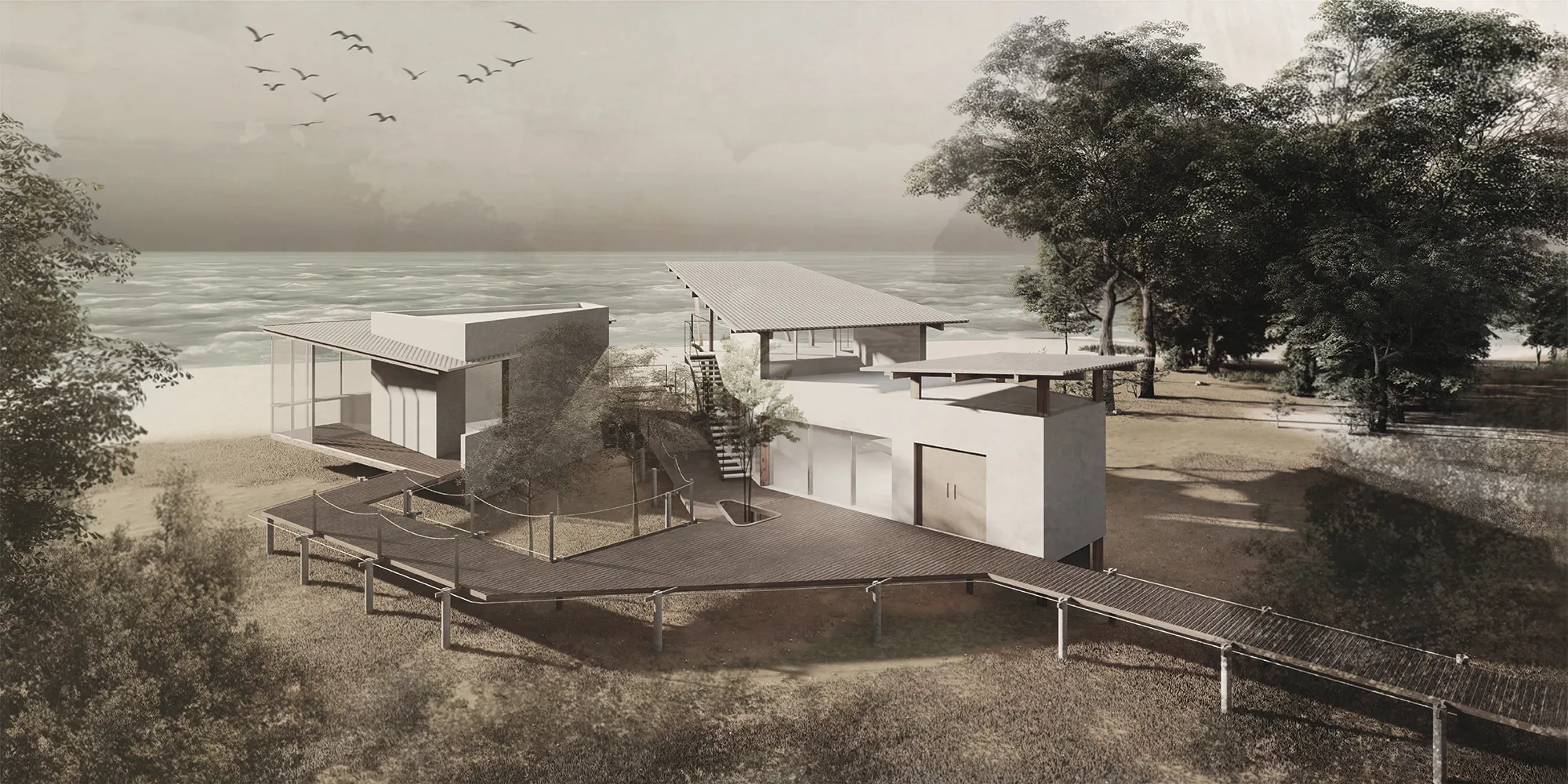
“The Shrike” is a bird observatory set amongst the diverse coastline of Maharashtra, India. It is a construct that reaches into the wild habitat around, whilst maintaining a safe and inclusive experience for all visitors that the site will attract. With the primary aim of offering panoramic views of the surrounding wildlife for bird watchers inclined to view from high or low, the structure offers walkways in which users may experience a boundary-less connection with the natural beauty of the coastal environment.
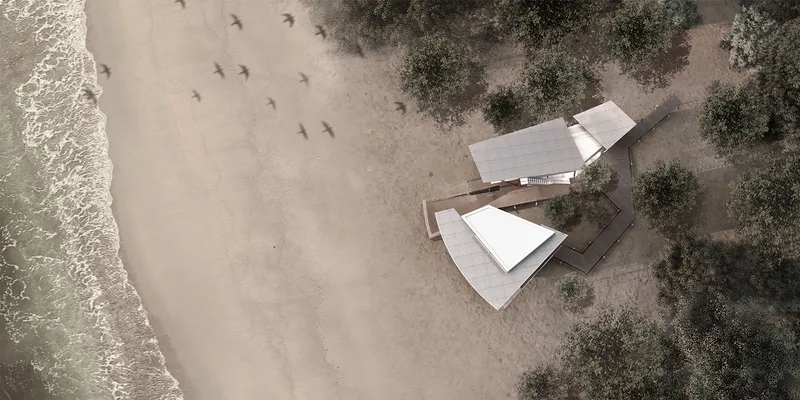
Designed in a circular formation, Fly encourages the visitor to embark on a journey around the site, momentarily stopping to enjoy the views offered at each location. Parts of the bird species on the site perch on trees, while some often like to catch birds on the beach. The water, beach and woodland showcase a variety in birdlife and can all be viewed from different parts of the bird observatory. Main viewing spots include the boarded walkway, panoramic viewing area in building one, and the second-floor terrace of building two. The variation between the three offers a way of experiencing the location with differing elevation and contact. A courtyard placed within the centre of the walkway offers an opportunity for the natural fauna and flora to emerge through and up toward the sky.
The unique connection between the construct and nature around, presents shade and protection onto an open air area that would otherwise be engulfed by the intense tropical savannah and monsoon climate that the Maharashtra region endures each year. Following research into the at times erratic weather that can present itself to the area, a solid foundation and structurally sound design was required and necessary for the buildings and walkway to survive in the, at times, severe conditions.
The material choices were therefore highly important when proposing a concept that should be offering a sustainable and renewable option with a structurally solid framework. With a basis of stone and render for the lower sections of the buildings, the buildings are supported by locally sourced timber uprights that run through the structure in their organic form. The use of their organic form reduces wasted energy through milling and processing and encourages the utilisation of the internal grain boundaries that timber offers. This upright holds on top a roof made almost entirely of timber and Zinc, which offers good durability and recyclability.
Towards the ground, light contact with the ground was sought after to encourage minimal disturbance of the natural environment around. For this reason, reinforced concrete piles were included to allow a solid direction of load into the ground without disturbing the soil on which birds and other species rely on for survival.
Plastic waste has become such an issue within coastal regions through local pollution and pollution brought in from tidal currents carrying plastics and other harmful substances that threaten the wildlife of a region like this. Within the design of the Fly construct, there is zero plastic inclusion and users are encouraged to lightly interact with the surrounding habitat to help collect and sensibly dispose of harmful trash that may be found on the nearby beach or woodland, through the use of walkways onto the ground around.
These walkways are essential also for the access of visitors with the aid of wheelchairs. All lower level viewing areas and internal spaces can be easily enjoyed by all, due to the constant height offerings of the floor level.
As an expansion plan for the project, the connection between user, structure and nature could be broken down further, to allow the construct to add value to the surrounding land in a way that isn’t currently there. The preservation of the natural habitat is essential for the longevity of species survival, and the design could be taken forward to include larger spaces of flora and fauna that require more protection for them to thoroughly thrive in the habitat.
As the building and walkways, age over time, plants and land around will be encouraged to encroach on the space and form a symbiotic relationship. This relationship should be explored by the visitors and used as an example of how the built environment and nature work together in ensuring a safe and sustainable environment for all members within.

Popular Articles
Popular articles from the community


Play: Fragments of Their World
Familiar architecture becomes modular playground design, creating safe spaces where displaced children can learn, connect, imagine and play.

Hill & Cross Opera: Sculptural Opera House Architecture Shaped by Tallinn’s Landscape and Identity
Hill & Cross Opera reimagines opera house architecture in Tallinn through its sculptural hill, civic plaza, glass wave and a luminous cross.

Co-life: Sustainable Architecture for Age-Friendly Community Living
Co-life reimagines sustainable architecture for seniors through courtyards, rammed earth, shared gardens, and spaces designed for belonging.

The Musturak Paradise: Senior Living Architecture for a Connected Future in Temara, Morocco
The Musturak Paradise reimagines senior living architecture in Temara via private homes, social spaces, culture, community, and shared care.
Similar Reads
You might also enjoy these articles

Day and Night Park: A Time-Based Urban Newsstand in Beijing
A temporary urban newsstand in Beijing blending travel, light, and reading through poetic colors, compact form, and community-focused design.

Modernist Patio Renovation in El Masnou, Barcelona by Oliver Segura Arquitectura + Cebrià Arquitectura
Modernist patio renovation blending tradition and innovation with a movable pool, leveled floors, and Catalan materials in El Masnou.

Alto Residencial Coop: Cooperative Housing Development in Santiago de Compostela by Carbajo Barrios Arquitectos
A linear cooperative housing complex blending white volumes and perforated metal façades, enhancing community living, natural light, privacy, and urban integration.
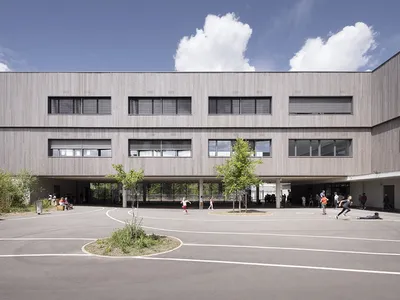
Vil Genis School by BPA ARCHITECTURE – Massy, France
Vil Genis School in Massy, France, features sustainable design, south-facing classrooms, community integration, accessible spaces, and modern educational architecture.
Explore Bird Watching Competitions
Discover active competitions in this discipline




Challenge to reimagine the Iron Throne


Photograph architecture without architects


Illustrate the lost glory of Angkor Wat - Render Challenge


Design challenge to reuse E-waste
Comments (0)
Please login or sign up to add comments
No comments yet. Be the first to comment!