
The White Renovation Office Building by Olgooco: Sustainable Office Building Renovation in Tehran
The White Renovation Office Building revitalizes a 35-year-old Tehran structure with sustainable design, reducing waste through adaptive reuse.


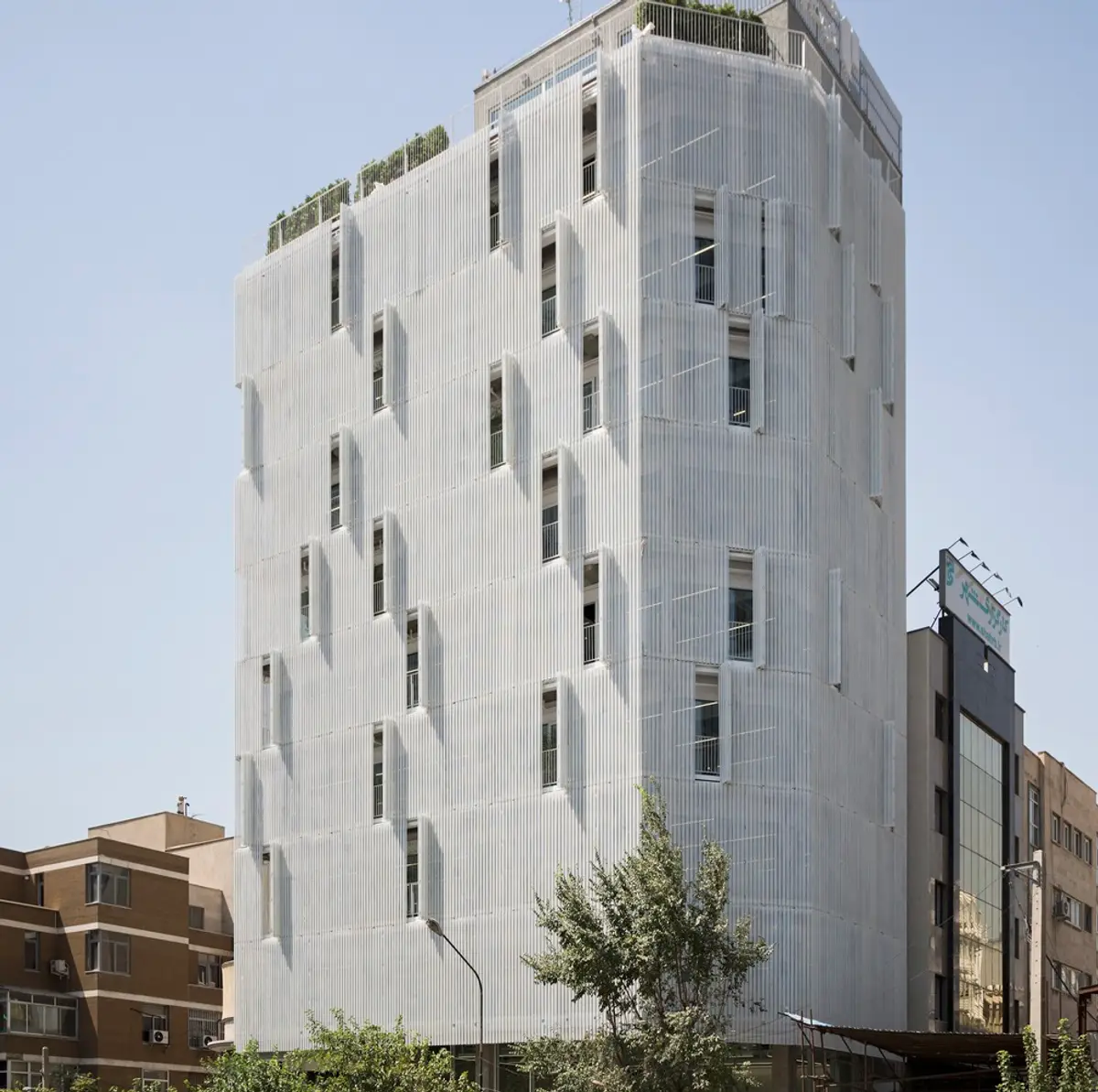
Located in the bustling office district of Tehran, Iran, The White Renovation Office Building is a masterful example of sustainable architecture and adaptive reuse by the innovative design team at Olgooco. Completed in 2022, this project transformed a 35-year-old concrete office building into a modern, efficient workspace spanning 3,000 square meters — all while minimizing construction waste and preserving the existing urban fabric.
Architectural Concept: Preserving History Behind a White Veil
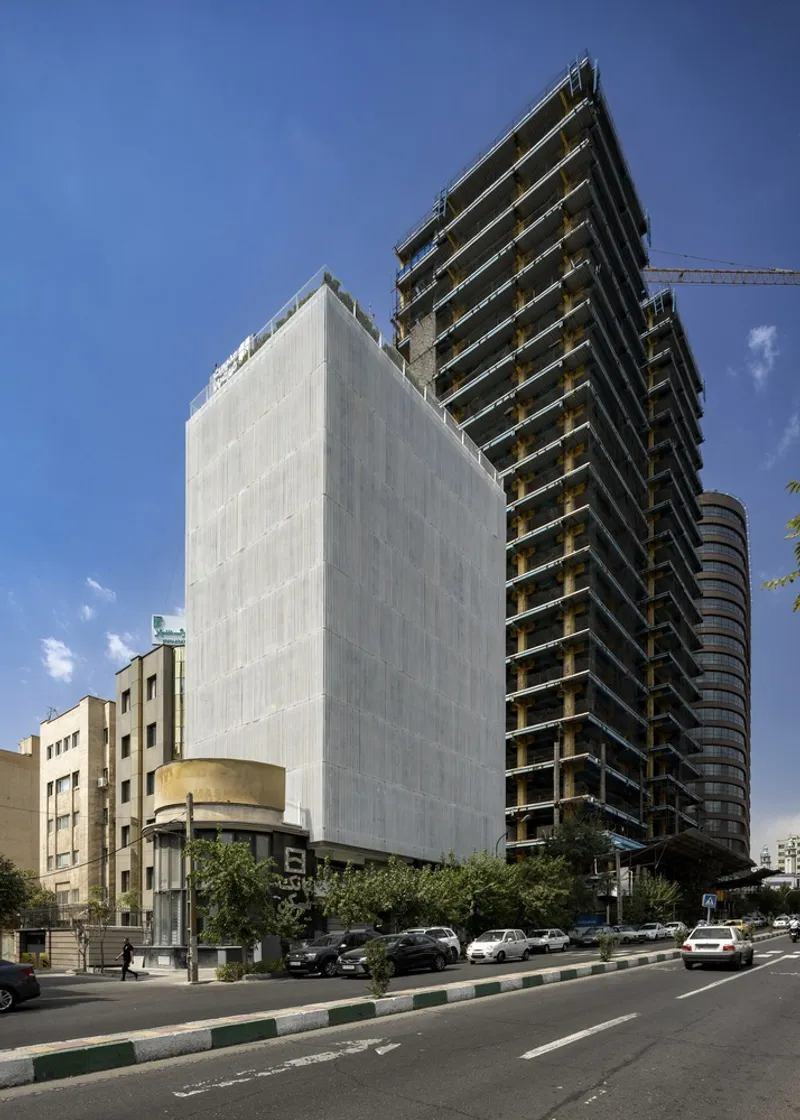
Nestled between dense urban facades along one of Tehran’s busiest streets, the original structure faced challenges typical of aging office buildings in crowded city centers. Instead of opting for demolition, which would produce significant environmental impact through waste and emissions, Olgooco chose to renovate and rejuvenate the existing building. The design wraps the structure in a sleek white façade, or "white veil," that masks the aged concrete frame while highlighting the contrast between the old and new. This façade acts as a modern protective shell that revitalizes the building’s identity and presence in the cityscape.
Innovative Structural “Weight Loss” Strategy
Due to limitations, the new owners could not acquire the adjacent bank building, which initially limited expansion possibilities. To address structural concerns and improve the building's functionality, a weight loss renovation strategy was implemented. This innovative approach reduced loads on the original concrete frame without adding bulky new materials, effectively extending the building’s lifespan and avoiding unnecessary demolition. The project thus became a pioneering example of reducing construction and demolition waste, aligning with global efforts to make urban development more sustainable.

Dynamic Double-Shell Façade with Thermal Efficiency
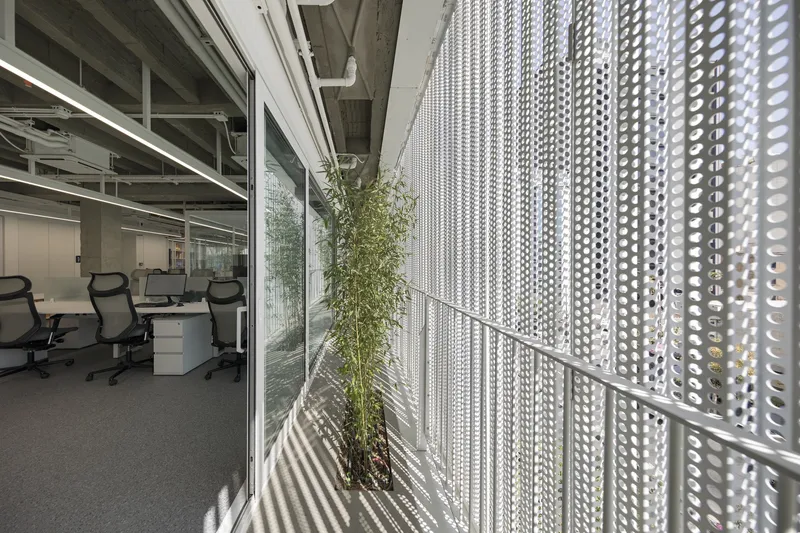
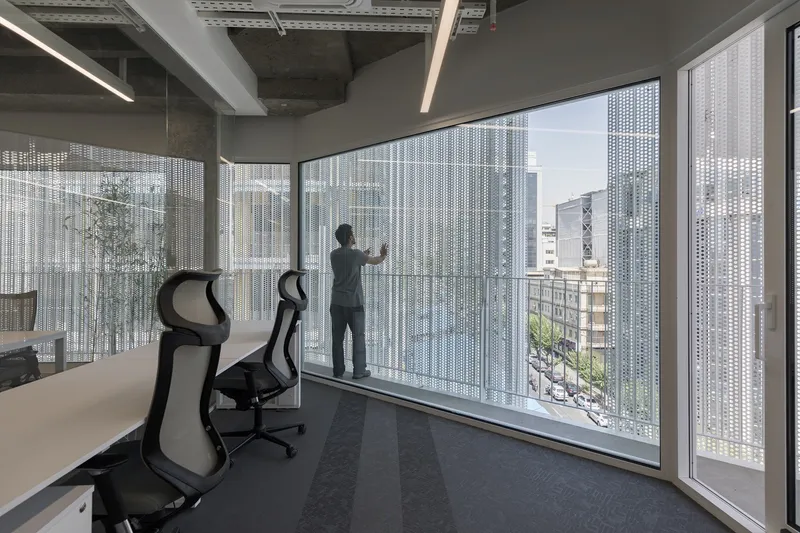
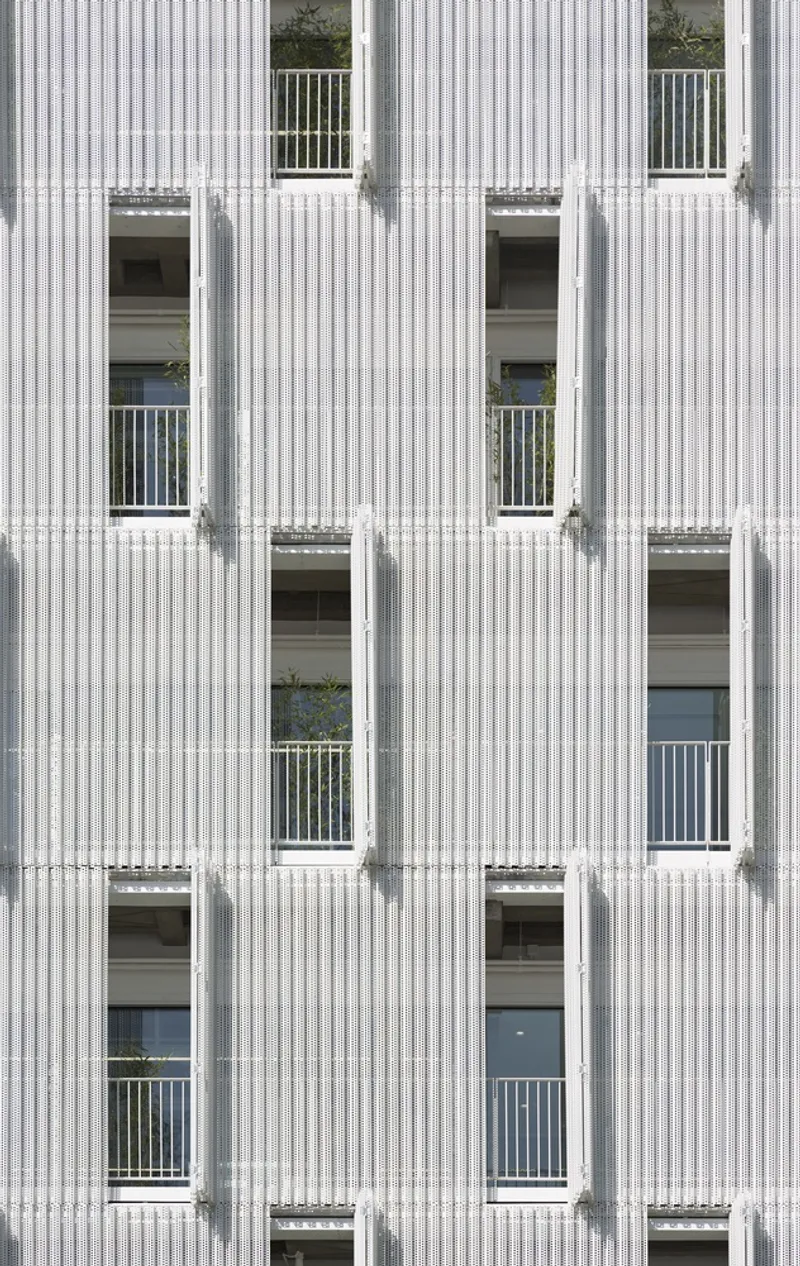
Inside, the building’s design prioritizes user comfort and environmental performance. Recognizing that external views are constrained by the increasingly dense surroundings, the architects introduced a second mobile perforated aluminum shell along the interior side of the façade. This dynamic layer serves multiple functions:
- It replaces traditional curtains by controlling light and privacy.
- It reduces thermal loads on the building, enhancing energy efficiency.
- It allows for window cleaning from the corridor located between the two shells.
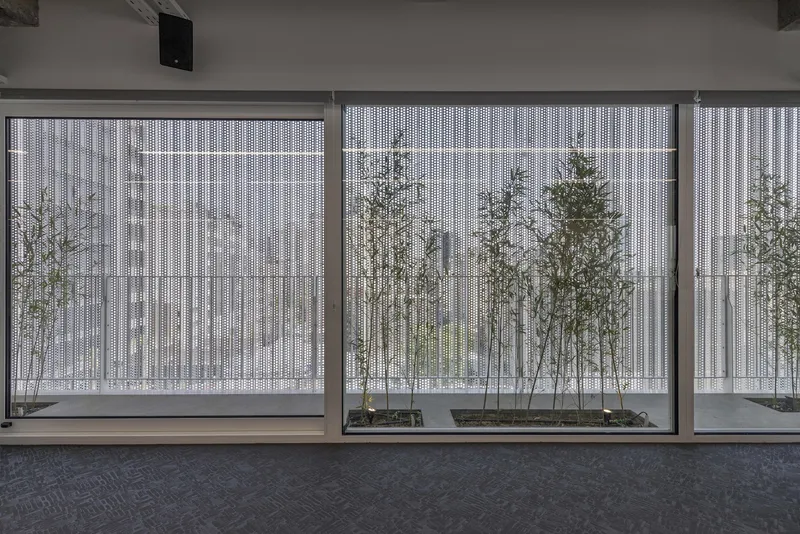
- It transforms visually throughout the day — opaque and protective by day, semi-transparent and luminous by night, creating a striking architectural lightscape.
The corridor between these shells, adorned with lush bamboo plants, forms a unique micro courtyard that brings nature indoors, improving office ambience and air quality.

Urban Silence in the Bustling Cityscape
The building’s external façade acts as an “urban gap” — a deliberate silent pause within Tehran’s otherwise chaotic architectural environment. This contrast creates a subtle, contemplative space amid the city’s busy rhythm, inviting reflection on the importance of mindful urban design.

Environmental Impact: Waste Reduction & Sustainable Renovation
According to a 2018 Environmental Protection Agency report, construction waste globally accounts for twice the volume of municipal waste, highlighting the critical need for sustainable renovation practices. By preserving the concrete skeleton and avoiding full demolition, The White Renovation Office Building significantly reduces carbon footprint and construction debris, setting an example for future urban projects in Tehran and beyond.

Interior Design: A Dialogue Between Past and Present
Inside, the renovation reveals a poetic interplay between historic concrete structures and contemporary white interventions. The minimalist white surfaces and furniture contrast with the raw textures of the original framework, symbolizing the passage of time and architectural evolution.
Mechanical, electrical, and plumbing (MEP) systems are artfully integrated into the design as three-dimensional elements that trace and reinterpret the old building’s skeleton. These new lines shape the ceilings and merge seamlessly with interior furniture, creating a harmonious blend of form and function.

All Photographs are works of Mohammad Hassan Ettefagh; Parham Taghioff


Popular Articles
Popular articles from the community


Little Red Riding Hood: Architectural Design as a Journey Through Fear, Light, and Storytelling
Little Red Riding Hood reimagines the fairy tale through architectural design shaped by fear, light, scale, memory, uncertainty, and choice.

Hill & Cross Opera: Sculptural Opera House Architecture Shaped by Tallinn’s Landscape and Identity
Hill & Cross Opera reimagines opera house architecture in Tallinn through its sculptural hill, civic plaza, glass wave and a luminous cross.

Play: Fragments of Their World
Familiar architecture becomes modular playground design, creating safe spaces where displaced children can learn, connect, imagine and play.

Lunar Spiral: Space Architecture Shaped by the Mathematics of the Universe
Lunar Spiral reimagines space architecture through Fibonacci geometry, lunar regolith, levitating habitats, and self-sustaining Moon living.

Similar Reads
You might also enjoy these articles


Hodi-Mandai Geram
Project Function: Preservation and revitalization of the Intangible heritage and socio-spatial identity of the Hodi by Housing, Cultural Memory Center, Sacred Grove, landscape, local tourism economy


Olio Towers: A Mid-Rise for Performers That Fuses Housing, Rehearsal, and Stage
Located blocks from Houston's Theater District, this modular tower stacks living units around a central performance atrium.

Oasis: Modular Green Housing Carved into Dhaka's Urban Fabric
A shortlisted Plugin Housing entry reclaims unauthorized settlements in Dhaka with stepped concrete volumes, green roofs, and ventilation-driven design.

Black Hole: A Floating Megastructure for the Post-Physical Era
Emiliano Mazzarotto envisions a spherical, self-scaling arena where e-sports, digital hotels, and holographic stadiums replace traditional public space.

Explore Office Building Competitions
Discover active competitions in this discipline

Challenge to reimagine the Iron Throne

Photograph architecture without architects

Illustrate the lost glory of Angkor Wat - Render Challenge

Design challenge to reuse E-waste
Comments (0)
Please login or sign up to add comments
No comments yet. Be the first to comment!