
Thomas Sankara Mausoleum Architecture: A Monument of Memory and Hope by Kéré Architecture
This article explores the Thomas Sankara Mausoleum’s architecture by Kéré, honoring Burkina Faso’s revolutionary legacy through symbolic design.


Honoring a Pan-African Revolutionary through Architecture in Burkina Faso
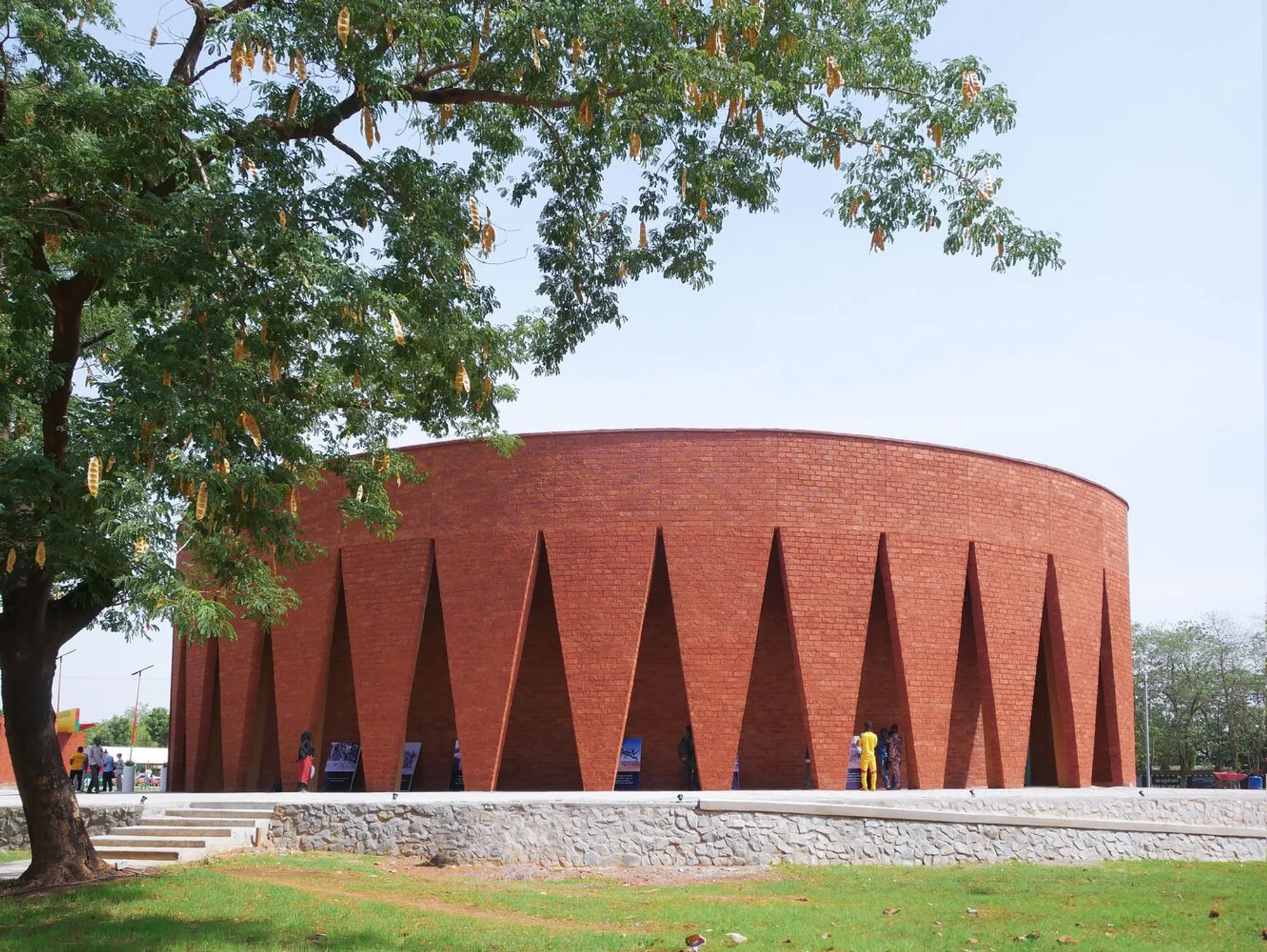
Located in Ouagadougou, Burkina Faso, the Thomas Sankara Mausoleum architecture is a powerful expression of remembrance and national identity, designed by Pritzker Prize-winning architect Francis Kéré. This mausoleum serves not only as the final resting place of Thomas Sankara—the charismatic leader and revolutionary president assassinated in 1987—but also as an architectural symbol of transformation, justice, and resilience.
A Sacred Site Transformed into a National Landmark
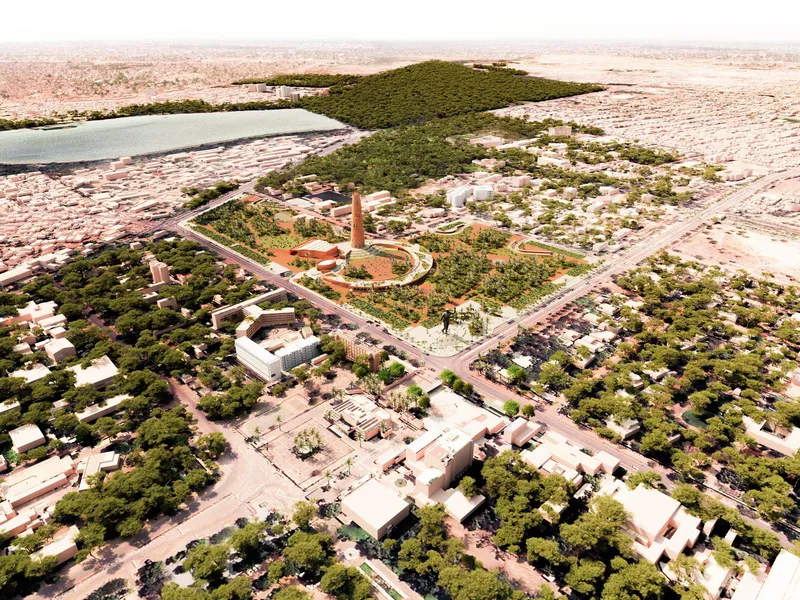
Built on the exact location where Sankara and twelve of his comrades were killed, the site has long carried the weight of trauma and unresolved history. Now, through Kéré's thoughtful architectural intervention, it becomes a public space of encounter, memory, and healing. The mausoleum forms the heart of the emerging Thomas Sankara Memorial Park, a 14-hectare civic development that integrates landscape, history, and sustainable urbanism.
Architectural Concept Inspired by Sunlight and Absence
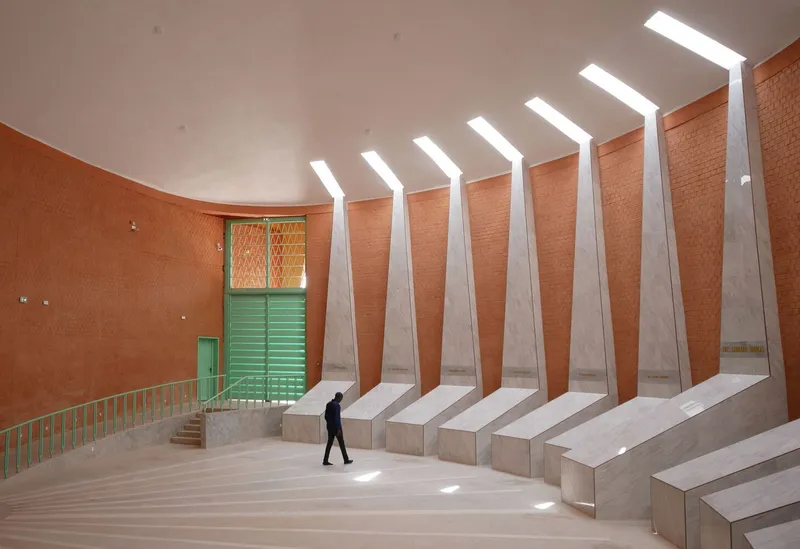
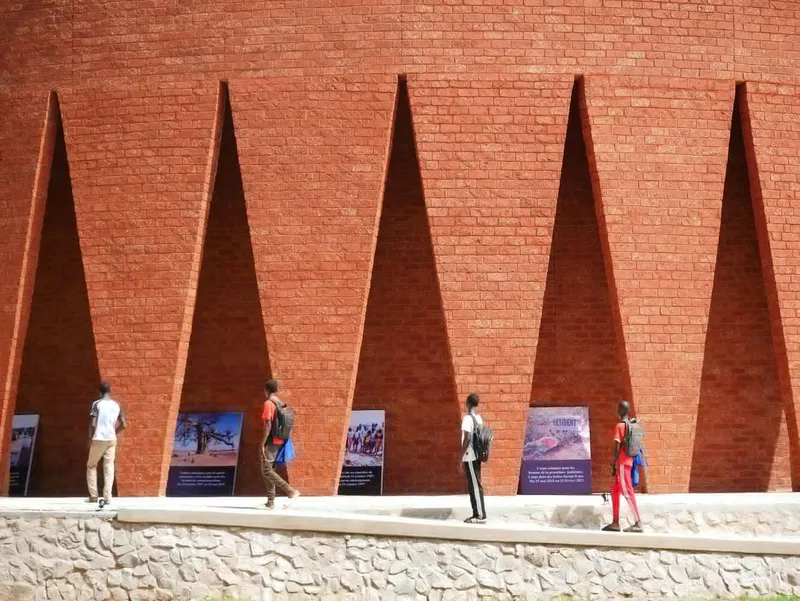
The Thomas Sankara Mausoleum architecture is defined by a central circular plan housing thirteen tombs—each beneath a dedicated skylight. As the sun moves through the sky, individual shafts of light illuminate each tomb sequentially, marking time and presence. This poetic choreography of light and architecture pays tribute to the lives lost while inviting personal reflection from every visitor.
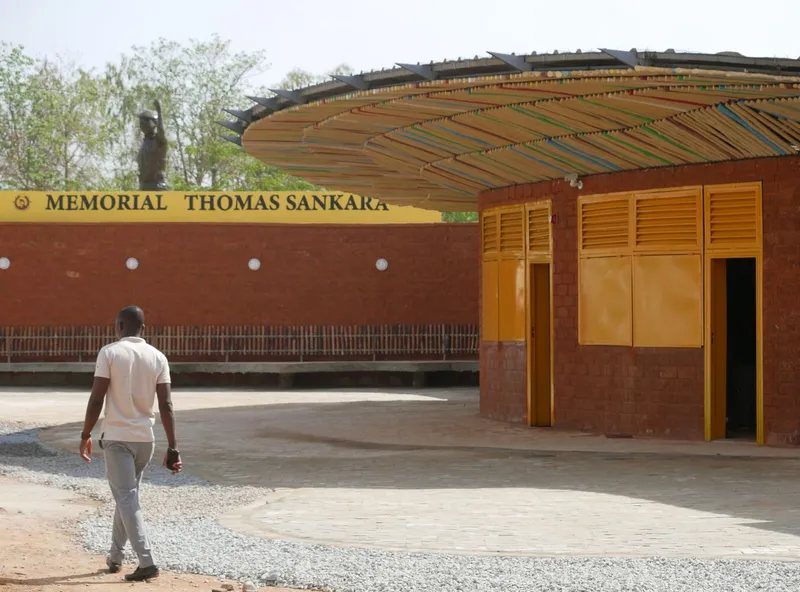
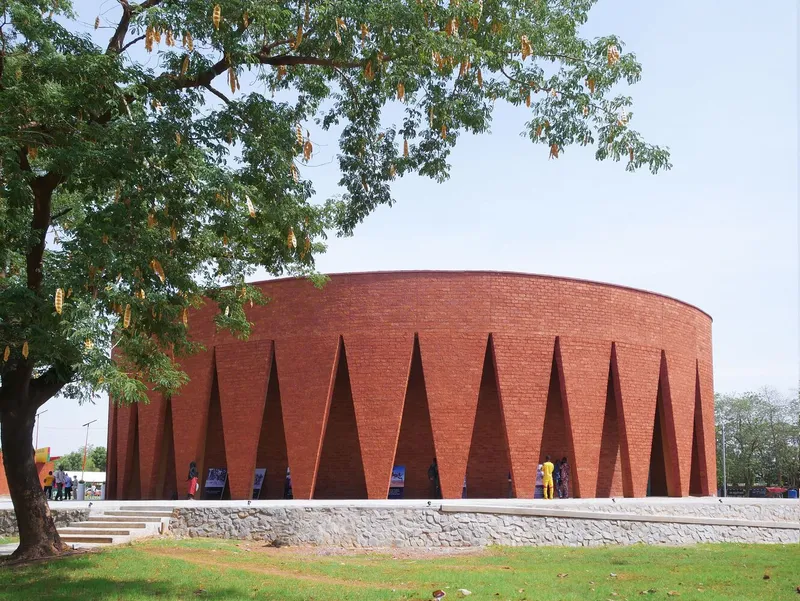
Thirteen structural columns frame thirteen voids, symbolizing the absence left behind in families and communities. These voids are more than architectural features—they are visual and emotional metaphors for collective grief and remembrance. The immersive spatial experience combines architecture, sunlight, and silence to establish a new civic and spiritual core for Ouagadougou.
Earthen Materials Reflecting Local Craft and Sustainability
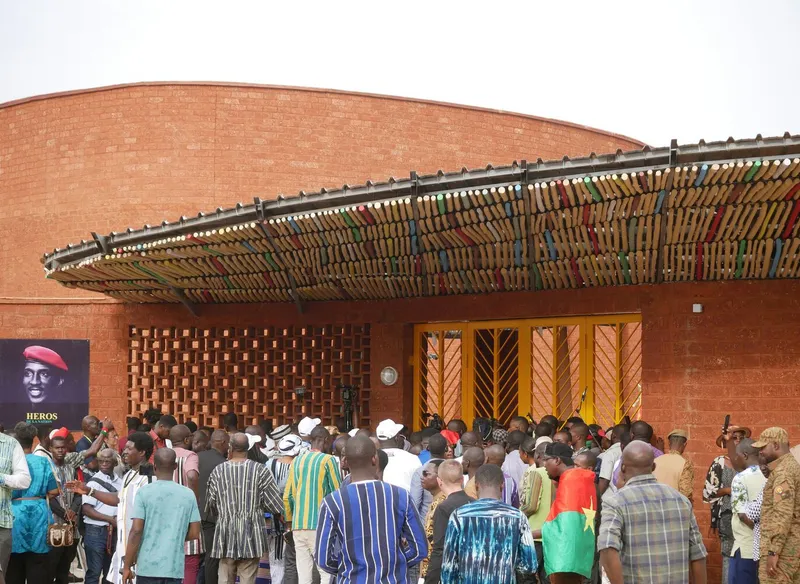
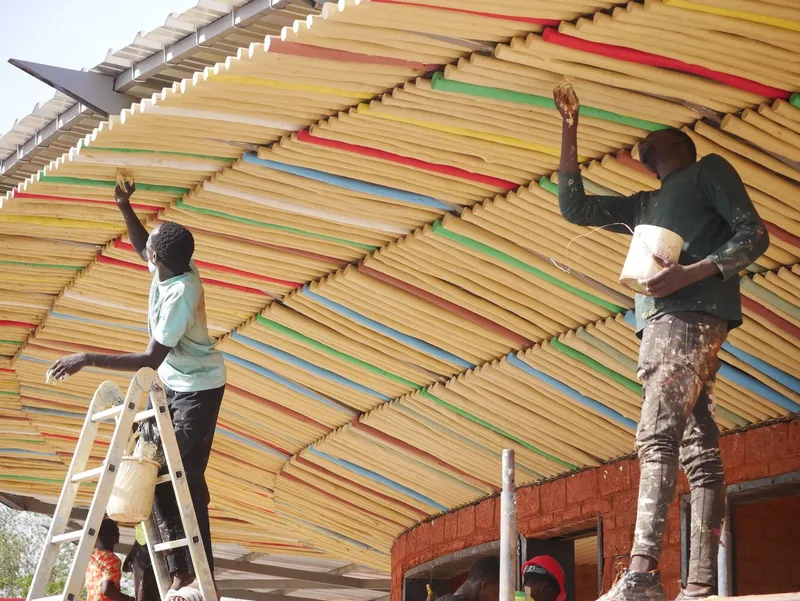
True to Thomas Sankara’s ethos of self-reliance and environmental stewardship, the mausoleum uses materials native to Burkina Faso. The structure is built with clay bricks and laterite, both sourced and fabricated by local communities. This decision anchors the project in the vernacular tradition while reducing the ecological footprint of construction. The thick earthen walls offer thermal mass, keeping the space naturally cool despite the region’s harsh climate.
The 34-meter-wide dome that tops the mausoleum plays a dual role—sheltering the interior from intense sunlight and serving as a powerful visual anchor visible from afar. Large louvered gates at either end create airflow through passive ventilation, reinforcing the building’s sustainable character and its integration with Burkina Faso’s natural conditions.
A Gateway to Thomas Sankara Memorial Park
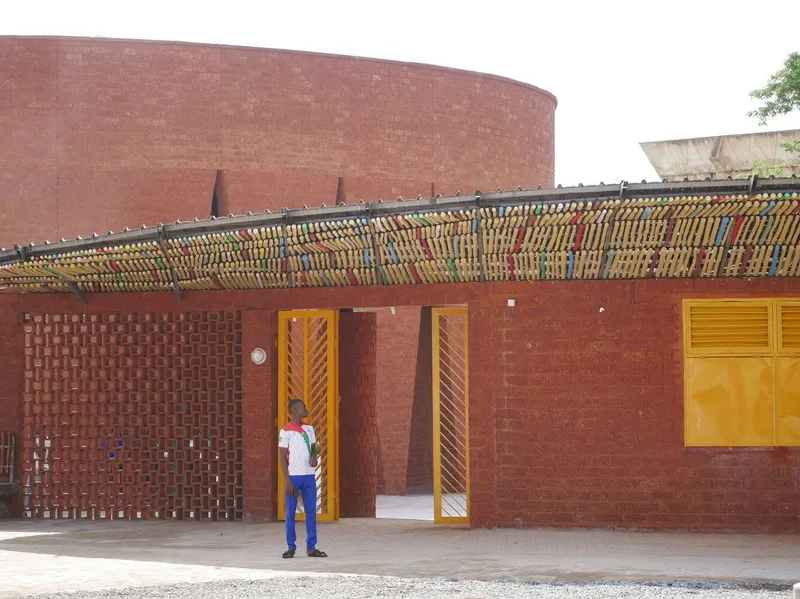
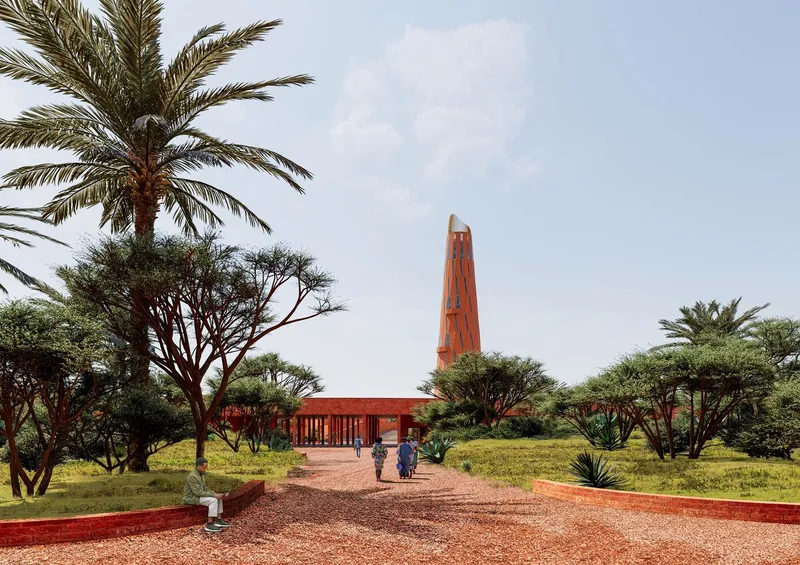
The mausoleum is the first completed component of the larger Thomas Sankara Memorial Park project. A sinuous and colorful pavilion gently guides visitors from Boulevard Thomas Sankara into the sacred precinct. The full memorial park will eventually feature an amphitheater, shops, restaurants, educational spaces, offices, and conference areas, extending Sankara’s legacy into future generations.
At the center of the park, a 100-meter-tall observation tower will be erected on the exact location of Sankara’s assassination. The terrace at 87 meters will commemorate the year of his death, offering panoramic views of the capital and a powerful symbol of elevation—both literal and ideological.
A Civic Space for Reflection, Unity, and Hope
Francis Kéré views the project as both personal and political. Having met Sankara in his youth, the project carries emotional weight and national responsibility. Kéré describes the transformation of the site from a place of fear into one of community and possibility. The Thomas Sankara Mausoleum architecture not only immortalizes a revolutionary figure but also reclaims space for Burkina Faso’s people to gather, reflect, and envision a hopeful future.
Integrated into Ouagadougou’s Green Belt development plan, the memorial introduces vital green public space to the arid capital. It revives Sankara’s vision of environmental responsibility while providing meaningful urban infrastructure for the next generation.
Architecture as a Vehicle of Memory and Progress
In its restrained elegance, material honesty, and symbolic resonance, the Thomas Sankara Mausoleum architecture proves that monumental design can be both grounded and visionary. It is an architecture that serves not just to honor the past but to inspire the future—echoing Sankara’s ideals of pan-African unity, justice, and self-determination.



Popular Articles
Popular articles from the community


Hill & Cross Opera: Sculptural Opera House Architecture Shaped by Tallinn’s Landscape and Identity
Hill & Cross Opera reimagines opera house architecture in Tallinn through its sculptural hill, civic plaza, glass wave and a luminous cross.

Conexión: Biophilic Design Reimagines High-Rise Living in Hong Kong
Conexión reimagines high-rise living in Hong Kong through biophilic design, green facades, shared spaces, daylight, water and nature within.

Riyadh For All: Intergenerational Urban Design for Active Aging in Rabat
Riyadh For All reimagines urban design in Rabat with intergenerational co-living, adaptive courtyards, and Moroccan cultural exchange today.

Co-life: Sustainable Architecture for Age-Friendly Community Living
Co-life reimagines sustainable architecture for seniors through courtyards, rammed earth, shared gardens, and spaces designed for belonging.

Similar Reads
You might also enjoy these articles

Bamboo Housing Challenge 2026: Design Affordable, Sustainable Homes Using Bamboo
An international design competition by Bamboo U and IBUKU inviting architects and designers to reimagine affordable housing using bamboo — with the winning design built full-scale in Bali.

Computational Design & Education: Beegraphy Design Awards Introduces 7th Category (Featuring Jiyun's Innovative Approach)
Dive into Beegraphy’s 7th Design Awards category, where computational design meets education to create immersive, interactive learning tools, inspired by Jiyun’s work.
From Parametric Lighting to Urban Furniture: Join the 2nd Workshop in Beegraphy’s Computational Design Series
Dive into Cutting-Edge Design Techniques and Practical Applications with Industry Experts

Last Call: Unleash Your Architectural Genius in SHAK's Kindergarten Design Competition
Urgent call for architects to join SHAK's kindergarten design competition before the looming deadline
Explore African Architecture Competitions
Discover active competitions in this discipline



Challenge to reimagine the Iron Throne


Photograph architecture without architects


Illustrate the lost glory of Angkor Wat - Render Challenge


Design challenge to reuse E-waste
Comments (0)
Please login or sign up to add comments
No comments yet. Be the first to comment!