

Tidal House by Studio to po ma: A Harmonious Blend of Architecture and Landscape
Tidal House blends architecture with nature, featuring sustainable materials, dynamic volumes, solar energy, and seamless indoor-outdoor connections on Texel Island.


A Home Shaped by Nature and Tides
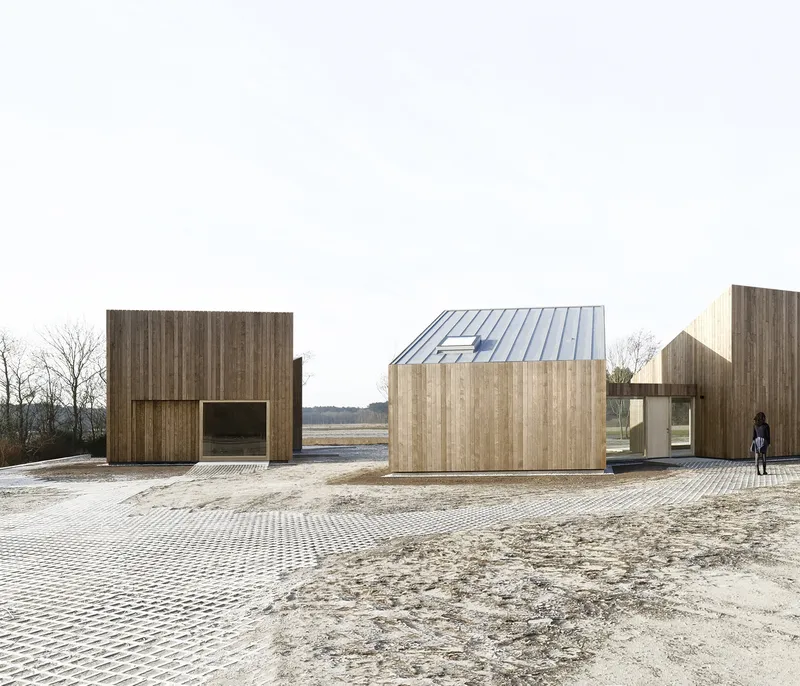
Tidal House, designed by Studio to po ma, is a striking example of how architecture can seamlessly merge with its natural surroundings. Situated on Texel Island, where rural landscapes transition into forests, dunes, and the North Sea, the residence embodies a fluid relationship between material, landscape, and inhabitants. The project consists of a primary living space and a separate practice area with a dedicated waiting room.
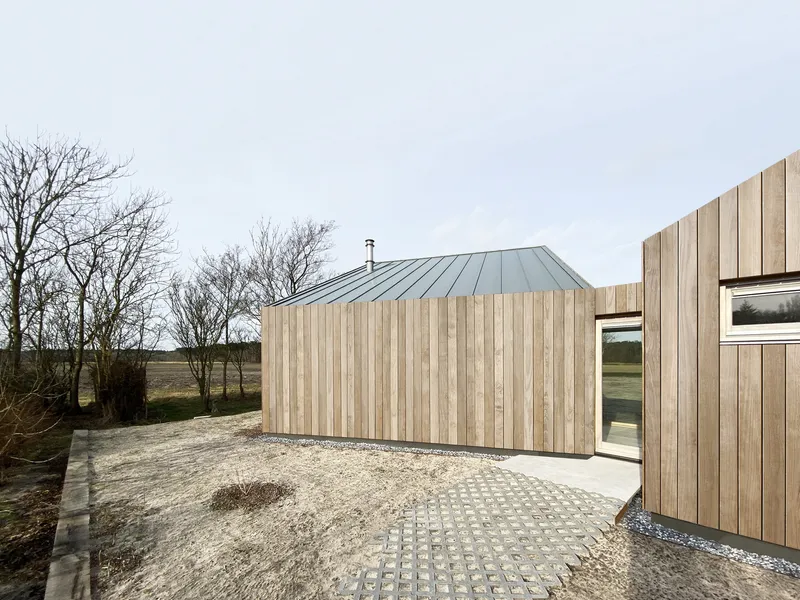
Inspired by the ebb and flow of the tides, the house is composed of sculptural, irregularly placed volumes that appear as if left behind by the sea. These dynamic forms are slightly rotated and shifted, creating open spaces in between, allowing nature to weave through the architecture. This thoughtful arrangement enhances natural light, shifting atmospheres throughout the day, and deepening the connection between the home and its ever-changing landscape.
Blending Privacy and Openness
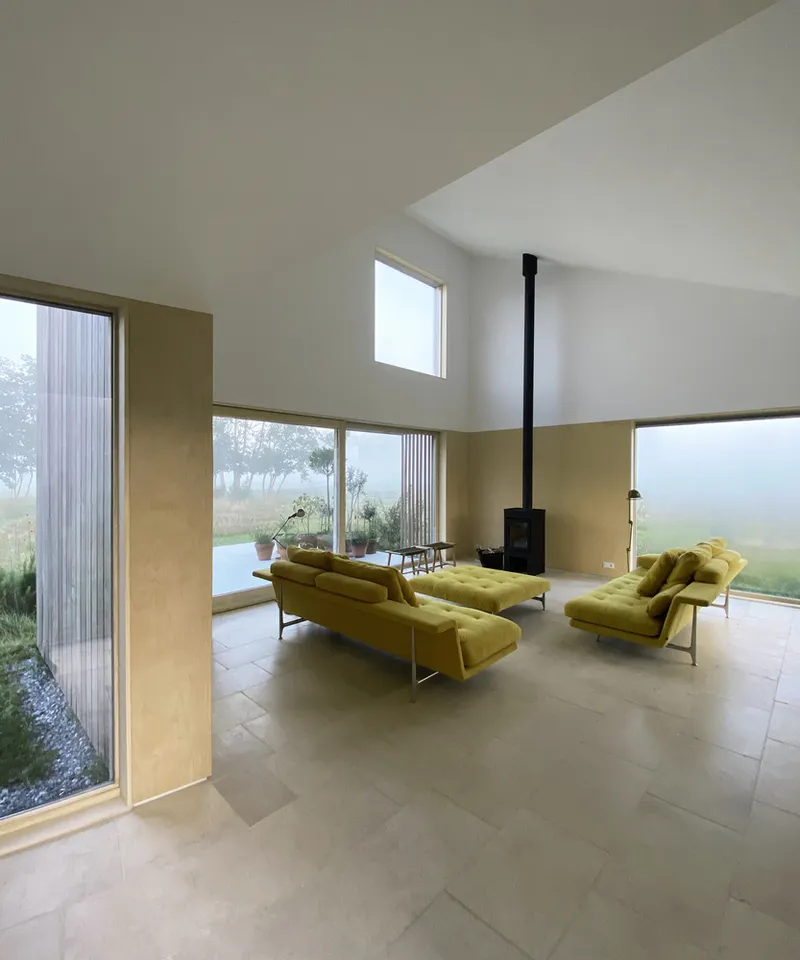
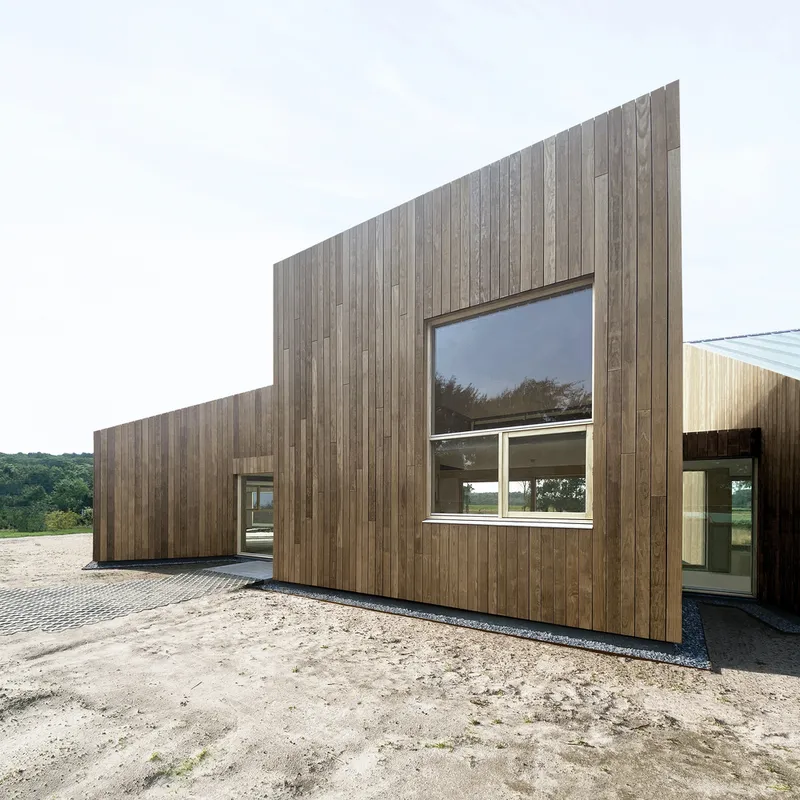
The exterior of the house strikes a balance between privacy and openness. On the street-facing side, the façade remains largely closed, ensuring seclusion from the narrow road. In contrast, the garden-facing side embraces the landscape with floor-to-ceiling windows and sliding doors, allowing uninterrupted views of nature and a direct experience of seasonal changes. The interplay between these architectural elements fosters an organic and immersive living experience.
A distinct horizontal division at a height of 2.40 meters runs throughout the house, marking a shift in materials between birch plywood, stucco, and steel beams. This thoughtful materiality enriches the interior, creating a layered and textured experience reminiscent of a constructed landscape.

Sustainable and Energy-Efficient Design
Sustainability is at the core of Tidal House, integrating eco-friendly materials and energy-efficient systems. Key sustainable features include:
- Timber structure and facade cladding made from sustainable modified wood
- Recycled aluminum roofing for durability and energy efficiency
- Natural ventilation for improved indoor air quality
- Concrete flooring with radiant heating for efficient heat retention
- Re-used travertine tiles, reducing material waste
- Solar panels integrated into the shed roof, generating renewable electricity
- Rainwater harvesting system, storing water in an underground tank for garden irrigation
By adopting a fully electric energy model, Tidal House relies on an air-to-water heat pump and solar power, reducing its environmental impact and promoting self-sufficiency.
A Dynamic and Evolving Space
Tidal House is more than just a residence; it is an ever-evolving structure that adapts to its surroundings. The open layout and strategic spatial transitions encourage a flexible and intuitive use of space, allowing for shifts in functionality over time. With its seamless integration into the Texel landscape, the home invites residents to engage with nature in a profound and immersive way.
All Photographs are works of Lars van Es


Popular Articles
Popular articles from the community


Manzana Morphosis: Stretching Barcelona's Grid into a Living Landscape for 2050
A radical reworking of the Eixample manzana turns density into a tool for generous public space, vertical ecology, and environmental performance.

Opera by the Sea Estonia: Three Shells Dissolving Architecture into Tallinn's Coastline
A winning opera house proposal replaces monumental form with interconnected shells that blur the boundary between building, park and Baltic Sea.

Faces of the Soviet Avant-Garde: Turning Moscow's Street Names into an Open-Air Museum
A network of sculptural installations across a Moscow residential district transforms forgotten architect names into spatial encounters with cultural memor

Singing Woman: Contemporary Architecture Inspired by Estonia’s Voice and the Sea
Singing Woman turns Estonia’s song culture into flowing opera house architecture, blending public life, landscape, sea, and national memory.

Similar Reads
You might also enjoy these articles


Hodi-Mandai Geram
Project Function: Preservation and revitalization of the Intangible heritage and socio-spatial identity of the Hodi by Housing, Cultural Memory Center, Sacred Grove, landscape, local tourism economy


Olio Towers: A Mid-Rise for Performers That Fuses Housing, Rehearsal, and Stage
Located blocks from Houston's Theater District, this modular tower stacks living units around a central performance atrium.

Oasis: Modular Green Housing Carved into Dhaka's Urban Fabric
A shortlisted Plugin Housing entry reclaims unauthorized settlements in Dhaka with stepped concrete volumes, green roofs, and ventilation-driven design.

Black Hole: A Floating Megastructure for the Post-Physical Era
Emiliano Mazzarotto envisions a spherical, self-scaling arena where e-sports, digital hotels, and holographic stadiums replace traditional public space.

Explore Seaside Architecture Competitions
Discover active competitions in this discipline

Challenge to reimagine the Iron Throne

Photograph architecture without architects

Illustrate the lost glory of Angkor Wat - Render Challenge

Design challenge to reuse E-waste
Comments (0)
Please login or sign up to add comments
No comments yet. Be the first to comment!