

Timber House Parking Garage in Copenhagen by Vilhelm Lauritzen Architects
Timber House Parking in Copenhagen features pixelated wood-aluminum façade, sustainable design, dynamic lighting, and integrates urban mobility with historical timber port references.


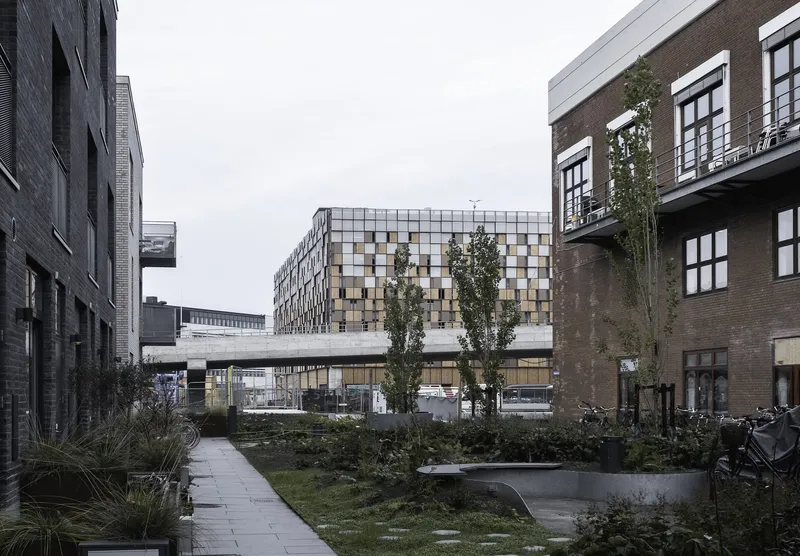
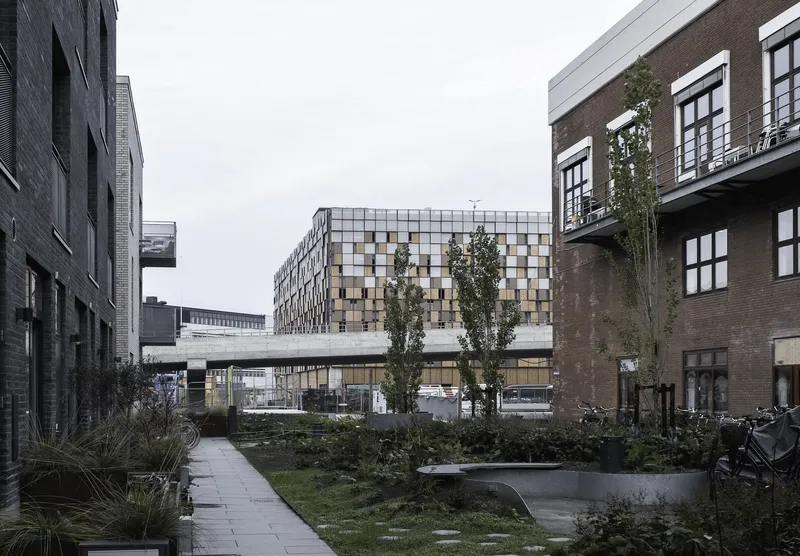
The Timber House Parking Garage by Vilhelm Lauritzen Architects redefines how utilitarian infrastructure can contribute to the urban environment. Located in the evolving district of Nordhavn in Copenhagen, the project transforms the traditional parking structure into a visually engaging architectural landmark.
Completed in 2022, the six-storey building spans approximately 13,300 square meters and accommodates 430 vehicles. Instead of concealing the parking function behind a conventional façade, the architects designed the structure as a dynamic urban element that enhances the surrounding public realm while reflecting the site’s industrial heritage.
The project demonstrates how parking architecture, often overlooked in urban design, can be transformed into a sustainable and artistic architectural intervention that contributes positively to the cityscape.
Context: A Historic Timber Port Reinterpreted
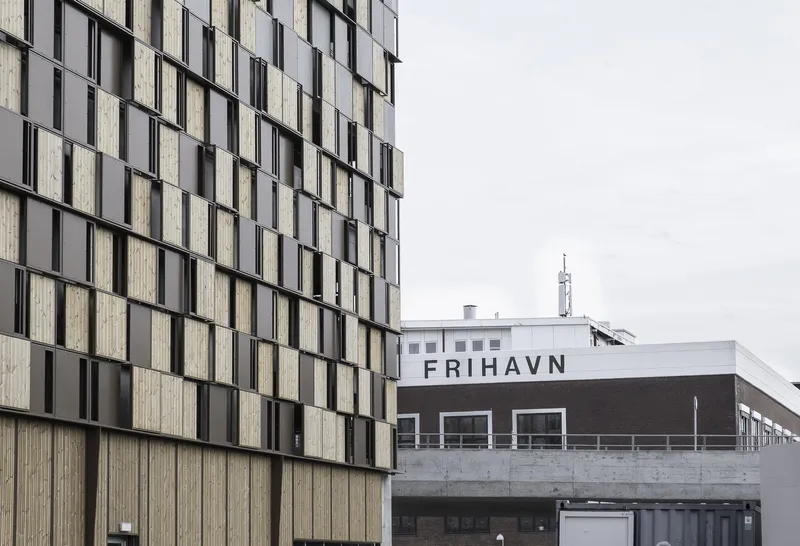
The Timber House stands within Nordhavn, a former industrial harbor that once served as part of Copenhagen’s 19th-century Freeport. Historically, this area functioned as a hub for shipping, storing, and handling timber imported from across Europe.
This legacy directly inspired the building’s name, “Trælasthuset,” which translates to “The Timber Loading House.” Rather than simply referencing history symbolically, the architects embedded this narrative directly into the architectural expression.
By referencing timber stacks commonly seen in sawmills, the design reflects the area’s industrial past while simultaneously representing Nordhavn’s transformation into a modern, sustainable urban district.

A Sculptural Pixelated Façade Inspired by Timber Stacks
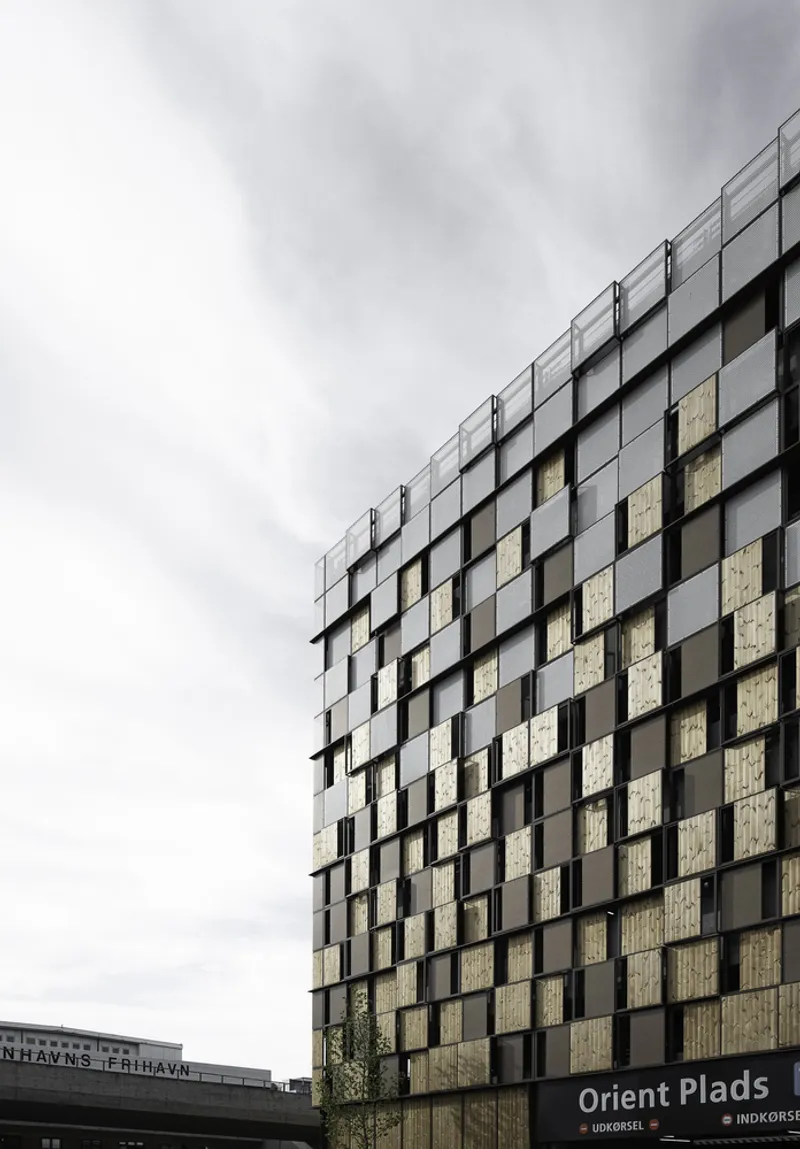
One of the defining architectural features of the Timber House is its three-dimensional pixelated façade, composed of wood and recycled aluminum elements.
The façade design draws inspiration from the irregular stacking of timber beams in sawmills, where each layer shifts slightly rather than aligning perfectly. Translating this idea into architecture, the façade consists of pixel-like modules that are intentionally offset to create depth and movement.
Each module is positioned either:
- flush with the façade surface, or
- recessed 30 centimeters inward
This subtle variation produces a dynamic relief pattern that interacts with natural daylight throughout the day. The constantly changing light conditions create shifting shadows across the façade, giving the building a sense of movement and visual complexity.
The pixelated system becomes both an homage to the site's timber heritage and a contemporary architectural language.

Material Strategy: Timber, Recycled Aluminum, and Concrete
The façade system is built upon a lightweight recycled aluminum frame, combined with perforated metal panels that allow ventilation for the parking levels while maintaining the visual rhythm of the exterior.
Expanded wood façade panels are mounted on hardwood slats, which are directly attached to the building’s raw concrete structure. This layered material strategy achieves several architectural goals:
- It introduces natural texture and warmth through timber.
- It maintains structural durability through concrete and aluminum.
- It allows natural ventilation, which is essential for parking structures.
The result is a façade that balances industrial robustness with refined architectural detailing.

Lighting Design: Transforming the Parking Structure at Night
Lighting plays a critical role in shaping the building’s identity after dark. The exterior façade incorporates vertical linear luminaires that emphasize the building’s curved and repetitive façade rhythms.
These lighting elements create a soft atmospheric glow across the structure, highlighting its layered depth while enhancing the surrounding public spaces.
Additional lighting strategies include:
- integrated illumination within benches and paving elements
- edge lighting that accentuates pedestrian zones
- façade lighting that enhances the building’s sculptural form
Inside the parking structure, motion-controlled LED lighting ensures energy efficiency while maintaining safe visibility for users. The perforated façade allows interior light to filter outward, producing a subtle glow that reinforces the building’s presence within the urban landscape.
Sustainable Infrastructure and Green Integration
Beyond aesthetics, the Timber House incorporates several sustainable architectural strategies that align with Copenhagen’s environmental ambitions.
Key sustainability features include:
- Green walls integrated into the building perimeter
- Vegetated rooftop elements that contribute to urban biodiversity
- Solar panels installed on the rooftop to generate renewable energy
- Energy-efficient LED lighting systems
These features demonstrate how infrastructure projects such as parking garages can contribute to climate-responsive architecture and green urban development.
Urban Connectivity and Public Use
The Timber House was designed not only as a parking facility but also as a multifunctional urban structure that encourages sustainable mobility.
Its location near a metro station allows drivers to park their vehicles and continue into Copenhagen’s city center using public transportation. This approach supports the city’s long-term strategy to reduce congestion and promote transit-oriented development.
In addition to parking, the building incorporates:
- spaces for future retail and local shops
- public meeting areas along the building perimeter
- a Kiss-and-Ride drop-off zone
- landscaped public spaces surrounding the structure
This integration ensures the parking garage functions as a community-oriented urban hub rather than a purely utilitarian facility.
Architecture Competition and Design Vision
The Timber House originated from an open architectural competition where the client sought an innovative approach to parking infrastructure. The design brief emphasized the need to establish a symbiotic relationship between the parking facility, the surrounding urban district, and Copenhagen’s evolving transportation system.
The architects responded by creating a building that combines:
- sculptural façade depth
- contextual references to industrial history
- high-quality lighting design
- sustainable building strategies
Through these elements, the Timber House elevates the architectural potential of parking structures, proving that even the most functional typologies can become expressive urban landmarks.
A New Model for Contemporary Parking Architecture
The Timber House Parking Garage demonstrates how thoughtful design can transform everyday infrastructure into meaningful architecture. By combining timber-inspired aesthetics, innovative façade systems, sustainable design strategies, and urban integration, the project contributes positively to Copenhagen’s evolving cityscape.
Rather than hiding the parking function, the architects celebrate it through a carefully crafted architectural language that blends history, materiality, light, and environmental responsibility.
The project stands as a compelling example of how parking architecture can evolve into a civic and artistic component of the modern city.


All photographs are works of
Sjavit Maestro


Popular Articles
Popular articles from the community


The Amber Palace Opera: A Geological Fiction Surfaces on Tallinn's Baltic Waterfront
Pierre Brillard reimagines a Baltic legend as a public landscape, opera house, and waterfront promenade rooted in Tallinn's coastal identity.

Extended Shell: Retrofitting Kolkata's Balconies as Living Urban Thresholds
A modular retrofit system recovers the social and environmental intelligence of Kolkata's historic verandas for contemporary Park Street residents.

Opera by the Sea Estonia: Three Shells Dissolving Architecture into Tallinn's Coastline
A winning opera house proposal replaces monumental form with interconnected shells that blur the boundary between building, park and Baltic Sea.
Temporary Home for Dogs: A Reversed Zoo Rethinks Animal Shelter Architecture
In Bucharest, a sinuous corridor and freed landscape flip the logic of containment, designing a shelter that works to make itself unnecessary.

Similar Reads
You might also enjoy these articles

Bamboo Housing Challenge 2026: Design Affordable, Sustainable Homes Using Bamboo
An international design competition by Bamboo U and IBUKU inviting architects and designers to reimagine affordable housing using bamboo — with the winning design built full-scale in Bali.

Computational Design & Education: Beegraphy Design Awards Introduces 7th Category (Featuring Jiyun's Innovative Approach)
Dive into Beegraphy’s 7th Design Awards category, where computational design meets education to create immersive, interactive learning tools, inspired by Jiyun’s work.

From Parametric Lighting to Urban Furniture: Join the 2nd Workshop in Beegraphy’s Computational Design Series
Dive into Cutting-Edge Design Techniques and Practical Applications with Industry Experts

Last Call: Unleash Your Architectural Genius in SHAK's Kindergarten Design Competition
Urgent call for architects to join SHAK's kindergarten design competition before the looming deadline

Explore Vertical Parking Competitions
Discover active competitions in this discipline

Challenge to reimagine the Iron Throne

Photograph architecture without architects

Illustrate the lost glory of Angkor Wat - Render Challenge

Design challenge to reuse E-waste
Comments (0)
Please login or sign up to add comments
No comments yet. Be the first to comment!